LJPRM-37GSM 900/1800/1900 Cellular Telephone
Microsoft Corporation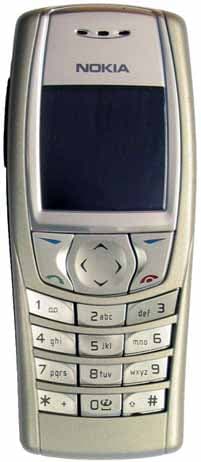
Click to zoom
Application Details
- Equipment Class
- PCE - PCS Licensed Transmitter held to ear
- Date of Grant
- Mar 30, 2004
- Application Purpose
- Original Equipment
- Date of Application
- Mar 30, 2004
- Equipment Note
- GSM 900/1800/1900 Cellular Telephone
- Frequency Range
- 1850.20000000 - 1909.80000000
- Company
- Microsoft Corporation
- Country
- United States
Documents & Files
Document Text
Text extracted from the exhibit documents filed with the FCC. Open a document above to read the original.
Users Manual
User’s Guide for Nokia 6610i phone 9230846 Issue 1 LEGAL INFORMATION DECLARATION OF CONFORMITY We, NOKIA CORPORATION declare under our sole responsibility that the product RM-37 is in conformity with the provisions of the following Council Directive:1999/5/EC. A copy of the Declaration of Conformity can be found at http://www.nokia.com/phones/declaration_of_conformity/. Part No. 9230846 Issue No. 1 Copyright ©2004 Nokia. All rights reserved. Nokia, Nokia Connecting People, Xpress-on and Pop-Port are trademarks or registered trademarks of Nokia Corporation. Other product and company names mentioned herein may be trademarks or tradenames of their respective owners. Printed in Canada 03/2004 US Patent No 5818437 and other pending patents. T9 text input software Copyright ©1999-2004. Tegic Communications, Inc. All rights reserved. Includes RSA BSAFE cryptographic or security protocol software from RSA Security. Java is a trademark of Sun Microsystems, Inc. USE OF THIS PRODUCT IN ANY MANNER THAT COMPLIES WITH THE MPEG-4 VISUAL STANDARD IS PROHIBITED, EXCEPT FOR USE DIRECTLY RELATED TO (A) DATA OR INFORMATION ENCODED BY A CONSUMER FOR PERSONAL AND NON- COMMERCIAL USE WITHOUT REMUNERATION; AND (B) OTHER USES SPECIFI- CALLY AND SEPARATELY LICENSED BY MPEG LA, L.L.C. The information contained in this user guide was written for the Nokia 6610i product. Nokia operates a policy of ongoing development. Nokia reserves the right to make changes to any of the products described in this document without prior notice. UNDER NO CIRCUMSTANCES SHALL NOKIA BE RESPONSIBLE FOR ANY LOSS OF DATA OR INCOME OR ANY SPECIAL, INCIDENTAL, AND CONSEQUENTIAL OR INDIRECT DAMAGES HOWSOEVER CAUSED. THE CONTENTS OF THIS DOCUMENT ARE PROVIDED "AS IS." EXCEPT AS REQUIRED BY APPLICABLE LAW, NO WAR- RANTIES OF ANY KIND, EITHER EXPRESS OR IMPLIED, INCLUDING, BUT NOT LIMITED TO, THE IMPLIED WARRANTIES OF MERCHANTABILITY AND FITNESS FOR A PARTICULAR PURPOSE, ARE MADE IN RELATION TO THE ACCURACY AND RELIABILITY OR CONTENTS OF THIS DOCUMENT. NOKIA RESERVES THE RIGHT TO REVISE THIS DOCUMENT OR WITHDRAW IT AT ANY TIME WITHOUT PRIOR NOTICE. EXPORT CONTROLS This device may contain commodities, technology, or software that may only be exported in accordance with the U. S. Export Administration regulations. Diver- sion contrary to U.S. or Canadian law is prohibited. FCC/INDUSTRY CANADA NOTICE Your device may cause TV or radio interference (for example, when using a tele- phone in close proximity to receiving equipment). The FCC or Industry Canada can require you to stop using your telephone if such interference cannot be eliminated. If you require assistance, contact your local service facility. This device complies with part 15 of the FCC rules. Operation is subject to the condi- tion that this device does not cause harmful interference. Manufactured or sold under one or more following US Patents. Asterisk (*) indicates design patents pending. 486884655198855827082596637861120996266330 496919255263665835889597005961156176282436 500137255531255839101598713761187756285888 50459735557639584884599171661218466292668 510117555658215845219599185761224986295286 521283455703695857151599952361283226308084 523009155812445862178600585761285096310609 523363455971025870683601185361380916311054 524128456252745887266601457361409666314166 524158356403955889770601827761442436324412 526678256640045892475602616161446766347218 5 3 111 5 156640535898925602856761482096356759 5 3 111 7 956690695907823602912861514856359904 531728356776205914690603823861515076363259 533163856782245914796604376061636096370362 533536256920325915440604719661645476370390 535332856994065917868604979661672486377803 537893556994825920826605041561700736393121 538478257013925926138605543961785356430721 539022357295345926769606019361852956434133 53966575729541593023360699236188909*29/170210 54009495734683594665160727876195338*29/170229 54164355754976595633260815346199035*29/170245 54425215760568595662560849626201876*29/170246 54448165782646595663360887466219560 54463645794142596035460945876240076 54794765802465596038960979646240079 54870845805084596390161057846249584 54932555805301596637461085536259312 3 Contents For your safety ......................... 5 General information ................ 8 Access codes ........................................... 8 Security code (5 to 10 digits) ......... 8 PIN and PIN2 codes (4 to 8 digits), Module PIN and Signing PIN .......... 8 PUK and PUK2 codes (8 digits) ...... 8 Barring password (4 digits) ............. 9 Wallet code (4 to 10 digits) ............ 9 Overview of the functions of the phone........................... 10 Camera ................................................... 10 Multimedia messaging service (MMS) ..................................................... 10 Polyphonic sound (MIDI) ................... 10 JavaTM applications ........................... 11 General Packet Radio Service (GPRS) ..................................................... 11 Over the Air (OTA) settings service. 11 1. Your phone ......................... 12 Keys and connectors........................... 12 Standby mode....................................... 13 Screen saver....................................... 14 Wallpaper ........................................... 14 Essential indicators in standby mode .................................................... 14 Headset................................................... 15 Putting on the wrist strap................. 16 2. Getting started................... 17 Installing the SIM card and the battery .................................................... 17 Charging the battery .......................... 19 Switching the phone on and off ..... 20 Keypad lock (Keyguard) ..................... 20 Changing the covers ........................... 22 3. Call functions ..................... 23 Making a call ........................................ 23 Speed dialling a phone number ... 23 Answering or rejecting an incoming call ...…
Text truncated - open the document above for the full version.
Cover Letter(s)
NOKIA CORPORATION Nokia Mobile Phones Elektroniikkatie 10 FIN-90570 OULU FINLAND Tel. +358 7180 08000 Fax. +358 7180 47222 March 29, 2004 Federal Communications Commission, Authorization & Evaluation Division, 7435 Oakland Mills Road, Columbia, MD. 21046 Attention: Equipment Authorization Branch REQUEST FOR CONFIDENTIALITY Pursuant to Sections 0.457 (d) (l) (ii) and 0.459 of the Commission’s Rules, the Applicant hereby requests confidential treatment of some of the information accompanying this Application of FCC ID: LJPRM-37 and as outlined below: - Exhibit 4: Block Diagram - Exhibit 5: Schematic Diagrams - Exhibit 10: List of Active Devices and Tune-Up Procedure - Exhibit 12: Theory of Operation / Description of Circuitry These materials contain trade secrets and proprietary information not customarily released to the public and the public disclosure of these matters might be harmful to the Applicant and provide unjustified benefits to its competitors. The Applicant understands that pursuant to Rule 0.457 (d) (l) (ii) disclosure of this Application and all accompanying documentation will not be made before the date of the Grant for this Application. NOKIA CORPORATION (signed) Timo Mukari Senior Product Program Manager Mobile Phones, Oulu
Cover Letter(s)
From: [email protected] [mailto:[email protected]] Sent: Wednesday, March 31, 2004 9:45 PM To: [email protected] Subject: RE: LJPRM-37_ATCB001234 Hi Dennis, Thanks for the grant. To answer your concerns: 1. This item was never 'shipped'. I personally picked the sample up after RF exposure testing, hand-carried it to Phoenix, AZ, supervised testing, and brough it back to Finland, all the time in antistatic padded packing along with other personal belongings. So this sample accompanied me all the time, and it was never handled as cargo. 2. It looks like those template texts were not corrected before finalizing the report. It should read just EIRP without any reference to conducted measurements. I hope this answers your questions. Best Regards, Kare -----Original Message----- From: ext dward ATCB [mailto:[email protected]] Sent: 01 April, 2004 04:53 To: Oksanen Kare (Nokia-TP/Oulu) Subject: RE: LJPRM-37_ATCB001234 Hi Kare Grant attached However, I do have minor concerns that should be answered. A confirmation or explanation would be greatly appreciated. The concerns are; the EMC testing was done in Arizona (USA) while the SAR testing was done in Finland. The power measurements in both the EMC and the SAR report are identical. The date of the SAR testing was around March 10, 2004 and the date of the EMC testing was around March 15 to 24 th , 2004. This indicates that the EMC power rating may have been taken from the SAR power readings as it is questionable if all three readings could be so exact. Also, the EMC power specifically states EIRP while the SAR report is nebulous as it states Conducted/EIRP and does not specify which. The comments are then 1- as the EMC and SAR were done so far distant from each other, please verify that the device sustained no change or damage in shipping. 2- Please clarify the designation of the power in the SAR (is it conducted or EIRP). IF it is conducted then please verify that the EIRP power of the SAR is within 5% of the EIRP of the EMC report or that the conducted from the EMC is within 5% of the conducted of the SAR report. Please provide the answers to the comments within 5 days as the grant is issued. Thanks Dennis
External Photos
26 Mar 2004 External Photographs FCC ID: LJPRM-37 Exhibit 3 IC: 661E-RM37 Applicant: Nokia Corporation Copyright © 2004 Nokia. All rights reserved. 26 Mar 2004 External Photographs FCC ID: LJPRM-37 Exhibit 3 IC: 661E-RM37 Applicant: Nokia Corporation Copyright © 2004 Nokia. All rights reserved.
Internal Photos
29 Mar 2004 Internal Photographs FCC ID: LJPRM-37 Exhibit 9 IC: 661E-RM37 Applicant: Nokia Corporation Copyright © 2004 Nokia. All rights reserved. 29 Mar 2004 Internal Photographs FCC ID: LJPRM-37 Exhibit 9 IC: 661E-RM37 Applicant: Nokia Corporation Copyright © 2004 Nokia. All rights reserved. 29 Mar 2004 Internal Photographs FCC ID: LJPRM-37 Exhibit 9 IC: 661E-RM37 Applicant: Nokia Corporation Copyright © 2004 Nokia. All rights reserved.
RF Exposure Info
Oulu SAR Report DTX10200-EN Applicant: Nokia Corporation Type: RM-37 Copyright © 2004 Nokia. All rights reserved. 1/17 SAR Compliance Test Report Test report no.: Not numbered Date of report: 2004-03-23 Number of pages: 32 Testing laboratory: Nokia Corporation Elektroniikkatie 10 P.O. Box 50 FIN-90571 OULU Finland Tel. +358-7180-08000 Fax+358-7180-47222 Client: Nokia Corporation Elektroniikkatie 10 P.O. Box 50 FIN-90571 OULU Finland Tel. +358-7180-08000 Fax+358-7180-47222 Responsible test engineer: Anne Kiviniemi Product contact person: Janne Siltari Measurements made by: Anne Kiviniemi Tested device: RM-37 FCC ID (USA): LJPRM-37 Industry Canada ID: 661E-RM37 Supplement reports: DTX10200-EN Testing has been carried out in accordance with: 47CFR §2.1093 Radiofrequency Radiation Exposure Evaluation: Portable Devices FCC OET Bulletin 65 (Edition 97-01), Supplement C (Edition 01-01) Evaluating Compliance with FCC Guidelines for Human Exposure to Radiofrequency Electromagnetic Fields RSS-102 Evaluation Procedure for Mobile and Portable Radio Transmitters with Respect to Health Canada’s Safety Code 6 for Exposure of Humans to Radio Frequency Fields IEEE 1528 - 2003 IEEE Recommended Practice for Determining the Peak Spatial-Average Specific Absorption Rate (SAR) in the Human Head from Wireless Communications Devices: Measurement Techniques Documentation: This document is archived for 15 years at TCC Oulu Test results: The tested device complies with the requirements in respect of all parameters subject to the test. The test results and statements relate only to the items tested. The test report shall not be reproduced except in full, without written approval of the laboratory. Date and signatures: 2004-03-23 For the contents: Anne Kiviniemi Test Engineer Oulu SAR Report DTX10200-EN Applicant: Nokia Corporation Type: RM-37 Copyright 2004 Nokia. All rights reserved. 2/17 CONTENTS 1. SUMMARY OF SAR TEST REPORT............................................................................................................................................. 3 1.1 TEST DETAILS.............................................................................................................................................................................3 1.2 MAXIMUM RESULTS....................................................................................................................................................................3 1.2.1 Head Configuration........................................................................................................................................................ 3 1.2.2 Body Worn Configuration ............................................................................................................................................ 3 1.2.3 Maximum Drift ................................................................................................................................................................ 3 1.2.4 Measurement Uncertainty ........................................................................................................................................... 3 2. DESCRIPTION OF THE DEVICE UNDER TEST........................................................................................................................... 4 2.1 PICTURE OF THE DEVICE..............................................................................................................................................................4 2.2 DESCRIPTION OF THE ANTENNA..................................................................................................................................................4 3. TEST CONDITIONS ..................................................................................................................................................................... 4 3.1 TEMPERATURE AND HUMIDITY....................................................................................................................................................4 3.2 TEST SIGNAL, FREQUENCIES, AND OUTPUT POWER....................................................................................................................5 4. DESCRIPTION OF THE TEST EQUIPMENT ............................................................................................................................... 5 4.1 MEASUREMENT SYSTEM AND COMPONENTS................................................................................................................................5 4.1.1 Isotropic E-field Probe ET3DV6 ................................................................................................................................... 6 4.2 PHANTOMS................................................................................................................................................................................6 4.3 SIMULATING LIQUIDS.................................................................................................................................................................7 4.3.1 Liquid Recipes.................................................................................................................................................................. 7 4.3.2 Verification of the System............................................................................................................................................ 7 4.3.3 Tissue Simulants used in the Measurements.......................................................................................................... 8 5. DESCRIPTION OF THE TEST PROCEDURE ............................................................................................................................... 9 5.1 DEVICE HOLDER..........................................................................................................................................................................9 5.2 TEST POSITIONS...........…
Text truncated - open the document above for the full version.
Test Report
FCC ID: LJPRM-37 Transmitter Certification of FCC ID: LJPRM-37 Model: RM-37 Serial Number of units tested: 004400/43/164694/0 and 004400/43/164684/1 to Federal Communications Commission Rule Part(s) 24E, Confidentiality Date Of Report: March 24, 2004 On the Behalf of the Applicant: Nokia Corporation At the Request of: P.O. D91-4809428/03/15/2004 Nokia Corporation Elektroniikkatie 10 Fin-90570 Oulu, Finland Attention of: Kare Oksanen, R&D Type Approvals [email protected] 011 358 7180 08000; FAX: 011 358 7180 47222 Supervised By: Morton Flom, P. Eng. MFA p0430006, d0430053 FCC ID: LJPRM-37 The applicant has been cautioned as to the following: 15.21 Information to User. The users manual or instruction manual for an intentional radiator shall caution the user that changes or modifications not expressly approved by the party responsible for compliance could void the user's authority to operate the equipment. 15.27(a) Special Accessories. Equipment marketed to a consumer must be capable of complying with the necessary regulations in the configuration in which the equipment is marketed. Where special accessories, such as shielded cables and/or special connectors are required to enable an unintentional or intentional radiator to comply with the emission limits in this part, the equipment must be marketed with, i.e. shipped and sold with, those special accessories. However, in lieu of shipping or packaging the special accessories with the unintentional or intentional radiator, the responsible party may employ other methods of ensuring that the special accessories are provided to the consumer, without additional charge. Information detailing any alternative method used to supply the special accessories for a grant of equipment authorization or retained in the verification records, as appropriate. The party responsible for the equipment, as detailed in § 2.909 of this chapter, shall ensure that these special accessories are provided with the equipment. The instruction manual for such devices shall include appropriate instructions on the first page of text concerned with the installation of the device that these special accessories must be used with the device. It is the responsibility of the user to use the needed special accessories supplied with the equipment. MFA p0430006, d0430053 FCC ID: LJPRM-37 Table of Contents Rule Description Page . Test Report 1 2.1033(c) General Information Required 2 2.1033(c)(14) Rule Summary 4 . Standard Test Conditions and Engineering Practices 5 2.1046(a) ERP Carrier Power (Radiated) 6 2.1051, 2.1049(c), 24, 24.238(b). . Transmitter Conducted Measurements 8 2.1053(a) Field Strength of Spurious Radiation 16 2.1055(a)(1), 24.235 . Frequency Stability (Temperature Variation) 20 2.1055(b)(1) Frequency Stability (Voltage Variation) 23 2.202(g) Necessary Bandwidth and Emission Bandwidth 24 MFA p0430006, d0430053 FCC ID: LJPRM-37 Page Number 1 of 24. Required information per ISO/IEC Guide 25-1990, paragraph 13.2: a) Test Report b) Laboratory: (FCC: 31040/SIT) (Canada: IC 2044) M. Flom Associates, Inc. 3356 N. San Marcos Place, Suite 107 Chandler, AZ 85225 c) Report Number: d0430053 d) Client: Nokia Corporation Elektroniikkatie 10 Fin-90570 Oulu, Finland e) Identification: RM-37 FCC ID: LJPRM-37 Description: GSM 900/1800/1900 Cellular Telephone f) EUT Condition: Not required unless specified in individual tests. g) Report Date: March 24, 2004 EUT Received: March 15, 2004 h, j, k): As indicated in individual tests. i) Sampling method: No sampling procedure used. l) Uncertainty: In accordance with MFA internal quality manual. m) Supervised by: Morton Flom, P. Eng. n) Results: The results presented in this report relate only to the item tested. o) Reproduction: This report must not be reproduced, except in full, without written permission from this laboratory. Accessories Used During Testing: Type Model MFA Number Charger ACP-12U S01275 Charger ACP-8U S01250 Charger ACP-7U S01248 Desktop Stand DCU-14 S00729 Music Stand DT-1 S00728 Stereo Headset HDS-3 S00566 Boom Headset HDB-4 S00721 Loopset LPS-4 S00564 USB Cable DKU-5 S01180 TTY Adapter HAD-10 S01181 Battery BLD-3 S01190 MFA p0430006, d0430053 FCC ID: LJPRM-37 Page Number 2 of 24. List of General Information Required for Certification In Accordance with FCC Rules and Regulations, Volume II, Part 2 and to 24E, Confidentiality Sub-Part 2.1033 (c)(1): Name and Address of Applicant: Nokia Corporation Elektroniikkatie 10 Fin-90570 Oulu, Finland Manufacturer: Nokia Komarom Kft. Nokia utca 1. 2901 Komarom, Hungary Nokia china/Beijing/Kaifaqu-Donghuan Zhonglu GongHuan Zhonglu Beijing, P.R.C 100176 (c)(2): FCC ID: LJPRM-37 Model Number: RM-37 (c)(3): Instruction Manual(s): Please See Attached Exhibits (c)(4): Type of Emission: 300KGXW (c)(5): FREQUENCY RANGE, MHz: 1850.2 to 1909.8 (c)(6): Power Rating, Watts: 32.1 EIRP, dbm Switchable x Variable N/A (c)(7): Maximum Power Rating, Watts: 2 MFA p0430006, d0430053 FCC ID: LJPRM-37 Page Number 3 of 24. Subpart 2.1033 (continued) (c)(8): Voltages & Currents in All Elements in Final RF Stage, Including Final Transistor or Solid State Device: Collector Current, A = 1.1 Collector Voltage, Vdc = 4.7 max Supply Voltage, Vdc = 3.6 (c)(9): Tune-Up Procedure: Please See Attached Exhibits (c)(10): Circuit Diagram/Circuit Description: Including description of circuitry & devices provided for determining and stabilizing frequency, for suppression of spurious radiation, for limiting modulation and limiting power. Please See Attached Exhibits (c)(11): Label Information: Please See Attached Exhibits (c)(12): Photographs: Please See Attached Exhibits (c)(13): Digital Modulation Description: ___ Attached Exhibits _x_ N/A (c)(14): Test and Measurement Data: Follows MFA p0430006, d0430053 FCC ID: LJPRM-37 Page Number 4 of 24. Sub-part 2.1033(c)(14): Test and Measurement Data All tests and measurement data shown were performed in accordance with FCC Rules and Regulations, Volume II; Part 2, Sub-part J,…
Text truncated - open the document above for the full version.
Contact Information
Applicant
Hasnain Syed(Director, EMC, SI and RF Compliance)
Technical Contact
Nokia CorporationKare Oksanen
[email protected]011 358 7180 08000
Elektroniikkatie 10 · OULU · Finland
Technical Specifications
| # | Rule Parts | Frequency Range | Power Output | Emission | Tolerance |
|---|---|---|---|---|---|
| 1 | 24E | 1.85 GHz - 1.91 GHz | 1.622 W | 300KGXW | 0.1000000000 ppm |
Other Applications from Microsoft Corporation
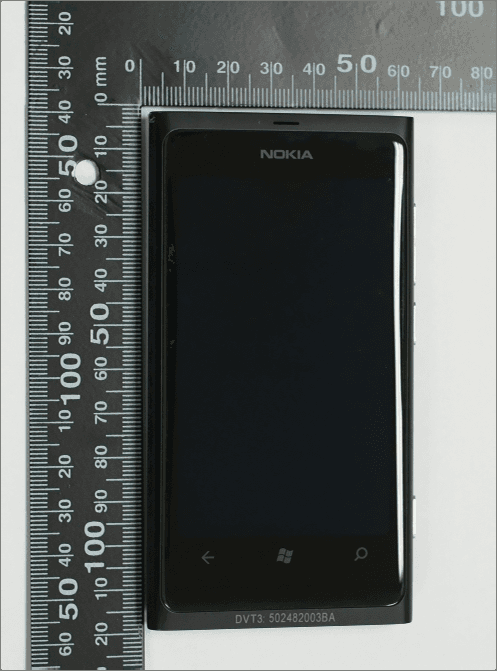
LJPA
Dec 20, 2011GSM/WCDMA cellular phone w/BT and WLAN
Equipment Class
DTS - Digital Transmission System
LJPRM-801
Oct 08, 2011GSM/WCDMA cellular phone w/BT and WLAN
Equipment Class
JBP - Part 15 Class B Computing Device Peripheral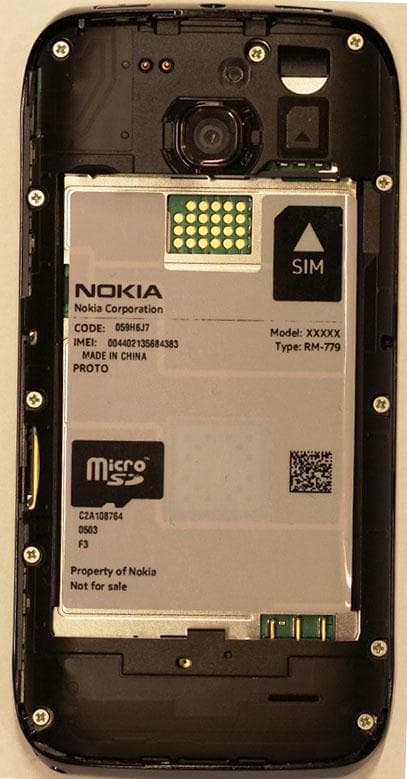
LJPRM-779
Sep 29, 2011GSM/WCDMA cellular phone w/BT, WLAN and NFC
Equipment Class
DTS - Digital Transmission System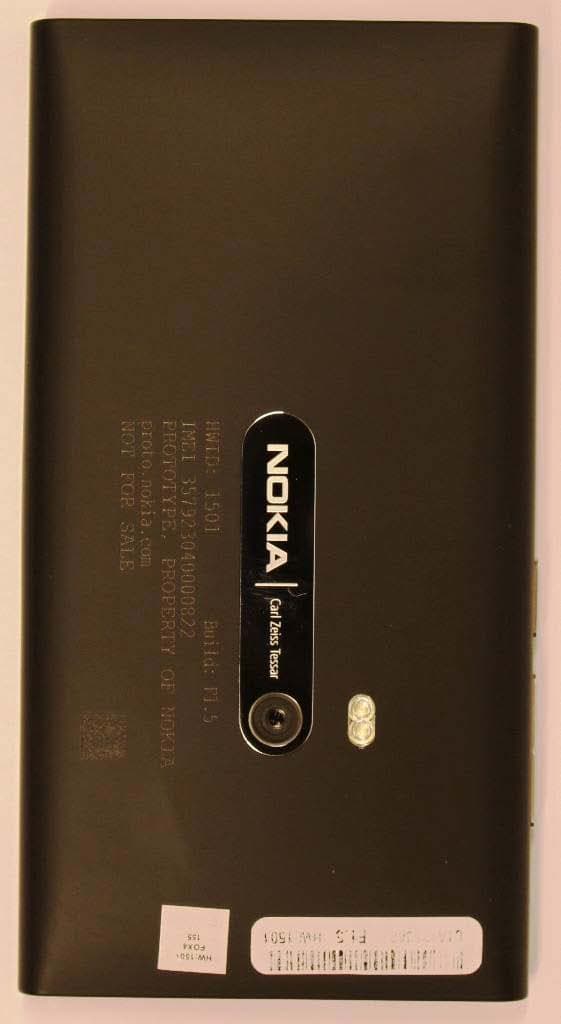
LJPK
Jul 20, 2011GSM/WCDMA cellular telephone with BT, WLAN, and NFC
Equipment Class
DTS - Digital Transmission System
LJPRM-701
Jul 20, 2011GSM/WCDMA cellular phone w/BT, WLAN, FMTx and NFC
Equipment Class
DXX - Part 15 Low Power Communication Device Transmitter