LJPSU-18Internet Tablet w/ WLAN/BT
Microsoft Corporation
Click to zoom
Application Details
- Equipment Class
- DTS - Digital Transmission System
- Date of Grant
- Aug 25, 2005
- Application Purpose
- Original Equipment
- Date of Application
- Aug 25, 2005
- Equipment Note
- Internet Tablet w/ WLAN/BT
- Frequency Range
- 2402.00000000 - 2480.00000000
- Company
- Microsoft Corporation
- Country
- United States
Documents & Files
Document Text
Text extracted from the exhibit documents filed with the FCC. Open a document above to read the original.
Users Manual
Nokia 770 Internet Tablet User Guide 9240895 Issue 3 770_ENv3_US_UG_9240895.fm Page 1 Tuesday, September 6, 2005 3:57 PM 2 LEGAL INFORMATION Part No. 9240895, Issue No. 3 Copyright © 2005 Nokia. All rights reserved. Reproduction, transfer, distribution or storage of part or all of the contents in this document in any form without the prior written permission of Nokia is prohibited. Nokia and Nokia Connecting People are trademarks or registered trademarks of Nokia Corporation. Other product and company names mentioned herein may be trademarks or tradenames of their respective owners. Nokia tune is a sound mark of Nokia Corporation. Bluetooth is a registered trademark of Bluetooth SIG, Inc. This product is licensed under the MPEG-4 Visual Patent Portfolio License (i) for personal and noncommercial use in connection with information which has been encoded in compliance with the MPEG-4 Visual Standard by a consumer engaged in a personal and noncommercial activity and (ii) for use in connection with MPEG-4 video provided by a licensed video provider. No license is granted or shall be implied for any other use. Additional information, including that related to promotional, internal, and commercial uses, may be obtained from MPEG LA, LLC. See <http://www.mpegla.com >. The information contained in this user guide was written for the Nokia 770 product. Nokia operates a policy of ongoing development. Nokia reserves the right to make changes to any of the products described in this document without prior notice. UNDER NO CIRCUMSTANCES SHALL NOKIA BE RESPONSIBLE FOR ANY LOSS OF DATA OR INCOME OR ANY SPECIAL, INCIDENTAL, AND CONSEQUENTIAL OR INDIRECT DAMAGES HOWSOEVER CAUSED. THE CONTENTS OF THIS DOCUMENT ARE PROVIDED “AS IS.” EXCEPT AS REQUIRED BY APPLICABLE LAW, NO WARRANTIES OF ANY KIND, EITHER EXPRESS OR IMPLIED, INCLUDING, BUT NOT LIMITED TO, THE IMPLIED WARRANTIES OF MERCHANTABILITY AND FITNESS FOR A PARTICULAR PURPOSE, ARE MADE IN RELATION TO THE ACCURACY AND RELIABILITY OR CONTENTS OF THIS DOCUMENT. NOKIA RESERVES THE RIGHT TO REVISE THIS DOCUMENT OR WITHDRAW IT AT ANY TIME WITHOUT PRIOR NOTICE. EXPORT CONTROLS This device may contain commodities, technology, or software subject to export laws and regulations from the U.S. and other countries. Diversion contrary to law is prohibited. FCC/INDUSTRY CANADA NOTICE Your device may cause TV or radio interference (for example, when using a device in close proximity to receiving equipment). The FCC or Industry Canada can require you to stop using your device if such interference cannot be eliminated. If you require assistance, contact your local service facility. Any changes or modifications not expressly approved by Nokia could void the user’s authority to operate this equipment. 770_ENv3_US_UG_9240895.fm Page 2 Tuesday, September 6, 2005 3:57 PM Contents 3 Contents For your safety......................... 5 1. Overview ............................ 7 Nokia support on the Web ......... 7 2. Get started ......................... 8 Remove the protective cover..... 8 Insert the battery.......................... 8 Charge the battery ....................... 9 Insert the memory card............... 9 Switch the device on or off ..... 11 3. Your device ...................... 11 Front and top side ...................... 11 Base and right side..................... 12 Touch screen ................................ 13 Task navigator .......................... 13 Application title area ............. 14 Status indicator area.............. 14 Minimize and close buttons .. 15 Application area ...................... 15 Toolbar........................................ 16 Calibrate the touch screen ... 16 Home view .................................... 16 Device control.............................. 17 Stylus .......................................... 17 Hardware keys.......................... 17 Text input methods .................... 18 On-screen keyboard................ 19 Handwriting recognition ....... 20 Volume control ............................ 20 Device lock.................................... 20 Touch screen and key guard .. 21 Memory management ............... 21 Help................................................. 22 Search for information.............. 22 4. Access the Internet ......... 23 Create a new WLAN connection....................... 23 Edit an existing WLAN connection....................... 24 Create a new cellular connection..................... 25 Bluetooth wireless technology................................. 25 Pair a phone with your device ................................ 25 Set up a cellular connection.. 26 Connectivity settings................. 28 Disable connections................ 29 5. Web browser .................... 29 Browse the Web.......................... 29 Manage bookmarks .................... 30 6. E-mail ............................... 31 Basic e-mail settings ................. 31 Retrieve and read e-mail.......... 32 Create and send e-mail............. 33 E-mail scheduling....................... 33 Inbox folder .................................. 33 Outbox folder............................... 34 Sent folder .................................... 34 Drafts folder ................................. 34 Own folders .................................. 34 7. Media players and viewers.............................. 35 Audio player ................................. 35 Internet radio............................... 35 Video player.................................. 36 Images............................................ 36 News reader ................................. 36 PDF reader..................................... 36 8. Control panel ................... 37 770_ENv3_US_UG_9240895.fm Page 3 Tuesday, September 6, 2005 3:57 PM 4 9. Tools, utilities, and games............................... 38 File manager ................................ 38 Connection manager ................. 38 Calculator ..................................... 38 Clock .........…
Text truncated - open the document above for the full version.
Cover Letter(s)
NOKIA CORPORATION Elektroniikkatie 10 FIN-90570 OULU FINLAND Tel. +358 7180 08000 Fax. +358 7180 47222 August 8, 2005 Federal Communications Commission, Authorization & Evaluation Division, 7435 Oakland Mills Road, Columbia, MD. 21046 Attention: Equipment Authorization Branch REQUEST FOR CONFIDENTIALITY Pursuant to Sections 0.457 (d) (l) (ii) and 0.459 of the Commission’s Rules, the Applicant hereby requests confidential treatment of some of the information accompanying this Application of FCC ID: LJPSU-18 and as outlined below: - Exhibit 4: Block Diagram - Exhibit 5: Schematic Diagrams - Exhibit 12: Theory of Operation / Description of Circuitry These materials contain trade secrets and proprietary information not customarily released to the public and the public disclosure of these matters might be harmful to the Applicant and provide unjustified benefits to its competitors. The Applicant understands that pursuant to Rule 0.457 (d) (l) (ii) disclosure of this Application and all accompanying documentation will not be made before the date of the Grant for this Application. NOKIA CORPORATION Harri Lilja Product Program Manager Convergence Products, Oulu
Cover Letter(s)
American Telecommunications Certification Body Inc. 6731 Whittier Ave, McLean, VA 22101 August 17, 2005 RE: FCC ID: LJPSU-18_ATCB002685 Attention: Kare Oksanen I have a few comments on this Application. Please note that further comments may arise in response to answers provided to the questions below. 1. Please note that the power shown on page 12 of the SAR report indicates a max power of 23.6dBm (229mW) radiated power while the max power shown in the EMC report indicates 22.1dBm (162mW) conducted power. Please note that 1528 and OET 75C say that the difference between the two reports is not to exceed 5%. This means that the same type power measurement should be performed to ensure that the SAR testing was done at the maximum power and within 5% of the EMC report power. Please provide data showing appropriate correlation between the two reports so a determination can be made as to this 5% requirement. Please provide either EIRP in the EMC report or conducted power in the SAR report. Alternately, please provide antenna gain information so a correlation between the two powers can be made. 2. FYI – please note that it while it is not mandatory, the manual should contain the maximum SAR value. Please consider putting this information in the manual. 3. Please note that the statement currently on the label (i.e. “This Device complies with Part 15 of the FCC rules. Operation is subject to the condition that this device does not cause harmful interference”) applies to receivers. As this device is a part 15 device other than a receiver, the current statement does not comply with 15.19(a)(3). Also, the device appears to be large enough to contain this required verbatim 2- condition statement on the device. Please provide a sample label containing this required verbatim statement. 4. Please note that as this is a part 15 device the non-modification statement, or similar, which cautions the user that unauthorized modifications may void the authority to operate the device must be in the manual (See 15.21). Please provide this or a similar non-modification statement in the manual as required. 5. Please note that the typical emissions designator or 802.11 devices depending on type is G1D, G7D etc. The designation P7D does not appear to be correct. Please verify the emissions designator. Dennis Ward mailto:[email protected] The items indicated above must be submitted before processing can continue on the above referenced application. Failure to provide the requested information may result in application termination. Correspondence should be considered part of the permanent submission and may be viewed from the Internet after a Grant of Equipment Authorization is issued. Please do not respond to this correspondence using the email reply button. In order for your response to be processed expeditiously, you must submit your documents through the AmericanTCB.com website. Also, please note that partial responses increase processing time and should not be submitted. Any questions about the content of this correspondence should be directed to the sender.
Cover Letter(s)
RESPONSE 1 (1) Kare Oksanen 08/26/2005 1. Please note that the power shown on page 12 of the SAR report indicates a max power of 23.6dBm (229mW) radiated power while the max power shown in the EMC report indicates 22.1dBm (162mW) conducted power. Please note that 1528 and OET 75C say that the difference between the two reports is not to exceed 5%. This means that the same type power measurement should be performed to ensure that the SAR testing was done at the maximum power and within 5% of the EMC report power. Please provide data showing appropriate correlation between the two reports so a determination can be made as to this 5% requirement. Please provide either EIRP in the EMC report or conducted power in the SAR report. Alternately, please provide antenna gain information so a correlation between the two powers can be made. 1. As there is no external antenna connector in this product, measuring conductive power output of the sample is destructive for the product itself. Therefore SAR sample was measured radiated. Typical antenna gain in middle channel is approximately 1.5dBi. 2. FYI – please note that it while it is not mandatory, the manual should contain the maximum SAR value. Please consider putting this information in the manual. 2. Noticed. 3. Please note that the statement currently on the label (i.e. “This Device complies with Part 15 of the FCC rules. Operation is subject to the condition that this device does not cause harmful interference”) applies to receivers. As this device is a part 15 device other than a receiver, the current statement does not comply with 15.19(a)(3). Also, the device appears to be large enough to contain this required verbatim 2- condition statement on the device. Please provide a sample label containing this required verbatim statement. 3. Please see revised product label document. 4. Please note that as this is a part 15 device the non-modification statement, or similar, which cautions the user that unauthorized modifications may void the authority to operate the device must be in the manual (See 15.21). Please provide this or a similar non-modification statement in the manual as required. 4. Please see revised user manual. 5. Please note that the typical emissions designator or 802.11 devices depending on type is G1D, G7D etc. The designation P7D does not appear to be correct. Please verify the emissions designator. 5. Acknowledged. I have revised RSP-100 accordingly.
External Photos
09 Aug 2005 External Photographs FCC ID: LJPSU-18 Exhibit 3 IC: 661E-SU18 Applicant: Nokia Corporation Copyright © 2005 Nokia. All rights reserved. 09 Aug 2005 External Photographs FCC ID: LJPSU-18 Exhibit 3 IC: 661E-SU18 Applicant: Nokia Corporation Copyright © 2005 Nokia. All rights reserved. 09 Aug 2005 External Photographs FCC ID: LJPSU-18 Exhibit 3 IC: 661E-SU18 Applicant: Nokia Corporation Copyright © 2005 Nokia. All rights reserved.
ID Label/Location Info
Label Location Exhibit 1 Applicant: Nokia Corporation FCC ID: LJPSU-18 IC: 661E-SU18 Copyright 2005 Nokia. All Rights Reserved. 09 Aug 2005 B T : 1 1 2 2 3 3 4 4 5 5 6 6 W L A N : 1 1 2 2 3 3 4 4 5 5 6 6 C o d e : 0 6 3 1 2 6 5 T y p e : S U - 1 8 M o d e l : 7 7 0 N o k i a C o r p o r a t i o n M a d e i n E s t o n i a F C C I D : L J P S U - 1 8 I C : 6 6 1 E - S U 1 8 T h i s d e v i c e c o m p l i e s w i t h p a r t 1 5 o f t h e F C C r u l e s . O p e r a t i o n i s s u b j e c t t o t h e f o l l o w i n g t w o c o n d i t i o n : ( 1 ) T h i s d e v i c e m a y n o t c a u s e h a r m f u l i n t e r f e r e n c e , a n d ( 2 ) t h i s d e v i c e m u s t a c c e p t a n y i n t e r f e r e n c e r e c e i v e d , i n c l u d i n g i n t e r f e r e n c e t h a t m a y c a u s e u n d e s i r e d o p e r a t i o n . Label Exhibit 1 Applicant: Nokia Corporation FCC ID: LJPSU-18 IC: 661E-SU18 Copyright 2005 Nokia. All Rights Reserved. 09 Aug 2005 BT: 112233445566 WLAN: 112233445566 Code: 0631265 Type: SU-18 Model: 770 Nokia Corporation Made in Estonia FCC ID: LJPSU-18 IC: 661E-SU18 This device complies with part 15 of the FCC rules. Operation is subject to the following two condition: (1) This device may not cause harmful interference, and (2) this device must accept any interference received, including interference that may cause undesired operation. BT: 112233445566 WLAN: 112233445566 Code: 0631265 Type: SU-18 Model: 770 Nokia Corporation Made in Estonia FCC ID: LJPSU-18 IC: 661E-SU18 This device complies with part 15 of the FCC rules. Operation is subject to the following two condition: (1) This device may not cause harmful interference, and (2) this device must accept any interference received, including interference that may cause undesired operation.
Internal Photos
09 Aug 2005 Internal Photographs FCC ID: LJPSU-18 Exhibit 9 IC: 661E-SU18 Applicant: Nokia Corporation Copyright © 2005 Nokia. All rights reserved. 09 Aug 2005 Internal Photographs FCC ID: LJPSU-18 Exhibit 9 IC: 661E-SU18 Applicant: Nokia Corporation Copyright © 2005 Nokia. All rights reserved. 09 Aug 2005 Internal Photographs FCC ID: LJPSU-18 Exhibit 9 IC: 661E-SU18 Applicant: Nokia Corporation Copyright © 2005 Nokia. All rights reserved.
RF Exposure Info
Nokia ____________________________________________________________________________ SAR Report Salo_SAR_0529_04 Applicant: Nokia Corporation Type: SU-18 Copyright © 2005 TCC Nokia 2/22 CONTENTS 1. SUMMARY OF SAR TEST REPORT............................................................................................................................................. 3 1.1 TEST DETAILS.............................................................................................................................................................................3 1.2 MAXIMUM RESULTS....................................................................................................................................................................3 1.2.1 Head Configuration........................................................................................................................................................ 3 1.2.2 Body Worn Configuration............................................................................................................................................ 3 1.2.3 Maximum Drift................................................................................................................................................................ 3 1.2.4 Measurement Uncertainty........................................................................................................................................... 3 2. DESCRIPTION OF THE DEVICE UNDER TEST........................................................................................................................... 4 2.1 PICTURE OF THE DEVICE..............................................................................................................................................................4 2.2 DESCRIPTION OF THE ANTENNA..................................................................................................................................................4 3. TEST CONDITIONS..................................................................................................................................................................... 4 3.1 TEMPERATURE AND HUMIDITY....................................................................................................................................................4 3.2 TEST SIGNAL, FREQUENCIES AND OUTPUT POWER......................................................................................................................4 4. DESCRIPTION OF THE TEST EQUIPMENT...............................................................................................................................5 4.1 MEASUREMENT SYSTEM AND COMPONENTS................................................................................................................................5 4.1.1 Isotropic E-field Probe SN:1765.................................................................................................................................. 6 4.2 PHANTOMS................................................................................................................................................................................7 4.3 TISSUE SIMULANTS....................................................................................................................................................................7 4.3.1 Tissue Simulant Recipes............................................................................................................................................... 7 4.3.2 System Checking............................................................................................................................................................. 7 4.3.3 Tissue Simulants used in the Measurements.......................................................................................................... 8 5. DESCRIPTION OF THE TEST PROCEDURE...............................................................................................................................8 5.1 DEVICE HOLDER..........................................................................................................................................................................8 5.2 TEST POSITIONS.........................................................................................................................................................................9 5.2.1 Against Phantom Head................................................................................................................................................. 9 5.2.2 Body Worn Configuration............................................................................................................................................ 9 5.3 SCAN PROCEDURES.....................................................................................................................................................................9 5.4 SAR AVERAGING METHODS..................................................................................................................................................... 10 6. MEASUREMENT UNCERTAINTY.............................................................................................................................................. 11 7. RESULTS.................................................................................................................................................................................... 12 APPENDIX A: SYSTEM CHECKING SCANS........................................................................................................................................ 13 APPENDIX B: MEASUREMENT SCANS.............................................................................................................................................. 16 APPENDIX C: RELEVANT PAGES FROM PROBE CALIBRATION REPORT(S)................................................................................ …
Text truncated - open the document above for the full version.
Test Report
FCC Part 15C Compliance Test Report / Template Version 2.0 T:\Projects\accessor\SU-18\results\emc\FCC\Salo_FCC_0531_02.doc Copyright © TCC Nokia 1 (41) TCC Nokia Salo Laboratory P.O. Box 86 Joensuunkatu 7H / Kiila 1B FIN-24101 SALO, FINLAND Tel. +358 (0) 7180 08000 Fax. +358 (0) 7180 45220 FCC Part 15C Compliance Test Report Test Report no.: Salo_FCC_0531_02.doc Date of Report: 17.08.2005 Number of pages: 41 Customer’s Contact person: Tomi Latvasalo Testing laboratory: TCC Nokia Salo Laboratory P.O. Box 86 Joensuunkatu 7H / Kiila 1B FIN-24101 SALO, FINLAND Tel. +358 (0) 7180 08000 Fax. +358 (0) 7180 45220 FCC listing no.: IC recognition no.: 533467 5385 Client: Nokia Corporation P.O. Box 300 Yrttipellontie 6 FIN-90230 OULU, FINLAND Tel. +358 (0) 7180 08000 Fax. +358 (0) 7180 58300 Tested devices/ accessories: BT/WLAN Browser SU-18 / Battery BP-5L FCC ID: LJPSU-18 IC: 661E-SU18 Supplement reports: - Testing has been carried out in accordance with: CFR 47, FCC rules Part 15 Subpart C, ANSI C63.4 (2003) and IC standard RSS-210. Deviations, modifications or clarifications (if any) to above mentioned documents are written in each section under "Test method and limit". Documentation: The test report must always be reproduced in full; reproduction of an excerpt only is subject to written approval of the testing laboratory. The documentation of the testing performed on the tested devices is archived for 15 years at TCC Nokia. Test Results: The EUT complies with the requirements in respect of all parameters subject to the test. The test results relate only to devices specified in this document. Date and signature for the contents: Tomi Lipponen, System Manager FCC Part 15C Compliance Test Report / Template Version 2.0 T:\Projects\accessor\SU-18\results\emc\FCC\Salo_FCC_0531_02.doc Copyright © TCC Nokia 2 (41) TCC Nokia Salo Laboratory P.O. Box 86 Joensuunkatu 7H / Kiila 1B FIN-24101 SALO, FINLAND Tel. +358 (0) 7180 08000 Fax. +358 (0) 7180 45220 1. Summary for FCC Part 15C Compliance Test Report Date of receipt 05.08.2005 Testing completed 05.08.2005 The customer's contact person Tomi Latvasalo Test Plan referred to T:\Projects\accessor\SU-18\testplans\EMC\Tcc\SU-18_testplan.xls Notes - Document name T:\Projects\accessor\SU-18\results\emc\FCC\Salo_FCC_0531_02.doc 1.1. EUT and Accessory Information The EUT is a Bluetooth and WLAN device. Bluetooth and WLAN are tested with maximum rated TX power. Product Type SN HW MV SW DUT BT/WLAN Browser SU-18 UQ0001284 1601 - SU-18R_0.2005.27-2_TA_MRO 10688 BT/WLAN Browser SU-18 UQ0001703 1601 - SU-18R_0.2005.27-2_TA_MRO 10689 Battery BP-5L 0670390393213 M053110263574 - - - 10690 1.2. Summary of Test Results Bluetooth: Section in CFR 47 Section in RSS-210 Name of the test Result 15.247(b)(1) 6.2.2(o)(a3) Peak output power PASSED 15.247(c) 6.2.2 (o)(e1) Band edge compliance of RF emissions - 15.247(c) 6.2.2 (o)(e1) Spurious RF conducted emissions PASSED 15.247(c), 15.209 6.2.2 (o)(e1) Spurious radiated emissions - 15.207 6.6 AC powerline conducted emissions - 15.247(a)(1) 6.2.2(o)(a3) 20 dB bandwidth PASSED 15.247(a)(1) 6.2.2(o)(a1) Carrier frequency separation PASSED 15.247(a)(1)(iii) Amend I(ii) Number of hopping frequencies PASSED 15.247(a)(1)(iii) Amend I(ii) Time of occupancy PASSED WLAN: Section in CFR 47 Section in RSS-210 Name of the test Result 15.247(b)(1) 6.2.2(o)(b) Peak output power PASSED 15.247(c) 6.2.2(o)(e1) Band edge compliance of RF emissions - 15.247(c) 6.2.2(o)(e1) Spurious RF conducted emissions PASSED 15.247(c), 15.209 6.2.2(o)(e1) Spurious radiated emissions - 15.207 6.6 AC powerline conducted emissions - 15.247(a)(2) Amend I(iv) 6 dB bandwidth PASSED 15.247(e) Amend I(iv) Power spectral density PASSED PASSED The EUT complies with the essential requirements in the standard. FAILED The EUT does not comply with the essential requirements in the standard. NP The test was not performed by the TCC Nokia Salo Laboratory. FCC Part 15C Compliance Test Report / Template Version 2.0 T:\Projects\accessor\SU-18\results\emc\FCC\Salo_FCC_0531_02.doc Copyright © TCC Nokia 3 (41) TCC Nokia Salo Laboratory P.O. Box 86 Joensuunkatu 7H / Kiila 1B FIN-24101 SALO, FINLAND Tel. +358 (0) 7180 08000 Fax. +358 (0) 7180 45220 CONTENTS 1. Summary for FCC Part 15C Compliance Test Report.............................................. 2 1.1. EUT and Accessory Information ............................................................................................2 1.2. Summary of Test Results .......................................................................................................2 2. Test setups.................................................................................................................. 5 2.1. Conducted RF test setup .......................................................................................................5 2.2. AC powerline conducted emissions test setup.......................................................................5 2.3. Spurious radiated emissions test setup .................................................................................5 3. Peak output power (FCC §15.247(b)(1), RSS-210 6.2.2(o)(a3))........................................... 6 3.1. Test method and limit .............................................................................................................6 3.2. Bluetooth Test results ............................................................................................................7 4. Spurious RF conducted emissions (FCC §15.247(c), RSS-210 6.2.2(o)(e1)..................... 9 4.1. Test method and limit .............................................................................................................9 4.2. Bluetooth Test results ..........................................................................................................10 5. 20 dB bandwidth (FCC §15.247(a)(1), RSS-210 6.2.2(o)(a3))............................................ 12 5.1. Test method and limi…
Text truncated - open the document above for the full version.
Test Report
FCC Part 15C Compliance Test Report / Template Version 2.0 Cph_FCC_0528_09.doc Copyright © TCC Nokia 1 (21) TCC Nokia Copenhagen Laboratory Frederikskaj 1790 COPENHAGEN V DENMARK Tel. +45 33 292929 Fax. +45 33 292934 FCC Part 15C Compliance Test Report Test Report no.: Cph_FCC_0528_09.doc Date of Report: 12-08-2005 Number of pages: 21 Customer’s Contact person: Jorma Hanni Testing laboratory: TCC Nokia Copenhagen Laboratory Frederikskaj 1790 COPENHAGEN V DENMARK Tel. +45 33 292929 Fax. +45 33 292934 FCC listing no.: IC recognition no.: 99059 4820 and 4820-1 Client: Nokia Corporation P.O. Box 50 Elektroniikkatie 10 FIN-90571 OULU, FINLAND Tel. +358 (0) 7180 08000 Fax. +358 (0) 7180 47222 Tested devices/ accessories: BT/WLAN Browser SU-18 / Battery BP-5L FCC ID: LJPSU-18 IC: 661E-SU18 Supplement reports: Testing has been carried out in accordance with: CFR 47, FCC rules Part 15 Subpart C, ANSI C63.4 (2003) and IC standard RSS-210. Deviations, modifications or clarifications (if any) to above mentioned documents are written in each section under "Test method and limit". Documentation: The test report must always be reproduced in full; reproduction of an excerpt only is subject to written approval of the testing laboratory. The documentation of the testing performed on the tested devices is archived for 15 years at TCC Nokia. Test Results: The EUT complies with the requirements in respect of all parameters subject to the test. The test results relate only to devices specified in this document. Date and signature for the contents: Allan F. Henriksen, Engineer FCC Part 15C Compliance Test Report / Template Version 2.0 Cph_FCC_0528_09.doc Copyright © TCC Nokia 2 (21) TCC Nokia Copenhagen Laboratory Frederikskaj 1790 COPENHAGEN V DENMARK Tel. +45 33 292929 Fax. +45 33 292934 1. Summary for FCC Part 15C Compliance Test Report Date of receipt 06 th July 2005 Testing completed 14 th July 2005 The customer's contact person Jorma Hanni Test Plan referred to \EMC\TESTPLAN\ Notes None Document name \\satcc01nmp\tcc_salo\Projects\accessor\SU- 18\results\emc\FCC\Cph_FCC_0528_09.doc 1.1. EUT and Accessory Information The EUT is a Bluetooth and WLAN device. Bluetooth and WLAN are tested with maximum rated TX power. Product Type SN HW MV SW DUT Phone SU-18 UQ0001134 1601 - SU-18R_0.2005.27-2_TA_MRO 28606 Phone SU-18 UQ0001600 1601 - SU-18R_0.2005.27-2_TA_MRO 28972 Phone SU-18 UQ0001071 1601 - SU-18R_0.2005.27-2_TA_MRO 28975 Battery BP-5L 0670390393213 M053110263578 - - - 28974 AC-Charger AC-4E 39979151571211Q0891; 0675384 - - - 28973 MMC 64MB MC12HO64DBOA-SA S VCA64MBZ 516 -…
Text truncated - open the document above for the full version.
Contact Information
Applicant
Hasnain Syed(Director, EMC, SI and RF Compliance)
Technical Contact
Test Firm
TCC Microsoft SaloKalle Hannila
Technical Specifications
| # | Rule Parts | Frequency Range | Power Output |
|---|---|---|---|
| 2 | 15C | 2.40 GHz - 2.48 GHz | 1.00 mW |
Other Applications from Microsoft Corporation
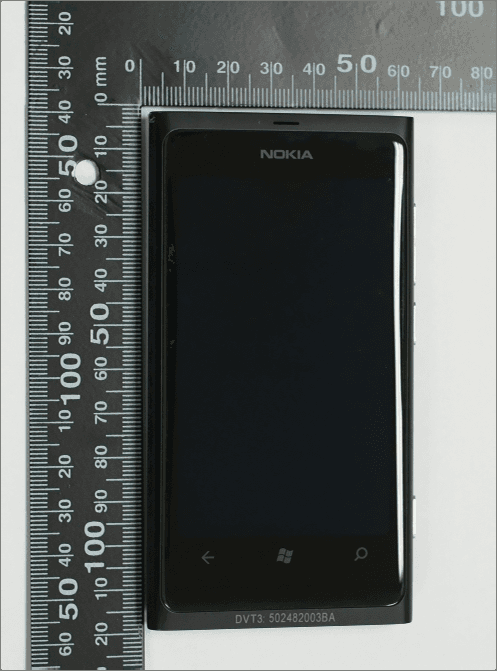
LJPA
Dec 20, 2011GSM/WCDMA cellular phone w/BT and WLAN
Equipment Class
DTS - Digital Transmission System
LJPRM-801
Oct 08, 2011GSM/WCDMA cellular phone w/BT and WLAN
Equipment Class
JBP - Part 15 Class B Computing Device Peripheral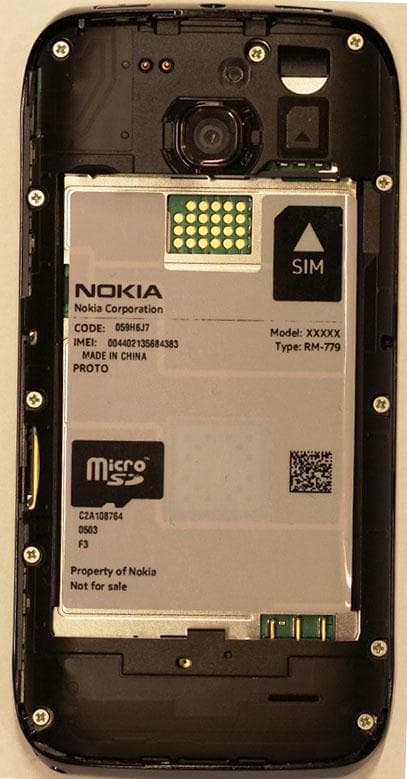
LJPRM-779
Sep 29, 2011GSM/WCDMA cellular phone w/BT, WLAN and NFC
Equipment Class
DTS - Digital Transmission System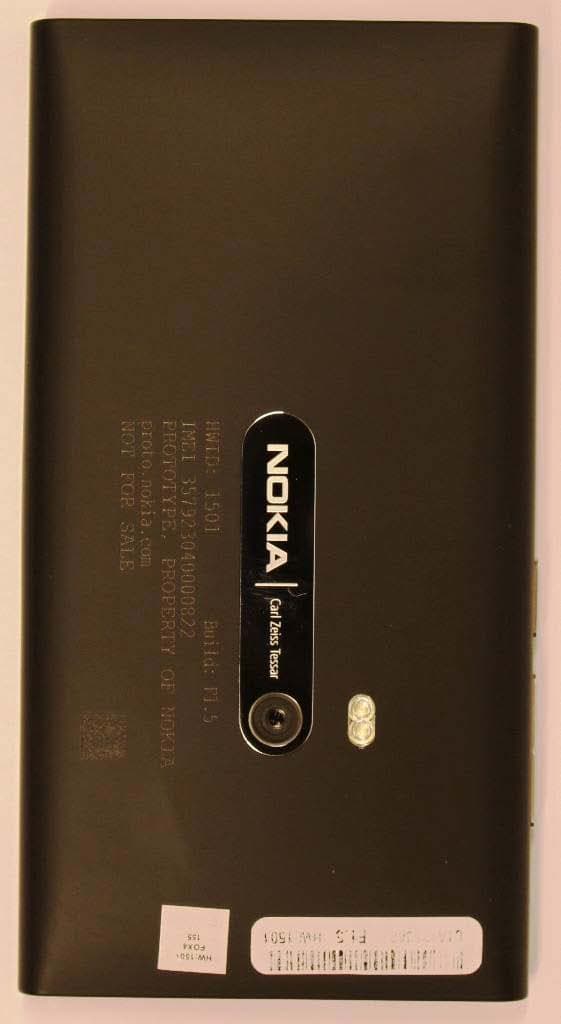
LJPK
Jul 20, 2011GSM/WCDMA cellular telephone with BT, WLAN, and NFC
Equipment Class
DTS - Digital Transmission System
LJPRM-701
Jul 20, 2011GSM/WCDMA cellular phone w/BT, WLAN, FMTx and NFC
Equipment Class
DXX - Part 15 Low Power Communication Device Transmitter