M3N-A2C931426RKES Transmitter
Continental Automotive Systems, Inc.
Click to zoom
Application Details
- Equipment Class
- DXT - Part 15 Low Power Transceiver, Rx Verified
- Date of Grant
- Dec 02, 2015
- Application Purpose
- Original Equipment
- Date of Application
- Dec 02, 2015
- Equipment Note
- RKES Transmitter
- Frequency Range
- 903.42500000 - 903.42500000
- Country
- United States
Documents & Files
Document Text
Text extracted from the exhibit documents filed with the FCC. Open a document above to read the original.
Users Manual
The device under test is manufactured by the grantee (Continental Corporation) and sold as an OEM product. Per 47 CFR 2.909, 2.927, 2.931, 2.1033, 15.15(b) etc..., the grantee must ensure the end-user has all applicable / appropriate operating instructions. When end-user instructions are required, as in the case of this product, the grantee must notify the OEM to notify the end- user. Continental Corporation will supply this document to the reseller/distributor dictating what must be included in the end user’s manual for the commercial product. INFORMATION TO BE INCLUDED IN THE END USER'S MANUAL The following information (in blue) must be included in the end product user’s manual to ensure continued FCC and Industry Canada regulatory compliance. The ID numbers must be included in the manual if the device label is not readily accessible to the end user. The compliance paragraphs below must be included in the user's manual. ****************************************************************************** FCC ID:M3N-A2C931426, IC:7812A- A2C931426 This device complies with Part 15 of the FCC Rules and with Industry Canada license-exempt RSS standard(s). Operation is subject to the following two conditions: (1) This device may not cause harmful interference, and (2) This device must accept any interference received, including interference that may cause undesired operation. Le présent appareil est conforme aux CNR d'Industrie Canada applicables aux appareils radio exempts de licence. L'exploitation est autorisée aux deux conditions suivantes: (1) l'appareil ne doit pas produire de brouillage, et (2) l'utilisateur de l'appareil doit accepter tout brouillage radioélectrique subi, même si le brouillage est susceptible d'en compromettre le fonctionnement. Note: Changes or modifications not expressively approved by the party responsible for compliance could void the user's authority to operate the equipment.The term “IC:” before the radio certification number only signifies that Industry Canada technical specifications were met. ******************************************************************************
Cover Letter(s)
The University of Michigan Radiation Laboratory 3228 EECS Building Ann Arbor, Michigan 48109-2122 USA Tel: (734) 483-4211 Fax: (734) 647-2106 e-mail: [email protected] Attn.:Certification and Engineering Bureau, Industry Canada 3701 Carling Avenue, Bldg. 94 Ottawa, Ontario K2H 8S2 Re: Certification for Continental Automotive Systems US Inc. A2C931426 IC: 7812A-A2C931426 Please find enclosed application materials for certification of Continental Automotive Systems US Inc. A2C931426. We tested it and found it to comply with IC RSS-210/GENe. Current Variants: There is only a single variant of the EUT, as tested. If there are any questions regarding the application or testing performed, please contact us at the above address or call (734) 483-4211, or e-mail [email protected]. Sincerely, Valdis V. Liepa The University of Michigan Radiation Laboratory 11 The University of Michigan Radiation Laboratory 3228 EECS Building Ann Arbor, Michigan 48109-2122 USA Tel: (734) 483-4211 Fax: (734) 647-2106 e-mail: [email protected] Attn.:Federal Communications Commission Equipment Approval Services P.O. Box 358315 Pittsburgh, PA 15251-5315 Re: Certification for Continental Automotive Systems US Inc. A2C931426 FCC ID: M3N-A2C931426 Please find enclosed application materials for certification of Continental Automotive Systems US Inc. A2C931426. We tested it and found it to comply with CFR Title 47, Part 15.249. Current Variants: There is only a single variant of the EUT, as tested. If there are any questions regarding the application or testing performed, please contact us at the above address or call (734) 483-4211, or e-mail [email protected]. Sincerely, Valdis V. Liepa The University of Michigan Radiation Laboratory 10
Cover Letter(s)
The University of Michigan Radiation Laboratory 3228 EECS Building Ann Arbor, Michigan 48109-2122 USA Tel: (734) 483-4211 Fax: (734) 647-2106 e-mail: [email protected] Re: Certification for Continental Automotive Systems US Inc. FCC ID: M3N-A2C931426 IC: 7812A-A2C931426 REQUEST FOR CONFIDENTIALITY Pursuant to USA FCC 47 CFR 0.457(d) and 0.459 and Canada IC RSP-100, Section 10, Continental Automotive Systems US Inc.requests that a part of the subject application be held confidential. Continental Automotive Systems US Inc. has spent substantial effort in developing this product and it is one of the first of its kind in industry. Having the subject information easily available to ”competition” would negate the advantage they have achieved by developing this product. Not protecting the details of the design will result in financial hardship. Exhibit Conf. TypeRational Exh 04 - Block DiagramPermanentIncludes proprietary internal oscillator frequency information. Exh 05 - SchematicsPermanentIncludes proprietary design information Exh 10 - BOM + PlacementPermanentIncludes proprietary design information Permanent Confidentiality:Continental Automotive Systems US Inc. requests that any exhibits listed above as permanently confidential be permanently withheld from public review. Short-Term Confidentiality (FCC Only):Continental Automotive Systems US Inc. requests that any exhibits selected above as short term confidential be withheld from public view for a period of days (noted above) from the date of the Grant of Equipment Authorization and prior to marketing. If there are any questions regarding the application or testing performed, please contact us at the above address or call (734) 483-4211, or e-mail [email protected]. Sincerely, Valdis V. Liepa The University of Michigan Radiation Laboratory 9
Operational Description
The 2017 PEPS bidirectional system consists of an RF transceiver integrated into the key which includes an RF receiver and transmitter. The antenna is common between the RF transmitter and the RF receiver. The RF transmitter is used to transmit information to the receiver in the vehicle for locking, unlocking, opening the trunk, starting the vehicle, and Panic function. The RF receiver in the bidirectional key is used to receive the engine status information from the vehicle. RF messages can be transmitted by one of two means. The keypad on the key can be used for locking, unlocking, unlocking the trunk, panic, and remote start. Lifting the door handle or pushing the start button in the vehicle will generate an LF field, which the key will respond to with a RF transmission to unlock or start the vehicle.
Test Report
Issue Date: November 30, 2015Prepared For: Continental Automotive Systems US Inc.Report No.: 417124-151130-01 The University of Michigan Radiation Laboratory 3228 EECS Building Ann Arbor, Michigan 48109-2122 USA Tel: (734) 483-4211 Fax: (734) 647-2106 e-mail: [email protected] Testing of Electromagnetic Emissions per USA: CFR Title 47, Part 15.249 Canada: IC RSS-210/GENe are herein reported for Continental Automotive Systems US Inc. A2C931426 Test Report No.: 417124-151130-01 Copyright c ©2015 Applicant/Provider: Continental Automotive Systems US Inc. 2400 Executive Hills Drive, Auburn Hills Michigan 48326-2980 USA Phone: +1 (248) 764-6522, Fax: +1 (248) 764-7281 Contact Person: David Reimus; [email protected] Measured by: Report Approved by: Dr. Valdis V. LiepaDr. Valdis V. Liepa Report by:Report Date of Issue:November 30, 2015 Dr. Valdis V. Liepa Results of testing completed on (or before) October 28, 2015 are as follows. Emissions:The transmitter intentional emissionsCOMPLYwith the regulatory limit(s) by no less than 1.4 dB. Transmit chain spurious or harmonic emissionsCOMPLYby no less than 6.1 dB. Radiated spurious emissions asso- ciated with the receive chain of this deviceCOMPLYthe regulatory limit(s) by no less than 7.8 dB. Unintentional spurious emissions from digital circuitryCOMPLYwith radiated emission limit(s) by at least 20 dB. The University of Michigan Radiation Laboratory, 3228 EECS Building, Ann Arbor, Michigan 48109-2122 USAPage 1 of 17 Issue Date: November 30, 2015Prepared For: Continental Automotive Systems US Inc.Report No.: 417124-151130-01 Contents 1 Test Specifications, General Procedures, and Location4 1.1 Test Specification and General Procedures . . . . . . . . . . . . . . . . . . . . . . . . . . . . . . . . . .4 1.2 Test Location and Equipment Used . . . . . . . . . . . . . . . . . . . . . . . . . . . . . . . . . . . . . .5 2 Configuration and Identification of the Equipment Under Test6 2.1 Description and Declarations . . . . . . . . . . . . . . . . . . . . . . . . . . . . . . . . . . . . . . . . .6 2.1.1EUT Configuration . . . . . . . . . . . . . . . . . . . . . . . . . . . . . . . . . . . . . . . . . . .7 2.1.2Modes of Operation . . . . . . . . . . . . . . . . . . . . . . . . . . . . . . . . . . . . . . . . . .7 2.1.3Variants . . . . . . . . . . . . . . . . . . . . . . . . . . . . . . . . . . . . . . . . . . . . . . . . .7 2.1.4Test Samples . . . . . . . . . . . . . . . . . . . . . . . . . . . . . . . . . . . . . . . . . . . . . .7 2.1.5Functional Exerciser . . . . . . . . . . . . . . . . . . . . . . . . . . . . . . . . . . . . . . . . . .7 2.1.6Modifications Made . . . . . . . . . . . . . . . . . . . . . . . . . . . . . . . . . . . . . . . . . .7 2.1.7Production Intent . . . . . . . . . . . . . . . . . . . . . . . . . . . . . . . . . . . . . . . . . . .7 2.1.8Declared Exemptions and Additional Product Notes . . . . . . . . . . . . . . . . . . . . . . . .7 3 Emissions8 3.1 General Test Procedures . . . . . . . . . . . . . . . . . . . . . . . . . . . . . . . . . . . . . . . . . . . .8 3.1.1Radiated Test Setup and Procedures . . . . . . . . . . . . . . . . . . . . . . . . . . . . . . . . .8 3.1.2Conducted Emissions Test Setup and Procedures . . . . . . . . . . . . . . . . . . . . . . . . . . 10 3.1.3Power Supply Variation . . . . . . . . . . . . . . . . . . . . . . . . . . . . . . . . . . . . . . . . 10 3.2 Intentional Emissions . . . . . . . . . . . . . . . . . . . . . . . . . . . . . . . . . . . . . . . . . . . . . . 11 3.2.1Fundamental Emission Pulsed Operation . . . . . . . . . . . . . . . . . . . . . . . . . . . . . . 11 3.2.2Fundamental Emission Bandwidth . . . . . . . . . . . . . . . . . . . . . . . . . . . . . . . . . . 13 3.2.3Fundamental Emission Field Strength . . . . . . . . . . . . . . . . . . . . . . . . . . . . . . . . 14 3.3 Unintentional Emissions . . . . . . . . . . . . . . . . . . . . . . . . . . . . . . . . . . . . . . . . . . . . 15 3.3.1Transmit Chain Spurious Emissions . . . . . . . . . . . . . . . . . . . . . . . . . . . . . . . . . 15 3.3.2Radiated Receiver Spurious . . . . . . . . . . . . . . . . . . . . . . . . . . . . . . . . . . . . . . 16 3.3.3Radiated Digital Spurious . . . . . . . . . . . . . . . . . . . . . . . . . . . . . . . . . . . . . . . 17 The University of Michigan Radiation Laboratory, 3228 EECS Building, Ann Arbor, Michigan 48109-2122 USAPage 2 of 17 Issue Date: November 30, 2015Prepared For: Continental Automotive Systems US Inc.Report No.: 417124-151130-01 List of Tables 1The University of Michigan Radiation Laboratory Equipment List . . . . . . . . . . . . . . . . . . . .5 2EUT Declarations. . . . . . . . . . . . . . . . . . . . . . . . . . . . . . . . . . . . . . . . . . . . . . . .6 3Fundamental Emission Pulsed Operation. . . . . . . . . . . . . . . . . . . . . . . . . . . . . . . . . . . 11 4Fundamental Emission Bandwidth.. . . . . . . . . . . . . . . . . . . . . . . . . . . . . . . . . . . . . 13 5Fundamental Emission Field Strength.. . . . . . . . . . . . . . . . . . . . . . . . . . . . . . . . . . . 14 6Transmit Chain Spurious Emissions. . . . . . . . . . . . . . . . . . . . . . . . . . . . . . . . . . . . . . 15 7Receiver Chain Spurious Emissions≥30 MHz.. . . . . . . . . . . . . . . . . . . . . . . . . . . . . . 16 List of Figures 1Photos of EUT.. . . . . . . . . . . . . . . . . . . . . . . . . . . . . . . . . . . . . . . . . . . . . . . .6 2EUT Test Configuration Diagram. . . . . . . . . . . . . . . . . . . . . . . . . . . . . . . . . . . . . . .7 3Radiated Emissions Diagram of the EUT. . . . . . . . . . . . . . . . . . . . . . . . . . . . . . . . . . .8 4Radiated Emissions Test Setup Photograph(s). . . . . . . . . . . . . . . . . . . . . . . . . . . . . . . .9 5Fundamental Emission Pulsed Operation. . . . . . . . . . . . . . . . . . . . . . . . . . . . . . . . . . . 12 6Fundamental Emission Bandwidth.. . . . . . . . . . . . . . . . . . . . . . . . . . . . . . . . . . . . . 13 The…
Text truncated - open the document above for the full version.
Contact Information
Applicant
Mark Kenney
Technical Contact
University of Michigan LabValdis Liepa
[email protected]7344834211
3228 EECS Bldg. · Ann Arbor, Michigan · United States
Test Firm
University of MichiganValdis Liepa
Technical Specifications
| # | Rule Parts | Frequency Range | Power Output |
|---|---|---|---|
| 2 | 15C | 903.425 MHz - 903.425 MHz | - |
Other Applications from Continental Automotive Systems, Inc.
M3NA2C786860
Dec 03, 2023LF Transmitter
Equipment Class
DCD - Part 15 Low Power Transmitter Below 1705 kHz
M3NRHT433
Jul 04, 2022KeyFob
Equipment Class
DSC - Part 15 Security/Remote Control Transmitter
M3NRCKF2B
Apr 25, 2021RCKF2B
Equipment Class
DSC - Part 15 Security/Remote Control Transmitter
M3NWXRFHM1
Jan 28, 2021FCA WL/WS PASE System MY 2021
Equipment Class
DCD - Part 15 Low Power Transmitter Below 1705 kHz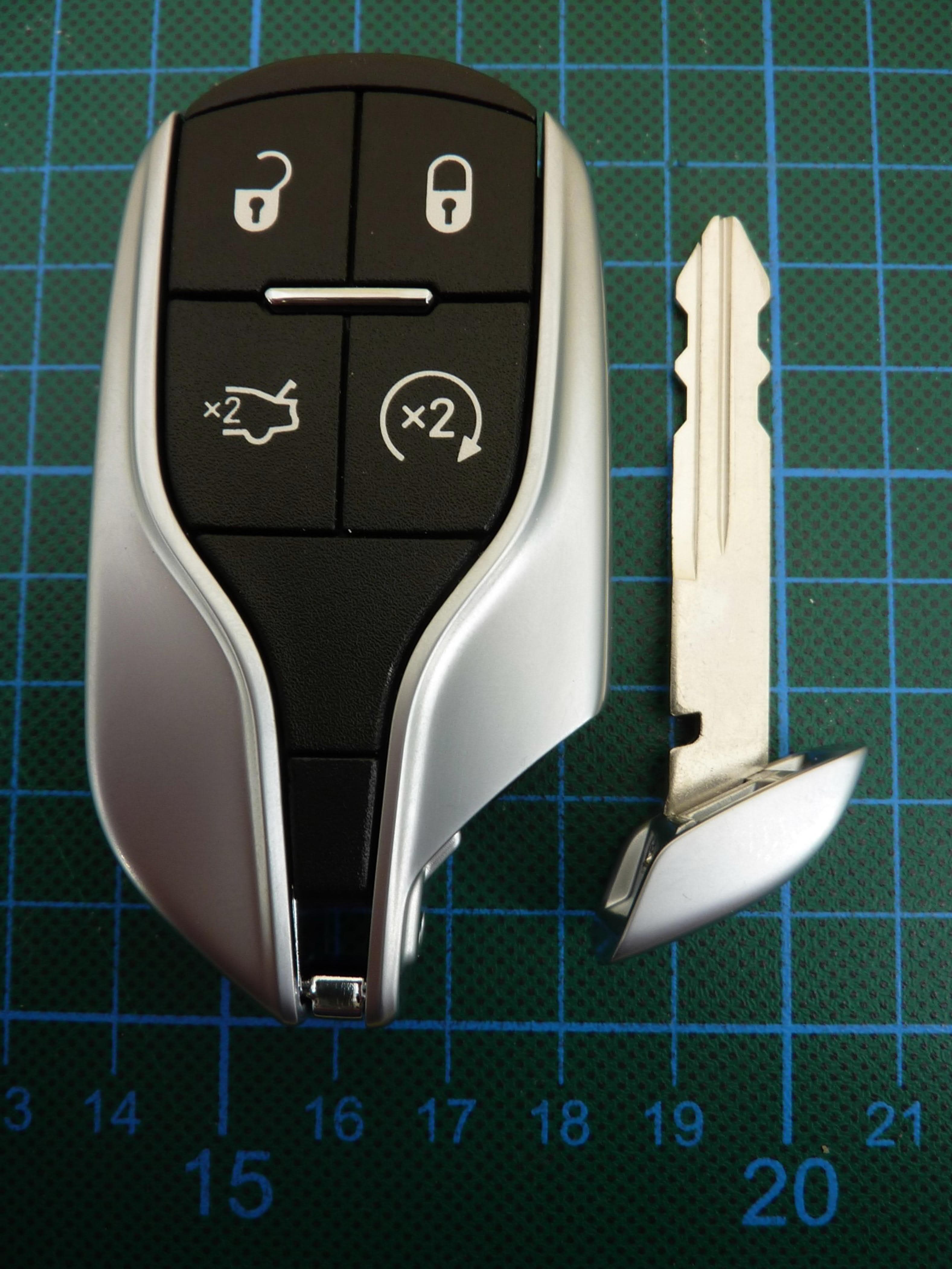
M3NMAS433
Jan 20, 2021Car Key
Equipment Class
DSR - Part 15 Remote Control/Security Device Transceiver