M9H95X4AGSM 850/1900 Mobile Phone
Sagem Wireless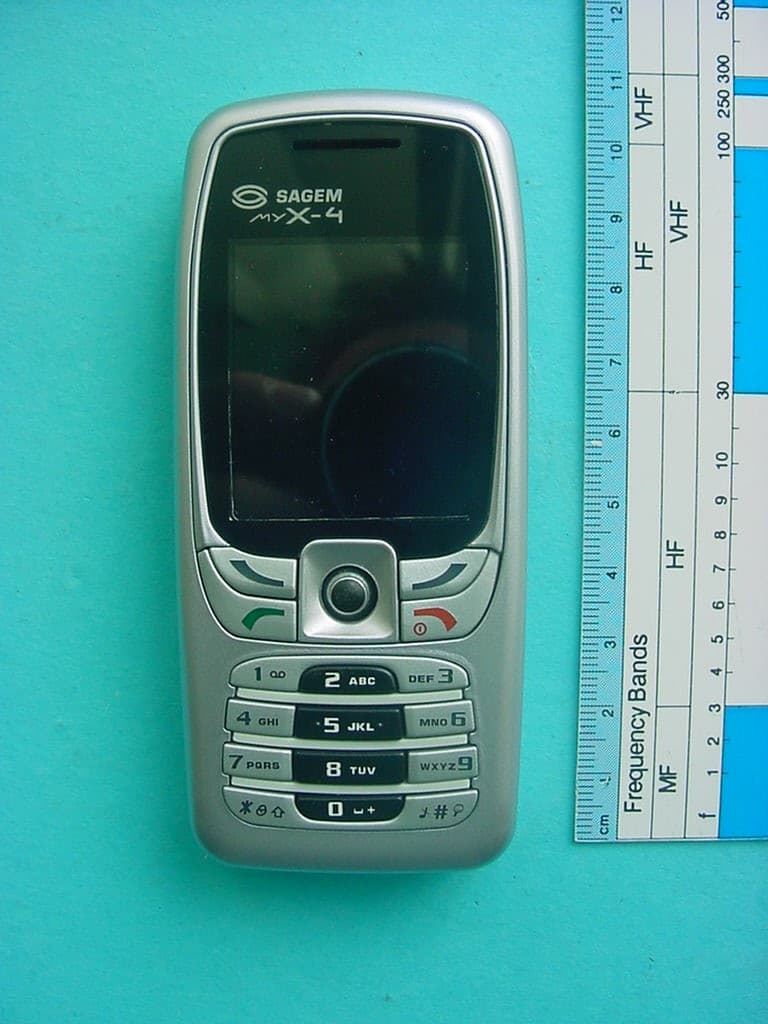
Click to zoom
Application Details
- Equipment Class
- PCE - PCS Licensed Transmitter held to ear
- Date of Grant
- Dec 21, 2004
- Application Purpose
- Original Equipment
- Date of Application
- Dec 21, 2004
- Equipment Note
- GSM 850/1900 Mobile Phone
- Frequency Range
- 824.20000000 - 848.80000000
- Company
- Sagem Wireless
- Country
- France
Documents & Files
Document Text
Text extracted from the exhibit documents filed with the FCC. Open a document above to read the original.
Users Manual
Mobile Phones Division www.sagem.com/mobiles Le Ponant de Paris - 27, rue Leblanc - 75512 PARIS CEDEX 15 - FRANCE SAGEM SA - Société anonyme à directoire et conseil de surveillance capital : 35 500 000 € - 562 082 909 RCS PARIS *251773922* SAGEM SA ENGLISH 251773922_myX-4_LU_en 1-2 20/10/04, 15:59:24 You have just purchased a SAGEM phone, we congratulate you; it is recommended that you read this handbook carefully in order to use your phone efficiently and in the best conditions. Your phone can be used internationally in the various networks (GSM 850 MHz and PCS 1900 MHz) depending on the roaming arrangements with your operator. We remind you that this phone is approved to meet European standards. WARNING Depending on the model, network configuration and associated subscription cards, certain functions may not be available. Ensure that your SIM card is a 3 V SIM type that is compatible with your phone. Inserting an incompatible card will be indicated by a message when your phone is switched on. Contact your operator. Your phone is identified by its IMEI number. Write this number down, and do not keep it with your phone, because you may be asked for it in the event of your phone being stolen, in order to prevent it from being used, even with a different SIM card. In order to display the IMEI on your phone's screen, type: *#06#. SAGEM is a trademark of SAGEM SA. AT is a registered trademark of Hayes Microcomputer Products Inc. Hayes is a registered trademark of Hayes Microcomputer Products Inc. T9 is protected by one or more of the following US patents: 5,818,437, 5,953,541, 5,187,480, 5,945,928, 6,011,554 and other patents are being applied for worldwide. Java and all Java based trademarks and logos are trademarks or registered trademarks of Sun Microsystems, Inc. in the U.S. and other countries. The WAP navigator and some message softwares (i-mode) are under licence Openwave. The WAP navigator and the softwares included are the exclusive property of Openwave. For this reason, it is forbidden to modify, translate, disassemble or even decompile all or part of these softwares. © 2003 GAMELOFT - All rights reserved - GAMELOFT is a registered trademark of GAMELOFT S.A. - All rights reserved. Wellphone™ and SmartCom™ are registered trademarks owned by SmartCom SARL France. 251773922_myX-4a_lu_2e-3ecouv_en.fm Page 1 Jeudi, 4. novembre 2004 10:31 10 Weight: 95 g Size: 104 x 46.5 x 17.8 mm Original battery: Lithium ion 780 mAh Battery life calls/standby: up to 4 h 30 mn/340 h (see page 24 how to increase the efficiency of your phone) Multimedia objects supported: Audio formats: iMelody, Midi, wave Graphic formats: wbmp, bmp, png, gif, animated gif, jpeg, .3gp Size of memory available for messages: 100 SMS Size of memory available for the phonenook and the multimedia objects: 3.7 MB Maximum size of each message: SMS < 160 characters MMS < 100 Kb for outgoing, 100 Kb for incoming messages (depends on the phone configuration and on the operator reservations) Using temperature: from - 10°C to + 55°C 251773922_myX-4a_lu_2e-3ecouv_en.fm Page 2 Jeudi, 4. novembre 2004 10:31 10 1 Conformance Document SAGEM SA declare under its sole responsibility that the product Dual Band GSM 850/PCS 1900 Type E2004 conforms to the requirements of the following EEC directives: EEC Directive 1999/5/CE SafetyEN 60950 EMCEN 301 489-1 EN 301 489-7 This phone is marked CE in accordance with RTTE directive with CEM EN301489-7 norme implementation, suited to the 850/1900 work frequencies. It is not intended to be used in Europe. Low voltage directive 73/23/CEE Network3GPP TS 51.010-1 v 5.4.0 Requirements GT01 v 4.7.0 TBR 19 Edition 5 TBR 20 Edition 3 TBR 31 Edition 2 TBR 32 Edition 2 EN 301 419-1 EN 301511 FCC Conformance Document FCC Part 24 NetworkNAPRD03.ver 2.12.2 HealthIEEE P1528/D1.2 251773922_myX-4a_lu_en.book Page 1 Jeudi, 4. novembre 2004 10:34 10 2 Safety Information for Wireless handled phones Use of your phone is subject to safety rules designed to protect the user and his or her environment. Exposure to Radio Frequency Signals - Your wireless handheld portable phone is a low power radio transmitter and receiver. When it is ON, it receives and also sends out frequency (RF) signals. - In August, 1996, the Federal Communications Commissions (FCC) adopted RF exposure guidelines with safety levels for handheld wireless phones. Those guidelines are consistent with the safety standards previously set by both U.S. and international standards bodies: ANSI C95.1 (1992) (*) NCPR Report 86 (1986) (*) ICNIRP (1996)*. - Those standards were based on comprehensive and periodic evaluations of the relevant scientific literature. For example, over 120 scientists, engineers, and physicians from universities, government health agencies, and industry reviewed the available body of research to develop the ANSI Standard (C95.1). - The design of your phone complies with the FCC guidelines (and those standards). - For body worn operation, this phone has been tested and meets FCC RF exposure guidelines when used with an accessory that contains no metal and that positions the handset a minimum of 1.5 cm from the body. Use of other accessories may not ensure compliance with FCC RF exposure guidelines. Phone Operation - Normal position: hold the phone as you would any other phone with the upper zone (back of the LCD display) pointed up and over your shoulder. - Tips on efficient operation: for your phone to operate most efficiently: do not touch cover unnecessarily the top part of the phone with your hand. This would cover the integrated antenna and affect call quality and may cause the phone to operate at a higher power level than otherwise needed. (*) American National Standards Institute; National Council on Radiation Protection and Measurements; International Commission and Non-Ionizing Radiation Protection. 251773922_myX-4a_lu_en.book Page 2 Jeudi, 4. novembre 2004 10:34 10 3 Safety Information for Wireless handled phones Driving - Check…
Text truncated - open the document above for the full version.
Users Manual
ADDENDA myX-4a You have just purchased a SAGEM phone, we congratulate you; it is recommended that you read this handbook carefully in order to use your phone efficiently and in the best conditions. Your phone can be used internationally in the various networks (GSM 850 MHz and PCS 1900 MHz) depending on the roaming arrangements with your operator. We remind you that this phone is approved to meet European standards. WARNING Depending on the model, network configuration and associated subscription cards, certain functions may not be available. Ensure that your SIM card is a 3 V SIM type that is compatible with your phone. Inserting an incompatible card will be indicated by a message when your phone is switched on. Contact your operator. Your phone is identified by its IMEI number. Write this number down, and do not keep it with your phone, because you may be asked for it in the event of your phone being stolen, in order to prevent it from being used, even with a different SIM card. In order to display the IMEI on your phone's screen, type: *#06#. SAGEM is a trademark of SAGEM SA. AT is a registered trademark of Hayes Microcomputer Products Inc. Hayes is a registered trademark of Hayes Microcomputer Products Inc. T9 is protected by one or more of the following US patents: 5,818,437, 5,953,541, 5,187,480, 5,945,928, 6,011,554 and other patents are being applied for worldwide. Java and all Java based trademarks and logos are trademarks or registered trademarks of Sun Microsystems, Inc. in the U.S. and other countries. The WAP navigator and some message softwares (i-mode) are under licence Openwave. The WAP navigator and the softwares included are the exclusive property of Openwave. For this reason, it is forbidden to modify, translate, disassemble or even decompile all or part of these softwares. © 2003 GAMELOFT - All rights reserved - GAMELOFT is a registered trademark of GAMELOFT S.A. - All rights reserved. Wellphone™ and SmartCom™ are registered trademarks owned by SmartCom SARL France. 281818015_Addenda FCC_myX-4a_En.fm Page 1 Lundi, 6. décembre 2004 4:38 16 Conformance Document SAGEM SA declare under its sole responsibility that the product Dual Band GSM 850/PCS 1900 Type E2004 conforms to the requirements of the following EEC directives: EEC Directive 1999/5/CE SafetyEN 60950 EMCEN 301 489-1 EN 301 489-7 This phone is marked CE in accordance with RTTE directive with CEM EN301489-7 norme implementation, suited to the 850/1900 work frequencies. It is not intended to be used in Europe. Low voltage directive 73/23/CEE Network3GPP TS 51.010-1 v 5.4.0 Requirements GT01 v 4.7.0 TBR 19 Edition 5 TBR 20 Edition 3 TBR 31 Edition 2 TBR 32 Edition 2 EN 301 419-1 EN 301511 FCC Conformance Document FCC Part 24 NetworkNAPRD03.ver 2.12.2 HealthIEEE P1528/D1.2 281818015_Addenda FCC_myX-4a_En.fm Page 2 Lundi, 6. décembre 2004 4:38 16 Safety Information for Wireless handled phones Use of your phone is subject to safety rules designed to protect the user and his or her environment. Exposure to Radio Frequency Signals - Your wireless handheld portable phone is a low power radio transmitter and receiver. When it is ON, it receives and also sends out frequency (RF) signals. - In August, 1996, the Federal Communications Commissions (FCC) adopted RF exposure guidelines with safety levels for handheld wireless phones. Those guidelines are consistent with the safety standards previously set by both U.S. and international standards bodies: ANSI C95.1 (1992) (*) NCPR Report 86 (1986) (*) ICNIRP (1996)*. - Those standards were based on comprehensive and periodic evaluations of the relevant scientific literature. For example, over 120 scientists, engineers, and physicians from universities, government health agencies, and industry reviewed the available body of research to develop the ANSI Standard (C95.1). - The design of your phone complies with the FCC guidelines (and those standards). - For body worn operation, this phone has been tested and meets FCC RF exposure guidelines when used with an accessory that contains no metal and that positions the handset a minimum of 1.5 cm from the body. Use of other accessories may not ensure compliance with FCC RF exposure guidelines. Phone Operation - Normal position: hold the phone as you would any other phone with the upper zone (back of the LCD display) pointed up and over your shoulder. (*) American National Standards Institute; National Council on Radiation Protection and Measurements; International Commission and Non-Ionizing Radiation Protection. 281818015_Addenda FCC_myX-4a_En.fm Page 3 Lundi, 6. décembre 2004 4:38 16 Safety Information for Wireless handled phones - Tips on efficient operation: for your phone to operate most efficiently: do not touch cover unnecessarily the top part of the phone with your hand. This would cover the integrated antenna and affect call quality and may cause the phone to operate at a higher power level than otherwise needed. Driving - Check the laws and regulations on the use of wireless phones in the areas where you drive. Always obey them. Also, if using your phone while driving while driving please: • Give full attention of driving, driving safely is your first responsibility • Use hands-free operation, if available • Pull off the road and park before making or answering a call if driving conditions so require. Electronic Devices - Most modern electronic equipment is shielded from RF signals. However, certain electronic equipment may not be shielded against the RF signals from your wireless phone. - Some phone accessories allow to reduce the radiation interferences of the phone. Please contact your distributor. Pacemakers The Health Industry Manufacturers Association recommends that a minimum separation of six (6”) inches be maintained between a handheld wireless phone and a pacemaker to avoid potential interference with the pacemaker. These recommendations are consistent with the independent research by and recommendations of Wireles…
Text truncated - open the document above for the full version.
External Photos
CETECOM ICT Services GmbH Annex to test report no.: 4-1220-23-05/04 Page 16 (23) Annex C: External Photos PHOTOGRAPHS OF THE EQUIPMENT Photograph no.: 1 CETECOM ICT Services GmbH Annex to test report no.: 4-1220-23-05/04 Page 17 (23) PHOTOGRAPHS OF THE EQUIPMENT Photograph no.: 2
ID Label/Location Info
Sagem SA Centre de Saint Christophe - DTM TELEPHONIE MOBILE MOBILE PHONES Date : 03/06/04 Document SAGEM SA Reproduction et divulgation interdites 13/26 2.1.3 Label Informations
Internal Photos
CETECOM ICT Services GmbH Annex to test report no.: 4-1220-23-05/04 Page 19 (23) Annex D: Internal Photos PHOTOGRAPHS OF THE EQUIPMENT Photograph no.: 4 CETECOM ICT Services GmbH Annex to test report no.: 4-1220-23-05/04 Page 20 (23) PHOTOGRAPHS OF THE EQUIPMENT Photograph no.: 5 CETECOM ICT Services GmbH Annex to test report no.: 4-1220-23-05/04 Page 21 (23) PHOTOGRAPHS OF THE EQUIPMENT Photograph no.: 6 CETECOM ICT Services GmbH Annex to test report no.: 4-1220-23-05/04 Page 22 (23) PHOTOGRAPHS OF THE EQUIPMENT Photograph no.: 7 CETECOM ICT Services GmbH Annex to test report no.: 4-1220-23-05/04 Page 23 (23) PHOTOGRAPHS OF THE EQUIPMENT Photograph no.: 8
RF Exposure Info
CETECOM ICT Services GmbH Untertuerkheimer Str. 6-10, 66117 Saarbruecken, Germany Phone: +49 (0) 681 598-0 Fax: -8475 SAR-Laboratory Phone: +49 (0) 681 598-8454 . As of 2004-11-05 Page 1 of 74 Accredited testing laboratory DAR registration number: TTI-P-G 081/94-D0 Federal Motor Transport Authority (KBA) DAR registration number: KBA-P 00070-97 Test report no. : 4-1220-23-03/04 Type identification : E2004a (myX-4a) Test specification : IEEE P1528/D1.2 FCC-ID : M9H95X4A Test specification : CETECOM ICT Services GmbH Test report no.: 4-1220-23-03/04 As of 2004-11-05 Page 2 of 74 Table of Contents 1General Information............................................................................................................................................................... 3 1.1Notes................................................................................................................................................................................ 3 1.1.1Statement of Compliance ....................................................................................................................................... 3 1.2Testing laboratory............................................................................................................................................................ 4 1.3Details of applicant.......................................................................................................................................................... 4 1.4Application details........................................................................................................................................................... 4 1.5Test item .......................................................................................................................................................................... 5 1.6Test specification(s) ........................................................................................................................................................ 6 1.6.1RF exposure limits ................................................................................................................................................. 6 2Technical test ......................................................................................................................................................................... 7 2.1Summary of test results ................................................................................................................................................... 7 2.2Test environment ............................................................................................................................................................. 7 2.3Measurement and test set-up ........................................................................................................................................... 7 2.4Measurement system ....................................................................................................................................................... 8 2.4.1System Description ................................................................................................................................................ 8 2.4.2Test environment ................................................................................................................................................... 9 2.4.3Probe description ................................................................................................................................................... 9 2.4.4Phantom description............................................................................................................................................. 10 2.4.5Device holder description .................................................................................................................................... 10 2.4.6Scanning procedure.............................................................................................................................................. 11 2.4.7Spatial Peak SAR Evaluation............................................................................................................................... 12 2.4.8Data Storage and Evaluation................................................................................................................................ 13 2.4.9Test equipment utilized ........................................................................................................................................ 15 2.4.10Tissue simulating liquids : dielectric properties................................................................................................... 16 2.4.11Tissue simulating liquids : parameters ................................................................................................................. 17 2.4.12Measurement uncertainty evaluation for SAR test .............................................................................................. 18 2.4.13Measurement uncertainty evaluation for system validation................................................................................. 19 2.4.14System validation................................................................................................................................................. 20 2.4.15Validation procedure............................................................................................................................................ 21 2.5Test results (Head and Body SAR)................................................................................................................................ 22 2.5.1Description of test procedures.............................................................................................................................. 23 2.6Test results (conducted power measurement)....................................…
Text truncated - open the document above for the full version.
RF Exposure Info
CETECOM ICT Services GmbH Untertuerkheimer Str. 6-10, 66117 Saarbruecken, Germany Phone: +49 (0) 681 598-0 Fax: -8475 SAR-Laboratory Phone: +49 (0) 681 598-8454 . As of 2004-11-05 Page 1 of 38 Accredited testing laboratory DAR registration number: TTI-P-G 166/98 Federal Motor Transport Authority (KBA) DAR registration number: KBA-P 00070-97 Appendix to test report 4-1220-23-03/04 Calibration data, Phantom certificate and detail information of the DASY4 System CETECOM ICT Services GmbH Calibration Data and Phantom Information to test report no.: 4-1220-23-03/04 As of 2004-11-05 Page 2 of 38 Table of Content 1 Calibration report “Probe ET3DV6” .................................................................................................................................... 3 2 Calibration report “900 MHz System validation dipole” .................................................................................................. 11 3 Calibration report “1900 MHz System validation dipole .................................................................................................. 21 4 Calibration certificate of Data Aquisition Unit (DAE) ...................................................................................................... 30 5 Certificate of “SAM Twin Phantom V4.0/V4.0C” ........................................................................................................... 31 6 Application Note System Performance Check ................................................................................................................... 33 2004-11-05 CETECOM ICT Services GmbH Calibration Data and Phantom Information to test report no.: 4-1220-23-03/04 As of 2004-11-05 Page 3 of 38 1 Calibration report “Probe ET3DV6” CETECOM ICT Services GmbH Calibration Data and Phantom Information to test report no.: 4-1220-23-03/04 As of 2004-11-05 Page 4 of 38 CETECOM ICT Services GmbH Calibration Data and Phantom Information to test report no.: 4-1220-23-03/04 As of 2004-11-05 Page 5 of 38 CETECOM ICT Services GmbH Calibration Data and Phantom Information to test report no.: 4-1220-23-03/04 As of 2004-11-05 Page 6 of 38 CETECOM ICT Services GmbH Calibration Data and Phantom Information to test report no.: 4-1220-23-03/04 As of 2004-11-05 Page 7 of 38 CETECOM ICT Services GmbH Calibration Data and Phantom Information to test report no.: 4-1220-23-03/04 As of 2004-11-05 Page 8 of 38 CETECOM ICT Services GmbH Calibration Data and Phantom Information to test report no.: 4-1220-23-03/04 As of 2004-11-05 Page 9 of 38 CETECOM ICT Services GmbH Calibration Data and Phantom Information to test report no.: 4-1220-23-03/04 As of 2004-11-05 Page 10 of 38 CETECOM ICT Services GmbH Calibration Data and Phantom Information to test report no.: 4-1220-23-03/04 As of 2004-11-05 Page 11 of 38 2 Calibration report “900 MHz System validation dipole” CETECOM ICT Services GmbH Calibration Data and Phantom Information to test report no.: 4-1220-23-03/04 As of 2004-11-05 Page 12 of 38 CETECOM ICT Services GmbH Calibration Data and Phantom Information to test report no.: 4-1220-23-03/04 As of 2004-11-05 Page 13 of 38 CETECOM ICT Services GmbH Calibration Data and Phantom Information to test report no.: 4-1220-23-03/04 As of 2004-11-05 Page 14 of 38 CETECOM ICT Services GmbH Calibration Data and Phantom Information to test report no.: 4-1220-23-03/04 As of 2004-11-05 Page 15 of 38 CETECOM ICT Services GmbH Calibration Data and Phantom Information to test report no.: 4-1220-23-03/04 As of 2004-11-05 Page 16 of 38 CETECOM ICT Services GmbH Calibration Data and Phantom Information to test report no.: 4-1220-23-03/04 As of 2004-11-05 Page 17 of 38 CETECOM ICT Services GmbH Calibration Data and Phantom Information to test report no.: 4-1220-23-03/04 As of 2004-11-05 Page 18 of 38 CETECOM ICT Services GmbH Calibration Data and Phantom Information to test report no.: 4-1220-23-03/04 As of 2004-11-05 Page 19 of 38 CETECOM ICT Services GmbH Calibration Data and Phantom Information to test report no.: 4-1220-23-03/04 As of 2004-11-05 Page 20 of 38 CETECOM ICT Services GmbH Calibration Data and Phantom Information to test report no.: 4-1220-23-03/04 As of 2004-11-05 Page 21 of 38 3 Calibration report “1900 MHz System validation dipole CETECOM ICT Services GmbH Calibration Data and Phantom Information to test report no.: 4-1220-23-03/04 As of 2004-11-05 Page 22 of 38 CETECOM ICT Services GmbH Calibration Data and Phantom Information to test report no.: 4-1220-23-03/04 As of 2004-11-05 Page 23 of 38 CETECOM ICT Services GmbH Calibration Data and Phantom Information to test report no.: 4-1220-23-03/04 As of 2004-11-05 Page 24 of 38 CETECOM ICT Services GmbH Calibration Data and Phantom Information to test report no.: 4-1220-23-03/04 As of 2004-11-05 Page 25 of 38 CETECOM ICT Services GmbH Calibration Data and Phantom Information to test report no.: 4-1220-23-03/04 As of 2004-11-05 Page 26 of 38 CETECOM ICT Services GmbH Calibration Data and Phantom Information to test report no.: 4-1220-23-03/04 As of 2004-11-05 Page 27 of 38 CETECOM ICT Services GmbH Calibration Data and Phantom Information to test report no.: 4-1220-23-03/04 As of 2004-11-05 Page 28 of 38 CETECOM ICT Services GmbH Calibration Data and Phantom Information to test report no.: 4-1220-23-03/04 As of 2004-11-05 Page 29 of 38 CETECOM ICT Services GmbH Calibration Data and Phantom Information to test report no.: 4-1220-23-03/04 As of 2004-11-05 Page 30 of 38 4 Calibration certificate of Data Aquisition Unit (DAE) CETECOM ICT Services GmbH Calibration Data and Phantom Information to test report no.: 4-1220-23-03/04 As of 2004-11-05 Page 31 of 38 5 Certificate of “SAM Twin Phantom V4.0/V4.0C” CETECOM ICT Services GmbH Calibration Data and Phantom Information to test report no.: 4-1220-23-03/04 As of 2004-11-05 Page 32 of 38 CETECOM ICT Services GmbH Calibration Data and Phantom Information to test report no.: 4-1220-23-03/04 As of 2004-11-05 Page 33 of 38 6 Appli…
Text truncated - open the document above for the full version.
Test Report
CETECOM ICT Services GmbH Radio Satellite Communication Untertürkheimer Straße 6-10 . D-66117 Saarbrücken Telefon: +49 (0)681 598-0 Telefax: - 9075 Test report No.:4-1220-23-05/04 This test report consists of 72 pages Page 1 (72) Recognized by the Federal Communications Commission Anechoic Chamber Registration No.: 90462 (FCC) Anechoic Chamber Registration No.: 3463 (IC) TCB ID: DE 0001 Accredited by the German Accreditation Council DAR–Registration Number TTI–P–G 081/94-D0 Independent ETSI compliance test house ETSI Test Report No.: 4-1220-23-05/04 Applicant: Sagem S.A. Type: E2004a Test Standards: FCC Part 22, 24 RSS132, 133 FCC ID: M9H95X4A IC: --- CETECOM ICT Services GmbH Test report No.: 4-1220-23-05/04 Date: 2004-12-08 Page 2 (72) Table of Contents 1 GENERAL INFORMATION................................................................................................... 3 1.1 N OTES................................................................................................................................... 3 1.2 T ESTING LABORATORY......................................................................................................... 3 1.3 D ETAILS OF APPLICANT........................................................................................................ 4 1.4 A PPLICATION DETAILS.......................................................................................................... 4 1.5 T EST ITEM............................................................................................................................. 5 1.6 T EST STANDARDS................................................................................................................. 6 2 STATEMENT OF COMPLIANCE........................................................................................... 7 2.1 S UMMARY OF MEASUREMENT RESULTS............................................................................... 7 2.1.1 PCS1900..................................................................................................................... 7 2.1.2 GSM 850..................................................................................................................... 7 3 MEASUREMENTS AND RESULTS...................................................................................... 8 3.1 PART PCS 1900 .................................................................................................................. 8 3.1.1 RF Power Output....................................................................................................... 8 3.1.2 Frequency Stability.................................................................................................. 12 3.1.3 Radiated Emissions................................................................................................ 15 3.1.4 Receiver Radiated Emissions............................................................................... 21 3.1.5 Conducted Spurious Emissions............................................................................ 24 3.1.6 Band Edge Compliance.......................................................................................... 28 3.1.7 Occupied Bandwidth............................................................................................... 30 3.2 PART GSM 850................................................................................................................. 37 3.2.1 RF Power Output..................................................................................................... 37 3.2.2 Frequency Stability.................................................................................................. 40 3.2.3 Radiated Emissions................................................................................................ 43 3.2.4 Receiver Radiated Emissions............................................................................... 49 3.2.5 Conducted Spurious Emissions............................................................................ 52 3.2.6 Band Edge Compliance.......................................................................................... 56 3.2.7 Occupied Bandwidth............................................................................................... 59 3.2.8 Mobile Emissions in the Base Frequency Range............................................... 66 4 TEST EQUIPMENT AND ANCILLARIES USED FOR TESTS....................................... 71 ANNEX A: PART 15 B TESTS ANNEX B: TEST SETUP PHOTOS ANNEX C: EXTERNAL PHOTOS ANNEX D: INTERNAL PHOTOS CETECOM ICT Services GmbH Test report No.: 4-1220-23-05/04 Date: 2004-12-08 Page 3 (72) 1 GENERAL INFORMATION 1.1 Notes The test results of this test report relate exclusively to the test item specified in 1.5. The CETECOM ICT Services GmbH does not assume responsibility for any conclusions an…
Text truncated - open the document above for the full version.
Contact Information
Applicant
Francois CHAMBON(GM)
Test Firm
Cetecom ICT Services GmbHRalf Hoehn
Technical Specifications
| # | Rule Parts | Frequency Range | Power Output | Emission | Tolerance |
|---|---|---|---|---|---|
| 2 | 22H | 824.2 MHz - 848.8 MHz | 851.00 mW | 300KGXW | 0.0197 ppm |
Other Applications from Sagem Wireless
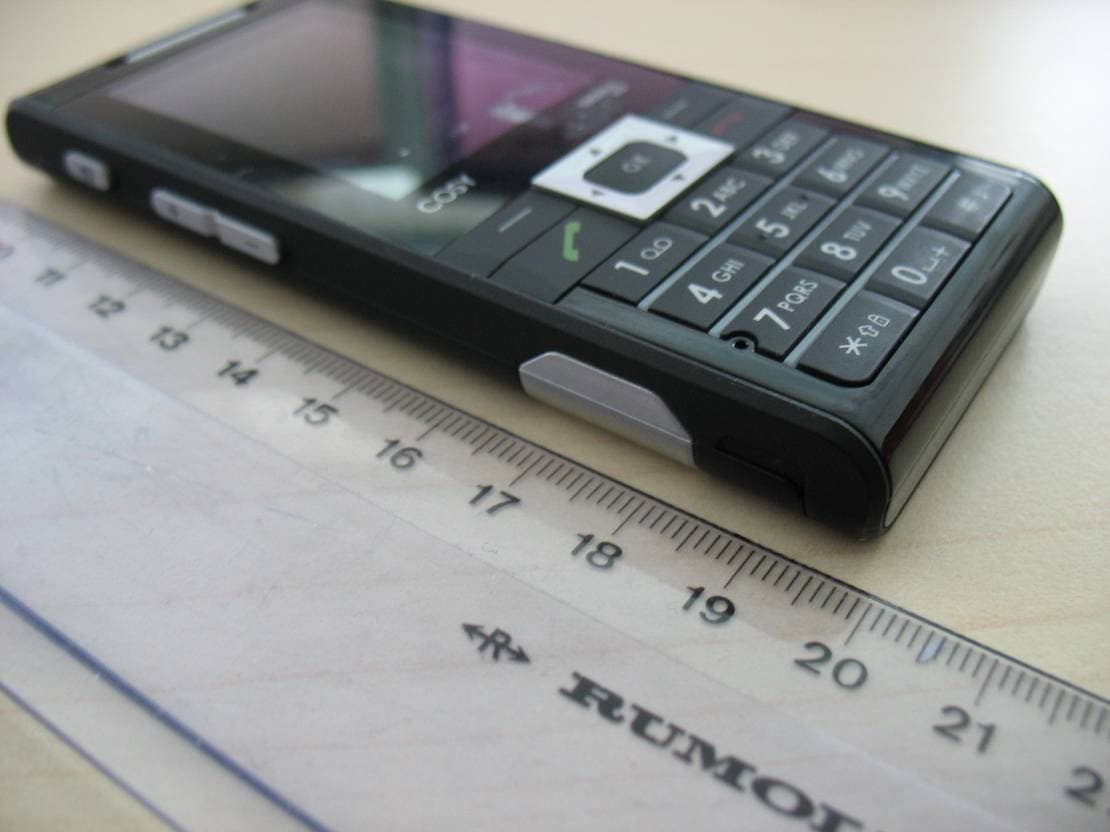
M9HCOSY3G
Oct 13, 2010COSY Phone 3G
Equipment Class
DXX - Part 15 Low Power Communication Device Transmitter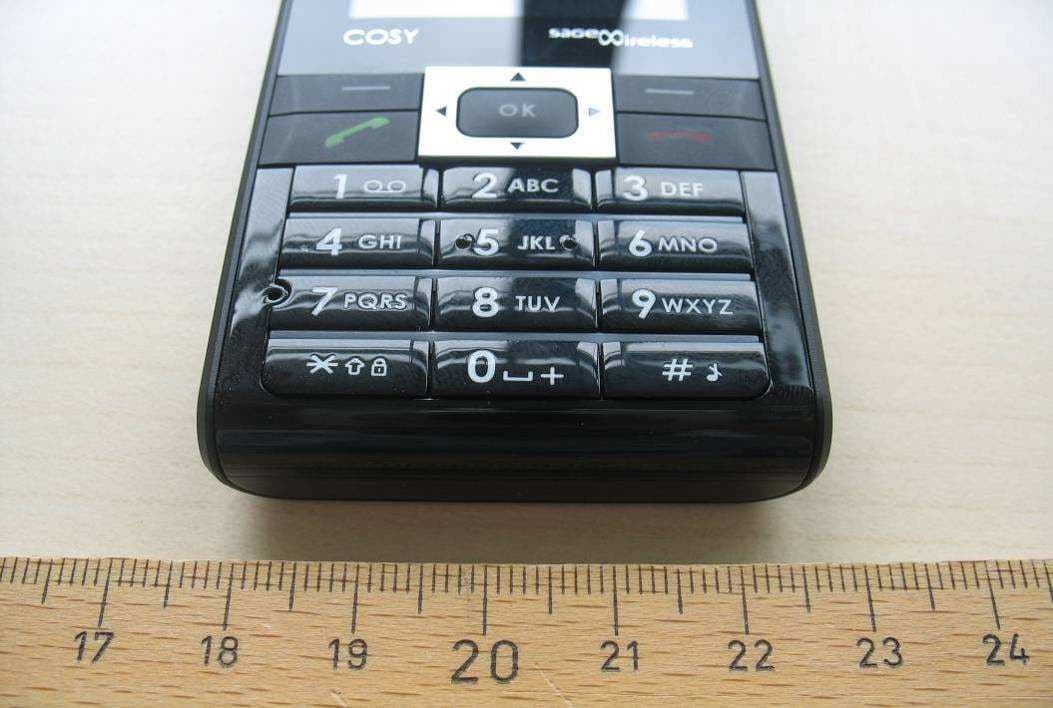
M9HCOSY2G
Sep 06, 2010COSY Phone 2G
Equipment Class
PCE - PCS Licensed Transmitter held to ear
M9HMOV001
Aug 18, 2010Handheld Top Up Terminal
Equipment Class
PCT - PCS Licensed Transmitter worn on body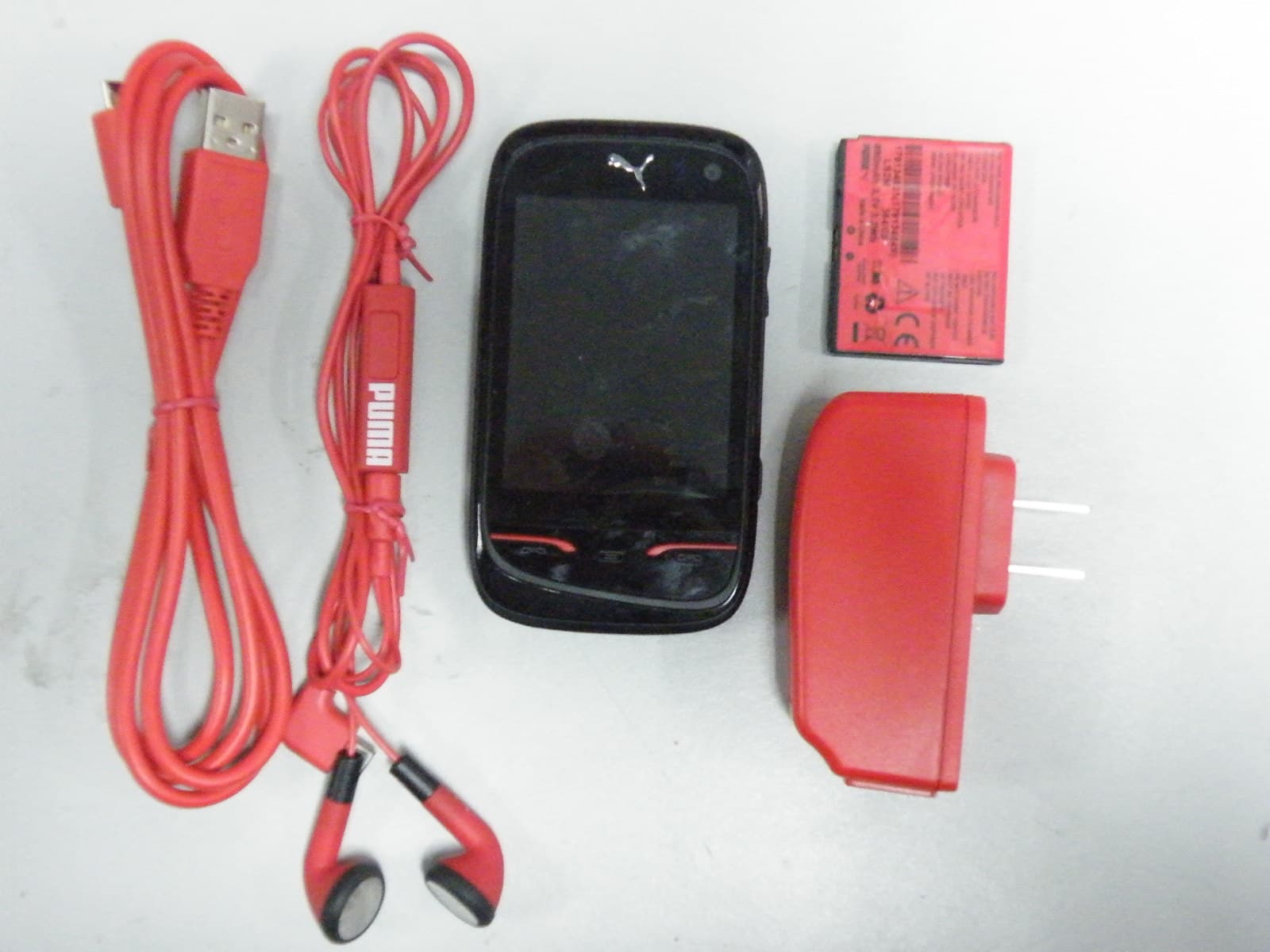
M9HPM1
Apr 26, 2010Mobile phone
Equipment Class
PCE - PCS Licensed Transmitter held to ear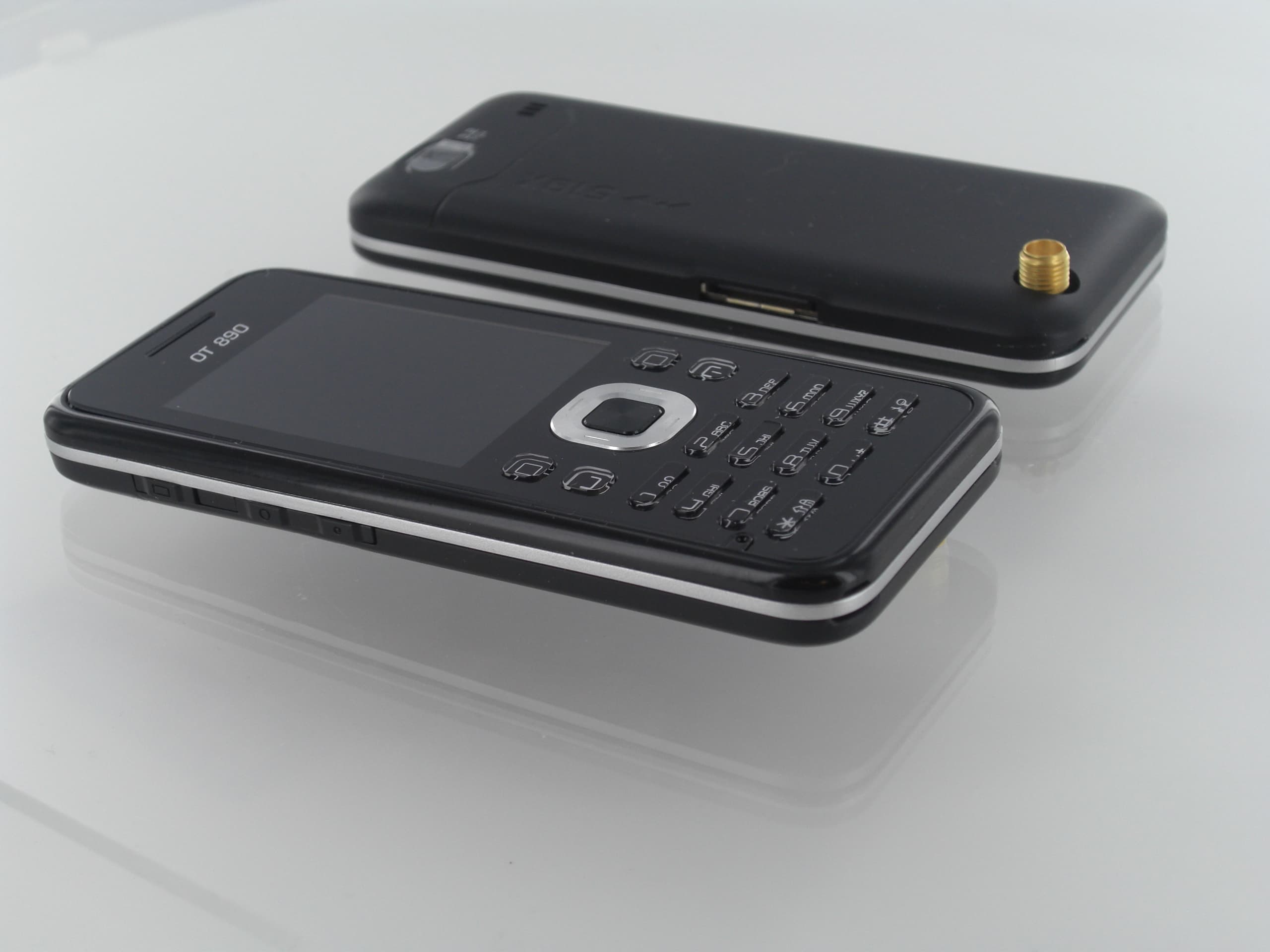
M9HOT8X0RF
Jan 31, 2010Network Measurement Device
Equipment Class
JBP - Part 15 Class B Computing Device Peripheral