N7NOEM3CDPD and AMPS wireless modem
Sierra Wireless, ULC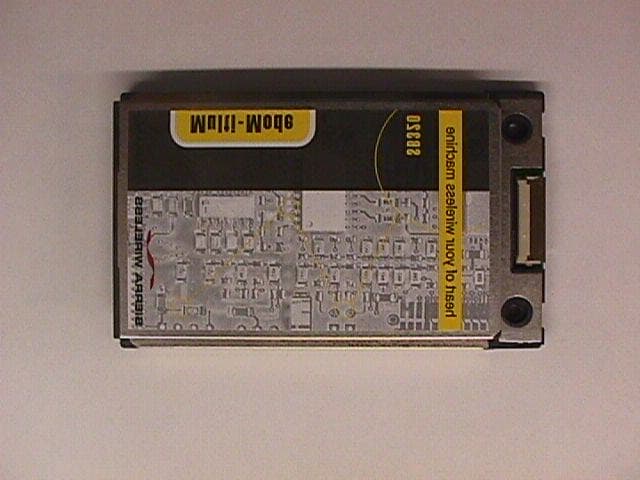
Click to zoom
Application Details
- Equipment Class
- TNB - Licensed Non-Broadcast Station Transmitter
- Date of Grant
- Mar 17, 1999
- Application Purpose
- Original Equipment
- Date of Application
- Dec 02, 1998
- Equipment Note
- CDPD and AMPS wireless modem
- Frequency Range
- 824.00000000 - 849.00000000
- Company
- Sierra Wireless, ULC
- Country
- Canada
Documents & Files
Document Text
Text extracted from the exhibit documents filed with the FCC. Open a document above to read the original.
Users Manual
Sierra Wireless SB300 Series OEM Modems User’s Guide 2110059 Rev B Preliminary December 1998 OEM Developer’s Toolkit Proprietary and Confidential User’s Guide 2110059 Rev B Preliminary98.12.10Page i Important Notice Because of the nature of wireless communications, transmission and reception of data can never be guaranteed. Data may be delayed, corrupted (i.e., have errors) or be totally lost. Although significant delays or losses of data are rare when wireless devices such as the Sierra Wireless modem are used in a normal manner with a well-constructed network, the Sierra Wireless modem should not be used in situations where failure to transmit or receive data could result in damage of any kind to the user or any other party, including but not limited to personal injury, death, or loss of property. Sierra Wireless, Inc., accepts no responsibility for damages of any kind resulting from delays or errors in data transmitted or received using the Sierra Wireless modem, or for failure of the Sierra Wireless modem to transmit or receive such data. Safety and Hazards Do not operate the Sierra Wireless modem in areas where blasting is in progress, where explosive atmospheres may be present, near medical equipment, near life support equipment, or any equipment which may be susceptible to any form of radio interference. In such areas, the Sierra Wireless modem MUST BE TURNED OFF. The Sierra Wireless modem can transmit signals that could interfere with this equipment. Do not operate the Sierra Wireless modem in any aircraft, whether the aircraft is on the ground or in flight. In aircraft, the Sierra Wireless modem MUST BE TURNED OFF. When operating, the Sierra Wireless modem can transmit signals that could interfere with various onboard systems. The driver or operator of any vehicle should not operate the Sierra Wireless modem while in control of a vehicle. Doing so will detract from the driver or operator’s control and operation of that vehicle. In some states and provinces, operating such communications devices while in control of a vehicle is an offence. Patents Portions of this product are covered by some or all of the following US patents: D367062, D372248, D372701, 5515013, 5617106, 5629960, 5682602, 5748449, and other patents pending. Copyright ©1998 Sierra Wireless, Inc. All rights reserved. Printed in Canada. No part of this publication may be reproduced, stored in a retrieval system, or transmitted in any form or by any means, without the prior permission of the publisher. The information in this manual is subject to change without notice and does not represent a commitment on the part of Sierra Wireless, Inc. Sierra Wireless, Inc. shall not be liable for incidental or consequential damages resulting from the furnishing, performance, or use of this manual. The Watcher ™ and WirelessExpert ™ software described in this manual are copyright 1998 Sierra Wireless, Inc. All rights reserved. Trademarks Watcher ™ and WirelessExpert ™ are trademarks of Sierra Wireless, Inc. Windows ® and Microsoft ® are registered trademarks of Microsoft Corporation. Hayes ™ is a trademark of Hayes Microcomputer Products, Inc. All other brand or product names, logos, trademarks, etc. mentioned in this manual are owned by their respective companies. OEM Developer’s Toolkit Proprietary and Confidential User’s Guide Page ii98.12.102110059 Rev B Preliminary Regulatory Information The equipment certifications appropriate to your device are marked on the device and the accompanying product specific information. Where appropriate, the use of the equipment is subject to the following conditions: CAUTION Unauthorized modifications or changes not expressly approved by Sierra Wireless, Inc. could void compliance with regulatory rules, and thereby your authority to use this equipment. !! WARNING (EMI) - United States FCC Information This equipment has been tested and found to comply with the Class B limits pursuant to Part 15 of the FCC Rules. These limits are designed to provide reasonable protection against harmful interference in an appropriate installation. This equipment generates, uses, and can radiate radio frequency energy and, if not installed and used in accordance with the instructions, may cause harmful interference to radio communication. However, there is no guarantee that interference will not occur in a particular installation. If this equipment does cause harmful interference to radio or television reception, which can be determined by turning the equipment off and on, the user is encouraged to try to correct the interference by one or more of the following measures: • Reorient or relocate the receiving antenna • Increase the separation between the equipment and receiver • Connect the equipment into an outlet on a circuit different from that to which the receiver is connected • Consult the dealer or an experienced radio/TV technician for help !! WARNING (EMI) – Canada This digital apparatus does not exceed the Class B limits for radio noise emissions from digital apparatus as set out in the interference causing equipment standard entitled 'Digital Apparatus', ICES-003 of the Department of Communications. Cet appareil numérique respecte les limites de bruits radioélectriques applicables aux appareils numériques de Classe B prescrites dans la norme sur le matériel brouilleur: 'Appareils Numériques', NHB-003 édictée par le ministre des Communications. RSA Licensee If you have purchased this product under a United States Government contract, it shall be subject to restrictions as set forth in subparagraph (c)(1)(ii) of Defense Federal Acquisitions Regulations (DFARs) Section 252.227-7013 for Department of Defense contracts, and as set forth in Federal Acquisitions Regulations (FARs) Section 52.227-19 for civilian agency contracts or any successor regulations. If further government regulations apply, it is your responsibility to ensure compliance with such regulations. OEM Developer’s Toolkit Proprietary and Conf…
Text truncated - open the document above for the full version.
Users Manual
Sierra Wireless SB300 Series OEM Modems User’s Guide 2110059 Rev B Preliminary December 1998 OEM Developer’s Toolkit Proprietary and Confidential User’s Guide 2110059 Rev B Preliminary98.12.10Page i Important Notice Because of the nature of wireless communications, transmission and reception of data can never be guaranteed. Data may be delayed, corrupted (i.e., have errors) or be totally lost. Although significant delays or losses of data are rare when wireless devices such as the Sierra Wireless modem are used in a normal manner with a well-constructed network, the Sierra Wireless modem should not be used in situations where failure to transmit or receive data could result in damage of any kind to the user or any other party, including but not limited to personal injury, death, or loss of property. Sierra Wireless, Inc., accepts no responsibility for damages of any kind resulting from delays or errors in data transmitted or received using the Sierra Wireless modem, or for failure of the Sierra Wireless modem to transmit or receive such data. Safety and Hazards Do not operate the Sierra Wireless modem in areas where blasting is in progress, where explosive atmospheres may be present, near medical equipment, near life support equipment, or any equipment which may be susceptible to any form of radio interference. In such areas, the Sierra Wireless modem MUST BE TURNED OFF. The Sierra Wireless modem can transmit signals that could interfere with this equipment. Do not operate the Sierra Wireless modem in any aircraft, whether the aircraft is on the ground or in flight. In aircraft, the Sierra Wireless modem MUST BE TURNED OFF. When operating, the Sierra Wireless modem can transmit signals that could interfere with various onboard systems. The driver or operator of any vehicle should not operate the Sierra Wireless modem while in control of a vehicle. Doing so will detract from the driver or operator’s control and operation of that vehicle. In some states and provinces, operating such communications devices while in control of a vehicle is an offence. Patents Portions of this product are covered by some or all of the following US patents: D367062, D372248, D372701, 5515013, 5617106, 5629960, 5682602, 5748449, and other patents pending. Copyright ©1998 Sierra Wireless, Inc. All rights reserved. Printed in Canada. No part of this publication may be reproduced, stored in a retrieval system, or transmitted in any form or by any means, without the prior permission of the publisher. The information in this manual is subject to change without notice and does not represent a commitment on the part of Sierra Wireless, Inc. Sierra Wireless, Inc. shall not be liable for incidental or consequential damages resulting from the furnishing, performance, or use of this manual. The Watcher ™ and WirelessExpert ™ software described in this manual are copyright 1998 Sierra Wireless, Inc. All rights reserved. Trademarks Watcher ™ and WirelessExpert ™ are trademarks of Sierra Wireless, Inc. Windows ® and Microsoft ® are registered trademarks of Microsoft Corporation. Hayes ™ is a trademark of Hayes Microcomputer Products, Inc. All other brand or product names, logos, trademarks, etc. mentioned in this manual are owned by their respective companies. OEM Developer’s Toolkit Proprietary and Confidential User’s Guide Page ii98.12.102110059 Rev B Preliminary Regulatory Information The equipment certifications appropriate to your device are marked on the device and the accompanying product specific information. Where appropriate, the use of the equipment is subject to the following conditions: CAUTION Unauthorized modifications or changes not expressly approved by Sierra Wireless, Inc. could void compliance with regulatory rules, and thereby your authority to use this equipment. !! WARNING (EMI) - United States FCC Information This equipment has been tested and found to comply with the Class B limits pursuant to Part 15 of the FCC Rules. These limits are designed to provide reasonable protection against harmful interference in an appropriate installation. This equipment generates, uses, and can radiate radio frequency energy and, if not installed and used in accordance with the instructions, may cause harmful interference to radio communication. However, there is no guarantee that interference will not occur in a particular installation. If this equipment does cause harmful interference to radio or television reception, which can be determined by turning the equipment off and on, the user is encouraged to try to correct the interference by one or more of the following measures: • Reorient or relocate the receiving antenna • Increase the separation between the equipment and receiver • Connect the equipment into an outlet on a circuit different from that to which the receiver is connected • Consult the dealer or an experienced radio/TV technician for help !! WARNING (EMI) – Canada This digital apparatus does not exceed the Class B limits for radio noise emissions from digital apparatus as set out in the interference causing equipment standard entitled 'Digital Apparatus', ICES-003 of the Department of Communications. Cet appareil numérique respecte les limites de bruits radioélectriques applicables aux appareils numériques de Classe B prescrites dans la norme sur le matériel brouilleur: 'Appareils Numériques', NHB-003 édictée par le ministre des Communications. RSA Licensee If you have purchased this product under a United States Government contract, it shall be subject to restrictions as set forth in subparagraph (c)(1)(ii) of Defense Federal Acquisitions Regulations (DFARs) Section 252.227-7013 for Department of Defense contracts, and as set forth in Federal Acquisitions Regulations (FARs) Section 52.227-19 for civilian agency contracts or any successor regulations. If further government regulations apply, it is your responsibility to ensure compliance with such regulations. OEM Developer’s Toolkit Proprietary and Conf…
Text truncated - open the document above for the full version.
Users Manual
Sierra Wireless SB300 Series OEM Modems User’s Guide 2110059 Rev 1.1 March 1999 SB300 Series Modems User’s Guide 2110059 Rev 1.1Proprietary and ConfidentialPage i Important Notice Because of the nature of wireless communications, transmission and reception of data can never be guaranteed. Data may be delayed, corrupted (i.e., have errors) or be totally lost. Although significant delays or losses of data are rare when wireless devices such as the Sierra Wireless modem are used in a normal manner with a well-constructed network, the Sierra Wireless modem should not be used in situations where failure to transmit or receive data could result in damage of any kind to the user or any other party, including but not limited to personal injury, death, or loss of property. Sierra Wireless, Inc., accepts no responsibility for damages of any kind resulting from delays or errors in data transmitted or received using the Sierra Wireless modem, or for failure of the Sierra Wireless modem to transmit or receive such data. Safety and Hazards Do not operate the Sierra Wireless modem in areas where blasting is in progress, where explosive atmospheres may be present, near medical equipment, near life support equipment, or any equipment which may be susceptible to any form of radio interference. In such areas, the Sierra Wireless modem MUST BE TURNED OFF. The Sierra Wireless modem can transmit signals that could interfere with this equipment. Do not operate the Sierra Wireless modem in any aircraft, whether the aircraft is on the ground or in flight. In aircraft, the Sierra Wireless modem MUST BE TURNED OFF. When operating, the Sierra Wireless modem can transmit signals that could interfere with various onboard systems. The driver or operator of any vehicle should not operate the Sierra Wireless modem while in control of a vehicle. Doing so will detract from the driver or operator’s control and operation of that vehicle. In some states and provinces, operating such communications devices while in control of a vehicle is an offence. Patents Portions of this product are covered by some or all of the following US patents: D367062, D372248, D372701, 5515013, 5617106, 5629960, 5682602, 5748449, and other patents pending. Copyright ©1999 Sierra Wireless, Inc. All rights reserved. Printed in Canada. No part of this publication may be reproduced, stored in a retrieval system, or transmitted in any form or by any means, without the prior permission of the publisher. The information in this manual is subject to change without notice and does not represent a commitment on the part of Sierra Wireless, Inc. Sierra Wireless, Inc. shall not be liable for incidental or consequential damages resulting from the furnishing, performance, or use of this manual. The Watcher ™ and WirelessExpert ™ software described in this manual are copyright 1998 Sierra Wireless, Inc. All rights reserved. Trademarks Watcher ™ and WirelessExpert ™ are trademarks of Sierra Wireless, Inc. Windows ® and Microsoft ® are registered trademarks of Microsoft Corporation. Hayes ™ is a trademark of Hayes Microcomputer Products, Inc. All other brand or product names, logos, trademarks, etc. mentioned in this manual are owned by their respective companies. SB300 Series Modems User’s Guide Page iiProprietary and Confidential2110059 Rev 1.1 Regulatory Information The equipment certifications appropriate to your device are marked on the device and the accompanying product specific information. Where appropriate, the use of the equipment is subject to the following conditions: CAUTION Unauthorized modifications or changes not expressly approved by Sierra Wireless, Inc. could void compliance with regulatory rules, and thereby your authority to use this equipment. !! !! WARNING (EMI) - United States FCC Information This equipment has been tested and found to comply with the Class B limits pursuant to Part 15 of the FCC Rules. These limits are designed to provide reasonable protection against harmful interference in an appropriate installation. This equipment generates, uses, and can radiate radio frequency energy and, if not installed and used in accordance with the instructions, may cause harmful interference to radio communication. However, there is no guarantee that interference will not occur in a particular installation. If this equipment does cause harmful interference to radio or television reception, which can be determined by turning the equipment off and on, the user is encouraged to try to correct the interference by one or more of the following measures: • Reorient or relocate the receiving antenna • Increase the separation between the equipment and receiver • Connect the equipment into an outlet on a circuit different from that to which the receiver is connected • Consult the dealer or an experienced radio/TV technician for help While this device is in operation, a separation distance of at least 20cm must be maintained between the radiating antenna and the body of all persons exposed by the transmitter to meet FCC exposure guidelines. !! WARNING (EMI) – Canada This digital apparatus does not exceed the Class B limits for radio noise emissions from digital apparatus as set out in the interference causing equipment standard entitled 'Digital Apparatus', ICES-003 of the Department of Communications. Cet appareil numérique respecte les limites de bruits radioélectriques applicables aux appareils numériques de Classe B prescrites dans la norme sur le matériel brouilleur: 'Appareils Numériques', NHB-003 édictée par le ministre des Communications. RSA Licensee If you have purchased this product under a United States Government contract, it shall be subject to restrictions as set forth in subparagraph (c)(1)(ii) of Defense Federal Acquisitions Regulations (DFARs) Section 252.227-7013 for Department of Defense contracts, and as set forth in Federal Acquisitions Regulations (FARs) Section 52.227-19 for civilian agency contracts or any successor regulations. …
Text truncated - open the document above for the full version.
Users Manual
Sierra Wireless SB300 Series OEM Modems User’s Guide 2110059 Rev 1.1 March 1999 SB300 Series Modems User’s Guide 2110059 Rev 1.1Proprietary and ConfidentialPage i Important Notice Because of the nature of wireless communications, transmission and reception of data can never be guaranteed. Data may be delayed, corrupted (i.e., have errors) or be totally lost. Although significant delays or losses of data are rare when wireless devices such as the Sierra Wireless modem are used in a normal manner with a well-constructed network, the Sierra Wireless modem should not be used in situations where failure to transmit or receive data could result in damage of any kind to the user or any other party, including but not limited to personal injury, death, or loss of property. Sierra Wireless, Inc., accepts no responsibility for damages of any kind resulting from delays or errors in data transmitted or received using the Sierra Wireless modem, or for failure of the Sierra Wireless modem to transmit or receive such data. Safety and Hazards Do not operate the Sierra Wireless modem in areas where blasting is in progress, where explosive atmospheres may be present, near medical equipment, near life support equipment, or any equipment which may be susceptible to any form of radio interference. In such areas, the Sierra Wireless modem MUST BE TURNED OFF. The Sierra Wireless modem can transmit signals that could interfere with this equipment. Do not operate the Sierra Wireless modem in any aircraft, whether the aircraft is on the ground or in flight. In aircraft, the Sierra Wireless modem MUST BE TURNED OFF. When operating, the Sierra Wireless modem can transmit signals that could interfere with various onboard systems. The driver or operator of any vehicle should not operate the Sierra Wireless modem while in control of a vehicle. Doing so will detract from the driver or operator’s control and operation of that vehicle. In some states and provinces, operating such communications devices while in control of a vehicle is an offence. Patents Portions of this product are covered by some or all of the following US patents: D367062, D372248, D372701, 5515013, 5617106, 5629960, 5682602, 5748449, and other patents pending. Copyright ©1999 Sierra Wireless, Inc. All rights reserved. Printed in Canada. No part of this publication may be reproduced, stored in a retrieval system, or transmitted in any form or by any means, without the prior permission of the publisher. The information in this manual is subject to change without notice and does not represent a commitment on the part of Sierra Wireless, Inc. Sierra Wireless, Inc. shall not be liable for incidental or consequential damages resulting from the furnishing, performance, or use of this manual. The Watcher ™ and WirelessExpert ™ software described in this manual are copyright 1998 Sierra Wireless, Inc. All rights reserved. Trademarks Watcher ™ and WirelessExpert ™ are trademarks of Sierra Wireless, Inc. Windows ® and Microsoft ® are registered trademarks of Microsoft Corporation. Hayes ™ is a trademark of Hayes Microcomputer Products, Inc. All other brand or product names, logos, trademarks, etc. mentioned in this manual are owned by their respective companies. SB300 Series Modems User’s Guide Page iiProprietary and Confidential2110059 Rev 1.1 Regulatory Information The equipment certifications appropriate to your device are marked on the device and the accompanying product specific information. Where appropriate, the use of the equipment is subject to the following conditions: CAUTION Unauthorized modifications or changes not expressly approved by Sierra Wireless, Inc. could void compliance with regulatory rules, and thereby your authority to use this equipment. !! WARNING (EMI) - United States FCC Information This equipment has been tested and found to comply with the Class B limits pursuant to Part 15 of the FCC Rules. These limits are designed to provide reasonable protection against harmful interference in an appropriate installation. This equipment generates, uses, and can radiate radio frequency energy and, if not installed and used in accordance with the instructions, may cause harmful interference to radio communication. However, there is no guarantee that interference will not occur in a particular installation. If this equipment does cause harmful interference to radio or television reception, which can be determined by turning the equipment off and on, the user is encouraged to try to correct the interference by one or more of the following measures: • Reorient or relocate the receiving antenna • Increase the separation between the equipment and receiver • Connect the equipment into an outlet on a circuit different from that to which the receiver is connected • Consult the dealer or an experienced radio/TV technician for help !! WARNING – FCC RF Exposure Guidelines While this device is in operation, a separation distance of at least 20cm must be maintained between the radiating antenna and the body of all persons exposed by the transmitter to meet FCC exposure guidelines. This transmitter is only approved to operate with an antenna not exceeding 1.5 watts total system ERP (effective radiated power) for operations with the antenna located at more than 20 cm from all persons. The warning label must be displayed at the base of the antenna (if stand-alone) or attached to the final product (if the antenna is integral with the product), clearly visible to all persons exposed to the transmitter. For Final Product Regulatory Approvals in the USA To use the modems in the United States of America without additional FCC certifications you must: 1. Use an antenna providing a total system ERP (effective radiated power) not exceeding 1.5 watts for operations with the antenna located at more than 20 cm from all persons. If the system exceeds 1.5 watts ERP then separate submissions to the FCC are required. 2. Place a warning label on the antenna (if stand-alone) or…
Text truncated - open the document above for the full version.
Cover Letter(s)
Dec 3, 1998 Federal Communications Commission Authorization and Standards Division 7435 Oakland Mills Rd. Columbia, M.D. 21046 Gentlemen: Sierra Wireless Incorporated has tested this transmitter in accordance with the requirements contained in the appropriate Commission Regulations. To the best of my knowledge, these tests were performed using measurement procedures consistent with the Industry or Commission standards and demonstrates that the equipment complies with the published standard. We are unable to warrant against unpublished changes in requirements. The applicable rules are listed in the following test report. The Open Area Test Site used for these measurements is located at Fluke Park, Mulkilteo, Washington. Site information required by Public Notice 24541 in accordance with ANSI C634-1992 was filed with the FCC Authorization and Evaluation Division Sampling and Measurements Branch in July 1994. Sincerely Trent McKeen RF Engineer
Cover Letter(s)
Dec 3, 1998 Federal Communications Commission Authorization and Standards Division 7435 Oakland Mills Rd. Columbia, M.D. 21046 Dear sir/madam: Re: FCC ID N7NOEM3 and Request for Confidentiality We hereby request that the documentation listed below, submitted with our application for type acceptance, be withheld from public disclosure. This request is made under the provisions of Section 0.457(d) of the Commission’s Rules, and Section 552(b)(4) of the Freedom of Information Act. We cite trade secrets as the reason and purpose of the request. 1. SB300 modem schematics (sb320_schematic.pdf) 2. SB300 detailed circuit description (sb320_dcd.pdf) Sincerely, Trent McKeen RF Engineer
Cover Letter(s)
Dec 3, 1998 Federal Communications Commission Authorization and Standards Division 7435 Oakland Mills Rd. Columbia, M.D. 21046 Dear sir/madam: Re: FCC ID N7NOEM3 and Request for Confidentiality We hereby request that the documentation listed below, submitted with our application for type acceptance, be withheld from public disclosure. This request is made under the provisions of Section 0.457(d) of the Commission’s Rules, and Section 552(b)(4) of the Freedom of Information Act. We cite trade secrets as the reason and purpose of the request. 1. SB300 modem schematics (sb320_schematic.pdf) 2. SB300 detailed circuit description (sb320_dcd.pdf) Sincerely, Trent McKeen RF Engineer
Cover Letter(s)
Dec 3, 1998 Federal Communications Commission Authorization and Standards Division 7435 Oakland Mills Rd. Columbia, M.D. 21046 Gentlemen: Sierra Wireless Incorporated has tested this transmitter in accordance with the requirements contained in the appropriate Commission Regulations. To the best of my knowledge, these tests were performed using measurement procedures consistent with the Industry or Commission standards and demonstrates that the equipment complies with the published standard. We are unable to warrant against unpublished changes in requirements. The applicable rules are listed in the following test report. The Open Area Test Site used for these measurements is located at Fluke Park, Mulkilteo, Washington. Site information required by Public Notice 24541 in accordance with ANSI C634-1992 was filed with the FCC Authorization and Evaluation Division Sampling and Measurements Branch in July 1994. Sincerely Trent McKeen RF Engineer
External Photos
APPLICATION FOR Type Acceptance EXTERNAL PHOTOS Sierra Wireless Inc. FCC ID: N7NOEM3 MODEL: SB320 Prepared by: Sierra Wireless Inc. #150 - 13575 Commerce Parkway Richmond, B.C. V6V 2L1 Dec.7, 1998 Figure 1: Modem External View – Top Side Figure 2: Modem External View – Bottom Side
External Photos
APPLICATION FOR Type Acceptance EXTERNAL PHOTOS Sierra Wireless Inc. FCC ID: N7NOEM3 MODEL: SB320 Prepared by: Sierra Wireless Inc. #150 - 13575 Commerce Parkway Richmond, B.C. V6V 2L1 Dec.7, 1998 Figure 1: Modem External View – Top Side Figure 2: Modem External View – Bottom Side
ID Label/Location Info
ComplieswithPart68ofFCCRules. RingerEquivalence:0.7B ComplieswithIndustryCanadaCS-03 LoadNumber:5B Thisdevicecomplieswithpart15oftheFCCRules. Operationissubjecttothefollowingtwoconditions: (1)Thisdevicemaynotcauseharmfulinterference, and(2)thisdevicemustacceptanyinterference received,includinginterferencethatmaycause undesiredoperations. Whilethisdeviceisinoperation,aseparationdistance ofatleast20cmmustbemaintainedbetweenthe radiatingantennaandthebodyofallpersonsexposed bythetransmittertomeetFCCexposureguidelines. DesignedandManufacturedbySierraWirelessInc. ProductofCanada ModelNumber:SB320 Part#:1200031 FCCID:N7NOEM3 2100097Rev.2 SB320BottomLabel
ID Label/Location Info
While this device is in operation, a separation distance of at least 20cm must be maintained between the radiating antenna and the body of all persons exposed by the transmitter to meet FCC exposure guidelines. While this device is in operation, a separation distance of at least 20cm must be maintained between the radiating antenna and the body of all persons exposed by the transmitter to meet FCC exposure guidelines. While this device is in operation, a separation distance of at least 20cm must be maintained between the radiating antenna and the body of all persons exposed by the transmitter to meet FCC exposure guidelines. While this device is in operation, a separation distance of at least 20cm must be maintained between the radiating antenna and the body of all persons exposed by the transmitter to meet FCC exposure guidelines. While this device is in operation, a separation distance of at least 20cm must be maintained between the radiating antenna and the body of all persons exposed by the transmitter to meet FCC exposure guidelines. While this device is in operation, a separation distance of at least 20cm must be maintained between the radiating antenna and the body of all persons exposed by the transmitter to meet FCC exposure guidelines. While this device is in operation, a separation distance of at least 20cm must be maintained between the radiating antenna and the body of all persons exposed by the transmitter to meet FCC exposure guidelines. While this device is in operat…
Text truncated - open the document above for the full version.
Contact Information
Applicant
Ying Wang(Director, Regulatory Compliance)
Technical Contact
Sierra Wireless Inc.Markus Myers
[email protected](604) 231-1154
13575 Commerce Parkway · Richmond, BC · Canada
Non-Technical Contact
Sierra Wireless Inc.Richard Lalau
[email protected](604) 231-1132
Test Firm
Spectrum Technology Inc.Rod Munro
Technical Specifications
| # | Rule Parts | Frequency Range | Power Output | Emission | Tolerance |
|---|---|---|---|---|---|
| 3 | 22H | 824 MHz - 849 MHz | 600.00 mW | 40K0F8W | 2.5 ppm |
Other Applications from Sierra Wireless, ULC
N7NHL79E
Feb 23, 2026Radio Module
Equipment Class
PCB - PCS Licensed Transmitter
N7NEM92P
Sep 04, 2025Radio Module
Equipment Class
CBE - Citizens Band End User DevicesN7NHL79
Aug 15, 2024Module
Equipment Class
PCB - PCS Licensed Transmitter
N7NEM92
Sep 26, 2023Radio Module
Equipment Class
CBE - Citizens Band End User Devices
N7NEM75Y
Sep 10, 2023Radio Module
Equipment Class
PCB - PCS Licensed Transmitter