N7NSB555SB555 Embedded Modem Module for Mobile Application
Sierra Wireless, ULC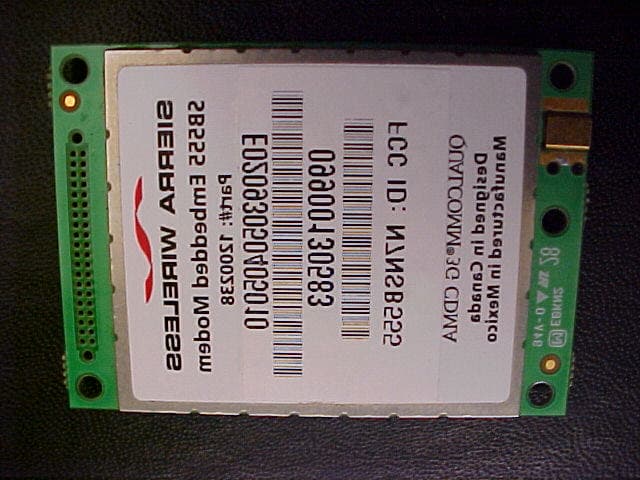
Click to zoom
Application Details
- Equipment Class
- PCB - PCS Licensed Transmitter
- Date of Grant
- Nov 24, 2002
- Application Purpose
- Original Equipment
- Date of Application
- Nov 24, 2002
- Equipment Note
- SB555 Embedded Modem Module for Mobile Application
- Frequency Range
- 1850.00000000 - 1910.00000000
- Company
- Sierra Wireless, ULC
- Country
- Canada
Documents & Files
Document Text
Text extracted from the exhibit documents filed with the FCC. Open a document above to read the original.
Users Manual
2130271 Rev 1.0 SB555 Embedded Modem Hardware Integration Guide Addendum Original Document2130075 SB555 Hardware Integration Guide Revision1.0 (April 2002) 2130271 Rev 1.0Nov.021 1 1: RF Integration • Receiver sensitivity • Matching • Antenna optionsReceiver sensitivity Page 79 of the of the Hardware Integration Guide includes “Table 7-1: Radio specifications”. This table has been corrected to: The receiver sensitivity in the PCS band has changed from -104 dBm to less than -106 dBm. The corrosponding sensitivity on the Cellular band now indicates less than -104 dBm. Matching antenna and cable The text on page 83 refering to antenna gain and cable loss should read: “Overall system antenna gain, with cable loss should be ≤+9 dBi. Keep in mind that your achieved value will have an impact on radiated power and RF exposure.” Antenna options Page 83 text refering antenna requirements to Table 7-1 is specifically for frequency band information. Table 7-1: Radio specifications Transmitter powerMaximum 224 mW into 50Ω (+23.5 dBm) Closed loop frequency stability ± 150 Hz PCS band Receiver sensitivity< -106.5 dBm Transmit band1850–1910 MHz Receive band1930–1990 MHz Channel spacing1.25 MHz Cellular band Receiver sensitivity < -104 dBm Transmit band824–849 MHz Receive band869–894 MHz Channel spacing1.25 MHz 2130271 Rev 1.0Nov.022 2 2: FCC Approval •FCC • Mobile vs. portable • Mobile approval and RF exposure • Product labelingThe Sierra Wireless SB555 embedded modem for CDMA2000 has been approved by the FCC for mobile applications. Chapter 7: “RF Integration” has been amended. A section headed FCC should be added, as follows. FCC For operation in the United States, your integration is required to meet appropriate regulatory requirements for stand-alone operation, including FCC parts 2, 15, 22, and 24. FCC Part 15 tests must be performed on the “whole device” and are therefore your responsibility. Mobile vs. portable devices The Federal Communications Commission Office of Engineering & Technology has published a bulletin, “Evalu- ating Compliance with FCC Guidelines for Human Exposure to Radiofrequency Electromagnetic Fields”, OET Bulletin 65. This provides a detailed description of the difference between mobile and portable devices. The FCC guidelines differentiate between these devices according to the antenna’s proximity to people, either the user or others nearby. MobileThe FCC defines a mobile device as being designed for use “in other than fixed locations and to generally be used in such a way that a separation distance of at least 20 centi- meters is normally maintained between radiating structures and the body of the user or nearby persons.” Mobile devices include vehicle-mounted systems designed to be used by people that are typically well separated from the antenna. This also includes wireless devices associated with a personal computer, provided the antenna is kept at least 20 cm away from people. These devices are normally evaluated for exposure potential with relation to Maximum Permissible Exposure (MPE) limits. The FCC rules for evaluating mobile devices for RF compliance are found in 47 CFR part 2.1091. Hardware Integration Guide AddendumFCC Approval 2130271 Rev 1.0Nov.023 PortableA portable device has a transmitter “designed to be used with any part of its radiating structure in direct contact with the user’s body or within 20 centimeters of the body of a user or bystanders under normal operating conditions.” This category includes hand-held cellular telephones with the antenna built into the handset. Portable devices are evaluated with respect to the Specific Absorption Rate (SAR) rules. These can be found in 47 CFR part 2.1093. Mobile approval and RF exposure requirements The SB555 module is approved for mobile operations only with respect to CFR 47 part 2.1091. FCC ID: N7NSB555 Note: If this module is intended to be used as a portable device, you are responsible for separate approval to satisfy the SAR requirements of part 2.1093. To ensure that the module meets the current FCC RF exposure guidelines, a separation distance of at least 20 cm (7.88") must be maintained between the module’s antenna and the body of the user and any nearby persons at all times and in all applica- tions and uses. Additionally, in mobile applications, maximum antenna gain must not exceed 9 dBi to comply with FCC regulations limiting both maximum RF output power and human exposure to RF radiation. Product labeling requirements For mobile devices, using the FCC approval obtained by Sierra Wireless, a label must be affixed to the outside of your end product—into which the authorized module is incorporated— with a statement similar to the following: This device contains TX FCC ID: N7NSB555 You need to provide a manual with your end product that clearly states the operating requirements and conditions that must be observed to ensure compliance with current FCC RF exposure guidelines (as detailed above). Hardware Integration Guide AddendumFCC Approval 2130271 Rev 1.0Nov.024 The warnings must appear in a prominent location in the User Guide for your product and may include: CAUTION Unauthorized modifications or changes not expressly approved by Sierra Wireless, Inc. could void compliance with regulatory rules, and thereby your authority to use this equipment. WARNING (EMI) – This equipment has been tested and found to comply with the limits pursuant to Part 15 of the FCC Rules. These limits are designed to provide reasonable protection against harmful interference in an appropriate installation. This equipment generates, uses, and can radiate radio frequency energy and, if not installed and used in accordance with the instructions, may cause harmful inter- ference to radio communication. However, there is no guarantee that interference will not occur in a particular installation. If this equipment does cause harmful interference to radio or television reception, which can be determined by turning the equipment of…
Text truncated - open the document above for the full version.
Users Manual
2130075 Rev 1.0 SB555 Development Kit Hardware Integration Guide Proprietary and Confidential Preface Rev 1.0 Apr.02 Proprietary and Confidential1 Important Notice Because of the nature of wireless communica- tions, transmission and reception of data can never be guaranteed. Data may be delayed, corrupted (i.e., have errors) or be totally lost. Although significant delays or losses of data are rare when wireless devices such as the Sierra Wireless modem are used in a normal manner with a well-constructed network, the Sierra Wireless modem should not be used in situations where failure to transmit or receive data could result in damage of any kind to the user or any other party, including but not limited to personal injury, death, or loss of property. Sierra Wireless, Inc., accepts no responsibility for damages of any kind resulting from delays or errors in data transmitted or received using the Sierra Wireless modem, or for failure of the Sierra Wireless modem to transmit or receive such data. Safety and Hazards Do not operate the Sierra Wireless modem in areas where blasting is in progress, where explosive atmospheres may be present, near medical equipment, near life support equipment, or any equipment which may be susceptible to any form of radio interference. In such areas, the Sierra Wireless modem MUST BE POWERED OFF. The Sierra Wireless modem can transmit signals that could interfere with this equipment. Do not operate the Sierra Wireless modem in any aircraft, whether the aircraft is on the ground or in flight. In aircraft, the Sierra Wireless modem MUST BE POWERED OFF. When operating, the Sierra Wireless modem can transmit signals that could interfere with various onboard systems. SB555 Hardware Integration Guide 2Proprietary and Confidential2130075 The driver or operator of any vehicle should not operate the Sierra Wireless modem while in control of a vehicle. Doing so will detract from the driver or operator's control and operation of that vehicle. In some states and provinces, operating such communications devices while in control of a vehicle is an offence. Note: Some airlines may permit the use of cellular phones while the aircraft is on the ground and the door is open. Sierra Wireless modems may be used at this time. Limitation of Liability The information in this manual is subject to change without notice and does not represent a commitment on the part of Sierra Wireless, Inc. SIERRA WIRELESS, INC. SPECIFICALLY DISCLAIMS LIABILITY FOR ANY AND ALL DIRECT, INDIRECT, SPECIAL, GENERAL, INCIDENTAL, CONSEQUENTIAL, PUNITIVE OR EXEMPLARY DAMAGES INCLUDING, BUT NOT LIMITED TO, LOSS OF PROFITS OR REVENUE OR ANTICIPATED PROFITS OR REVENUE ARISING OUT OF THE USE OR INABILITY TO USE ANY SIERRA WIRELESS, INC. PRODUCT, EVEN IF SIERRA WIRELESS, INC. HAS BEEN ADVISED OF THE POSSI- BILITY OF SUCH DAMAGES OR THEY ARE FORESEEABLE OR FOR CLAIMS BY ANY THIRD PARTY. Preface Rev 1.0 Apr.02 Proprietary and Confidential3 PatentsPortions of this product are covered by some or all of the following US patents: 5,515,0135,617,1065,629,9605,682,602 5,748,4495,845,2165,847,5535,878,234 5,890,0575,929,8156,169,8846,191,741 6,199,1686,327,1546,339,405D367,062 D372,248D372,701D416,857D442,170 D452,495D452,496 and other patents pending. This product includes technology licensed from: Copyright©2002 Sierra Wireless, Inc. All rights reserved. Printed in Canada. Tr a d e m a r k s “Heart of the Wireless Machine” is a registered trademark of Sierra Wireless, Inc. Sierra Wireless, the Sierra Wireless logo, the red wave design, and Watcher are trademarks of Sierra Wireless, Inc. Windows ® is a registered trademark of Microsoft Corporation. Qualcomm ® is a registered trademark of Qualcomm Incorporated. Other trademarks are the property of the respective owners. SB555 Hardware Integration Guide 4Proprietary and Confidential2130075 Contact Information Your comments and suggestions on improving this documentation are welcome and appre- ciated. Please e-mail your feedback to [email protected]. Thank you. Consult our website for up-to-date product descriptions, documentation, application notes, firmware upgrades, troubleshooting tips, and press releases: www.sierrawireless.com Sales Desk:Phone:1-604-232-1488 Hours:8:00 AM to 5:00 PM Pacific Time e-mail:[email protected] Technical Support:Included with the purchase of the SB555 Development Kit you receive five hours of tier 3 engineering integration support. You will have received instructions by e-mail on how to access the OEM Customer Support web site. For more details, please contact your account manager, or the Sierra Wireless sales desk. Post:Sierra Wireless, Inc. 13811 Wireless Way, Richmond, BC Canada V6V 3A4 Fax:1-604-231-1109 Web:www.sierrawireless.com Rev 1.0 Apr.02Proprietary and Confidential5 Table of Contents About this Guide. . . . . . . . . . . . . . . . . . . . . . . . . . . . . . . . . . . . . . . . 11 Introduction . . . . . . . . . . . . . . . . . . . . . . . . . . . . . . . . . . . . . . . . 11 Document structure . . . . . . . . . . . . . . . . . . . . . . . . . . . . . . . . . 12 References . . . . . . . . . . . . . . . . . . . . . . . . . . . . . . . . . . . . . . . . . 13 Terminology and acronyms . . . . . . . . . . . . . . . . . . . . . . . . 13 Conventions . . . . . . . . . . . . . . . . . . . . . . . . . . . . . . . . . . . . . . . . 13 Mechanical Integration . . . . . . . . . . . . . . . . . . . . . . . . . . . . . . . . . . 15 Introduction . . . . . . . . . . . . . . . . . . . . . . . . . . . . . . . . . . . . . . . . 15 Physical dimensions . . . . . . . . . . . . . . . . . . . . . . . . . . . . . . . . . 16 Mounting the module . . . . . . . . . . . . . . . . . . . . . . . . . . . . . . . . 17 Module weight . . . . . . . . . . . . . . . . . . . . . . . . . . . . . . . . . . . 18 Module shields . . . . . . . . . . . . . . . . . . . . . . . . . . . . . . . . . . 18 Module connectors . . . . . . . . . . . . . . . . . . . . …
Text truncated - open the document above for the full version.
Cover Letter(s)
November 13, 2002 Federal Communications Commission Authorization and Standards Division 7435 Oakland Mills Road Columbia, M.D. 21046 To Whom It May Concern: Re: Confidentiality Request for FCC ID N7NSB555 We hereby request that the documentation listed below, submitted with our application for certification, be withheld from public disclosure. This request is made under the provisions of Section 0.457(d) of the Commission’s Rules, and Section 552(b)(4) of the Freedom of Information Act. We cite trade secrets as the reason and purpose of the request. 1. SB555 Schematics 2. SB555 Block Diagram 3. SB555 Parts List 4. SB555 Detailed Circuit Description 5. SB555 Tune Up Procedure Sincerely Ying Wang Senior RF Engineer
Cover Letter(s)
Sent: Wednesday, November 13, 2002 10:53 AM To: 'Mike Kuo' Cc: Anne Liang Subject: RE: Sierra Wireless, Inc., FCC ID:N7NSB555, AN02T2361 Hi! Mike, Here you are. Regards, Ying -----Original Message----- From: Mike Kuo [mailto:[email protected]] Sent: Wednesday, November 13, 2002 8:14 AM To: 'Ying Wang'; Mike Kuo Cc: Anne Liang Subject: RE: Sierra Wireless, Inc., FCC ID:N7NSB555, AN02T2361 Hi Ying: Please copy the reply to Question 6 to Sierra Wireless Letter head and with title " Tune- UP procedures " and modify the " request for confidentiality letter " to include tune-up procedures as one of confidential document. Best Regards Mike Kuo -----Original Message----- Sent: Tuesday, November 12, 2002 2:51 PM To: 'Mike Kuo' Cc: 'Anne Liang (E-mail)' Subject: RE: Sierra Wireless, Inc., FCC ID:N7NSB555, AN02T2361 Importance: High Hi! Mike, In addition to the documents listed in the confidentiality request, we also request that the answer to Question 6, submitted on November 8, 2002, be withheld from public disclosure. This request is made under the provisions of Section 0.457(d) of the Commission's Rules, and Section 552(b)(4) of the Freedom of Information Act. We cite trade secrets as the reason and purpose of the request. Thanks, Ying > -----Original Message----- > From: Ying Wang > Sent: Friday, November 08, 2002 3:03 PM > To: 'Mike Kuo' > Cc: Anne Liang (E-mail) > Subject: RE: Sierra Wireless, Inc., FCC ID:N7NSB555, AN02T2361 > > Mike: > > Question 1, 2, 3, 5 and 7 have been addressed in the user guide sent > yesterday. > > In reply to Question 4, the MPE calculation was sent yesterday. > > Question 8 will be addressed by CCS. > > Answer to Question 6: > > Please refer to tune up procedure > > Answer to Question 9: > > The SB555 operates in CDMA mode only. Previous references to "AMPS" > should have been "Cellular", which refers to the band of operation only, > not the mode. Rather than stating that the SB555 operated in the cellular > and PCS bands, previous documentation stated that the unit operated in the > "AMPS band", meaning 800MHz. This should have been stated as the > "cellular band". The SB555 modem does not support or operate in AMPS > mode. > > Pls let me know if you have any further questions. > > Regards, > Ying > > -----Original Message----- > From: CERTADM > Sent: Tuesday, November 05, 2002 4:47 PM > To: '[email protected]' > Subject: Sierra Wireless, Inc., FCC ID:N7NSB555, AN02T2361 > > > Notice_content > ------------- > Question #1: What is the max. Antenna gain going to be used with this > device > ? > > Question #2: Please provide antenna installation procedures and > requirement > to be provided to the OEM or system integrator. > > Question #3: Please confirm that this device will only be used for mobile > and / or fix application. > > Question #4: Please provide MPE estimate based upon the max. antenna gain > information given in Question #1. > > Question #5: Please provide user manual with RF exposure warning > statement. > > Question #6: Please provide tune-up procedures. > > Question #7: Please provide a cover letter to disclose the intended usage > for this product. > > Question #8: By comparing the RF radiated and RF conducted test reports, > the > conducted output reported in the radiated test report as conducted average > power with max. average power of 25.77dBm in 800MHz band and 25.37dBm in > 1900MHz band. On the other hands, the conducted output power reported in > RF > conducted test report is peak power. The highest peak output power > reported > is 23.50dBm in 800MHz band, 23.72dBm in 1900MHz. > > Please explain why the average output power is higher than the peak output > power. > > Please provide channel power spectrum plots with RBW=1MHz, VBW=1MHz, > channel > bandwidth greater than necessary bandwidth for Mid channel/800MHz band and > high channel /1900MHz band. > > Question #9: In the theory of operation file, it mentioned that this > device > is equipped with AMPS modulation. However, all tests were performed based > upon CDMA in Cellular band and in PCS band. Please explain. > > Best Regards > > Mike Kuo / TCB Certifier > The items indicated above must be submitted before processing can continue > on the above referenced application. Failure to provide the requested > information within 60 days of the original e-mail date may result in > application dismissal and forfeiture of the filing fee. Also, please note > that partial responses increase processing time and should not be > submitted. > Any questions about the content of this correspondence should be directed > to > the e-mail address listed below the name of the sender.
RF Exposure Info
APPLICANT: SIERRA WIRELESS FCC ID: N7NSB555 MPE CALCULATION FOR MAXIMUM ANTENNA GAIN Formula used in the MPE Calculations: E^2/3770 = S, mW/cm2 Pwatts*Ggain = 10^(PdBm-30+GdBi)/10) E, V/m = (Pwatts*Ggain*30)^.5/d, meters d, m = ((Pwatts*G*30)/3770*S))^0.5 --------- ( A ) GdBi = 10 lg (d^2*S*3770/30*Pwatts) -------- ( B ) 1) 800 MHz Since S (mW/cm2) = 0.50 from 1.1310 Table 1 P (dBm) = 23.50 EUT output power MPE safe distance d (cm) = 19.99 Substitute these parameters into the A above, we have G (dBi) = 10.50 EUT antenna gain To maintain MPE safe distance d < 20 cm, the maximum Antenna gain can be up to 10.50 dBi. 2) 1900 MHz Since S (mW/cm2) = 1.00 from 1.1310 Table 1 P (dBm) = 23.50 EUT output power MPE safe distance d (cm) = 19.99 Substitute these parameters into the A above, we have G (dBi) = 13.51 EUT antenna gain To maintain MPE safe distance d < 20 cm, the maximum Antenna gain can be up to 13.51 dBi. To maintain MPE safe distance d < 20 cm, the maximum Antenna gain can be up to 10.50 dBi.
Test Report
FCC CFR47 CERTIFICATION PART 22H and 24E SPURIOUS RADIATION TEST REPORT FOR 800/1900 MHZ CDMA MODULE MODEL NUMBER: SB555 FCC ID: N7NSB555 REPORT NUMBER: 02U1592-1 ISSUE DATE: November 21, 2002 Prepared for SIERRA WIRELESS, INC 13811 WIRELESS WAY RICHMOND, BC V6V 3A4 CANADA Prepared by COMPLIANCE CERTIFICATION SERVICES 561F MONTEREY ROAD, ROUTE 2 MORGAN HILL, CA 95037, USA TEL: (408) 463-0885 FAX: (408) 463-0888 REPORT NO: 02U1592-1 DATE: NOV 21,2002 FCC ID: N7NSB555 EUT: 800/900 MHZ CDMA MODULE Page 2 of 21 COMPLIANCE CERTIFICATION SERVICES DOCUMENT NO: CCSUP4031A 561F MONTEREY ROAD, MORGAN HILL, CA 95037 USA TEL: (408) 463-0885 FAX: (408) 463-0888 This report shall not be reproduced except in full, without the written approval of CCS. This document may be altered or revised by Compliance Certification Services personnel only, and shall be noted in the revision section of the document. TABLE OF CONTENT 1. TEST RESULT CERTIFICATION.................................................................................................3 2. EUT DESCRIPTION.........................................................................................................................4 3. FACILITIES, LABORATORY AND ACCREDITATION...........................................................4 3.1. FACILITIES....................................................................................................................................4 3.2. LABORATORY ACCREDITATION...................................................................................................4 3.3. LIST OF ACCREDITATIONS............................................................................................................5 4. CALIBRATION, METHODOLOGY AND UNCERTAINTY......................................................6 4.1. EQUIPMENT CALIBRATION...........................................................................................................6 4.2. TEST METHODOLOGY...................................................................................................................6 4.3. MEASUREMENT UNCERTAINTY....................................................................................................6 4.4. TEST AND MEASUREMENT EQUIPMENT.......................................................................................7 5. APPLICABLE RULES......................................................................................................................8 5.1. FIELD STRENGTH OF SPURIOUS RADIATION §2.1053.....................................................8 6. TEST SETUP, PROCEDURE AND RESULT................................................................................9 6.1. FIELD STRENGTH OF SPURIOUS RADIATION...................................................................9 7. EUT SETUP PHOTOS....................................................................................................................20 REPORT NO: 02U1592-1 DATE: NOV 21,2002 FCC ID: N7NSB555 EUT: 800/900 MHZ CDMA MODULE Page 3 of 21 COMPLIANCE CERTIFICATION SERVICES DOCUMENT NO: CCSUP4031A 561F MONTEREY ROAD, MORGAN HILL, CA 95037 USA TEL: (408) 463-0885 FAX: (408) 463-0888 This report shall not be reproduced except in full, without the written approval of CCS. This document may be altered or revised by Compliance Certification Services personnel only, and shall be noted in the revision section of the document. 1. TEST RESULT CERTIFICATION COMPANY NAME: SIERRA WIRELESS, INC. 13811 WIRELESS WAY RICHMOND, BC V6V 3A4 CANADA EUT DESCRIPTION: 800/1900MHZ CDMA MODULE MODEL NUMBER: SB555 DATE TESTED: OCTOBER 21 & NOVEMBER 19, 2002 TYPE OF EQUIPMENT INTENTIONAL RADIATOR EQUIPMENT TYPE CDMA MODULE MEASUREMENT PROCEDURE ANSI 63.4 / 1992, TIA/EIA 603 PROCEDURE CERTIFICATION FCC RULE CFR 47 PART 22 Subpart H and 24 Subpart E Only the radiated spurious emissions are documented in this test report; other requirements (antenna port conducted measurements) are documented separately by Sierra Wireless. Subject to this scope, Compliance Certification Services, Inc. tested the above equipment for compliance with the requirement set forth in CFR 47, PART 22 Subpart H-Cellular Radiotelephone Service and 24 Subpart E-Broadband PCS. The equipment in the configuration described in this report, shows the measured emission levels emanating from the equipment do not exceed the specified limit. Note: This document reports conditions under which testing was conducted and results of tests performed. This document may not be altered or revised in any way unless done so by Compliance Certification Services and all revisions are duly noted in the revisions section. Any alteration of this document not carried out by Compliance Certification Services will constitute fraud and shall nullify the document. Tested By: Approved and Released For CCS By: FRANK IBRAHIM THU CHAN EMC ENGINEER SENIOR EMC ENGINEER COMPLIANCE CERTIFICATION SERVICES COMPLIANCE CERTIFICATION SERVICES REPORT NO: 02U1592-1 DATE: NOV 21,2002 FCC ID: N7NSB555 EUT: 800/900 MHZ CDMA MODULE Page 4 of 21 COMPLIANCE CERTIFICATION SERVICES DOCUMENT NO: CCSUP4031A 561F MONTEREY ROAD, MORGAN HILL, CA 95037 USA TEL: (408) 463-0885 FAX: (408) 463-0888 This report shall not be reproduced except in full, without the written approval of CCS. This document may be altered or revised by Compliance Certification Services personnel only, and shall be noted in the revision section of the document. 2. EUT DESCRIPTION SB555 Embedded Modem is a dual-band wireless modem supporting both the 800 MHz cellular and 1900 MHz PCS bands. 3. FACILITIES, LABORATORY AND ACCREDITATION 3.1. Facilities The open area test sites and conducted measurement facilities used to collect the radiated data are located at 561F Monterey Road, Morgan Hill, California, USA. The sites are constructed in conformance with the requirements of ANSI C63.7, ANSI C63.4 and CISPR Publication 16. 3.2. Laboratory Accreditation The laboratory and associated test faciliti…
Text truncated - open the document above for the full version.
Test Report
2002 Sierra Wireless, Inc. This document contains information which is proprietary and confidential to Sierra Wireless, Inc. Disclosure to persons other than the officers, employees, agents, or subcontractors of the Company or licensee of this document without the prior written permission of Sierra Wireless, Inc. is strictly prohibited. FCC Part 22 and 24 800/1900 MHz CDMA DUAL BAND MODULE Model: SB555-S FCC ID: N7NSB555 Prepared by SIERRA WIRELESS INC. 13811 WIRELESS WAY RICHMOND, BC V6V 3A4 CANADA Test Date(s): September 2002 SIERRA WIRELESS, INC. FCC Part 22 & 24 Test Report SB555-S Sept 2002 Page 2 of 43 Table of Contents 1 Introduction and Purpose.........................................................................3 2 Test Summary..........................................................................................3 3 Product Description.................................................................................4 4 Test Configuration...................................................................................5 5 RF Power Output.....................................................................................6 5.1 Test Procedure....................................................................................................6 5.2 Test Equipment.................................................................................................... 6 5.3 Test Results.........................................................................................................7 6 Occupied Bandwidth..............................................................................14 6.1 Test Procedure..................................................................................................14 6.2 Test Equipment.................................................................................................. 14 6.3 Test Results.......................................................................................................14 7 Out of Band Emissions at Antenna Terminals......................................17 7.1 Test Procedure..................................................................................................17 7.2 Test Equipment.................................................................................................. 17 7.3 Test Results.......................................................................................................18 8 Frequency Stability vs Temperature......................................................40 8.1 Test Procedure..................................................................................................40 8.2 Test Equipment.................................................................................................. 40 8.3 Test Results.......................................................................................................41 9 Frequency Stability vs Voltage..............................................................42 9.1 Test Procedure..................................................................................................42 9.2 Test Equipment.................................................................................................. 43 9.3 Test Results.......................................................................................................43 2002 Sierra Wireless, Inc. The contents of this page are subject to the confidentiality information on page one. SIERRA WIRELESS, INC. FCC Part 22 & 24 Test Report SB555-S Sept 2002 Page 3 of 43 1 Introduction and Purpose This document provides the FCC test data for the SB555-S module. The tests included in this report are limited to all conducted tests required. Other radiated tests were performed at an external test facility. 2 Test Summary FCC RULE DESCRIPTION OF TEST RESULT PAGE 2.1046 RF Power Output Complies 6 2.1049 Occupied Bandwidth Complies 15 2.1051, 22.901(d) 22.917(f), 24.238(a) Out of Band Emissions at Antenna Terminals Mobile Emissions In Base Frequency Range Complies 18 2.1053 Field Strength of Spurious Radiation Complies See CCS Report 2.1055 Frequency Stability vs Temperature Complies 44 2.1055 Frequency Stability vs Voltage Complies 45 The tests described in this report were performed by Mr. Sean Hoare, under the supervision of Mr Ron Vanderhelm, P.Eng. at Sierra Wireless, Inc. 13811 Wireless Way Richmond, B.C. V6V 3A4 Canada 2002 Sierra Wireless, Inc. The contents of this page are subject to the confidentiality information on page one. SIERRA WIRELESS, INC. FCC Part 22 & 24 Test Report SB555-S Sept 2002 Page 4 of 43 3 Product Description The Sierra Wireless Inc. model SB555-S is a dual band CDMA embedded modem. EUT Type Cellular and PCS CDMA Embedded Modem Whether quantity(>1) production is planned [X] Yes [ ]No Standards CDMA2000 Types of Emission 1M25F9W RF Output Power 824-849 MHz: 23.5 dBm max 1850-1910 MHz: 23.5 dBm max In both bands, power is variable to –50 dBm. Frequency Range 824-849 MHz, 1850-1910 MHz 2002 Sierra Wireless, Inc. The contents of this page are subject to the confidentiality information on page one. SIERRA WIRELESS, INC. FCC Part 22 & 24 Test Report SB555-S Sept 2002 Page 5 of 43 4 Test Configuration Tests were performed on the radio module alone. For frequency stability versus temperature, testing the module requires a wider range of temperature at the higher extreme to account for the insulating and warming affects of the end-user device. We test up to 70 degrees C for the module alone rather than just 50 deg C for the module in the end user device. For the effect of variation of DC power sup…
Text truncated - open the document above for the full version.
Contact Information
Applicant
Ying Wang(Director, Regulatory Compliance)
Test Firm
Compliance Certification Services IncSteve Cheng
Technical Specifications
| # | Rule Parts | Frequency Range | Power Output | Emission | Tolerance |
|---|---|---|---|---|---|
| 2 | 24E | 1.85 GHz - 1.91 GHz | 224.00 mW | 1M25F9W | 2.5 ppm |
Other Applications from Sierra Wireless, ULC
N7NHL79E
Feb 23, 2026Radio Module
Equipment Class
PCB - PCS Licensed Transmitter
N7NEM92P
Sep 04, 2025Radio Module
Equipment Class
CBE - Citizens Band End User DevicesN7NHL79
Aug 15, 2024Module
Equipment Class
PCB - PCS Licensed Transmitter
N7NEM92
Sep 26, 2023Radio Module
Equipment Class
CBE - Citizens Band End User Devices
N7NEM75Y
Sep 10, 2023Radio Module
Equipment Class
PCB - PCS Licensed Transmitter