NIYMWP2090Office Wireless Mouse
Dexin Corp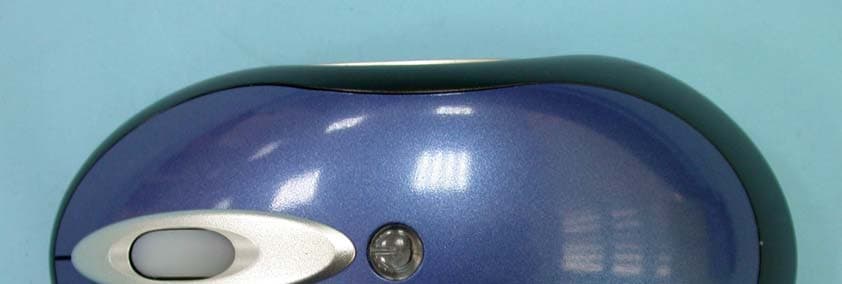
Click to zoom
Application Details
- Equipment Class
- DXX - Part 15 Low Power Communication Device Transmitter
- Date of Grant
- Jul 21, 2004
- Application Purpose
- Original Equipment
- Date of Application
- Jul 21, 2004
- Equipment Note
- Office Wireless Mouse
- Frequency Range
- 27.04500000 - 27.14500000
- Company
- Dexin Corp
- Country
- Taiwan
Documents & Files
Document Text
Text extracted from the exhibit documents filed with the FCC. Open a document above to read the original.
Users Manual
WIRELESS OFFICE-WEB OPTICAL MOUSE USER’S MANUAL (Model #: DC-2090) Important Ergonomic Information Some experts believe that using any mouse or trackball may cause serious injury to hands, wrists, arms, neck, or back. If you feel pain, numbness, or weakness in these areas, see a qualified health professional. TO REDUCE THE RISK OF INJURY, FOLLOW THESE PRECAUTIONS: z Take frequent breaks, get up and walk around several times every hour. z Vary your tasks throughout the day. z Keep your shoulders relaxed with your elbows at your side. Position your keyboard and mouse so you do not have to reach. z Adjust your chair and keyboard so your upper arms and wrists are straight. z Avoid resting your wrists on sharp edges. System Requirement z Mouse compatible with standard Microsoft mode z 3 rd button and wheel function require Win98/2000/ME/NT/XP z 4 th & 5 th button require Win2000/XP to function, or will require to install additional driver as attached with this product. z 6 th & 7 th button require installing additional driver as attached with this product. z If your computer’s operating system uses Windows98/98SE, please prepare the Windows98 or 98SE compact disk for system’s request during the installation of mouse. Before you begin z Keep this installation guide for future reference! It contains Important Troubleshooting Information. z Keep your old PS/2 mouse as a back-up device. Getting Started Congratulations on your purchase of an 800dpi Office-Web mouse. The 800dpi high resolution will bring users the best operation accuracy and efficiency, especially for a display at 1024*768 or higher. It has a double operation speed and only requires 1/4 space by comparing with a 400dpi mouse. With the ergonomic design in extra buttons, 1 the short-cut functions about MS-Office and Internet provide you an efficient operation to access defaulted path or hot-functions chosen by yourself. Package Contains Your DC-2090 Mouse package includes the following: 1. Optical Mouse 2. Mini Receiver 3. User’s manual 4. CD-ROM Driver for Windows 98SE/2000/ME/NT/XP 5. 2 AA size alkaline batteries NoteIf any part is missing, please contact your dealer for a replacement immediately. Precaution ! The optical mouse cannot work on a glass or mirror surface. Avoid operating this mouse on a glossy surface. Otherwise, this mouse may not operate normally. ! For consideration of saving battery power and have a good performance, it is strongly recommended to operate an optical mouse on a bright surface with fine texture. Battery Warning! When replace the batteries, use alkaline. You may use rechargeable NiMH or other type of batteries, but do not mix then with alkaline. Do not mix used and new batteries together! Installation Guide (Mouse Connection) ! If your computer’s operating system uses Windows98/98SE, please prepare the Windows98 or 98SE compact disk for system’s request during the installation of mouse. Step 1. Inserting the Batteries 1. Turn the mouse to the bottom side. 2. Remove the batteries cover by moving the opening tabs and pull the battery cover out. 3. There are signs to indicate batteries' positive and negative poles. Follow the signs to place the batteries 2 4. Place the batteries cover back and make sure it is firmly closed Insert 2 AA Batteries. Step 2. Synchronize the RF Mouse If the mouse is in sleep mode click the mouse button once to wake it up. 1. Plug the receiver into the notebook Computer’s USB ports or into the keyboard’s USB port. 2. Bring the mouse within 1 ft range from the receiver, Hold the mouse upside-down and use a pointed object, such as a pen tip, to click the “CONNECT” button once. Do Not depress the CONNECT button longer then 1.5 seconds. (The red sensor light will go off when the “CONNECT” button is pressed down.) ! Please poke the Mouse Connect button first, and then click the receiver’s button! Plug into USB port 2. Click 1. Click 3. Click the receiver’s connect button once (located on the back of the receiver) within 5 seconds of clicking the connect button on the mouse. The LED will start blinking, when the connection is established. 4. Move the mouse around to test if it was successful. 5. If the synchronization is not successful for some reason please (1) Remove the batteries and unplug the receivers (2) Wait for 20 sec then try the steps 1 to 4 3 again. Note: * During normal use, please make sure that the mouse is no more than 3 ft away from the receiver in order to have reliable connection. ** The LED on the receiver will light up or blink while the mouse is being used. PLEASE READ THIS BEFORE YOU INSTALL ANY DRIVERS NOTE: After the driver installation, your mouse should automatically function in any Windows environment. If you are using Windows Version 3.1/3.11, the scroll function (and 4 th ~8 th buttons will not operate). The wheel scroll is an enhanced feature of Windows 98, 2000,ME & XP. The 4 th ~ 7 th buttons can be functioned only if you have installed Office-Web driver(bundled CD). If users want to assign the 4 th ~7 th buttons as extra functions, please follow the below steps to install the Office-Web driver and to program buttons. Installing the Software To install the software, please follow the steps below to finish: 1. Insert the Auto-Run CD-ROM onto CD-ROM driver, the installation menu will be executed automatically. (If the auto-run does not function itself, double-click the “setup” icon in the CD files.) 2. The setup program will guide you to finish the installation step by step 4 After you finish the installation, select "Restart" to reboot your system and activate multimedia hot keys and wheel scrolling functions. Programmable Office-Web Hot Keys When you install the included software driver the mouse hot keys will be enable with driver default. The Office-Wheel Function is attached on the mouse software as following. Users can change the default function of wheel and extra hot-keys. Web-Wheel Office-Wheel (Scroll to choose and press to function) D…
Text truncated - open the document above for the full version.
External Photos
Page 1 CONSTRUCTION PHOTOS OF EUT Page 2
ID Label/Location Info
DSCN4278 (1600x1200x16M jpeg)
ID Label/Location Info
DSCN4277 (1600x1200x16M jpeg) DSCN4278 (1600x1200x16M jpeg)
Internal Photos
Page 3 Page 4 Page 5 Page 6
Operational Description
FCC ID: NIYMWP2090 Report No.RF930429L05 Operational Description The transmitter of the EUT (OFFICE WIRELESS MOUSE) is powered by 3V Battery. The type of antenna is Internal copper trace Antenna. The output power of this device is very low. Under normal use condition, the transmitter and the receiver are quite close, so high EIRP power is neither necessary nor allowed because of interference.
Parts List/Tune Up Info
Sheet1 Page 1 Part TypeDesignatorFootprint 0.1UFC4603 0.1UFC15603 0.1UFC2603 0.82UHL3AXIAL0.4 1.2MR1603 1KR5603 3.3UHL2AXIAL0.4 4.7MR6603 4PC9603 4PC14603 12PC8603 22PC17603 22PC16603 24PC13603 27.045X327MHZ 27.145X227MHZ 27PC5603 33PC10603 33pC11603 47PC7603 76.8KHZX176.8KHZ 100KR3603 100UHL1AXIAL0.4 220UFC3DR 220UHC1LED 620KR2603 ?R4603 BAV56D3BAV56 BAV56D2BAV56 FDV301Q1SOT-23 MA60H223U1MA60H22-1 NCR0603 NCC0603 RB421D1RB421 Sheet1 Page 1 Part TypeDesignatorFootprint 0.1UFC2RAD0.1 0.1UFC4RAD0.1 10UFC1LED 10UFC3LED 18.432MHZX1ZDQ 27KR2R7.5 100R1R7.5 470R3R7.5 ANDS2051U1MA60H251 ENCODERE1BMQ LED BLUED1LED LED REDD2LED
Test Report
FCC ID: NIYMWP2090 Report No.: RF930429L051Issued: May 7, 2004 FCC TEST REPORT REPORT NO.: RF930429L05 MODEL NO.: MWP2090 RECEIVED: Apr. 29, 2004 TESTED: May 4, 2004 APPLICANT: DEXIN Corporation ADDRESS: 14F-8, No 258,Lian Cheng Rd., Chung Ho City, Taipei Hsien, Taiwan, R.O.C ISSUED BY: Advance Data Technology Corporation LAB LOCATION: No. 19, Hwa Ya 2nd rd., Kueishan, Taoyuan, Taiwan, R.O.C. This test report consists of 14 pages in total. It may be duplicated completely for legal use with the approval of the applicant. It should not be reproduced except in full, without the written approval of our laboratory. The client should not use it to claim product endorsement by any government agencies. The test results in the report only apply to the tested sample. FCC ID: NIYMWP2090 Report No.: RF930429L052Issued: May 7, 2004 Table of Contents 1CERTIFICATION ......................................................................................................... 3 2SUMMARY OF TEST RESULTS................................................................................. 4 3GENERAL INFORMATION ......................................................................................... 5 3.1GENERAL DESCRIPTION OF EUT............................................................................ 5 3.2DESCRIPTION OF TEST MODES.............................................................................. 6 3.3GENERAL DESCRIPTION OF APPLIED STANDARDS ............................................. 6 3.4DESCRIPTION OF SUPPORT UNITS........................................................................ 6 3.5 CONFIGURATION OF SYSTEM UNDER TEST.......................................................... 6 4TEST PROCEDURE AND RESULT ............................................................................ 7 4.1CONDUCTED EMISSION MEASUREMENT .............................................................. 7 4.2RADIATED EMISSION MEASUREMENT ................................................................... 7 4.2.1LIMITS OF RADIATED EMISSION MEASUREMENT ................................................ 7 4.2.2TEST INSTRUMENT................................................................................................... 8 4.2.3TEST PROCEDURE ................................................................................................... 9 4.2.4DEVATION FROM TEST STANDARD ........................................................................ 9 4.2.5TEST SETUP ............................................................................................................ 10 4.2.6EUT OPERATING CONDITION ................................................................................ 10 4.2.7TEST RESULTS ........................................................................................................ 11 5PHOTOGRAPHS OF THE TEST CONFIGURATION ............................................... 13 6INFORMATION ON THE TESTING LABORATORIES .............................................. 14 FCC ID: NIYMWP2090 Report No.: RF930429L053Issued: May 7, 2004 1 CERTIFICATION PRODUCT NAME : OFFICE WIRELESS MOUSE BRAND NO: DEXIN MODEL NO. : MWP2090 APPLICANT : DEXIN Corporation TESTED: May 4, 2004 TEST ITEM : Engineering Sample STANDARDS : FCC Part 15, Subpart C(15.227) ANSI C63.4-2001 The above equipment has been tested by Advance Data Technology Corporation, and found compliance with the requirement of the above standards. The test record, data evaluation & Equipment Under Test (EUT) configurations represented herein are true and accurate accounts of the measurements of the sample’s EMC characteristics under the conditions specified in this report. FCC ID: NIYMWP2090 Report No.: RF930429L054Issued: May 7, 2004 2 SUMMARY OF TEST RESULTS The EUT has been tested according to the following specifications: APPLIED STANDARD: FCC Part 15, Subpart C STANDARD PARAGRAPH TEST TYPERESULTREMARK 15.207Conducted Emission TestN/A Power supply is 3Vdc from batteries 15.227Radiated Emission TestPASS Minimum passing margin is –7.19dB at 269.10MHz NOTE: The receiver part to communicate with the EUT has been verified to comply with FCC Part 15, Subpart B, Class B (DoC). The test report can be provided upon request. FCC ID: NIYMWP2090 Report No.: RF930429L055Issued: May 7, 2004 3 GENERAL INFORMATION 3.1 GENERAL DESCRIPTION OF EUT PRODUCT OFFICE WIRELESS MOUSE MODEL NO. MWP2090 POWER SUPPLY 3.0Vdc for Mouse from AA Battery x 2 MODULATION TYPE FSK CARRIER FREQUENCY OF EACH CHANNEL 27.045MHz, 27.145MHz BANDWIDTH OF EACH CHANNEL NA NUMBER OF CHANNEL 2 ANTENNA TYPE Internal copper trace antenna DATA CABLE NA I/O PORTS NA ASSOCIATED DDVCES NA NOTE: 1. The EUT is the transmitter part of a wireless mouse. 2. The above EUT information was declared by manufacturer and for more detailed features description, please refer to the manufacturer's specifications or User's Manual. FCC ID: NIYMWP2090 Report No.: RF930429L056Issued: May 7, 2004 3.2 DESCRIPTION OF TEST MODES Two channels were provided in this EUT. CHENNELFREQUENCY 127.045MHz 227.145MHz Note: Frequency of 27.045MHz, the worst case one, was chosen for the final test. 3.3 GENERAL DESCRIPTION OF APPLIED STANDARDS The EUT is the transmitter part of a OFFICE WIRELESS MOUSE. According to the specifications of the manufacturer, it must comply with the requirements of the following standards: FCC Part 15, Subpart C (15.227) ANSI C63.4-2001 All test items have been performed and recorded as per the above standards. 3.4 DESCRIPTION OF SUPPORT UNITS NA 3.5 CONFIGURATION OF SYSTEM UNDER TEST Mouse (Tx) FCC ID: NIYMWP2090 Report No.: RF930429L057Issued: May 7, 2004 4 TEST PROCEDURE AND RESULT 4.1 CONDUCTED EMISSION MEASUREMENT NA 4.2 RADIATED EMISSION MEASUREMENT 4.2.1 LIMITS OF RADIATED EMISSION MEASUREMENT According to 15.227 the field strength of Emissions from intentional radiators operated under these frequencies bands shall not exceed the following: Fundamental Frequency (MHz) Field Strength of Fundamental (dBu…
Text truncated - open the document above for the full version.
Test Setup Photos
FCC ID: NIYMWP2090 Report No.: RF930429L0513Issued: May 7, 2004 5 PHOTOGRAPHS OF THE TEST CONFIGURATION RADIATED EMISSION TEST
Contact Information
Applicant
Lu Ho Lung(Manager)
Technical Contact
Advance Data Technology Corp.Ellis Wu
[email protected]+886-3-318-3232
No.19, Hwa Ya 2nd Rd. · Kueishan Taoyuan · Taiwan
Test Firm
Advance Data Technology CorporationStephen Chen
Technical Specifications
| # | Rule Parts | Frequency Range | Power Output |
|---|---|---|---|
| 1 | 15C | 27.045 MHz - 27.145 MHz | - |
Other Applications from Dexin Corp

NIYP707TX
Feb 24, 2021Optical Gaming Mouse
Equipment Class
DXX - Part 15 Low Power Communication Device Transmitter
NIYP707RX
Feb 22, 2021Optical Gaming Mouse Dock
Equipment Class
DXX - Part 15 Low Power Communication Device Transmitter
NIY-VENGEANCEM90
Nov 29, 2011USB Gaming Mouse
Equipment Class
JBP - Part 15 Class B Computing Device Peripheral
NIY-VENGEANCEM60
Nov 29, 2011USB Gaming Mouse
Equipment Class
JBP - Part 15 Class B Computing Device Peripheral
NIYMWP177P6S
Jun 13, 20112.4G Wireless mouse
Equipment Class
DXX - Part 15 Low Power Communication Device Transmitter