NM8PI86100WINDOWS PHONE
HTC Corporation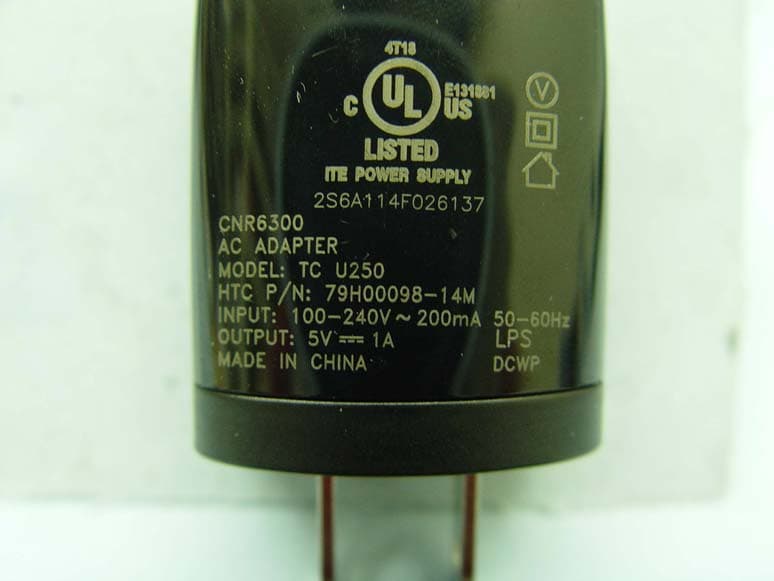
Click to zoom
Application Details
- Equipment Class
- DTS - Digital Transmission System
- Date of Grant
- Jan 26, 2012
- Application Purpose
- Original Equipment
- Date of Application
- Dec 28, 2011
- Equipment Note
- WINDOWS PHONE
- Frequency Range
- 2412.00000000 - 2462.00000000
- Company
- HTC Corporation
- Country
- Taiwan
Documents & Files
Document Text
Text extracted from the exhibit documents filed with the FCC. Open a document above to read the original.
Users Manual
Safety and regulatory guide 2 Safety and regulatory guide Please read before proceeding THE BATTERY IS NOT FULLY CHARGED WHEN YOU TAKE IT OUT OF THE BOX. DO NOT REMOVE THE BATTERY PACK WHEN THE PHONE IS CHARGING. YOUR WARRANTY IS INVALIDATED IF YOU DISASSEMBLE OR ATTEMPT TO DISASSEMBLE THE DEVICE. Privacy restrictions Some countries require full disclosure of recorded telephone conversations, and stipulate that you must inform the person with whom you are speaking that the conversation is being recorded. Always obey the relevant laws and regulations of your country when using the recording feature of your phone. Disclaimers ANY WEATHER, STOCK, OR OTHER INFORMATION, DATA, OR DOCUMENTATION (“ACCESSED INFORMATION”) ARE PROVIDED “AS IS” AND WITHOUT ANY WARRANTY OR ANY TECHNICAL SUPPORT. TO THE MAXIMUM EXTENT PERMITTED BY APPLICABLE LAW, HTC AND ITS AFFILIATES expressly disclaim any and all representations and warranties, arising by law or otherwise, related to the Accessed Information, including without limitation any express or implied representation or warranty of merchantability, fitness for a particular purpose, non-infringement, quality, accuracy, completeness, effectiveness, reliability, or usefulness. Without limiting the foregoing, it is further understood that HTC and its Affiliates are not responsible for any use or of the Accessed Information or the results arising from such use, and that you use such information at your own risk. Safety and regulatory guide 3 Limitation of damages TO THE MAXIMUM EXTENT PERMITTED BY APPLICABLE LAW, IN NO EVENT SHALL HTC OR ITS AFFILIATES BE LIABLE TO YOU, ANY USER, OR THIRD PARTY FOR ANY INDIRECT, SPECIAL, CONSEQUENTIAL, INCIDENTAL OR PUNITIVE DAMAGES OF ANY KIND, ARISING IN CONTRACT, TORT, OR OTHERWISE, INCLUDING, BUT NOT LIMITED TO, INJURY, LOSS OF REVENUE, LOSS OF GOODWILL, LOSS OF BUSINESS OPPORTUNITY, LOSS OF DATA, AND/OR LOSS OF PROFITS, REGARDLESS OF THE FORESEEABILITY THEREOF OR WHETHER HTC OR ITS AFFILIATES HAVE BEEN ADVISED OF THE POSSIBILITY OF SUCH DAMAGES. AND IN NO EVENT SHALL THE TOTAL LIABILITY OF HTC OR ITS AFFILIATES EXCEED THE AMOUNT RECEIVED FROM YOU, REGARDLESS OF THE LEGAL THEORY UNDER WHICH THE CAUSE OF ACTION IS BROUGHT. THE FOREGOING DOES NOT AFFECT ANY STATUTORY RIGHTS WHICH MAY NOT BE DISCLAIMED. Important health information and safety precautions When using this product, the safety precautions below must be taken to avoid possible legal liabilities and damages. Retain and follow all product safety and operating instructions. Observe all warnings in the operating instructions on the product. To reduce the risk of bodily injury, electric shock, fire, and damage to the equipment, observe the following precautions. Electrical safety This product is intended for use when supplied with power from the designated battery or power supply unit. Other usage may be dangerous and will invalidate any approval given to this product. Safety precautions for proper grounding installation CAUTION: Connecting to an improperly grounded equipment can result in an electric shock to your device. This product is equipped with a USB Cable for connecting with desktop or notebook computer. Be sure your computer is properly grounded (earthed) before connecting this product to the computer. The power supply cord of a desktop or notebook computer has an equipment-grounding conductor and a grounding plug. The plug must be plugged into an appropriate 4 Safety and regulatory guide outlet which is properly installed and grounded in accordance with all local codes and ordinances. Safety precautions for power supply unit Use the correct external power source A product should be operated only from the type of power source indicated on the electrical ratings label. If you are not sure of the type of power source required, consult your authorized service provider or local power company. For a product that operates from battery power or other sources, refer to the operating instructions that are included with the product. This product should be operated only with the following designated power supply unit(s). AC adapter: • HTC, Model TC U250 Handle battery packs carefully This product contains a Lithium-ion polymer or Lithium-ion battery. There is a risk of fire and burns if the battery pack is handled improperly. Do not attempt to open or service the battery pack. Do not disassemble, crush, puncture, short external contacts or circuits, dispose of in fire or water, or expose a battery pack to temperatures higher than 60 ̊C (140 ̊F). WARNING: Danger of explosion if battery is incorrectly replaced. To reduce risk of fire or burns, do not disassemble, crush, puncture, short external contacts, expose to temperature above 60° C (140° F), or dispose of in fire or water. Replace only with specified batteries. Recycle or dispose of used batteries according to the local regulations or reference guide supplied with your product. Safety and regulatory guide 5 Take extra precautions • Keep the battery or device dry and away from water or any liquid as it may cause a short circuit. • Keep metal objects away so they don’t come in contact with the battery or its connectors as it may lead to short circuit during operation. • The phone should only be connected to products that bear the USB-IF logo or have completed the USB-IF compliance program. • Do not use a battery that appears damaged, deformed, or discolored, or the one that has any rust on its casing, overheats, or emits a foul odor. • Always keep the battery out of the reach of babies and small children, to avoid swallowing of the battery. Consult the doctor immediately if the battery is swallowed. • Only use the battery with a charging system that has been qualified with the system per this standard, IEEE-Std-1725- 2006. Use of an unqualified battery or charger may present a risk of fire, explosion, leakage or other hazard. • Replace the battery only with another battery that has been qualified with the system per …
Text truncated - open the document above for the full version.
External Photos
Page 1 CONSTRUCTION PHOTOS OF EUT The EUT has following accessories. NO. PRODUCT MODEL DESCRIPTION 1 Power Adapter TC X250 (X=U, E, B, C, A, K) (For Test: TC U250) I/P: 100-240Vac, 50-60Hz, 200mA O/P: 5Vdc, 1A 2 Battery BG86100 Rating: 3.8Vdc, 1600mAh 3 USB cable DC M410 1.25m shielded cable w/o core 4 LCD Panel GCX159AKM-7 5 Photo Camera IUO81F-Z2 6 Video Camera 1 11P1BF116 7 Video Camera 2 50-704B6HTT8 The device has 2 configurations as below: Main Sample: LCD panel +Photo Camera+ Video Camera 1 2nd Sample: LCD panel +Photo Camera+ Video Camera 2 Page 2 Main Sample Page 3 2nd Sample Page 4 Page 5
ID Label/Location Info
Page 1/1
ID Label/Location Info
PI86100 PI86100
Internal Photos
Page 6 Main Sample Page 7 Page 8 Page 9 Page 10 Page 11 Page 12 Page 13 Page 14 Page 15 Page 16 2nd Sample Page 17 Page 18 Page 19 Page 20 Page 21 Page 22 Page 23 Page 24
RF Exposure Info
Report No.: SA110805C09-3 1 Report Format Version 4.0.0 SAR TEST REPORT (WLAN) REPORT NO.: SA110805C09-3 MODEL NO.: PI86100 FCC ID: NM8PI86100 RECEIVED: Aug. 05, 2011 TESTED: Sep. 16, 2011 ~ Sep. 29, 2011 ISSUED: Oct. 13, 2011 APPLICANT: HTC Corporation ADDRESS: 23, Xinghua Rd., Taoyuan 330, Taiwan, R.O.C. ISSUED BY: Bureau Veritas Consumer Products Services (H.K.) Ltd., Taoyuan Branch LAB ADDRESS: No. 47, 14th Ling, Chia Pau Tsuen, Lin Kou Dist., New Taipei City, Taiwan, R.O.C. TEST LOCATION: No. 19, Hwa Ya 2nd Rd, Wen Hwa Tsuen, Kwei Shan Hsiang, Taoyuan Hsien 333, Taiwan, R.O.C. This test report consists of 34 pages in total except Appendix. It may be duplicated completely for legal use with the approval of the applicant. It should not be reproduced except in full, without the written approval of our laboratory. The client should not use it to claim product certification, approval, or endorsement by TAF or any government agency. The test results in the report only apply to the tested sample. Report No.: SA110805C09-3 2 Report Format Version 4.0.0 TABLE OF CONTENTS RELEASE CONTROL RECORD ................................................................................................ 3 1. CERTIFICATION ............................................................................................................... 4 2. GENERAL INFORMATION ............................................................................................... 5 2.1 GENERAL DESCRIPTION OF EUT .................................................................................. 5 2.2 SUMMARY OF PEAK SAR RESULTS .............................................................................. 6 2.3 TEST CONFIGURATION ................................................................................................... 6 2.4 GENERAL DESCRIPTION OF APPLIED STANDARDS .................................................... 7 2.5 GENERAL INOFRMATION OF THE SAR SYSTEM .......................................................... 8 2.6 TEST EQUIPMENT .......................................................................................................... 11 2.7 GENERAL DESCRIPTION OF THE SPATIAL PEAK SAR EVALUATION .........................12 2.8 DESCRIPTION OF SUPPORT UNITS .............................................................................15 3. DESCRIPTION OF TEST POSITION ...............................................................................16 3.1. DESCRIPTION OF TEST POSITION ...............................................................................16 3.1.1 Touch/Cheek Test Position ...............................................................................................17 3.1.2 Tilt Test Position ...............................................................................................................18 3.1.3 Body-Worn Configuration .................................................................................................18 4. RECIPES FOR TISSUE SIMULATING LIQUIDS..............................................................19 5. SYSTEM VERIFICATION .................................................................................................22 5.1 TEST PROCEDURE ........................................................................................................22 5.2 SYSTEM VERIFICATION RESULTS ................................................................................24 5.3 UNCERTAINTY ................................................................................................................25 6. TEST RESULTS...............................................................................................................27 6.1 TEST PROCEDURES ......................................................................................................27 6.2 MEASURED CONDUCTED POWER OF DUT .................................................................28 6.3 MEASURED SAR RESULTS ............................................................................................28 6.4 SIMULTANEOUS TRANSMISSION EVALUATION ...........................................................30 6.5 SAR LIMITS .....................................................................................................................33 7. INFORMATION ON THE TESTING LABORATORIES .....................................................34 APPENDIX A: TEST CONFIGURATIONS AND TEST DATA APPENDIX B: ADT SAR MEASUREMENT SYSTEM APPENDIX C: PHOTOGRAPHS OF SYSTEM VALIDATION APPENDIX D: SYSTEM CERTIFICATE & CALIBRATION Report No.: SA110805C09-3 3 Report Format Version 4.0.0 RELEASE CONTROL RECORD ISSUE NO. REASON FOR CHANGE DATE ISSUED Original release NA Oct. 13, 2011 Report No.: SA110805C09-3 4 Report Format Version 4.0.0 1. CERTIFICATION PRODUCT: Windows Phone MODEL NO.: PI86100 FCC ID: NM8PI86100 BRAND: HTC APPLICANT: HTC Corporation TESTED: Sep. 16, 2011 ~ Sep. 29, 2011 STANDARDS: FCC Part 2 (Section 2.1093) FCC OET Bulletin 65, Supplement C (01-01) IEEE 1528:2003 The above equipment has been tested by Bureau Veritas Consumer Products Services (H.K.) Ltd., Taoyuan Branch, and found compliance with the requirement of the above standards. The test record, data evaluation & Equipment Under Test (EUT) configurations represented herein are true and accurate accounts of the measurements of the sample‟s SAR characteristics under the conditions specified in this report. PREPARED BY : , DATE: Oct. 13, 2011 Ivonne Wu / Senior Specialist APPROVED BY : , DATE: Oct. 13, 2011 Gary Chang / Technical Manager Report No.: SA110805C09-3 5 Report Format Version 4.0.0 2. GENERAL INFORMATION 2.1 GENERAL DESCRIPTION OF EUT EUT Windows Phone MODEL NO. PI86100 FCC ID NM8PI86100 MODULATION TYPE CCK, DQPSK, DBPSK for DSSS 64QAM, 16QAM, QPSK, BPSK for OFDM MODULATION TECHNOLOGY DSSS, OFDM OPERATING FREQUENCY 2412 ~ 2462 MHz ANTENNA TYPE PIFA antenna with -5dBi gain ANTENNA CONNECTOR NA I/O PORTS Refer to users‟ manual DATA CABLE Refer to Note as below…
Text truncated - open the document above for the full version.
Test Report
Report No.: RF110805C09 1 Report Format Version 4.0.0 FCC TEST REPORT (15.247) REPORT NO.: RF110805C09 MODEL NO.: PI86100 FCC ID: NM8PI86100 RECEIVED: Aug. 05, 2011 TESTED: Sep. 24 ~ Oct. 05, 2011 ISSUED: Oct. 07, 2011 APPLICANT: HTC Corporation ADDRESS: 23, Xinghua Rd., Taoyuan 330, Taiwan, R.O.C. ISSUED BY: Bureau Veritas Consumer Products Services (H.K.) Ltd., Taoyuan Branch LAB ADDRESS: No. 47, 14th Ling, Chia Pau Vil., Lin Kou Dist., New Taipei City, Taiwan ( R.O.C ) TEST LOCATION: No. 19, Hwa Ya 2nd Rd, Wen Hwa Tsuen, Kwei Shan Hsiang, Taoyuan Hsien 333, Taiwan, R.O.C. This test report consists of 73 pages in total. It may be duplicated completely for legal use with the approval of the applicant. It should not be reproduced except in full, without the written approval of our laboratory. The client should not use it to claim product certification, approval, or endorsement by TAF or any government agency. The test results in the report only apply to the tested sample. Report No.: RF110805C09 2 Report Format Version 4.0.0 TABLE OF CONTENTS RELEASE CONTROL RECORD......................................................................................... 4 1. CERTIFICATION...................................................................................................... 5 2. SUMMARY OF TEST RESULTS ............................................................................. 6 2.1 MEASUREMENT UNCERTAINTY .......................................................................... 6 3. GENERAL INFORMATION ...................................................................................... 7 3.1 GENERAL DESCRIPTION OF EUT........................................................................ 7 3.2 DESCRIPTION OF TEST MODES.......................................................................... 8 3.2.1 CONFIGURATION OF SYSTEM UNDER TEST ..................................................... 8 3.2.2 TEST MODE APPLICABILITY AND TESTED CHANNEL DETAIL .......................... 9 3.3 GENERAL DESCRIPTION OF APPLIED STANDARDS ....................................... 11 3.4 DESCRIPTION OF SUPPORT UNITS .................................................................. 11 4. TEST TYPES AND RESULTS ............................................................................... 12 4.1 RADIATED EMISSION MEASUREMENT ............................................................. 12 4.1.1 LIMITS OF RADIATED EMISSION MEASUREMENT........................................... 12 4.1.2 TEST INSTRUMENTS .......................................................................................... 13 4.1.3 TEST PROCEDURES ........................................................................................... 14 4.1.4 DEVIATION FROM TEST STANDARD ................................................................. 14 4.1.5 TEST SETUP ........................................................................................................ 15 4.1.6 EUT OPERATING CONDITIONS .......................................................................... 15 4.1.7 TEST RESULT....................................................................................................... 16 4.2 CONDUCTED EMISSION MEASUREMENT ........................................................ 36 4.2.1 LIMITS OF CONDUCTED EMISSION MEASUREMENT...................................... 36 4.2.2 TEST INSTRUMENTS .......................................................................................... 36 4.2.3 TEST PROCEDURES ........................................................................................... 37 4.2.4 DEVIATION FROM TEST STANDARD ................................................................. 37 4.2.5 TEST SETUP ........................................................................................................ 38 4.2.6 EUT OPERATING CONDITIONS .......................................................................... 38 4.2.7 TEST RESULTS .................................................................................................... 39 4.3 6dB BANDWIDTH MEASUREMENT .................................................................... 45 4.3.1 LIMITS OF 6dB BANDWIDTH MEASUREMENT .................................................. 45 4.3.2 TEST INSTRUMENTS .......................................................................................... 45 4.3.3 TEST PROCEDURE ............................................................................................. 45 4.3.4 DEVIATION FROM TEST STANDARD ................................................................. 45 4.3.5 TEST SETUP ........................................................................................................ 46 4.3.6 EUT OPERATING CONDITIONS .......................................................................... 46 4.3.7 TEST RESULTS .................................................................................................... 47 4.4 MAXIMUM OUTPUT POWER ............................................................................... 50 4.4.1 LIMITS OF MAXIMUM OUTPUT POWER MEASUREMENT ............................... 50 4.4.2 INSTRUMENTS..................................................................................................... 50 4.4.3 TEST PROCEDURE ............................................................................................. 50 4.4.4 DEVIATION FROM TEST STANDARD ................................................................. 51 4.4.5 TEST SETUP ........................................................................................................ 51 4.4.6 EUT OPERATING CONDITIONS .......................................................................... 51 4.4.7 TEST RESULTS .................................................................................................... 52 4.5 POWER SPECTRAL DENSITY MEASUREMENT................................................ 53 4.5.1 LIMITS OF POWER SPECTRAL DENSITY MEASUREM…
Text truncated - open the document above for the full version.
Test Setup Photos
1 PHOTOGRAPHS OF THE TEST CONFIGURATION (FOR WLAN & BLUETOOTH) CONDUCTED EMISSION TEST 2 (FOR WLAN ) RADIATED EMISSION TEST 3 (FOR BLUETOOTH) RADIATED EMISSION TEST 4 (For Mobile Phone) (PART 22) RADIATED EMISSION TEST 5 ERP POWER TEST 6 (PART 24) RADIATED EMISSION TEST 7 EIRP POWER TEST 8 (For LTE) (PART 27 BAND 17) RADIATED EMISSION TEST 9 ERP POWER TEST 10 (PART 27 BAND 4) RADIATED EMISSION TEST 11 EIRP POWER TEST
Test Setup Photos
1 PHOTOGRAPHS OF THE TEST CONFIGURATION (WWAN & WLAN SAR Test Set Up Photos) A. RIGHT HEAD POSITION: CHEEK TILT B. LEFT HEAD POSITION: CHEEK TILT 2 C. BODY POSITION: FRONT FACE WITH 1 CM GAP (DUT WITHOUT EARPHONE) REAR FACE WITH 1 CM GAP (DUT WITHOUT EARPHONE) LEFT SIDE WITH 1 CM GAP (DUT WITHOUT EARPHONE) RIGHT SIDE WITH 1 CM GAP (DUT WITHOUT EARPHONE) DOWN SIDE WITH 1 CM GAP (DUT WITHOUT EARPHONE) TOP SIDE WITH 1 CM GAP (DUT WITHOUT EARPHONE) 3 FRONT FACE WITH 1 CM GAP (DUT WITH EARPHONE) REAR FACE WITH 1 CM GAP (DUT WITH EARPHONE) 4 Antenna Location Top edge Bottom edge Left ed ge Right edge
Contact Information
Applicant
Sylvia Shen
Test Firm
Bureau Veritas CPS (H.K.) Ltd. Taoyuan BranchRichard Chen
Technical Specifications
| # | Rule Parts | Frequency Range | Power Output |
|---|---|---|---|
| 1 | 15C | 2.41 GHz - 2.46 GHz | 155.00 mW |
Other Applications from HTC Corporation
NM82QDJ100
Dec 31, 2025VIVE Headset
Equipment Class
DSS - Part 15 Spread Spectrum TransmitterNM82QD4100
Sep 01, 2024Headset
Equipment Class
6XD - 15E 6 GHz Low Power Indoor Client
NM82QBP100
May 10, 2023Tracker
Equipment Class
DTS - Digital Transmission System
NM82QCD100
May 07, 2023Dongle
Equipment Class
DTS - Digital Transmission System
NM82QBB100
Jan 08, 2023Headset
Equipment Class
DTS - Digital Transmission System