NM8PO58200Smartphone
HTC Corporation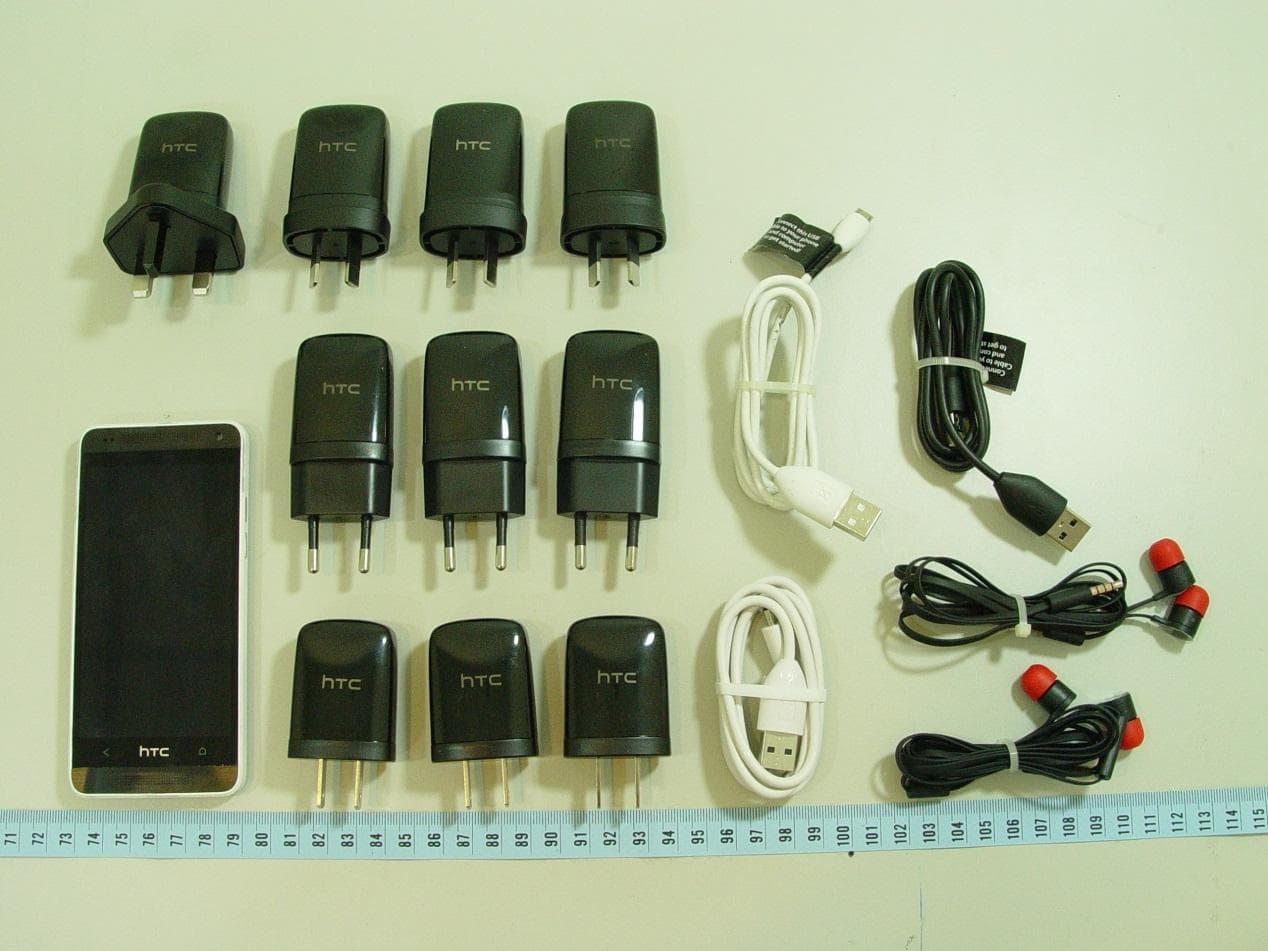
Click to zoom
Application Details
- Equipment Class
- NII - Unlicensed National Information Infrastructure TX
- Date of Grant
- Jul 17, 2013
- Application Purpose
- Original Equipment
- Date of Application
- Jul 15, 2013
- Equipment Note
- Smartphone
- Frequency Range
- 5500.00000000 - 5700.00000000
- Company
- HTC Corporation
- Country
- Taiwan
Documents & Files
Document Text
Text extracted from the exhibit documents filed with the FCC. Open a document above to read the original.
Users Manual
Safety and regulatory guide 2 Safety and regulatory guide Please read before proceeding THE BATTERY IS NOT FULLY CHARGED WHEN YOU TAKE THE DEVICE OUT OF THE BOX. Privacy restrictions Some countries require full disclosure of recorded telephone conversations. Pictograms and graphic symbols Read this manual’s Safety Information and General Precautions. Do not use while re-fuelling Do not use hand-held while driving This device may produce a bright or flashing light For body-worn operation maintain a separation of 1.5 cm Do not dispose of in a fire Small parts may cause a choking hazard Avoid contact with magnetic media This device may produce a loud sound Avoid extreme temperatures Keep away from pacemakers and other personal medical devices Avoid contact with liquid, keep dry Switch off when instructed in hospitals and medical facilities Do not try and disassemble Switch off when instructed in aircraft and airports Do not rely on this device for emergency communications Safety and regulatory guide 3 Switch off in explosive environments Only use approved accessories Important health information and safety precautions When using this product, the safety precautions below must be taken to avoid possible legal liabilities and damages. Retain and follow all product safety and operating instructions. Observe all warnings in the operating instructions on the product. To reduce the risk of bodily injury, electric shock, fire, and damage to the equipment, observe the following precautions. Electrical safety This product is intended for use when supplied with power from the designated battery or power supply unit. Other usage may be dangerous and will invalidate any approval given to this product. Safety precautions for proper grounding installation CAUTION: Connecting to improperly grounded equipment can result in an electric shock to your device. This product is equipped with a USB Cable for connecting with desktop or notebook computer. Be sure your computer is properly grounded (earthed) before connecting this product to the computer. The power supply cord of a desktop or notebook computer has an equipment-grounding conductor and a grounding plug. The plug must be plugged into an appropriate outlet which is properly installed and grounded in accordance with all local codes and ordinances. Safety precautions for power supply unit Use the correct external power source A product should be operated only from the type of power source indicated on the electrical ratings label. If you are not sure of the type of power source required, consult your authorized service provider or local power company. For a product that operates from battery power or other sources, refer to the operating instructions that are included with the product. This product should be operated only with the following designated power supply unit(s). AC adapter: HTC, Model TC U250, TC E250, TC B250, TC A250 Handle battery packs carefully This product contains a Lithium-ion polymer or Lithium-ion battery. 4 Safety and regulatory guide There is a risk of fire and burns if the battery pack is handled improperly. Do not attempt to open or service the battery pack. Do not disassemble, crush, puncture, short external contacts or circuits, dispose of in fire or water, or expose a battery pack to temperatures higher than 60 ̊C (140 ̊F). WARNING: To reduce risk of fire or burns, do not disassemble, crush, puncture, short external contacts, expose to temperature above 60° C (140° F), or dispose of in fire or water. Recycle or dispose of used batteries according to the local regulations or reference guide supplied with your product. Take extra precautions y Keep the device dry and away from water or any liquid as it may cause a short circuit. y The phone should only be connected to products that bear the USB-IF logo or have completed the USB-IF compliance program. y If the battery leaks: y Do not allow the leaking fluid to come in contact with skin or clothing. If already in contact, flush the affected area immediately with clean water and seek medical advice. y Do not allow the leaking fluid to come in contact with eyes. If already in contact, DO NOT rub; rinse with clean water immediately and seek medical advice. y Take extra precautions to keep a leaking battery away from fire as there is a danger of ignition or explosion. Safety and regulatory guide 5 Safety precautions for direct sunlight Keep this product away from excessive moisture and extreme temperatures. Do not leave the product inside a vehicle or in places where the temperature may exceed 60 °C (140°F), such as on a car dashboard, window sill, or behind a glass that is exposed to direct sunlight or strong ultraviolet light for extended periods of time. This may damage the product, overheat the battery, or pose a risk to the vehicle. Prevention of hearing loss CAUTION: Permanent hearing loss may occur if earphones or headphones are used at high volume for prolonged periods of time. NOTE: For France, Earphone (listed below) for this device have been tested to comply with the Sound Pressure Level requirement laid down in the applicable NF EN 50332-1:2000 and/or NF EN 50332-2:2003 standards as required by French Article L. 5232-1. y Earphone, manufactured by HTC, Model Max-300. Safety in aircraft Due to the possible interference caused by this product to an aircraft’s navigation system and its communications network, using this device’s phone function on board an airplane is against the law in most countries. If you want to use this device when on board an aircraft, remember to turn off your phone by switching to Airplane Mode. Environment restrictions Do not use this product in gas stations, fuel depots, chemical plants or where blasting operations are in progress, or in potentially explosive atmospheres such as fuelling areas, fuel storehouses, below deck on boats, chemical plants, fuel or chemical transfer or storage facilities, and areas where the air contains chemicals or p…
Text truncated - open the document above for the full version.
Users Manual
Your HTC XXXX User guide HTC Confidential 20130517 For Certification Conventions used in this guide In this user guide, we use the following symbols to indicate useful and important information: This is a note. A note often gives additional information, such as what happens when you choose to do or not to do a certain action. A note also provides information that may only be applicable to some situations. This is a tip. A tip gives you an alternative way to do a particular step or procedure, or lets you know of an option that you may find helpful. This indicates important information that you need in order to accomplish a certain task or to get a feature to work properly. This provides safety precaution information, that is, information that you need to be careful about to prevent potential problems. 6Conventions used in this guide HTC Confidential 20130517 For Certification Unboxing HTC XXXX 1.BACK 2.USB connector 3.HOME 4.Dual speakers 5.VOLUME 6.Front camera 7.3.5mm headset jack 8.Notification LED 9.POWER 10.Proximity sensor 11.Tray eject hole/SIM card tray §HTC XXXX is available in either a 3G or LTE version, depending on your region and mobile operator. You need an LTE plan to use your operator's 4G/LTE network for voice calls and data services. Check with your operator for details. §If you want to use a screen protector, please don’t cover and block the proximity sensor. You can purchase the dedicated screen protector for HTC XXXX that already has a small opening for the sensor. 7Unboxing HTC Confidential 20130517 For Certification microSIM card HTC XXXX uses a microSIM card. The microSIM card contains your phone number, service details, and memory for storing phonebook contacts and/or text messages. Inserting the SIM card 1.Hold the phone face up. 2.Insert the tip of the SIM eject tool (or a small bent paperclip) into the small hole next to the SIM card tray slot. 3.Push the tip all the way into the hole until the SIM card tray ejects. 4.Pull the SIM card tray out, and place the SIM card (contacts facing down) into the tray. Use a standard microSIM only. Inserting other types (such as nanoSIM with an adapter or a modified SIM) may cause the card to not fit properly or damage the card slot. 5.Insert the SIM card tray back into the slot. 8Unboxing HTC Confidential 20130517 For Certification Removing the SIM card Make sure to switch off HTC XXXX before removing your SIM card. 1.Hold the phone face up and the top panel facing you. 2.Insert the tip of the SIM eject tool (or a small bent paperclip) into the small hole next to the SIM card tray slot. 3.Push the tip all the way into the hole until the SIM card tray ejects. 4.Pull the SIM card tray out, and remove the SIM card. After removing the SIM card, make sure that you insert the empty SIM card tray back into the slot. 9Unboxing HTC Confidential 20130517 For Certification Charging the battery Before you turn on and start using HTC XXXX, it is recommended that you charge the battery. Use only the adapter and the USB cable that came with HTC XXXX to charge the battery. 1.Insert the small end of the USB cable into the USB connector. 2.Insert the other end of the USB cable into the power adapter. 3.Plug in the power adapter to an electrical outlet to start charging the battery. As a safety precaution, the battery stops charging if it overheats. Switching the power on or off Switching the power on Press the POWER button. When you turn on HTC XXXX for the first time, you’ll need to set it up. Switching the power off 1.If the display is off, press the POWER button to turn it back on. If your screen is protected with a lock screen, you need to unlock it. 2.Press and hold the POWER button for a few seconds. 3.Tap Power off on the options menu. 10Unboxing HTC Confidential 20130517 For Certification Want some quick guidance on your phone? Exploring HTC XXXX Tips & Help lets you get the most out of HTC XXXX in seconds. §Ever have the feeling that you're not getting the most out of your phone? Browse through the friendly walkthroughs on Tips & Help to learn how. The topics range from intro to advanced and the Tips & Help feed on the Home screen even recommends topics that you might like. §Need to know how to do something right away? Just type in some keywords and get clear, up-to-date answers right on HTC XXXX. To open Tips & Help from the Home screen, tap > Tips & Help. If you haven't downloaded Tips & Help content yet, or if there's updated content available, just tap the download link to get it. To change the sync settings of Tips & Help, tap > Update settings. Searching Tips & Help 1.In Tips & Help, tap , and then enter the words you want to search for. 2.Tap a search result to jump straight to that item. 11Unboxing HTC Confidential 20130517 For Certification
Attestation Statements
Declaration for DFS client devices July 4, 2013 Dear Examiner: Per KDB# 848637, We, HTC Corporation, declare that following description truly represent our product in consideration (FCC ID: NM8PO58200). Please do not hesitate to contact us, if further info is required. Thanks. a). A channel/frequency plan for the device showing the channels that have active scanning or passive scanning. Active scanning is where the device can transmit a probe (beacon) and passive scanning is where the device can listen only without probes. Below is the channel / frequency plan for the device CH 1 2 3 4 5 6 7 8 9 10 11 Frequency (MHz) 2412 2417 2422 2427 2432 2437 2442 2447 2452 2457 2462 Scan Type Active Active Active Active Active Active Active Active Active Active Active CH 36 38 40 44 46 48 52 54 56 60 62 Frequency (MHz) 5180 5190 5200 5220 5230 5240 5260 5270 5280 5300 5310 Scan Type Active Active Active Active Active Active Passive Passive Passive Passive Passive CH 64 100 102 104 108 110 112 116 118 120 124 Frequency (MHz) 5320 5500 5510 5520 5540 5550 5560 5580 5590 5600 5620 Scan Type Passive Passive Passive Passive Passive Passive Passive Passive Passive Passive Passive CH 126 128 132 134 136 140 149 151 153 157 159 Frequency (MHz) 5630 5640 5660 5670 5680 5700 5745 5755 5765 5785 5795 Scan Type Passive Passive Passive Passive Passive Passive Active Active Active Active Active CH 161 165 Frequency (MHz) 5805 5825 Scan Type Active Active b). For client devices that have software configuration control to operate in different modes (active scanning in some and passive scanning in others) or in different bands (devices with multiple equipment classes or those that operate on non-DFS frequencies), or modular devices that configure the modes of operations through software; the applicant must provide in the application software and operations description that discuss how the software and / or hardware is implemented to ensure that proper operations modes cannot be modified by an end user or an installer. Also, include an attestation that the device complies with the requirements for software configuration control as discussed in KDB #594280. On DFS channels, the WLAN driver on the device operates under the control of an AP at all times, except when in ad-hoc mode, on US non-DFS channels. As described in the answer to question a, the device passively scans DFS frequencies until a master device is detected. The control of this functionality is not accessible to anyone under any conditions. Furthermore, the firmware is locked by proprietary password and cannot be changed or modified by end user. If you should have any question(s) regarding this declaration, please don’t hesitate to contact us. Thank you! _____________________ Daniel Lee / Vice President Bureau Veritas Consumer Products Services (H.K.) Ltd., Taoyuan Branch Fax: +886 (0) 3 3270892 Tel: +886 (0) 3 3183232 E-mail: [email protected]
Cover Letter(s)
宏達國際電子股份有限公司 No. 23, Xinghua Rd., HTC Corporation Taoyuan City 330, Taiwan Date: June 7, 2013 Power of Attorney To whom it may concern, Please be notified that I, Lucy Shih, have designated Daniel Lee of Bureau Veritas Consumer Products Services (H.K.) Ltd., Taoyuan Branch (BV CPS Taoyuan Branch) of Taiwan and Jessica Yang in HTC Corporation as the persons being responsible for this project and to sign the form 731 and other documentation. Any and all acts carried out by Daniel Lee of Bureau Veritas Consumer Products Services (H.K.) Ltd., Taoyuan Branch (BV CPS Taoyuan Branch) of Taiwan and Jessica Yang in HTC Corporation on the matters relating to all processes required in the FCC approval and any communication needed with the national authority, shall have the same legal authority as acts on our own behalf. As defined in 47 CFR Ch. 1.2002 (b), we further certify that neither the applicant nor any party to this application is subject to a denial to Federal benefits, including FCC benefits, pursuant to section 5301 of the Anti-Drug Abuse Act of 1998, 21 U.S.C. 835(a). This authorization is limited to the product of as following: FCC ID: NM8PO58200 If you have any acknowledgement and response, please send it to Daniel Lee of Bureau Veritas Consumer Products Services (H.K.) Ltd., Taoyuan Branch (BV CPS Taoyuan Branch) of Taiwan directly. Should you have any question or comment regarding this matter, please have my best attention. Sincerely yours, Lucy Shih HTC Corporation Fax: 886-2-8912-6307 Tel: 886-2-8912-4138 E-mail: [email protected]
External Photos
The EUT has following accessories. Product Brand MODEL Description Power Adapter 1 Salcomp TC X250 (X=A,E,U) I/P: 100-240Vac, 200mA O/P: 5Vdc, 1A Power Adapter 2 Phihong TC X250 (X=A,E,U) I/P: 100-240Vac, 200mA O/P: 5Vdc, 1A Power Adapter 3 Delta TC X250 (X=A,B,E,U) I/P: 100-240Vac, 200mA O/P: 5Vdc, 1A Battery 1 Formosa BO58100 Rating: 3.8Vdc, 2300mAh Type: Li-ion Battery 2 WTE BO58100 Rating: 3.8Vdc, 2300mAh Type: Li-ion Earphone 1 Merry Max 300 1.1m cable Earphone 2 Cotron Max 300 1.1m cable USB Cable 1 Foxlink DC M600 1m cable USB Cable 2 Foxconn DC M600 1m cable USB Cable 3 Coxoc DC M600 1m cable LCD Panel 1 Sharp LS043K1SC03 -- LCD Panel 2 AU H426TAN01.0 Front Camera PRIMAX S5K6A2 Photo Camera 1 LITEON VD6869 Photo Camera 2 LITEON OV4688
ID Label/Location Info
Label Location (backside) FCC ID: NM8PO58200
Internal Photos
Main Sample 2 nd Sample
RF Exposure Info
Test Laboratory: Bureau Veritas ADT SAR/HAC Testing Lab Date: 2013/04/29 System Check_H835_130429 DUT: Dipole 835 MHz; Type: D835V2; SN: 4d12 0 Communication System: CW; Frequency: 835 MHz;Duty Cycle: 1:1 Medium: H835_0429 Medium parameters used: f = 835 MHz; σ = 0.889 S/m; ε r = 42.897; ρ = 1000 kg/m 3 Ambient Temperature:21.6 °C; Liquid Temperature:20.5 °C DASY5 Configuration: - Probe: EX3DV4 - SN3864; ConvF(9.8, 9.8, 9.8); Calibrated: 2012/07/19; - Sensor-Surface: 2mm (Mechanical Surface Detection) - Electronics: DAE4 Sn1277; Calibrated: 2012/07/19 - Phantom: SAM Phantom_Front; Type: SAM V4.0; Serial: TP 1485 - Measurement SW: DASY52, Version 52.8 (4); SEMCAD X Version 14.6.8 (7028) Pin=250mW/Area Scan (61x81x1): Interpolated grid: dx=1.500 mm, dy=1.500 mm Maximum value of SAR (interpolated) = 2.90 W/kg Pin=250mW/Zoom Scan (5x5x7)/Cube 0: Measurement grid: dx=8mm, dy=8mm, dz=5mm Reference Value = 57.855 V/m; Power Drift = 0.06 dB Peak SAR (extrapolated) = 3.52 W/kg SAR(1 g) = 2.32 W/kg; SAR(10 g) = 1.52 W/kg Maximum value of SAR (measured) = 2.95 W/kg Test Laboratory: Bureau Veritas ADT SAR/HAC Testing Lab Date: 2013/04/27 System Check_H1900_130427 DUT: Dipole 1900 MHz; Type: D1900V2; SN: 5d036 Communication System: CW; Frequency: 1900 MHz;Duty Cycle: 1:1 Medium: H1900_0427 Medium parameters used: f = 1900 MHz; σ = 1.43 S/m; ε r = 40.37; ρ = 1000 kg/m 3 Ambient Temperature:21.8 °C; Liquid Temperature:20.6 °C DASY5 Configuration: - Probe: EX3DV4 - SN3864; ConvF(8.13, 8.13, 8.13); Calibrated: 2012/07/19; - Sensor-Surface: 2mm (Mechanical Surface Detection) - Electronics: DAE4 Sn1277; Calibrated: 2012/07/19 - Phantom: SAM Phantom_Front; Type: SAM V4.0; Serial: TP 1485 - Measurement SW: DASY52, Version 52.8 (4); SEMCAD X Version 14.6.8 (7028) Pin=250mW/Area Scan (61x61x1): Interpolated grid: dx=1.500 mm, dy=1.500 mm Maximum value of SAR (interpolated) = 13.8 W/kg Pin=250mW/Zoom Scan (5x5x7)/Cube 0: Measurement grid: dx=8mm, dy=8mm, dz=5mm Reference Value = 100.1 V/m; Power Drift = 0.15 dB Peak SAR (extrapolated) = 18.8 W/kg SAR(1 g) = 9.8 W/kg; SAR(10 g) = 4.94 W/kg Maximum value of SAR (measured) = 14.4 W/kg Test Laboratory: Bureau Veritas ADT SAR/HAC Testing Lab Date: 2013/05/13 System Check_H2450_130513 DUT: Dipole 2450 MHz; Type: D2450V2; SN: 737 Communication System: CW; Frequency: 2450 MHz;Duty Cycle: 1:1 Medium: H2450_0513 Medium parameters used: f = 2450 MHz; σ = 1.864 S/m; ε r = 37.917; ρ = 1000 kg/m 3 Ambient Temperature:21.1 °C; Liquid Temperature:20.2°C DASY5 Configuration: - Probe: EX3DV4 - SN3801; ConvF(6.7, 6.7, 6.7); Calibrated: 2012/06/22; - Sensor-Surface: 2mm (Mechanical Surface Detection) - Electronics: DAE4 Sn861; Calibrated: 2013/03/19 - Phantom: SAM Phantom_Left; Type: SAM V4.0; Serial: TP 1202 - Measurement SW: DASY52, Version 52.8 (4); SEMCAD X Version 14.6.8 (7028) Pin=250mW/Area Scan (81x81x1): Interpolated grid: dx=1.200 mm, dy=1.200 mm Maximum value of SAR (interpolated) = 19.9 W/kg Pin=250mW/Zoom Scan (7x7x7)/Cube 0: Measurement grid: dx=5mm, dy=5mm, dz=5mm Reference Value = 106.1 V/m; Power Drift = -0.00 dB Peak SAR (extrapolated) = 27.4 W/kg SAR(1 g) = 12.8 W/kg; SAR(10 g) = 5.83 W/kg Maximum value of SAR (measured) = 20.0 W/kg Test Laboratory: Bureau Veritas ADT SAR/HAC Testing Lab Date: 2013/06/21 System Check_H2600_130621 DUT: Dipole 2600 MHz; Type: D2600V2; SN: 1020 Communication System: CW; Frequency: 260 0 MHz;Duty Cycle: 1:1 Medium: H2600_0621 Medium parameters used: f = 2600 MHz; σ = 2.052 S/m; ε r = 37.587; ρ = 10 00 kg/m 3 Ambient Temperature:21.5 °C; Liquid Temperature:20.5 °C DASY5 Configuration: - Probe: EX3DV4 - SN3590; ConvF(7.69, 7.69, 7.69); Calibrated: 2013/02 /2 0; - Sensor-Surface: 2mm (Mechanical Surface Detection) - Electronics: DAE3 Sn360; Calibrated: 2013/01/30 - Phantom: SAM Phantom_Front; Type: SAM V4.0; Serial: TP 1653 - Measurement SW: DASY52, Version 52.8 (4); SEMCAD X Version 14.6.8 (7028) Pin=250mW/Area Scan (81x81x1): Interpolated grid: dx=1.200 mm, dy=1.200 mm Maximum value of SAR (interpolated) = 20.7 W/kg Pin=250mW/Zoom Scan (7x7x7)/Cube 0: Measurement grid: dx=5mm, dy=5mm, dz=5mm Reference Value = 107.0 V/m; Power Drift = -0.02 d B Peak SAR (extrapolated) = 28.5 W/kg SAR(1 g) = 13.5 W/kg; SAR(10 g) = 6.08 W/kg Maximum value of SAR (measured) = 20.8 W/kg Test Laboratory: Bureau Veritas ADT SAR/HAC Testing Lab Date: 2013/05/22 System Check_H5200_130522 DUT: Dipole 5 GHz; Type: D5GHzV2; SN: 1019 Communication System: CW; Frequency: 5200 MHz;Duty Cycle: 1:1 Medium: H5G_0522 Medium parameters used: f = 5200 MHz; σ = 4.846 S/m; ε r = 36.108; ρ = 1000 kg/m 3 Ambient Temperature:21.4 °C; Liquid Temperature:20.5 °C DASY5 Configuration: - Probe: EX3DV4 - SN3650; ConvF(5.2 , 5.2, 5.2); Calibrated: 2013/04/30; - Sensor-Surface: 2mm (Mechanical Surface Detection) - Electronics: DAE4 Sn1277; Calibrated: 2012/07/19 - Phantom: SAM Phantom_Front; Type: SAM V4.0; Serial: TP 1654 - Measurement SW: DASY52, Version 52.8 (4); SEMCAD X Version 14.6.8 (7028) Pin=100mW/Area Scan (91x91x1): Interpolated grid: dx=1.000 mm, dy=1.000 mm Maximum value of SAR (interpolated) = 17.3 W/kg Pin=100mW/Zoom Scan (7x7x12)/Cube 0: Measurement grid: dx=4mm, dy=4mm, dz=2mm Reference Value = 63.098 V/m; Power Drift = 0.03 dB Peak SAR (extrapolated) = 34.6 W/kg SAR(1 g) = 8.31 W/kg; SAR(10 g) = 2.38 W/kg Maximum value of SAR (measured) = 17.3 W/kg Test Laboratory: Bureau Veritas ADT SAR/HAC Testing Lab Date: 2013/05/22 System Check_H5300_130522 DUT: Dipole 5 GHz; Type: D5GHzV2; SN: 1019 Communication System: CW; Frequency: 5300 MHz;Duty Cycle: 1:1 Medium: H5G_0522 Medium parameters used: f = 5300 MHz; σ = 4.96 S/m; ε r = 35.93; ρ = 1000 kg/m 3 Ambient Temperature:21.4 °C; Liquid Temperature:20.5 °C DASY5 Configuration: - Probe: EX3DV4 - SN3650; ConvF(5 .07, 5.07, 5.07); Calibrated: 2013/04/30; - Sensor-Surface: 2mm (Mechanical Surface Detection) - Electronics: DAE4 Sn1277; Calibrated: 2012/07/19 - Phantom: SAM Phantom_Front; Type: SAM V4.0; Serial: TP 1654 - Measur…
Text truncated - open the document above for the full version.
RF Exposure Info
Test Laboratory: Bureau Veritas ADT SAR/HAC Testing Lab Date: 2013/04/29 P01 GSM850_GPRS12_ Right Cheek_Ch189_Sample 1_ANT-1 DUT: 130408C20 Communication System: GPRS12; Frequency: 836.4 MHz;Duty Cycle: 1:2 Medium: H835_0429 Medium parameters used: f = 836.4 MHz; σ = 0.89 S/m; ε r = 42.88; ρ = 1000 kg/m 3 Ambient Temperature:21.6 °C; Liquid Temperature:20.5 °C DASY5 Configuration: - Probe: EX3DV4 - SN3864; ConvF(9.8, 9.8, 9.8); Calibrated: 2012/07/19; - Sensor-Surface: 2mm (Mechanical Surface Detection) - Electronics: DAE4 Sn1277; Calibrated: 2012/07/19 - Phantom: SAM Phantom_Front; Type: SAM V4.0; Serial: TP 1485 - Measurement SW: DASY52, Version 52.8 (4); SEMCAD X Version 14.6.8 (7028) Ch189/Area Scan (51x101x1): Interpolated grid: dx=1.500 mm, dy=1.500 mm Maximum value of SAR (interpolated) = 1.12 W/kg Ch189/Zoom Scan (5x5x7)/Cube 0: Measurement grid: dx=8mm, dy=8mm, dz=5mm Reference Value = 24.484 V/m; Power Drift = -0.02 dB Peak SAR (extrapolated) = 1.18 W/kg SAR(1 g) = 0.703 W/kg; SAR(10 g) = 0.435 W/kg Maximum value of SAR (measured) = 0.914 W/kg Test Laboratory: Bureau Veritas ADT SAR/HAC Testing Lab Date: 2013/04/27 P02 GSM1900_GPRS12_Left Cheek_Ch512_Sample 1_ANT-0 DUT: 130408C20 Communication System: GPRS12; Frequency: 1850.2 MHz;Duty Cycle: 1:2 Medium: H1900_0427 Medium parameters used: f = 1850.2 MHz; σ = 1.367 S/m; ε r = 40.644; ρ = 1000 kg/m 3 Ambient Temperature:21.8 °C; Liquid Temperature:20.6 °C DASY5 Configuration: - Probe: EX3DV4 - SN3864; ConvF(8.13, 8.13, 8.13); Calibrated: 2012/07/19; - Sensor-Surface: 2mm (Mechanical Surface Detection) - Electronics: DAE4 Sn1277; Calibrated: 2012/07/19 - Phantom: SAM Phantom_Front; Type: SAM V4.0; Serial: TP 1485 - Measurement SW: DASY52, Version 52.8 (4); SEMCAD X Version 14.6.8 (7028) Ch512/Area Scan (51x101x1): Interpolated grid: dx=1.500 mm, dy=1.500 mm Maximum value of SAR (interpolated) = 1.11 W/kg Ch512/Zoom Scan (5x5x7)/Cube 0: Measurement grid: dx=8mm, dy=8mm, dz=5mm Reference Value = 12.101 V/m; Power Drift = 0.01 dB Peak SAR (extrapolated) = 1.25 W/kg SAR(1 g) = 0.867 W/kg; SAR(10 g) = 0.552 W/kg Maximum value of SAR (measured) = 1.08 W/kg Test Laboratory: Bureau Veritas ADT SAR/HAC Testing Lab Date: 2013/04/27 P03 WCDMA II_RMC12.2k_Left Cheek_Ch9262_Sample 1_ANT-0 DUT: 130408C20 Communication System: WCDMA; Frequency: 1852.4 MHz;Duty Cycle: 1:1 Medium: H1900_0427 Medium parameters used: f = 1852.4 MHz; σ = 1.37 S/m; ε r = 40.633; ρ = 1000 kg/m 3 Ambient Temperature:21.8 °C; Liquid Temperature:20.6 °C DASY5 Configuration: - Probe: EX3DV4 - SN3864; ConvF(8.13, 8.13, 8.13); Calibrated: 2012/07/19; - Sensor-Surface: 2mm (Mechanical Surface Detection) - Electronics: DAE4 Sn1277; Calibrated: 2012/07/19 - Phantom: SAM Phantom_Front; Type: SAM V4.0; Serial: TP 1485 - Measurement SW: DASY52, Version 52.8 (4); SEMCAD X Version 14.6.8 (7028) Ch9262/Area Scan (51x101x1): Interpolated grid: dx=1.500 mm, dy=1.500 mm Maximum value of SAR (interpolated) = 0.933 W/kg Ch9262/Zoom Scan (5x5x7)/Cube 0: Measurement grid: dx=8mm, dy=8mm, dz=5mm Reference Value = 10.197 V/m; Power Drift = 0.08 dB Peak SAR (extrapolated) = 1.08 W/kg SAR(1 g) = 0.748 W/kg; SAR(10 g) = 0.476 W/kg Maximum value of SAR (measured) = 0.934 W/kg Test Laboratory: Bureau Veritas ADT SAR/HAC Testing Lab Date: 2013/06/21 P04 LTE7_QPSK_20M_Left Cheek_Ch20850_1RB_OS50_Sample 1_ANT-0 DUT: 130408C20 Communication System: LTE; Frequency: 2510 MHz;Duty Cycle: 1:1 Medium: H2600_0621 Medium parameters used: f = 2510 MHz; σ = 1.948 S/m; ε r = 37.927; ρ = 1000 kg/m 3 Ambient Temperature:21.5 °C; Liquid Temperature:20.5 °C DASY5 Configuration: - Probe: EX3DV4 - SN3590; ConvF(7.69, 7.69, 7.69); Calibrated: 2013/02/20; - Sensor-Surface: 2mm (Mechanical Surface Detection) - Electronics: DAE3 Sn360; Calibrated: 2013/01/30 - Phantom: SAM Phantom_Front; Type: SAM V4.0; Serial: TP 1653 - Measurement SW: DASY52, Version 52.8 (4); SEMCAD X Version 14.6.8 (7028) Ch20850/Area Scan (71x131x1): Interpolated grid: dx=1.200 mm, dy=1.200 mm Maximum value of SAR (interpolated) = 0.392 W/kg Ch20850/Zoom Scan (5x5x7)/Cube 0: Measurement grid: dx=8mm, dy=8mm, dz=5mm Reference Value = 2.065 V/m; Power Drift = -0.11 dB Peak SAR (extrapolated) = 0.529 W/kg SAR(1 g) = 0.285 W/kg; SAR(10 g) = 0.148 W/kg Maximum value of SAR (measured) = 0.397 W/kg Test Laboratory: Bureau Veritas ADT SAR/HAC Testing Lab Date: 2013/05/13 P05 802.11b_Left Cheek_Ch6_Sample 1 DUT: 130408C20 Communication System: WLAN_2.4G; Frequency: 2437 MHz;Duty Cycle: 1:1 Medium: H2450_0513 Medium parameters used: f = 2437 MHz; σ = 1.849 S/m; ε r = 37.959; ρ = 1000 kg/m 3 Ambient Temperature:21.1 °C; Liquid Temperature:20.2°C DASY5 Configuration: - Probe: EX3DV4 - SN3801; ConvF(6.7, 6.7, 6.7); Calibrated: 2012/06/22; - Sensor-Surface: 2mm (Mechanical Surface Detection) - Electronics: DAE4 Sn861; Calibrated: 2013/03/19 - Phantom: SAM Phantom_Left; Type: SAM V4.0; Serial: TP 1202 - Measurement SW: DASY52, Version 52.8 (4); SEMCAD X Version 14.6.8 (7028) Ch6/Area Scan (61x121x1): Interpolated grid: dx=1.200 mm, dy=1.200 mm Maximum value of SAR (interpolated) = 0.754 W/kg Ch6/Zoom Scan (5x5x7)/Cube 0: Measurement grid: dx=8mm, dy=8mm, dz=5mm Reference Value = 14.393 V/m; Power Drift = 0.06 dB Peak SAR (extrapolated) = 0.930 W/kg SAR(1 g) = 0.404 W/kg; SAR(10 g) = 0.172 W/kg Maximum value of SAR (measured) = 0.647 W/kg Test Laboratory: Bureau Veritas ADT SAR/HAC Testing Lab Date: 2013/05/22 P06 802.11a_Left Tilted_Ch48_Sample1 DUT: 130408C20 Communication System: WLAN_5G; Frequency: 5240 MHz;Duty Cycle: 1:1 Medium: H5G_0522 Medium parameters used: f = 5240 MHz; σ = 4.892 S/m; ε r = 36.023; ρ = 1000 kg/m 3 Ambient Temperature:21.4 °C; Liquid Temperature:20.5 °C DASY5 Configuration: - Probe: EX3DV4 - SN3650; ConvF(5.2, 5.2, 5.2); Calibrated: 2013/04/30; - Sensor-Surface: 2mm (Mechanical Surface Detection) - Electronics: DAE4 Sn1277; Calibrated: 2012/07/19 - Phantom: SAM Phantom_Front; Type: SAM V4.0; Serial: TP 1654 - Measurement SW: DASY52, Versi…
Text truncated - open the document above for the full version.
RF Exposure Info
FCC SAR Test Report Report Format Version 5.0.0 Page No. : 1 of 46 Report No. : SA130408C20 Issued Date : Jul. 02, 2013 Revision : R01 FCC SAR Test Report Report No. : SA130408C20 Applicant : HTC Corporation Address : No. 23, Xinghua Rd., Taoyuan City 330, Taiwan Product : Smartphone FCC ID : NM8PO58200 Brand : HTC Model No. : PO58200 Standards : FCC 47 CFR Part 2 (2.1093) / IEEE C95.1:1991 / IEEE 1528:2003 FCC OET Bulletin 65 Supplement C (Edition 01-01) KDB 248227 D01 v01r02 / KDB 447498 D01 v05r01 / KDB 648474 D04 v01r01 KDB 941225 D01 v02 / KDB 941225 D02 v02r02 / KDB 941225 D03 v01 KDB 941225 D05 v02r02 / KDB 941225 D06 v01r01 Date of Testing : Apr. 27, 2013 ~ Jun. 22, 2013 CERTIFICATION: The above equipment have been tested by Bureau Veritas Consumer Products Services (H.K.) Ltd., Taoyuan Branch - Taiwan HwaYa Lab, and found compliance with the requirement of the above standards. The test record, data evaluation & Equipment Under Test (EUT) configurations represented herein are true and accurate accounts of the measurements of the sample’s SAR characteristics under the conditions specified in this report. It should not be reproduced except in full, without the written approval of our laboratory. The client should not use it to claim product certification, approval, or endorsement by TAF or any government agencies. Prepared By : Ivonne Wu / Senior Specialist Approved By : Roy Wu / Manager This report is for your exclusive use. Any copying or replication of this report to or for any other person or entity, or use of our name or trademark, is permitted only with our prior written permission. This report sets forth our findings solely with respect to the test samples identified herein. The results set forth in this report are not indicative or representative of the quality or characteristics of the lot from which a test sample was taken or any si…
Text truncated - open the document above for the full version.
Contact Information
Applicant
Sylvia Shen
Test Firm
Bureau Veritas CPS (H.K.) Ltd., Taoyuan BranchRichard Chen
Technical Specifications
| # | Rule Parts | Frequency Range | Power Output |
|---|---|---|---|
| 3 | 15E | 5.50 GHz - 5.70 GHz | 39.00 mW |
Other Applications from HTC Corporation
NM82QDJ100
Dec 31, 2025VIVE Headset
Equipment Class
DSS - Part 15 Spread Spectrum TransmitterNM82QD4100
Sep 01, 2024Headset
Equipment Class
6XD - 15E 6 GHz Low Power Indoor Client
NM82QBP100
May 10, 2023Tracker
Equipment Class
DTS - Digital Transmission System
NM82QCD100
May 07, 2023Dongle
Equipment Class
DTS - Digital Transmission System
NM82QBB100
Jan 08, 2023Headset
Equipment Class
DTS - Digital Transmission System