OH2BLEGST2Disposable glucose sensor transmitter
Medtronic MiniMed, Inc.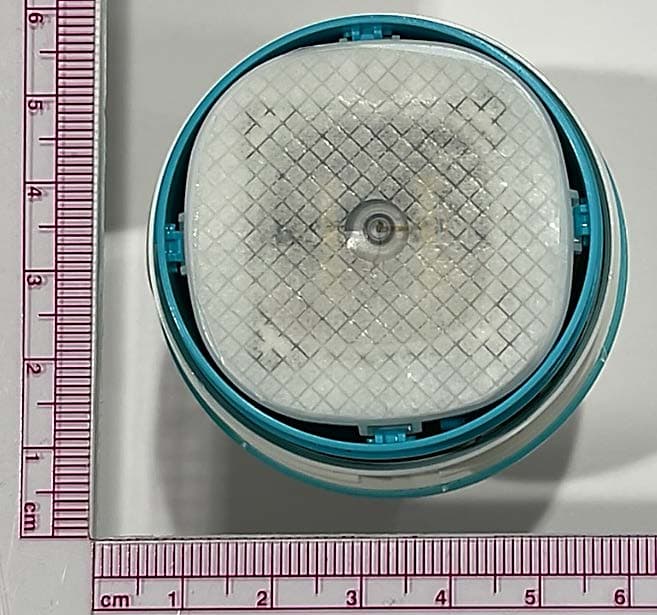
Click to zoom
Application Details
- Equipment Class
- DTS - Digital Transmission System
- Date of Grant
- Jul 08, 2024
- Application Purpose
- Original Equipment
- Date of Application
- Jun 27, 2024
- Equipment Note
- Disposable glucose sensor transmitter
- Frequency Range
- 2402.00000000 - 2480.00000000
- Company
- Medtronic MiniMed, Inc.
- Country
- United States
Documents & Files
Document Text
Text extracted from the exhibit documents filed with the FCC. Open a document above to read the original.
Users Manual
DS5 Sensor User Guide CAUTION: Investigational device. Limited by United States Law to investigational use. Exclusively for Clinical Investigation. M050862C001_1 M050862C001DOC1_A.indd 1M050862C001DOC1_A.indd 13/25/24 4:16 PM3/25/24 4:16 PM M050862C001DOC1_A.indd 2M050862C001DOC1_A.indd 23/25/24 4:16 PM3/25/24 4:16 PM - 1 - English Introduction The DS5 sensor is designed to detect, measure, store the interstitial glucose signal, and sensor diagnostic data throughout the duration of sensor wear. At the end of the study, the sensor is removed from the patient and the stored data is downloaded using a personal computer (PC) download application. Indications for use The DS5 sensor is intended to communicate with a compatible download utility to record glucose information. The DS5 sensor is intended for single-patient, single-use only. All components of the DS5 sensor are disposable. The sensor is pre-loaded into the disposable inserter. Contraindications No contraindications are associated with the DS5 sensor use. User safety Warnings and precautions Read this entire user guide before attempting to insert the DS5 sensor. The inserter portion of the sensor does not work the same way as other Medtronic insertion devices. The sensor is not inserted the same way as other Medtronic sensors. Failure to follow directions may result in improper insertion, pain, or injury. Do not use the DS5 sensor adjacent to other electrical equipment that may cause interference with normal system operation. For more information on electrical equipment that may cause interference with normal system operation, see “Exposure to magnetic fields and radiation” on page 3. Do not use continuous glucose monitoring if hydroxyurea, also known as hydroxycarbamide, is taken. Hydroxyurea is used to treat certain diseases, such as cancer and sickle cell anemia. Hydroxyurea use results in higher sensor glucose readings compared to blood glucose readings. Taking hydroxyurea while using continuous glucose monitoring can result in substantially higher sensor glucose readings in reports than actual blood glucose readings. Always check the label of any medication being taken to confirm if hydroxyurea or hydroxycarbamide is an active ingredient. If hydroxyurea is taken, consult a healthcare professional. Use additional blood glucose meter readings to verify glucose levels. Always consult a healthcare professional before using sensor glucose values to make treatment decisions if a medication that contains acetaminophen or paracetamol is taken while wearing the sensor. Medications that contain acetaminophen or paracetamol can M050862C001DOC1_A.indd 1M050862C001DOC1_A.indd 13/25/24 4:16 PM3/25/24 4:16 PM - 2 - falsely raise sensor glucose readings. The level of inaccuracy depends on the amount of acetaminophen active in the body and can differ for each person. Falsely elevated sensor readings can result in over-administration of insulin, which can cause hypoglycemia. Medications that contain acetaminophen or paracetamol include, but are not limited to, cold medicines and fever reducers. Check the label of any medications being taken to see if acetaminophen or paracetamol is an active ingredient. Use additional blood glucose meter readings to confirm blood glucose levels. Always examine the DS5 sensor box for damage. If the sensor box is open or damaged, examine the sensor for damage. If the sensor is visibly damaged, discard the device to avoid possible contamination. Do not use the DS5 sensor if any part of the device is damaged. If the device is damaged, discard the device to avoid possible contamination. Do not use the DS5 sensor if the device is dropped (inside or outside of the customer box). If the sensor is dropped, return the sensor to the clinical site. Do not use the DS5 sensor if the tamper band is broken, damaged, or missing from the device. The sensor is sterile and non-pyrogenic unless the device is damaged. If the tamper band is broken, damaged, or missing from the device, the sensor and the needle can be exposed to contamination. A sensor and needle exposed to contamination can cause site infection if inserted into the body. Do not use the DS5 sensor if the cap label is broken, damaged, or missing from the device. The sensor is sterile and non-pyrogenic unless the device is damaged. If the cap label is broken, damaged, or missing from the device, the sensor and the needle can be exposed to contamination. A sensor and needle exposed to contamination can cause site infection if inserted into the body. Do not unscrew or remove the DS5 sensor cap until the device is ready to be used. Do not remove the cap and place it back on the device. Do not remove the cap and store the device for future use. The sensor is sterile and non-pyrogenic unless the cap is removed from the device or the tamper band is broken. If the cap is not on the device or the tamper band is broken, the sensor and the needle can be exposed to contamination. A sensor and needle exposed to contamination can cause site infection if inserted into the body. Do not change or modify the DS5 sensor. Changing or modifying the sensor can result in improper insertion, pain, or injury. Do not let children hold the DS5 sensor without adult supervision. Do not let children put any part of the sensor in their mouth. This product poses a choking hazard for young children that can result in serious injury or death. Watch for bleeding at the insertion site on top of the DS5 sensor. If bleeding occurs, apply steady pressure with a sterile gauze pad or clean cloth placed on top of the sensor for up to three minutes. If bleeding continues, is significantly visible on top of the sensor, or if there is M050862C001DOC1_A.indd 2M050862C001DOC1_A.indd 23/25/24 4:16 PM3/25/24 4:16 PM - 3 - excessive pain or discomfort after insertion, follow these steps: 1. Remove the DS5 sensor and continue to apply steady pressure until the bleeding stops. 2. Dispose of the DS5 sensor. See “Disposal”…
Text truncated - open the document above for the full version.
Attestation Statements
CKC Certification Services, LLC CB: US0103; NB/AB: 0976 5046 Sierra Pines Drive Mariposa, CA 95338 Phone: 1 800-500-4EMC (4362) Fax: 209-787-5568 Email: [email protected] APP-FCC-A Page 1 of 2 Rev 3 APP-FCC-A Applicant Attestation Applicant Information Company Name: Medtronic Minimed Contact Name: Jonathan Tabalujan Contact Title: Sr. Electrical Engineer – RF Company Address: 18000 Devonshire St Northridge, CA 91325 Telephone No: +1 (818) 576-5273 Facsimile No: N/A Email Address: [email protected] Certification Type / Equipment Identification Certification Program: FCC Equipment Authorization / Radio Certification Certification Number: OH2BLEGST2 The equipment identified above ☐ is / ☒ is not “covered” equipment prohibited from receiving an equipment authorization pursuant to 47 CFR Part 2, Subpart J, §2.903. The applicant identified above ☐ is / ☒ is not identified on the FCC’s “Covered List” as an entity, affiliate, or subsidiary which produces equipment on the “Covered List” or identified as an entity which has rebranded or relabeled equipment produced by entities identified on the “Covered List.” I hereby attest and certify that the above statements are true and correct. Signature of Authorized Individual: 1 Printed Name: Jonathan Tabalujan Title of authorized signature: Sr. Electrical Engineer - RF Date 5/10/2024 Note this attestation shall be signed by the applicant or their direct appointee within the same legal entity. A third party agent is not permitted to sign on behalf of the applicant. 1 Signature is not subject to the FCC’s authorized individual policy ( KDB 852134) and may be signed by any appropriate company official. CKC Certification Services, LLC CB: US0103; NB/AB: 0976 5046 Sierra Pines Drive Mariposa, CA 95338 Phone: 1 800-500-4EMC (4362) Fax: 209-787-5568 Email: [email protected] APP-FCC-A Page 2 of 2 Rev 3 Attachment A – Additional Information The FCC’s “Covered List” includes certain “telecommunications equipment” and “video surveillance equipment” produced by specific manufacturers, their Affiliates or Subsidiaries and including any products produced by these entities which are rebranded or relabeled by other entities. (191, 184, 185, 188) 2 The FCC claims the identified equipment poses an unacceptable risk to United States national security. Telecommunications Equipment (195) : Any equipment used in fixed or mobile networks that provides advanced communications service, provided the equipment includes or uses electronic components, as defined under section 1.50001(c). Video Surveillance Equipment (205) : Any equipment that is used in fixed and mobile networks that provides advanced communications service in the form of a video surveillance service, provided the equipment includes or uses electronic components. Advanced Communications Service (195, 205) Any equipment that can be used in such a fixed or mobile broadband network to enable users to originate and receive high quality voice, data, graphics, and video telecommunications service using any technology with connection speeds of at least 200 kbps in either direction. Affiliate (183) : An entity that (directly or indirectly) owns or controls, is owned or controlled by, or is under common ownership or control with, another entity, where the term “own” means to have, possess, or otherwise control an equity interest (or the equivalent thereof) of more than 10 percent. Subsidiary (184) : Any entity in which such named entity directly or indirectly (1) holds de facto control or (2) owns or controls more than 50% of the total voting power of the entity’s outstanding voting stock. Useful Links: FCC Covered List https://www.fcc.gov/supplychain/coveredlist 47 CFR Part 2 Subpart J (including 2.903 and 2.911) https://www.ecfr.gov/current/title-47/chapter-I/subchapter-A/part-2/subpart-J FCC KDB System: https://apps.fcc.gov/oetcf/kdb/index.cfm FCC Report and Order 22-84 https://docs.fcc.gov/public/attachments/FCC-22-84A1.pdf 2 Parenthetical references are citations of paragraph numbers in FCC Report and Order FCC 22-84 (ET Docket 21.232).
Attestation Statements
Attestation For United States Agent for Service of Process Self-Designation for US Based Manufacturers Only CKC CS PUB FCC AFSOP Self Designation v5 Applicant / Equipment Manufacturer Information Company Name: Medtronic Minimed Grantee Code: OH2 FRN (10-Digit Number): 0006729248 Applicant Attestation The undersigned hereby consents: a) to self-designation as US Agent for Service of Process; and b) to accept responsibility and obligation to maintain self-designation for no less than one year after either all marketing and importation of the applicable equipment within the U.S has been permanently terminated, or the conclusion of any Commission-related administrative or judicial proceeding involving the equipment, whichever is later; and c) to accept service of process in the US for matters related to the applicable equipment and at the physical address and email address identified in the applicant’s grantee code registration for equipment authorization applications under certification pursuant to 47 CFR Part 2 Subpart J; and d) to maintain current grantee code information on file in accordance with 47 CFR Part 2.929. Signature of Applicant: Printed Name: Jonathan Tabalujan Date: 5/7/2024
Cover Letter(s)
Medtronic Minimed 18000 Devonshire St. 18000 Devonshire St Northridge, CA 91325 3/21/2024 To Whom It May Concern: We hereby delegate CKC Certification Services, LLC (CKC CS) power of attorney to act on our behalf in matters pertaining to certification of products. The actions of CKC CS shall be considered the same as our own. Sincerely, Jonathan Tabalujan Sr. Electrical Engineer - RF Note: Signature is subject to FCC’s authorized individual policy KDB 852134; signature must be the named grantee or an authorized delegate.
Cover Letter(s)
Medtronic Confidential Medtronic MiniMed, Inc. 18000 Devonshire Street Northridge, CA-91325, USA www.medtronicdiabetes.com May 7, 2024 Equipment Authorization Branch Federal Communications Commission Columbia, MD 21046 Subject: Confidentiality Request Letter pertaining to the certification of FCC ID No: OH2BLEGST2 To whom it may concern, Medtronic MiniMed, Inc. (“Medtronic”) requests that the information contained in the items enumerated below pertaining to the above-referenced application be withheld from public disclosure in accordance with Commission’s Rules, 47 C.F.R. § 0.457(d) and 0.459, following grant of the application. The confidential information is embodied in circuit diagrams, detailed explanations, parts lists, block diagram, and internal photographs of a device designed for patients under the care of a medical professional. As such, this material is treated as highly confidential business information and information that could convey trade secrets pertaining to manufacturing and design techniques. The information for which confidentiality is sought is employed in the design and manufacture of medical device systems that are offered on a highly competitive basis. Customers for this equipment have a variety of competing sources of supply from both domestic and foreign suppliers. Disclosure would, in effect, give away the fruits of the labors of Medtronic MiniMed’s engineering personnel, who have designed the equipment and the manufacturing processes. Disclosure would also offer competitors additional unwarranted insight into the state of product development thereby allowing such competitors an advantage that would not be available to Medtronic MiniMed. The information for which confidential treatment is sought is kept confidential by Medtronic MiniMed and not made available to third parties except pursuant to arrangements designed to prevent public disclosure (Non-disclosure Agreements, of which an example is attached to this letter). To the knowledge of those preparing this application, the information has not been disclosed publicly heretofore. The protection sought is narrowly drawn and pertains to certain specific implementations of the technology incorporated into the device for which certification is sought. Medtronic Confidential Long-Term Confidentiality The materials set forth in the following exhibits, which are segregated from the non-confidential exhibits of the application, are the ones for which Medtronic requests Long-Term Confidentiality: - Internal Photos - Schematics - Block Diagram - Operational description - Parts List/Tune-Up Procedure Following the Equipment Authorization Confidentiality Request Procedures as described in KDB Guidance 726920 D01 of April 8 th , 2016, Internal Photos may be held Long-Term Confidential under the condition that the circuit board or internal components are not accessible to users. Medtronic MiniMed’s Glucose Sensor Transmitters, which are the subject of this future filing, are not available to the public. The devices are part of a Continuous Glucose Monitoring system which are Class 3 systems regulated by the FDA and are available by prescription only by health care professionals. To avoid opening, the models are constructed in a manner that they cannot be easily opened. The devices have no screws and are sealed by ultrasonic seam welding, opening the device is not possible without damaging the external case and internal parts. Therefore, the equipment to which this Long-Term Confidentiality request pertains satisfies this criterion. Sincerely, Jonathan Tabalujan Sr. Electrical Engineer – RF Medtronic MiniMed, Inc.
Cover Letter(s)
Medtronic Confidential June 18, 2024 Subject: FCC ID location for FCC ID No: OH2BLEGST2 To whom it may concern: Medtronic MiniMed requests review of our proposal for FCC Identification labeling pursuant to 47 CFR § 2.925 and 2.926 for the Simplera Sensor The Simplera sensor is a small body worn glucose sensor designed to aid in the monitoring of interstitial glucose levels in people with diabetes. The device measures 2.6 cm by 2.6 cm. The device is a disposal medical device, worn for seven days and is only available via prescription under the care of a licensed physician. The Simplera sensor is worn directly attached to the skin, affixed via an adhesive patch. The primary placement site is the back of the upper arm driven by accuracy and discreteness. The device uses a monolithic housing with no compartments. The Simplera sensor is intended to provide patients with convenient access to real time glucose levels, and thus discreteness is a key product attribute. For this reason, there are no markings on the face of the device. The Simplera sensor is placed in a separate housing or “Serter” from the factory during which time the device is deactivated. The “Serter” is used by the patient to attach the Simplera sensor onto the skin. Medtronic MiniMed proposes to include the FCC ID on the Serter portion of the device, which is visible to the user. Medtronic Confidential The serter is an integral part of the medical device and is often retained by the patient post sensor application to aid in pairing the device to other components of the system. The FCC ID and other required labeling is also included in the Instructions for Use (User Manual), which accompanies the Simplera sensor in the customer packaging. Given the small size, body worn nature, and discreteness of the sensor Medtronic believes the Serter portion of the medical device as well as the IFU are the best locations for the FCC ID, and otherwise meets the requirements of KDB 784748 D01 section 3 for small devices. Sincerely, Jonathan Tabalujan Sr. Electrical Engineer - RF Medtronic MiniMed, Inc.
External Photos
External Pictures Top View Bottom View Side View External Pictures With Serter External Pictures
ID Label/Location Info
Example of ID Label showing FCC ID: Example of ID Label placement:
RF Exposure Info
LP100045_RFX MPE Report Form_Rev10 RADIO FREQUENCY EXPOSURE REPORT FOR THE Simplera Model: MMT-DSSOC* *(See Appendix A for Manufacturers Declaration) Report No.: 109793-4 Date of issue: May 16, 2024 PREPARED FOR: Jonathan Tabalujan Medtronic MiniMed 18000 Devonshire Street Northridge, CA 91325 PREPARED BY: Steven Pittsford CKC Laboratories, Inc. 5046 Sierra Pines Drive Mariposa, CA 95338 The test data contained in this report documents the observed testing parameters pertaining to and are relevant for only the sample equipment tested in the agreed upon operational mode(s) and configuration(s) as identified herein. Compliance assessment remains the client’s responsibility. This report may not be used to claim product endorsement by A2LA or any government agencies. This test report has been authorized for release under quality control from CKC Laboratories, Inc. Steve Behm Director of Quality Assurance & Engineering Services CKC Laboratories, Inc. Page 2 of 14 Report No: 109793-4 Purpose: To demonstrate compliance with United States, Canada, Australia, New Zealand, European Union and/or United Kingdom RF Exposure requirements for Portable equipment (devices used ≤20cm from the body) with power output below exemption levels or Mobile equipment (devices used >20cm from the body) where Maximum Permissible Exposure (MPE) Calculations apply. Device and Antenna Operating Configuration: Device operating at maximum output power with continuous transmission of modulated data. Method: This equipment is evaluated in accordance with the guidelines set forth in 47 CFR 1.1310, KDB 447498 & ANSI C95.1 for the US, Health Canada Safety Code 6 & RSS 102 for Canada, ARPANSA RPS S- 1 for AU & NZ and EN 62479 or EN 62311 for EU and UK. Other Considerations: Report considers stand-alone equipment configurations only. RF Exposure limits are calculated at the mid-point of each operating band. Referenced Test Reports: The following test reports were referenced in conjunction with this assessment: 109793-3 Decision Rule: Outcome of RF exposure assessment is listed in the comment section(s) below as a binary statement for simple acceptance rule according to ILAC-G8 (2019). Page 3 of 14 Report No: 109793-4 RF Exposure Portable Equipment Assessment Exemption Calculations (Single Transmitter, Stand Alone) US Exemption Power Reported is: ☒ Peak ☐ Average Limit Used is: ☒ General Population ☐ Occupational Exposure Criteria: 47 CFR 1.1307(b)(3)(i) Criteria A Operating Band MHz Power dBm Ant Type/Gain dBi EIRP dBm Sep. Dist mm Exemption Limit Comment dBm mW 2440 NA NA -4.0 5 0 1 Pass IC Exemption Power Reported is: ☒ Peak ☐ Average Limit Used is: ☒ General Population ☐ Occupational Exposure Operating Band MHz Power dBm Ant Type/Gain dBi EIRP dBm Sep Dist mm Exemption Limit Comment dBm mW 2440 NA NA -4.0 5 6.1 4.0 Pass EU Exemption Power Reported is: ☒ Peak ☐ Average Limit Used is: ☒ General Population ☐ Occupational Exposure Operating Band MHz Power dBm Ant Type/Gain dBi EIRP dBm Exemption Limit Comment dBm mW 2440 NA NA -4.0 13 20 Pass UK Exemption Power Reported is: ☒ Peak ☐ Average Limit Used is: ☒ General Population ☐ Occupational Exposure Operating Band MHz Power dBm Ant Type/Gain dBi EIRP dBm Exemption Limit Comment dBm mW 2440 NA NA -4.0 13 20 Pass AU Exemption Power Reported is: ☒ Peak ☐ Average Limit Used is: ☒ General Population ☐ Occupational Exposure Operating Band MHz Power dBm Ant Type/Gain dBi EIRP dBm Exemption Limit Comment dBm mW 2440 NA NA -4.0 13 20 Pass NZ Exemption Power Reported is: ☒ Peak ☐ Average Limit Used is: ☒ General Population ☐ Occupational Exposure Operating Band MHz Power dBm Ant Type/Gain dBi EIRP dBm Exemption Limit Comment dBm mW 2440 NA NA -4.0 13 20 Pass Page 4 of 14 Report No: 109793-4 Summary: Exemptions: Equipment demonstrating compliance by portable RF exposure exemption have been evaluated, without further testing, for use under either portable or mobile RF exposure configurations. Additional configurations including collocation or simultaneous transmission with other transmitters (including necessary separation distances) are subject to further assessment. Certain exemption criteria may define specific separation distances. It is assumed that the manufacturer shall design the equipment such that these minimum separation distance is met. MPE Calculation Results: Equipment demonstrating compliance with MPE calculations have been evaluated, without further testing, for use under mobile RF exposure configurations as identified herein. Additional configurations including collocation or simultaneous transmission with other transmitters (including necessary separation distances) are subject to further assessment. It is assumed that the manufacturer shall design the equipment such that the minimum separation distance of 20cm (or greater, as listed above) is met or that the manufacturer provides a protection guide (e.g. installation instructions) to the end user such that the antenna(s) may be installed in accordance with the manufacturer’s instructions in such a manor to maintain the minimum separation distance. General Comments: The absorption and distribution of Electromagnetic energy in the body is a very complex phenomena that depends on the mass, shape and physiological condition of the body; the orientation of the body with respect to the fields; and, the electrical properties of the body and the environment. Variables that may play a substantial role in possible biological effects are those that characterize the environment (including but not limited to: ambient temperature, air velocity, relative humidity and body insulation); and those that characterize the individual (including but not limited to: age, gender, activity level and existing debilitation or disease). Because innumerable factors may interact to determine specific biological effects of exposure to electromagnetic fields, any protection guide should consider both intended and unintended operational environments and p…
Text truncated - open the document above for the full version.
Test Report
Unlicensed Transmitters: Approved Antennas List Manufacturer Antenna Description Type Peak Gain (dBi) Min Cable loss (dB) Ω Connector Type Notes Precision Concepts Group (PCG) M990686A003/A004 Metal stamped IFA -6 0 50 NA 1 Notes: 1) Tested for compliance. Figure 1: Antenna gain under ideal conditions.
Test Report
This report contains a total of 41 pages and may be reproduced in full only. Partial reproduction may only be done with the written consent of CKC Laboratories, Inc. Medtronic MiniMed EMC TEST REPORT FOR Simplera Model: MMT-DSSOC* *(See Appendix A for Manufacturers Declaration) Tested to The Following Standards: FCC Part 15 Subpart C Section(s) 15.247 (DTS 2400-2483.5 MHz) Report No.: 109793-3 Date of issue: May 16, 2024 This test report bears the accreditation symbol indicating that the testing performed herein meets the test and reporting requirements of ISO/IEC 17025 under the applicable scope of testing for CKC Laboratories, Inc. We strive to create long-term, trust based relationships by providing sound, adaptive, customer first testing services. We embrace each of our customers’ unique EMC challenges, not as an interruption to set processes, but rather as the reason we are in business. Test Certificate # 803.01 Page 2 of 41 Report No.: 109793-3 TABLE OF CONTENTS Administrative Information .......................................................................................................................... 3 Test Report Information ............................................................................................................................................ 3 Report Authorization ................................................................................................................................................. 3 Test Facility Information ............................................................................................................................................ 4 Software Versions ...................................................................................................................................................... 4 Site Registration & Accreditation Information .......................................................................................................... 4 Summary of Results ................................................................................................................................................... 5 Standard / Specification: FCC Part 15 Subpart C - 15.247 (DTS 2400-2483.5 MHz) .............................................. 5 Modifications During Testing ..................................................................................................................................... 5 Conditions During Testing ......................................................................................................................................... 5 Equipment Under Test (EUT) ..................................................................................................................................... 6 General Product Information: ................................................................................................................................... 6 FCC Part 15 Subpart C ................................................................................................................................... 9 15.247(a)(2) 6dB Bandwidth ...................................................................................................................................... 9 15.247(b)(3) Output Power ..................................................................................................................................... 13 15.247(d) Radiated Emissions & Band Edge ............................................................................................................ 21 15.247(e) Power Spectral Density ........................................................................................................................... 32 Appendix A: Manufacturer Declaration ...................................................................................................... 39 Supplemental Information .......................................................................................................................... 40 Measurement Uncertainty ...................................................................................................................................... 40 Emissions Test Details .............................................................................................................................................. 40 Page 3 of 41 Report No.: 109793-3 Administrative Information Test Report Information REPORT PREPARED FOR: REPORT PREPARED BY: Medtronic MiniMed 18000 Devonshire Street Northridge, CA 91325 Lisa Bevington CKC Laboratories, Inc. 5046 Sierra Pines Drive Mariposa, CA 95338 Representative: Jonathan Tabalujan Project Number:109793 Customer Reference Number: 6000019779 DATE OF EQUIPMENT RECEIPT: April 15, 2024 DATE(S) OF TESTING: April 15-16, 2024 Report Authorization The test data contained in this report documents the observed testing parameters pertaining to and are relevant for only the equipment provided by the client, tested in the agreed upon operational mode(s) and configuration(s) as identified herein. Compliance assessment remains the client’s responsibility. This report may not be used to claim product endorsement by A2LA or any government agencies. This test report has been authorized for release under quality control from CKC Laboratories, Inc. Steve Behm Director of Quality Assurance & Engineering Services CKC Laboratories, Inc. Page 4 of 41 Report No.: 109793-3 Test Facility Information Our laboratories are configured to effectively test a wide variety of product types. CKC utilizes first class test equipment, anechoic chambers, data acquisition and information services to create accurate, repeatable and affordable test results. TEST LOCATION(S): CKC Laboratories, Inc. Canyon Park 22116 23rd Drive S.E., Suite A Bothell, WA 98021 Software Versions CKC Laboratories Proprietary Software Version EMITest Emissions 5.03.20 Site Registration & Accreditation Information Location *NIST CB # FCC Canada Japan Canyon …
Text truncated - open the document above for the full version.
Contact Information
Applicant
Jonathan Tabalujan(Sr. Electrical Engineer)
Test Firm
CKC Laboratories, Inc.Steve Behm
Technical Specifications
| # | Rule Parts | Frequency Range | Power Output |
|---|---|---|---|
| 1 | 15C | 2.40 GHz - 2.48 GHz | 1.60 mW |
Other Applications from Medtronic MiniMed, Inc.
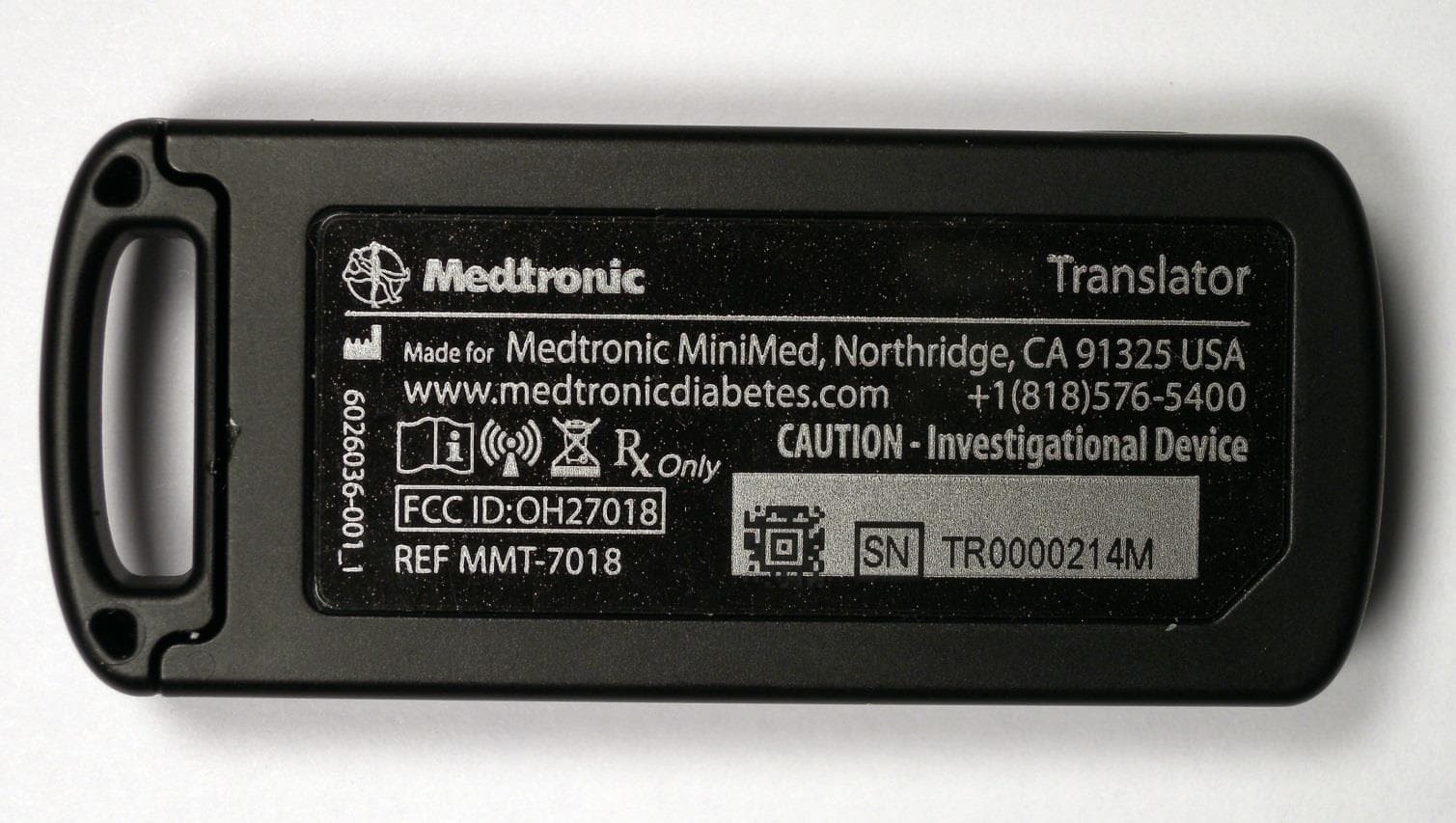
OH27018
Jul 09, 2015The Paradigm Translator allows RF intercommunication between Medtronic Minimed Paradigm series insulin pumps and commercially available smartphones running Medtronic application software.
Equipment Class
DXT - Part 15 Low Power Transceiver, Rx Verified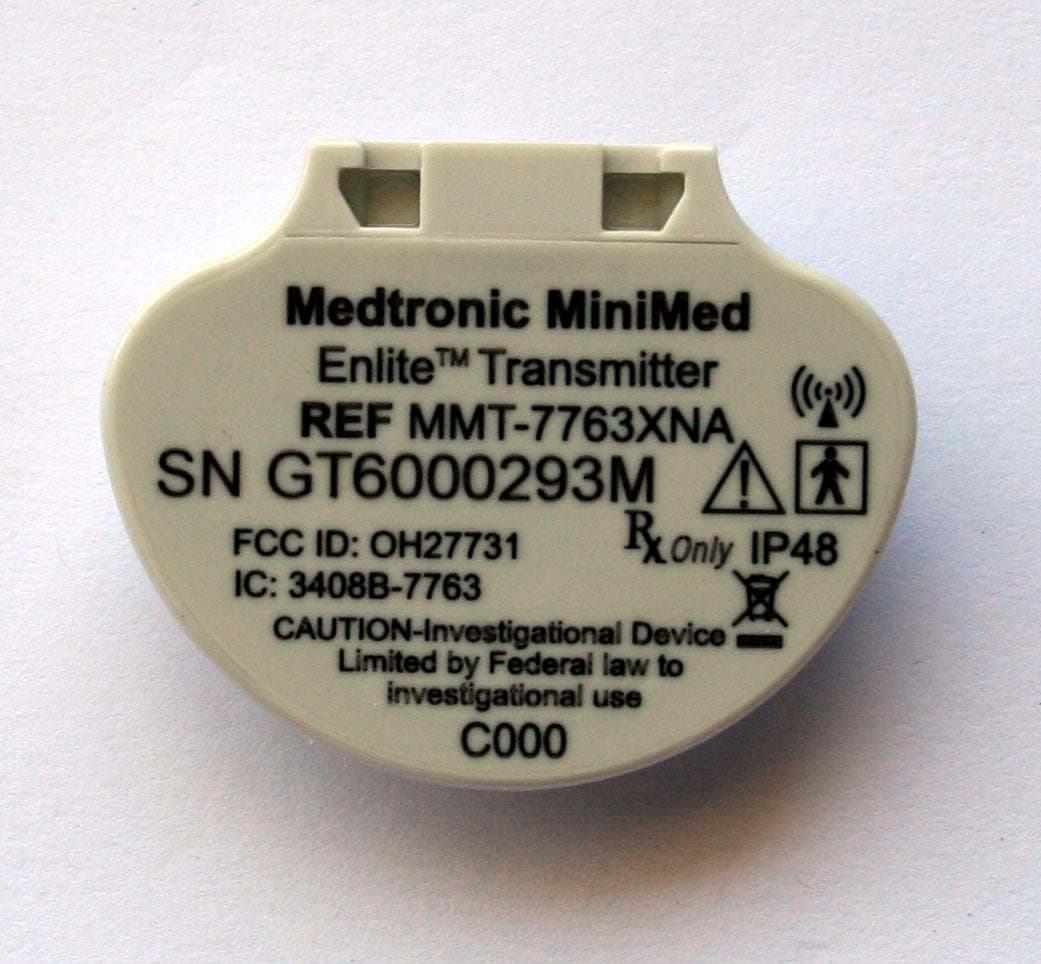
OH27731
Mar 10, 2015The Guardian Link transmitter is a component of the continuous glucose monitoring system for the MiniMed 600 series insulin pumps. The transmitter collects data from the glucose sensor and then wirelessly sends the data to the insulin pump.
Equipment Class
DTS - Digital Transmission System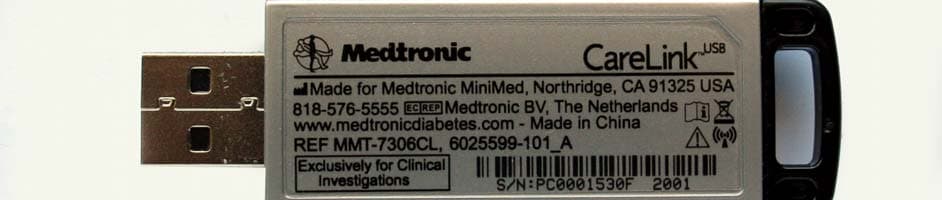
OH27306
Feb 08, 2015CareLINK USB
Equipment Class
DTS - Digital Transmission System
OH21510
Sep 24, 2014620G/630G/640G/670G Insulin Delivery Pump
Equipment Class
DTS - Digital Transmission System
OH27703
Apr 17, 2006Glucose Sensor Transmitter (GST1)
Equipment Class
DXX - Part 15 Low Power Communication Device Transmitter