P6XSBXW-166LHGE-6Wireless Broadband Router
SofaWare Technologies Ltd.
Click to zoom
Application Details
- Equipment Class
- DTS - Digital Transmission System
- Date of Grant
- Aug 16, 2006
- Application Purpose
- Original Equipment
- Date of Application
- Aug 16, 2006
- Equipment Note
- Wireless Broadband Router
- Frequency Range
- 2412.00000000 - 2462.00000000
- Company
- SofaWare Technologies Ltd.
- Country
- Israel
Documents & Files
Document Text
Text extracted from the exhibit documents filed with the FCC. Open a document above to read the original.
Users Manual
Check Point Safe@Office Internet Security Appliance User Guide Version 6.0 Part No: 700797, November 2005 COPYRIGHT & TRADEMARKS Copyright © 2005 SofaWare, All Rights Reserved. No part of this document may be reproduced in any form or by any means without written permission from SofaWare. Information in this document is subject to change without notice and does not represent a commitment on part of SofaWare Technologies Ltd. SofaWare, Safe@Home and Safe@Office are trademarks, service marks, or registered trademarks of SofaWare Technologies Ltd. Check Point, the Check Point logo, FireWall-1, FireWall-1 SecureServer, FireWall-1 SmallOffice, FloodGate-1, INSPECT, IQ Engine, Meta IP, MultiGate, Open Security Extension, OPSEC, Provider-1, SecureKnowledge, SecureUpdate, SiteManager-1, SVN, UAM, User-to-Address Mapping, UserAuthority, Visual Policy Editor, VPN-1, VPN-1 Accelerator Card, VPN-1 Gateway, VPN-1 SecureClient, VPN-1 SecuRemote, VPN-1 SecureServer, and VPN-1 Edge are trademarks, service marks, or registered trademarks of Check Point Software Technologies Ltd. or its affiliates. All other product names mentioned herein are trademarks or registered trademarks of their respective owners. The products described in this document are protected by U.S. Patent No. 5,606,668 and 5,835,726 and may be protected by other U.S. Patents, foreign patents, or pending applications. GNU GENERAL PUBLIC LICENSE Version 2, June 1991 Copyright © 1989, 1991 Free Software Foundation, Inc. 59 Temple Place, Suite 330, Boston, MA 02111-1307 USA Everyone is permitted to copy and distribute verbatim copies of this license document, but changing it is not allowed. PREAMBLE The licenses for most software are designed to take away your freedom to share and change it. By contrast, the GNU General Public License is intended to guarantee your freedom to share and change free software--to make sure the software is free for all its users. This General Public License applies to most of the Free Software Foundation's software and to any other program whose authors commit to using it. (Some other Free Software Foundation software is covered by the GNU Library General Public License instead.) You can apply it to your programs, too. When we speak of free software, we are referring to freedom, not price. Our General Public Licenses are designed to make sure that you have the freedom to distribute copies of free software (and charge for this service if you wish), that you receive source code or can get it if you want it, that you can change the software or use pieces of it in new free programs; and that you know you can do these things. To protect your rights, we need to make restrictions that forbid anyone to deny you these rights or to ask you to surrender the rights. These restrictions translate to certain responsibilities for you if you distribute copies of the software, or if you modify it. For example, if you distribute copies of such a program, whether gratis or for a fee, you must give the recipients all the rights that you have. You must make sure that they, too, receive or can get the source code. And you must show them these terms so they know their rights. We protect your rights with two steps: (1) copyright the software, and (2) offer you this license which gives you legal permission to copy, distribute and/or modify the software. Also, for each author's protection and ours, we want to make certain that everyone understands that there is no warranty for this free software. If the software is modified by someone else and passed on, we want its recipients to know that what they have is not the original, so that any problems introduced by others will not reflect on the original authors' reputations. Finally, any free program is threatened constantly by software patents. We wish to avoid the danger that redistributors of a free program will individually obtain patent licenses, in effect making the program proprietary. To prevent this, we have made it clear that any patent must be licensed for everyone's free use or not licensed at all. The precise terms and conditions for copying, distribution and modification follow. GNU GENERAL PUBLIC LICENSE TERMS AND CONDITIONS FOR COPYING, DISTRIBUTION AND MODIFICATION 0. This License applies to any program or other work which contains a notice placed by the copyright holder saying it may be distributed under the terms of this General Public License. The "Program", below, refers to any such program or work, and a "work based on the Program" means either the Program or any derivative work under copyright law: that is to say, a work containing the Program or a portion of it, either verbatim or with modifications and/or translated into another language. (Hereinafter, translation is included without limitation in the term "modification".) Each licensee is addressed as "you". Activities other than copying, distribution and modification are not covered by this License; they are outside its scope. The act of running the Program is not restricted, and the output from the Program is covered only if its contents constitute a work based on the Program (independent of having been made by running the Program). Whether that is true depends on what the Program does. 1. You may copy and distribute verbatim copies of the Program's source code as you receive it, in any medium, provided that you conspicuously and appropriately publish on each copy an appropriate copyright notice and disclaimer of warranty; keep intact all the notices that refer to this License and to the absence of any warranty; and give any other recipients of the Program a copy of this License along with the Program. You may charge a fee for the physical act of transferring a copy, and you may at your option offer warranty protection in exchange for a fee. 2. You may modify your copy or copies of the Program or any portion of it, thus forming a work based on the Program, and copy and distribute such modifications or work under the …
Text truncated - open the document above for the full version.
Users Manual
Using SmartDefense Chapter 9: Setting Your Security Policy 235 In this field... Do this... Max. Connections/Second from Same Source IP Type the maximum number of network connections allowed per second from the same source IP address. The default value is 100. Set a lower threshold for stronger protection against DoS attacks. Note: Setting this value too low can lead to false alarms. Welchia The Welchia worm uses the MS DCOM vulnerability or a WebDAV vulnerability. After infecting a computer, the worm begins searching for other live computers to infect. It does so by sending a specific ping packet to a target and waiting for the reply that signals that the target is alive. This flood of pings may disrupt network connectivity. You can configure how the Welchia worm should be handled. Using SmartDefense 236 Check Point Safe@Office User Guide Table 43: Welchia Fields In this field... Do this... Action Specify what action to take when the Welchia worm is detected, by selecting one of the following: • Block. Block the attack. This is the default. • None. No action. Track Specify whether to log Welchia worm attacks, by selecting one of the following: • Log. Log the attack. This is the default. • None. Do not log the attack. Cisco IOS DOS Cisco routers are configured to process and accept Internet Protocol version 4 (IPv4) packets by default. When a Cisco IOS device is sent a specially crafted sequence of IPv4 packets (with protocol type 53 - SWIPE, 55 - IP Mobility, 77 - Sun ND, or 103 - Protocol Independent Multicast - PIM), the router will stop processing inbound traffic on that interface. Using SmartDefense Chapter 9: Setting Your Security Policy 237 You can configure how Cisco IOS DOS attacks should be handled. Table 44: Cisco IOS DOS In this field... Do this... Action Specify what action to take when a Cisco IOS DOS attack occurs, by selecting one of the following: • Block. Block the attack. This is the default. • None. No action. Track Specify whether to log Cisco IOS DOS attacks, by selecting one of the following: • Log. Log the attack. This is the default. • None. Do not log the attack. Number of Hops to Protect Type the number of hops from the enforcement module that Cisco routers should be protected. The default value is 10. Using SmartDefense 238 Check Point Safe@Office User Guide In this field... Do this... Action Protection for SWIPE - Protocol 53 / IP Mobility - Protocol 55 / SUN-ND - Protocol 77 / PIM - Protocol 103 Specify what action to take when an IPv4 packet of the specific protocol type is received, by selecting one of the following: • Block. Drop the packet. This is the default. • None. No action. Null Payload Some worms, such as Sasser, use ICMP echo request packets with null payload to detect potentially vulnerable hosts. You can configure how null payload ping packets should be handled. Table 45: Null Payload Fields In this field... Do this... Action Specify what action to take when null payload ping packets are detected, by selecting one of the following: • Block. Block the packets. This is the default. • None. No action. Using SmartDefense Chapter 9: Setting Your Security Policy 239 In this field... Do this... Track Specify whether to log null payload ping packets, by selecting one of the following: • Log. Log the packets. This is the default. • None. Do not log the packets. TCP This category allows you to configure various protections related to the TCP protocol. It includes the following: • Strict TCP on page 239 • Small PMTU on page 241 Strict TCP Out-of-state TCP packets are SYN-ACK or data packets that arrive out of order, before the TCP SYN packet. Note: In normal conditions, out-of-state TCP packets can occur after the Safe@Office restarts, since connections which were established prior to the reboot are unknown. This is normal and does not indicate an attack. Using SmartDefense 240 Check Point Safe@Office User Guide You can configure how out-of-state TCP packets should be handled. Table 46: Strict TCP In this field... Do this... Action Specify what action to take when an out-of-state TCP packet arrives, by selecting one of the following: • Block. Block the packets. • None. No action. This is the default. Track Specify whether to log null payload ping packets, by selecting one of the following: • Log. Log the packets. This is the default. • None. Do not log the packets. Using SmartDefense Chapter 9: Setting Your Security Policy 241 Small PMTU Small PMTU (Packet MTU) is a bandwidth attack in which the client fools the server into sending large amounts of data using small packets. Each packet has a large overhead that creates a "bottleneck" on the server. You can protect against this attack by specifying a minimum packet size for data sent over the Internet. Table 47: Small PMTU Fields In this field... Do this... Action Specify what action to take when a packet is smaller than the Minimal MTU Size threshold, by selecting one of the following: • Block. Block the packet. • None. No action. This is the default. Track Specify whether to issue logs for packets are smaller than the Minimal MTU Size threshold, by selecting one of the following: • Log. Issue logs. This is the default. • None. Do not issue logs. Using SmartDefense 242 Check Point Safe@Office User Guide In this field... Do this... Minimal MTU Size Type the minimum value allowed for the MTU field in IP packets sent by a client. An overly small value will not prevent an attack, while an overly large value might degrade performance and cause legitimate requests to be dropped. The default value is 300. Port Scan An attacker can perform a port scan to determine whether ports are open and vulnerable to an attack. This is most commonly done by attempting to access a port and waiting for a response. The response indicates whether or not the port is open. This category includes the following types of port scans: • Host Port Scan. The attacker scans a specific host's ports to determine which of the ports are open. •…
Text truncated - open the document above for the full version.
Cover Letter(s)
SofaWare Technologies Ltd. 3 Hilazon St. Ramat-Gan Israel, 52522 FCC ID: P6XSBXW-166LHGE-6 Federal Communications Commission Authorization and Evaluation Division Confidentiality Request Pursuant to Sections 0.457 and 0.459 of the Commission’s Rules, the Applicant hereby requests confidential treatment of information accompanying this Application as outlined below: Schematics Block Diagram The above materials contain trade secrets and proprietary information not customarily released to the public. The public disclosure of these matters might be harmful to the Applicant and provide unjustified benefits to its competitors. The Applicant understands that pursuant to Rule 0.457, disclosure of this Application and all accompanying documentation will not be made before the date of the Grant for this application. Sincerely Gil Ozeri / Engineering Manager SofaWare Technologies Ltd. Tel: +972-3-6128989 Cell.: +972-54-6605012 Fax: +972-3-5755442 E-mail: [email protected]
Cover Letter(s)
SofaWare Technologies Ltd. 3 Hilazon St. Ramat-Gan Israel, 52522 Authorization Letter Date: 2006/6/28 To whom it may concern: We, the undersigned, SofaWare Technologies Ltd. , hereby authorize Advance Data Technology Corp. (ADT) of Taiwan to act on our behalf, as our agent, in the following matters related to the FCC approval of our products: report submittal, related correspondence, the signing of all documents relating to these matters, and any other lawful activity necessary to obtain such certification. Any act carried out by ADT within the scope of this authorization shall have the same effects as our own. This authorization shall expire six months from original date. If you have any questions regarding the authorization, please don’t hesitate to contact us. Thank you! Sincerely yours, Gil Ozeri / Engineering Manager SofaWare Technologies Ltd. Tel: +972-3-6128989 Cell.: +972-54-6605012 Fax: +972-3-5755442 E-mail: [email protected]
External Photos
Page 1 CONSTRUCTION PHOTOS OF EUT Page 2 Page 3 Page 4
ID Label/Location Info
FCC ID .: P6XSBXW-166LHGE-6 Label Location
ID Label/Location Info
EMI Label-SCN210W_051206.jpg (856 x 1903 x 24)
Internal Photos
Page 5 Page 6 Page 7 Page 8 Page 9 Page 10 Page 11 Page 12 Page 13
Operational Description
FCC ID: P6XSBXW-166LHGE-6 Report No.: RF950620L09 Operational Description This device is an Wireless Broadband Router which operates in the 2.4GHz frequency spectrum with throughput of up to 108Mbps which OFDM technique will be applied. If the signal to noise radio is too poor which could not support 108Mbps, the 11Mbps data rate with DSSS technique will be applied. The transmitter of the EUT is powered by AC adapter. The antenna is Dipole antenna with RSMA antenna connector. The other instruction, please have a look at the users manual.
RF Exposure Info
FCC ID: P6XSBXW-166LHGE-6 Report No.: 950620L09 1 RF EXPOSURE REPORT REPORT NO.: SA950620L09 MODEL NO.: SBXW-166LHGE-6 ACCORDING: FCC Guidelines for Human Exposure IEEE C95.1 APPLICANT : SofaWare Technologies Ltd. ADDRESS : 3 Hilazon St. Ramat-Gan Israel, 52522 ISSUED BY : Advance Data Technology Corporation LAB ADDRESS : No. 47, 14th Ling, Chia Pau Tsuen, Lin Kou Hsiang 244, Taipei Hsien, Taiwan, R.O.C. TEST LOCATION : No. 19, Hwa Ya 2nd Rd., Wen Hwa Tsuen, Kwei Shan Hsiang, Taoyuan Hsien 333, Taiwan, R.O.C. FCC ID: P6XSBXW-166LHGE-6 Report No.: 950620L09 2 RF Exposure Measurement (Mobile Device) 1. Introduction In this document, we try to prove the safety of radiation harmfulness to the human body for our product. The limit for Maximum Permissible Exposure (MPE) specified in FCC 1.1310 is followed. The Gain of the antenna used in this product is measured in a Fully Anechoic Chamber (FAC) calibrated for antenna measurement in ADT, and also the maximum total power input to the antenna is measured. Through the Friis transmission formula and the maximum gain of the antenna, we can calculate the distance, away from the product, where the limit of MPE is reached. Although the Friis transmission formula is a far field assumption, the calculated result of that is an over-prediction for near field power density. We will take that as the worst case to specify the safety range. 2. RF Exposure Limit According to FCC 1.1310: The criteria listed in the following table shall be used to evaluate the environmental impact of human exposure to radio-frequency (RF) radiation as specified in 1.1307(b) LIMITS FOR MAXIMUM PERMISSIBLE EXPOSURE (MPE) Frequency Range (MHz) Electric Field Strength (V/m) Magnetic Field Strength (A/m) Power Density (mW/cm 2 ) Average Time (minutes) (A)Limits For Occupational / Control Exposures 300-1500......F/3006 1500-100,000......56 (B)Limits For General Population / Uncontrolled Exposure 300-1500......F/15006 1500-100,000......1.030 F = Frequency in MHz FCC ID: P6XSBXW-166LHGE-6 Report No.: 950620L09 3 3. Friis Formula Friis transmission formula : Pd = (Pout*G) / (4*pi*r 2 ) where Pd = power density in mW/cm 2 Pout = output power to antenna in mW G = gain of antenna in linear scale Pi = 3.1416 R = distance between observation point and center of the radiator in cm If we know the maximum Gain of the antenna and the total power input to the antenna, through the calculation, we will know the MPE value at distance r. Ref. : David K. Cheng, Field and Wave Electromagnetics, Second Edition, Page 640, Eq. (11-133). 4. EUT Operating condition The software provided by Manufacturer enabled the EUT to transmit and receive data at lowest, middle and highest channel individually. 5. Classification The antenna of this product, under normal use condition, is at least 20cm away from the body of the user. Warning statement to the user for keeping at least 20cm or more separation distance with the antenna should be included in users manual. So, this device is classified as Mobile Device. FCC ID: P6XSBXW-166LHGE-6 Report No.: 950620L09 4 6. Test Results 6.1 Antenna Gain The maximum Gain measured in Fully Anechoic Chamber is 2dBi or 1.5849 (numeric) 6.2 Output Power into Antenna & RF Exposure value at distance 20cm: For 802.11b DSSS MODULATION: Channel Channel Frequency (MHz) Output Power to Antenna (mW) Power Density (mW/cm 2 ) Limit of Power Density (mW/cm 2 ) 1241270.7950.0221.0 62437161.0650.0511.0 112462160.3250.0511.0 For 802.11g OFDM MODULATION: Channel Channel Frequency (MHz) Output Power to Antenna (mW) Power Density (mW/cm 2 ) Limit of Power Density (mW/cm 2 ) 1241279.6160.0251.0 6243780.5380.0251.0 11246280.1680.0251.0 For 802.11g OFDM MODULATION_TURBO MODE: Channel Channel Frequency (MHz) Output Power to Antenna (mW) Power Density (mW/cm 2 ) Limit of Power Density (mW/cm 2 ) 6243780.5380.0251.0
Test Report
Report No.: RF950620L091Report Format Version 2.0.4 FCC TEST REPORT REPORT NO.: RF950620L09 MODEL NO.: SBXW-166LHGE-6 RECEIVED: Jun. 20, 2006 TESTED: Jun. 24 ~ Jul. 11, 2006 ISSUED: Jul. 12, 2006 APPLICANT : SofaWare Technologies Ltd. ADDRESS : 3 Hilazon St. Ramat-Gan Israel, 52522 ISSUED BY : Advance Data Technology Corporation LAB ADDRESS : No. 47, 14th Ling, Chia Pau Tsuen, Lin Kou Hsiang 244, Taipei Hsien, Taiwan, R.O.C. TEST LOCATION : No. 19, Hwa Ya 2nd Rd., Wen Hwa Tsuen, Kwei Shan Hsiang, Taoyuan Hsien 333, Taiwan, R.O.C. This test report consists of 78 pages in total. It may be duplicated completely for legal use with the approval of the applicant. It should not be reproduced except in full, without the written approval of our laboratory. The client should not use it to claim product endorsement by CNLA, A2LA or any government agencies. The test results in the report only apply to the tested sample. Report No.: RF950620L092Report Format Version 2.0.4 Table of Contents 1CERTIFICATION...........................................................................................................4 2SUMMARY OF TEST RESULTS ..................................................................................5 2.1MEASUREMENT UNCERTAINTY................................................................................5 3GENERAL INFORMATION ...........................................................................................6 3.1GENERAL DESCRIPTION OF EUT .............................................................................6 3.2DESCRIPTION OF TEST MODES ...............................................................................7 3.2.1 CONFIGURATION OF SYSTEM UNDER TEST ..........................................................8 3.2.2 TEST MODE APPLICABILITY AND TESTED CHANNEL DETAIL ...............................9 3.3GENERAL DESCRIPTION OF APPLIED STANDARDS ............................................10 3.4DESCRIPTION OF SUPPORT UNITS ....................................................................... 11 4TEST TYPES AND RESULTS ....................................................................................12 4.1CONDUCTED EMISSION MEASUREMENT .............................................................12 4.1.1 LIMITS OF CONDUCTED EMISSION MEASUREMENT...........................................12 4.1.2 TEST INSTRUMENTS................................................................................................12 4.1.3 TEST PROCEDURES ................................................................................................13 4.1.4 DEVIATION FROM TEST STANDARD.......................................................................13 4.1.5 TEST SETUP..............................................................................................................14 4.1.6 EUT OPERATING CONDITIONS ...............................................................................14 4.1.7 TEST RESULTS .........................................................................................................15 4.2RADIATED EMISSION MEASUREMENT ..................................................................31 4.2.1 LIMITS OF RADIATED EMISSION MEASUREMENT................................................31 4.2.2 TEST INSTRUMENTS................................................................................................32 4.2.3 TEST PROCEDURES ................................................................................................33 4.2.4 DEVIATION FROM TEST STANDARD.......................................................................33 4.2.5 TEST SETUP..............................................................................................................34 4.2.6 EUT OPERATING CONDITIONS ...............................................................................34 4.2.7 TEST RESULTS .........................................................................................................35 4.36dB BANDWIDTH MEASUREMENT..........................................................................47 4.3.1 LIMITS OF 6dB BANDWIDTH MEASUREMENT .......................................................47 4.3.2 TEST INSTRUMENTS................................................................................................47 4.3.3 TEST PROCEDURE...................................................................................................47 4.3.4 DEVIATION FROM TEST STANDARD.......................................................................47 4.3.5 TEST SETUP..............................................................................................................48 4.3.6 EUT OPERATING CONDITIONS ...............................................................................48 4.3.7 TEST RESULTS .........................................................................................................49 4.4MAXIMUM PEAK OUTPUT POWER..........................................................................54 4.4.1 LIMITS OF MAXIMUM PEAK OUTPUT POWER MEASUREMENT ..........................54 4.4.2 TEST INSTRUMENTS................................................................................................54 4.4.3 TEST PROCEDURES ................................................................................................55 4.4.4 DEVIATION FROM TEST STANDARD.......................................................................55 4.4.5 TEST SETUP..............................................................................................................55 4.4.6 EUT OPERATING CONDITIONS ...............................................................................55 Report No.: RF950620L093Report Format Version 2.0.4 4.4.7 TEST RESULTS .........................................................................................................56 4.5POWER SPECTRAL DENSITY MEASUREMENT .....................................................57 4.5.1 LIMITS OF POWER SPECTRAL D…
Text truncated - open the document above for the full version.
Test Setup Photos
1 PHOTOGRAPHS OF THE TEST CONFIGURATION CONDUCTED EMISSION TEST (Test Mode A) 2 CONDUCTED EMISSION TEST (Test Mode B) 3 RADIATED EMISSION TEST (Test Mode A) 4 RADIATED EMISSION TEST (Test Mode B)
Contact Information
Applicant
Liran Eshel(Director)
Technical Contact
Advance Data Technology Corporation (Hwa Ya)Gary Chang
[email protected]886-3-3183232
No. 19, Hwa Ya 2nd Rd., Kwei Shan Hsiang · Taoyuan Hsien · Taiwan
Non-Technical Contact
Advance Data Technology CorporationEllis Wu
[email protected]886-3-3183232
Test Firm
Bureau Veritas CPS (H.K.) Ltd. Taoyuan BranchRichard Chen
Technical Specifications
| # | Rule Parts | Frequency Range | Power Output |
|---|---|---|---|
| 1 | 15C | 2.41 GHz - 2.46 GHz | 161.00 mW |
Other Applications from SofaWare Technologies Ltd.
P6XSBX-166LHGE-5
Nov 13, 2006Safe@Office/VPN-1 Edge
Equipment Class
JBP - Part 15 Class B Computing Device Peripheral
P6XSBX-11GWLAN-5
Oct 24, 20062.4G WLAN MINI PCI MODULAR
Equipment Class
DTS - Digital Transmission System
P6XSBXW-166LHGE-4
Oct 05, 2004Wireless Broadband Router
Equipment Class
DTS - Digital Transmission System
P6XSBX-166LHGE-2
Dec 11, 2003Internet Security Appliance
Equipment Class
JBP - Part 15 Class B Computing Device Peripheral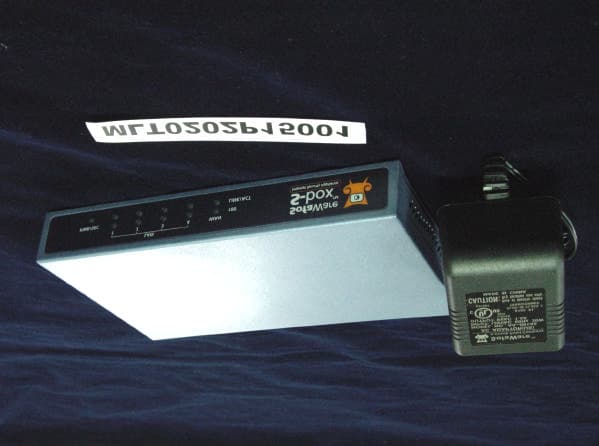
P6XSBX-133LHE-1
Feb 25, 2002Broadband Sharing Router
Equipment Class
JBP - Part 15 Class B Computing Device Peripheral