PANBT333EBluetooth USB Adapter
CC&C Technologies, Inc.
Click to zoom
Application Details
- Equipment Class
- DSS - Part 15 Spread Spectrum Transmitter
- Date of Grant
- Sep 05, 2005
- Application Purpose
- Original Equipment
- Date of Application
- Sep 05, 2005
- Equipment Note
- Bluetooth USB Adapter
- Frequency Range
- 2402.00000000 - 2480.00000000
- Company
- CC&C Technologies, Inc.
- Country
- Taiwan
Documents & Files
Document Text
Text extracted from the exhibit documents filed with the FCC. Open a document above to read the original.
Users Manual
Bluetooth USB Adapter User’s Manual i . Bluetooth USB Adapter User’s Manual Version 1.6 Bluetooth USB Adapter User’s Manual ii INFORMATION TO USER Federal Communication Commission Interference Statement This equipment has been tested and found to comply with the limits for a class B digital device, pursuant to part 15 of the FCC Rules. These limits are designed to provide reasonable protection against harmful interference in a residential installation. This equipment generates, uses and can radiate radio frequency energy and, if not installed and used in accordance with the instructions, may cause harmful interference to radio communications. However, there is no guarantee that interference will not occur in a particular installation. If this equipment does cause harmful interference to radio or television reception, which can be determined by turning the equipment off and on, the user is encouraged to try to correct the interference by one or more of the following measures: ---Reorient or relocate the receiving antenna. ---Increase the separation between the equipment and receiver. ---Connect the equipment into an outlet on a circuit different from that to which the receiver is connected. ---Consult the dealer or an experienced radio/TV technician for help. Installation and use of this Bluetooth USB Adapter must be in strict accordance with the instructions included in the user documentation provided with the product. Any changes or modifications (including the antennas) made to this device that are not expressly approved by the manufacturer may void the user’s authority to operate the equipment. The manufacturer is not responsible for any radio or television interference caused by unauthorized modification of this device, or the substitution of the connecting cables and equipment other than manufacturer specified. It is the responsibility of the user to correct any interference caused by such unauthorized modification, substitution or attachment. Manufacturer and its authorized resellers or distributors will assume no liability for any damage or violation of government regulations arising from failing to comply with these guidelines. FCC RF Radiation Exposure Statement This equipment complies with FCC RF radiation exposure limits set forth for an uncontrolled environment. End users must follow the specific operating instructions for satisfying RF exposure compliance. This device and its antenna must not be co-located or operating in conjunction with any other antenna or transmitter. Your device contains a low power transmitter. When device is transmitted it sends out Radio Frequency (RF) signal. Use only with supplied antenna. Unauthorized antenna, modification, or attachments could damage the transmitter and may violate FCC regulations. The users manual or instruction manual for an intentional or unintentional radiator shall caution the user that changes or modifications not expressly approved by the party responsible for compliance could void the user’s authority to operate the equipment. Bluetooth USB Adapter User’s Manual iii REGULATORY INFORMATION Bluetooth USB Adapter must be installed and used in strict accordance with the manufacturer’s instructions. This device complies with the following radio frequency and safety standards. This device complies with Part 15 of the FCC Rules. Operation is subject to the following two conditions: (1) This device may not cause harmful interference. (2) This device must accept any interference received, including interference that may cause undesired operation. Europe- R&TTE Compliance Statement This equipment complies with all the requirements of DIRECTIVE 1999/5/CE OF THE EUROPEAN PARLIAMENT AND THE COUNCIL of March 9, 1999 on radio equipment and telecommunication terminal Equipment and the mutual recognition of their conformity (R&TTE) CE Declaration of Conformity For the following equipment: Bluetooth USB Adapter (Product Name) BT-333E (Model Designation) is herewith confirmed to comply with the requirements set out in the Council (European parliament) Directive on the Approximation of the Laws of the Member States relating to Electromagnetic Compatibility of Radio and Telecom device (1999/5/EC). For the evaluation regarding this Directive, the following standards were applied: EN 300 328 V1.6.1 (2004-11) EN 301 489-1 V1.4.1 (2002-08), EN 301 489-17 V1.2.1 (2002-08) EN 60950-1: 2001 FCC Guidelines for Human Exposure IEEE C95.1 Bluetooth USB Adapter User’s Manual iv LICENSED SOFTWARE © Copyright 2000 – 2003, WIDCOMM, Inc. (“WIDCOMM”). All rights reserved. Warning: This software and accompanying documentation are protected by copyright law and international treaties. Unauthorized reproduction or distribution of this software, or any portion of it, may result in severe civil and criminal penalties, and will be prosecuted to the maximum extent possible under the law. Use of this software is governed by the terms of the end user license agreement that accompanies or is included with such software. Unless otherwise noted in the end user license agreement, or herein, no part of the documentation accompanying this software, whether provided in printed or electronic form may be reproduced in any form, or stored in a database or retrieval system, or transmitted in any form or by any means, or used to make any derivative work (such as translation, transformation, or adaptation) without the express, prior written consent of WIDCOMM. Trademark(s) ™ and Registered Trademark(s) ® WIDCOMM and the WIDCOMM logo are trademarks of WIDCOMM, Inc. Bluetooth and the Bluetooth logos are trademarks owned by Bluetooth SIG, Inc., U.S.A. and licensed to WIDCOMM, Inc. Microsoft, Windows, Outlook are registered trademarks of Microsoft Corporation. Other brand and product names may be registered trademarks or trademarks of their respective holders. Bluetooth USB Adapter User’s Manual v Table of Contents 1 INTRODUCTION........................................................…
Text truncated - open the document above for the full version.
External Photos
Page 1 CONSTRUCTION PHOTOS OF EUT Page 2 Page 3 Page 4 Page 5 Page 6 Page 7 Page 8 Page 9 Page 10
ID Label/Location Info
Label and Label Position The device is so small that the 2 parts warning statement does not have to go on the device. It will be really hard to read. We remove the 2 parts statement from the device since we already have it in the manual.
Internal Photos
Page 11 Page 12
RF Exposure Info
FCC ID: PANBT333E Report No: SA940721L10 1 RF EXPOSURE REPORT REPORT NO.: SA940721L10 MODEL NO.: BT-333E ACCORDING: FCC Guidelines for Human Exposure IEEE C95.1 APPLICANT: CC&C Technologies, Inc. ADDRESS: 8F, 150, Jian Yi Road, Chung Ho City, Taipei County, Taiwan 235, R.O.C. ISSUED BY: Advance Data Technology Corporation LAB ADDRESS: No. 47, 14th Ling, Chia Pau Tsuen, Lin Kou Hsiang 244, Taipei Hsien, Taiwan, R.O.C. TEST LOCATION: No. 19, Hwa Ya 2 nd Rd., Wen Hwa Tsuen, Kwei Shan Hsiang, Taoyuan Hsien 333, Taiwan, R.O.C. FCC ID: PANBT333E Report No: SA940721L10 2 RF Exposure Measurement 1. Introduction In this document, we try to prove the safety of radiation harmfulness to the human body for our product. The limit for Maximum Permissible Exposure (MPE) specified in FCC 1.1310 is followed. The Gain of the antenna used in this product is measured in a Fully Anechoic Chamber (FAC) calibrated for antenna measurement in ADT, and also the maximum total power input to the antenna is measured. Through the Friis transmission formula and the maximum gain of the antenna, we can calculate the distance, away from the product, where the limit of MPE is reached. Although the Friis transmission formula is a far field assumption, the calculated result of that is an over-prediction for near field power density. We will take that as the worst case to specify the safety range. 2. RF Exposure Limit According to FCC 1.1310: The criteria listed in the following table shall be used to evaluate the environmental impact of human exposure to radio-frequency (RF) radiation as specified in 1.1307(b) LIMITS FOR MAXIMUM PERMISSIBLE EXPOSURE (MPE) Frequency Range (MHz) Electric Field Strength (V/m) Magnetic Field Strength (A/m) Power Density (mW/cm 2 ) Average Time (minutes) (A)Limits For Occupational / Control Exposures 300-1500......F/3006 1500-100,000......56 (B)Limits For General Population / Uncontrolled Exposure 300-1500......F/15006 1500-100,000......1.030 F = Frequency in MHz FCC ID: PANBT333E Report No: SA940721L10 3 3. Friis Formula Friis transmission formula: Pd = (Pout*G) / (4*pi*r 2 ) where Pd = power density in mW/cm 2 Pout = output power to antenna in mW G = gain of antenna in linear scale Pi = 3.1416 R = distance between observation point and center of the radiator in cm If we know the maximum Gain of the antenna and the total power input to the antenna, through the calculation, we will know the MPE value at distance 20cm. Ref.: David K. Cheng, Field and Wave Electromagnetics, Second Edition, Page 640, Eq. (11-133). 4 EUT Operating condition The software provided by Manufacturer enabled the EUT to transmit and receive data at lowest, middle and highest channel individually. FCC ID: PANBT333E Report No: SA940721L10 4 5 Conclusion No Evaluation Required if power is below this threshold: F(GHz)mW Low2.402 High2.480 24.585 Maximum measured transmitter power: Pout (dBm)Pout (mW) Conducted Power11.8815.417 EIRP Power13.6523.174 *Note: The antenna is Chip antenna with 1.77dBi gain Threshold for no SAR evaluation is 24.585mW Transmitter power is 23.174mW Conclusion: No SAR evaluation required since Transmitter Pout is below FCC threshold
Test Report
FCC ID: PANBT333E Report No.: RF940721L101Report Format Version 2.0.3 FCC TEST REPORT REPORT NO.: RF940721L10 MODEL NO.: BT-333E RECEIVED: Jul. 21, 2005 TESTED: Jul. 27 ~ Aug. 10, 2005 ISSUED: Aug. 18, 2005 APPLICANT: CC&C Technologies, Inc. ADDRESS: 8F, 150, Jian Yi Road, Chung Ho City, Taipei County, Taiwan 235, R.O.C. ISSUED BY: Advance Data Technology Corporation LAB ADDRESS: No. 47, 14 th Ling, Chia Pau Tsuen, Lin Kou Hsiang 244, Taipei Hsien, Taiwan, R.O.C. TEST LOCATION: No. 19, Hwa Ya 2 nd Rd., Wen Hwa Tsuen, Kwei Shan Hsiang, Taoyuan Hsien 333, Taiwan, R.O.C. This test report consists of 91 pages in total. It may be duplicated completely for legal use with the approval of the applicant. It should not be reproduced except in full, without the written approval of our laboratory. The client should not use it to claim product endorsement by CNLA, A2LA or any government agencies. The test results in the report only apply to the tested sample. 0528 ILAC MRA NO. 2177-01 FCC ID: PANBT333E Report No.: RF940721L102Report Format Version 2.0.3 TABLE OF CONTENTS 1.CERTIFICATION..........................................................................................................4 2.SUMMARY OF TEST RESULTS .................................................................................5 2.1MEASUREMENT UNCERTAINTY...............................................................................6 3.GENERAL INFORMATION ..........................................................................................7 3.1 GENERAL DESCRIPTION OF EUT ............................................................................7 3.2 DESCRIPTION OF TEST MODES ..............................................................................8 3.2.1 CONFIGURATION OF SYSTEM UNDER TEST .........................................................9 3.2.2 TEST MODE APPLICABILITY AND TESTED CHANNEL DETAIL ............................10 3.3.3 GENERAL DESCRIPTION OF APPLIED STANDARDS ...........................................12 3.3.4 DESCRIPTION OF SUPPORT UNITS ......................................................................12 4. TEST TYPES AND RESULTS ...................................................................................13 4.1 CONDUCTED EMISSION MEASUREMENT ............................................................13 4.1.1 LIMITS OF CONDUCTED EMISSION MEASUREMENT..........................................13 4.1.2 TEST INSTRUMENTS...............................................................................................13 4.1.3 TEST PROCEDURES ...............................................................................................14 4.1.4 DEVIATION FROM TEST STANDARD......................................................................14 4.1.5 TEST SETUP.............................................................................................................15 4.1.6 EUT OPERATING CONDITIONS ..............................................................................16 4.1.7 TEST RESULTS ........................................................................................................17 4.2 RADIATED EMISSION MEASUREMENT .................................................................29 4.2.1 LIMITS OF RADIATED EMISSION MEASUREMENT...............................................29 4.2.2 TEST INSTRUMENTS...............................................................................................30 4.2.3 TEST PROCEDURES ...............................................................................................31 4.2.4 DEVIATION FROM TEST STANDARD......................................................................31 4.2.5 TEST SETUP.............................................................................................................32 4.2.6 EUT OPERATING CONDITIONS ..............................................................................32 4.2.7 TEST RESULTS ........................................................................................................33 4.3 NUMBER OF HOPPING FREQUENCY USED .........................................................47 4.3.1 LIMIT OF HOPPING FREQUENCY USED................................................................47 4.3.2 TEST INSTRUMENTS...............................................................................................47 4.3.3 TEST PROCEDURES ...............................................................................................47 4.3.4 DEVIATION FROM TEST STANDARD......................................................................48 4.3.5 TEST SETUP.............................................................................................................48 4.3.6 TEST RESULTS ........................................................................................................48 4.4 DWELL TIME ON EACH CHANNEL .........................................................................51 4.4.1 LIMIT OF DWELL TIME USED ..................................................................................51 4.4.2 TEST INSTRUMENTS...............................................................................................51 4.4.3 TEST PROCEDURES ...............................................................................................51 FCC ID: PANBT333E Report No.: RF940721L103Report Format Version 2.0.3 4.4.4 DEVIATION FROM TEST STANDARD......................................................................51 4.4.5 TEST SETUP.............................................................................................................52 4.4.6 TEST RESULTS ........................................................................................................52 4.5 CHANNEL BANDWIDTH ...........................................................................................59 4.5.1 LIMITS OF CHANNEL BANDWIDTH ........................................................................60 4.5.2 TEST INSTRUMEN…
Text truncated - open the document above for the full version.
Test Setup Photos
FCC ID: PANBT333E Report No.: RF940721L1089Report Format Version 2.0.3 5. PHOTOGRAPHS OF THE TEST CONFIGURATION CONDUCTED EMISSION TEST FCC ID: PANBT333E Report No.: RF940721L1090Report Format Version 2.0.3 RADIATED EMISSION TEST
Contact Information
Applicant
Cooper Hou(Product Manager)
Technical Contact
Advance Data Technology CorporationCody Chang
[email protected]886-3-3183232
No. 19, Hwa Ya 2nd Rd., Kwei Shan Hsiang · Taoyuan Hsien · Taiwan
Non-Technical Contact
Advance Data Technology CorporationStephanie Hung
[email protected]886-3-3183232
Test Firm
Bureau Veritas CPS (H.K.) Ltd. Taoyuan BranchRichard Chen
Technical Specifications
| # | Rule Parts | Frequency Range | Power Output |
|---|---|---|---|
| 1 | 15C | 2.40 GHz - 2.48 GHz | 15.00 mW |
Other Applications from CC&C Technologies, Inc.
PANBM3095
Jun 24, 2026Bluetooth v5.4 APTX LE Audio RX Module
Equipment Class
DSS - Part 15 Spread Spectrum Transmitter
PANBA550T
Sep 26, 2024Triple source to BT5.3 LE Audio Transmitter
Equipment Class
DSS - Part 15 Spread Spectrum Transmitter
PANBA55T
Sep 26, 2024Dual source to BT5.3 LE Audio Transmitter
Equipment Class
DTS - Digital Transmission System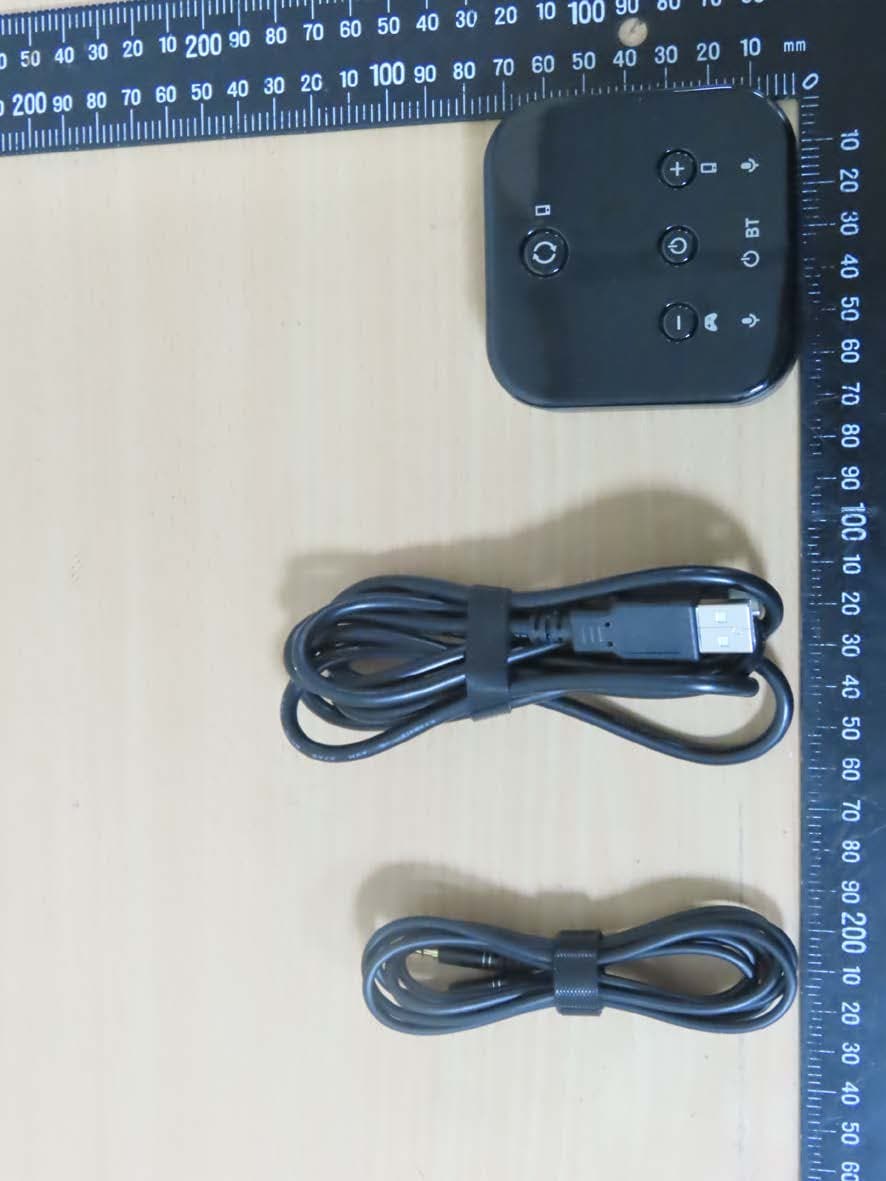
PANBA300M
Dec 08, 2022BT5 Aptx Audio Mixer
Equipment Class
DTS - Digital Transmission System
PANWA9563
Dec 17, 2020AC1200 FE Repeater
Equipment Class
NII - Unlicensed National Information Infrastructure TX