PXITR-419-A2Dual Band GSM Cellular Transceiver
Sony Ericsson Mobile Communications Inc.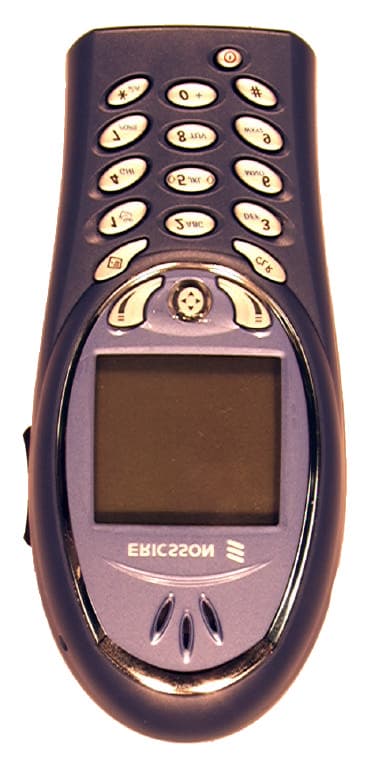
Click to zoom
Application Details
- Equipment Class
- PCE - PCS Licensed Transmitter held to ear
- Date of Grant
- Feb 14, 2002
- Application Purpose
- Original Equipment
- Date of Application
- Feb 14, 2002
- Equipment Note
- Dual Band GSM Cellular Transceiver
- Frequency Range
- 1850.20000000 - 1909.80000000
- Country
- United States
Documents & Files
Document Text
Text extracted from the exhibit documents filed with the FCC. Open a document above to read the original.
Users Manual
EricssonZ LZT 123 4598/17 R1 Important InformationTHIS PHONE MODEL HAS BEEN CERTIFIED IN COMPLIANCE WITH THE GOVERNMENT’S REQUIREMENTS FOR EXPOSURE TO RADIO WAVES.Your wireless phone is a radio transmitter and receiver. It is designed to not exceed the limits for exposure to radio frequency (RF) energy set by the Federal Communications Commission (FCC) of the U.S. Government. These limits establish permitted levels of RF energy for the general population. The guidelines are based on standards that were developed by international scientific organizations through periodic and thorough evaluation of scientific studies. The standards include a safety margin designed to assure the safety of all persons, regardless of age and health.The exposure standard for wireless mobile phones employs a unit of measurement known as the Specific Absorption Rate, or SAR. The SAR limit set by the FCC is 1.6W/kg.* Tests for SAR are conducted using standard operating positions accepted by the FCC with the phone transmitting at its highest certified power level in all tested frequency bands. Although the SAR is determined at the highest certified power level, the actual SAR level of the phone while operating can be well below the maximum value. This is because the phone is designed to operate at multiple power levels so as to use only the power required to reach the network. In general, the closer you are to a wireless base station antenna, the lower the power output. Before a phone model is available for sale to the public, it must be tested and certified to the FCC th at it does not exceed the limit established by the government-adopted requirement for safe exposure. The tests are performed in positions and locations (i.e., at the ear and worn on the body) as required by the FCC for each model. The highest SAR value as reported to the FCC for this model phone when tested for use at the ear is 0.91 W/kg and when worn on the body is 0.56 W/kg. Body worn measurements are made while the phone is in use and worn on the body with an Ericsson accessory. Accessories can significantly affect SAR compliance. The Federal Communication Commission requires that some manufacturers' accessories be tested, and Ericsson has done so with respect to its products. Ericsson has not tested non-Ericsson accessories in conjunction with Ericsson phones. It is therefore recommended that only Ericsson accessories be used in conjunction with Ericsson phones.The FCC has granted an Equipment Authorization for this model phone with all reported SAR levels evaluated as in compliance with the FCC RF exposure guidelines. While there may be differences between the SAR levels of various phones, all mobile phones granted an FCC equipment authorization meet the government requirement for safe exposure.SAR information on this model phone is on file with the FCC and can be found under the Display Grant section of http:// www.fcc.gov/oet/fccid after searching on FCC ID PXITR-419-A2. Additional information on Specific Absorption Rates (SAR) can be found on the Cellular Telecommunications & Internet Association (CTIA) web-site at http://phonefacts.net/ . * In the United States and Canada, the SAR limit for mobile phones used by the public is 1.6 watts/kilogram (W/kg) averaged over one gram of tissue. The standard incorporates a margin of safety to give additional protection for the public and to account for any variations in measurements. LZT 123 4598-17 R1.fm Page i Wednesday, January 23, 2002 10:16 AM 1 T61 series User’s GuidePara obtener una copia en español de esta Guía del Usuario, visite nuestra página Web en www.SonyEricssonMobile.com/phones o, si se encuentra en Estados Unidos, también puede llamar al 1-800-374-2776.Register your new phone, purchase Sony Ericsson original accessories, and see the latest in products by visiting us at www.SonyEricssonMobile.com . This manual is published by Sony Ericsson Mobile Communications (USA) Inc., without any warranty. Improvements and changes to this manual necessitated by typographical errors, inaccuracies or current information, or improvements to programs and/or equipment may be made by Sony Ericsson Mobile Communications (USA) Inc., at any time and without notice. Such changes will, however, be incorporated into new editions of this manual.Trademarks referred to here in are trademarks of their respective companies. “Ericsson”, “Ericsson z ” and “ERICSSON ORIGINAL ACCESSORIES” are each registered U.S. Trademarks owned by Telefonaktiebolaget L M Ericsson of Sweden and are used with permission by Sony Ericsson Mobile Communications (USA) Inc.T9 Text Input is licensed under one or more of the following: U.S. Pat. Nos. 5,818,437, 5,953,541, 5,187,480, 5,945,928, and 6,011,554; Canadian Pat. No. 1,331,057; United Kingdom Pat. No.2238414B; Hong Kong Standard Pat. No. HK0940329; Republic of Singapore Pat. No. 51383; Euro.Pat. No. 0 842 463 (96927260.8) DE/DK, FI, FR, IT,NL,PT.ES,SE,GB; and additional patents are pending worldwide.“Microsoft”, “Windows” and the design plus words “Microsoft Windows” are each either registered and/or pending U.S. Trademarks owned by Microsoft Corporation of Redmond, Washington, U.S.A.The BLUETOOTH trademarks are owned by Bluetooth SIG, Inc., U.S.A. T60g.book Page 1 Wednesday, January 23, 2002 4:03 PM 2 T61 series User’s Guide Please note:Some of the services in this manual are not supported by all networks. This also applies to the GSM International Emergency Number 112 or 911.Please contact your network operator or service provider if you are in doubt about whether you can use a particular service or not.Please read the Guidelines for safe and efficient use and the Limited warranty chapters before you use your mobile phone.©2002, Sony Ericsson Mobile Communications (USA) Inc.All rights reservedPublication number: AE/LZT 123 2487 pre-second draft03/02 PBM Printed in USASome menus/features are operator dependent. T60g.book Page 2 Wednesday, January 23, 2002 4:03 PM 3 T61 series U…
Text truncated - open the document above for the full version.
Cover Letter(s)
Engineering and Testing for EMC and Safety Compliance 360 Herndon Parkway, Suite 1400 Herndon, VA 20170 Phone: 703-689-0368; Fax: 703-689-2056; Metro: 703-471-6441 January 31, 2002 Federal Communications Commission 7435 Oakland Mills Road Columbia, MD 21046 FCC ID: PXITR-419-A2 To Whom It May Concern: The following information is to be held confidential pursuant of 47 CFR Part 0 §0.457 and Section 552(b)(4) of the Freedom of Information Act, because the information provided contains trade secrets and proprietary. If made public, the information might be used to the disadvantage of the applicant in the market place. • Schematics • Product Description • Block Diagram • Bill of Materials (Parts List) Best Regards, Melissa Carter [email protected] Rhein Tech Laboratories, Inc.
Cover Letter(s)
American Telecommunications Certification Body Inc. 6731 Whittier Ave, McLean, VA 22101 February 12, 2002 RE: Sony Ericsson Mobile Communications FCC ID: PXITR-419-A2 1.) Form 731 and the Test Report face page asks for a power output of 1.23 W. Please note that Part 22 power must be quoted in terms of ERP, and Part 24 in EIRP. Please correct. 2.) Power Output measurements in Table 4.3 of Test Report vary as much as ½ dB from the values quoted in SAR report Test Results. Please review. 3.) SAR values quoted in Manual on pp.1 do not match Test Results in SAR report. Please review. 4.) No body worn results are shown in SAR report, but Manual quotes body worn SAR values. 5.) Please describe accessories which will be made available with this phone including battery options, holsters, leather cases and belt clips. The manual does not provide this information, however the Technical Description does. 6.) The plots in the SAR report Appendix 1 and 2 are nearly unreadable when printed on a black and white laser printer. Please supply plots with annotation that is readable. 7.) Was equipment tested for SAR compliance with headset? Explain. 8.) Are plots available showing antenna gain over frequency for the 824-849MHz AMPS band and 1850-1910 PCS band? This would be helpful in this evaluation. 9.) Please provide necessary bandwidth information. 10.) There seems to be quite a bit of difference between the lower and high channel power output [in excess of 4 dB] in both PCS and AMPS band edge compliance tests. Please explain. Thank you for your prompt attention. William H. Graff Examining Engineer President and Director of Engineering mailto:[email protected] The items indicated above must be submitted before processing can continue on the above referenced application. Failure to provide the requested information may result in application termination. Correspondence should be considered part of the permanent submission and may be viewed from the Internet after a Grant of Equipment Authorization is issued. Please do not respond to this correspondence using the email reply button. In order for your response to be processed expeditiously, you must submit your documents through the AmericanTCB.com website. Also, please note that partial responses increase processing time and should not be submitted. Any questions about the content of this correspondence should be directed to the sender.
Cover Letter(s)
1.) Form 731 and the Test Report face page asks for a power output of 1.23 W. Please note that Part 22 power must be quoted in terms of ERP, and Part 24 in EIRP. Please correct. Max ERP measured 732.8 mW Max EIRP measured 811.7 mW 2.) Power Output measurements in Table 4.3 of Test Report vary as much as ½ dB from the values quoted in SAR report Test Results. Please review. 1900 GSM SAR values = 30.86, 30.85, 30.73 1900 GSM RTL values = 30.50, 30.57, 30.85 800 GSM SAR values = 29.41, 29.78, 29.74 800 GSM RTL values = 29.93, 29.94, 29.65 Please note: Section 2.2 Device Description in SAR report, Maximum Peak Output Power for product is 30.0dBm and 31.0dBm for cellular and PCS bands respectively. With nominals 29.0dBm and 30.0dBm for cellular and PCS bands respectively. Section 6 Test Results in SAR report, values reported for FCC Certification are calculated to maximum output power. For example, actual SAR value @ 824MHz is 0.87W/kg with output power of 29.41dBm. The reported value of 0.91dBm would be for an output power of 30.0dBm. Therefore, the variation expected in production is already factored to the reported SAR values. 3.) SAR values quoted in Manual on pp.1 do not match Test Results in SAR report. Please review. When Body-Worn data is reviewed(attached), SAR values quoted on pp.1 of Manual matches maximum reported SAR Values Page 1 of Manual: Head/Ear 0.91W/kg; Body-Worn 0.56W/kg Page 6 of Head/Ear SAR report: @824MHz 0.91W/kg for 1g tissue model Page 6 of Body-Worn SAR report: @1850MHz 0.56W/kg for 1g tissue model 4.) No body worn results are shown in SAR report, but Manual quotes body worn SAR values. Mistakenly the Body-Worn measurements did not reach you. Please find attached SAR measurement results for Body-Worn. 5.) Please describe accessories which will be made available with this phone including battery options, holsters, leather cases and belt clips. The manual does not provide this information, however the Technical Description does. Product will be launched with the following accessories: Battery: BKB-193-1052 Carry Case: SXK 109 4705 Hands-free: RFL 501 25/03 Technical Description document is an internal document. Section 6 Appendix A shows all possible accessories under development for future consideration. This should not have been submitted. We have removed this section from the document, attached is the revised version. 6.) The plots in the SAR report Appendix 1 and 2 are nearly unreadable when printed on a black and white laser printer. Please supply plots with annotation that is readable. Please view plots on color screen and/or print on color printer – contrast will be lost in black and white. 7.) Was equipment tested for SAR compliance with headset? Explain. Yes it was, please see attached Body-Worn SAR report 8.) Are plots available showing antenna gain over frequency for the 824-849MHz AMPS band and 1850-1910 PCS band? This would be helpful in this evaluation. No gain available. No, for FCC purpose, phone is rotated on X, Y, and Z planes and maximum radiation is recorded. 9.) Please provide necessary bandwidth information. No measurement was calculated using Carsons Rule per 2.202, but from the 99% bandwidth measurement of 200kHz thus, 200KGXW measured. 10.) There seems to be quite a bit of difference between the lower and high channel power output [in excess of 4 dB] in both PCS and AMPS band edge compliance tests. Please explain. They were referenced to ERP/EIRP not to conducted antenna power power levels. 800 GSM ERP= 28.14 dBm , lower band edge reference level=26.1 dBm 800 GSM ERP= 28.65 dBm , upper band edge reference level=26.4 dBm(initial ERP taken, plot not corrected to updated ERP) 1600 GSM EIRP = 28.13 dBm, lower band edge reference level = 28.1 dBm 1600 GSM EIRP = 29.09 dBm, upper band edge reference level = 29.1 dBm
RF Exposure Info
REPORT 1 (25) Prepared (also subject responsible if other)No. SEM/CV/PF/P William Stewart EUS/CV/R-02:0029/REP ApprovedChecked SEM/CV/PF/P Dulce AltabellaDA2002-1-22A U:\FCC Submittals\Fcc_419 HP Nicole\XHIBIT11\Source\T61g_T61z_head.doc EN SAR Test Report: T61g and T61z (PXITR-419-A2) Date of test: December 5,7, 2001 Laboratory: SAR Testing Laboratory Sony Ericsson Mobile Communications, Inc. 7001 Development Drive, P.O. Box 13969, Research Triangle Park, NC, 27709, USA Tested by: William Stewart Development Engineer, Antenna Development Group Test Responsible: Dulce Altabella Staff Engineer, Antenna Development Group Accreditation: This laboratory is accredited to ISO/IEC 17025-1999 to perform the following electromagnetic tests: Specific Absorption Rate (SAR), dielectric parameters, and RF power measurement on the following types of products: Wireless communications devices. A2LA certificate Number: 1650-01 Statement of Compliance: Sony Ericsson Mobile Communications, Inc. declares under its sole responsibility that the product T61g and T61z FCC ID: PXITR-419-A2 to which this declaration relates, is in conformity with the appropriate RF exposure standards, recommendations and guidelines. It also declares that the product was tested using specifications that closely conform to the latest appropriate measurement standards, guidelines and recommended practices. Any deviations from these specifications or from ISO/IEC 17025-1999 are noted below: None © Sony Ericsson Mobile Communications, Inc. 2002 This test report shall not be reproduced except in full, without written approval of the laboratory. The results and statements contained herein relate only to the items tested. The names of individuals involved may be mentioned only in connection with the statements or results from this report. All feedback on this report is encouraged, both positive and negative. REPORT 2 (25) Prepared (also subject responsible if other)No. SEM/CV/PF/P William Stewart EUS/CV/R-02:0029/REP ApprovedChecked SEM/CV/PF/P Dulce AltabellaDA2002-1-22A U:\FCC Submittals\Fcc_419 HP Nicole\XHIBIT11\Source\T61g_T61z_head.doc EN Table of Contents 1. Introduction3 2. Device Under Test3 2.1 Antenna description3 2.2 Device description3 3. Test equipment3 3.1 Dosimetric system3 3.2 Additional calibrated equipment5 4. Electrical parameters of the tissue simulating liquid5 5. System performance check5 6. Test results6 References7 Appendix 1: SAR distribution comparison for system performance check8 Appendix 2: SAR distribution plots11 Appendix 3: Photographs of Device Under Test19 Appendix 4: Position of Device on Phantom21 Appendix 5: Probe calibration parameters24 REPORT 3 (25) Prepared (also subject responsible if other)No. SEM/CV/PF/P William Stewart EUS/CV/R-02:0029/REP ApprovedChecked SEM/CV/PF/P Dulce AltabellaDA2002-1-22A U:\FCC Submittals\Fcc_419 HP Nicole\XHIBIT11\Source\T61g_T61z_head.doc EN 1. Introduction In this report, compliance of the T61g and T61z wireless handsets with RF safety guidelines is demonstrated while the device is held next to the ear of a person. The T61g model is a dual band phone, which operates in the 850 MHz and 1900 MHz frequency bands. Conversely, the T61z model is a single band phone operating in the 1900 MHz band only. The applicable RF safety guidelines and the SAR measurement specifications used for the test are described in [1]. 2. Device Under Test 2.1 Antenna description Type Internal antenna Location Inside the back cover, near the top Maximum length38 mm Dimensions Maximum width51 mm Configuration Patch antenna 2.2 Device description Device model T61g and T61z FCC ID PXITR-419-A2 Serial number UA2020LXTZ Maximum Size Length121 mm Width54 mm Thickness24 mm Modes 800 GSM1900 GSM Multiple Access Scheme TDMATDMA Maximum Output Power Setting 29.0 dBm30.0 dBm Factory Tolerance in Power Setting +1 / -2+1 / -2 Maximum Peak Output Power 30.0 dBm31.0 dBm Duty Cycle 1 / 81 / 8 Transmitting Frequency Range 824 – 849 MHz1850 – 1910 MHz Prototype or Production Unit Prototype Device Category Portable RF Exposure Environment [2] General population / uncontrolled 3. Test equipment 3.1 Dosimetric system SAR measurements were made using a DASY3 professional system (software version 3.1c) with a SAM phantom, manufactured by Schmid & Partner Engineering AG (SPEAG). The measurement uncertainty of the system is given in [1]. Below is a list of the calibrated equipment. Description Serial NumberDue Date DASY3 DAE V143105 / 2002 E-field probe ET3DV6153806 / 2002 Dipole Validation Kit, D835V242812 / 2002 Dipole Validation Kit, D1900V253605 / 2003 REPORT 4 (25) Prepared (also subject responsible if other)No. SEM/CV/PF/P William Stewart EUS/CV/R-02:0029/REP ApprovedChecked SEM/CV/PF/P Dulce AltabellaDA2002-1-22A U:\FCC Submittals\Fcc_419 HP Nicole\XHIBIT11\Source\T61g_T61z_head.doc EN REPORT 5 (25) Prepared (also subject responsible if other)No. SEM/CV/PF/P William Stewart EUS/CV/R-02:0029/REP ApprovedChecked SEM/CV/PF/P Dulce AltabellaDA2002-1-22A U:\FCC Submittals\Fcc_419 HP Nicole\XHIBIT11\Source\T61g_T61z_head.doc EN 3.2 Additional calibrated equipment DescriptionSerial NumberDue Date Signal Generator HP8648C3537A015989/2002 Dielectric probe kit HP 85070BUS330203903/2002 Network analyzer HP 8752C3410A031057/2002 Power meter HP 437B3125U120266/2002 Power sensor HP 8482H3318A070972/2002 Power meter HP 437B3125U1134816/2002 Power sensor HP 8482HMY410902406/2002 Power meter HP 437B3125U137291/2002 Power sensor HP 8482HMY410902396/2002 Hygrometer / Thermometer2124291110/2002 Thermometer / Probe350078/9917235110/2002 Thermometer / Probe21117674/2111782411/2002 Spectrum Analyzer MS2623AM0741810/2002 4. Electrical parameters of the tissue simulating liquid Prior to conducting SAR measurements, the relative permittivity, ε r , and the conductivity, σ, of the tissue simulating liquids were measured with the dielectric probe kit. These are tabulated below. A mass density of ρ = 1.00 g/cm 3 was entered into the DASY3 …
Text truncated - open the document above for the full version.
RF Exposure Info
REPORT 1 (19) Prepared (also subject responsible if other)No. SEM/CV/PF/P William Stewart EUS/CV/R-02:0030/REP ApprovedChecked SEM/CV/PF/P Dulce AltabellaDA2002-1-24A U:\FCC Submittals\Fcc_419 HP Nicole\XHIBIT11\Source\T61g_T61zbody.doc EN SAR Test Report: T61g and T61z (PXITR-419-A2) Supplement A: Results for body-worn usage Date of test: December 6,11, 2001 Laboratory: SAR Testing Laboratory Sony Ericsson Mobile Communications, Inc. 7001 Development Drive, P.O. Box 13969, Research Triangle Park, NC, 27709, USA Tested by: William Stewart Development Engineer, Antenna Development Group Test Responsible: Dulce Altabella Staff Engineer, Antenna Development Group Accreditation: This laboratory is accredited to ISO/IEC 17025-1999 to perform the following electromagnetic tests: Specific Absorption Rate (SAR), dielectric parameters, and RF power measurement on the following types of products: Wireless communications devices. A2LA certificate Number: 1650-01 Statement of Compliance: Sony Ericsson Mobile Communications, Inc. declares under its sole responsibility that the product T61g and T61z FCC ID: PXITR-419-A2 to which this declaration relates, is in conformity with the appropriate RF exposure standards, recommendations and guidelines. It also declares that the product was tested using specifications that closely conform to the latest appropriate measurement standards, guidelines and recommended practices. Any deviations from these specifications or from ISO/IEC 17025-1999 are noted below: None © Sony Ericsson Mobile Communications, Inc. 2002 This test report shall not be reproduced except in full, without written approval of the laboratory. The results and statements contained herein relate only to the items tested. The names of individuals involved may be mentioned only in connection with the statements or results from this report. All feedback on this report is encouraged, both positive and negative. REPORT 2 (19) Prepared (also subject responsible if other)No. SEM/CV/PF/P William Stewart EUS/CV/R-02:0030/REP ApprovedChecked SEM/CV/PF/P Dulce AltabellaDA2002-1-24A U:\FCC Submittals\Fcc_419 HP Nicole\XHIBIT11\Source\T61g_T61zbody.doc EN Table of Contents 1. Introduction3 2. Device Under Test3 2.1 Antenna description3 2.2 Device description3 3. Test equipment3 3.1 Dosimetric system3 3.2 Additional calibrated equipment4 4. Electrical parameters of the tissue simulating liquid4 5. System accuracy verification4 6. Test results5 References6 Appendix 1: SAR distribution comparison for system accuracy verification7 Appendix 2: SAR distribution plots10 Appendix 3: Photographs of Device Under Test14 Appendix 4: Position of Device on Phantom17 Appendix 5: Probe calibration parameters18 REPORT 3 (19) Prepared (also subject responsible if other)No. SEM/CV/PF/P William Stewart EUS/CV/R-02:0030/REP ApprovedChecked SEM/CV/PF/P Dulce AltabellaDA2002-1-24A U:\FCC Submittals\Fcc_419 HP Nicole\XHIBIT11\Source\T61g_T61zbody.doc EN 1. Introduction This report is a supplement to the document EUS/CV/R-02:0029/REP “SAR Test Report: T61g and T61z (PXITR- 419-A2).” The main document demonstrates compliance of the T61g and T61z wireless handsets with RF safety guidelines while used against the head. In this report, compliance of the T61g and T61z wireless handsets with RF safety guidelines is demonstrated while the device is used in body-worn configurations. The applicable RF safety guidelines and the SAR measurement specifications used for the test are described in [1]. 2. Device Under Test 2.1 Antenna description Type Internal antenna Location Inside the back cover, near the top Maximum length38 mm Dimensions Maximum width51 mm Configuration Patch antenna 2.2 Device description Device model T61g and T61z FCC ID PXITR-419-A2 Serial number UA2020LXTZ Maximum Size Length121 mm Width54 mm Thickness24 mm Modes 800 GSM1900 GSM Multiple Access Scheme TDMATDMA Maximum Output Power Setting 29.0 dBm30.0 dBm Factory Tolerance in Power Setting +1 / -2+1 / -2 Maximum Peak Output Power 30.0 dBm31.0 dBm Duty Cycle 1 / 81 / 8 Transmitting Frequency Range 824 – 849 MHz1850 – 1910 MHz Prototype or Production Unit Prototype Device Category Portable RF Exposure Environment [2] General population / uncontrolled 3. Test equipment 3.1 Dosimetric system SAR measurements were made using a DASY3 professional system (software version 3.1c) with a SAM phantom, manufactured by Schmid & Partner Engineering AG (SPEAG). The measurement uncertainty of the system is given in [1]. Below is a list of the calibrated equipment. Description Serial NumberDue Date DASY3 DAE V143105 / 2002 E-field probe ET3DV6153806 / 2002 Dipole Validation Kit, D835V242812 / 2002 Dipole Validation Kit, D1900V253605 / 2003 REPORT 4 (19) Prepared (also subject responsible if other)No. SEM/CV/PF/P William Stewart EUS/CV/R-02:0030/REP ApprovedChecked SEM/CV/PF/P Dulce AltabellaDA2002-1-24A U:\FCC Submittals\Fcc_419 HP Nicole\XHIBIT11\Source\T61g_T61zbody.doc EN 3.2 Additional calibrated equipment DescriptionSerial NumberDue Date Signal Generator HP8648C3537A015989/2002 Dielectric probe kit HP 85070BUS330203903/2002 Network analyzer HP 8752C3410A031057/2002 Power meter HP 437B3125U120266/2002 Power sensor HP 8482H3318A070972/2002 Power meter HP 437B3125U1134816/2002 Power sensor HP 8482HMY410902406/2002 Power meter HP 437B3125U137291/2002 Power sensor HP 8482HMY410902396/2002 Hygrometer / Thermometer2124291110/2002 Thermometer / Probe350078/9917235110/2002 Thermometer / Probe21117674/2111782411/2002 Spectrum Analyzer MS2623AM0741810/2002 4. Electrical parameters of the tissue simulating liquid Prior to conducting SAR measurements, the relative permittivity, ε r , and the conductivity, σ, of the tissue simulating liquids were measured with the dielectric probe kit. These are tabulated below. A mass density of ρ = 1.00 g/cm 3 was entered into the DASY3 program in all cases. The temperatures of the tissue simulants during measurements are also given. During the tests, the ambien…
Text truncated - open the document above for the full version.
Test Report
360 Herndon Parkway RTL Work Order: 2001342 Suite 1400 RTL Quote Number: QRTL01-378 Herndon, VA 20170 PO Number: 0070020947 http://www.rheintech.com Date of Tests: December 7, 2001 © Rhein Tech Laboratories, Inc. CERTIFICATE OF COMPLIANCE FCC PART 22 & 24 CERTIFICATION & INDUSTRY CANADA CERTIFICATION Test Lab: Rhein Tech Laboratories, Inc. Phone: 703-689-0368 360 Herndon Parkway Fax: 703-689-2056 Suite 1400 Web Site: www.rheintech.com Herndon, VA 20170 Applicant Information Sony Ericsson Mobile Communications (USA, Inc.) 7001 Development Drive P.O. Box 13969 Research Triangle Park, NC 27709 USA Phone: 919-472-1697 (Pierre Chery) FCC ID: PXITR-419-A2 FRN NUMBER: 0005-0294-00 EQUIPMENT TYPE: GSM MODEL(S): T61g and T61z RTL WORK ORDER NUMBER: 2001342 RTL QUOTE NUMBER: QRTL01-378 DATE OF TEST REPORT: February 14, 2002 FCC Classification: PCB – Licensed Base Station for Part 24 PCE – Part 24 Licensed Portable Transmitter held to ear PCF – Part 24 Licensed Portable Transmitter held to face PCT – Part 24 Licensed Portable Transmitter held to body FCC Rule Part(s): Part 22: Public Mobile Services Subpart E – Paging and Radiotelephone Services Subpart F – Rural Radiotelephone Services Subpart G – Air-Ground Radiotelephone Services Subpart H – Cellular Radiotelephone Services Subpart I – Offshore Radiotelephone Services Part 24: Personal Communications Services Subpart D – Narrowband PCS Subpart E – Broadband PCS Industry Canada Standard: RSS-118: Land and Subscriber Stations: Voice, Data and Tone Modulated, Angle Modulation Radiotelephone Transmitters and Receivers Operating in the Cellular Mobile Bands 824-849 MHz and 869-894 MHz RSS-128: 800 MHz Dual-Mode TDMA Cellular Telephones RSS-129: 800 MHz Dual Mode CDMA Cellular Telephones RSS-133: 2 GHz Personal Communications Services Frequency Range (MHz) Output Power (W) Freq. Tolerance (ppm, %, or Hz) Emission Designator 824-849 0.733 W ERP 0.1 ppm 256KGXW 1850-1910 0.811 W EIRP 0.1 ppm 246KGXW We, the undersigned, hereby declare that the equipment tested and referenced in this report conforms to the identified standard(s) as described in this test report. No modifications were made to the equipment during testing in order to achieve compliance with these standards. Furthermore, there was no deviation from, additions to or exclusions from the FCC Part 2, FCC Part 15, FCC Part 22, FCC Part 24, Industry Canada RSS-133, ANSI C63.4, ANSI/TIA/EIA603 and ANSI/TIA/EIA 603-1. Signature: Date: February 14, 2002 Typed/Printed Name: Bruno Clavier Position: Vice President of Operations (NVLAP Signatory) Note: This report may not be used by the client to claim product endorsement by NVLAP or any agency of the U.S. Government. Accredited by the National Voluntary Accreditation Program for the specific scope of accreditation under Lab Code 200061-0. 360 Herndon Parkway RTL Work Order: 2001342 Suite 1400 RTL Quote Number: QRTL01-378 Herndon, VA 20170 PO Number: 0070020947 http://www.rheintech.com Date of Tests: December 7, 2001 Page 2 of 53 © Rhein Tech Laboratories, Inc. TABLE OF CONTENTS 1 GENERAL INFORMATION ............................................................................................................................................... 4 1.1 SCOPE .......................................................................................................................................................................... 4 1.2 TEST FACILITY .......................................................................................................................................................... 4 1.3 RELATED SUBMITAL(S)/GRANT(S) ....................................................................................................................... 4 2 EQUIPMENT INFORMATION .......................................................................................................................................... 5 2.1 APPLICANT AND EQUIPMENT INFORMATION ................................................................................................... 5 2.2 JUSTIFICATION .......................................................................................................................................................... 5 2.3 EXERCISING THE EUT .............................................................................................................................................. 6 2.4 TEST SYSTEM DETAILS ........................................................................................................................................... 6 2.5 CONFIGURATION OF TESTED SYSTEM ................................................................................................................ 7 3 DC VOLTAGES AND CURRENTS - PART §2.1033(C)(8) .............................................................................................. 8 4 RF POWER OUTPUT - §2.1046 ...................................................................................…
Text truncated - open the document above for the full version.
Contact Information
Applicant
Jasen Kolev(GSM Type Approval)
Technical Contact
Rhein Tech Laboratories, Inc.Desmond Fraser
[email protected]703 689 0368
360 Herndon Parkway · Herndon, Virginia · United States
Test Firm
Rhein Tech Laboratories, Inc.Rick McMurray
Technical Specifications
| # | Rule Parts | Frequency Range | Power Output | Emission | Tolerance |
|---|---|---|---|---|---|
| 2 | 24E | 1.85 GHz - 1.91 GHz | 812.00 mW | 256KGXW | 0.1 ppm |
Other Applications from Sony Ericsson Mobile Communications Inc.

PXITR-CA1102
Jan 28, 2003Dual Band Tri-Mode CDMA Cellular Transceiver
Equipment Class
PCE - PCS Licensed Transmitter held to ear
PXITR-G1202
Dec 08, 2002Dual Band GSM Cellular Phone
Equipment Class
PCE - PCS Licensed Transmitter held to ear
PXITR-G0702
Dec 05, 2002Dual Band GSM Cellular Phone
Equipment Class
PCE - PCS Licensed Transmitter held to ear
PXITR-CA0802
Nov 26, 2002Dual Band Tri-mode CDMA Cellular Phone
Equipment Class
PCE - PCS Licensed Transmitter held to ear
PXITR-505-A2
Aug 07, 2002TRANSCEIVER MODULE
Equipment Class
TNB - Licensed Non-Broadcast Station Transmitter