PXITR-503-A2Dual Band Tri-Mode CDMA Cellular Telephone
Sony Ericsson Mobile Communications Inc.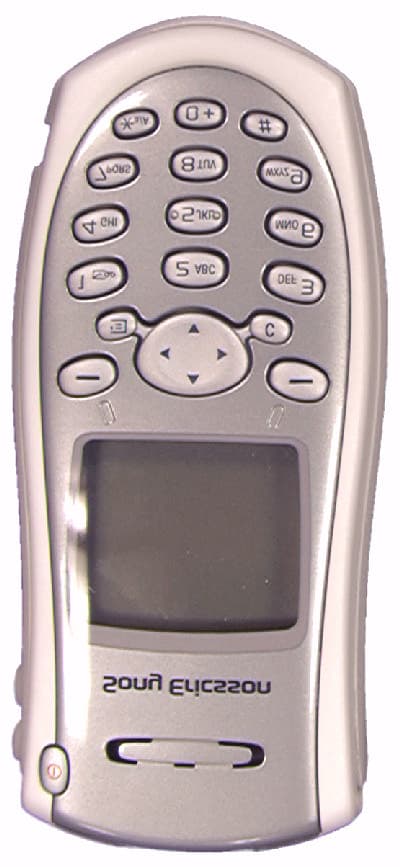
Click to zoom
Application Details
- Equipment Class
- PCE - PCS Licensed Transmitter held to ear
- Date of Grant
- Jun 27, 2002
- Application Purpose
- Original Equipment
- Date of Application
- Jun 24, 2002
- Equipment Note
- Dual Band Tri-Mode CDMA Cellular Telephone
- Frequency Range
- 1851.25000000 - 1908.75000000
- Country
- United States
Documents & Files
Document Text
Text extracted from the exhibit documents filed with the FCC. Open a document above to read the original.
Users Manual
T206 User’s GuidePara obtener una copia en español de esta Guía del Usuario, visite nuestra página Web en www.SonyEricsson.com o, si se encuentra en Estados Unidos, también puede llamar al 1-800-374-2776.Register your new phone, purchase accessories, and see the latest in products by visiting us at: www.SonyEricsson.com This manual is published by Sony Ericsson Mobile Communications (USA) Inc., without any warranty. Improvements and changes to this manual necessitated by typographical errors, inaccuracies of current information, or improvements to programs and/or equipment, may be made by Sony Ericsson Mobile Communications (USA) Inc., at any time and without notice. Such changes will, however, be incorporated into new editions of this manual.Trademarks referred to herein are trademarks of their respective companies.“Ericsson”, “ Ericsson L ” and “ERICSSON ORIGINAL ACCESSORIES” are each registered U.S. Trademarks owned by Telefonaktiebolaget LM Ericsson of Sweden and are used with permission by Sony Ericsson Mobile Communications (USA) Inc.T9 Text Input is licensed under one or more of the following: U.S. Pat. Nos. 5,818,437, 5,953,541, 5,187,480, 5,945,928, and 6,011,554; Canadian Pat. No. 1,331,057; United Kingdom Pat. No.2238414B; Hong Kong Standard Pat. No. HK0940329; Republic of Singapore Pat. No. 51383; Euro.Pat. No. 0 842 463 (96927260.8) DE/DK, FI, FR, IT,NL,PT.ES,SE,GB; and additional patents are pending worldwide.“Microsoft”, “Windows” and the design plus words “Microsoft Windows” are each either registered and/or pending U.S. Trademarks owned by Microsoft Corporation of Redmond, Washington, U.S.A.© 2002, Sony Ericsson Mobile Communications (USA) Inc.All rights reserved. Publication Number: AE/LZT 123 7166 Alpha 07/02 PBM Printed in USA Some menus/features are operator dependent. T206cug_R1_ae.book Page i Thursday, May 16, 2002 1:39 PM Understanding This User’s Guide • A Menu Diagram is located on the inside front cover of this User’s Guide. It gives a quick overview of the menus in the T206. • A portable Quick Reference Card is located on the back cover of this user’s guide. It provides an overview of key icons and functions. • Text that is seen in the phone’s display is shown in the following typeface: Add to phonebook . • Softkeys names are shown in the following typeface: Softkey . • Key names are shown in the following typeface: 2 . • When this guide instructs you to press a key, press and release the key. • When this guide instructs you to press and hold a key, press and hold the key for one to two seconds. T206cug_R1_ae.book Page ii Thursday, May 16, 2002 1:39 PM Table of ContentsGuidelines for Safe and Efficient Use ........... 1 Recommendations ........................................ 1Antenna ........................................................ 1Efficient Use ................................................. 2Radio Frequency (RF) Exposure and SAR.... 2Electronic Devices......................................... 3Driving ......................................................... 4Children........................................................ 4Disposing of the Product .............................. 5Power Supply ................................................ 5Emergency Ca lls ........................................... 5 Battery Use and Care .................................... 5FCC Statement ............................................. 6For Canadian Customers .............................. 6 Getting to Know Your Phone ...................... 7 Diagrams....................................................... 7Standby Screen Icons .................................... 8 Key Functions .............................................. 9 Assembling Your Phone ............................. 12 Step 1: Attach the Battery........................... 12Step 2: Attach the Back Cover.................... 12Step 3: Charge the Battery.......................... 13 Basic Operations ........................................ 14 Turning Your Phone On and Off .............. 14Making and Receiving Calls ....................... 14Receiving Calls ........................................... 15Options from Standby................................ 16 Changing Front Covers .............................. 16 Using Menus .............................................. 19 Phonebook Menu....................................... 20Messages Menu .......................................... 22Call Info Menu........................................... 23Settings Menu ............................................ 24Extras Menu ............................................... 31 T206cug_R1_ae.book Page i Thursday, May 16, 2002 1:39 PM Browser ....................................................... 33My Shortcuts .............................................. 34 Using the Phonebook Menu...................... 35 Adding Contacts ......................................... 35Calling Cont acts ......................................... 36 Editing and Deleting Contacts ................... 37Groups........................................................ 38Aliases ......................................................... 38Using Calling Cards.................................... 39Phonebook Memory Status ........................ 40 Using the Messages Menu ......................... 41 Voicemail.................................................... 41Sending Text Messages (SMS).................... 41Receiving Text Messages (SMS) ................. 42SMS Chat ................................................... 44Preferences .................................................. 45Input Method ............................................. 46Quick Text ................................................. 47Icons ........................................................... 47 Downloadable Content .............................. 48 Using Voice Control .................................. 49 Recording Voice Commands ..................... 49Magic Word…
Text truncated - open the document above for the full version.
Users Manual
LZT 123 4598/23 PA1 Important InformationTHIS PHONE MODEL HAS BEEN CERTIFIED IN COMPLIANCE WITH THE GOVERNMENT’S REQUIREMENTS FOR EXPOSURE TO RADIO WAVES.This mobile phone model T206 has been designed to comply with applicable safety requirements for expo sure to radio waves. Your wireless phone is a radio transmitter and receiver. It is designed to not exceed the limits for exposure to radio frequency (RF) energy set by the Federal Communications Commission (FCC) of the U.S. Government. These limits establish permitted levels of RF energy for the general population. The guidelines are based on standards that were developed by international scientific organizations through periodic and thorough evaluation of scientific studies. The standards include a safety margin designed to assure the safety of all persons, regardless of age and health.The exposure standard for wireless mobile phones employs a unit of measurement known as the Specific Absorption Rate, or SAR. The SAR limit set by the FCC is 1.6W/kg.* Tests for SAR are conducted using standard operating positions accepted by the FCC with the phone transmitting at its highest certified power level in all tested frequency bands. Although the SAR is determined at the highest certified power level, the actual SAR level of the phone while operating can be well below the maximum value. This is because the phone is designed to operate at multiple power levels so as to use only the power required to reach the network. In general, the closer you are to a wireless base station antenna, the lower the power output. Before a phone model is available for sale to the public, it must be tested and certified to the FCC that it does not exceed the limit established by the government-adopted requirement for safe exposure. The tests are performed in positions and locations (i.e., at the ear and worn on the body) as required by the FCC for each model. The highest SAR value as reported to the FCC for this model phone when tested for use at the ear is 1.48 W/kg and when worn on the body is 1.27 W/kg. Body worn measurements are made while the phone is in use and worn on the body with an Ericsson or Sony Ericsson accessory. Accessories can significantly affect SAR compliance. The Federal Communication Commission requires that some manufacturers' accessories be tested, and Sony Ericsson has done so with respect to its products. Sony Ericsson has only tested Ericsson and Sony Ericsson original accessories in conjunction with Sony Ericsson phones. It is therefore recommended that only Ericsson and Sony Ericsson original a ccessories be used in conjunction with Sony Ericsson phones. The FCC has granted an Equipment Authorization for this model phone with all reported SAR levels evaluated as in compliance with the FCC RF exposure guidelines. While there may be differences between the SAR levels of various phones, all mobile phones granted an FCC equipment authorization meet the government requirement for safe exposure.SAR information on this model phone is on file with the FCC and can be found under the Display Grant section of http://www.fcc.gov/oet/fccid after searching on FCC ID PXITR-503-A2 . Additional information on Specific Absorption Rates (SAR) can be found on the Cellular Telecommunications & Internet Association (CTIA) web-site at http:// phonefacts.net/ . * In the United States and Canada, the SAR limit for mobile phones used by the public is 1.6 watts/kilogram (W/kg) averaged over one gram of tissue. The standard incorporates a margin of safety to give additional protection for the public and to account for any variations in measurements.
Cover Letter(s)
Sony Ericsson Mobile Communications (USA) Inc. 7001 Development Drive RTP, North Carolina 27709 June 10, 2002 American TCB, Inc 6731 Whittier Ave McLean, VA 22101 Subject:FCC Certification for FCC ID: PXITR-503-A2 Model: T206 To Whom It May Concern: This letter is in request of certification for the above mentioned FCC Identifier. This mobile is designed for use in AMPS/CDMA Cellular/CDMA PCS systems. The transceiver operates in the 800 MHz Domestic Public Cellular Radiotelephone Communications Services per Subpart H of Part 22 and in the 1900 MHz Domestic Public Cellular Radiotelephone Communications Services, as per Part 24. Sony Ericsson Inc. requests confidentiality under 47 CFR 0.459 for the following exhibit listed: Exhibit 4Block diagrams Exhibit 5Schematics Exhibit 10Parts list/tune-up procedure Exhibit 12Operational description This request is in order to protect Sony Ericsson’s proprietary techniques. Sincerely, Pierre Chery Manager, Type ApprovalTel No:(919) 472-1697 Research Triangle Park, NCFax No:(919) 472-6382
Cover Letter(s)
American Telecommunications Certification Body Inc. 6731 Whittier Ave, McLean, VA 22101 June 14, 2002 RE: FCC ID: PXITR-503-A2 Attention: Pierre Chery I have a few comments on this Application. 1 Supplement C of OET65 2001 states that “The temperature of the tissue medium during the SAR measurement should be within ± 2.0°C of the temperature at which the dielectric parameters are measured.” In the SAR report you state “ambient temperature of the laboratory was in the range 21.8 – 24.5 C." The temperature at which the dielectric was measured was 22.3 0 C. The variation exceeds this +/-2 0 C limit. This can be due to many reasons, many of which are acceptable. This will not hold up certification, but please explain why the 2 0 C limit was exceeded. 2 The following pages of SAR report 503-11_body.pdf are blank – Pages 13, 17, 18, 20 and 25. Please explain why they are blank and/or provide the appropriate information that should be on these pages. 3 The following pages of SAR report 503-11_head.pdf are blank – Pages 25, 27 and 30. Please explain why they are blank and/or provide the appropriate information that should be on these pages. 4 Please note that while your report states that CDMA was not done for the 800 MHz cell phone, the levels of SAR for the 1900 PCS CDMA are close enough to the AMPS leves to bring question about the decision not to test CDMA. The power levels for the 800 and 1900 CDMA devices are close. This brings to question if the SAR level of the 800 MHz CDMA could also be close to the AMPS. This is not going to prevent approval, but it is recommended that you supplement the application with testing of the 800 MHz CDMA device. Dennis Ward mailto:[email protected] The items indicated above must be submitted before processing can continue on the above referenced application. Failure to provide the requested information may result in application termination. Correspondence should be considered part of the permanent submission and may be viewed from the Internet after a Grant of Equipment Authorization is issued. Please do not respond to this correspondence using the email reply button. In order for your response to be processed expeditiously, you must submit your documents through the AmericanTCB.com website. Also, please note that partial responses increase processing time and should not be submitted. Any questions about the content of this correspondence should be directed to the sender.
Cover Letter(s)
RESPONSE TO THE QUESTIONS FOR FCC ID:PXITR-503-A2 1.) Supplement C of OET65 2001 states that “The temperature of the tissue medium during the SAR measurement should be within ± 2.0°C of the temperature at which the dielectric parameters are measured.” In the SAR report you state “ambient temperature of the laboratory was in the range 21.8 – 24.5 C." The temperature at which the dielectric was measured was 22.3°C. The variation exceeds this +/-2 °C limit. This can be due to many reasons, many of which are acceptable. This will not hold up certification, but please explain why the 2°C limit was exceeded. According to Supplement C of OET 65, the temperature of the tissue medium is kept during the measurement within ± ± 2 °C of the temperature at which the tissue was characterized. This can be observed from tables 1 and 2. The ambient temperature, also reported, corresponds to the temperature of the chamber and not the tissue simulant. This temperature should be kept below 25 °C. 2.) The following pages of SAR report 503-11_body.pdf are blank – Pages 13, 17, 18, 20 and 25. Please explain why they are blank and/or provide the appropriate information that should be on these pages. No information is missing from the report, the blank pages were created by word in the process of moving some of the figures. 3.) The following pages of SAR report 503-11_head.pdf are blank – Pages 25, 27 and 30. Please explain why they are blank and/or provide the appropriate information that should be on these pages. No information is missing from the report, the blank pages were created by word in the process of moving some of the figures. 4.) Please note that while your report states that CDMA was not done for the 800 MHz cell phone, the levels of SAR for the 1900 PCS CDMA are close enough to the AMPS leves to bring question about the decision not to test CDMA. The power levels for the 800 and 1900 CDMA devices are close. This brings to question if the SAR level of the 800 MHz CDMA could also be close to the AMPS. This is not going to prevent approval, but it is recommended that you supplement the application with testing of the 800 MHz CDMA device. According to Supplement C of OET 65: “For devices that operate in multiple modes within the same frequency band, all modes with a maximum source-based time-averaged output within 1.0 dB of the mode with the highest output should be tested to demonstrate compliance.” Based on the previous statement AMPS and CDMA 800 share the same frequency band, and their respective peak output powers are 26.25 dBm and 23.8dBm. Based on the difference of 2.45 dB in their output power, CDMA 800 is not required to be tested since it would result in much lower SAR values.
Cover Letter(s)
Sony Ericsson Mobile Communications (USA) Inc. 7001 Development Drive RTP, North Carolina 27709 July 15, 2002 American Telecommunications Certification Body Inc. 6731 Whittier Ave McLean, VA 22101 Attention: Equipment Authorization Branch Subject:TCB Comment Responses for FCC ID: PXITR-503-A2 Model: T206 Dear Mr. Ward: The attached page contains explanation for the revisions made to submitted test report for model T206. Please note there were no changes made to the product. The revision to frequency stability data was made because the submitted PCS measurements were not performed on call with base station frequency reference. We apologize for any inconvenience this change may cause. If you have any questions and/or comments, please do not hesitate to contact me. Sincerely, Pierre Chery Technical Manager, Type ApprovalTel No:(919) 472-1697 Research Triangle Park, NCFax No:(919) 472-6382 [email protected] Sony Ericsson Mobile Communications (USA) Inc. 7001 Development Drive RTP, North Carolina 27709 1.) Cover page of submitted test report does not have signatures Page 1/49, the cover page of the test report now include signatures 2.) Frequency Stability vs. Temperature 1900MHz(PCS) band not measured in call mode Page 43/49, Tables 11.3-1 and 11.3-2 Frequency Stability vs. Temperature re-measured in call mode for both cellular and PCS bands. 3.) Frequency Stability vs. Voltage 1900MHz(PCS) band not measured in call mode Page 45/49, Tables 12.3-1 and 12.3-2 Frequency Stability vs. Voltage re-measured in call mode for both cellular and PCS bands.
External Photos
APPLICANT:FCC ID: SONY ERICSSON MOBILE COMMUNICATIONS INC.PXITR-503-A2 © 2002 Sony Ericsson Mobile Communications Inc. APPLICANT:FCC ID: SONY ERICSSON MOBILE COMMUNICATIONS INC.PXITR-503-A2 © 2002 Sony Ericsson Mobile Communications Inc.
ID Label/Location Info
APPLICANT:FCC ID: SONY ERICSSON MOBILE COMMUNICATIONS INC.PXITR-503-A2 © 2002 Sony Ericsson Mobile Communications Inc.
Internal Photos
APPLICANT:FCC ID: SONY ERICSSON MOBILE COMMUNICATIONS INC.PXITR-503-A2 © 2002 Sony Ericsson Mobile Communications Inc. APPLICANT:FCC ID: SONY ERICSSON MOBILE COMMUNICATIONS INC.PXITR-503-A2 © 2002 Sony Ericsson Mobile Communications Inc. APPLICANT:FCC ID: SONY ERICSSON MOBILE COMMUNICATIONS INC.PXITR-503-A2 © 2002 Sony Ericsson Mobile Communications Inc. APPLICANT:FCC ID: SONY ERICSSON MOBILE COMMUNICATIONS INC.PXITR-503-A2 © 2002 Sony Ericsson Mobile Communications Inc. APPLICANT:FCC ID: SONY ERICSSON MOBILE COMMUNICATIONS INC.PXITR-503-A2 © 2002 Sony Ericsson Mobile Communications Inc.
RF Exposure Info
REPORT 1 (28) Prepared (also subject responsible if other)No. SEM/CV/PF/P Dulce Altabella SEM/CV/P-02:0537/REP ApprovedChecked SEM/CV/PF/P Dulce AltabellaDA2002-5-31B \\Eusrtnt045\antenna\DULCE\T206\T206bodyok.doc EN SAR Test Report: T206 (PXITR-503-A2) Supplement A: Results for body-worn usage Date of test:May 14 and 15, 2002 Laboratory:SAR Testing Laboratory Sony Ericsson Mobile Communications, Inc. 7001 Development Drive, P.O. Box 13969, Research Triangle Park, NC, 27709, USA Tested by:William Stewart Development Engineer, Antenna Development Group Test Responsible:Dulce Altabella Staff Engineer, Antenna Development Group Accreditation:This laboratory is accredited to ISO/IEC 17025-1999 to perform the following electromagnetic tests: Specific Absorption Rate (SAR), dielectric parameters, and RF power measurement on the following types of products: Wireless communications devices. A2LA certificate Number: 1650-01 Statement of Compliance:Sony Ericsson Mobile Communications, Inc. declares under its sole responsibility that the product T206 FCC ID: PXITR-503-A2 to which this declaration relates, is in conformity with the appropriate RF exposure standards, recommendations and guidelines. It also declares that the product was tested using specifications that closely conform to the latest appropriate measurement standards, guidelines and recommended practices. Any deviations from these specifications or from ISO/IEC 17025-1999 are noted below: None © Sony Ericsson Mobile Communications, Inc. 2002 This test report shall not be reproduced except in full, without written approval of the laboratory. The results and statements contained herein relate only to the items tested. The names of individuals involved may be mentioned only in connection with the statements or results from this report. All feedback on this report is encouraged, both positive and negative. REPORT 2 (28) Prepared (also subject responsible if other)No. SEM/CV/PF/P Dulce Altabella SEM/CV/P-02:0537/REP ApprovedChecked SEM/CV/PF/P Dulce AltabellaDA2002-5-31B \\Eusrtnt045\antenna\DULCE\T206\T206bodyok.doc EN Table of Contents 1. Introduction3 2. Device Under Test3 2.1 Antenna description3 2.2 Device description3 3. Test equipment3 3.1 Dosimetric system3 3.2 Additional calibrated equipment4 4. Electrical parameters of the tissue simulating liquid4 5. System accuracy verification4 6. Test results5 References6 Appendix 1: SAR distribution comparison for system accuracy verification7 Appendix 2: SAR distribution plots9 Appendix 3: Photographs of Device Under Test14 Appendix 4: Position of Device on Phantom17 Appendix 5: Probe calibration parameters19 REPORT 3 (28) Prepared (also subject responsible if other)No. SEM/CV/PF/P Dulce Altabella SEM/CV/P-02:0537/REP ApprovedChecked SEM/CV/PF/P Dulce AltabellaDA2002-5-31B \\Eusrtnt045\antenna\DULCE\T206\T206bodyok.doc EN 1. Introduction This report is a supplement to the document SEM/CV/P-02:0536/REP “SAR Test Report: T206 (PXITR-503-A2).” The main document demonstrates compliance of the T206 wireless handset with RF safety guidelines while used against the head. In this report, compliance of the T206 wireless handset with RF safety guidelines is demonstrated while the device is used in body-worn configurations. The applicable RF safety guidelines and the SAR measurement specifications used for the test are described in [1]. 2. Device Under Test 2.1 Antenna description Type Internal antenna Location Inside the back cover, near the top Maximum length20 mm Dimensions Maximum width40 mm Configuration Patch antenna 2.2 Device description Device model T206 FCC ID PXITR-503-A2 Serial number UA2020NPHM Maximum Size Length113 mm Width50 mm Thickness26 mm Modes 800 AMPS800 CDMA1900 CDMA Multiple Access Scheme FDMACDMACDMA Maximum Output Power Setting 26.0 dBm23.4 dBm23.4 dBm Factory Tolerance in Power Setting ± 0.25 ± 0.40± 0.40 Maximum Peak Output Power 26.25 dBm 23.8 dBm23.8 dBm Duty Cycle 111 Transmitting Frequency Range 824 – 849 MHz824 – 849 MHz1850 – 1910 MHz Prototype or Production Unit Prototype Device Category Portable RF Exposure Environment [2] General population / uncontrolled 3. Test equipment 3.1 Dosimetric system SAR measurements were made using a DASY3 professional system (software version 3.1d) with a SAM phantom, manufactured by Schmid & Partner Engineering AG (SPEAG). The measurement uncertainty of the system is given in [1]. Below is a list of the calibrated equipment. DescriptionSerial NumberDue Date DASY3 DAE V141512 / 2002 DASY3 DAE V141612 / 2002 E-field probe ET3DV5132412 / 2002 E-field probe ET3DV6153912 / 2002 Dipole Validation Kit, D835V242903 / 2003 Dipole Validation Kit, D1900V253603 / 2003 REPORT 4 (28) Prepared (also subject responsible if other)No. SEM/CV/PF/P Dulce Altabella SEM/CV/P-02:0537/REP ApprovedChecked SEM/CV/PF/P Dulce AltabellaDA2002-5-31B \\Eusrtnt045\antenna\DULCE\T206\T206bodyok.doc EN 3.2 Additional calibrated equipment DescriptionSerial NumberDue Date Signal Generator HP8648C3537A015989/2002 Dielectric probe kit HP 85070BUS3302025610/2002 Network analyzer HP 8752C3410A031058/2002 Power meter HP 437B3125U161904/2003 Power sensor HP 8482H2704A062353/2003 Power meter HP 437B3125U1134816/2002 Power sensor HP 8482HMY410902406/2002 Power meter E4418BGB402065949/2002 Power sensor HP 8482H3318A092688/2002 Hygrometer / Thermometer2124291110/2002 Thermometer / Probe350078/9917235110/2002 Thermometer / Probe21117674/2111782411/2002 Spectrum Analyzer MS2623AM0741810/2002 4. Electrical parameters of the tissue simulating liquid Prior to conducting SAR measurements, the relative permittivity, ε r , and the conductivity, σ, of the tissue simulating liquids were measured with the dielectric probe kit. These are tabulated below. A mass density of ρ = 1.00 g/cm 3 was entered into the DASY3 program in all cases. The temperatures of the tissue simulants during measurements are also given. During the tests, the ambient temperature of the laboratory was in the range 22.7 –…
Text truncated - open the document above for the full version.
RF Exposure Info
REPORT 1 (32) Prepared (also subject responsible if other)No. SEM/CV/PF/P Dulce Altabella SEM/CV/P-02:0536/REP ApprovedChecked SEM/CV/PF/P Dulce AltabellaDA2002-5-31B N:\DULCE\T206\T206_headok.doc EN SAR Test Report: T206 (PXITR-503-A2) Date of test:May 14,15,and 16, 2002 Laboratory:SAR Testing Laboratory Sony Ericsson Mobile Communications, Inc. 7001 Development Drive, P.O. Box 13969, Research Triangle Park, NC, 27709, USA Tested by:William Stewart Development Engineer, Antenna Development Group Dulce Altabella Staff Engineer, Antenna Development Group Test Responsible:Dulce Altabella Staff Engineer, Antenna Development Group Accreditation:This laboratory is accredited to ISO/IEC 17025-1999 to perform the following electromagnetic tests: Specific Absorption Rate (SAR), dielectric parameters, and RF power measurement on the following types of products: Wireless communications devices. A2LA certificate Number: 1650-01 Statement of Compliance:Sony Ericsson Mobile Communications, Inc. declares under its sole responsibility that the product T206 FCC ID: PXITR-503-A2 to which this declaration relates, is in conformity with the appropriate RF exposure standards, recommendations and guidelines. It also declares that the product was tested using specifications that closely conform to the latest appropriate measurement standards, guidelines and recommended practices. Any deviations from these specifications or from ISO/IEC 17025-1999 are noted below: None © Sony Ericsson Mobile Communications, Inc. 2002 This test report shall not be reproduced except in full, without written approval of the laboratory. The results and statements contained herein relate only to the items tested. The names of individuals involved may be mentioned only in connection with the statements or results from this report. All feedback on this report is encouraged, both positive and negative. REPORT 2 (32) Prepared (also subject responsible if other)No. SEM/CV/PF/P Dulce Altabella SEM/CV/P-02:0536/REP ApprovedChecked SEM/CV/PF/P Dulce AltabellaDA2002-5-31B N:\DULCE\T206\T206_headok.doc EN Table of Contents 1. Introduction3 2. Device Under Test3 2.1 Antenna description3 2.2 Device description3 3. Test equipment3 3.1 Dosimetric system3 3.2 Additional calibrated equipment4 4. Electrical parameters of the tissue simulating liquid4 5. System performance check4 6. Test results5 References6 Appendix 1: SAR distribution comparison for system performance check7 Appendix 2: SAR distribution plots10 Appendix 3: Photographs of Device Under Test20 Appendix 4: Position of Device on Phantom22 Appendix 5: Probe calibration parameters24 REPORT 3 (32) Prepared (also subject responsible if other)No. SEM/CV/PF/P Dulce Altabella SEM/CV/P-02:0536/REP ApprovedChecked SEM/CV/PF/P Dulce AltabellaDA2002-5-31B N:\DULCE\T206\T206_headok.doc EN 1. Introduction In this report, compliance of the T206 wireless handset with RF safety guidelines is demonstrated while the device is held next to the ear of a person. The T206 model is a dual band tri-mode CDMA cellular phone, which operates in the 800 MHz and 1900 MHz frequency bands. The applicable RF safety guidelines and the SAR measurement specifications used for the test are described in [1]. 2. Device Under Test 2.1 Antenna description Type Internal antenna Location Inside the back cover, near the top Maximum length20 mm Dimensions Maximum width40 mm Configuration Patch antenna 2.2 Device description Device model T206 FCC ID PXITR-503-A2 Serial number UA2020NPHM Maximum Size Length113 mm Width50 mm Thickness26 mm Modes 800 AMPS800 CDMA1900 CDMA Multiple Access Scheme FDMACDMACDMA Maximum Output Power Setting 26.0 dBm23.4 dBm23.4 dBm Factory Tolerance in Power Setting ± 0.25± 0.40± 0.40 Maximum Peak Output Power 26.25 dBm23.8 dBm23.8 dBm Duty Cycle 111 Transmitting Frequency Range 824 – 849 MHz824 – 849 MHz1850 – 1910 MHz Prototype or Production Unit Prototype Device Category Portable RF Exposure Environment [2] General population / uncontrolled 3. Test equipment 3.1 Dosimetric system SAR measurements were made using a DASY3 professional system (software version 3.1d) with a SAM phantom, manufactured by Schmid & Partner Engineering AG (SPEAG). The measurement uncertainty of the system is given in [1]. Below is a list of the calibrated equipment. DescriptionSerial NumberDue Date DASY3 DAE V141512 / 2002 DASY3 DAE V141612 / 2002 E-field probe ET3DV5132412 / 2002 E-field probe ET3DV6153912 / 2002 Dipole Validation Kit, D835V242903 / 2003 Dipole Validation Kit, D1900V253603 / 2003 REPORT 4 (32) Prepared (also subject responsible if other)No. SEM/CV/PF/P Dulce Altabella SEM/CV/P-02:0536/REP ApprovedChecked SEM/CV/PF/P Dulce AltabellaDA2002-5-31B N:\DULCE\T206\T206_headok.doc EN 3.2 Additional calibrated equipment DescriptionSerial NumberDue Date Signal Generator HP8648C3537A015989/2002 Dielectric probe kit HP 85070BUS3302025610/2002 Network analyzer HP 8752C3410A031058/2002 Power meter HP 437B3125U161904/2003 Power sensor HP 8482H2704A062353/2003 Power meter HP 437B3125U1134816/2002 Power sensor HP 8482HMY410902406/2002 Power meter E4418BGB402065949/2002 Power sensor HP 8482H3318A092688/2002 Hygrometer / Thermometer2124291110/2002 Thermometer / Probe350078/9917235110/2002 Thermometer / Probe21117674/2111782411/2002 Spectrum Analyzer MS2623AM0741810/2002 4. Electrical parameters of the tissue simulating liquid Prior to conducting SAR measurements, the relative permittivity, ε r , and the conductivity, σ, of the tissue simulating liquids were measured with the dielectric probe kit. These are tabulated below. A mass density of ρ = 1.00 g/cm 3 wa…
Text truncated - open the document above for the full version.
Contact Information
Applicant
Jasen Kolev(GSM Type Approval)
Technical Specifications
| # | Rule Parts | Frequency Range | Power Output | Emission | Tolerance |
|---|---|---|---|---|---|
| 4 | 24E | 1.85 GHz - 1.91 GHz | 164.00 mW | 1M30G9W | 150 Hz |
Other Applications from Sony Ericsson Mobile Communications Inc.

PXITR-CA1102
Jan 28, 2003Dual Band Tri-Mode CDMA Cellular Transceiver
Equipment Class
PCE - PCS Licensed Transmitter held to ear
PXITR-G1202
Dec 08, 2002Dual Band GSM Cellular Phone
Equipment Class
PCE - PCS Licensed Transmitter held to ear
PXITR-G0702
Dec 05, 2002Dual Band GSM Cellular Phone
Equipment Class
PCE - PCS Licensed Transmitter held to ear
PXITR-CA0802
Nov 26, 2002Dual Band Tri-mode CDMA Cellular Phone
Equipment Class
PCE - PCS Licensed Transmitter held to ear
PXITR-505-A2
Aug 07, 2002TRANSCEIVER MODULE
Equipment Class
TNB - Licensed Non-Broadcast Station Transmitter