Q5TB400G32004617Bluetooth Headset
Bluetake Technology Co., Ltd.Application Details
- Equipment Class
- DSS - Part 15 Spread Spectrum Transmitter
- Date of Grant
- Jul 27, 2004
- Application Purpose
- Original Equipment
- Date of Application
- Jul 27, 2004
- Equipment Note
- Bluetooth Headset
- Frequency Range
- 2402.00000000 - 2480.00000000
- Country
- Taiwan
Documents & Files
Document Text
Text extracted from the exhibit documents filed with the FCC. Open a document above to read the original.
Users Manual
BT400 G3 Bluetooth Headset QUICK START-UP www.bluetake.com 2 C O N T E N T English..........................................3 French........................................12 German........................................21 Italian........................................30 Russian........................................39 Spanish........................................48 Specification.....................................57 3 1 Volume Down Button 2 Volume Up Button 3 Power/Talking/Pairing Button 4 Ear Hook 5 DC Power In 6 Speaker 7 Microphone Foldable Microphone The microphone can be folded up easily when you don't use the headset. - Overview of BT400 G3 - 4 1. 2. 3. The BT400 G3 Bluetooth headset can be worn on either ear. Please follow the below steps to shift the ear hook for wearing it on the other ear. 1. Carefully remove the ear hook from the headset. 2. Change the direction of the ear hook as shown in diagram 2. 3. Carefully relocate the ear hook to the headset. - Changing the earhook - 5 To turn your headset ON: Press and hold the button for 5 seconds, and then the speaker will emit two high tones. When the power is ON, the LED in the button starts to flash blue. (Note: the headset will enter pairing mode if you press and hold the button for 7 seconds from OFF status.) To turn your headset OFF: Press and hold the button for 2 seconds, and then the speaker will emit two high tones. When the power is OFF, the LED in the button will stop flashing. - Turning the headset ON/OFF - 6 Please charge the battery for approximate 2.5 hours to ensure a fully power while first time using BT400 G3. The LED will turn to be green when the power is fully charged. 1. Plug the AC power adapter into the DC Jack situated at the back of the headset. 2. Plug the AC power adapter 3. When charging, the LED in the button is on and remains red color. 4. The LED in the button turns to be green after the battery is fully charged. 5. Remove the AC power adapter from the headset’s AC Power Jack. - Charging the battery - Caution: Risk of explosion if battery is replaced by an incorrect type. Dispose of used batteries according to the instructions Notice: The headset doesn’t work while it’s char ging. 7 Please follow the instruction below to pair the headset with a Bluetooth cell phone: 1. Ensure the headset is OFF. 2. Press and hold the button for approximately 7 seconds until the headset LED starts to flash with blue and red. 3. Release the button when the LED is flashing, the status indicates that the headset is in pairing mode and waiting to pair with another Bluetooth device. 4. Follow the operating instruction for your Bluetooth phone to start a pairing process. 5. The phone’s display will indicate that it found one or more Bluetooth devices, the “BT400 G3” should be included in the list, please select it for pairing. 6. The phone’s display then prompt you for a pairing passkey or PIN, please enter four zeros “0000”. 7. When the pairing process is finished successfully, the headset LED will return to normal status of flashing blue only. 8. The phone’s display may ask you whether you want to change the headset’s name; you can replace the “BT400 G3” with any name you prefer. - Pairing to a Bluetooth phone - 8 Answering a call: After being paired with your cell phone, the headset is now ready to receive incoming calls without handling the phone. When there’s an incoming call, both the cell phone and the headset will ring simultaneously. Upon hearing the ring tones through the headset’s speaker you can answer the incoming call by pressing button and then speaking normally. Ending a call: You can use either of the ways to end a call: 1. Press the headset’s button to end a call. 2. Press the phone’s keypad to end a call. Making a call: There are two ways to make calls: 1. Using the phone’s keypad: As general usage, dial the phone number you want to call by pressing the phone’s keypad. You may also hear the dialing tones through the headset. 2. Using the Voice Dialing through the headset: What is voice dialing? Voice dialing is a feature on some Bluetooth phones which - Use the headset - 9 allows you make calls by saying the name of the person you want to call. The phone compares your voice with your previous recording (called a voice tag). If they match then the phone will automatically dial the corresponding phone number. Not all Bluetooth phones support voice dialing, please refer to your phone’s specification to make sure whether your phone supports this feature. Voice dialing: The headset does not have a keyboard so it’s necessary to use voice dialing to make calls. To do this you have to record voice tags for the contacts in your phone address book. If your phone supports voice function, you can use this feature with the headset easily. Note that the voice dialing on your phone must be enabled and the voice tags must have been recorded previously. (Please refer to your phone’s instruction on voice recording and storing voice tags.) a. Briefly press the button once. b. After the tone, say the name of the person you want to call. c. The phone number will be dialed automatically by phone after recognizing the correct voice tag. 10 Multi-Pairing: BT400 G3 supports a particular function “Multi-Pairing”. It allows the headset to be paired with several Bluetooth devices but connected to only one device at a time. The only one basis for multi-pairing is that the last paired device has the highest priority than others. If the headset is switched on within10 meters of several paired devices, the headset will try to connect to the “1 st device” within a few seconds. If the headset can not connect to the “1 st device”, the headset tries to connect to the second device within a few seconds. If the headset can not connect to either of the phones, it remains discoverable for other devices for the next xxxxxx minutes, which is displayed by the blinking green indicator light. If you do not make the connection during this time…
Text truncated - open the document above for the full version.
Cover Letter(s)
DOC-FCC007-2 2/19/04 Example of Agent Authorization Letter attn: Reviewing Engineer Federal Communications Commission 7435 Oakland Mills Road Columbia, MD 21046 RE: LETTER OF AGENT AUTHORIZATION To Whom It May Concern: We, the undersigned, hereby authorize MET Laboratories, Inc. to act on our behalf in all matters relating to application for equipment authorization, including the signing of all documents relating to these matters. We also hereby certify that no party to the application authorized hereunder is subject to the denial of benefits, including FCC benefits, pursuant to Section 5301 of the Anti-Drug Abuse Act of 1988,21 U.S.C.853(a). This agreement expires one year from the current date. Sincerely, Ming Chen / Jun, 30, 2004
External Photos
REPORT NO: EF/2004/60007 ID: Q5TB400G32004617 DATE: Jul. 01, 2004 The results shown in this test report refer only to the sample(s) tested unless otherwise stated. This test report cannot be reproduced, except in full, without prior written permission of the Company. SGS Taiwan Ltd. No. 134, Wu Kung Rd., Wuku Industrial Zone, Taipei Country, Taiwan. / 134 t (886-2) 2299-3939 f (886-2) 2298-2698 www.sgs.com.tw ILAC MRA APPENDIX 2 EXTERNAL OF EUT REPORT NO: EF/2004/60007 ID: Q5TB400G32004617 DATE: Jul. 01, 2004 The results shown in this test report refer only to the sample(s) tested unless otherwise stated. This test report cannot be reproduced, except in full, without prior written permission of the Company. SGS Taiwan Ltd. No. 134, Wu Kung Rd., Wuku Industrial Zone, Taipei Country, Taiwan. / 134 t (886-2) 2299-3939 f (886-2) 2298-2698 www.sgs.com.tw ILAC MRA All of EUT Front View of EUT REPORT NO: EF/2004/60007 ID: Q5TB400G32004617 DATE: Jul. 01, 2004 The results shown in this test report refer only to the sample(s) tested unless otherwise stated. This test report cannot be reproduced, except in full, without prior written permission of the Company. SGS Taiwan Ltd. No. 134, Wu Kung Rd., Wuku Industrial Zone, Taipei Country, Taiwan. / 134 t (886-2) 2299-3939 f (886-2) 2298-2698 www.sgs.com.tw ILAC MRA Front View of EUT Back View of EUT
ID Label/Location Info
FCC ID LABEL FORMAT AND LOCATION Applicant: Bluetake Technology Co., Ltd. FCC ID: Q5TB400G32004617 FCC ID: Q5TB400G32004617 This device complies with part 15 of the FCC Rules. Operation is subject to the following two conditions: (1) This device may not cause harmful interference, and (2) this device must accept any interference received, including interference that may cause undesired operation. FCC ID LABEL AREA
Test Report
REPORT NO: EF/2004/60007 ID: Q5TB400G32004617 DATE: Jul. 01, 2004 Page: 1 of 53 The results shown in this test report refer only to the sample(s) tested unless otherwise stated. This test report cannot be reproduced, except in full, without prior written permission of the Company. SGS Taiwan Ltd. No. 134, Wu Kung Rd., Wuku Industrial Zone, Taipei Country, Taiwan. / 1361 t (886-2) 2299-3939 f (886-2) 2298-2698 www.sgs.com.tw ILAC MRA ELECTROMAGNETIC EMISSIONS COMPLIANCE REPORT INTENTIONAL RADIATOR CERTIFICATION TO FCC PART 15 SUBPART C REQUIREMENT OF Product Name: Bluetooth Headset Brand Name: Bluetake Model Name: BT400 G3 FCC ID: Q5TB400G32004617 Report No.: EF/2004/60007 Issue Date: Jul. 01, 2004 FCC Rule Part: 15.247 Prepared for: Bluetake Technology Co., Ltd. 5F, No.27, LANE 155, SEC.3, Pei Shen Road, Shen Keng Shiang, Taipei, Taiwan 222 R.O.C. Prepared by: SGS Taiwan Ltd. No. 134, Wu Kung Rd., Wuku Industrial Zone, Taipei County, Taiwan. Note: This report shall not be reproduced except in full, without the written approval of SGS Taiwan Ltd. This document may be altered or revised by SGS Taiwan Ltd. personnel only, and shall be noted in the revision section of the document. REPORT NO: EF/2004/60007 ID: Q5TB400G32004617 DATE: Jul. 01, 2004 Page: 2 The results shown in this test report refer only to the sample(s) tested unless otherwise stated. This test report cannot be reproduced, except in full, without prior written permission of the Company. SGS Taiwan Ltd. No. 134, Wu Kung Rd., Wuku Industrial Zone, Taipei Country, Taiwan. / 134 t (886-2) 2299-3939 f (886-2) 2298-2698 www.sgs.com.tw ILAC MRA VERIFICATION OF COMPLIANCE Applicant: Bluetake Technology Co., Ltd. 5F, No.27, LANE 155, SEC.3, Pei Shen Road, Shen Keng Shiang, Taipei, Taiwan 222 R.O.C. Equipment Under Test: Bluetooth Headset Brand Name: Bluetake FCC ID Number: Q5TB400G32004617 Model No.: BT400 G3 Model Difference: N/A File Number: EF/2004/60007 Date of test: Jun. 23, 2004 ~ Jun. 30, 2004 Date of EUT Received: Jun. 21, 2004 We hereby certify that: The above equipment was tested by SGS Taiwan Ltd. The test data, data evaluation, test proce- dures, and equipment configurations shown in this report were made in accordance with the procedures given in ANSI C63.4 (2001) and the energy emitted by the sample EUT tested as described in this report is in compliance with conducted and radiated emission limits of FCC Rules Part 15.247 The test results of this report relate only to the tested sample identified in this report. Test By: Date Jul. 01, 2004 Willis Chen Approved By Date Jul. 01, 2004 Vincent Su REPORT NO: EF/2004/60007 ID: Q5TB400G32004617 DATE: Jul. 01, 2004 Page: 3 The results shown in this test report refer only to the sample(s) tested unless otherwise stated. This test report cannot be reproduced, except in full, without prior written permission of the Company. SGS Taiwan Ltd. No. 134, Wu Kung Rd., Wuku Industrial Zone, Taipei Country, Taiwan. / 134 t (886-2) 2299-3939 f (886-2) 2298-2698 www.sgs.com.tw ILAC MRA Table of Contents 1. GENERAL INFORMATION .........................................................................................................6 1.1. Product Description ............................................................................................................................6 1.2. Related Submittal(s) / Grant (s) ..........................................................................................................6 1.3. Test Methodology ...............................................................................................................................6 1.4. Test Facility.........................................................................................................................................6 1.5. Special Accessories .............................................................................................................................6 1.6. Equipment Modifications....................................................................................................................6 2. SYSTEM TEST CONFIGURATION ............................................................................................7 2.1. EUT Configuration .............................................................................................................................7 2.2. EUT Exercise ......................................................................................................................................7 2.3. Test Procedure.....................................................................................................................................7 2.4. Configuration of Tested System..........................................................................................................8 3. SUMMARY OF TEST RESULTS .................................................................................................9 4. DESCRIPTION OF TEST MODES ..............................................................................................9 5. CONDUCTED EMISSION TEST................................................................................................10 5.1. Standard Applicable ..........................................................................................................................10 5.2. EUT Setup.........................................................................................................................................10 5.3. Measurement Procedure....................................................................................................................10 5.4. Measurement Equipment Used: ........................................................................................................11 5.5. Measurement Result..........................................................................................................................11 6. PEAK OUTPUT POWER MEASUREMENT............................................…
Text truncated - open the document above for the full version.
Test Report
Bluetooth Declaration Per FCC 15.247 Requirements 1 Output power and channel separation of a Bluetooth device in the different operating modes: The different operating modes (data-mode, acquisition-mode) of a Bluetooth device don’t influence the output power and the channel spacing. There is only one transmitter which is driven by identical input parameters concerning these two parameters. Only a different hopping sequence will be used. For this reason the check of these RF parameters in one op-mode is sufficient. 2 Frequency range of a Bluetooth device: Hereby we declare that the maximum frequency of this device is: 2402 – 2480 MHz. This is according the Bluetooth Core Specification V 1.0B (+ critical errata) for devices which will be operated in the USA. This was checked during the Bluetooth Qualification tests (Test Case: TRM/CA/04-E). Other frequency ranges ( e.g. for Spain, France, Japan) which are allowed according the Core Specification are not supported by this device. 3 Co-ordination of the hopping sequence in data mode to avoid simultaneous occupancy by multiple transmitters: Bluetooth units which want to communicate with other units must be organized in a structure called piconet. This piconet consist of max. 8 Bluetooth units. One unit is the master the other seven are the slaves. The master co-ordinates frequency occupation in this piconet for all units. As the master hop sequence is derived from it’s BD address which is unique for every Bluetooth device, additional masters intending to establish new piconets will always use different hop sequences. 4 Example of a hopping sequence in data mode: Example of a 79 hopping sequence in data mode: 40, 21, 44, 23, 42, 53, 46, 55, 48, 33, 52, 35, 50, 65, 54, 67, 56, 37, 60, 39, 58, 69, 62, 71, 64, 25, 68, 27, 66, 57, 70, 59, 72, 29, 76, 31, 74, 61, 78, 63, 01, 41, 05, 43, 03, 73, 07, 75, 09, 45, 13, 47, 11, 77, 15, 00, 64, 49, 66, 53, 68, 02, 70, 06, 01, 51, 03, 55, 05, 04 5 Equally average use of frequencies in data mode and behaviour for short transmissions: The generation of the hopping sequence in connection mode depends essentially on two input values: 1. LAP/UAP of the master of the connection 2. Internal master clock The LAP (lower address part) are the 24 LSB’s of the 48 BD_ADDRESS. The BD_ADDRESS is an unambiguous number of every Bluetooth unit. The UAP (upper address part) are the 24 MSB’s of the 48 BD_ADDRESS. The internal clock of a Bluetooth unit is derived from a free running clock which is never adjusted and is never turned off. For synchronisation with other units only offset are used. It has no relation to the time of the day. Its resolution is at least half the RX/TX slot length of 312.5 μs. The clock has a cycle of about one day (23h30). In most case it is implemented as 28 bit counter. For the deriving of the hopping sequence the entire LAP (24 bits), 4 LSB’s (4 bits) (Input 1) and the 27 MSB’s of the clock (Input 2) are used. With this input values different mathematical procedures (permutations, additions, XOR-operations) are performed to generate the sequence. This will be done at the beginning of every new transmission. Regarding short transmissions the Bluetooth system has the following behaviors: The first connection between the two devices is established, a hopping sequence was generated. For transmitting the wanted data the complete hopping sequence was not used. The connection ended. The second connection will be established. A new hopping sequence is generated. Due to the fact that the Bluetooth clock has a different value, because the period between the two transmission is longer (and it cannot be shorter) than the minimum resolution of the clock (312.5 μs). The hopping sequence will always differ from the first one. 6 Receiver input bandwidth and behaviors for repeated single or multiple packets: The input bandwidth of the receiver is 1 MHz. In every connection one Bluetooth device is the master and the other one is the slave. The master determines the hopping sequence (see chapter 5). The slave follows this sequence. Both devices shift between RX and TX time slot according to the clock of the master. Additionally the type of connection (e.g. single or multislot packet) is set up at the beginning of the connection. The master adapts its hopping frequency and its TX/RX timing according to the packet type of the connection. Also the slave of the connection will use these settings. Repeating of a packet has no influence on the hopping sequence. The hopping sequence generated by the master of the connection will be followed in any case. That means, a repeated packet will not be send on the same frequency, it is send on the next frequency of the hopping sequence. 7 Dwell time in data mode The dwell time of 0.3797s within a 30 second period in data mode is independent from the packet type (packet length). The calculation for a 30 second period is a follows: Dwell time = time slot length * hop rate / number of hopping channels *30s Example for a DH1 packet (with a maximum length of one time slot) Dwell time = 625 μs * 1600 1/s / 79 * 30s = 0.3797s (in a 30s period) For multislot packet the hopping is reduced according to the length of the packet. Example for a DH5 packet (with a maximum length of five time slots) Dwell time = 5 * 625 μs * 1600 * 1/5 *1/s / 79 * 30s = 0.3797s (in a 30s period) This is according the Bluetooth Core Specification V 1.0B (+ critical errata) for all Bluetooth devices. There for all Bluetooth devices comply with the FCC dwell time requirement in data mode. This was checked during the Bluetooth Qualification tests. The Dwell time in hybrid mode is measured and stated in the test report. 8 Channel Separation in hybrid mode The nominal channel spacing of the Bluetooth system is 1Mhz independent of the operating mode. The maximum “initial carrier frequency tolerance” which is allowed for Bluetooth is fcenter = 75 kHz. This was checked during the Bluetooth Qualification tests (Test Case:…
Text truncated - open the document above for the full version.
Test Setup Photos
REPORT NO: EF/2004/60007 ID: Q5TB400G32004617 DATE: Jul. 01, 2004 The results shown in this test report refer only to the sample(s) tested unless otherwise stated. This test report cannot be reproduced, except in full, without prior written permission of the Company. SGS Taiwan Ltd. No. 134, Wu Kung Rd., Wuku Industrial Zone, Taipei Country, Taiwan. / 1361 t (886-2) 2299-3939 f (886-2) 2298-2698 www.sgs.com.tw ILAC MRA APPENDIX 1 PHOTOGRPHS OF SET UP REPORT NO: EF/2004/60007 ID: Q5TB400G32004617 DATE: Jul. 01, 2004 The results shown in this test report refer only to the sample(s) tested unless otherwise stated. This test report cannot be reproduced, except in full, without prior written permission of the Company. SGS Taiwan Ltd. No. 134, Wu Kung Rd., Wuku Industrial Zone, Taipei Country, Taiwan. / 1361 t (886-2) 2299-3939 f (886-2) 2298-2698 www.sgs.com.tw ILAC MRA Radiated Emission Set up Photo REPORT NO: EF/2004/60007 ID: Q5TB400G32004617 DATE: Jul. 01, 2004 The results shown in this test report refer only to the sample(s) tested unless otherwise stated. This test report cannot be reproduced, except in full, without prior written permission of the Company. SGS Taiwan Ltd. No. 134, Wu Kung Rd., Wuku Industrial Zone, Taipei Country, Taiwan. / 1361 t (886-2) 2299-3939 f (886-2) 2298-2698 www.sgs.com.tw ILAC MRA Conducted Emission Set up Photo Conducted Emission Set up Photo
Contact Information
Applicant
Gavin Chan(Marketing Manager)
Test Firm
SGS Taiwan Ltd.Wyse Chiu
Technical Specifications
| # | Rule Parts | Frequency Range | Power Output |
|---|---|---|---|
| 1 | 15C | 2.40 GHz - 2.48 GHz | 2.00 mW |
Other Applications from Bluetake Technology Co., Ltd.
Q5TBT220
Mar 28, 2007Bluetooth Printer Adapter
Equipment Class
DSS - Part 15 Spread Spectrum Transmitter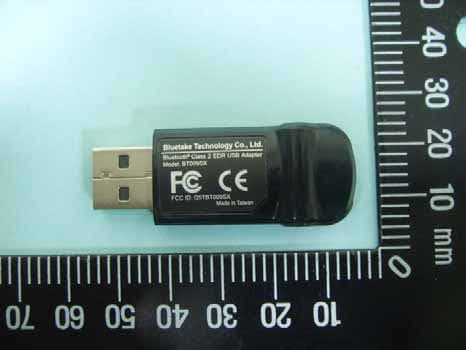
Q5TBT009SX
Nov 01, 2006Bluetooth Class 2 EDR USB Adapter
Equipment Class
DSS - Part 15 Spread Spectrum Transmitter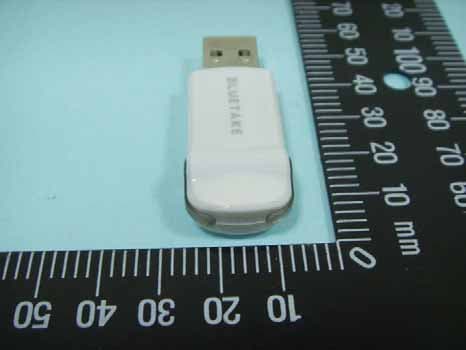
Q5TBT007SX
Oct 29, 2006Bluetooth Class 1 EDR USB Adapter
Equipment Class
DSS - Part 15 Spread Spectrum Transmitter
Q5TBT420RX0511A
Jan 26, 2006Bluetooth Stereo Headphone
Equipment Class
DSS - Part 15 Spread Spectrum Transmitter
Q5TBT430TX0511A
Jan 26, 2006Bluetooth Stereo Headphone
Equipment Class
DSS - Part 15 Spread Spectrum Transmitter