QJE-MM-4300-49Dual 802.11a/b/g 2.4GHz 4.9GHz Meshing Radio
Zebra Technologies Corporation
Click to zoom
Application Details
- Equipment Class
- TNB - Licensed Non-Broadcast Station Transmitter
- Date of Grant
- May 29, 2007
- Application Purpose
- Original Equipment
- Date of Application
- May 29, 2007
- Equipment Note
- Dual 802.11a/b/g 2.4GHz 4.9GHz Meshing Radio
- Frequency Range
- 4950.00000000 - 4980.00000000
- Country
- United States
Documents & Files

Document Text
Text extracted from the exhibit documents filed with the FCC. Open a document above to read the original.
Users Manual
MOTOROLA MOTOMESH DUO 4300 Users Guide May 2007 MOTOMESH DUO 4300 Users Guide May 2007 ii This page intentionally left blank. May 2007 iii Copyrights The Motorola products described in this document may include copyrighted Motorola computer programs. Laws in the United States and other countries reserve for Motorola certain exclusive rights for copyrighted computer programs. Accordingly, any copyrighted Motorola computer programs contained in the Motorola products described in this document may not be copied or reproduced in any manner without the express written permission of Motorola. Furthermore, the purchase of Motorola products shall not be deemed to grant either directly or by implication, estoppels or otherwise, any license under the copyrights, patents or patent applications of Motorola, except for the normal nonexclusive, royalty-free license to use that arises by operation of law in the sale of a product. Disclaimer Please note that certain features, facilities and capabilities described in this document may not be applicable to or licensed for use on a particular system, or may be dependent upon the characteristics of a particular mobile subscriber unit or configuration of certain parameters. Please refer to your Motorola contact for further information. Trademarks Motorola, the Motorola logo, and all other trademarks identified as such herein are trademarks of Motorola, Inc. All other product or service names are the property of their respective owners. Copyrights © 2007 Motorola, Inc. All rights reserved. No part of this document may be reproduced, transmitted, stored in a retrieval system, or translated into any language or computer language, in any form or by any means, without the prior written permission of Motorola, Inc. MOTOMESH DUO 4300 Users Guide May 2007 iv This page intentionally left blank. May 2007 v Table of Contents Contents ............................................. . . . . Chapter 1: Product Introduction ............................................................................ 1-1 Infrastructure Devices ...................................................................................................................................... 1-1 Infrastructure Devices within a MOTOMESH 2.0 Wireless Network ................................................................. 1-2 MOTOMESH Duo 4300 Device Specifications .............................................................................................. 1-3 Chapter 2: Infrastructure Device Installation ........................................................ 2-1 Software Requirements......................................................................................................................................... 2-1 Hardware Installation Notes ................................................................................................................................. 2-1 Equipment Specification .................................................................................................................................. 2-2 Ports and Connections .............................................................................................................................................. 2-2 Operator Supply List ................................................................................................................................................ 2-3 Optional Antennas ......................................................................................................................................................... 2-4 MOTOMESH DUO Infrastructure Device Labels ......................................................................................................... 2-4 Infrastructure Device MAC Address Table .............................................................................................................. 2-4 Infrastructure Device Assembly....................................................................................................................... 2-6 Infrastructure Device Deployment and Installation.......................................................................................... 2-7 Grounding Considerations ............................................................................................................................................. 2-8 Assembling the MOTOMESH Duo Device ................................................................................................................... 2-8 Initial Infrastructure Device Configuration Information ................................................................................................ 2-8 Device Connectivity Testing.......................................................................................................................................... 2-8 Chapter 3: Device Configuration............................................................................ 3-1 Pre-staging a MOTOMESH Duo 4300 Device in MeshManager......................................................................... 3-1 Second IP Stack Aids in Troubleshooting ............................................................................................................ 3-1 Second IP Stack Settings.................................................................................................................................. 3-1 Accessing the MOTOMESH Duo Device Recovery Settings in MeshManager ............................................................ 3-2 Device Recovery Settings .............................................................................................................................................. 3-2 Chapter 4: License Information.............................................................................. 4-1 Motorola End User License Agreement................................................................................................................ 4-1 Third Party Licensing Agree…
Text truncated - open the document above for the full version.
External Photos
External Photographs of the MOTOMESH Duo 4300-49 (4.9 GHz 802.11a) Page 1 of 4 Photograph 1. View of Front External Photographs of the MOTOMESH Duo 4300-49 (4.9 GHz 802.11a) Page 2 of 4 Photograph 2. View of Rear External Photographs of the MOTOMESH Duo 4300-49 (4.9 GHz 802.11a) Page 3 of 4 Photograph 3. View of Side External Photographs of the MOTOMESH Duo 4300-49 (4.9 GHz 802.11a) Page 4 of 4 Photograph 4. View of Side
ID Label/Location Info
MOTOMESH DUO 4300 Users Guide May 2007 2-7 Figure 2-6 Close Up of External Connection Points Infrastructure Device Deployment and Installation The MWR and the IAP devices require professional installation to ensure that the installation is performed in accordance with FCC licensing regulations. All common precautions for grounding and electrostatic discharge protection should be observed during deployment and installation. Observe the following additional guidelines when deploying fixed Infrastructure devices (MWR and IAP): • The MOTOMESH Duo 4300 device may be mounted on a pole having a diameter of 1- 3.5 inches, utilizing the provided brackets. • The antenna must have a separation distance of at least 2 meters from the body of all persons and must not be co-located or operating in conjunction with any other antenna or transmitter. • Users and installers must be provided with antenna installation and transmitter operating conditions to satisfy RF exposure compliance. • When deploying the MOTOMESH Duo 4300 device, the antenna(s) should be a minimum of 30 inches from any nearby metal poles to avoid distortion of the RF pattern. • The installation location must provide power to the MOTOMESH DUO 4300 Device. • It is the responsibility of the Network Operator to ensure that the installation complies with any local building codes and permits.
Internal Photos
Internal Photographs of the MOTOMESH Duo 4300-49 (4.9 GHz 802.11a) Page 1 of 7 Photograph 1 Internal Photographs of the MOTOMESH Duo 4300-49 (4.9 GHz 802.11a) Page 2 of 7 Photograph 2 Internal Photographs of the MOTOMESH Duo 4300-49 (4.9 GHz 802.11a) Page 3 of 7 Photograph 3 Internal Photographs of the MOTOMESH Duo 4300-49 (4.9 GHz 802.11a) Page 4 of 7 Photograph 4 Internal Photographs of the MOTOMESH Duo 4300-49 (4.9 GHz 802.11a) Page 5 of 7 Photograph 5 Internal Photographs of the MOTOMESH Duo 4300-49 (4.9 GHz 802.11a) Page 6 of 7 Photograph 6 Internal Photographs of the MOTOMESH Duo 4300-49 (4.9 GHz 802.11a) Page 7 of 7 Photograph 7
RF Exposure Info
Motorola, Inc. MOTOMESH Duo 4300-49 (2.4/4.9 GHz 802.11) CFR Title 47, Part 15, Subpart C MET Report: EMC21852-FCC247 © 2007, MET Laboratories, Inc. Page 55 of 87 MPE Limit Calculation: EUT’s operating frequencies @ 2412-2462 MHz ; highest conducted power = 27.97dBm (peak) therefore, Limit for Uncontrolled exposure: 1 mW/cm 2 . EUT maximum antenna gain = 8 dBi. Equation from page 18 of OET 65, Edition 97-01 S = PG / 4πR 2 where, S = Power Density mW/m 2 P = Power Input to antenna mili Watts G = Numeric Antenna Gain R = Distance to the center of radiation of the antenna (20 cm for Mobile minimum distance) Antenna Numeric Gain = 10 dBi/10 Power at antenna port = 602.6 mW Antenna Gain = 8 dBi Numeric antenna gain = 10 8/10 = 6.31 S = (602.6)(6.31) / 4(3.1416)(20) 2 S = 0.756 mW/cm 2 Therefore, EUT meets the Uncontrolled Exposure limit.
Test Report
MET Laboratories, Inc. Safety Certification - EMI - Telecom Environmental Simulation 914 WEST PATAPSCO AVENUE ! BALTIMORE, MARYLAND 21230-3432 ! PHONE (410) 354-3300 ! FAX (410) 354-3313 The Nation’s First Licensed Nationally Recognized Testing Laboratory May 7, 2007 Motorola - Mesh Networks Product Group 1064 Greenwood Blvd. Suite 400 Lake Mary, FL 32746 Dear Thai Le, Enclosed is the EMC test report for compliance testing of the Motorola - Mesh Networks Product Group, MOTOMESH Duo 4300-49 (4.9 GHz 802.11a), tested to the requirements of Title 47 of the Code of Federal Regulations (CFR), Part 90 for a Class A Digital Device. Thank you for using the services of MET Laboratories, Inc. If you have any questions regarding these results or if MET can be of further service to you, please feel free to contact me. Sincerely yours, MET LABORATORIES, INC. Samantha Sharbonda Documentation Department Reference: (\Motorola - Mesh Networks Product Group\EMC21852-FCC90) Certificates and reports shall not be reproduced except in full, without the written permission of MET Laboratories, Inc. While use of the National Voluntary Laboratory Accreditation Program (NVLAP) letters or the NVLAP Logo, the Standards Council of Canada Logo, A2LA, or the Nationally Recognized Testing Laboratory (NRTL) Letters in this report reflects MET Accreditation under these programs, these letters, logo, or statements do not claim product endorsement by these organizations or any Agency of the U.S. Government. This letter of transmittal is not a part of the attached report. MET Laboratories, Inc. Safety Certification - EMI - Telecom Environmental Simulation 914 WEST PATAPSCO AVENUE ! BALTIMORE, MARYLAND 21230-3432 ! PHONE (410) 354-3300 ! FAX (410) 354-3313 DOC-EMC700 7/9/04 Electromagnetic Compatibility Criteria Test Report For the Motorola - Mesh Networks Product Group MOTOMESH Duo 4300-49 (4.9 GHz 802.11a) Tested under The FCC Verification Rules Contained in Title 47 of the CFR, Part 90, Subpart Y for Private Land Mobile Radio Services MET Report: EMC21852-FCC90 May 7, 2007 Prepared For: Motorola - Mesh Networks Product Group 1064 Greenwood Blvd. Suite 400 Lake Mary, FL 32746 Prepared By: MET Laboratories, Inc. 914 W. Patapsco Avenue Baltimore, MD 21230 Motorola - Mesh Networks Product Group Electromagnetic Compatibility MOTOMESH Duo 4300-49 (4.9 GHz 802.11a) CFR Title 47, Part 90, Subpart Y MET Report: EMC21852-FCC90 © 2007, MET Laboratories, Inc. Page ii of vi DOC-EMC700 7/9/04 Electromagnetic Compatibility Criteria Test Report For the Motorola - Mesh Networks Product Group MOTOMESH Duo 4300-49 (4.9 GHz 802.11a) Tested under The FCC Verification Rules Contained in Title 47 of the CFR, Part 90, Subpart Y for Private Land Mobile Radio Services MET Report: EMC21852-FCC90 Dusmantha Tennakoon, Project Engineer Samantha Sharbonda Electromagnetic Compatibility Lab Documentation Department Engineering Statement: The measurements shown in this report were made in accordance with the procedures indicated, and the emissions from this equipment were found to be within the limits applicable. I assume full responsibility for the accuracy and completeness of these measurements, and for the qualifications of all persons taking them. It is further stated that upon the basis of the measurements made, the equipment tested is capable of operation in accordance with the requirements of Part 90, Subpart Y of the FCC Rules under normal use and maintenance. Dusmantha Tennakoon, Wireless Coordinator Electromagnetic Compatibility Lab Motorola - Mesh Networks Product Group Electromagnetic Compatibility MOTOMESH Duo 4300-49 (4.9 GHz 802.11a) CFR Title 47, Part 90, Subpart Y MET Report: EMC21852-FCC90 © 2007, MET Laboratories, Inc. Page iii of vi DOC-EMC700 7/9/04 Report Status Sheet Revision Report Date Reason for Revision ∅ May 7, 2007 Initial Issue. Motorola - Mesh Networks Product Group Electromagnetic Compatibility MOTOMESH Duo 4300-49 (4.9 GHz 802.11a) CFR Title 47, Part 90, Subpart Y MET Report: EMC21852-FCC90 © 2007, MET Laboratories, Inc. Page iv of vi DOC-EMC700 7/9/04 Table of Contents I. Testing Summary ................................................................................................................................................... 1 A. Testing Summary ................................................................................................................................................ 2 II. Equipment Configuration...................................................................................................................................... 3 A. Overview ............................................................................................................................................................. 4 B. Test Site ............................................................................................................................................................... 5 C. Description of Test Sample ................................................................................................................................. 5 D. Equipment Configuration .................................................................................................................................... 6 E. Support Equipment .............................................................................................................................................. 6 F. Ports and Cabling Information ............................................................................................................................. 7 G. Mode of Operation .............................................................................................................................................. 8 H. Method of Monitoring EUT Operation................................................................................................................ 8 I. Modifications ..........................................................…
Text truncated - open the document above for the full version.
Test Setup Photos
Test Setup Photos - MOTOMESH Duo 4300-49 Photograph 1. Conducted Emissions Photograph 2. Radiated Emissions Test Setup Photos - MOTOMESH Duo 4300-49 Photograph 3. Radiated Emissions – Mode A Photograph 4. Emissions Bandwidth Test Setup Photos - MOTOMESH Duo 4300-49 Photograph 5. Frequency Stability Photograph 6. Peak Output Conducted Power
Contact Information
Applicant
Qianlin Zhou(Regulatory Specialist)
Test Firm
EUROFINS ELECTRICAL AND ELECTRONIC TESTING NA, INCGreg Kovolenko
Technical Specifications
| # | Rule Parts | Frequency Range | Power Output | Emission | Tolerance |
|---|---|---|---|---|---|
| 2 | 90,9 | 4.95 GHz - 4.98 GHz | 550.00 mW | 18M3W7D | 0.1 ppm |
Other Applications from Zebra Technologies Corporation
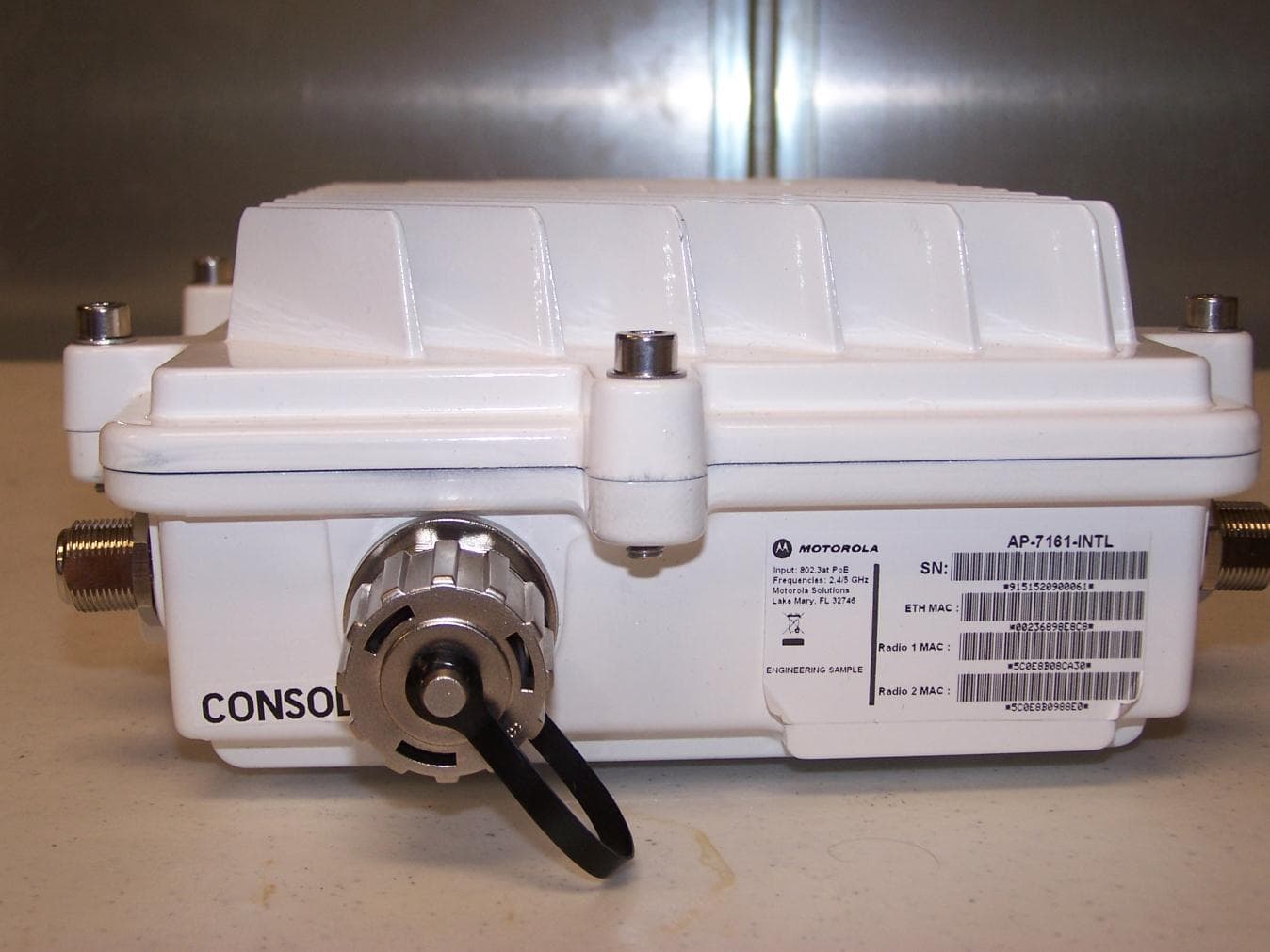
QJEAP716101
Aug 08, 2011Mesh AP-7161 Outdoor Wireless Access Point
Equipment Class
TNB - Licensed Non-Broadcast Station Transmitter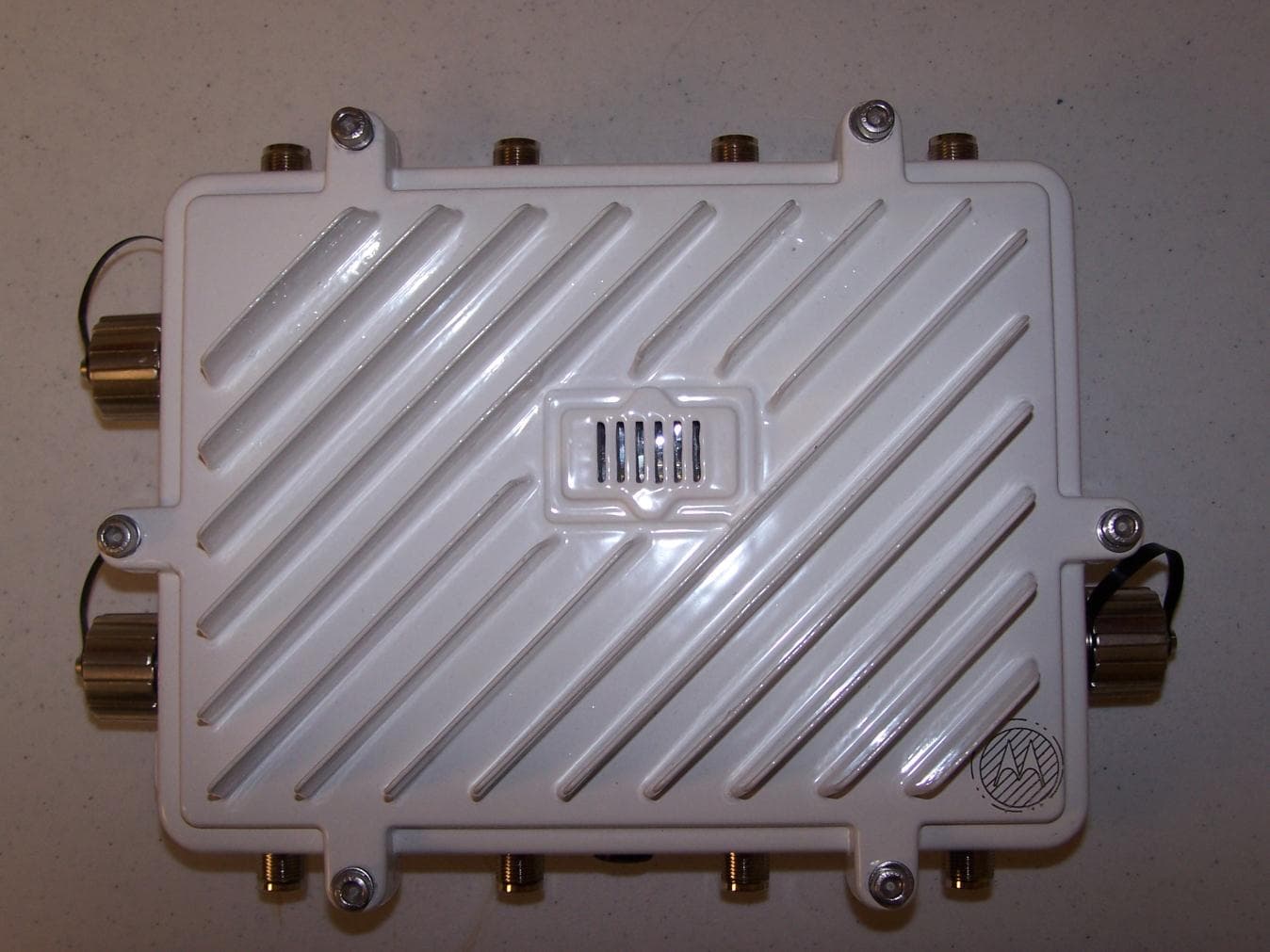
QJEAP716102
Aug 02, 2011Mesh AP-7161 Outdoor Wireless Access Point
Equipment Class
NII - Unlicensed National Information Infrastructure TX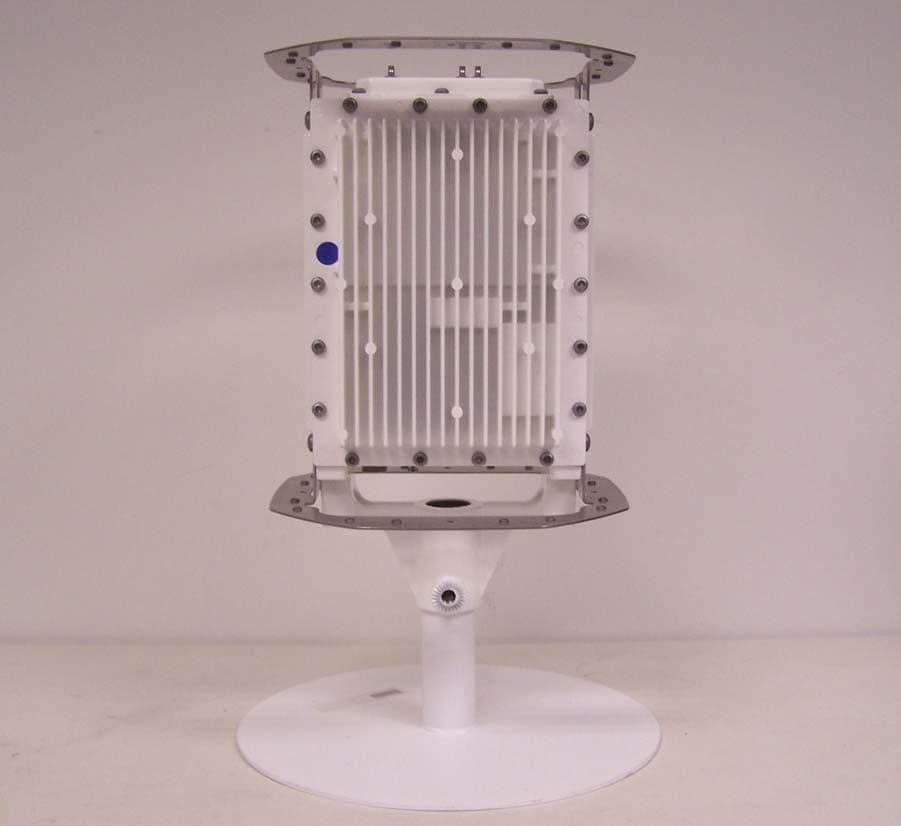
QJEMM718101
Mar 29, 2010Mesh AP-7181 Outdoor Wireless Access Point
Equipment Class
DTS - Digital Transmission System
QJE-MM4300-5800
Nov 13, 2007MM Duo 4300-5800 is an infrastructure device
Equipment Class
DTS - Digital Transmission System
QJE-HZD-4300
Nov 15, 2006HotZone Duo
Equipment Class
NII - Unlicensed National Information Infrastructure TX