QTLBH-608Bluetooth headset
Microsoft Corporation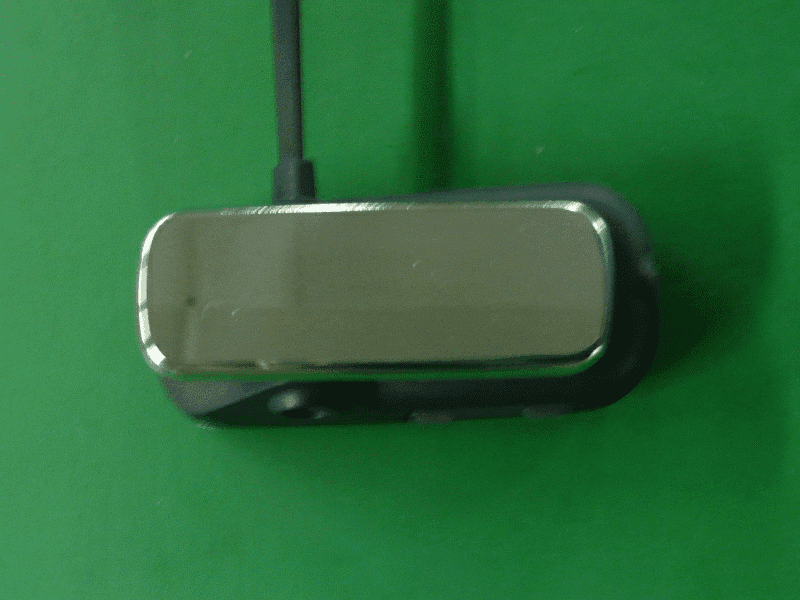
Click to zoom
Application Details
- Equipment Class
- DSS - Part 15 Spread Spectrum Transmitter
- Date of Grant
- Feb 25, 2010
- Application Purpose
- Original Equipment
- Date of Application
- Feb 24, 2010
- Equipment Note
- Bluetooth headset
- Frequency Range
- 2402.00000000 - 2480.00000000
- Company
- Microsoft Corporation
- Country
- United States
Documents & Files
Document Text
Text extracted from the exhibit documents filed with the FCC. Open a document above to read the original.
Users Manual
Nokia Bluetooth Headset BH-608 1 3 5 6 7 8 9 2 10 4 11 12 ENGLISH DECLARATION OF CONFORMITY Hereby, NOKIA CORPORATION declares that this BH-608 product is in compliance with the essential requirements and other relevant provisions of Directive 1999/5/EC. A copy of the Declaration of Conformity can be found at http://www.nokia.com/phones/ declaration_of_conformity/. © 2010 Nokia. All rights reserved. Nokia, Nokia Connecting People and the Nokia Original Accessories logo are trademarks or registered trademarks of Nokia Corporation. Nokia tune is a sound mark of Nokia Corporation. Other product and company names mentioned herein may be trademarks or tradenames of their respective owners. Reproduction, transfer, distribution, or storage of part or all of the contents in this document in any form without the prior written permission of Nokia is prohibited. Nokia operates a policy of continuous development. Nokia reserves the right to make changes and improvements to any of the products described in this document without prior notice. Bluetooth is a registered trademark of Bluetooth SIG, Inc. To the maximum extent permitted by applicable law, under no circumstances shall Nokia or any of its licensors be responsible for any loss of data or income or any special, incidental, consequential or indirect damages howsoever caused. The contents of this document are provided "as is". Except as required by applicable law, no warranties of any kind, either express or implied, including, but not limited to, the implied warranties of merchantability and fitness for a particular purpose, are made in relation to the accuracy, reliability or contents of this document. Nokia reserves the right to revise this document or withdraw it at any time without prior notice. The availability of particular products may vary by region. Please check with your Nokia dealer for details. This device may contain commodities, technology or software subject to export laws and regulations from the US and other countries. Diversion contrary to law is prohibited. ENGLISH Introduction With the Nokia Bluetooth Headset BH-608, you can make and answer calls hands-free with your compatible mobile device. The headset is provided with digital signal processing (DSP) noise cancellation that helps you handle calls in noisy environments. Read this user guide carefully before using the headset. Also, read the user guide for the device that you connect to the headset. This product may contain small parts. Keep them out of the reach of small children. Note: The surface of this device does not contain nickel in the platings. The surface of this device contains stainless steel. Bluetooth wireless technology Bluetooth wireless technology allows you to connect compatible devices without cables. The headset and the other device do not need to be in line of sight, but they should be within 10 metres (33 feet) of each other. Connections may be subject to interference from obstructions, such as walls, or other electronic devices. The headset is compliant with the Bluetooth Specification 2.1 + EDR supporting the Headset Profile 1.1 and Hands-Free Profile 1.5. Check with the manufacturers of other devices to determine their compatibility with this device. ENGLISH Get started The headset contains the following parts shown on the title page: earpiece (1), microphone (2), mute key (3), answer/end key (4), charger connector (5), volume up key (6), volume down key (7), clip (8), indicator light (9), and power key (10). Before using the headset, you must charge the battery and pair the headset with a compatible device. Parts of the device are magnetic. Metallic materials may be attracted to the device. Do not place credit cards or other magnetic storage media near the device, because information stored on them may be erased. Charge the battery Before charging the battery, carefully read “Battery and charger information”. Warning: Use only chargers approved by Nokia for use with this particular model. The use of any other types may invalidate any approval or warranty, and may be dangerous. Use of unapproved chargers may present a risk of fire, explosion, or other hazard. When you disconnect the power cord of any accessory, grasp and pull the plug, not the cord. 1. Connect the charger to a wall outlet. 2. Connect the charger cable to the charger connector. The red indicator light is displayed during charging. Charging the battery fully may take up to 1 hour. Charging the battery for 15 minutes provides up to 3 hours and 30 minutes of talk time. ENGLISH If the ambient temperature falls below 0°C (32°F) or exceeds 55°C (131°F), charging stops temporarily until the temperature rises to 0°C (32°F) or falls below 55°C (131°F). 3. When the battery is fully charged, the green indicator light is displayed. Disconnect the charger from the headset, then from the wall outlet. The fully charged battery has power for up to 8 hours of talk time or up to 200 hours of standby time. To check the battery charge when the headset is not connected to a charger, press the power key when the headset is connected to a mobile device. If the indicator light is green, the charge level is sufficient. If the light is yellow, you may need to recharge the battery soon. If the light is red, recharge the battery. When the battery charge is low, the headset beeps every 5 minutes and the red indicator light flashes. Switch on or off To switch on, press and hold the power key for about 2 seconds. The headset beeps, and the green indicator light flashes slowly while the headset tries to connect to the last one or two connected devices. When the headset is connected to at least one device and is ready for use, the blue indicator light flashes slowly. If the headset has not been paired with a device, it automatically enters pairing mode. To switch off, press and hold the power key for about 2 seconds. The headset beeps, and the red indicator light is briefly displayed. If the headset is not connected…
Text truncated - open the document above for the full version.
Cover Letter(s)
Nokia (China) Investment Co., Ltd. B2, Nokia China Campus, Beijing Economic and Tech Development Area No.5 Donghuan, Zhonglu, Beijing, 100176, China Date: 2010/2/5 Federal Communication Commission Equipment Authorization Division, Application Processing Branch 7435 Oakland Mills Road Columbia, MD 21048 Attention: Equipment Authorization Branch REQUEST FOR CONFIDENTIALITY Pursuant to Sections 0.457 (d) (1) (ii) and 0.459 of the Commission's Rules, the Applicant hereby requests confidential treatment of some of the information accompanying this Application of FCC ID: QTLBH-608 and as outlined below: - Block Diagram - Schematic Diagrams - Circuit/Technical Description - Component list These materials contain trade secrets and proprietary information not customarily released to the public and the public disclosure of these matters might be harmful to Applicant and provide unjustified benefits to its competitors. The Applicant understands that pursuant to Rule 0.457 (d) (1) (ii) disclosure of this Application and all accompanying documentation will not be made before the date of the Grant for this Application. Petri Hänninen Nokia (China) Investment Co., Ltd.
Cover Letter(s)
Nokia (China) Investment Co., Ltd. B2, Nokia China Campus, Beijing Economic and Tech Development Area No.5 Donghuan, Zhonglu, Beijing, 100176, China Date: 2010/2/5 Federal Communication Commission Equipment Authorization Division, Application Processing Branch 7435 Oakland Mills Road Columbia, MD 21048 Attention: Equipment Authorization Branch REQUEST FOR SHORT TERM CONFIDENTIALITY Pursuant to Sections 0.459 of the Commission's Rules and Public Notice DA04-1705 of June 15, 2004, the Applicant hereby requests for 180days short term confidential treatment of some of the information accompanying this Application of FCC ID: QTLBH-608 and as outlined below: - External photos - Internal photos - Test setup photos - User's manual These materials contain proprietary information not yet released to the public and the public disclosure of these matters might be harmful to the Applicant and provide unjustified benefits to its competitors. Petri Hänninen Nokia (China) Investment Co., Ltd.
Cover Letter(s)
Letter of Agency Authorization Date: 2010/2/5 1.1 Agent’s Authorization Letter Current Date I, an officer of Nokia (China) Investment Co., Ltd, do hereby authorize, until further notice, TUV Rheinland Japan Ltd., 4-25-2 Kita-Yamata Tsuzuki-ku, Yokohama, 224-0021, Japan, to act on our behalf in dealings before the Federal Communications Commission with respect to all matters relating to equipment authorizations, Nokia Wireless headset BH-608 , under 47 CFR. This authorization includes, but is not limited to, the signing of Form 731. I certify that no party (as defined in 47 CFR 1.2002) to this application, including myself, is subject to a denial of federal benefits, that include FCC benefits, pursuant to section 5301 of the Anti-Drug Abuse Act of 1988, 21 U.S.C., 853A. Certified By: Petri Hänninen Nokia (China) Investment Co., Ltd.
External Photos
Photographs of BH-608 [External photos] <Front view> <Rear View> <Side view –Left side> <Side view –Right side> <Top view> <Bottom view>
ID Label/Location Info
Label information ・Appearance of Label Position of label Bottom enclosure Clip Label is located on the bottom side of the enclosure under the clip
Internal Photos
[Internal photos] <Top side of PCB> <Back side of PCB>
Test Report
FCC ID: QTLBH-608 IC: 661AB-BH608 Produkte Products Prüfbericht - Nr.: Test Report No.: 12606564 001 Seite 2 von 53 Page 2 of 53 TEST SUMMARY 3.2.1 VOLTAGE REQUIREMENTS, FCC 15.31(E) RESULT: PASS 3.2.2 ANTENNA REQUIREMENTS, FCC 15.203, FCC 15.204 AND RSS-GEN 7.1.4 RESULT: PASS 5.1.1 C ONDUCTED OUTPUT POWER AT ANTENNA TERMINALS, FCC 15.247(B)(1) AND RSS-210 A8.4(2) RESULT: PASS 5.1.2 CARRIER FREQUENCY SEPARATION, FCC 15.247(A)(1) AND RSS-210 A8.1(B) RESULT: PASS 5.1.3 20 DB BANDWIDTH, FCC 15.247(A)(1)(II) AND RSS-210 A8.1(A) RESULT: PASS 5.1.4 99% BANDWIDTH, RSS-GEN 4.6.1 RESULT: PASS 5.1.5 HOPPING CHARACTERISTICS NUMBER OF HOPPING FREQUENCIES, FCC 15.247(A)(1)(III) AND RSS-210 A8.1(D) RESULT: PASS 5.1.6 HOPPING CHARACTERISTICS AVERAGE TIME OF OCCUPANCY, FCC 15.247(A)(1)(III) AND RSS-210 A8.1(D) RESULT: PASS 5.1.7 CONDUCTED SPURIOUS EMISSION, FCC 15.247(D) AND RSS-210 A8.5 RESULT: PASS 6.1.1 MAINS TERMINAL CONTINUOUS DISTURBANCE VOLTAGE OF TRANSMITTER, FCC 15.207 AND RSS-GEN 7.2.2 RESULT: PASS 6.2.1 AC POWER LINE CONDUCTED EMISSION OF RECEIVER, FCC 15.107 AND RSS-GEN 7.2.2 RESULT: PASS 7.1.1 BAND EDGE RADIATED EMISSION, FCC 15.247(D) AND RSS- 210 2.2 RESULT: Pass 7.1.2 R ADIATED EMISSION, OUT-OF-BAND AND SPURIOUS EMISSION, FCC 15.247(D), FCC 15.205, FCC 15.209, RSS-210 2.2, RSS-210 A8.5 AND RSS-GEN 7.2.1 RESULT: PASS 7.2.1 RADIATED EMISSION OF RECEIVER, FCC 15.109, RSS-210 2.2, RSS-210 2.6, RSS-210 A8.5, RSS-GEN 7.2.3.2 RESULT: PASS FCC ID: QTLBH-608 IC: 661AB-BH608 Produkte Products Prüfbericht - Nr.: Test Report No.: 12606564 001 Seite 3 von 53 Page 3 of 53 Contents 1. GENERAL REMARKS............................................................................................... 5 1.1 COMPLEMENTARY MATERIALS................................................................................. 5 2. TEST SITES............................................................................................................ 6 2.1 T EST FACILITIES..................................................................................................... 6 2.2 LIST OF TEST AND MEASUREMENT INSTRUMENTS...................................................... 6 2.3 M EASUREMENT UNCERTAINTY................................................................................. 7 3. GENERAL PRODUCT INFORMATION........................................................................... 8 3.1 PRODUCT FUNCTION AND INTENDED USE.................................................................. 8 3.2 S YSTEM DETAILS.................................................................................................... 8 3.2.1 Voltage Requirements, FCC 15.31(e) .........................................................................................8 3.2.2 Antenna Requirements, FCC 15.203, FCC 15.204 and RSS-Gen 7.1.4.....................................9 3.3 CLOCK FREQUENCIES............................................................................................. 9 3.4 INDEPENDENT OPERATION MODES........................................................................... 9 4. TEST SET-UP AND OPERATION MODES................................................................... 10 4.1 TEST METHODOLOGY............................................................................................ 10 4.2 P HYSICAL CONFIGURATION FOR TESTING............................................................... 11 4.3 TEST OPERATION AND TEST SOFTWARE................................................................. 12 4.4 SPECIAL ACCESSORIES AND AUXILIARY EQUIPMENT............................................... 13 4.5 C OUNTERMEASURES TO ACHIEVE EMC COMPLIANCE.............................................. 14 5. TEST RESULTS CONDUCTED TESTING AT ANTENNA PORT........................................ 15 5.1.1 Conducted Output Power at Antenna Terminals, FCC 15.247(b)(1) and RSS-210 A8.4(2) .....15 5.1.2 Carrier Frequency Separation, FCC 15.247(a)(1) and RSS-210 A8.1(b)..................................17 5.1.3 20dB Bandwidth, FCC 15.247(a)(1)(ii) and RSS-210 A8.1(a) ...................................................19 5.1.4 99% Bandwidth, RSS-Gen 4.6.1................................................................................................22 5.1.5 Hopping Characteristics Number of Hopping Frequencies, FCC 15.247(a)(1)(iii) and RSS-210 A8.1(d) 25 5.1.6 Hopping Characteristics Average time of Occupancy, FCC 15.247(a)(1)(iii) and RSS-210 A8.1(d) 27 5.1.7 Conducted Spurious Emission, FCC 15.247(d) and RSS-210 A8.5..........................................30 6. TEST RESULTS AC MAINS CONDUCTED EMISSION.................................................. 40 6.1 AC MAINS CONDUCTED EMISSION OF TRANSMITTER............................................... 40 6.1.1 Mains Terminal Continuous Disturbance Voltage of Transmitter, FCC 15.207 and RSS-Gen 7.2.2 40 6.2 AC POWER LINE CONDUCTED EMISSION OF RECEIVER............................................ 42 6.2.1 AC Power Line Conducted Emission of Receiver, FCC 15.107 and RSS-Gen 7.2.2 ...............42 7. TEST RESULTS RADIATED EMISSION...................................................................... 44 FCC ID: QTLBH-608 IC: 661AB-BH608 Produkte Products Prüfbericht - Nr.: Test Report No.: 12606564 001 Seite 4 von 53 Page 4 of 53 7.1 RADIATED EMISSION OF TRANSMITTER................................................................... 44 7.1.1 Band Edge Radiated Emission, FCC 15.247(d) and RSS- 210 2.2 ..........................................44 7.1.2 Radiated Emission, Out-of-Band and Spurious Emission, FCC 15.247(d), FCC 15.205, FCC 15.209, RSS-210 2.2, RSS-210 A8.5 and RSS-Gen 7.2.1.....................................................................47 7.2 R ADIATED EMISSION OF RECEIVER......................................................................... 50 7.2.1 Radiated Emission of Receiver, FCC 15.109, RSS-210 2.2, RSS-210 2.6, RSS-210 A8.5, RSS-Gen 7.2.3.2.....................................................…
Text truncated - open the document above for the full version.
Test Setup Photos
Produkte Products Prüfbericht - Nr.: Test Report No.: 12606564 002 Seite 1 von 10 Page 1 of 10 Auftraggeber: Client: Nokia (China) Investment Co., Ltd. B2, Nokia China Campus.Beijing Economic and Tech Development Area, No.5. Donghuan Zhonglu, Beijing, China Gegenstand der Prüfung: Test item: Nokia Bluetooth Headset Bezeichnung: Identification: BH-608 Serien-Nr.: Serial No.: Engineering Sample Wareneingangs-Nr.: Receipt No.: PT0213095563-1 Eingangsdatum: Date of receipt: 2010-01-25 Prüfort: Testing location: TÜV Rheinland Japan Ltd. - Global Technology Assessment Center 4-25-2 Kita-Yamata, Tsuzuki-ku, Yokohama 224-0021, Japan Prüfgrundlage: Test specification: 47 CFR Part 15.247 (Subpart: C), October, 2009 ANSI C63.4-2003 FCC Public Notice DA 00-705, Released March 30, 2000 RSS-210 (Issue 7): 2007 RSS-Gen (Issue 2): 2007 Prüfergebnis: Test Result: Der Prüfgegenstand entspricht oben genannter Prüfgrundlage(n). The test item passed the test specification(s). Prüflaboratorium: Testing Laboratory: TÜV Rheinland Japan Ltd. - Global Technology Assessment Center 4-25-2 Kita-Yamata, Tsuzuki-ku, Yokohama 224-0021, Japan geprüft/ tested by: 2010-02-19 Y. Sasaki / Inspector Datum Name/Stellung Unterschrift Date Name/Position Signature kontrolliert/ reviewed by: 2010-02-19 T. Cheung / Reviewer Datum Name/Stellung Unterschrift Date Name/Position Signature Sonstiges / Other Aspects: Details refer to Section 1: “General Remarks” Abkürzungen: P(ass) = entspricht Prüfgrundlage F(ail) = entspricht nicht Prüfgrundlage N/A = nicht anwendbar N/T = nicht getestet Abbreviations: P(ass) = passed F(ail) = failed N/A = not applicable N/T = not tested Dieser Prüfbericht bezieht sich nur auf das o.g. Prüfmuster und darf ohne Genehmigung der Prüfstelle nicht auszugsweise vervielfältigt werden. Dieser Bericht berechtigt nicht zur Verwendung eines Prüfzeichens. This test report relates to the a. m. test sample. Without permission of the test center this test report is not permitted to be duplicated in extracts. This test report does not entitle to carry any safety mark on this or similar products. Produkte Products Prüfbericht - Nr.: Test Report No.: 12606564 002 Seite 3 von 10 Page 3 of 10 1. General Remarks This report is prepared for Test setup photos of Intentional radiator. For the test result, please refer to test report 12606564 001. Test report number Content 12606564 001 Intentional radiator 12606564 002 Test setup photos of Intentional radiator 12606564 003 Unintentional radiator 12606564 004 Exposure letter 1.1 Complementary Materials There is no attachment for this test report. Produkte Products Prüfbericht - Nr.: Test Report No.: 12606564 002 Seite 4 von 10 Page 4 of 10 2. Test Sites 2.1 Test Facilities TÜV Rheinland Japan Ltd. - Global Technology Assessment Center 4-25-2 Kita-Yamata, Tsuzuki-ku, Yokohama 224-0021, Japan The used test equipment is in accordance with CISPR 16 for measurement of radio interference. The Federal Communications Commission has reviewed the technical characteristics of the radiated and conducted emission facility, and has found these test facilities to be in compliance with the requirements of section 2.948 of the FCC rules. The description of the test facility is listed under FCC registration number 299054. The Industry Canada has reviewed the technical characteristics of the radiated and conducted emission facility, and has found these test facilities to be in compliance. The description of the test facility is listed under OATS filing number 3466B. The test facility is accredited by VLAC (member of ILAC) under number VLAC-017 according to ISO/IEC 17025:2005. TÜV Rheinland Japan Ltd. is accredited by the Federal Communications Commission as a Conformity Assessment Body under Designation Number JP0017 and Test Firm Registration Number 386498. Produkte Products Prüfbericht - Nr.: Test Report No.: 12606564 002 Seite 5 von 10 Page 5 of 10 3. Photographs of test setup Photograph 1: Set-up for Conducted Emissions at Antenna Port Produkte Products Prüfbericht - Nr.: Test Report No.: 12606564 002 Seite 6 von 10 Page 6 of 10 Photograph 2: Set-up for AC Mains Conducted Emission of Transmitter and Receiver, Front View Photograph 3: Set-up for AC Mains Conducted Emission of Transmitter and Receiver, Rear View Produkte Products Prüfbericht - Nr.: Test Report No.: 12606564 002 Seite 7 von 10 Page 7 of 10 Photograph 4: Set-up for Radiated Emission, EUT Configuration X-Axis Photograph 5: Set-up for Radiated Emission, EUT Configuration Y-Axis Produkte Products Prüfbericht - Nr.: Test Report No.: 12606564 002 Seite 8 von 10 Page 8 of 10 Photograph 6: Set-up for Radiated Emission, EUT Configuration Z-Axis Photograph 7: Set-up for Radiated Emission of Transmitter, Front View Produkte Products Prüfbericht - Nr.: Test Report No.: 12606564 002 Seite 9 von 10 Page 9 of 10 Photograph 8: Set-up for Radiated Emission of Transmitter, Rear View Photograph 9: Set-up for Radiated Emission of Receiver, Front View Produkte Products Prüfbericht - Nr.: Test Report No.: 12606564 002 Seite 10 von 10 Page 10 of 10 Photograph 10: Set-up for Radiated Emission of Receiver, Rear View 4. List of Photographs Photograph 1: Set-up for Conducted Emissions at Antenna Port.................................................................5 Photograph 2: Set-up for AC Mains Conducted Emission of Transmitter and Receiver, Front View ...........6 Photograph 3: Set-up for AC Mains Conducted Emission of Transmitter and Receiver, Rear View............6 Photograph 4: Set-up for Radiated Emission, EUT Configuration X-Axis.....................................................7 Photograph 5: Set-up for Radiated Emission, EUT Configuration Y-Axis.....................................................7 Photograph 6: Set-up for Radiated Emission, EUT Configuration Z-Axis.....................................................8 Photograph 7: Set-up for Radiated Emission of Transmitter, Front View ...................................................…
Text truncated - open the document above for the full version.
Contact Information
Applicant
Hasnain Syed(Director, EMC, SI and RF Compliance)
Test Firm
TUV Rheinland Japan Ltd., Global Technology AssessMinoru Yamanaka
Technical Specifications
| # | Rule Parts | Frequency Range | Power Output |
|---|---|---|---|
| 1 | 15C | 2.40 GHz - 2.48 GHz | 3.50 mW |
Other Applications from Microsoft Corporation
QTLRM-1041
Nov 03, 2014GSM/WCDMA/LTE/CDMA Cellular Device with BT, BTLE, WLAN, NFC
Equipment Class
PCE - PCS Licensed Transmitter held to ear
QTLRM-1078
Sep 24, 2014GSM/WCDMA/LTE/CDMA cellular device w/BT, BTLE, WLAN
Equipment Class
JBP - Part 15 Class B Computing Device Peripheral
QTLRM-1039
Sep 10, 2014GSM/WCDMA/LTE cellular device w/BT, BTLE, WLAN and NFC
Equipment Class
JBP - Part 15 Class B Computing Device Peripheral
QTLRM-1040
Aug 25, 2014GSM/WCDMA cellular device w/BT, BTLE, WLAN, NFC
Equipment Class
PCB - PCS Licensed Transmitter
QTLRM-1038
Aug 14, 2014GSM/WCDMA cellular device w/BT, BTLE, WLAN, NFC
Equipment Class
PCE - PCS Licensed Transmitter held to ear