QTLRM-1025GSM/WCDMA cellular phone w/BT WLAN
Microsoft Corporation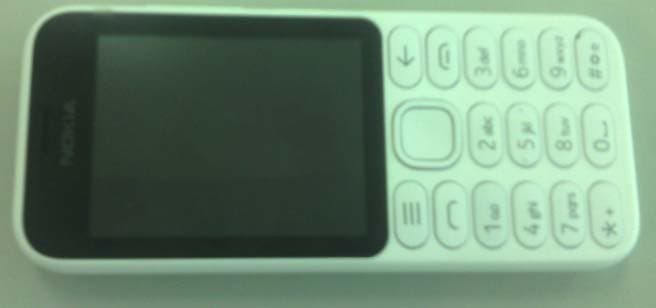
Click to zoom
Application Details
- Equipment Class
- PCE - PCS Licensed Transmitter held to ear
- Date of Grant
- Jul 17, 2014
- Application Purpose
- Original Equipment
- Date of Application
- Jul 17, 2014
- Equipment Note
- GSM/WCDMA cellular phone w/BT WLAN
- Frequency Range
- 1852.40000000 - 1907.60000000
- Company
- Microsoft Corporation
- Country
- United States
Documents & Files
Document Text
Text extracted from the exhibit documents filed with the FCC. Open a document above to read the original.
Users Manual
Quick GuideNokia XXX Issue 1 EN RM-1025 Psst... This guide isn't all there is... There's a user guide in your phone – it's always with you, available when needed. On the start screen, tap Care. For the online user guide, even more info, and troubleshooting help, go to www.nokia.com/ support. The instructions in this user guide are based on the latest available software version. If your device has not been updated to the latest available software, there may be differences in the availability and functionality of some features. For info about writing text on your phone, see the user guide in your phone or the online user guide. For info on Microsoft Mobile Service terms and Privacy policy, go to www.nokia.com/privacy. Contents For your safety 3 Get started 5 Keys and parts 5 Insert SIM, battery and memory card 6 Charge the battery 9 Copy contacts from your old phone 9 2 Basics 10 Explore your phone 11 Switch between views 13 Find your favourites 14 Change settings quickly 15 Switch Glance screen on 16 Camera 16 Take a photo 16 Phone management & connectivity 17 Connect your computer to the web 17 Sync your content with an Android phone 17 Find your model number and serial number (IMEI) 18 Product and safety info 18 MANUFACTURER’S LIMITED WARRANTY 28 NOKIA — MANUFACTURER’S LIMITED WARRANTY 32 For your safety We invite you to read the instructions on this guide before using the device. SWITCH OFF IN RESTRICTED AREAS Switch the device off when mobile phone use is not allowed or when it may cause interference or danger, for example, in aircraft, in hospitals or near medical equipment, fuel, chemicals, or blasting areas. Obey all instructions in restricted areas. 3 ROAD SAFETY COMES FIRST Obey all local laws. Always keep your hands free to operate the vehicle while driving. Your first consideration while driving should be road safety. INTERFERENCE All wireless devices may be susceptible to interference, which could affect performance. QUALIFIED SERVICE Only qualified personnel may install or repair this product. BATTERIES, CHARGERS, AND OTHER ACCESSORIES Use only batteries, chargers, and other accessories approved by Microsoft Mobile for use with this device. Do not connect incompatible products. KEEP YOUR DEVICE DRY Your device is not water-resistant. Keep it dry. PROTECT YOUR HEARING To prevent possible hearing damage, do not listen at high volume levels for long periods. Exercise caution when holding your device near your ear while the loudspeaker is in use. SAR This device meets RF exposure guidelines when used either in the normal use position against the ear or when positioned at least 1.5 centimetres (5/8 inch) away from the body. The specific maximum SAR values can be found in the Certification Information (SAR) section of this user guide. For more info, go to www.sar- tick.com. When a carry case, belt clip or other form of device holder is used for body-worn operation, it should not contain metal and should provide at least the above-stated separation distance from the body. Note that mobile devices may be transmitting even if you are not making a voice call. 4 Get started Get started with the basics, and have your phone up and running in no time. Keys and parts Explore the keys and parts of your new phone. 1Micro-USB connector 2Audio connector (3.5 mm) 3Earpiece 4Volume/Zoom keys 5Lock/Power key 6Back key 7End key 5 8Microphone 9Scroll key 10Call key 11Options key 12Screen 13Camera lens. Before using the camera, remove the protective tape from the lens. 14Antenna area 15Speaker Avoid touching the antenna area while the antenna is in use. Contact with antennas affects the communication quality and may reduce battery life due to higher power level during operation. Do not connect to products that create an output signal, as this may damage the device. Do not connect any voltage source to the audio connector. If you connect an external device or headset, other than those approved for use with this device, to the audio connector, pay special attention to volume levels. Some of the accessories mentioned in this user guide, such as charger, headset, or data cable, may be sold separately. Insert SIM, battery and memory card Learn how to insert a battery and SIM and memory cards. 6 Important: Your device uses a micro-SIM card, also known as a mini-UICC SIM card. Use of incompatible SIM cards, or use of SIM card adapters, may damage the card or the device, and may corrupt data stored on the card. Use only compatible memory cards approved for use with this device. Incompatible cards may damage the card and the device and corrupt data stored on the card. 1. Place your finger on the logo and gently lift the back cover. 2. If the battery is in the phone, lift it out. 3. Open the SIM holder, and slide the SIM into the holder. Close the holder, and lock it into place. Make sure the SIM contact area is face down. 7 4. Insert the memory card into the memory card holder. Close the holder, and lock it into place. Tip: To remove the memory card, unlock the holder, then pull the memory card out. 5. Line up the battery contacts, and push the battery in. 6. Replace the back cover. 7. To switch your phone on, press and hold the power key until the phone vibrates. Note: Switch the device off and disconnect the charger and any other device before removing any covers. Avoid touching electronic components while changing any covers. Always store and use the device with any covers attached. 8 Charge the battery Your battery has been partially charged at the factory, but you may need to recharge it before you can use your phone. 1. Plug the charger into a wall outlet. 2. Connect the charger to the phone. When done, unplug the charger from the phone, then from the wall outlet. If the battery is completely discharged, it may take up to 20 minutes before the charging indicator is displayed. Tip: You can use USB charging when a wall outlet is not available. Data can be transferred while charging the device. The efficie…
Text truncated - open the document above for the full version.
Cover Letter(s)
Confidential 1 (1) 2014-07-16 Confidential This material, including documentation and any related computer programs, is protected by copyright controlled by Microsoft. All rights are reserved. Copying, including reproducing, storing, adapting or translating, any or all of this material requires the prior written consent of Microsoft. This material also contains confidential information, which may not be disclosed to others without the prior written consent of Microsoft. Copyright 2014 Microsoft. All rights reserved. Exhibit 13a Request for Confidentiality FCC ID: QTLRM-1025 Applicant: Microsoft Mobile Oy Nokia (China) Investment Co., Ltd B2, Nokia China Campus Beijing Economic and Tech Development Area, No.5 Donghuan Zhonglu Beijing, 100176 China PRC Tel. +861087118888 Fax +861087114550 July 16, 2014 Federal Communications Commission, Authorization & Evaluation Division, 7435 Oakland Mills Road, Columbia, MD. 21046 Attention: Equipment Authorization Branch REQUEST FOR CONFIDENTIALITY Pursuant to Sections 0.457 (d) (l) (ii) and 0.459 of the Commission’s Rules, the Applicant hereby requests confidential treatment of some of the information accompanying this Application of FCC ID: QTLRM-1025 and as outlined below: - Exhibit 4: Block Diagram - Exhibit 5: Schematic Diagrams - Exhibit 10: List of Active Devices and Tune-Up Procedure - Exhibit 12: Theory of Operation / Description of Circuitry These materials contain trade secrets and proprietary information not customarily released to the public and the public disclosure of these matters might be harmful to the Applicant and provide unjustified benefits to its competitors. The Applicant understands that pursuant to Rule 0.457 (d) (l) (ii) disclosure of this Application and all accompanying documentation will not be made before the date of the Grant for this Application. Microsoft Mobile Xu Helen Product Certification Officer
Cover Letter(s)
Confidential 1 (1) 2014-07-16 Confidential This material, including documentation and any related computer programs, is protected by copyright controlled by Microsoft. All rights are reserved. Copying, including reproducing, storing, adapting or translating, any or all of this material requires the prior written consent of Microsoft. This material also contains confidential information, which may not be disclosed to others without the prior written consent of Microsoft. Copyright 2014 Microsoft. All rights reserved. Exhibit 13b Request for short term confidentiality FCC ID: QTLRM-1025 Applicant: Microsoft Mobile Oy Nokia (China) Investment Co., Ltd B2, Nokia China Campus Beijing Economic and Tech Development Area, No.5 Donghuan Zhonglu Beijing, 100176 China PRC Tel. +861087118888 Fax +861087114550 July 16, 2014 Attention: Equipment Authorization Branch REQUEST FOR SHORT TERM CONFIDENTIALITY Pursuant to Section 0.459 of the Commission’s Rules and Public Notice DA 04-1705 of June 15, 2004, the Applicant hereby requests for 90 days short term confidential treatment of some of the information accompanying this application of FCC ID: QTLRM-1025 and as outlined below: - Exhibit 3: External photos - Exhibit 7: Test setup photos - Exhibit 8: User's manual - Exhibit 9: Internal photos These materials contain proprietary information not yet released to the public and the public disclosure of these matters might be harmful to the Applicant and provide unjustified benefits to its competitors. Microsoft Mobile Xu Helen Product Certification Officer
Cover Letter(s)
Microsoft Mobile Oy Tel +358 *(0) 7180 08000 Keilalahdentie 4 02150 ESPOO www.microsoft.com Finland Microsoft Corporation is an equal opportunity employer. Page 1 of 1 June 11, 2014 Federal Communications Commission, Authorization & Evaluation Division, 7435 Oakland Mills Road, Columbia, MD. 21046 Attention: Equipment Authorization Branch This letter will authorize the appointment of Xu Helen to act as our agent in all FCC matters for grantee code QTL. Yours Sincerely, Microsoft Mobile Oy Antero Koivisto Senior Specialist, Regulatory
External Photos
Applicant: Microsoft Mobile Oy FCC ID: QTLRM-1025 Copyright © 2014 Microsoft. All rights reserved. Applicant: Microsoft Mobile Oy FCC ID: QTLRM-1025 Copyright © 2014 Microsoft. All rights reserved. Applicant: Microsoft Mobile Oy FCC ID: QTLRM-1025 Copyright © 2014 Microsoft. All rights reserved.
ID Label/Location Info
Applicant: Microsoft Mobile Oy FCC ID: QTLRM-1025 Copyright © 2014 Microsoft. All rights reserved Type label placement on the phone Applicant: Microsoft Mobile Oy FCC ID: QTLRM-1025 Copyright © 2014 Microsoft. All rights reserved
Internal Photos
1 (4) Applicant: Microsoft Mobile Oy FCC ID: QTLRM-1025 Copyright © 2014 Microsoft. All rights reserved. 2 (4) Applicant: Microsoft Mobile Oy FCC ID: QTLRM-1025 Copyright © 2014 Microsoft. All rights reserved. 3 (4) Applicant: Microsoft Mobile Oy FCC ID: QTLRM-1025 Copyright © 2014 Microsoft. All rights reserved. 4 (4) Applicant: Microsoft Mobile Oy FCC ID: QTLRM-1025 Copyright © 2014 Microsoft. All rights reserved.
RF Exposure Info
____________________________________________________________________________ SAR Report FCC_RM-1025_03 Applicant: Microsoft Mobile Type: RM-1025 Copyright 2014 TCC Microsof t 1/79 SAR Compliance Test Report Test report no.: FCC_RM-1025_03 Date of report: 2014-07-08 Template version: 19.7 Number of pages: 79 Testing laboratory: TCC Microsoft Beijing Laboratory Beijing Economic and Technological Development Area No.5 Donghuan Zhonglu Beijing PRC China 100176 Tel. +86 10 8711 8888 Fax. +86 10 8711 4550 Client: Microsoft Mobile Beijing Economic and Technological Development Area No.5 Donghuan Zhonglu Beijing PRC China 100176 Tel. +86 10 8711 8888 Fax. +86 10 8711 4550 Responsible test engineer: Cai Jim Product contact person: Wang Kelly Measurements made by: Yuan Rui, He Ying, Xu Liping Tested device: RM-1025 FCC ID: QTLRM-1025 IC: - Supplement reports: SAR_Photo_RM-1025_04 Testing has been carried out in accordance with: 47CFR §2.1093 Radiofrequency Radiation Exposure Evaluation: Portable Devices FCC published RF exposure KDB procedures RSS-102, Issue 4 Evaluation Procedure for Mobile and Portable Radio Transmitters with Respect to Health Canada’s Safety Code 6 for Exposure of Humans to Radio Frequency Fields IEEE 1528 - 2013 IEEE Recommended Practice for Determining the Peak Spatial-Average Specific Absorption Rate (SAR) in the Human Head from Wireless Communications Devices: Measurement Technique Documentation: The documentation of the testing performed on the tested devices is archived for 15 years at TCC Microsoft. Test results: The tested device complies with the requirements in respect of all parameters subject to the test. The test results and statements relate only to the items tested. The test report shall not be reproduced except in full, without written approval of the laboratory. Date and signatures: For the contents: ____________________________________________________________________________ SAR Report FCC_RM-1025_03 Applicant: Microsoft Mobile Type: RM-1025 Copyright 2014 TCC Microsof t 2/79 CONTENTS 1. SUMMARY OF SAR TEST REPORT ............................................................................................................................................ 4 1.1 TEST DETAILS............................................................................................................................................................................ 4 1.2 MAXIMUM RESULTS ................................................................................................................................................................... 4 1.2.1 Head Configuration...................................................................................................................................................... 4 1.2.2 Body Worn Configuration .......................................................................................................................................... 5 1.2.3 Wireless Router Configuration ................................................................................................................................. 5 1.2.4 Summary SAR data ....................................................................................................................................................... 6 1.2.5 Maximum Drift .............................................................................................................................................................. 6 1.2.6 Measurement Uncertainty ......................................................................................................................................... 6 2. DESCRIPTION OF THE DEVICE UNDER TEST .......................................................................................................................... 7 2.1 DESCRIPTION OF THE ANTENNA .............................................................................................................................................. 10 3. TEST CONDITIONS .................................................................................................................................................................. 13 3.1 TEMPERATURE AND HUMIDITY ................................................................................................................................................ 13 3.2 TEST SIGNAL, FREQUENCIES AND OUTPUT POWER .................................................................................................................. 13 4. DESCRIPTION OF THE TEST EQUIPMENT ............................................................................................................................. 14 4.1 MEASUREMENT SYSTEM AND COMPONENTS ............................................................................................................................ 14 4.1.1 Isotropic E-field Probe Type ES3DV3 ................................................................................................................... 16 4.1.2 Isotropic E-field Probe Type EX3DV4 ................................................................................................................... 16 4.2 PHANTOMS ............................................................................................................................................................................ 17 4.3 TISSUE SIMULANTS ................................................................................................................................................................ 17 4.3.1 Tissue Simulant Recipes .......................................................................................................................................... 17 4.4 SYSTEM VALIDATION AND SYSTEM CHECKING ........................................................................................................................... 18 4.4.1 System validation status ......................................................................................…
Text truncated - open the document above for the full version.
Test Report
FCC Part 22/24 Compliance Test Report / Template Version 15.0 FCC22&24_RM-1025_13.docx Copyright © TCC Microsoft 1 (24) TCC Microsoft Beijing Laboratory Beijing Economic and Technological Development Area No.5 Donghuan Zhonglu Beijing PRC China 100176 Tel. +86 10 8711 8888 Fax. +86 10 8711 4550 FCC Part 22/24 Compliance Test Report Test Report no.: FCC22&24_RM-1025_13.docx Date of Report: 16-Jul-2014 Number of pages: 24 Customer’s Contact person: Wang Hai Juan (kellywan) Testing laboratory: TCC Microsoft Beijing Laboratory Beijing Economic and Technological Development Area No.5 Donghuan Zhonglu Beijing PRC China 100176 Tel. +86 10 8711 8888 Fax. +86 10 8711 4550 Customer: Microsoft Beijing Economic and Technological Development Area No.5 Donghuan Zhonglu Beijing PRC China 100176 Tel. +86 10 8711 8888 Fax. +86 10 8711 4550 FCC listing no.: IC recognition no.: 975940 661AH-1 Tested devices/ accessories: Phone RM-1025 / Battery BL-4UL / AC-Charger AC-18E / Headset WH- 108 / Dummy battery SD-232R FCC ID: QTLRM-1025 IC: Supplement reports: - Testing has been carried out in accordance with: CFR 47, FCC rules Parts 22/24, TIA-603-C-2004 and IC standards, RSS-GEN (Issue 3, December 2010), RSS-130 (Issue 1, October 2013), RSS-132 (Issue 2, September 2005), RSS-133 (Issue 5, February 2009). Deviations, modifications or clarifications (if any) to above mentioned documents are written in each section under "Test method and limit". Documentation: The test report must always be reproduced in full; reproduction of an excerpt only is subject to written approval of the testing laboratory. The documentation of the testing performed on the tested devices is archived for 15 years at TCC Microsoft. Test Results: The EUT complies with the requirements in respect of all parameters subject to the test. The test results relate only to devices specified in this document Date and signature for the contents: Gao Sherina, Engineer, EMC FCC Part 22/24 Compliance Test Report / Template Version 15.0 FCC22&24_RM-1025_13.docx Copyright © TCC Microsoft 2 (24) TCC Microsoft Beijing Laboratory Beijing Economic and Technological Development Area No.5 Donghuan Zhonglu Beijing PRC China 100176 Tel. +86 10 8711 8888 Fax. +86 10 8711 4550 1. Summary for FCC Part 22/24 Compliance Test Report Date of receipt 17-Jun-2014 Testing completed 04-Jul-2014 The customer's contact person Wang Hai Juan (kellywan) Test Plan referred to T:\Projects\RM-1025\TestPlan\RS_testplan_RM-1025.xlsm Notes - Document name FCC22&24_RM-1025_13.docx 1.1. EUT and Accessory Information The EUT is a mobile phone with following features: GSM/WCDMA/WLAN/Bluetooth The EUT is tested with maximum rated TX power. Devices under tests Product Type SN HW MV SW DUT Phone RM-1025 004402478181732 0242 - 0.1421.100 54403 Battery BL-4UL 4955404185020121466;0670721 - - - 54419 AC-Charger AC-18E 4868673505140312365;0675695 - - - 54410 Headset WH-108 3223m3R - - - 54414 Dummy Battery SD-232R 50024 - - - 54418 Phone RM-1025 004402478182326 0242 - 0.1421.100 54400 Battery BL-4UL 4955404185020121497;0670721 - - - 54408 AC-Charger AC-18E 4868673505140311599;0675695 - - - 54409 Headset WH-108 3223m3R - - - 54413 1.2. Summary of Test Results GSM 1900: Section in CFR 47 Section in RSS-GEN or RSS-133 Name of the test Result §2.1046(a) 6.4 Conducted RF output power NP §24.232(b) 6.4 Radiated RF output power NP §2.1049(h) 4.6.1 99 % occupied bandwidth PASSED §24.238(a) 6.5 Band edge compliance PASSED §24.238(a), §2.1051 6.5 Spurious emissions at antenna terminals NP §24.238(a), §2.1053 6.5 Spurious radiated emissions PASSED §2.1055(a) 6.3 Frequency stability, temperature variation PASSED §2.1055(d) 6.3 Frequency stability, voltage variation PASSED GSM 850: Section in CFR 47 Section in RSS-GEN or RSS-132 Name of the test Result §2.1046(a), 22.913(a) 4.4 Conducted RF output power NP §22.913(a) 4.4 Radiated RF output power NP §2.1049(h) 4.6.1 99 % occupied bandwidth PASSED §22.917(a) 4.5 Band edge compliance PASSED §22.917(a), §2.1051 4.5 Spurious emissions at antenna terminals NP §22.917(a), §2.1053 4.5 Spurious radiated emissions PASSED §2.1055(a) 4.3 Frequency stability, temperature variation PASSED §2.1055(d) 4.3 Frequency stability, voltage variation PASSED FCC Part 22/24 Compliance Test Report / Template Version 15.0 FCC22&24_RM-1025_13.docx Copyright © TCC Microsoft 3 (24) TCC Microsoft Beijing Laboratory Beijing Economic and Technological Development Area No.5 Donghuan Zhonglu Beijing PRC China 100176 Tel. +86 10 8711 8888 Fax. +86 10 8711 4550 WCDMA 1900: Section in CFR 47 Section in RSS-GEN or RSS-133 Name of the test Result §2.1046(a) 6.4 Conducted RF output power NP §24.232(b) 6.4 Radiated RF output power NP §2.1049(h) 4.6.1 99 % occupied bandwidth PASSED §24.238(a) 6.5 Band edge compliance PASSED §24.238(a), §2.1051 6.5 Spurious emissions at antenna terminals NP §24.238(a), §2.1053 6.5 Spurious radiated emissions PASSED §2.1055(a) 6.3 Frequency stability, temperature variation NP §2.1055(d) 6.3 Frequency stability, voltage variation NP WCDMA 850: Section in CFR 47 Section in RSS-GEN or RSS-132 Name of the test Result §2.1046(a), 22.913(a) 4.4 Conducted RF output power NP §22.913(a) 4.4 Radiated RF output power NP §2.1049(h) 4.6.1 99 % occupied bandwidth PASSED §22.917(a) 4.5 Band edge compliance PASSED §22.917(a), §2.1051 4.5 Spurious emissions at antenna terminals NP §22.917(a), §2.1053 4.5 Spurious radiated emissions PASSED §2.1055(a) 4.3 Frequency stability, temperature variation NP §2.1055(d) 4.3 Frequency stability, voltage variation NP PASSED The EUT complies with the essential requirements in the standard. FAILED The EUT does not comply with the essential requirements in the standard. NP The test was not performed by the TCC Microsoft Laboratory. FCC Part 22/24 Compliance Test Report / Template Version 15.0 FCC22&24_RM-1025_13.docx Copyright © TCC Microsoft 4 (24) TCC Microsoft Beijing Laboratory Beijing Economic and Technological Development Area No.5 Donghuan Zhongl…
Text truncated - open the document above for the full version.
Test Setup Photos
EMC Test Setup Photos / Template Version 1.0 EMC_Photo_RM-1025_12.docx Copyright © TCC Nokia 1 (3) RM-1025 Test Setups Picture 1. FCC Part 15C Radiated emissions Picture 2. FCC Part 15B Radiated emissions EMC Test Setup Photos / Template Version 1.0 EMC_Photo_RM-1025_12.docx Copyright © TCC Nokia 2 (3) Picture 3. FCC Part 15B Radiated emissions, computer peripherals Picture 4. FCC Part 15C AC powerline conducted emissions EMC Test Setup Photos / Template Version 1.0 EMC_Photo_RM-1025_12.docx Copyright © TCC Nokia 3 (3) Picture 5. FCC Part 15B AC powerline conducted emissions, computer peripherals, measure from PC charger
Test Setup Photos
____________________________________________________________________________ SAR Report SAR_Photo_RM-1025_03 Applicant: Microsoft Mobile Type: RM-1025 Copyright 2014 TCC Microsof t 1/8 Test Setup photos for RM-1025 SAR Compliance Test Report Test report no.: SAR_Photo_RM-1025_04 Date of report: 2014-07-08 Template version: 19.7 Number of pages: 8 Testing laboratory: TCC Microsoft Beijing Laboratory Beijing Economic and Technological Development Area No.5 Donghuan Zhonglu Beijing PRC China 100176 Tel. +86 10 8711 8888 Fax. +86 10 8711 4550 Client: Microsoft Mobile Beijing Economic and Technological Development Area No.5 Donghuan Zhonglu Beijing PRC China 100176 Tel. +86 10 8711 8888 Fax. +86 10 8711 4550 Responsible test engineer: Cai Jim Product contact person: Wang Kelly Measurements made by: Yuan Rui, He Ying, Xu Liping Tested device: RM-1025 FCC ID: QTLRM-1025 IC: - Supplement reports: FCC_RM-1025_03 Testing has been carried out in accordance with: 47CFR §2.1093 Radiofrequency Radiation Exposure Evaluation: Portable Devices FCC published RF exposure KDB procedures RSS-102, Issue 4 Evaluation Procedure for Mobile and Portable Radio Transmitters with Respect to Health Canada’s Safety Code 6 for Exposure of Humans to Radio Frequency Fields IEEE 1528 - 2013 IEEE Recommended Practice for Determining the Peak Spatial-Average Specific Absorption Rate (SAR) in the Human Head from Wireless Communications Devices: Measurement Technique Documentation: The documentation of the testing performed on the tested devices is archived for 15 years at TCC Microsoft. Test results: The tested device complies with the requirements in respect of all parameters subject to the test. The test results and statements relate only to the items tested. The test report shall not be reproduced except in full, without written approval of the laboratory. Date and signatures: For the contents: ____________________________________________________________________________ SAR Report SAR_Photo_RM-1025_03 Applicant: Microsoft Mobile Type: RM-1025 Copyright 2014 TCC Microsof t 2/8 CONTENTS 1. SUMMARY OF SAR TEST REPORT ............................................................................................................................................ 3 1.1 TEST DETAILS............................................................................................................................................................................ 3 1.2 PICTURE OF THE DEVICE ............................................................................................................................................................. 3 2. TEST POSITIONS ........................................................................................................................................................................ 4 2.1 AGAINST PHANTOM HEAD ......................................................................................................................................................... 4 2.2 BODY WORN CONFIGURATION .................................................................................................................................................. 5 2.3 WIRELESS ROUTER CONFIGURATION.......................................................................................................................................... 6 ____________________________________________________________________________ SAR Report SAR_Photo_RM-1025_03 Applicant: Microsoft Mobile Type: RM-1025 Copyright 2014 TCC Microsof t 3/8 1. SUMMARY OF SAR TEST REPORT 1.1 Test Details Period of test 2014-06-19 to 2014-07-08 SN, HW and SW numbers of tested device SN: 004402/47/818240/9, HW: 0242, SW: 0.1421.100, DUT: 54122 SN: 004402/47/818145/0, HW: 0242, SW: 0.1421.100, DUT: 54121 SN: 004402/47/818222/7, HW: 0242, SW: 0.1421.100, DUT: 54120 SN: 004402/47/818270/6, HW: 0242, SW: 0.1421.100, DUT: 54127 SN: 004402/47/818259/9, HW: 0242, SW: 0.1421.100, DUT: 54109 SN: 004402/47/818234/2, HW: 0242, SW: 0.1421.100, DUT: 54108 Batteries used in testing BL-4UL, DUT: 54113, 54119, 54118, 54117,54116 Headsets used in testing WH-108, DUT: 54180,54115, 54114 Other accessories used in testing - State of sample Prototype unit Notes - 1.2 Picture of the Device ____________________________________________________________________________ SAR Report SAR_Photo_RM-1025_03 Applicant: Microsoft Mobile Type: RM-1025 Copyright 2014 TCC Microsof t 4/8 2. TEST POSITIONS 2.1 Against Phantom Head Measurements were made in “cheek” and “tilt” positions on both the left hand and right hand sides of the phantom. The positions used in the measurements were according to IEEE 1528 "IEEE Recommended Practice for Determining the Peak Spatial-Average Specific Absorption Rate (SAR) in the Human Head from Wireless Communications Devices: Measurement Techniques". Photo of the Device in "cheek" position Photo of the Device in "tilt" position ____________________________________________________________________________ SAR Report SAR_Photo_RM-1025_03 Applicant: Microsoft Mobile Type: RM-1025 Copyright 2014 TCC Microsof t 5/8 2.2 Body Worn Configuration The device was placed in the SPEAG holder using the spacer and placed below the flat section of the phantom. The distance between the device and the phantom was kept at the separation distance indicated in the photo below using a separate flat spacer that was removed before the start of the measurements. The device was oriented with both sides facing the phantom to find the highest results. Photo of the device positioned for Body SAR measurement. The spacer was removed for the tests. Microsoft body-worn accessories are commonly available for the separation distance used in this testing. ____________________________________________________________________________ SAR Report SAR_Photo_RM-1025_03 Applicant: Microsoft Mobile Type: RM-1025 Copyright 2014 TCC Microsof t 6/8 2.3 Wireless Router Configuration The device was placed in the …
Text truncated - open the document above for the full version.
Contact Information
Applicant
Hasnain Syed(Director, EMC, SI and RF Compliance)
Test Firm
TCC Microsoft BeijingJia Dongsheng
[email protected]861087118888
Technical Specifications
| # | Rule Parts | Frequency Range | Power Output | Emission | Tolerance |
|---|---|---|---|---|---|
| 4 | 24E | 1.85 GHz - 1.91 GHz | 129.00 mW | 4M20F9W | 0.1 ppm |
Other Applications from Microsoft Corporation
QTLRM-1041
Nov 03, 2014GSM/WCDMA/LTE/CDMA Cellular Device with BT, BTLE, WLAN, NFC
Equipment Class
PCE - PCS Licensed Transmitter held to ear
QTLRM-1078
Sep 24, 2014GSM/WCDMA/LTE/CDMA cellular device w/BT, BTLE, WLAN
Equipment Class
JBP - Part 15 Class B Computing Device Peripheral
QTLRM-1039
Sep 10, 2014GSM/WCDMA/LTE cellular device w/BT, BTLE, WLAN and NFC
Equipment Class
JBP - Part 15 Class B Computing Device Peripheral
QTLRM-1040
Aug 25, 2014GSM/WCDMA cellular device w/BT, BTLE, WLAN, NFC
Equipment Class
PCB - PCS Licensed Transmitter
QTLRM-1038
Aug 14, 2014GSM/WCDMA cellular device w/BT, BTLE, WLAN, NFC
Equipment Class
PCE - PCS Licensed Transmitter held to ear