QTLRM-725GSM 850/1900 Cellular Telephone with BT
Microsoft Corporation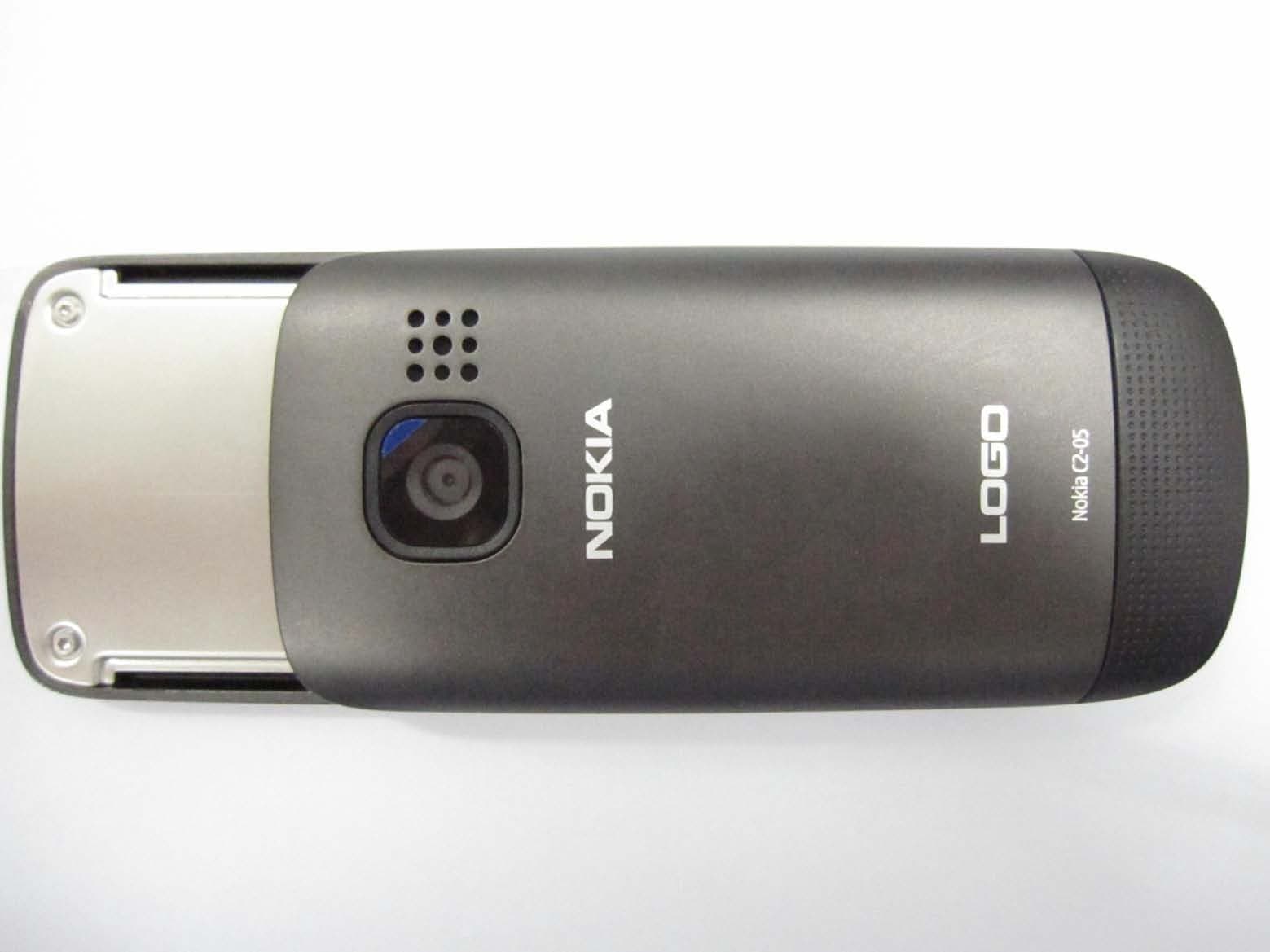
Click to zoom
Application Details
- Equipment Class
- PCE - PCS Licensed Transmitter held to ear
- Date of Grant
- May 26, 2011
- Application Purpose
- Original Equipment
- Date of Application
- May 25, 2011
- Equipment Note
- GSM 850/1900 Cellular Telephone with BT
- Frequency Range
- 1850.20000000 - 1909.80000000
- Company
- Microsoft Corporation
- Country
- United States
Documents & Files
Document Text
Text extracted from the exhibit documents filed with the FCC. Open a document above to read the original.
Users Manual
Nokia C2–05.1 User Guide 5555555 Issue 1 CyanCyanMagentaMagentaYellowYellowBlackBlack Contents Safety5 Get started7 Keys and parts7 Insert a SIM card and battery9 Insert a memory card11 Charge the battery13 Switch the device on or off14 GSM antenna16 Attach a strap17 Basic use17 Access codes17 Lock the keys 18 Indicators19 Copy contacts or pictures from your old device20 Change the volume of a call, song, or video21 Use your device offline 22 Calls22 Make a call22 Call the last dialled number23 View your missed calls 23 Contacts24 Save a name and phone number24 Use speed dial24 Write text25 Switch between text input modes25 Write using traditional text input26 Use predictive text input27 Messaging28 Send a message28 Listen to voice messages30 Send an audio message 30 Personalise your device31 2www.nokia.com/support CyanCyanMagentaMagentaYellowYellowBlackBlack About the home screen 31 Personalise the home screen32 Personalise your device tones33 Connectivity 33 Bluetooth33 USB data cable35 Music and audio36 Media player36 FM radio40 Mail and Chat42 About Mail42 Send a mail43 Read and reply to mail 43 About Chat43 Chat with your friends44 Web 44 About the web browser 44 Browse the web45 Clear browsing history 45 Nokia's Ovi services46 Ovi by Nokia46 Availability and costs of Nokia's Ovi services47 Access Nokia's Ovi services47 Camera and video47 Take a picture47 Record a video48 Send a picture or video 49 Find help50 Support50 Subscribe to the Tips and Offers service51 Keep your device up to date 51 Protect the environment55 Save energy55 Recycle56 Product and safety information56 www.nokia.com/support3 CyanCyanMagentaMagentaYellowYellowBlackBlack Index69 4www.nokia.com/support CyanCyanMagentaMagentaYellowYellowBlackBlack Safety Read these simple guidelines. Not following them may be dangerous or illegal. Read the complete user guide for further information. SWITCH OFF IN RESTRICTED AREAS Switch the device off when mobile phone use is not allowed or when it may cause interference or danger, for example, in aircraft, near medical equipment, fuel, chemicals, or blasting areas. ROAD SAFETY COMES FIRST Obey all local laws. Always keep your hands free to operate the vehicle while driving. Your first consideration while driving should be road safety. INTERFERENCE All wireless devices may be susceptible to interference, which could affect performance. QUALIFIED SERVICE Only qualified personnel may install or repair this product. 5 CyanCyanMagentaMagentaYellowYellowBlackBlack KEEP YOUR DEVICE DRY Your device is not water-resistant. Keep it dry. PROTECT YOUR HEARING Listen to a headset at a moderate level, and do not hold the device near your ear when the loudspeaker is in use. 6 CyanCyanMagentaMagentaYellowYellowBlackBlack Get started Keys and parts 7 CyanCyanMagentaMagentaYellowYellowBlackBlack 1Earpiece 2Display 3Selection keys 4Call key 5Keypad 6Navi™ key (scroll key) 7End/Power key 8Wrist strap hole 9Loudspeaker 10Camera lens 8 CyanCyanMagentaMagentaYellowYellowBlackBlack 11Microphone 12Charger connector 13Micro-USB connector 14Nokia AV connector (3.5 mm) Insert a SIM card and battery Note: Switch the device off and disconnect the charger and any other device before removing any covers. Avoid touching electronic components while changing any covers. Always store and use the device with any covers attached. Important: To prevent damage to the SIM card, always remove the battery before you insert or remove the card. This device is intended for use with a BL-4C battery. Always use original Nokia batteries. The SIM card and its contacts can be easily damaged by scratches or bending, so be careful when handling, inserting, or removing the card. 1Place your finger in the recess at the top of the device, and carefully lift and remove the back cover (1). 2If the battery is inserted, lift the battery out (2). 9 CyanCyanMagentaMagentaYellowYellowBlackBlack 3Insert or remove the SIM card (3 or 4). Make sure the contact area of the card is facing down. 10 CyanCyanMagentaMagentaYellowYellowBlackBlack 4Line up the contacts of the battery and the battery compartment, and insert the battery (5). To replace the back cover, direct the bottom locking catches toward their slots (6), and press down until the cover locks into place (7). Insert a memory card Use only compatible memory cards approved by Nokia for use with this device. Incompatible cards may damage the card and the device and corrupt data stored on the card. Your device supports memory cards with a capacity of up to 32 GB. 11 CyanCyanMagentaMagentaYellowYellowBlackBlack 1Remove the back cover. 2Insert the memory card. Make sure the contact area of the card is facing down. Push the card in, until it locks into place. 3Replace the back cover. Remove the memory card Important: Do not remove the memory card when an application is using it. Doing so may damage the memory card and the device, and corrupt data stored on the card. You can remove or replace the memory card without switching the device off. 12 CyanCyanMagentaMagentaYellowYellowBlackBlack 1Remove the back cover. 2Push the card in, until it is released, and pull the card out. 3Replace the back cover. Charge the battery Your battery has been partially charged at the factory, but you may need to recharge it before you can switch on your device for the first time. If the device indicates a low charge, do the following: 1Connect the charger to a wall outlet. 2Connect the charger to the device. 3When the device indicates a full charge, disconnect the charger from the device, then from the wall outlet. 13 CyanCyanMagentaMagentaYellowYellowBlackBlack You do not need to charge the battery for a specific length of time, and you can use the device while it is charging. During charging, the device may feel warm. If the battery is completely discharged, it may take several minutes before the charging indicator appears on the display or before any calls can be made. If the battery has not been used for a long…
Text truncated - open the document above for the full version.
Cover Letter(s)
Nokia (China) Investment Co., Ltd B2, Nokia China Campus Beijing Economic and Tech Development Area, No.5 Donghuan Zhonglu Beijing, 100176 China PRC Tel. +861087118888 Fax +861087114550 May 04, 2011 Federal Communications Commission Authorization & Evaluation Division, 7435 Oakland Mills Road, Columbia, MD. 21046 Attention: Equipment Authorization Branch REQUEST FOR CONFIDENTIALITY Pursuant to Sections 0.457 (d) (l) (ii) and 0.459 of the Commission’s Rules, the Applicant hereby requests confidential treatment of some of the information accompanying this Application of FCC ID: QTLRM-725 and as outlined below: - Exhibit 4: Block Diagram - Exhibit 5: Schematic Diagrams - Exhibit 10: List of Active Devices and Tune-Up Procedure - Exhibit 12: Theory of Operation / Description of Circuitry These materials contain trade secrets and proprietary information not customarily released to the public and the public disclosure of these matters might be harmful to the Applicant and provide unjustified benefits to its competitors. The Applicant understands that pursuant to Rule 0.457 (d) (l) (ii) disclosure of this Application and all accompanying documentation will not be made before the date of the Grant for this Application. NOKIA CORPORATION Wang Yan Product Certification Officer Beijing, PRC.
Cover Letter(s)
Nokia (China) Investment Co., Ltd B2, Nokia China Campus Beijing Economic and Tech Development Area, No.5 Donghuan Zhonglu Beijing, 100176 China PRC Tel. +861087118888 Fax +861087114550 May 04, 2011 Federal Communications Commission Authorization & Evaluation Division, 7435 Oakland Mills Road, Columbia, MD. 21046 Attention: Equipment Authorization Branch REQUEST FOR SHORT TERM CONFIDENTIALITY Pursuant to Section 0.459 of the Commission’s Rules and Public Notice DA 04-1705 of June 15, 2004, the Applicant hereby requests for 180 days short term confidential treatment of some of the information accompanying this application of FCC ID: QTLRM-725 and as outlined below: - Exhibit 3: External photos - Exhibit 7: Test setup photos - Exhibit 8: User's manual - Exhibit 9: Internal photos These materials contain proprietary information not yet released to the public and the public disclosure of these matters might be harmful to the Applicant and provide unjustified benefits to its competitors. NOKIA CORPORATION Wang Yan Product Certification Officer Beijing, PRC.
External Photos
CONFIDENTIAL 1 (7) 21.04.2011 FCC ID: QTLRM-725 IC: 661AB-RM725 Copyright © 2011 Nokia. All rights reserved. 99.43mm 47.77mm CONFIDENTIAL 2 (7) 21.04.2011 FCC ID: QTLRM-725 IC: 661AB-RM725 Copyright © 2011 Nokia. All rights reserved. 16.28 mm 16.28 mm CONFIDENTIAL 3 (7) 21.04.2011 FCC ID: QTLRM-725 IC: 661AB-RM725 Copyright © 2011 Nokia. All rights reserved. CONFIDENTIAL 4 (7) 21.04.2011 FCC ID: QTLRM-725 IC: 661AB-RM725 Copyright © 2011 Nokia. All rights reserved. 130.43mm CONFIDENTIAL 5 (7) 21.04.2011 FCC ID: QTLRM-725 IC: 661AB-RM725 Copyright © 2011 Nokia. All rights reserved. CONFIDENTIAL 6 (7) 21.04.2011 FCC ID: QTLRM-725 IC: 661AB-RM725 Copyright © 2011 Nokia. All rights reserved. 130.43mm CONFIDENTIAL 7 (7) 21.04.2011 FCC ID: QTLRM-725 IC: 661AB-RM725 Copyright © 2011 Nokia. All rights reserved.
ID Label/Location Info
1 (1) 2011-05-10 FCC ID: QTLRM-725 IC: 661AB-RM725 Copyright © 2011 Nokia. All rights reserved . Type label location
Internal Photos
CONFIDENTIAL 1 (2) Exhibit_9_Internal_Picture FCC ID:QTLRM-725 09.05.2011 IC:661AB-RM725 Copyright © 2011Nokia Corporation. All rights reserved. RM-725 Internal Picture CONFIDENTIAL 2 (2) Exhibit_9_Internal_Picture FCC ID:QTLRM-725 09.05.2011 IC:661AB-RM725 Copyright © 2011Nokia Corporation. All rights reserved.
RF Exposure Info
Nokia ____________________________________________________________________________ SAR Report FCC_RM-725_01 Applicant: Nokia Corporation Type: RM-725 Copyright 2011 TCC Nokia 1/51 SAR Compliance Test Report Test report no.: FCC_RM-725_01 Date of report: 2011-05-03 Template version: 17.0 Number of pages: 51 Testing laboratory: TCC Nokia Beijing Laboratory Beijing Economic and Technological Development Area No.5 Donghuan Zhonglu Beijing PRC China 100176 Tel. +86 10 8711 8888 Fax. +86 10 8711 4550 Client: Nokia Corporation Beijing Economic and Technological Development Area No.5 Donghuan Zhonglu Beijing PRC China 100176 Tel. +86 10 8711 8888 Fax. +86 10 8711 4550 Responsible test engineer: Liang Dong Product contact person: Hu Helen Measurements made by: Liang Dong, Zhang Luwen Tested device: RM-725 FCC ID: QTLRM-725 IC: 661AB-RM725 Supplement reports: SAR_Photo_RM-725_02 Testing has been carried out in accordance with: 47CFR §2.1093 Radiofrequency Radiation Exposure Evaluation: Portable Devices FCC OET Bulletin 65 (Edition 97-01), Supplement C (Edition 01-01) Evaluating Compliance with FCC Guidelines for Human Exposure to Radiofrequency Electromagnetic Fields RSS-102 Evaluation Procedure for Mobile and Portable Radio Transmitters with Respect to Health Canada’s Safety Code 6 for Exposure of Humans to Radio Frequency Fields IEEE 1528 - 2003 IEEE Recommended Practice for Determining the Peak Spatial-Average Specific Absorption Rate (SAR) in the Human Head from Wireless Communications Devices: Measurement Technique Documentation: The documentation of the testing performed on the tested devices is archived for 15 years at TCC Nokia. Test results: The tested device complies with the requirements in respect of all parameters subject to the test. The test results and statements relate only to the items tested. The test report shall not be reproduced except in full, without written approval of the laboratory. Date and signatures: For the contents: Nokia ____________________________________________________________________________ SAR Report FCC_RM-725_01 Applicant: Nokia Corporation Type: RM-725 Copyright 2011 TCC Nokia 2/51 CONTENTS 1. SUMMARY OF SAR TEST REPORT ......................................................................................................................................... 3 1.1 TEST DETAILS ............................................................................................................................................................................. 3 1.2 MAXIMUM RESULTS .................................................................................................................................................................... 3 1.2.1 Head Configuration ........................................................................................................................................................ 3 1.2.2 Body Worn Configuration ............................................................................................................................................ 3 1.2.3 Maximum Drift ................................................................................................................................................................ 4 1.2.4 Measurement Uncertainty............................................................................................................................................ 4 2. DESCRIPTION OF THE DEVICE UNDER TEST ........................................................................................................................ 4 2.1 DESCRIPTION OF THE ANTENNA .................................................................................................................................................. 4 3. TEST CONDITIONS ................................................................................................................................................................. 4 3.1 TEMPERATURE AND HUMIDITY .................................................................................................................................................... 4 3.2 TEST SIGNAL, FREQUENCIES AND OUTPUT POWER ...................................................................................................................... 5 3.3 TEST CASES AND TEST MINIMISATION ........................................................................................................................................ 5 4. DESCRIPTION OF THE TEST EQUIPMENT ............................................................................................................................ 7 4.1 MEASUREMENT SYSTEM AND COMPONENTS ................................................................................................................................ 7 4.1.1 Isotropic E-field Probe Type ET3DV6 ......................................................................................................................... 8 4.2 PHANTOMS ................................................................................................................................................................................ 8 4.3 TISSUE SIMULANTS..................................................................................................................................................................... 8 4.3.1 Tissue Simulant Recipes................................................................................................................................................ 9 4.3.2 System Checking .......................................................................................................................................................... 10 4.3.3 Tissue Simulants used in the Measurements ....................................................................................................... 11 5. DESCRIPTION OF THE TEST PROCEDURE .....................................................................................................…
Text truncated - open the document above for the full version.
Test Report
FCC Part 22/24 Compliance Test Report / Template Version 15.0 FCC22&24_RM-725_01.docx Copyright © TCC Nokia 1 (11) TCC Nokia Beijing Laboratory Beijing Economic and Technological Development Area No.5 Donghuan Zhonglu Beijing PRC China 100176 Tel. +86 10 8711 8888 Fax. +86 10 8711 4550 FCC Part 22/24 Compliance Test Report Test Report no.: FCC22&24_RM-725_01.docx Date of Report: 29-Apr-2011 Number of pages: 11 Customer’s Contact person: Hu Helen Testing laboratory: TCC Nokia Beijing Laboratory Beijing Economic and Technological Development Area No.5 Donghuan Zhonglu Beijing PRC China 100176 Tel. +86 10 8711 8888 Fax. +86 10 8711 4550 Customer: Nokia Corporation Beijing Economic and Technological Development Area No.5 Donghuan Zhonglu Beijing PRC China 100176 Tel. +86 10 8711 8888 Fax. +86 10 8711 4550 FCC listing no.: IC recognition no.: 975940 661AH-1 Tested devices/ accessories: Phone RM-725 / Battery BL-4C FCC ID: QTLRM-725 IC: 661AB-RM725 Supplement reports: - Testing has been carried out in accordance with: CFR 47, FCC rules Parts 22/24 , TIA-603-C-2004 and IC standards, RSS-GEN (Issue 3, December 2010), RSS-132 (Issue 2, September 2005), RSS-133 (Issue 5, February 2009). Deviations, modifications or clarifications (if any) to above mentioned documents are written in each section under "Test method and limit". Documentation: The test report must always be reproduced in full; reproduction of an excerpt only is subject to written approval of the testing laboratory. The documentation of the testing performed on the tested devices is archived for 15 years at TCC Nokia. Test Results: The EUT complies with the requirements in respect of all parameters subject to the test. The test results relate only to devices specified in this document Date and signature for the contents: Jia Dongsheng, System Manager FCC Part 22/24 Compliance Test Report / Template Version 15.0 FCC22&24_RM-725_01.docx Copyright © TCC Nokia 2 (11) TCC Nokia Beijing Laboratory Beijing Economic and Technological Development Area No.5 Donghuan Zhonglu Beijing PRC China 100176 Tel. +86 10 8711 8888 Fax. +86 10 8711 4550 1. Summary for FCC Part 22/24 Compliance Test Report Date of receipt 02-Apr-2011 Testing completed 27-Apr-2011 The customer's contact person Hu Helen Test Plan referred to T:\Projects\RM-725\TestPlan\RS_testplan_RM-725.xls Notes - Document name FCC22&24_RM-725_01.docx 1.1. EUT and Accessory Information The EUT is a 2-band (GSM850/1900) mobile phone with GPRS and Bluetooth. The EUT is tested with maximum rated TX power, modulated with pseudo random bit sequence (PRBS9). Product Type SN HW MV SW DUT Phone RM-725 001004/00/419318/2 0204 - Bx104_11W12_1 52013 Battery BL-4C 0670389382066O44512AW18536 - - - 52016 1.2. Summary of Test Results GSM850: Section in CFR 47 Section in RSS-GEN or RSS-132 Name of the test Result §2.1046(a), 22.913(a) 4.4 Conducted RF output power NP §22.913(a) 4.4 Radiated RF output power PASSED §2.1049(h) 4.6.1 99 % occupied bandwidth NP §22.917(a) 4.5 Band edge compliance PASSED §22.917(a), §2.1051 4.5 Spurious emissions at antenna terminals NP §22.917(a), §2.1053 4.5 Spurious radiated emissions NP §2.1055(a) 4.3 Frequency stability, temperature variation NP §2.1055(d) 4.3 Frequency stability, voltage variation NP GSM1900: Section in CFR 47 Section in RSS-GEN or RSS-133 Name of the test Result §2.1046(a) 6.4 Conducted RF output power NP §24.232(b) 6.4 Radiated RF output power PASSED §2.1049(h) 4.6.1 99 % occupied bandwidth NP §24.238(a) 6.5 Band edge compliance PASSED §24.238(a), §2.1051 6.5 Spurious emissions at antenna terminals NP §24.238(a), §2.1053 6.5 Spurious radiated emissions NP §2.1055(a) 6.3 Frequency stability, temperature variation NP §2.1055(d) 6.3 Frequency stability, voltage variation NP PASSED The EUT complies with the essential requirements in the standard. FAILED The EUT does not comply with the essential requirements in the standard. NP The test was not performed by the TCC Nokia Laboratory. FCC Part 22/24 Compliance Test Report / Template Version 15.0 FCC22&24_RM-725_01.docx Copyright © TCC Nokia 3 (11) TCC Nokia Beijing Laboratory Beijing Economic and Technological Development Area No.5 Donghuan Zhonglu Beijing PRC China 100176 Tel. +86 10 8711 8888 Fax. +86 10 8711 4550 CONTENTS 1. Summary for FCC Part 22/24 Compliance Test Report ............................................ 2 1.1. EUT and Accessory Information ........................................................................................... 2 1.2. Summary of Test Results ..................................................................................................... 2 2. Radiated RF output power (FCC §22.913(a), §24.232(b), RSS-132 4.4, RSS-133 6.4) ............................................... 4 2.2. Test method and limit ........................................................................................................... 4 2.3. GSM850 TX Test results ...................................................................................................... 5 2.4. GSM1900 TX Test results .................................................................................................... 5 3. Band edge compliance (FCC §22.917(a), §24.238(a), RSS-132 4.5, RSS-133 6.5)................................................ 6 3.2. Test method and limit ........................................................................................................... 6 3.3. GSM850 Test results ............................................................................................................ 7 3.4. GSM1900 Test results .......................................................................................................... 9 4. Test Equipment ......................................................................................................... 11 4.1. Conducted measurements ................................................................................................. 11 4.2. Radiated measurements ..…
Text truncated - open the document above for the full version.
Test Report
FCC Part 22/24 Compliance Test Report Test Report no.: FCC22&24_RM-725_03.docx Date of Report: 29-Apr-2011 Number of pages: 13 Customer’s Contact person: Hu Helen Testing laboratory: TCC Nokia Beijing Laboratory Beijing Economic and Technological Development Area No.5 Donghuan Zhonglu Beijing PRC China 100176 Tel. +86 10 8711 8888 Fax. +86 10 8711 4550 FCC listing no.: IC recognition no.: 975940 661AH-1 Customer: Nokia Corporation Beijing Economic and Technological Development Area No.5 Donghuan Zhonglu Beijing PRC China 100176 Tel. +86 10 8711 8888 Fax. +86 10 8711 4550 Tested devices/ accessories: Phone RM-725 / Battery BL-4C / AC-charger AC-3U / Headset WH-102 / Dummy battery SD-4MOD FCC ID: QTLRM-725 IC: 661AB-RM725 Supplement reports: - Testing has been carried out in accordance with: CFR 47, FCC rules Parts 22 and 24, TIA-603-C-2004 and IC standards RSS-GEN (Issue 2, June 2007), RSS-132 (Issue 2, September 2005) and RSS-133 (Issue 5, February 2009). Deviations, modifications or clarifications (if any) to above mentioned documents are written in each section under "Test method and limit". Documentation: The test report must always be reproduced in full; reproduction of an excerpt only is subject to written approval of the testing laboratory. The documentation of the testing performed on the tested devices is archived for 15 years at TCC Nokia. Test Results: The EUT complies with the requirements in respect of all parameters subject to the test. The test results relate only to devices specified in this document. Date and signature for the contents: Jia Dongsheng, System Manager FCC Part 22/24/27 Compliance Test Report / Template Version 15.0 FCC22&24_RM-725_03.doc Copyright © TCC Nokia 1 (13) TCC Nokia Beijing Laboratory Beijing Economic and Technological Development Area No.5 Donghuan Zhonglu Beijing PRC China 100176 Tel. +86 10 8711 8888 Fax. +86 10 8711 4550 1. Summary for FCC Part 22/24 Compliance Test Report Date of receipt 02-Apr-2011 Testing completed 27-Apr-2011 The customer's contact person Hu Helen Test Plan referred to T:\Projects\RM-725\TestPlan\RS_testplan_RM-725.xls Notes - Document name FCC22&24_RM-725_03.docx 1.1. EUT and Accessory Information The EUT is a 2-band (GSM850/1900) mobile phone with GPRS and Bluetooth. The EUT is tested with maximum rated TX power, modulated with pseudo random bit sequence (PRBS9). Product Type SN HW MV SW DUT Phone RM-725 001004004193372 0204 - bx104_11w12_1 52140 Battery BL-4C 0670389382066O40612AW37802 - - - 52148 Dummy battery SD-4MOD 03618 - - - 52159 Phone RM-725 001004004193463 0204 - bx104_11w12_1 52138 Battery BL-4C 0670389382066O40612AW37795 - - - 52149 AC-charger AC-3U 4818711012132006452;0675372 - - - 52154 Headset WH-102 0694324048302600286 - - - 52158 1.2. Summary of Test Results GSM 850: Section in CFR 47 Section in RSS-GEN or RSS-132 Name of the test Result §2.1046(a), 22.913(a) 4.4 Conducted RF output power NP §22.913(a) 4.4 Radiated RF output power NP §2.1049(h) 4.6.1 99 % occupied bandwidth PASSED §22.917(a) 4.5 Band edge compliance NP §22.917(a), §2.1051 4.5 Spurious emissions at antenna terminals NP §22.917(a), §2.1053 4.5 Spurious radiated emissions PASSED §2.1055(a) 4.3 Frequency stability, temperature variation PASSED §2.1055(d) 4.3 Frequency stability, voltage variation PASSED GSM 1900: Section in CFR 47 Section in RSS-GEN or RSS-133 Name of the test Result §2.1046(a) 6.4 Conducted RF output power NP §24.232(b) 6.4 Radiated RF output power NP §2.1049(h) 4.6.1 99 % occupied bandwidth PASSED §24.238(a) 6.5 Band edge compliance NP §24.238(a), §2.1051 6.5 Spurious emissions at antenna terminals NP §24.238(a), §2.1053 6.5 Spurious radiated emissions PASSED §2.1055(a) 6.3 Frequency stability, temperature variation PASSED §2.1055(d) 6.3 Frequency stability, voltage variation PASSED PASSED The EUT complies with the essential requirements in the standard. FAILED The EUT does not comply with the essential requirements in the standard. NP The test was not performed by the TCC Nokia Beijing Laboratory. FCC Part 22/24/27 Compliance Test Report / Template Version 15.0 FCC22&24_RM-725_03.doc Copyright © TCC Nokia 2 (13) TCC Nokia Beijing Laboratory Beijing Economic and Technological Development Area No.5 Donghuan Zhonglu Beijing PRC China 100176 Tel. +86 10 8711 8888 Fax. +86 10 8711 4550 CONTENTS 1. Summary for FCC Part 22/24 Compliance Test Report............................................2 1.1. EUT and Accessory Information.............................................................................................2 1.2. Summary of Test Results........................................................................................................2 2. 99 % occupied bandwidth (FCC §2.1049(h), RSS-GEN 4.6.1) .....................................................................................4 2.1. Test setup...............................................................................................................................4 2.2. Test method and limit..............................................................................................................4 2.3. GSM 850 Test results.............................................................................................................5 2.4. GSM 1900 Test results...........................................................................................................5 3. Spurious radiated emissions (FCC §22.917(a), §2.1053, §24.238(a), §2.1053, RSS-132 4.5, RSS-133 6.5)..................6 3.2. Test method and limit..............................................................................................................6 3.3. GSM850 TX Test results.........................................................................................................8 3.4. GSM1900 TX Test results.......................................................................................................8 4. Frequency stability, temperature variation (FCC §2.1055(a), RSS-132 4.3, …
Text truncated - open the document above for the full version.
Test Setup Photos
Nokia ____________________________________________________________________________ SAR Report SAR_Photo_RM-725_02 Applicant: Nokia Corporation Type: RM-725 Copyright 2011 TCC Nokia 1/5 Test Setup photos for RM-725 SAR Compliance Test Report Test report no.: SAR_Photo_RM-725_02 Date of report: 2011-05-03 Template version: 17.0 Number of pages: 5 Testing laboratory: TCC Nokia Beijing Laboratory Beijing Economic and Technological Development Area No.5 Donghuan Zhonglu Beijing PRC China 100176 Tel. +86 10 8711 8888 Fax. +86 10 8711 4550 Client: Nokia Corporation Beijing Economic and Technological Development Area No.5 Donghuan Zhonglu Beijing PRC China 100176 Tel. +86 10 8711 8888 Fax. +86 10 8711 4550 Responsible test engineer: Liang Dong Product contact person: Hu Helen Measurements made by: Liang Dong, Zhang Luwen Tested device: RM-725 FCC ID: QTLRM-725 IC: 661AB-RM725 Supplement reports: FCC_RM-725_01 Testing has been carried out in accordance with: 47CFR §2.1093 Radiofrequency Radiation Exposure Evaluation: Portable Devices FCC OET Bulletin 65 (Edition 97-01), Supplement C (Edition 01-01) Evaluating Compliance with FCC Guidelines for Human Exposure to Radiofrequency Electromagnetic Fields RSS-102 Evaluation Procedure for Mobile and Portable Radio Transmitters with Respect to Health Canada’s Safety Code 6 for Exposure of Humans to Radio Frequency Fields IEEE 1528 - 2003 IEEE Recommended Practice for Determining the Peak Spatial-Average Specific Absorption Rate (SAR) in the Human Head from Wireless Communications Devices: Measurement Technique Documentation: The documentation of the testing performed on the tested devices is archived for 15 years at TCC Nokia. Test results: The tested device complies with the requirements in respect of all parameters subject to the test. The test results and statements relate only to the items tested. The test report shall not be reproduced except in full, without written approval of the laboratory. Date and signatures: For the contents: Nokia ____________________________________________________________________________ SAR Report SAR_Photo_RM-725_02 Applicant: Nokia Corporation Type: RM-725 Copyright 2011 TCC Nokia 2/5 CONTENTS 1. SUMMARY OF SAR TEST REPORT ......................................................................................................................................... 3 1.1 TEST DETAIL…
Text truncated - open the document above for the full version.
Contact Information
Applicant
Hasnain Syed(Director, EMC, SI and RF Compliance)
Technical Specifications
| # | Rule Parts | Frequency Range | Power Output | Emission | Tolerance |
|---|---|---|---|---|---|
| 2 | 24E | 1.85 GHz - 1.91 GHz | 1.549 W | 300KGXW | 0.1 ppm |
Other Applications from Microsoft Corporation
QTLRM-1041
Nov 03, 2014GSM/WCDMA/LTE/CDMA Cellular Device with BT, BTLE, WLAN, NFC
Equipment Class
PCE - PCS Licensed Transmitter held to ear
QTLRM-1078
Sep 24, 2014GSM/WCDMA/LTE/CDMA cellular device w/BT, BTLE, WLAN
Equipment Class
JBP - Part 15 Class B Computing Device Peripheral
QTLRM-1039
Sep 10, 2014GSM/WCDMA/LTE cellular device w/BT, BTLE, WLAN and NFC
Equipment Class
JBP - Part 15 Class B Computing Device Peripheral
QTLRM-1040
Aug 25, 2014GSM/WCDMA cellular device w/BT, BTLE, WLAN, NFC
Equipment Class
PCB - PCS Licensed Transmitter
QTLRM-1038
Aug 14, 2014GSM/WCDMA cellular device w/BT, BTLE, WLAN, NFC
Equipment Class
PCE - PCS Licensed Transmitter held to ear