QXZCFSC-CL2Bluetooth Compact Flash Card (Class 2)
Gigawavetech Pte Ltd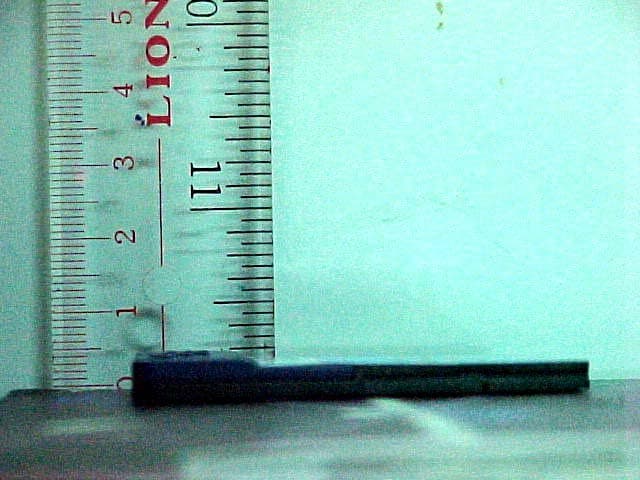
Click to zoom
Application Details
- Equipment Class
- DSS - Part 15 Spread Spectrum Transmitter
- Date of Grant
- Apr 22, 2003
- Application Purpose
- Original Equipment
- Date of Application
- Apr 22, 2003
- Equipment Note
- Bluetooth Compact Flash Card (Class 2)
- Frequency Range
- 2402.00000000 - 2480.00000000
- Company
- Gigawavetech Pte Ltd
- Country
- Singapore
Documents & Files
Document Text
Text extracted from the exhibit documents filed with the FCC. Open a document above to read the original.
Users Manual
Bluetooth™ CompactFlash Adapter Users’ Guide The easy way to add Bluetooth functionality to: o Microsoft ® Windows 2000® o Microsoft ® Windows 98 SE® o Microsoft ® PocketPC ® o Microsoft ® PocketPC 2002 ® o Microsoft ® CE.NET ® (future support) GigaWaveTech (Pte) Ltd (a member of schmidt electronics asia) DISCLAIMER: This manual is published by Gigawavetech Pte Ltd, without any warranty. Improvements and changes to this manual necessitated by typographical errors, inaccuracies of current information or improvements to equipment may be made by Gigawavetech Pte Ltd at any time and without notice. Such changes will however be incorporated into new editions of this manual. Hardware, software and firmware mentioned in this document are subject to continuous development and improvement. Consequently, there may be discrepancies between the information in this document and the performance and design of the product. Table of Contents Chapter 1: Introduction................................................................................................4 Installation Overview – PocketPC/PocketPC 2002.................................................4 Installation Overview – Windows 2000, Windows 98 SE.......................................4 Minimum System Requirements................................................................................5 Chapter 2 Windows 2000 Driver installation & removal.......................................6 Step 1: Copy the files to a hard disk directory...............................................6 Step 2: Inserting the Card.................................................................................6 Step 3: Driver installation..................................................................................7 Step 4: Completing the Installation.................................................................8 Step 5: Configuring the driver..........................................................................8 Step 7: Reboot the system.............................................................................10 Step 8: Driver Removal – only if you wish to remove the driver...............10 Chapter 3 Pocket PC 2002 Driver installation & removal...................................11 Step 1 (optional) Card validation and mobile computer functionality check 11 Step 2 Preparing for Driver installation............................................................11 Step 3 Driver installation....................................................................................12 Step 4 Driver removal – only if you wish to remove the drivers..................12 Chapter 4: Basic Troubleshooting Guide...............................................................14 Chapter 5: Specifications..........................................................................................15 Chapter 6: Useage & Safety Considerations.........................................................17 Appendix A: Limited Product Warranty.................................................................19 Copyright Notice.............................................................................................................21 Regulatory Compliance Notice.....................................................................................22 Life Support Policy.........................................................................................................23 CHAPTER 1: INTRODUCTION Congratulations on the purchase of your GigaWaveTech Type 1 Bluetooth CompactFlash adapter. This adapter will allow you to easily add Bluetooth functionality to your handheld PC, running Microsoft® PocketPC ® , PocketPC 2002 ® or and Windows CE.NET ®. This adapter will also allow you to easily add Bluetooth functionality to a desktop/laptop PC running Microsoft Windows98 SE and Windows 2000. A CF-PCMCIA adapter quickly and easily allows the use of this card in a standard PCMCIA/PC-Card slot The CF card package includes: o Drivers on a driver disk o Installation guide (this document) This Users’ Guide shows you how to quickly install the drivers. The following graphics show the GUI for PocketPC 2002 and Windows 2000; however, the operation is the same for PocketPC and Windows 98 SE respectively. Installation Overview – PocketPC/PocketPC 2002 1. Important: Read chapter on “Useage and Safety Considerations” before first using the card 2. Turn on the mobile computer 3. Copy the drivers into the mobile computer via ActiveSync and install the drivers. 4. Insert card into available CompactFlash (CF) slot 5. Drivers will be loaded. Installation Overview – Windows 2000, Windows 98 SE 1. Important: Read chapter on “Useage and Safety Considerations” before first using the card 2. Turn on the computer 3. Copy driver files into a directory of your choice. 4. Insert card into a CF-to-PC-Card adapter, then insert both into an available PCMCIA or PC-Card slot. 5. When prompted, request Windows to do a search for drivers. Then, point driver source to directory where files were earlier copied to. Follow the on-screen instructions. Minimum System Requirements o Operating System: - Pocket PC (PPC) or Pocket PC 2002(PPC 2002) using Intel StrongArm SA1110 processor. - Microsoft Windows 2000 Professional or Server Edition. - Microsoft Windows 98 SE o Hardware: - PPC or PPC2002: • PPC or PPC2002 with available CompactFlash slot - Windows 2000 or Windows 98 SE: • Computer with available CF card slot • CF to PCMCIA card adapter CHAPTER 2 WINDOWS 2000 DRIVER INSTALLATION & REMOVAL This chapter covers the steps you need to take to install the card and its drivers. It also covers the procedure on how to remove the drivers, if desired. Step 1: Copy the files to a hard disk directory • Create a directory in your local hard disk (e.g. C:\GWTBTCF) and copy all the files located under \GWTBTCF of the GWTBTCF Driver Disk into this newly created directory. Step 2: Inserting the Card • Fit the GigaWaveTech Bluetooth CF Card into a CF-PCMCIA …
Text truncated - open the document above for the full version.
External Photos
TÜV Rheinland Product Safety GmbH Am Grauen Stein D - 51105 Köln Appendix 3 Prüfbericht - Nr.: Test Report No. 14003058 001 Seite 1 von 6 Page 1 of 6 Gigawavetech – CFSC-001 Bluetooth CF Adapter (Class 2) Front side of external view: TÜV Rheinland Product Safety GmbH Am Grauen Stein D - 51105 Köln Appendix 3 Prüfbericht - Nr.: Test Report No. 14003058 001 Seite 2 von 6 Page 2 of 6 Rear side of external view: TÜV Rheinland Product Safety GmbH Am Grauen Stein D - 51105 Köln Appendix 3 Prüfbericht - Nr.: Test Report No. 14003058 001 Seite 3 von 6 Page 3 of 6 Side view of external view:
ID Label/Location Info
TÜV Rheinland Product Safety GmbH Am Grauen Stein D - 51105 Köln Appendix 4 Prüfbericht - Nr.: Test Report No. 14003058 001 Seite 1 von 13 Page 1 of 13 1.1 FCCID Label Artwork
Operational Description
TÜV Rheinland Product Safety GmbH Am Grauen Stein D - 51105 Köln Appendix 4 Prüfbericht - Nr.: Test Report No. 14003058 001 Seite 2 von 14 Page 2 of 14 2.1 Description of Circuit Function 2.1.1 General Description Bluetooth operates in the unlicensed ISM band at 2.4 GHz. A frequency hop transceiver is applied to combat interference and fading. A shaped, binary FM modulation is applied to minimize transceiver complexity. The symbol rate is 1 Ms/s. A slotted channel is applied with a nominal slot length of 625 μs. For full duplex transmission, a Time-Division Duplex (TDD) scheme is used. On the channel, information is exchanged through packets. Each packet is transmitted on a different hop frequency. A packet nominally covers a single slot, but can be extended to cover up to five slots. The Bluetooth protocol uses a combination of circuit and packet switching. Slots can be reserved for synchronous packets. Bluetooth can support an asynchronous data channel, up to three simultaneous synchronous voice channels, or a channel which simultaneously supports asynchronous data and synchronous voice. Each voice channel supports a 64 kb/s synchronous (voice) channel in each direction. The asynchronous channel can support maximal 723.2 kb/s asymmetric (and still up to 57.6 kb/s in the return direction), or 433.9 kb/s symmetric. The Bluetooth system consists of a radio unit, a link control unit, and a support unit for link management and host terminal interface functions. 2.1.2 Specific Information about the RF module The Bluetooth Radio PMB 8760 from Infineon is a short-range microwave frequency radio transceiver for Bluetooth communication links. Provided in a compact LFBGA package. The Bluetooth Radio offers a combination of compact size, low power consumption, and cost effective assembly. The PMB 8760 integrates a 13 MHz low power oscillator with on-chip PLL and a voice encoding (PCM, CVSD). There is a on-chip 2.4 GHz RF driver amplifier with 4 dBm output power. State-of-the-art CMOS technology is used.
Test Report
TÜV Rheinland Product Safety GmbH Am Grauen Stein D - 51105 Köln Prüfbericht - Nr.: Test Report No. 14003058 001 Seite 2 von 19 Page 2 of 19 1 Test Summary 7.1.1 ANTENNA CONNECTOR SUBCLAUSE 15.203 7.1.2 A NTENNA TYPE SUBCLAUSE 15.204 7.1.3 DISTURBANCE VOLTAGE ON AC MAINS SUBCLAUSE 15.207(A) RESULT: N/A Limit Subclause 15.207(a) 7.1.4 C ARRIER FREQUENCY SEPERATION SUBCLAUSE 15.247(A)(1) Limit Subclause 15.247(a)(1) 7.1.5 D WELL TIME SUBCLAUSE 15.247(A)(1)(III) RESULT: Pass Limit Subclause 15.247(a)(1)(iii) 7.1.6 20DB BANDWIDTH SUBCLAUSE 15.247(A)(1) RESULT: Pass Limit Subclause 15.247(a)(1)(ii) 7.1.7 HOPPING SEQUENCE SUBCLAUSE 15.247(A)(1) 7.1.8 R ECEIVER INPUT BANDWIDTH SUBCLAUSE 15.247(A)(1) 7.1.9 PEAK OUTPUT POWER SUBCLAUSE 15.247(B)(1) RESULT: Pass Limit Subclause 15.247(b)(1) 7.1.10 B AND EDGE COMPLIANCE SUBCLAUSE 15.247(C) RESULT: Pass Limit Subclause 15.247(c) 7.1.11 S PURIOUS CONDUCTED EMISSIONS SUBCLAUSE 15.247(C) RESULT: Pass Limit Subclause 15.247(c) 7.1.12 S PURIOUS RADIATED EMISSIONS SUBCLAUSE 15.247(C) RESULT: Pass Limit Subclause 15.247(c) TÜV Rheinland Product Safety GmbH Am Grauen Stein D - 51105 Köln Prüfbericht - Nr.: Test Report No. 14003058 001 Seite 3 von 19 Page 3 of 19 2 Contents 1 TEST SUMMARY..................................................................................................................2 2 C ONTENTS...........................................................................................................................3 3 GENERAL REMARKS...........................................................................................................4 3.1 COMPLEMENTARY MATERIALS..........................................................................................4 4 TEST SITES..........................................................................................................................4 4.1 TEST FACILITIES.................................................................................................................4 4.2 L IST OF TEST AND MEASUREMENT INSTRUMENTS............................................................5 5 GENERAL PRODUCT INFORMATION...................................................................................6 5.1 PRODUCT FUNCTION AND INTENDED USE..........................................................................6 5.2 R ATINGS AND SYSTEM DETAILS.........................................................................................6 5.3 INDEPENDENT OPERATION MODES....................................................................................6 5.4 SUBMITTED DOCUMENTS....................................................................................................7 6 T EST SET-UP AND OPERATION MODE................................................................................7 6.1 P RINCIPLE OF CONFIGURATION SELECTION.....................................................................7 6.2 T EST OPERATION AND TEST SOFTWARE............................................................................7 6.3 S PECIAL ACCESSORIES AND AUXILIARY EQUIPMENT.......................................................7 7 T EST RESULTS.....................................................................................................................7 7.1.1 Antenna connector Subclause 15.203 ........................................................................................................ 8 7.1.2 Antenna type Subclause 15.204.................................................................................................................. 8 7.1.3 Disturbance voltage on AC mains Subclause 15.207(a) ............................................................................9 7.1.4 Carrier frequency seperation Subclause 15.247(a)(1).............................................................................10 7.1.5 Dwell time Subclause 15.247(a)(1)(iii) .................................................................................................... 11 7.1.6 20dB bandwidth Subclause 15.247(a)(1) ................................................................................................. 12 7.1.7 Hopping sequence Subclause 15.247(a)(1).............................................................................................. 13 7.1.8 Receiver input bandwidth Subclause 15.247(a)(1) .................................................................................. 14 7.1.9 Peak output power Subclause 15.247(b)(1) ............................................................................................. 15 7.1.10 Band edge compliance Subclause 15.247(c) .......................................................................................16 7.1.11 Spurious conducted emissions Subclause 15.247(c) ........................................................................... 17 7.1.12 Spurious radiated emissions Subclause 15.247(c) .............................................................................. 18 TÜV Rheinland Product Safety GmbH Am Grauen Stein D - 51105 Köln Prüfbericht - Nr.: Test Report No. 14003058 001 Seite 4 von 19 Page 4 of 19 3 General Remarks 3.1 Complementary Materials All attachments are integral parts of this test report. This applies especially to the following appendix: Appendix 1: Test Results Appendix 2: Test Setup Appendix 3: EUT Photos Appendix 4: FCCID Label, Block Diagram and Schematics 4 Test Sites 4.1 Test Facilities Hong Kong Productivity Council HKPC Building 78 Tat Chee Avenue Kowloon Hong Kong TÜV Rheinland Product Safety GmbH Am Grauen Stein D - 51105 Köln Prüfbericht - Nr.: Test Report No. 14003058 001 Seite 5 von 19 Page 5 of 19 4.2 List of Test and Measurement Instruments Table 1: List of Test and Measurement Equipment Kind of Equipment Manufacturer Type S/N Test Receiver Rohde & Schwarz ESH-3 890173/033 L/I/S/N Rohde & Schwarz ESH 3-Z5 849876/026 Oscilloscope HP 54713B US34510455 Test Receiver Rohde & Schwarz ESVP 882402/033 Absorbing Clamp Rohde & Schwarz MDS…
Text truncated - open the document above for the full version.
Test Setup Photos
TÜV Rheinland Product Safety GmbH Am Grauen Stein D - 51105 Köln Appendix 2 Prüfbericht - Nr.: Test Report No. 14003058 001 Seite 1 von 2 Page 1 of 2 1.1 Test set-up (Spurious Radiated Emissions) TÜV Rheinland Product Safety GmbH Am Grauen Stein D - 51105 Köln Appendix 2 Prüfbericht - Nr.: Test Report No. 14003058 001 Seite 2 von 2 Page 2 of 2
Contact Information
Applicant
Michael Soeding(Managing Director)
Technical Contact
T�V Rheinland Hong Kong Ltd.Stephan Wald
[email protected]+852 2779 3181
Room 405, Tech Centre · Hong Kong · Hong Kong
Non-Technical Contact
Gigawavetech Pte LtdMichael Soeding
[email protected]+65 63774801
Test Firm
Hong Kong Productivity CouncilIr Angel Wong Yuen-yee
Technical Specifications
| # | Rule Parts | Frequency Range | Power Output |
|---|---|---|---|
| 1 | 15C | 2.40 GHz - 2.48 GHz | 1.94 mW |
Other Applications from Gigawavetech Pte Ltd
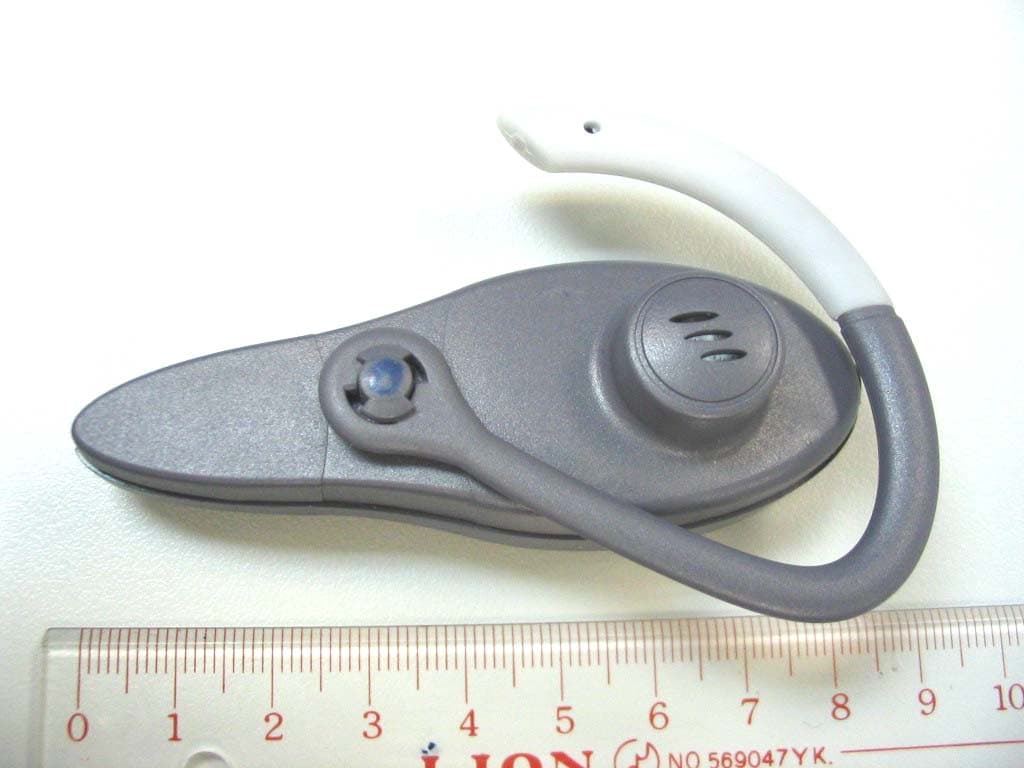
QXZGWTBTH1
Dec 21, 2003Bluetooth Headset
Equipment Class
DSS - Part 15 Spread Spectrum Transmitter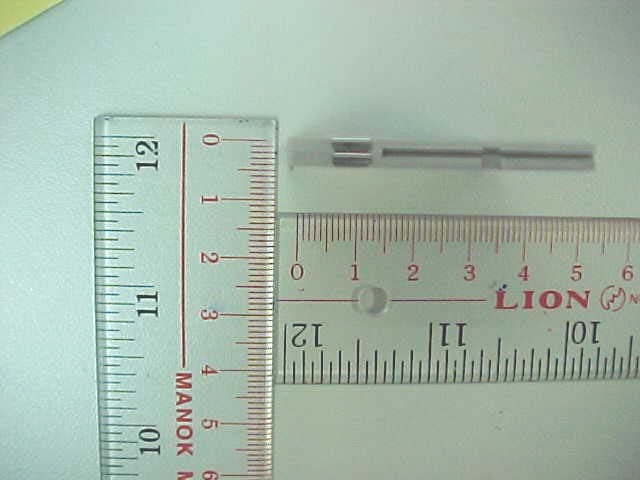
QXZCFSF-CL2
Sep 18, 2003Bluetooth Class 2 CF Adapter GWT-SFF
Equipment Class
DSS - Part 15 Spread Spectrum Transmitter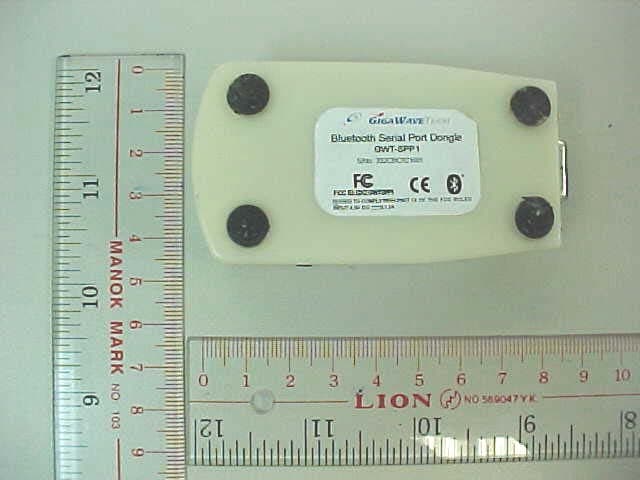
QXZGWTSPP1
Sep 18, 2003Bluetooth Serial Port Dongle
Equipment Class
DSS - Part 15 Spread Spectrum Transmitter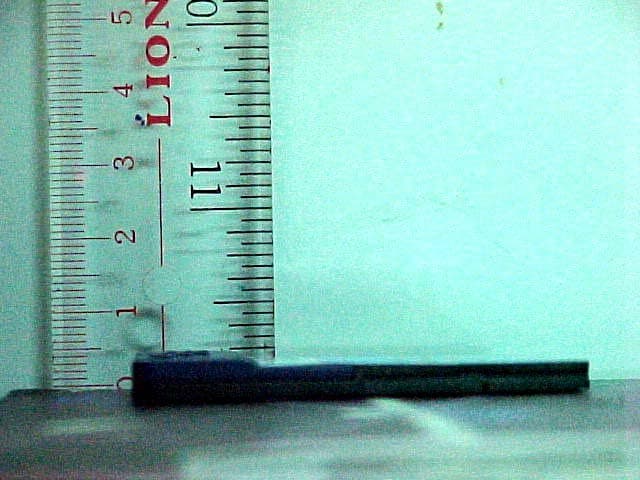
QXZCFPA-001A
Jul 27, 2003Bluetooth Compact Flash Card (Class 1)
Equipment Class
DSS - Part 15 Spread Spectrum Transmitter
QXZCFPA-001
Jul 07, 2003Bluetooth Compact Flash Card (Class 1)
Equipment Class
DSS - Part 15 Spread Spectrum Transmitter