QYMPID601Personal Identification Device
Serco Geografix Limited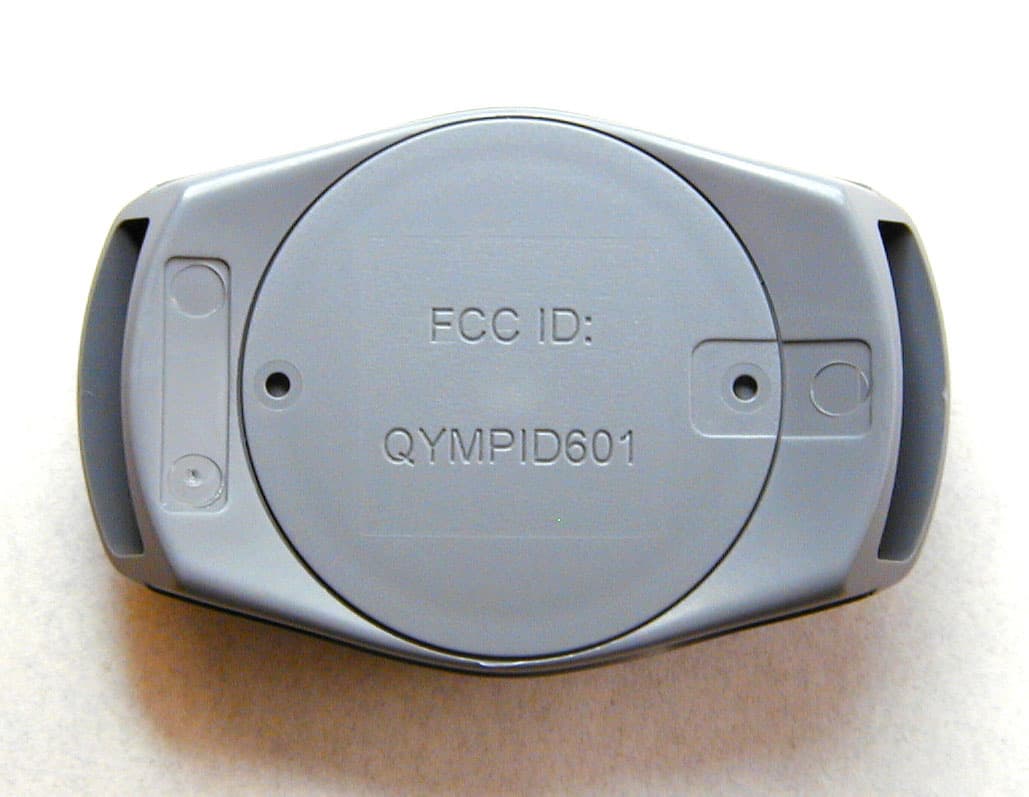
Click to zoom
Application Details
- Equipment Class
- DXX - Part 15 Low Power Communication Device Transmitter
- Date of Grant
- May 19, 2003
- Application Purpose
- Original Equipment
- Date of Application
- May 19, 2003
- Equipment Note
- Personal Identification Device
- Frequency Range
- 433.92000000 - 433.92000000
- Company
- Serco Geografix Limited
- Country
- United Kingdom
Documents & Files
Document Text
Text extracted from the exhibit documents filed with the FCC. Open a document above to read the original.
Users Manual
2 CONTENTS System Components ................................................................................................................ 3 Personal Identification Device (PID)........................................................................................ 4 PID Operation............................................................................................................................ 4 PID Clip Assembly .................................................................................................................... 5 Fitting the PID ........................................................................................................................... 6 Removing the PID ..................................................................................................................... 7 Cleaning the PID ....................................................................................................................... 7 Using the PID Clip Removal Tool ............................................................................................ 8 Field Activator Unit (FAU) ........................................................................................................ 9 Switching On the FAU .............................................................................................................. 9 Switching Off the FAU .............................................................................................................. 9 Using the FAU to Put the PID Into Active Mode ................................................................... 10 Using the FAU to Put the PID Into Dormant Mode................................................................ 11 Changing the FAU Battery ..................................................................................................... 11 Alternative Switch Panel ........................................................................................................12 3 System Components Personal Identification Device (PID) Field Activator Unit (FAU) 4 Personal Identification Device (PID) Also referred to as a 'transmitter' or ‘cuff’, this device is worn by a subject to register his or her presence within the boundaries of their place of curfew, or proximity to their Personal Tracking Unit (PTU) by means of a radio signal which can be detected by the PTU. The signal is transmitted periodically and contains the PID's status and ID number. The PID is water resistant to a depth of 5 metres. FCC Compliance WARNING: Changes or modifications to the transmitter not expressly approved by the manufacturer could void the user's authority to operate this RF device. This device complies with part 15 of the FCC Rules. Operation is subject to the following two conditions: (1) This device may not cause harmful interference, and (2) This device must accept any interference received, including interference that may cause undesired operation FCC ID: QYMPID601 PID Operation The PID is worn constantly by the offender during the course of their sentence and, once activated, cannot be removed by the subject without triggering an alarm. Periodically the PID transmits a radio signal detailing its status indicating whether it has been 'tampered' with, battery level and ID number. If the strap is removed a transmission is made immediately. These details are picked up by the PTU. 5 PID Clip Assembly The PID is fitted in place using locking clips, which cannot be undone without leaving physical evidence and triggering the tamper alarm. PID Clip Assembly 1. Component parts. 2. Press the strap on to the clip. 3. Fold the clip ensuring that the two halves lock together. 4. Push the clip into the PID until it locks with an audible click, ensure that it may not be removed. 6 Fitting the PID 1. Measure the circumference of the subject’s ankle with the tape measure. The tape measure should be adjusted so that it is a comfortable fit but not too tight. Read the strap size from the printed chart on the side of the tape measure. Measure circumference (PID) 2. Fit a clip to both ends of the strap as detailed on page 13, insert one clip into the PID, place the strap around the subject’s ankle and insert the other clip until an audible click is heard. Ensure that the clip cannot be removed and that the PID is comfortable but not too loose. Attaching a PID 7 Removing the PID To remove the PID simply cut if off using the safety scissors in your toolbox. Do not cut too close to the clip as this will make it difficult remove the clips from the PID body. Removal of the strap ends and clips should be performed out of sight of the subject if possible, using the Clip Removal Tool as described below. In order to conserve battery life the PID should be turned off as soon as it is returned. Use the FAU to place the PID into dormant mode. The procedure is outlined in the FAU section. Cleaning the PID The PID will need to be cleaned once removed from the subject. To clean the equipment: • Fill a sink with warm water and a small amount of LYSOL. DO NOT use any other type of cleaning agent. Items such as PINE SOL will disintegrate the plastic housing the PID. • Disassemble the bracelet and throw away the strap and clips. Check to see if there is any damage to the PID. If so, clean the PID and send it to CMU for diagnostics. • Use a toothbrush to scrub the PID paying particular attention to the sockets that the clips are inserted into. • Rinse with warm water and dry. Store in a secure place. 8 Using the PID Clip Removal Tool The following procedure details the use of the clip removal tool for the PID. Note: beware of the two sharp pins, which protrude from the removal tool when the lever is pressed. 1. Thread the cut strap through the clip removal tool until the PID body fits into the recess on the tool. PID Strap Insertion 2. Hold the two firmly together and press down on the clip removal tool lever. The clip removal tool will grip the strap and release t…
Text truncated - open the document above for the full version.
Test Report
TTI - P-G 009 / 98-00 TTI - P-G 089 / 94-50 Test Site File-No. IC 3009 File No. T 22499-1-00 AA , Page 1 of 15 MIKES BABT PRODUCT SERVICE GmbH Ohmstrasse 2-4 94342 Strasskirchen Tel.:+9424-9407-0 Fax:+9424-9407-60 Rev. No. 9.0 E M I S S I O N -- T E S T R E P O R T Test Report File No. : T 22499-1-00 AA ________________ Date : November 11, 2002 of issue ________________ Type Designation: Personal Identification Device (PID) ______________________________________________ Kind of Product: Transmitter ______________________________________________ Applicant: TÜV Product Service Ltd ______________________________________________ Manufacturer: Premier Geografix Limited ______________________________________________ Licence holder: Premier Geografix Limited ______________________________________________ Address: Hurricane Way, Norwich ______________________________________________ Norfolk NR6 6EW ______________________________________________ Test result accdg. to the regulation(s) at page 3 : Positive This test report with attachment consists of 24 pages. The test result only corresponds to the tested sample. It is not permitted to copy this report, in part or in full, without the permission of the test laboratory. File No. T 22499-1-00 AA , Page 2 of 15 MIKES BABT PRODUCT SERVICE GmbH Ohmstrasse 2-4 94342 Strasskirchen Tel.:+9424-9407-0 Fax:+9424-9407-60 Rev. No. 9.0 D I R E C T O R Y Page Documentation Directory2 ________ Test regulations3 ________ General information4-5 ________ Discovery of worst case condition6 ________ Equipment under Test14 ________ Summary15 ________ Test data Conducted emissions 10/150 kHz - 30 MHz7 ________ Spurious emissions (magnetic field) 9 kHz - 30 MHz8-9 ________ Spurious emissions (electric field) 30 MHz - 1000 MHz10 ________ Spurious emissions (electric field) 1 GHz - 18 GHz11 ________ Radiated power of the fundamental wave12 ________ Conducted power of the fundamental wave measured on13 the antenna terminals ________ Attachment A)Test dataA1 ________ B)List of Test EquipmentB1-B2 ________ C) Photos of the test setupC1-C2 ________ D) Technical description of the test sample-- (e.g. CDF, Declaration) ________ E)Photos of the EuTE1-E4 ________ F)Measurement Protocol for FCC, VCCI and AUSTEL-- ________ File No. T 22499-1-00 AA , Page 3 of 15 MIKES BABT PRODUCT SERVICE GmbH Ohmstrasse 2-4 94342 Strasskirchen Tel.:+9424-9407-0 Fax:+9424-9407-60 Rev. No. 9.0 T E S T R E G U L A T I O N S The tests were performed according to following regulations : o - EN 50081-1/ 2.1991 o - EN 50081-2/ 7.1993 -------------------------------------------------------------------------------- o - EN 55011/ 3.1991o - Group 1o - Group 2 o - class Ao - class B o - EN 55014/ 4.1993o - Household appliances and similar o - tools o - Semiconductor devices o - EN 55014 / A2:1990 o - EN 55104/ 5.1995Category: o - EN 55015 / A1:1990 o - EN 55015 / 12.1993 o - EN 55022 / 5.1995o - class Ao - class B o - prEN 55103-1/ 3.1995 o - prEN 50121-3-2/ 3.1995 o - EN 60601-1-2/ 4.1994 o - VCCIo - class 1o - class 2 - RSS-210 Issue 3, Rev.1; February 5, 2000 File No. T 22499-1-00 AA , Page 4 of 15 MIKES BABT PRODUCT SERVICE GmbH Ohmstrasse 2-4 94342 Strasskirchen Tel.:+9424-9407-0 Fax:+9424-9407-60 Rev. No. 9.0 A D D R E S S O F T H E T E S T L A B O R A T O R Y -MIKES BABT PRODUCT SERVICE GmbH Ohmstrasse 2-4 D - 94342 Strasskirchen o - ______________________________________ ______________________________________ ______________________________________ ______________________________________ E N V I R O N M E N T A L C O N D I T I O N S Temperature:15-35 ° C ____________ Humidity45-60 % ____________ Atmospheric pressure 860-1060 mbar ____________ POWER SUPPLY SYSTEM UTILIZED Power supply systemo 230V/50 Hz / 1φ 3.6 VDC o 400V/50 Hz 3PEo 400V/50 Hz 3NPE STATEMENT OF MEASUREMENT UNCERTAINTY The data and results referenced in this document are true and accurate. The reader is cautioned that there may be errors within the calibration limits of the equipment and facilities. The measurement uncertainty was calculated for all measurements listed in this test report accdg. to NIS 81 /5.1994 „The Treatment of Uncertainty in EMC Measurements“ and is documented in the MIKES BABT Product Service quality system accdg. to EN 45001. Furthermore, component and process variability of devices similar to that tested may result in additional deviation. The manufacturer has the sole responsibility of continued compliance of the device. SHORT DESCRIPTION OF THE EQUIPMENT UNDER TEST (EuT) The transmitter PID is worn by a subject to register his or her presence within the boundaries of their place of curfew by means of a radio signal which can be detected by an on-site SMU, GSMU or portable FMU. Number of received/tested samples:2 / 1 Serial Number:ID 82537 DEFINITIONS FOR SYMBOLS USED IN THIS TEST REPORT The black square indicates that the listed condition, standard or equipment is applicable for this report. o Blank box indicates that the listed condition, standard or equipment was not applicable for this report. File No. T 22499-1-00 AA , Page 5 of 15 MIKES BABT PRODUCT SERVICE GmbH Ohmstrasse 2-4 94342 Strasskirchen Tel.:+9424-9407-0 Fax:+9424-9407-60 Rev. No. 9.0 M E A S U R E M E N T P R O T O C O L F O R F C C , V C C I A N D A U S T E L Test Methodology Conducted and radiated emission testing is performed according to the procedures in International Special Committee on Radio Interference (CISPR) Publication 22 (1993), European Standard EN 55022 and Australian Standard AS 3548 (which are based on CISPR 22). The Japanese standard, "Voluntary Control Council for Interference (VCCI) by Data Processing Equipment and Electronic Office Machines, Technical Requirements" is technically equivalent to CISPR 22 (1993). For official compliance, a conformance report must be sent to and accepted by the VCCI. In compliance with FCC Docket 92-152, "Harmonization of Rules for Digital Devices Incorporate International Standards", testi…
Text truncated - open the document above for the full version.
Contact Information
Applicant
Matthew Armiger(General Manager)
Technical Contact
Mikes BABT Product Service GmbHKeith Riches
[email protected]+49-9424-9407-30
Hurricane Way · Norwich, Norfolk · United Kingdom
Test Firm
MIKES BABT Product Service GmbHHarald Buchwald
Technical Specifications
| # | Rule Parts | Frequency Range | Power Output |
|---|---|---|---|
| 1 | 15C | 433.92 MHz - 433.92 MHz | - |
Other Applications from Serco Geografix Limited
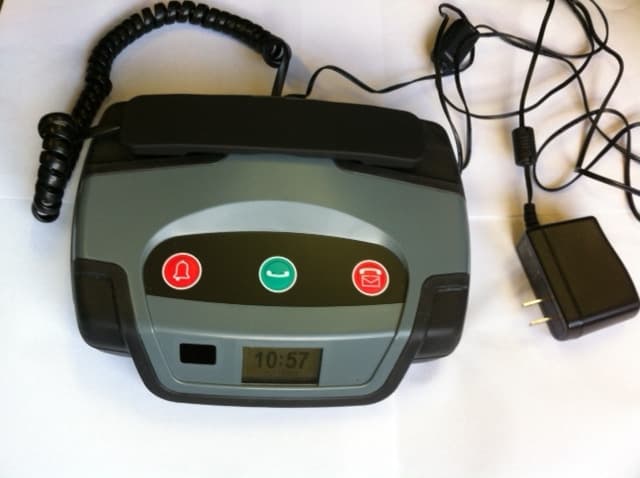
QYM-SMU4
Aug 07, 2014Site Monitoring Unit SMU4
Equipment Class
DXX - Part 15 Low Power Communication Device Transmitter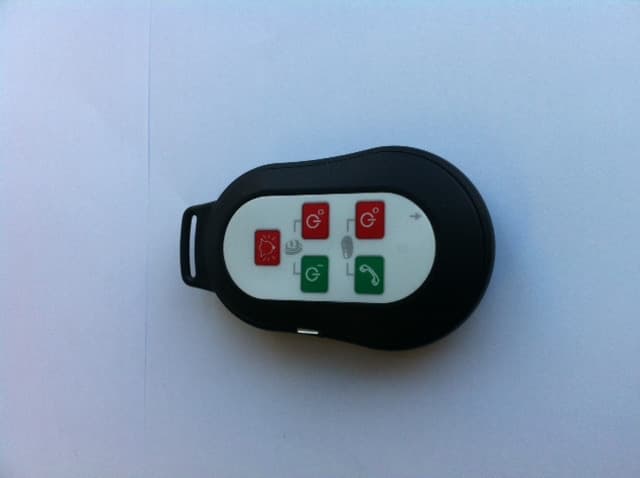
QYM-MID2
May 21, 2014Monitor Interface Device
Equipment Class
DXT - Part 15 Low Power Transceiver, Rx Verified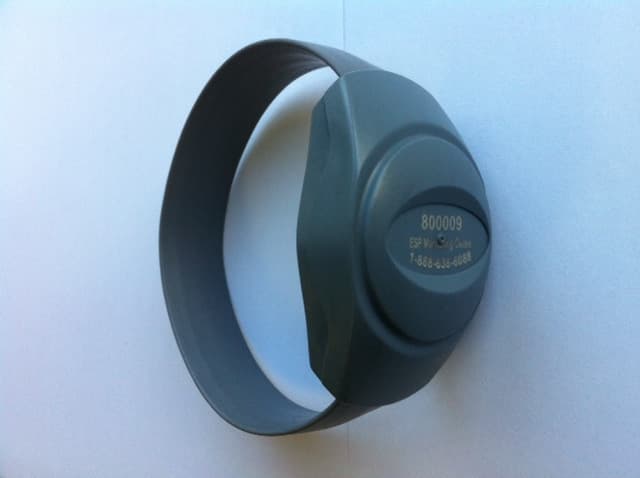
QYM-PID3X
May 06, 2014Personal Identity Device
Equipment Class
DXT - Part 15 Low Power Transceiver, Rx Verified
QYMFMU002
Feb 26, 2007Alarm Device
Equipment Class
DSR - Part 15 Remote Control/Security Device Transceiver