SAZ-MS6833Wireless mini-PCI Card Model MS-6833
Uniwill Computer Corp.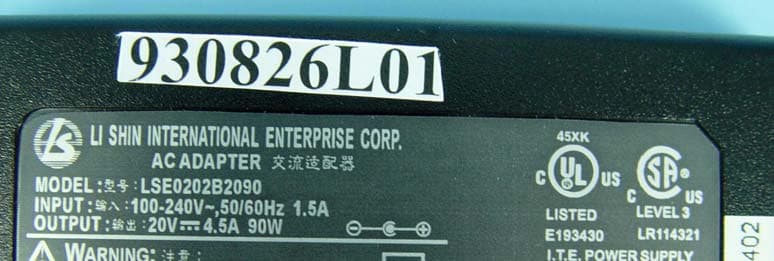
Click to zoom
Application Details
- Equipment Class
- DTS - Digital Transmission System
- Date of Grant
- Oct 15, 2004
- Application Purpose
- Original Equipment
- Date of Application
- Oct 15, 2004
- Equipment Note
- Wireless mini-PCI Card Model MS-6833
- Frequency Range
- 2412.00000000 - 2462.00000000
- Company
- Uniwill Computer Corp.
- Country
- Taiwan
Documents & Files
Document Text
Text extracted from the exhibit documents filed with the FCC. Open a document above to read the original.
Users Manual
i Wireless 11g MiniPCI Card (for OEMs use only) User’s Guide ii FCC Caution 1. The device complies with Part 15 of the FCC rules. Operation is subject to the following two conditions: (1) This device may not cause harmful interference, and (2) This device must accept any interference received, including interference that may cause undesired operation. 2. FCC RF Radiation Exposure Statement: The equipment complies with FCC RF radiation exposure limits set forth for an uncontrolled environment. This equipment should be installed and operated with a minimum distance of 20 centimeters between the radiator and your body. 3. This Transmitter must not be co-located or operating in conjunction with any other antenna or transmitter. 4. Changes or modifications to this unit not expressly approved by the party responsible for compliance could void the user authority to operate the equipment. Trademarks Microsoft Windows and Internet Explorer are registered trademarks or trademarks of Microsoft Corporation. All brand names, icons, and trademarks used in this manual are the sole property of their respective owners. Revision History RevisionHistoryDate V 2.0First ReleaseFebruary 2004 iii Important Safety Precautions Always read and follow these basic safety precautions carefully when handling any piece of electronic component. 1.Keep this User’s Guide for future reference. 2.Keep this equipment away from humidity. 3.Lay this equipment on a reliable flat surface before setting it up. 4.The openings on the enclosure are for air convection hence protects the equipment from overheating. 5.All cautions and warnings on the equipment should be noted. 6.Never pour any liquid into the opening that could damage or cause electrical shock. 7.If any of the following situations arises, get the equipment checked by a service personnel: Liquid has penetrated into the equipment The equipment has been exposed to moisture The equipment has not work well or you can not get it work according to User’s Manual The equipment has dropped and damaged If the equipment has obvious sign of breakage 8.DO NOT LEAVE THIS EQUIPMENT IN AN ENVIRONMENT UNCONDITIONED, STORAGE TEMPERATURE ABOVE 60 O C OR BELOW -20 O C, IT MAY DAMAGE THE EQUIPMENT. iv How to Use This Guide This User’s Guide provides instructions and illustrations on how to install and use your Wireless 11g MiniPCI Card. Chapter 1, Introduction, provides a general information on the product you bought, including its application, specification, and requirements. Chapter 2, Hardware Installation, tells you how to install the product into your system. Chapter 3, Software Installation, guides you through the installation of the product’s driver and utility. Chapter 4, Wireless Network Utility, describes the Wireless Network Utility that lets you configure your product to connect the network quickly and easily. Chapter 5, Networking Basic, helps you to build your network and share resources over the network. Please note that the setting diagrams or values in this guide are FOR YOUR REFER- ENCE ONLY. The actual settings and values depend on your system and network. If you are not sure about these information, please ask your network administrator or MIS staff for help. v Table of Contents 1. Introduction ......................................................................................................... 1 1.1 Wireless 11g MiniPCI Card............................................................................ 1 1.2 How Wireless LAN Adapter Works............................................................... 2 1.3 Specifications.................................................................................................. 4 1.4 System Requirements ..................................................................................... 6 1.5 Package Contents ............................................................................................ 6 1.6 Product View .................................................................................................. 7 2. Hardware Installation ......................................................................................... 8 2.1 Installing the Wireless LAN Adapter............................................................. 8 2.2 Removing the Wireless LAN Adapter............................................................ 9 3. Software Installation.......................................................................................... 10 4. Wireless Network Utility................................................................................... 13 4.1 Introduction.................................................................................................... 13 4.2 Networking ..................................................................................................... 14 4.2.1 Profile..................................................................................................... 14 4.2.2 Link Status .............................................................................................. 15 4.2.3 Site Survey .............................................................................................. 15 4.2.4 Statistics................................................................................................. 16 4.2.5 Advance.................................................................................................. 16 4.2.6 About ...................................................................................................... 17 5. Networking Basics.............................................................................................. 18 5.1 Checking the Network Elements.................................................................... 18 5.2 Computer Identification ................................................................................. 20 5.3 Configuring a Dynamic/Fixed IP Address....................................................... 23 5.4 Checking TCP/I…
Text truncated - open the document above for the full version.
Cover Letter(s)
American Telecommunications Certification Body Inc. 6731 Whittier Ave, McLean, VA 22101 October 16, 2004 RE: Uniwill Computer FCC ID: SAZ-MS6833 I have a few comments on this Application. Depending on your responses, kindly understand there may be additional comments. 1.) The Manual has 20cm warning statements. This is not appropriate for an RF category “Portable” Limited Modular Approval (LMA) with SAR reports. 2.) The Manual should indicate the highest SAR values seen with each of these two chassis [255KIy and 245xIy]. As for all Limited Modular Approvals (LMA), the Manual is expected to be written for OEM integrators, not end users. This Manual should indicate the SAR values for each model to be included in the final Manual provided to the end user. 3.) FYI: The Grant Notes will indicate that this LMA applies to “...models 255KIy and 245xIy with 3.3VDC regulation at the PCI interface.” William H. Graff President and Director of Engineering mailto: [email protected] The items indicated above must be submitted before processing can continue on the above referenced application. Failure to provide the requested information may result in application termination. Correspondence should be considered part of the permanent submission and may be viewed from the Internet after a Grant of Equipment Authorization is issued. Please do not respond to this correspondence using the email reply button. In order for your response to be processed expeditiously, you must submit your documents through the AmericanTCB.com website. Also, please note that partial responses increase processing time and should not be submitted. Any questions about the content of this correspondence should be directed to the sender.
External Photos
Page 1 CONSTRUCTION PHOTOS OF EUT Page 2 Page 3 Page 4 Page 5 Page 6
ID Label/Location Info
FCC ID Label Location
ID Label/Location Info
245IX/255KI/259KI WLAN LABEL 1:1 SIZE:35X12mm :#75 :63-UXXXXX-XX 351 1 2 1 2004/08/20 2004/09/08 2004/10/05(255/259 Ki) CONTAINS FCC ID: SAZ-MS6833 MICRO STAR MS-6833 CONTAINS FCC ID: SAZ-MS6833 MICRO STAR MS-6833 223/245/255/259 1:1 SIZE:40X8mm 1 FCC ID:SAZ-MS6833 FCC ID:SAZ-MS6833
Internal Photos
Page 7 Page 8 Page 9 Page 10 Page 11 Page 12 Page 13 Page 14 Page 15 Page 16
Operational Description
FCC ID: SAZ-MS6833 Report No.RF930826L01 Operational Description This device is a Notebook PC (with Wireless Mini PCI Card: MSI, Model: MS-6833 ), which operates in the 2.4GHz frequency spectrum with throughput of up to 54Mbps which OFDM technique will be applied. If the signal to noise radio is too poor which could not support 54Mbps, the 11Mbps data rate with CCK technique will be applied. The transmitter of the EUT is powered by AC Adapter. The antenna is PIFA antenna with UFL antenna connector. The other instruction, please have a look at the users manual.
RF Exposure Info
FCC ID: SAZ-MS6833 Report No.: SA930826L01-21Issued: Oct. 11, 2004 SAR TEST REPORT REPORT NO.: SA930826L01-2 MODEL NO.: 245xIy (with Wireless Mini PCI Card: MSI, Model: MS-6833) RECEIVED: Aug. 26, 2004 TESTED: Oct. 07, 2004 APPLICANT: UNIWILL COMPUTER CORP. ADDRESS: 5F, No. 9, Wu Chiuan Rd., Wu Gu Ind. Park, Taipei, Taiwan, R.O.C. ISSUED BY: Advance Data Technology Corporation LAB ADDRESS: No. 47, 14th Ling, Chia Pau Tsuen, Lin Kou Hsiang 244, Taipei Hsien, Taiwan, R.O.C. TEST LOCATION: No. 19, Hwa Ya 2 nd Rd., Wen Hwa Tsuen, Kwei Shan Hsiang, Taoyuan Hsien 333, Taiwan, R.O.C. This test report consists of 33 pages in total except Appendix. It may be duplicated completely for legal use with the approval of the applicant. It should not be reproduced except in full, without the written approval of our laboratory. The client should not use it to claim product endorsement by CNLA, A2LA or any government agencies. The test results in the report only apply to the tested sample. 0528 ILAC MRA No. 2177-01 FCC ID: SAZ-MS6833 Report No.: SA930826L01-22Issued: Oct. 11, 2004 Table of Contents 1.CERTIFICATION .........................................................................................................3 2.GENERAL INFORMATION..........................................................................................4 2.1 GENERAL DESCRIPTION OF EUT............................................................................4 2.2 GENERAL DESCRIPTION OF APPLIED STANDARDS .............................................5 2.3 GENERAL INOFRMATION OF THE SAR SYSTEM ...................................................5 2.4 GENERAL DESCRIPTION OF THE SPATIAL PEAK SAR EVALUATION .................9 3.DESCRIPTION OF TEST MODES AND CONFIGURATIONS ..................................13 4.DESCRIPTION OF SUPPORT UNITS ......................................................................14 5.TEST RESULTS ........................................................................................................15 5.1 TEST PROCEDURES ...............................................................................................15 5.2 MEASURED SAR RESULT .......................................................................................16 5.3 SAR LIMITS...............................................................................................................18 5.4 RECIPES FOR TISSUE SIMULATING LIQUIDS ......................................................19 5.5 TEST EQUIPMENT FOR TISSUE PROPERTY ........................................................21 6.SYSTEM VALIDATION ..............................................................................................21 6.1 TEST EQUIPMENT ...................................................................................................22 6.2 TEST PROCEDURE .................................................................................................22 6.3 VALIDATION RESULT...............................................................................................25 6.4 SYSTEM VALIDATION UNCERTAINTIES ................................................................26 7.MEASUREMENT SAR PROCEDURE UNCERTAINTIES.........................................27 7.1 PROBE CALIBRATION UNCERTAINTY ...................................................................27 7.2 ISOTROPY UNCERTAINTY......................................................................................27 7.3 BOUNDARY EFFECT UNCERTAINTY .....................................................................28 7.4 PROBE LINEARITY UNCERTAINTY ........................................................................28 7.5 READOUT ELECTRONICS UNCERTAINTY ............................................................28 7.6 RESPONSE TIME UNCERTAINTY...........................................................................29 7.7 INTEGRATION TIME UNCERTAINTY ......................................................................30 7.8 PROBE POSITIONER MECHANICAL TOLERANCE................................................30 7.9 PROBE POSITIONING .............................................................................................31 7.10 PHANTOM UNCERTAINTY ......................................................................................31 7.11 DASY4 UNCERTAINTY BUDGET.............................................................................32 8.INFORMATION ON THE TESTING LABORATORIES ..............................................33 APPENDIX A: TEST CONFIGURATIONS AND TEST DATA APPENDIX B: ADT SAR MEASUREMENT SYSTEM APPENDIX C: PHOTOGRAPHS OF SYSTEM VALIDATION APPENDIX D: SYSTEM CERTIFICATE & CALIBRATION FCC ID: SAZ-MS6833 Report No.: SA930826L01-23Issued: Oct. 11, 2004 1. CERTIFICATION PRODUCT : Notebook (with Wireless Mini PCI Card: MSI, Model: MS-6833) MODEL NO. : 245xIy (with Wireless Mini PCI Card: MSI, Model: MS- 6833) BRAND NAME : Uniwill APPLICANT : UNIWILL COMPUTER CORP. TESTED : Oct. 07, 2004 TEST SAMPLE : ENGINEERING SAMPLE STANDARDS : FCC Part 2 (Section 2.1093), FCC OET Bulletin 65, Supplement C (01-01), RSS-102 The above equipment has been tested by Advance Data Technology Corporation, and found compliance with the requirement of the above standards. The test record, data evaluation & Equipment Under Test (EUT) configurations represented herein are true and accurate accounts of the measurements of the sample’s EMC characteristics under the conditions specified in this report. PREPARED BY :, DATE:Oct. 11, 2004 ( Andrea Hsia) TECHNICAL ACCEPTANCE :, DATE:Oct. 11, 2004 Responsible for RF ( Ansen Lei ) APPROVED BY :, DATE:Oct. 11, 2004 ( Cody Chang, Deputy Manager ) FCC ID: SAZ-MS6833 Report No.: SA930826L01-24Issued: Oct. 11, 2004 2. GENERAL INFORMATION 2.1 GENERAL DESCRIPTION OF EUT GENERAL DESCRIPTION OF EUT PRODUCT Notebook (with Wireless Mini PCI Card: MSI, Model: MS-6833) MODEL NO. 245xIy (with Wireless Mini PCI Card: MSI, Model: MS-6833) POWER SUPPLY 20Vdc from battery CLASSIFICATION Po…
Text truncated - open the document above for the full version.
RF Exposure Info
APPENDIX A: TEST CONFIGURATIONS AND TEST DATA A1: TEST CONFIGURATION Mode 1 Bottom Position The bottom of the EUT to the flat phantom distance 0 mm Mode 2 Tip Position The tip of the EUT to the flat phantom distance 0 mm Mode 3 Tip Position The tip of the EUT to the flat phantom distance 0 mm EUT Photo Liquid Level Photo MSL 2450MHz D=155mm Date/Time: 10/05/04 21:17:24 Test Laboratory: Advance Data Technology 245xIy 11b Bottom Mode 1 Ch 1 DUT: Notebook ; Type: 245xIy ; Test Channel Frequency: 2412 MHz Communication System: 802.11b ; Frequency: 2412 MHz ; Duty Cycle: 1:1 ; Modulation type: CCK Medium: MSL2450 Medium parameters used: f = 2412 MHz; σ = 1.92 mho/m; ε r = 51.2; ρ = 1000 kg/m 3 ; Liquid level : 155mm Phantom section: Flat Section ; Separation distance : 0 mm (The bottom side of the EUT to the Phantom) Antenna type : Internal Antenna ; Air temp. : 22.0 degrees ; Liquid temp. : 21.0 degrees DASY4 Configuration: - Probe: ET3DV6 - SN1687 ; ConvF(4.23, 4.23, 4.23) ; Calibrated: 2004/8/26 - Sensor-Surface: 4mm (Mechanical Surface Detection) - Electronics: DAE3 Sn510 ; Calibrated: 2004/8/17 - Phantom: SAM 12 ; Type: SAM V4.0 ; Serial: TP 1202 - Measurement SW: DASY4, V4.3 Build 22 ; Postprocessing SW: SEMCAD, V1.8 Build 127 Low Channel/Area Scan (6x8x1): Measurement grid: dx=15mm, dy=15mm Maximum value of SAR (measured) = 0.023 mW/g Low Channel/Zoon Scan (7x7x7)/Cube 0: Measurement grid: dx=5mm, dy=5mm, dz=5mm Reference Value = 2.78 V/m; Power Drift = -0.1 dB Peak SAR (extrapolated) = 581470.1 W/kg SAR(1 g) = 0.017 mW/g; SAR(10 g) = 0.00436 mW/g Maximum value of SAR (measured) = 0.027 mW/g Date/Time: 10/05/04 21:34:28 Test Laboratory: Advance Data Technology 245xIy 11b Bottom Mode 1 Ch 6 DUT: Notebook ; Type: 245xIy ; Test Channel Frequency: 2437 MHz Communication System: 802.11b ; Frequency: 2437 MHz ; Duty Cycle: 1:1 ; Modulation type: CCK Medium: MSL2450 Medium parameters used: f = 2437 MHz; σ = 1.95 mho/m; ε r = 51.1; ρ = 1000 kg/m 3 ; Liquid level : 155mm Phantom section: Flat Section ; Separation distance : 0 mm (The bottom side of the EUT to the Phantom) Antenna type : Internal Antenna ; Air temp. : 22.0 degrees ; Liquid temp. : 21.0 degrees DASY4 Configuration: - Probe: ET3DV6 - SN1687 ; ConvF(4.23, 4.23, 4.23) ; Calibrated: 2004/8/26 - Sensor-Surface: 4mm (Mechanical Surface Detection) - Electronics: DAE3 Sn510 ; Calibrated: 2004/8/17 - Phantom: SAM 12 ; Type: SAM V4.0 ; Serial: TP 1202 - Measurement SW: DASY4, V4.3 Build 22 ; Postprocessing SW: SEMCAD, V1.8 Build 127 Middle Channel/Area Scan (6x8x1): Measurement grid: dx=15mm, dy=15mm Maximum value of SAR (measured) = 0.022 mW/g Middle Channel/Zoon Scan (7x7x7)/Cube 0: Measurement grid: dx=5mm, dy=5mm, dz=5mm Reference Value = 2.44 V/m; Power Drift = 0.2 dB Peak SAR (extrapolated) = 40300.1 W/kg SAR(1 g) = 0.00837 mW/g; SAR(10 g) = 0.00259 mW/g Maximum value of SAR (measured) = 0.028 mW/g Date/Time: 10/05/04 21:51:54 Test Laboratory: Advance Data Technology 245xIy 11b Bottom Mode 1 Ch 11 DUT: Notebook ; Type: 245xIy ; Test Channel Frequency: 2462 MHz Communication System: 802.11b ; Frequency: 2462 MHz ; Duty Cycle: 1:1 ; Modulation type: CCK Medium: MSL2450 Medium parameters used: f = 2462 MHz; σ = 1.98 mho/m; ε r = 51.1; ρ = 1000 kg/m 3 ; Liquid level : 155mm Phantom section: Flat Section ; Separation distance : 0 mm (The bottom side of the EUT to the Phantom) Antenna type : Internal Antenna ; Air temp. : 22.0 degrees ; Liquid temp. : 21.0 degrees DASY4 Configuration: - Probe: ET3DV6 - SN1687 ; ConvF(4.23, 4.23, 4.23) ; Calibrated: 2004/8/26 - Sensor-Surface: 4mm (Mechanical Surface Detection) - Electronics: DAE3 Sn510 ; Calibrated: 2004/8/17 - Phantom: SAM 12 ; Type: SAM V4.0 ; Serial: TP 1202 - Measurement SW: DASY4, V4.3 Build 22 ; Postprocessing SW: SEMCAD, V1.8 Build 127 High Channel/Area Scan (6x8x1): Measurement grid: dx=15mm, dy=15mm Maximum value of SAR (measured) = 0.018 mW/g High Channel/Zoon Scan (7x7x7)/Cube 0: Measurement grid: dx=5mm, dy=5mm, dz=5mm Reference Value = 2.1 V/m; Power Drift = 0.1 dB Peak SAR (extrapolated) = 5173020.2 W/kg SAR(1 g) = 0.00337 mW/g; SAR(10 g) = 0.000721 mW/g Maximum value of SAR (measured) = 0.022 mW/g Date/Time: 10/05/04 19:32:14 Test Laboratory: Advance Data Technology 245xIy 11b Tip Mode 2 Ch 1 DUT: Notebook ; Type: 245xIy ; Test Channel Frequency: 2412 MHz Communication System: 802.11b ; Frequency: 2412 MHz; Duty Cycle: 1:1; Modulation type: CCK Medium: MSL2450 Medium parameters used: f = 2412 MHz; σ = 1.92 mho/m; ε r = 51.2; ρ = 1000 kg/m 3 ; Liquid level : 155 mm Phantom section: Flat Section ; Separation distance : 0 mm (The tip of the EUT to the Phantom) Antenna type : Internal Antenna ; Air temp. : 22.0 degrees ; Liquid temp. : 21.0 degrees DASY4 Configuration: - Probe: ET3DV6 - SN1687 ; ConvF(4.23, 4.23, 4.23) ; Calibrated: 2004/8/26 - Sensor-Surface: 4mm (Mechanical Surface Detection) - Electronics: DAE3 Sn510; Calibrated: 2004/8/17 - Phantom: SAM 12; Type: SAM V4.0; Serial: TP 1202 - Measurement SW: DASY4, V4.3 Build 22; Postprocessing SW: SEMCAD, V1.8 Build 127 Low Channel/Area Scan (6x7x1): Measurement grid: dx=15mm, dy=15mm Maximum value of SAR (measured) = 0.374 mW/g Low Channel/Zoon Scan (7x7x7)/Cube 0: Measurement grid: dx=5mm, dy=5mm, dz=5mm Reference Value = 10.3 V/m; Power Drift = -0.2 dB Peak SAR (extrapolated) = 1.34 W/kg SAR(1 g) = 0.458 mW/g; SAR(10 g) = 0.175 mW/g Maximum value of SAR (measured) = 0.555 mW/g Date/Time: 10/05/04 19:57:34 Test Laboratory: Advance Data Technology 245xIy 11b Tip Mode 2 Ch 6 DUT: Notebook ; Type: 245xIy ; Test Channel Frequency: 2437 MHz Communication System: 802.11b ; Frequency: 2437 MHz; Duty Cycle: 1:1; Modulation type: CCK Medium: MSL2450 Medium parameters used: f = 2437 MHz; σ = 1.95 mho/m; ε r = 51.1; ρ = 1000 kg/m 3 ; Liquid level : 155 mm Phantom section: Flat Section ; Separation distance : 0 mm (The tip of the EUT to the Phantom) Antenna type : Internal Antenna ; Air temp. : 22.0 degrees ; Liquid temp. : 21.0 degree…
Text truncated - open the document above for the full version.
RF Exposure Info
D4: 2450MHz SYSTEM VALIDATION DIPOLE
RF Exposure Info
FCC ID: SAZ-MS6833 Report No.: SA930826L01-11Issued: Oct. 08, 2004 SAR TEST REPORT REPORT NO.: SA930826L01-1 MODEL NO.: 255KIy (with Wireless Mini PCI Card: MSI, Model: MS-6833) RECEIVED: Aug. 26, 2004 TESTED: Oct. 05, 2004 APPLICANT: UNIWILL COMPUTER CORP. ADDRESS: 5F, No. 9, Wu Chiuan Rd., Wu Gu Ind. Park, Taipei, Taiwan, R.O.C. ISSUED BY: Advance Data Technology Corporation LAB ADDRESS: No. 47, 14th Ling, Chia Pau Tsuen, Lin Kou Hsiang 244, Taipei Hsien, Taiwan, R.O.C. TEST LOCATION: No. 19, Hwa Ya 2 nd Rd., Wen Hwa Tsuen, Kwei Shan Hsiang, Taoyuan Hsien 333, Taiwan, R.O.C. This test report consists of 32 pages in total except Appendix. It may be duplicated completely for legal use with the approval of the applicant. It should not be reproduced except in full, without the written approval of our laboratory. The client should not use it to claim product endorsement by CNLA, A2LA or any government agencies. The test results in the report only apply to the tested sample. 0528 ILAC MRA No. 2177-01 FCC ID: SAZ-MS6833 Report No.: SA930826L01-12Issued: Oct. 08, 2004 Table of Contents 1.CERTIFICATION .........................................................................................................3 2.GENERAL INFORMATION..........................................................................................4 2.1 GENERAL DESCRIPTION OF EUT............................................................................4 2.2 GENERAL DESCRIPTION OF APPLIED STANDARDS .............................................5 2.3 GENERAL INOFRMATION OF THE SAR SYSTEM ...................................................5 2.4 GENERAL DESCRIPTION OF THE SPATIAL PEAK SAR EVALUATION .................9 3.DESCRIPTION OF TEST MODES AND CONFIGURATIONS ..................................13 4.DESCRIPTION OF SUPPORT UNITS ......................................................................13 5.TEST RESULTS ........................................................................................................14 5.1 TEST PROCEDURES ...............................................................................................14 5.2 MEASURED SAR RESULT .......................................................................................15 5.3 SAR LIMITS...............................................................................................................16 5.4 RECIPES FOR TISSUE SIMULATING LIQUIDS ......................................................17 5.5 TEST EQUIPMENT FOR TISSUE PROPERTY ........................................................19 6.SYSTEM VALIDATION ..............................................................................................19 6.1 TEST EQUIPMENT ...................................................................................................20 6.2 TEST PROCEDURE .................................................................................................20 6.3 VALIDATION RESULT...............................................................................................23 6.4 SYSTEM VALIDATION UNCERTAINTIES ................................................................24 7.MEASUREMENT SAR PROCEDURE UNCERTAINTIES.........................................25 7.1 PROBE CALIBRATION UNCERTAINTY ...................................................................25 7.2 ISOTROPY UNCERTAINTY......................................................................................25 7.3 BOUNDARY EFFECT UNCERTAINTY .....................................................................26 7.4 PROBE LINEARITY UNCERTAINTY ........................................................................26 7.5 READOUT ELECTRONICS UNCERTAINTY ............................................................26 7.6 RESPONSE TIME UNCERTAINTY...........................................................................27 7.7 INTEGRATION TIME UNCERTAINTY ......................................................................28 7.8 PROBE POSITIONER MECHANICAL TOLERANCE................................................28 7.9 PROBE POSITIONING .............................................................................................29 7.10 PHANTOM UNCERTAINTY ......................................................................................29 7.11 DASY4 UNCERTAINTY BUDGET.............................................................................30 8.INFORMATION ON THE TESTING LABORATORIES ..............................................31 APPENDIX A: TEST CONFIGURATIONS AND TEST DATA APPENDIX B: ADT SAR MEASUREMENT SYSTEM APPENDIX C: PHOTOGRAPHS OF SYSTEM VALIDATION APPENDIX D: SYSTEM CERTIFICATE & CALIBRATION FCC ID: SAZ-MS6833 Report No.: SA930826L01-13Issued: Oct. 08, 2004 1. CERTIFICATION PRODUCT : Notebook (with Wireless Mini PCI Card: MSI, Model: MS-6833) MODEL NO. : 255KIy (with Wireless Mini PCI Card: MSI, Model: MS- 6833) BRAND NAME : Uniwill APPLICANT : UNIWILL COMPUTER CORP. TESTED : Oct. 05, 2004 TEST SAMPLE : ENGINEERING SAMPLE STANDARDS : FCC Part 2 (Section 2.1093), FCC OET Bulletin 65, Supplement C (01-01), RSS-102 The above equipment has been tested by Advance Data Technology Corporation, and found compliance with the requirement of the above standards. The test record, data evaluation & Equipment Under Test (EUT) configurations represented herein are true and accurate accounts of the measurements of the sample’s EMC characteristics under the conditions specified in this report. PREPARED BY :, DATE:Oct. 08, 2004 ( Andrea Hsia) TECHNICAL ACCEPTANCE :, DATE:Oct. 08, 2004 Responsible for RF ( Ansen Lei ) APPROVED BY :, DATE:Oct. 08, 2004 ( Cody Chang, Deputy Manager ) FCC ID: SAZ-MS6833 Report No.: SA930826L01-14Issued: Oct. 08, 2004 2. GENERAL INFORMATION GENERAL DESCRIPTION OF EUT PRODUCT Notebook (with Wireless Mini PCI Card: MSI, Model: MS-6833) MODEL NO. 255KIy (with Wireless Mini PCI Card: MSI, Model: MS-6833) POWER SUPPLY 20Vdc from battery CLASSIFICATION Portable device, production unit …
Text truncated - open the document above for the full version.
RF Exposure Info
APPENDIX A: TEST CONFIGURATIONS AND TEST DATA A1: TEST CONFIGURATION Mode 1 Main Antenna Bottom Position The bottom of the EUT to the flat phantom distance 0 mm Mode 2 Main Antenna Tip Position The tip of the EUT to the flat phantom distance 0 mm Mode 3 Auxiliary Antenna Bottom Position The bottom of the EUT to the flat phantom distance 0 mm Mode 4 Auxiliary Antenna Tip Position The tip of the EUT to the flat phantom distance 0 mm Mode 5 Main Antenna Tip Position The tip of the EUT to the flat phantom distance 0 mm Mode 6 Auxiliary Antenna Tip Position The tip of the EUT to the flat phantom distance 0 mm EUT Photo Liquid Level Photo MSL 2450MHz D=155mm Date/Time: 10/07/04 17:35:17 Test Laboratory: Advance Data Technology 255KI1 11b Main Antenna Bottom Mode 1 Ch 1 DUT: Notebook ; Type: 255KI1 ; Test Channel Frequency: 2412 MHz Communication System: 802.11b ; Frequency: 2412 MHz ; Duty Cycle: 1:1 ; Modulation type: CCK Medium: MSL2450 Medium parameters used: f = 2412 MHz; σ = 1.94 mho/m; ε r = 51; ρ = 1000 kg/m 3 ; Liquid level : 155mm Phantom section: Flat Section ; Separation distance : 0 mm (The bottom side of the EUT to the Phantom) Antenna type : Internal Antenna ; Air temp. : 22.0 degrees ; Liquid temp. : 21.0 degrees DASY4 Configuration: - Probe: ET3DV6 - SN1687 ; ConvF(4.23, 4.23, 4.23) ; Calibrated: 2004/8/26 - Sensor-Surface: 4mm (Mechanical Surface Detection) - Electronics: DAE3 Sn510 ; Calibrated: 2004/8/17 - Phantom: SAM 12 ; Type: SAM V4.0 ; Serial: TP 1202 - Measurement SW: DASY4, V4.3 Build 22 ; Postprocessing SW: SEMCAD, V1.8 Build 127 Low Channel/Area Scan (6x8x1): Measurement grid: dx=15mm, dy=15mm Maximum value of SAR (measured) = 0.00435 mW/g Low Channel/Zoon Scan (7x7x7)/Cube 0: Measurement grid: dx=5mm, dy=5mm, dz=5mm Reference Value = 0.361 V/m; Power Drift = 0.2 dB Peak SAR (extrapolated) = 0.015 W/kg SAR(1 g) = 0.000251 mW/g; SAR(10 g) = 5.05e-005 mW/g Maximum value of SAR (measured) = 0.015 mW/g Date/Time: 10/07/04 17:53:10 Test Laboratory: Advance Data Technology 255KI1 11b Main Antenna Bottom Mode 1 Ch 6 DUT: Notebook ; Type: 255KI1 ; Test Channel Frequency: 2437 MHz Communication System: 802.11b ; Frequency: 2437 MHz ; Duty Cycle: 1:1 ; Modulation type: CCK Medium: MSL2450 Medium parameters used: f = 2437 MHz; σ = 1.98 mho/m; ε r = 50.9; ρ = 1000 kg/m 3 ; Liquid level : 155mm Phantom section: Flat Section ; Separation distance : 0 mm (The bottom side of the EUT to the Phantom) Antenna type : Internal Antenna ; Air temp. : 22.0 degrees ; Liquid temp. : 21.0 degrees DASY4 Configuration: - Probe: ET3DV6 - SN1687 ; ConvF(4.23, 4.23, 4.23) ; Calibrated: 2004/8/26 - Sensor-Surface: 4mm (Mechanical Surface Detection) - Electronics: DAE3 Sn510 ; Calibrated: 2004/8/17 - Phantom: SAM 12 ; Type: SAM V4.0 ; Serial: TP 1202 - Measurement SW: DASY4, V4.3 Build 22 ; Postprocessing SW: SEMCAD, V1.8 Build 127 Middle Channel/Area Scan (6x8x1): Measurement grid: dx=15mm, dy=15mm Maximum value of SAR (measured) = 0.00341 mW/g Middle Channel/Zoon Scan (7x7x7)/Cube 0: Measurement grid: dx=5mm, dy=5mm, dz=5mm Reference Value = 0.958 V/m; Power Drift = -0.2 dB Peak SAR (extrapolated) = 0.014 W/kg SAR(1 g) = 0.000284 mW/g; SAR(10 g) = 5.27e-005 mW/g Maximum value…
Text truncated - open the document above for the full version.
Contact Information
Applicant
Albert Chen(VP/R&D Division)
Technical Contact
Advance Data Technology CorporationEllis Wu
[email protected]+886 3 318 3232
No. 19, Hwa Ya 2nd Rd · Kuieshan, Taoyuan · Taiwan
Test Firm
Bureau Veritas CPS (H.K.) Ltd. Taoyuan BranchRichard Chen
Technical Specifications
| # | Rule Parts | Frequency Range | Power Output |
|---|---|---|---|
| 1 | 15C | 2.41 GHz - 2.46 GHz | 50.00 mW |
Other Applications from Uniwill Computer Corp.
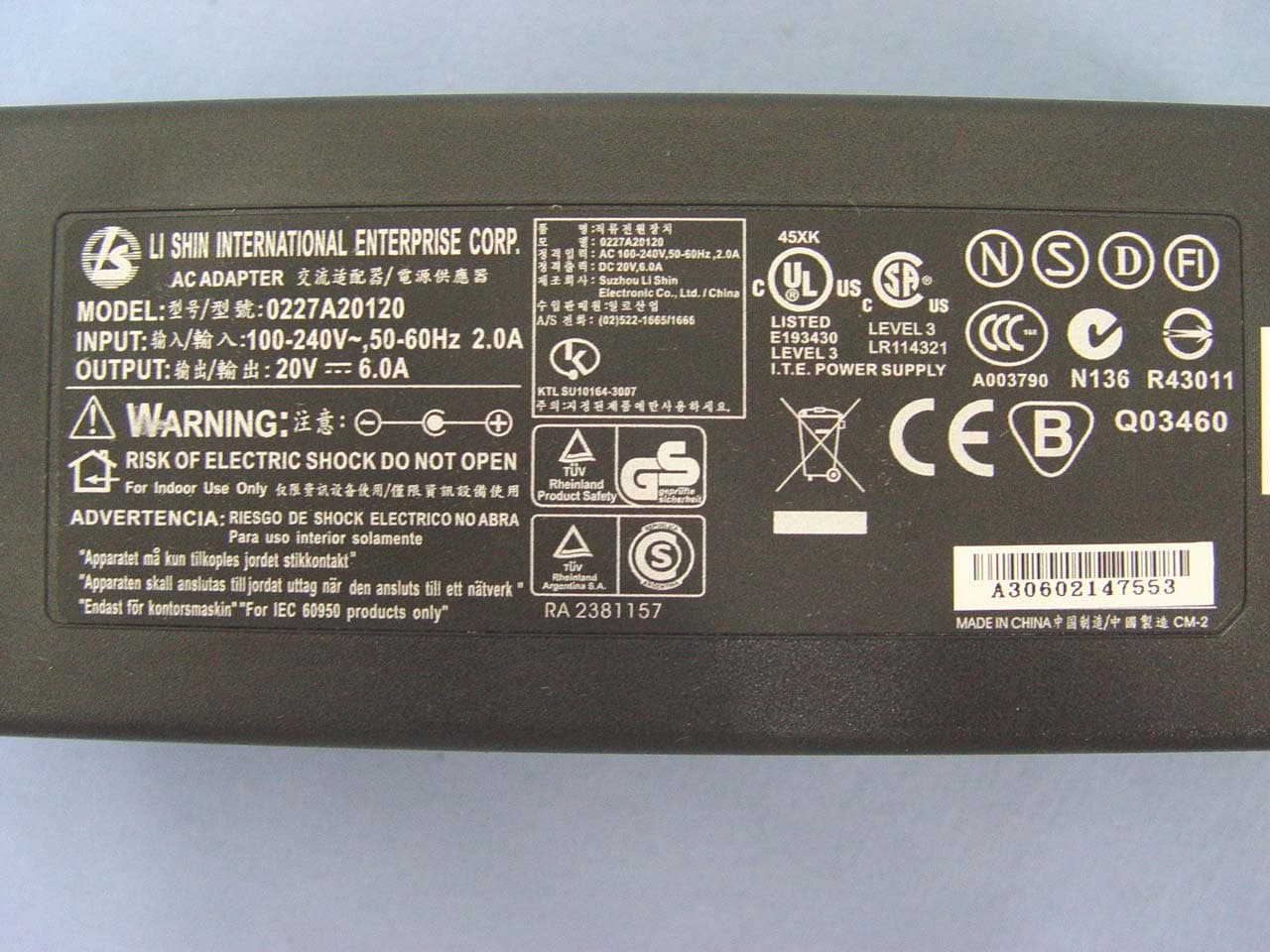
SAZ-3945ABGXPCIA
May 25, 2006Shuttle XPC (Wireless 802.11a+b+g)
Equipment Class
NII - Unlicensed National Information Infrastructure TX
SAZ-GUBTCRQ2426
May 10, 2006Notebook PC
Equipment Class
PCB - PCS Licensed Transmitter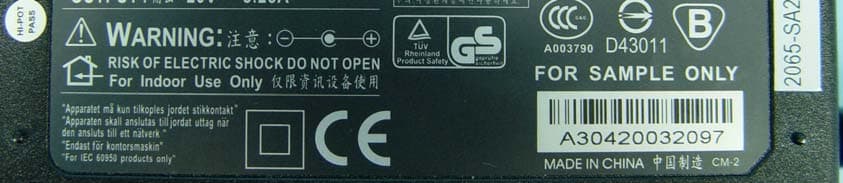
SAZ-2200BG255
Aug 22, 2004Notebook PC with Intel model WM3B2200BG WLAN card
Equipment Class
DTS - Digital Transmission System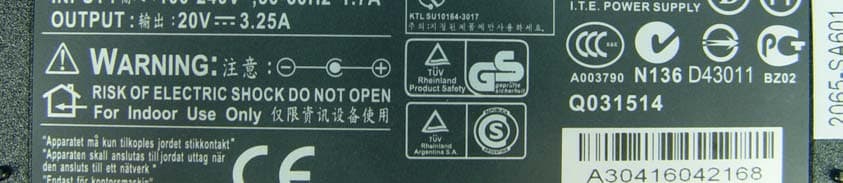
SAZ-2200BG223
Jul 15, 2004Notebook PC with Wireless LAN Mini-PCI Card
Equipment Class
DTS - Digital Transmission System