SBL-GT802Bluetooth Hands-Free Car Kit
Global Target Enterprise Inc.Application Details
- Equipment Class
- DSS - Part 15 Spread Spectrum Transmitter
- Date of Grant
- Aug 30, 2004
- Application Purpose
- Original Equipment
- Date of Application
- Aug 30, 2004
- Equipment Note
- Bluetooth Hands-Free Car Kit
- Frequency Range
- 2402.00000000 - 2480.00000000
- Country
- Taiwan
Documents & Files
Document Text
Text extracted from the exhibit documents filed with the FCC. Open a document above to read the original.
Users Manual
GTE-802 Bluetooth hands free car kit user’s operation briefing 2004/7/29 Product illustration Function illustration: Microphone tube: Microphone head: Fixing the angle of the car kit: Auto answering setting: The preparations before use Before you start to use GTE-802 Bluetooth hands free car kit, it is necessary to pair your Bluetooth enabled cell phone and car kit. Please check the settings of your Bluetooth cell phone with your service provider or cell phone user’s manual. Try to fit GTE-802 into the cigarette lighter and adjust the speaker direction with fixing screw. Turn the swivel microphone to proper direction. If you like, you can set auto answering in advance. This is the easier way to take a phone when you are driving. Power on and off When you insert GTE-802 car kit into cigarette lighter and turn on the ignition, it powers on automatically, blue LED and the back lights of buttons are light on. When the ignition is off, it is off automatically, blue LED and the back lights of buttons are off. You can just take out the car kit from cigarette light and it is power off. The functions are working only under power on mode. Pairing Please insert GTE-802 car kit into 12V cigarette lighter and turn on engine. If you are first time to use it, please prepare your cell phone at Bluetooth pairing mode. During pairing, it is recommended that the car kit and phone distance is as close as possible – with no solid objects in between. To proceed pairing the car kit to phone, please refer to the following steps: 1. Check the mobile phone user guide, turn on Bluetooth function and find out the locations of “Bluetooth device discovery”. 2. Press car kit Hang up button for 3 seconds and you will hear a ring tone. Release your finger. 3. Press again Hang up button for 3 seconds and you will hear a remind ring tone. Release your finger. 4. Press Hang up button for 3 seconds to enter the pairing mode. 5. Perform cell phone “Bluetooth device discovery” and wait few seconds to establish the connections. 6. The phone’s screen will display that it has found GTE-802 and ask you to confirm that you want to pair with it. Please confirm this. 7. Enter passkey 1234, when your phone menu prompts you, and the phone will start to pair the car kit. 8. Your phone screen will advise the pairing has been made successfully. 9. If the pairing fails, you can press car kit Hang up button for about 3 seconds to stop pairing mode. Then you may proceed above procedure again. Taking a call and end a call Before taking a call, it is necessary to set up auto answering or manual answering mode in advance. The default setting is auto answering mode when the car kit is out from the factory. Take a call If it is at auto answering mode, the call is accepted by car kit automatically after you hear about two ring tones from the car kit. If it is at manual answering mode, you can talk until Talk button is pressed once. End a call To press Hang up button once to end a call while you are talking. Or, the call is hung off when the other side hangs off the call. Making a Call There are two methods to make a call. Note: Make sure the car kit and the mobile phone are under link stage. Dial out from cell phone key buttons 1. Using the phone’s keypad, dial the phone number. 2. To send the call, press he phone’s SEND/CALL button – the phone initiates the call. 3. The call will be then transferred automatically to the car kit when the connection is made. Dial out by cell phone’s voice dial function 1. Voice dialing of your phone setting must be turned on and voice tags are stored. Please refer to your cell phone manual. 2. Press once the TALK button on the car kit under standby mode and you can hear the confirmation ring tone. 3. After this ring tone, then you can speak the voice tag as entered in the cell phone voice dial phone book. 4. The cell phone automatically dials out. NOTE: The cell phone must support voice dialing function. Volume adjustment You can press volume up key once to increase the volume or volume down key to decrease the volume. Mute During conversation, you can press volume up key or volume down key about 3 seconds, the car kit will enter mute mode. Press once either key again will cancel mute mode. Last number redial When the car kit is in standby condition (not in conversation), press and hold the Hang up button for about 3 sec. and your phone will redial the last number that you called. Note: This function only works on Bluetooth phones that support Handsfree profile; therefore you need to make sure that the phone and the car kit are linked with Handsfree profile. LED indication Meaning Pairing: fast flash 5 times every 1 second. Standby (w/pairing data):flash 1 time every 1 second. Mute: flash 2 times and stop for 1 second. Talking: flash 2 times every 1 second. Incoming call: flash 5 times and stop for 2 times. Standby without pairing: LED is off Compatible cell phone list: Motorola Nokia Panasonic Sony Ericsson Siemens A760 V600 V80 6310i 8910 8910i 3650 6600 N-gage 6230 7600 7610 X88 T39 T68i T610 T630 Z600 P800 P900 S700i SX1 CU928 PDA MOBILE PHONE FCC Statement This equipment complies with FCC radiation exposure limits set forth for an uncontrolled environment. End users must follow the specific operating instructions for satisfying RF exposure compliance. This transmitter must not be co-located or operating in conjunction with any other antenna or transmitter. Notice: Any changes or modification not expressly approved by the party responsible could void the user’s authority to operate the device.
Cover Letter(s)
Bluetooth Declaration Per FCC 15.247 Requirements 1 Output power and channel separation of a Bluetooth device in the different operating modes: The different operating modes (data-mode, acquisition-mode) of a Bluetooth device don’t influence the output power and the channel spacing. There is only one transmitter which is driven by identical input parameters concerning these two parameters. Only a different hopping sequence will be used. For this reason the check of these RF parameters in one op-mode is sufficient. 2 Frequency range of a Bluetooth device: Hereby we declare that the maximum frequency of this device is: 2402 – 2480 MHz. This is according the Bluetooth Core Specification V 1.0B (+ critical errata) for devices which will be operated in the USA. This was checked during the Bluetooth Qualification tests (Test Case: TRM/CA/04-E). Other frequency ranges ( e.g. for Spain, France, Japan) which are allowed according the Core Specification are not supported by this device. 3 Co-ordination of the hopping sequence in data mode to avoid simultaneous occupancy by multiple transmitters: Bluetooth units which want to communicate with other units must be organized in a structure called piconet. This piconet consist of max. 8 Bluetooth units. One unit is the master the other seven are the slaves. The master co-ordinates frequency occupation in this piconet for all units. As the master hop sequence is derived from it’s BD address which is unique for every Bluetooth device, additional masters intending to establish new piconets will always use different hop sequences. 4 Example of a hopping sequence in data mode: Example of a 79 hopping sequence in data mode: 40, 21, 44, 23, 42, 53, 46, 55, 48, 33, 52, 35, 50, 65, 54, 67, 56, 37, 60, 39, 58, 69, 62, 71, 64, 25, 68, 27, 66, 57, 70, 59, 72, 29, 76, 31, 74, 61, 78, 63, 01, 41, 05, 43, 03, 73, 07, 75, 09, 45, 13, 47, 11, 77, 15, 00, 64, 49, 66, 53, 68, 02, 70, 06, 01, 51, 03, 55, 05, 04 5 Equally average use of frequencies in data mode and behaviour for short transmissions: The generation of the hopping sequence in connection mode depends essentially on two input values: 1. LAP/UAP of the master of the connection 2. Internal master clock The LAP (lower address part) are the 24 LSB’s of the 48 BD_ADDRESS. The BD_ADDRESS is an unambiguous number of every Bluetooth unit. The UAP (upper address part) are the 24 MSB’s of the 48 BD_ADDRESS. The internal clock of a Bluetooth unit is derived from a free running clock which is never adjusted and is never turned off. For synchronisation with other units only offset are used. It has no relation to the time of the day. Its resolution is at least half the RX/TX slot length of 312.5 μs. The clock has a cycle of about one day (23h30). In most case it is implemented as 28 bit counter. For the deriving of the hopping sequence the entire LAP (24 bits), 4 LSB’s (4 bits) (Input 1) and the 27 MSB’s of the clock (Input 2) are used. With this input values different mathematical procedures (permutations, additions, XOR-operations) are performed to generate the sequence. This will be done at the beginning of every new transmission. Regarding short transmissions the Bluetooth system has the following behaviors: The first connection between the two devices is established, a hopping sequence was generated. For transmitting the wanted data the complete hopping sequence was not used. The connection ended. The second connection will be established. A new hopping sequence is generated. Due to the fact that the Bluetooth clock has a different value, because the period between the two transmission is longer (and it cannot be shorter) than the minimum resolution of the clock (312.5 μs). The hopping sequence will always differ from the first one. 6 Receiver input bandwidth and behaviors for repeated single or multiple packets: The input bandwidth of the receiver is 1 MHz. In every connection one Bluetooth device is the master and the other one is the slave. The master determines the hopping sequence (see chapter 5). The slave follows this sequence. Both devices shift between RX and TX time slot according to the clock of the master. Additionally the type of connection (e.g. single or multislot packet) is set up at the beginning of the connection. The master adapts its hopping frequency and its TX/RX timing according to the packet type of the connection. Also the slave of the connection will use these settings. Repeating of a packet has no influence on the hopping sequence. The hopping sequence generated by the master of the connection will be followed in any case. That means, a repeated packet will not be send on the same frequency, it is send on the next frequency of the hopping sequence. 7 Dwell time in data mode The dwell time of 0.3797s within a 30 second period in data mode is independent from the packet type (packet length). The calculation for a 30 second period is a follows: Dwell time = time slot length * hop rate / number of hopping channels *30s Example for a DH1 packet (with a maximum length of one time slot) Dwell time = 625 μs * 1600 1/s / 79 * 30s = 0.3797s (in a 30s period) For multislot packet the hopping is reduced according to the length of the packet. Example for a DH5 packet (with a maximum length of five time slots) Dwell time = 5 * 625 μs * 1600 * 1/5 *1/s / 79 * 30s = 0.3797s (in a 30s period) This is according the Bluetooth Core Specification V 1.0B (+ critical errata) for all Bluetooth devices. There for all Bluetooth devices comply with the FCC dwell time requirement in data mode. This was checked during the Bluetooth Qualification tests. The Dwell time in hybrid mode is measured and stated in the test report. 8 Channel Separation in hybrid mode The nominal channel spacing of the Bluetooth system is 1Mhz independent of the operating mode. The maximum “initial carrier frequency tolerance” which is allowed for Bluetooth is fcenter = 75 kHz. This was checked during the Bluetooth Qualification tests (Test Case:…
Text truncated - open the document above for the full version.
Cover Letter(s)
Chris Harvey From: [email protected] Sent: Tuesday, August 31, 2004 4:26 AM To: Chris Harvey; [email protected] Cc: [email protected]; [email protected]; [email protected] Subject: RE: Global Target Enterprise Inc. / FCC ID: SBL-GT802 Page 1 of 2 8/31/2004 Chris, Thank you for your comment on this project. We've asked our customer to modify the documentation. Please see attached "Rev. User Manual" and "Schematic". Should there be any mistake or problem, please let me know. Sincerely, Elisa Chen --- Elisa Chen E&E Lab. of SGS Taiwan Ltd. E-Mail: [email protected] TEL: +886 2 2299 3279 ext. 1161 FAX: +886 2 2298 2698 No. 134, Wu Kung Road, Wuku Industrial Zone, Taipei County, Taiwan Elisa, I have reviewed the documentation submitted for the TCB Certification of this Bluetooth Hands¡XFree Car Kit and have the following issues that need to be addressed: 1) There is no FCC information in the manual, so they need 15.21 as well as no-collocation statement. An example of acceptable wording is as follows: This equipment complies with FCC radiation exposure limits set forth for an uncontrolled environment. End users must follow the specific operating instructions for satisfying RF exposure compliance. This transmitter must not be co-located or operating in conjunction with any other antenna or transmitter. Notice: Any changes or modification not expressly approved by the party responsible could void the user¡¦s authority to operate the device. 2) The schematic diagram is not legible. Please re-submit a higher resolution exhibit so the text can be read. Please submit the information directly to me and copy Marianne. Chris Harvey <[email protected]> 2004/08/30 08:33 PM To: [email protected], 'TCB INFO' <[email protected]>, 'Marianne Bosley' <[email protected]>, 'Rob Frier' <[email protected]>, 'Shari Meyers' <[email protected]> cc: [email protected], [email protected], [email protected] Subject: RE: Global Target Enterprise Inc. / FCC ID: SBL-GT802 Best regards, Chris Harvey -----Original Message----- From: [email protected] [mailto:[email protected]] Sent: Monday, August 30, 2004 3:42 AM To: TCB INFO; Marianne Bosley; Rob Frier; '[email protected] '; Shari Meyers Cc: '[email protected] '; '[email protected] '; '[email protected] ' Subject: Global Target Enterprise Inc. / FCC ID: SBL-GT802 Marianne, There is a new project Global Target Enterprise Inc. / FCC ID: SBL-GT802 needs to apply FCC ID Grants . I now submitting the FCC ID materials as follows: Please check the documentation of SBL-GT802 which includes: User Manual Confidential Letter Operation Description Block Diagram Schematic Test Report FCC ID Label Setup photos External photos Internal photos Application Form Agent Authorization Letter Purchase Order TCB Service Agreement Should there be any mistake or problem, please feel free to contact me. Thank you for your favorable considerations upon this matter. Sincerely, Elisa Chen --- Elisa Chen E&E Lab. of SGS Taiwan Ltd. E-Mail: [email protected] TEL: +886 2 2299 3279 ext. 1161 FAX: +886 2 2298 2698 No. 134, Wu Kung Road, Wuku Industrial Zone, Taipei County, Taiwan Page 2 of 2 8/31/2004
External Photos
REPORT NO: EF/2004/80004 ID: SBL-GT802 DATE: Aug 30, 2004 The results shown in this test report refer only to the sample(s) tested unless otherwise stated. This test report cannot be reproduced, except in full, without prior written permission of the Company. SGS Taiwan Ltd. No. 134, Wu Kung Rd., Wuku Industrial Zone, Taipei Country, Taiwan. / 134 t (886-2) 2299-3939 f (886-2) 2298-2698 www.sgs.com.tw ILAC MRA APPENDIX 2 EXTERNAL OF EUT REPORT NO: EF/2004/80004 ID: SBL-GT802 DATE: Aug 30, 2004 The results shown in this test report refer only to the sample(s) tested unless otherwise stated. This test report cannot be reproduced, except in full, without prior written permission of the Company. SGS Taiwan Ltd. No. 134, Wu Kung Rd., Wuku Industrial Zone, Taipei Country, Taiwan. / 134 t (886-2) 2299-3939 f (886-2) 2298-2698 www.sgs.com.tw ILAC MRA Front View of EUT Back View of EUT REPORT NO: EF/2004/80004 ID: SBL-GT802 DATE: Aug 30, 2004 The results shown in this test report refer only to the sample(s) tested unless otherwise stated. This test report cannot be reproduced, except in full, without prior written permission of the Company. SGS Taiwan Ltd. No. 134, Wu Kung Rd., Wuku Industrial Zone, Taipei Country, Taiwan. / 134 t (886-2) 2299-3939 f (886-2) 2298-2698 www.sgs.com.tw ILAC MRA Right Side of EUT Left Side of EUT
ID Label/Location Info
FCC ID LABEL FORMAT AND LOCATION Applicant: Global Target Enterprise Inc. FCC ID: SBL-GT802 FCC ID: SBL-GT802 This device complies with part 15 of the FCC Rules. Operation is subject to the following two conditions: (1) This device may not cause harmful interference, and (2) this device must accept any interference received, including interference that may cause undesired operation. FCC ID LABEL AREA
Internal Photos
REPORT NO: EF/2004/80004 ID: SBL-GT802 DATE: Aug. 30, 2004 The results shown in this test report refer only to the sample(s) tested unless otherwise stated. This test report cannot be reproduced, except in full, without prior written permission of the Company. SGS Taiwan Ltd. No. 134, Wu Kung Rd., Wuku Industrial Zone, Taipei Country, Taiwan. / 134 t (886-2) 2299-3939 f (886-2) 2298-2698 www.sgs.com.tw ILAC MRA APPENDIX 3 INTERNAL OF EUT REPORT NO: EF/2004/80004 ID: SBL-GT802 DATE: Aug. 30, 2004 The results shown in this test report refer only to the sample(s) tested unless otherwise stated. This test report cannot be reproduced, except in full, without prior written permission of the Company. SGS Taiwan Ltd. No. 134, Wu Kung Rd., Wuku Industrial Zone, Taipei Country, Taiwan. / 134 t (886-2) 2299-3939 f (886-2) 2298-2698 www.sgs.com.tw ILAC MRA Open View of EUT Internal of EUT REPORT NO: EF/2004/80004 ID: SBL-GT802 DATE: Aug. 30, 2004 The results shown in this test report refer only to the sample(s) tested unless otherwise stated. This test report cannot be reproduced, except in full, without prior written permission of the Company. SGS Taiwan Ltd. No. 134, Wu Kung Rd., Wuku Industrial Zone, Taipei Country, Taiwan. / 134 t (886-2) 2299-3939 f (886-2) 2298-2698 www.sgs.com.tw ILAC MRA Internal of EUT
Test Report
REPORT NO: EF/2004/80004 ID: SBL-GT802 DATE: Aug. 30, 2004 Page: 1 of 52 The results shown in this test report refer only to the sample(s) tested unless otherwise stated. This test report cannot be reproduced, except in full, without prior written permission of the Company. SGS Taiwan Ltd. No. 134, Wu Kung Rd., Wuku Industrial Zone, Taipei Country, Taiwan. / 134 t (886-2) 2299-3939 f (886-2) 2298-2698 www.sgs.com.tw ILAC MRA ELECTROMAGNETIC EMISSIONS COMPLIANCE REPORT INTENTIONAL RADIATOR CERTIFICATION TO FCC PART 15 SUBPART C REQUIREMENT OF Product Name: Bluetooth hands free car kit Brand Name: GTE Model Name: GTE-802 FCC ID: SBL-GT802 Report No.: EF/2004/80004 Issue Date: Aug. 30, 2004 FCC Rule Part: 15.247 Prepared for: Global Target Enterprise Inc. 5F, No. 186, Sec. 2, Chung-Hsing Rd., Hsin Tien, Taipei Taiwan, ROC Prepared by: SGS Taiwan Ltd. No. 134, Wu Kung Rd., Wuku Industrial Zone, Taipei County, Taiwan. Note: This report shall not be reproduced except in full, without the written approval of SGS Taiwan Ltd. This document may be altered or revised by SGS Taiwan Ltd. personnel only, and shall be noted in the revision section of the document. REPORT NO: EF/2004/80004 ID: SBL-GT802 DATE: Aug. 30, 2004 Page: 2 The results shown in this test report refer only to the sample(s) tested unless otherwise stated. This test report cannot be reproduced, except in full, without prior written permission of the Company. SGS Taiwan Ltd. No. 134, Wu Kung Rd., Wuku Industrial Zone, Taipei Country, Taiwan. / 134 t (886-2) 2299-3939 f (886-2) 2298-2698 www.sgs.com.tw ILAC MRA VERIFICATION OF COMPLIANCE Applicant: Global Target Enterprise Inc. 5F, No. 186, Sec. 2, Chung-Hsing Rd., Hsin Tien, Taipei Taiwan, ROC Equipment Under Test: Bluetooth hands free car kit Brand Name: GTE FCC ID Number: SBL-GT802 Model No.: GTE-802 Model Difference: N/A File Number: EF/2004/80004 Date of test: Aug. 15, 2004 ~ Aug. 27, 2004 Date of EUT Received: Aug. 12, 2004 We hereby certify that: The above equipment was tested by SGS Taiwan Ltd. The test data, data evaluation, test proce- dures, and equipment configurations shown in this report were made in accordance with the procedures given in ANSI C63.4 (2001) and the energy emitted by the sample EUT tested as described in this report is in compliance with conducted and radiated emission limits of FCC Rules Part 15.247 The test results of this report relate only to the tested sample identified in this report. Test By: Date Aug. 30, 2004 Sky Wang Approved By Date Aug. 30, 2004 Vincent Su REPORT NO: EF/2004/80004 ID: SBL-GT802 DATE: Aug. 30, 2004 Page: 3 The results shown in this test report refer only to the sample(s) tested unless otherwise stated. This test report cannot be reproduced, except in full, without prior written permission of the Company. SGS Taiwan Ltd. No. 134, Wu Kung Rd., Wuku Industrial Zone, Taipei Country, Taiwan. / 134 t (886-2) 2299-3939 f (886-2) 2298-2698 www.sgs.com.tw ILAC MRA Table of Contents 1. GENERAL INFORMATION .........................................................................................................6 1.1. Product Description ............................................................................................................................6 1.2. Related Submittal(s) / Grant (s) ..........................................................................................................6 1.3. Test Methodology ...............................................................................................................................6 1.4. Test Facility.........................................................................................................................................6 1.5. Special Accessories .............................................................................................................................6 1.6. Equipment Modifications....................................................................................................................6 2. SYSTEM TEST CONFIGURATION ............................................................................................7 2.1. EUT Configuration .............................................................................................................................7 2.2. EUT Exercise ......................................................................................................................................7 2.3. Test Procedure.....................................................................................................................................7 2.4. Configuration of Tested System..........................................................................................................8 3. SUMMARY OF TEST RESULTS .................................................................................................9 4. DESCRIPTION OF TEST MODES ..............................................................................................9 5. CONDUCTED EMISSION TEST................................................................................................10 5.1. Standard Applicable ..........................................................................................................................10 5.2. EUT Setup.........................................................................................................................................10 5.3. Measurement Procedure....................................................................................................................10 5.4. Measurement Equipment Used: ........................................................................................................11 5.5. Measurement Result..........................................................................................................................11 6. PEAK OUTPUT POWER MEASUREMENT............................................................................12 6.1. Standard Applicable .......…
Text truncated - open the document above for the full version.
Test Setup Photos
REPORT NO: EF/2004/80004 ID: SBL-GT802 DATE: Aug. 30, 2004 The results shown in this test report refer only to the sample(s) tested unless otherwise stated. This test report cannot be reproduced, except in full, without prior written permission of the Company. SGS Taiwan Ltd. No. 134, Wu Kung Rd., Wuku Industrial Zone, Taipei Country, Taiwan. / 134 t (886-2) 2299-3939 f (886-2) 2298-2698 www.sgs.com.tw ILAC MRA APPENDIX 1 PHOTOGRPHS OF SET UP REPORT NO: EF/2004/80004 ID: SBL-GT802 DATE: Aug. 30, 2004 The results shown in this test report refer only to the sample(s) tested unless otherwise stated. This test report cannot be reproduced, except in full, without prior written permission of the Company. SGS Taiwan Ltd. No. 134, Wu Kung Rd., Wuku Industrial Zone, Taipei Country, Taiwan. / 134 t (886-2) 2299-3939 f (886-2) 2298-2698 www.sgs.com.tw ILAC MRA Radiated Emission Set up Photo
Contact Information
Applicant
Tiffany Wu
Test Firm
SGS Taiwan Ltd.Wyse Chiu
Technical Specifications
| # | Rule Parts | Frequency Range | Power Output |
|---|---|---|---|
| 1 | 15C | 2.40 GHz - 2.48 GHz | 1.39 mW |
Other Applications from Global Target Enterprise Inc.
SBL-ST608
May 10, 2007Bluetooth Stereo Pendant
Equipment Class
DSS - Part 15 Spread Spectrum Transmitter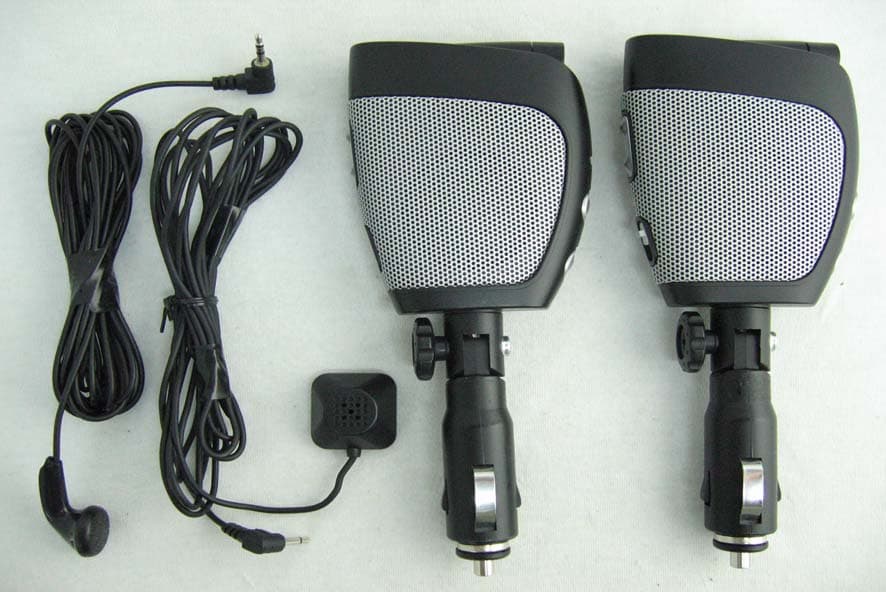
SBL-802DM
Aug 07, 2006Bluetooth Car Kit
Equipment Class
DSS - Part 15 Spread Spectrum Transmitter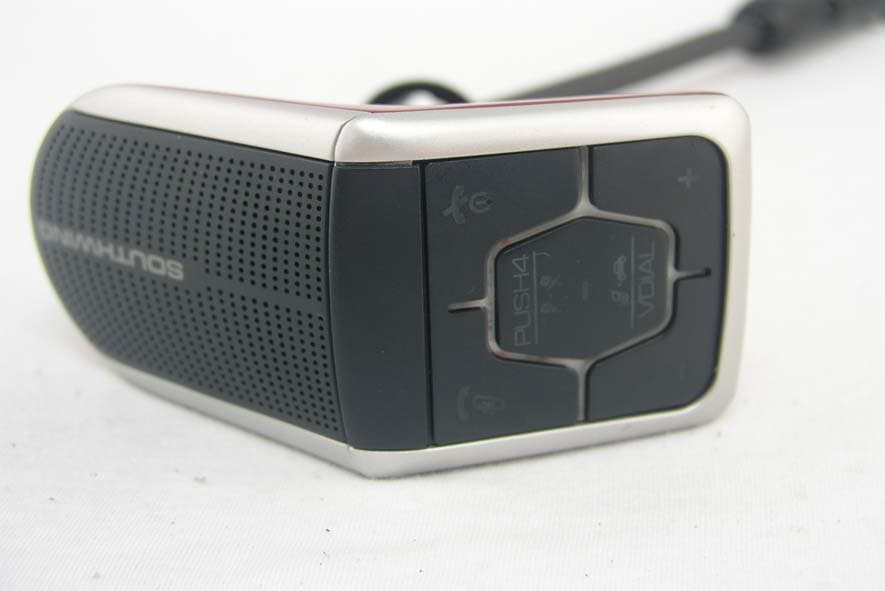
SBL-310
May 16, 2006Bluetooth Hands Free Car kit
Equipment Class
DSS - Part 15 Spread Spectrum Transmitter
SBL-CK811
Nov 28, 2005Bluetooth stereo portable speaker w. hands free
Equipment Class
DSS - Part 15 Spread Spectrum Transmitter
SBL-ST701
Nov 08, 2005Stereo Dongle with Bluetooth
Equipment Class
DSS - Part 15 Spread Spectrum Transmitter