TDA-FMT200Wireless headset for two-way radios
Radeum, Inc. (DBA FreeLinc)
Click to zoom
Application Details
- Equipment Class
- DXT - Part 15 Low Power Transceiver, Rx Verified
- Date of Grant
- Oct 13, 2005
- Application Purpose
- Original Equipment
- Date of Application
- Oct 13, 2005
- Equipment Note
- Wireless headset for two-way radios
- Frequency Range
- 13.56000000 - 13.95900000
- Company
- Radeum, Inc. (DBA FreeLinc)
- Country
- United States
Documents & Files
Document Text
Text extracted from the exhibit documents filed with the FCC. Open a document above to read the original.
Users Manual
FreeLinc™ FreeMotion™ 200 Headset User Guide ™ Warranty I. What this warranty covers and for how long: a. Radeum, Inc., doing business as FreeLinc (“FreeLinc”), war- rants to Purchaser that its FreeLinc manufactured products (“Product”) will substantially conform to FreeLinc’s published specifications, as of the date of the Purchaser’s purchase of the Product, and for one (1) year from the date of purchase (the “Warranty Period”). b. Rechargeable batteries will be replaced during the warranty period if the battery develops leakage. c. FreeLinc, at its option, will at no charge either repair, replace, or refund the purchase price for warranted Product during the warranty period provided it is returned in accordance with the terms of this warranty to the place of purchase. Repair, at FreeLinc’s option, may include the replacement of parts or boards with functionally equivalent reconditioned or new parts or boards. Replaced parts or boards are war- ranted only for the balance of the original Warranty Period. All replaced parts or Product shall become the property of FreeLinc. d. This express limited warranty is extended by FreeLinc to the original end user purchaser only and is not assignable or transferable to any other party. This is the complete warranty for Product manufactured by FreeLinc. FreeLinc assumes no obligations or liability for additions or modifications to this warranty unless made in writing and signed by an officer of FreeLinc. Unless made in a separate written agreement be- tween FreeLinc and the original end user purchaser, FreeLinc does not warrant the installation, maintenance or service of warranted Product. e. FreeLinc is not responsible in any way for any ancillary equip- ment not furnished by FreeLinc which is attached to or used in connection with Product, or for operation of the Product with any ancillary equipment and all such equipment is expressly excluded from this warranty. Because each system which may use the Product is unique, FreeLinc disclaims liability for range, coverage, or operation of the system as a whole under this warranty. II. What this warranty does not cover: a. Defects or damage resulting from use of the Product in other than its normal and customary manner. b. Defects or damage from misuse, accident, water or neglect. c. Defects or damage from improper testing, operation, mainte- nance, installation, alteration, modification, or adjustment. d. A Product subjected to unauthorized Product modifications, disassemblies, or repairs. e. Product which has had the serial number removed or made illegible. f. Rechargeable batteries if the damage or defect is caused by charging or using the battery in equipment or service other than the Product for which it is specified. g. Freight costs related to Product returned for warranty claims. h. A product which, due to illegal or unauthorized alteration of the software/firmware in the Product, does not function in accordance with FreeLinc’s published specifications or the FCC type acceptance labeling in effect for the Product at the time the Product was purchased. III. How to get warranty service: a. Purchaser shall notify FreeLinc of any nonconformance Warranty and FCC Compliance during the warranty period, and obtain a written return material authorization (“RMA”) and an RMA number for the nonconforming Product from FreeLinc. b. Purchaser shall return the nonconforming Product to the place of purchase freight prepaid. IV. Limitation of Liability: a. This warranty sets forth the full extent of FreeLinc’s responsi - bilities regarding the Product. Repair, replacement, or refund of the purchase price, at FreeLinc’s option, is the exclusive remedy. b. THE FOREGOING WARRANTIES ARE THE SOLE WARRANTIES, EXPRESS OR IMPLIED, GIVEN BY FREELINC IN CONNECTION WITH THE PRODUCT, AND FREELINC DISCLAIMS ALL OTHER WARRANTIES EXPRESS OR IMPLIED, INCLUDING WARRANTIES OF MERCHANTIBILITY, FITNESS FOR A PARTICULAR PURPOSE, AND NONINFRINGEMENT OF THIRD-PARTY RIGHTS. c. FREELINC SHALL NOT BE LIABLE FOR ANY SPECIAL, INCIDEN - TAL, OR CONSEQUENTIAL DAMAGES IN CONNECTION WITH THE PRODUCT, EVEN IF FREELINC HAS BEEN ADVISED OF THE POSSIBILITY OF SUCH DAMAGES. d. EXCEPT FOR CLAIMS FOR BODILY INJURY (including death) AND CLAIMS FOR DAMAGE TO REAL PROPERTY AND TANGIBLE PERSONAL PROPERTY, FREELINC’S LIABILITY FOR ALL OTHER CLAIMS SHALL NOT EXCEED THE AMOUNT PAID TO FREELINC FOR THE PRODUCT GIVING RISE TO FREELINC’S LIABILITY. THIS LIMIT OF LIABILITY ALSO APPLIES TO OUR MANUFACTURERS AND DISTRIBUTORS. IT IS THE MAXIMUM AMOUNT FOR WHICH WE ARE COLLECTIVELY RESPONSIBLE. FCC Compliance This equipment has been tested and found to comply with the limits for a class B digital device, pursuant to Part 15 of the FCC rules. These limits are designed to provide reasonable protection against harmful interference in a residential installation. This equip - ment generates, uses and can radiate radio frequency energy and, if not installed and used in accordance with the manufacturer’s instructions, may cause inter - ference harmful to radio communications. There is no guarantee however, that interference will not occur in a particular installation. If this equipment does cause harmful interference to radio or television reception, which can be determined by comparing the equipment off and on, the user is encouraged to try to correct the interference by one or more of the following measures: • Reorient or relocate the receiving antenna. • Increase the separation between the equipment and receiver. • Connect the equipment into an outlet on a circuit different from that to which the receiver is con- nected. • Consult your supplier or an experienced radio/TV technician for assistance. Warning: Changes or modifications to this unit not expressly approved by the party responsible for compliance could void the user’s authority to operate this equipment. WARRANTY & FCC COMPLIANCE 3 Caution: To reduce the risk of fire or injury to persons, read and follow these …
Text truncated - open the document above for the full version.
Users Manual
From: John Lair [[email protected]] Sent: Tuesday, October 11, 2005 6:11 PM To: Roland Gubisch ES-Box; Terre Wolak ES-Atl Cc: 'Tony Sutera '; 'Doug Dobyns' Subject: RE: TCB Review of FreeLinc FCC ID: TDA-FA1 and TDA-FMT200 Roland & Terre, Attached please find the artwork for the sticker that we will adhere to the bottom left corner of the outside front cover of the current user manual. Please let me know if this solves the problem. Thank you, John Lair -----Original Message----- From: Roland Gubisch ES-Box [mailto:[email protected]] Sent: Monday, October 10, 2005 8:59 AM To: John Lair; Terre Wolak ES-Atl Subject: RE: TCB Review of FreeLinc FCC ID: TDA-FA1 and TDA-FMT200 John, 15.19(a)(5) allows devices which are too small for the full text to be included on the device label, to place the required text either in the user manual or on the device package. A sticker could be used either for adding the text in the manual, or onto the package. The rule is not specific as to the outside of the packaging or inside of the lid, so either location would be acceptable. In any case you will need to specify which location will be used, either by description or illustration. Regards, Roland
Cover Letter(s)
1(1) Attention: Application Examiner Reviewing Engineer Re: Request for confidentiality Applicant: Radeum, Inc. FCC ID: TDA-FMT200 under project number 3079725 To whom it may concern, Request is hereby submitted by Radeum, Inc. (DBA FreeLinc) to withhold permanently from public review certain portions of the application for equipment certification for the referenced FCC identifiers. This request for confidentiality is made pursuant to 47 CFR 0.457(d) and 0.459 of the FCC Rules. In particular, the following sections of the application are to be kept permanently confidential: • Schematics • Detailed Block diagrams • Detailed Operational/Functional Description Rationale for request for confidentiality: Radeum, Inc. has invested considerable time and materials in research and development to produce the referenced product. Disclosure of the permanently confidential portions of this application to competitors would not only give them significant competitive advantages in developing similar products, but would also disclose successful implementation of unpublished, leading edge technology developed by us. The fee for confidentiality has been submitted along with the fee for certification. If you have questions or need further information, please contact the undersigned. Sincerely, John Lair President Radeum, Inc. (DBA FreeLinc)
Cover Letter(s)
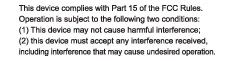
-----Original Message----- From: John Lair [mailto:[email protected]] Sent: Wednesday, October 12, 2005 11:48 AM To: Roland Gubisch ES-Box; Terre Wolak ES-Atl Cc: 'Tony Sutera '; 'Doug Dobyns' Subject: RE: TCB Review of FreeLinc FCC ID: TDA-FA1 and TDA-FMT200 Roland, Attached are forms 731; please let me know right away if you can or cannot open them. Also attached are revised confidentiality requests. Please let me know right away if they are acceptable. If there are any other issues, please let me know right away. Thank you, John -----Original Message----- From: Roland Gubisch ES-Box [mailto:[email protected]] Sent: Wednesday, October 12, 2005 8:34 AM To: John Lair; Terre Wolak ES-Atl Cc: Tony Sutera ; Doug Dobyns Subject: RE: TCB Review of FreeLinc FCC ID: TDA-FA1 and TDA-FMT200 John, Here are the remaining issues to be addressed: A. I cannot open the updated Form 731 you submitted in PDF format. Please re-send. Without being able to read the Form 731, I can't tell if you answered the prior open question: ****************************** ADMINISTRATIVE (2) The frequency range of operation is not specified in the Form 731 for either device. The frequency should be entered either as the center of the band for single-band operation, or the centers of the highest and lowest bands for multi-band operation. ***************************** B. The updated Confidentiality request asks for the internal photos to be held confidential. This is not normally allowed, on the basis that anyone can purchase the product and look at the inside. You should consider deleting this item from the Confidentiality request, or provide additional justification in the letter, such as: the device is potted, and would be damaged or destroyed by user entry. Regards, Roland -----Original Message----- From: John Lair [mailto:[email protected]] Sent: Wednesday, October 12, 2005 10:14 AM To: Roland Gubisch ES-Box; Terre Wolak ES-Atl Cc: 'Tony Sutera '; 'Doug Dobyns' Subject: RE: TCB Review of FreeLinc FCC ID: TDA-FA1 and TDA-FMT200 Roland, Excellent. Am I correct then to assume that we are all set to receive our FCC Grant of Authorization? If not, please let me know what to expect from here. Thanks, John -----Original Message----- From: Roland Gubisch ES-Box [mailto:[email protected]] Sent: Wednesday, October 12, 2005 7:48 AM To: John Lair; Terre Wolak ES-Atl Cc: Tony Sutera ; Doug Dobyns Subject: RE: TCB Review of FreeLinc FCC ID: TDA-FA1 and TDA-FMT200 John, The label, with your description of its location, is acceptable for meeting the labeling requirements of FCC Part 15. Regards, Roland -----Original Message----- From: John Lair [mailto:[email protected]] Sent: Tuesday, October 11, 2005 6:11 PM To: Roland Gubisch ES-Box; Terre Wolak ES-Atl Cc: 'Tony Sutera '; 'Doug Dobyns' Subject: RE: TCB Review of FreeLinc FCC ID: TDA-FA1 and TDA-FMT200 Roland & Terre, Attached please find the artwork for the sticker that we will adhere to the bottom left corner of the outside front cover of the current user manual. Please let me know if this solves the problem. Thank you, John Lair -----Original Message----- From: Roland Gubisch ES-Box [mailto:[email protected]] Sent: Monday, October 10, 2005 8:59 AM To: John Lair; Terre Wolak ES-Atl Subject: RE: TCB Review of FreeLinc FCC ID: TDA-FA1 and TDA-FMT200 John, 15.19(a)(5) allows devices which are too small for the full text to be included on the device label, to place the required text either in the user manual or on the device package. A sticker could be used either for adding the text in the manual, or onto the package. The rule is not specific as to the outside of the packaging or inside of the lid, so either location would be acceptable. In any case you will need to specify which location will be used, either by description or illustration. Regards, Roland -----Original Message----- From: John Lair [mailto:[email protected]] Sent: Saturday, October 08, 2005 3:59 PM To: Roland Gubisch ES-Box; Terre Wolak ES-Atl Subject: RE: TCB Review of FreeLinc FCC ID: TDA-FA1 and TDA-FMT200 Roland, What about a sticker? If that's acceptable, would it need to go on the outside of the packaging, or on the inside of the package lid? Thanks, John -----Original Message----- From: Roland Gubisch ES-Box [mailto:[email protected]] Sent: Saturday, October 08, 2005 1:54 PM To: Terre Wolak ES-Atl; John Lair Subject: RE: TCB Review of FreeLinc FCC ID: TDA-FA1 and TDA-FMT200 Terre, A user manual insert is acceptable. We will need a copy of the insert or its text. Roland -----Original Message----- From: John Lair [mailto:[email protected]] Sent: Tuesday, October 04, 2005 3:00 PM To: Terre Wolak ES-Atl Subject: RE: TCB Review of FreeLinc FCC ID: TDA-FA1 and TDA-FMT200 We've already printed mass quantities of these manuals. Is it acceptable to include an insert? Thanks, John -----Original Message----- From: Terre Wolak ES-Atl [mailto:[email protected]] Sent: Tuesday, October 04, 2005 12:52 PM To: John Lair Cc: Roland Gubisch ES-Box; Nicholas Abbondante ES-Box Subject: RE: TCB Review of FreeLinc FCC ID: TDA-FA1 and TDA-FMT200 John, Thank you for the 731 forms and confidentiality request letters received today. On another note, Roland's final review of the FCC labels and User manuals indicate that neither of them carries the label text required in 15.19(a)(3): "This device complies with part 15 of the FCC Rules. Operation is subject to the following two conditions: (1) This device may not cause harmful interference, and (2) this device must accept any interference received, including interference that may cause undesired operation." When the device is smaller than the palm of a normal hand (as it is in these cases), it is permissible to delete the text from the FCC ID label and place it in the User manual. Similar text is now present in the User manuals, but it is not identical to the text above. Please resolve this issue as soon as possible. Regards, Terre -----Or…
Text truncated - open the document above for the full version.
External Photos
Request for new FCC Certification for FCC ID: TDA-FMT200 under project number 3079725 Exhibit 7b: Housing Photographs: Section 1: Housing Exterior, Assembled Section 2: Housing Interior, Unassembled Section 3: Housing Assembly
ID Label/Location Info
Request for new FCC Certification for FCC ID: TDA-FMT200 under project number 3079725 Exhibit 7c: FCC ID Label Photographs:
Internal Photos
Request for new FCC Certification for FCC ID: TDA-FMT200 under project number 3079725 Exhibit 7a: Electronics Photographs:
Test Report
EMI Report for Radeum on Model: Freelinc Wireless Headset System Report Number 3079725.EMI Page 2 of 21 1.0 Job Description 1.1 Client Information This EUT has been tested at the request of Company: Radeum 2144 S. Highland Drive Suite #160 Salt Lake City, UT, 84106 Contact: John Lair Telephone: Fax: 801-467-1199 801-467-6099 1.2 Equipment Under Test Equipment Type: Wireless Headset System Model Number(s): Freelinc Wireless Headset System Serial number(s): BOX0507271156-(001, 003, 005, 007) (ITS assigned) -001 and –005 are Headsets, –003 and –007 are Relays Manufacturer: Radeum EUT receive date: 07/27/2005 EUT received condition: Good Test start date: 07/28/2005 Test end date: 08/12/2005 1.3 Test Plan Reference: Tested according to the standards listed and ANSI C63.4-2003. 1.4 Test Configuration 1.4.1 Block Diagram The EUT set must be in the proximity of another EUT set in order to trigger transmission at 13.956 MHz in addition to the normal 13.56 MHz transmission. The Headset and Relay must be ~1.1 meters apart maximum, and the two systems must be ~0.5 meters apart. Headset Turntable Headset Relay Relay EMI Report for Radeum on Model: Freelinc Wireless Headset System Report Number 3079725.EMI Page 3 of 21 1.4.2 Cable List: Cable Shielding Connector Length (m) Qty. None 1.4.3 Support Equipment: Name: Model No.: Serial No.: None 1.5 Mode of Operation: The EUT was activated from a fresh, charged battery in transmit mode. The EUT software disables transmission while in charge mode, so this mode was not tested to the transmitter requirements. EMI Report for Radeum on Model: Freelinc Wireless Headset System Report Number 3079725.EMI Page 4 of 21 2.0 Test Summary TEST STANDARD RESULTS FCC Part 15 Subpart C 15.225 SUB-TEST TEST PARAMETER COMMENT FCC Parts 15.205, 15.209, 15.215, 15.225 RF Output Power and Radiated and Restricted Band Emissions Emissions below specified limits Pass FCC Part 15.207 Line-Conducted Emissions Emissions below specified limits Pass FCC Parts 15.225 Frequency Stability Frequency drift must not exceed ±0.01% Pass FCC Parts 15.205 Occupied Bandwidth and Restricted Bands The 20dB bandwidth must not extend into or drift into the restricted bands Pass EMI Report for Radeum on Model: Freelinc Wireless Headset Sysem Report Number 3079725.EMI Page 5 of 21 3.0 Sample Calculations The field strength is calculated by adding the Antenna Factor and Cable Factor, and subtracting the Amplifier Gain (if any) from the measured reading. The basic equation with a sample calculation is as follows: FS = RA + AF + CF - AG Where FS = Field Strength in dBμV/m RA = Receiver Amplitude (including preamplifier) in dBμV CF = Cable Attenuation Factor in dB AF = Antenna Factor in dB AG = Amplifier Gain in dB In the following table(s), the reading shown on the data table reflects the preamplifier gain. An example for the calculations in the following table is as follows. Assume a receiver reading of 52.0 dBμV is obtained. The antenna factor of 7.4 dB and cable factor of 1.6 dB is added. The amplifier gain of 29 dB is subtracted, giving a field strength of 32 dBμV/m. This value in dBμV/m was converted to its corresponding level in μV/m. RA = 52.0 dBμV AF = 7.4 dB/m CF = 1.6 dB AG = 29.0 dB FS = 32 dBμV/m Level in μV/m = [10( 32 dBμV/m)/20] = 39.8 μV/m The following is how net line-conducted readings were determined: NF = RF + LF + CF + AF Where NF = Net Reading in dBμV RF = Reading from receiver in dBμV LF = LISN Correction Factor in dB CF = Cable Correction Factor in dB AF = Attenuator Loss Factor in dB To convert from dBμV to μV or mV the following was used: UF = 10 (NF / 20) where UF = Net Reading in μV Example: NF = RF + LF + CF + AF = 28.5 + 0.2 + 0.4 + 20.0 = 49.1 dBμV UF = 10 (48.1 dBμV / 20) = 254 μV/m EMI Report for Radeum on Model: Freelinc Wireless Headset System Report Number 3079725.EMI Page 6 of 21 3.1 Measurement Uncertainty Compliance of the product is based on the measured value. However, the measurement uncertainty is included for informational purposes. The expanded uncertainty (k = 2) for radiated emissions from 30 to 1000 MHz has been determined to be: ±3.5 dB at 10m, ±3.8 dB at 3m The expanded uncertainty (k = 2) for mains conducted emissions from 150 kHz to 30 MHz has been determined to be: ±2.6 dB The expanded uncertainty (k = 2) for telecom port conducted emissions from 150 kHz to 30 MHz has been determined to be: ±3.2 for ISN and voltage probe measurements ±3.1 for current probe measurements EMI Report for Radeum on Model: Freelinc Wireless Headset Sysem Report Number 3079725.EMI Page 7 of 21 3.2 Site Description Test Site(s): 2, Field Behind Site 2 Our OATS are 3m and 10m sheltered emissions measurement ranges located in a light commercial environment in Boxborough, Massachusetts. They meet the technical requirements of ANSI C63.4-2003 and CISPR 22:1993/EN 55022:1994 for radiated and conducted emission measurements. The shelter structure is entirely fiberglass and plastic, with outside dimensions of 33 ft x 57 ft. The structure resembles a quonset hut with a center ceiling height of 16.5 ft. The testing floor is covered by a galvanized sheet metal groundplane that is earth-grounded via copper rods around the perimeter of the site. The joints between individual metal sheets are bridged with a 2 inch wide metal strips to provide low RF impedance contact throughout. The sheets are screwed in place with stainless steel, round-head screws every three inches. Site illumination and HVAC are provided from beneath the ground reference plane through flush entry ports, the port covers are electrically bonded to the ground plane. A flush metal turntable with 12 ft. diameter and 5000 lb. load capacity (12,000 lb. in Site 3) is provided for floor-standing equipment. A wooden table 80 cm high is used for table-top equipment. The turntable is electrically connected to the ground plane with three copper straps. The straps are connected to the turntable at the center of it with ground braid. T…
Text truncated - open the document above for the full version.
Test Setup Photos
Setup Photos
Contact Information
Applicant
Douglas H. Dobyns(President)
Technical Contact
FreeLincDoug Dobyns
[email protected]801 467 1199
2144 South Highland Drive · Salt Lake City, Utah · United States
Non-Technical Contact
FreeLincTony Sutera
[email protected]801 467 1199
Test Firm
Intertek Testing Services NA Inc.Roland Gubisch
Technical Specifications
| # | Rule Parts | Frequency Range | Power Output |
|---|---|---|---|
| 1 | 15C | 13.56 MHz - 13.959 MHz | - |
Other Applications from Radeum, Inc. (DBA FreeLinc)

TDA-FPTT
May 16, 2011Wireless PTT
Equipment Class
DXX - Part 15 Low Power Communication Device Transmitter
TDA-FA02
Apr 01, 2007Adapter for wireless devices for two-way Radios
Equipment Class
DXT - Part 15 Low Power Transceiver, Rx Verified
TDA-FMC200
Apr 27, 2006Wireless speaker-microphone for two-way radios
Equipment Class
DXT - Part 15 Low Power Transceiver, Rx Verified
TDA-FA1
Oct 13, 2005Adapter for Wireless headset for two-way radios
Equipment Class
DXT - Part 15 Low Power Transceiver, Rx Verified