UG9-MD-HPBT01MODAL BLUETOOTH HEADPHONES
Usafe Co.,LtdApplication Details
- Equipment Class
- DSS - Part 15 Spread Spectrum Transmitter
- Date of Grant
- May 15, 2014
- Application Purpose
- Original Equipment
- Date of Application
- May 15, 2014
- Equipment Note
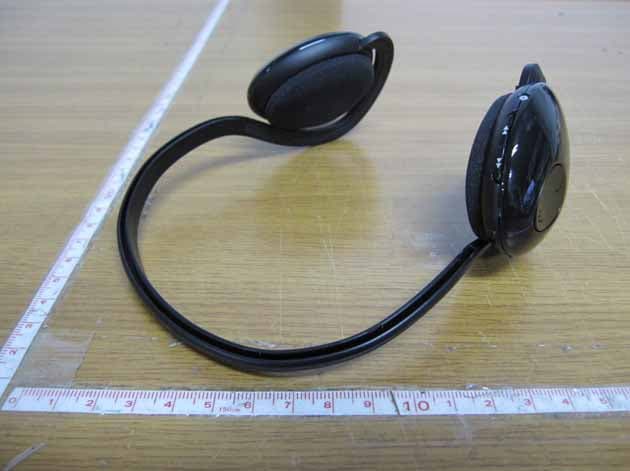
- MODAL BLUETOOTH HEADPHONES
- Frequency Range
- 2402.00000000 - 2480.00000000
- Company
- Usafe Co.,Ltd
- Country
- South Korea
Documents & Files
Document Text
Text extracted from the exhibit documents filed with the FCC. Open a document above to read the original.
Users Manual
MD-HPBT01 Modal Bluetooth Headphone User Manual MD-HPBT01 Modal Bluetooth Headphone Features Volume Up/Down Play/Pause Logo with LED FF/RW Next/Previous Reflective film Power/Talk Receiver Microphone MD-HPBT01 Modal Bluetooth Headphone Notice ▮ MD- HPBT01 has a rechargeable Li thi um-ion battery. Please Charge your headphone before using. Package Contents ▮ B luetooth Stereo Headphone ▮ A/C wall adapter ▮ USB charging cable ▮ User Manual ▮ Replac ement ear pads A/C wall adapter USB charging cable Replacement ear pads User Manual Bluetooth Stereo Headphone MD-HPBT01 Modal Bluetooth Headphone Turning the headphone on and off ▮ To turn the headphone on or off, press and hold the Power/Talk button for two seconds. The LED flashes bl ue or red and Voice prompt is “Hello” or “Bye”. ▮ MD- HPBT01 supports easy pairing, there is no need to enter 0000 (four zeros). ▮ When being connected, v oice pr ompt is “Connected”. And then, your headphone lets you know “apt-X mode” or “3D mode”. Supports battery status notification ▮ When Battery’ s residual quantity is under 20%, red LED flashes and voice prompt is “Battery Low”. ▮ MD-HPBT01 also supports battery indicator on iOS device. How to pair the MD-HPBT01 ▮ Cell phone or MP3 pl ay er : 1. With the headphone turned off, press and hold Talk for f our seconds. The Voice prompt is “Pairing”. 2. On the phone or M P3 player w hen pairing mode is activated, select MD-HPBT01 from the list of discovered devices, then enter t he password 0000 (f our zeros) to pair y our headphone. (No need to enter 0000, if not require password) For more information on pairing Bluetooth devices to your cell phone or M P3 player, see t he device’s documentation. Note: After the headphone has been successfully paired with the cell phone or MP3 player, the headphone automatically connects to the phone or MP3 player. Next time, the headphone will automatically connect to the phone or MP3 player. MD-HPBT01 Modal Bluetooth Headphone How to change apt-X to 3D mode ▮ If your device supports the apt-X codec, MD-HPBT01 will be automatically activated. ▮ You may also press and hold Talk, Play button simultaneously for 4 seconds to select 3D mode or apt-X mode. Once 3D mode is selected, you can enjoy 5 different 3D s ound effects. ※ 3D sound effects are not supported for apt-X Codec. Using 3D Sound ▮ To enable 3D sound while listening to music, simply press and hold Play/Pause button to select the next pre-set 3D sound effect. Normal mode and four types of 3D sound effects are programmed in the order below. ▮ Normal It makes playback of the original sound of mus ic source. (Two beeps indicate Normal m ode.) ▮ XOME Provides comfortable and persistent listening environment by taking distractible sound away from ears and head when using earphones. ▮ Live Delivers a natural and sof t 3D sound field effect simulating that of a live performance. ▮ Wide Provides a panoramic 3D audio im age of widely spread m ain vocal and center-placed instruments. ▮ MEX Not only delivers wide ster eo sound image, but also enhances low-frequency sound to provide rich and deep bass tones. ※ If you want to enjoy these 3D effects, have to change to 3D mode. MD-HPBT01 Modal Bluetooth Headphone Playing Music To: Do this: Play/Pause/Stop Press Play/Pause to launch the phone’s MP3 player and begin playing music. Press this button to pause and resume playback. Double click Play/Pause to stop playback. Select a song Press and release ◀◀ or ▶▶. Rewind or fast forward a song While music is playing, press and hold ◀◀ or ▶▶. (Some phones may not support this feature.) Answer a call while playing music Press Talk or press Play/Pause to reject the call. Press Talk again to end the call. Music resumes playing after a call is rejected or ended. Change the volume Press Vol+ or Vol – . Making Phone Call To: Do this: Voice dial Press Talk once. (Some phones might not support this feature.) Redial Press Talk twice. Answer a call Press Talk once. End a call Press Talk once. Refuse a call While your phone is ringing, Press Play/Pause. Change the volume Press + or – . Transfer a call between connected devices Press Talk. MD-HPBT01 Modal Bluetooth Headphone Multi Pairing ▮ Before you can connect the headphone to two devices, you must pair to each device individually. The device you are pairing must support one of the following Bluetooth profiles: • A2DP (Advanced Audio Distribution Profile)—Provides high quali ty A udio (stereo and mono) communication between the headphone and a phone’s or computer’s MP3 player. • AVRCP (Audio Video Remote Control Profile)– Lets a MP3 player control the headphone media playback buttons (such as play/pause or rewind/fast-forward). If you c onnect an MP3 player, the player must support AVRCP. See the documentation that came wi th the MP3 player to determine if the player s upports AVRCP. Windows M edia Player supports AVRCP. • HSP (Heads et Profile)—Provides two-way communication between the headphone and a Bluetooth phone. This profile is the most c ommonly used profile for Bluetooth phones. A paired phone must support HSP or HFP. See the documentation that came with the phone to determine if the phone supports HSP or HFP. • HFP (Hands-Free Profile)— Provides two-way communication between the headphone and a Bluetooth phone. If the phone does not use HSP, it uses th is profile. A paired phone must support HSP or HFP. See the documentation that came with the phone to determine if the phone supports HFP or HSP. ▮ A profile can only connect one device at a time. For example, you cannot use a phone’s MP3 player and a computer’s MP3 player at t he same time, because both players are connected through the A2DP profile. ▮ You c an connect a phone and a computer at the same time because the phone uses HSP or HFP and the computer uses A2DP. This lets you listen to music from the computer and answer phone c alls at the same time. Notes: In multi-pairing mode, some functi ons may be restricted depending on the host…
Text truncated - open the document above for the full version.
Cover Letter(s)
Usafe Co., Ltd. 8F, Ssanglim Bldg. Ssanglim-dong, 151-11, Chung-gu, Seoul, Korea Tel. +82-2-6324-0215 Fax +82-2-6324-0199 April 30, 2014 Federal Communications Commission Equipment Authorization Branch 7435 Oakland Mills Road Columbia, MD 21046 LETTER OF AUTHORIZATION To whom it may concern: We, the undersigned, hereby authorize LTA Co., Ltd., to act on our behalf in all manners relating to application for equipment authorization for FCC ID: UG9-MD-HPBT01 including signing of all documents relating to these matters. Any and all acts carried out by LTA Co., Ltd., on our behalf shall have the same affect as acts of our own. This authorization is valid until further written notice from Usafe Co., Ltd LTA Co.,LTD. (Contact Person) Contact name: Jae-Ho, Lee Position: Manager Phone:(82)31-323-6008 E-mail: [email protected] Gi-Young Kim Usafe Co., Ltd
Cover Letter(s)
Usafe Co., Ltd. 8F, Ssanglim Bldg. Ssanglim-dong, 151-11, Chung-gu, Seoul, Korea Tel. +82-2-6324-0215 Fax +82-2-6324-0199 April 30, 2014 Federal Communications Commission Equipment Authorization Branch 7435 Oakland Mills Road Columbia, MD 21046 In re : Usafe Co., Ltd FCC ID : UG9-MD-HPBT01 Request for Confidentiality Pursuant to Sections 0.457 and 0.459 of the Commission’s Rules (CFR 47), and Section 552 (b) (4) of the Freedom of Information Act, Usafe Co., Ltd. hereby requests confidentiality and treatment of certain information accompanying this application. The materials contain trade secrets and proprietary information not customarily released to the public. The public disclosure of these matters might be harmful to the Applicant and provide unjustified benefits to its competitors. We are also hereby request Short-Term Confidentiality for 180 days after the grant as outlined in Public Notice DA 04-1705. This provision will give Usafe Co., Ltd. temporary confidentiality of commercially sensitive information prior to product release. The requested Confidential and Temporary Confidential exhibits are listed as follows: Exhibit Type File Name CONFIDENTIAL Schematics CONF APPENDIX UG9-MD-HPBT01 SCH DIA.pdf Parts list CONF APPENDIX UG9-MD-HPBT01 PL.pdf Block diagram CONF APPENDIX UG9-MD-HPBT01 BLK DIA.pdf Operational description CONF APPENDIX UG9-MD-HPBT01 OpDes.pdf SHORT-TERM CONFIDENTIAL External Photos SHORT-TERM CONF UG9-MD-HPBT01 EXT Photo.pdf Internal Photos SHORT-TERM CONF UG9- MD-HPBT01 INT Photo.pdf Test-Setup Photos SHORT-TERM CONF UG9- MD-HPBT01 Test Photo.pdf User’s Manual SHORT-TERM CONF UG9- MD-HPBT01 Manual.pdf The Applicant understands that pursuant to Rule 0.457, disclosure of this application and all accompanying documentations, where applicable, will not be made public before the date of the Grant for this application. Gi-Young Kim Usafe Co., Ltd
Cover Letter(s)
Usafe Co., Ltd. 8F, Ssanglim Bldg. Ssanglim-dong, 151-11, Chung-gu, Seoul, Korea Tel. +82-2-6324-0215 Fax +82-2-6324-0199 April 30, 2014 Federal Communications Commission Equipment Authorization Branch 7435 Oakland Mills Road Columbia, MD 21046 In re: Usafe Co., Ltd. Model Name : MD-HPBT01 Variant Model Name : UBHS-HPBT01 Cover letter Gentlemen: I. Multi-model is added. On the multi-model, only the model name is changed because of marketing purpose. the circuit is not changed. Gi-Young Kim Usafe Co., Ltd
Cover Letter(s)
Usafe Co., Ltd. 8F, Ssanglim Bldg. Ssanglim-dong, 151-11, Chung-gu, Seoul, Korea Tel. +82-2-6324-0215 Fax +82-2-6324-0199 April 30, 2014 Federal Communications Commission Authorization and Evaluation Division 1435 Oakland Mills Road Columbia, MD 21046 In re : Usafe Co., Ltd FCC Application for FCC ID: UG9-MD-HPBT01 To Whom It May Concern: We, the undersigned, hereby attest to the fact that we will apply the Declaration of Conformity procedure to the class B computer peripheral portion of this composite filing. Regards, Gi-Young Kim Usafe Co., Ltd
External Photos
FCC ID: UG9-MD-HPBT01 IC: 8795A-MDHPBT01 Copyright ○ c 2014, LTA Co., Ltd. Page 1 of 3 Upper Lower For charging Only FCC ID: UG9-MD-HPBT01 IC: 8795A-MDHPBT01 Copyright ○ c 2014, LTA Co., Ltd. Page 2 of 3 Front Rear FCC ID: UG9-MD-HPBT01 IC: 8795A-MDHPBT01 Copyright ○ c 2014, LTA Co., Ltd. Page 3 of 3 ANTENNA- M/N: MD-HPBT01 Antenna
ID Label/Location Info
FCC ID: UG9-MD-HPBT01 IC : 8795A-MDHPBT01 Copyright Ⓒ 2014, LTA Co., Ltd. SAMPLE LABEL & LOCATION Model : MD-HPBT01 FCC ID : UG9-MD-HPBT01 IC : 8795A-MDHPBT01 Made in Korea Usafe Co., Ltd.
Internal Photos
FCC ID: UG9-MD-HPBT01 IC: 8795A-MDHPBT01 Copyright ○ c 2014, LTA Co., Ltd. Page 1 of 2 Main Board – Front Main Board – Rear FCC ID: UG9-MD-HPBT01 IC: 8795A-MDHPBT01 Copyright ○ c 2014, LTA Co., Ltd. Page 2 of 2 RF Module Total internal
RF Exposure Info
FCC ID:UG9-MD-HPBT01 ATTACHMENT IC : 8795A-MDHPBT01 * Standalone SAR test exclusion considerations - Min. transmitting frequency = 2402 MHz - Min. test separation distance = 5 mm -Max. Power with tune-up tolerance = 2.14 dBm = 1.64 mW (Measured power 1.64 dBm ± 0.5dB) Step 1) SAR Test exclusion thresholds for 100MHz to 6GHz at test separation distance ≤ 50 mm = Used [(max.power of channel, including tune-up torelance, mW)/(min. test separation distance, mm)] * [√f(GHz)] = [ 1.64 / 5 ] * [ √ 2.402 ] = 0.508 ≤ 3, for 1g SAR Thus, SAR for this device is not required. Step 2) SAR Test exclusion thresholds for 100MHz to 1500MHz at test separation distance > 50 mm = N/A [Threshold at 50mm in step 1) + (test separation distance - 50 mm) * (√f(MHz)/150] mW Step 3) SAR Test exclusion thresholds for 1500MHz to 6GHz at test separation distance > 50 mm = N/A [Threshold at 50mm in step 1) + (test separation distance - 50 mm) * 10] mW
Test Report
Ref. No.: LR500111404C Copyright ○ c 2014, LTA Co., Ltd. Page 1 of 42 243 Jubug-Ri,Yangji-Myeon, Yongin-Si, Gyeonggi-Do, Korea 449-822 Tel: +82-31-323-6008 Fax: +82-31-323-6010 http://www.ltalab.com Dates of Tests : April 24, 2014 ~ April 30, 2014 Test Report S/N: LR500111404C Test Site : LTA CO., LTD. CERTIFICATION OF COMPLIANCE FCC ID IC APPLICANT Equipment Class : Part 15 Spread Spectrum Transmitter (DSS) Manufacturing Description : Modal Bluetooth Headphones Manufacturer : Usafe Co., Ltd. Model name : MD-HPBT01 Variant Model Name : UBHS-HPBT01 Test Device Serial No.: : Identical prototype Rule Part(s) : FCC Part 15.247 Subpart C; ANSI C-63.4-2009 Frequency Range : 2402 ~ 2480MHz RF power : Max 2.14 dBm – Conducted Data of issue : May 1, 2014 This test report is issued under the authority of: The test was supervised by: Jae-Ho Lee, Manager Joon-Young Jeon, Test Engineer This test result only responds to the tested sample. It is not allowed to copy this report even partly without the allowance of the test laboratory. The report must not be used by the client to claim product certification, approval, or endorsement by NVLAP, NIST, or any agency of the Federal Government. NVLAP LAB Code.: 200723-0 UG9-MD-HPBT01 8795A-MDHPBT01 Usafe Co., Ltd. Ref. No.: LR500111404C Copyright ○ c 2014, LTA Co., Ltd. Page 2 of 42 TABLE OF CONTENTS 1. GENERAL INFORMATION ---------------------------------------------------------------------------- 2. INFORMATION ABOUT TEST ITEM --------------------------------------------------------------- 3. TEST REPORT --------------------------------------------------------------------------------------------- 3.1 SUMMARY OF TESTS ------------------------------------------------------------------------------ 3.2 FREQUENCY HOPPING SYSTEM REQUIREMENTS-------------------------------------------- 3.3 TECHNICAL CHARACTERISTICS TEST ------------------------------------------------------- 3.3.1 CARRIER FREQUENCY SEPARATION ---------------------------------------------------- 3.3.2 NUMBER OF HOPPING FREQUENCIES -------------------------------------------------- 3.3.3 20 dB BANDWIDTH ---------------------------------------------------------------------------- 3.3.4 TIME OF OCCUPANCY (Dwell Time) ------------------------------------------------------- 3.3.5 TRANSMITTER OUTPUT POWER ---------------------------------------------------------- 3.3.6 BAND EDGE ------------------------------------------------------------------------------------- 3.3.7 CONDUCTED SPURIOUS EMISSIONS ----------------------------------------------------- 3.3.8 RADIATED SPURIOUS EMISSIONS ------------------------------------------------------- 3.3.9 AC CONDUCTED EMISSIONS --------------------------------------------------------------- APPENDIX APPENDIX TEST EQUIPMENT USED FOR TESTS -------------------------------------------- 3 4 5 5 6 8 8 10 12 19 24 28 31 34 38 41 Ref. No.: LR500111404C Copyright ○ c 2014, LTA Co., Ltd. Page 3 of 42 1. General information 1-1 Test Performed Company name : LTA Co., Ltd. Address : 243, Jubug-ri,Yangji-Myeon,Youngin-Si, Kyunggi-Do, Korea. 449-822 Web site : http://www.ltalab.com E-mail : [email protected] Telephone : +82-31-323-6008 Facsimile : +82-31-323-6010 Quality control in the testing laboratory is implemented as per ISO/IEC 17025 which is the “General requirements for the competents of calibration and testing laboratory”. 1-2 Accredited agencies LTA Co., Ltd. is approved to perform EMC testing by the following agencies: Agency Country Accreditation No. Validity Reference NVLAP U.S.A 200723-0 2014-09-30 ECT accredited Lab. RRA KOREA KR0049 2015-03-06 EMC accredited Lab. FCC U.S.A 610755 2017-04-21 FCC filing FCC U.S.A 649054 2015-04-17 FCC CAB VCCI JAPAN R2133(10 m), C2307 2017-06-21 VCCI registration VCCI JAPAN T-2009 2016-12-23 VCCI registration VCCI JAPAN G-563 2015-05-28 VCCI registration IC CANADA 5799A-1 2015-06-21 IC filing Ref. No.: LR500111404C Copyright ○ c 2014, LTA Co., Ltd. Page 4 of 42 2. Information about test item 2-1 Client & Manufacturer Company name : Usafe Co., Ltd. Address Telephone / Facsimile : : 8F, Ssanglim Bldg. Ssanglim-dong, 151-11, Chung-gu, Seoul, Korea Tel : +82-2-6324-0215 / Fax : +82-2-6324-0199 2-2 Equipment Under Test (EUT) Trade name : MODAL Model name : MD-HPBT01 Variant Model name : UBHS-HPBT01 Serial number : Identical prototype Date of receipt : April 19, 2014 EUT condition : Pre-production, not damaged Antenna type : Internal PCB Pattern Antenna Max Gain 0.61 dBi Frequency Range : 2402 ~ 2480MHz RF output power : Max. 2.14 dBm – Conducted Number of channels : 79 Duty cycle : 81.76 % Channel spacing : 1MHz Channel Access Protocol : Frequency Hopping Spread Spectrum (FHSS) Type of Modulation : Basic Mode(GFSK), EDR Mode(Pi/4 DQPSK, 8DPSK) Power Source : DC 3.7V by battery Firmware Version : V1.0.0 2-3 Tested frequency Bluetooth LOW MID HIGH Frequency (MHz) 2402 2441 2480 2-4 Ancillary Equipment Equipment Model No. Serial No. Manufacturer - - - - Ref. No.: LR500111404C Copyright ○ c 2014, LTA Co., Ltd. Page 5 of 42 3. Test Report 3.1 Summary of tests FCC Part Section(s) Parameter Limit Test Condition Status (note 1) 15.247(a) Carrier Frequency Separation ≥ 2/3 of 20dB BW Conducted C 15.247(a) Number of Hopping Frequencies ≥ 15 channels C 15.247(a) 20 dB Bandwidth 99% Bandwidth − C 15.247(a) Dwell Time ≤ 0.4 seconds C 15.247(b) Transmitter Output Power ≤ 1W for 1Mbps ≤ 125mW for 2,3Mbps C 15.247(d) Conducted Spurious emission > 20 dBc C 15.247(d) Band Edge > 20 dBc C 15.249 / 15.209 Field Strength of Harmonics < 54 dBuV (at 3m) Radiated C 15.109 Field Strength − C 15.207 /15.107 AC Conducted Emissions EN 55022 Line Conducted C 15.203 Antenna requirement − − C Note 1: C=Complies NC=Not Complies NT=Not Tested NA=Not Applicable Note 2: The data in this test report are traceable to the national or international standards. Note 1: Antenna Requirement The Usafe Co., Ltd. FCC ID: UG9-MD-HPBT01 unit complies with the requirement of §15.203. T…
Text truncated - open the document above for the full version.
Test Setup Photos
FCC ID: UG9-MD-HPBT01 IC: 8795A-MDHPBT01 Copyright ○ c 2014, LTA Co., Ltd. Page 1 of 4 Radiate Emission (9kHz ~ 30MHz) FCC ID: UG9-MD-HPBT01 IC: 8795A-MDHPBT01 Copyright ○ c 2014, LTA Co., Ltd. Page 2 of 4 Radiate Emission (30MHz ~ 1GHz) FCC ID: UG9-MD-HPBT01 IC: 8795A-MDHPBT01 Copyright ○ c 2014, LTA Co., Ltd. Page 3 of 4 Radiate Emission (Above 1GHz) FCC ID: UG9-MD-HPBT01 IC: 8795A-MDHPBT01 Copyright ○ c 2014, LTA Co., Ltd. Page 4 of 4 Conducted Emission
Contact Information
Applicant
Gi-Young KIM(General Manager)
Test Firm
LTA Co.,Ltd.Michael AHN
Technical Specifications
| # | Rule Parts | Frequency Range | Power Output |
|---|---|---|---|
| 1 | 15C | 2.40 GHz - 2.48 GHz | 1.60 mW |
Other Applications from Usafe Co.,Ltd
UG9UBHS-NE1A
Feb 22, 2012BLUETOOTH STEREO HEADSET
Equipment Class
DSS - Part 15 Spread Spectrum Transmitter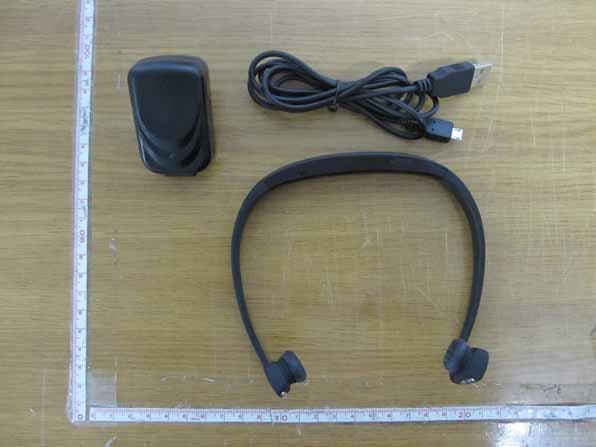
UG9UBHS-NE3
Feb 21, 2012BLUETOOTH STEREO HEADSET
Equipment Class
DSS - Part 15 Spread Spectrum Transmitter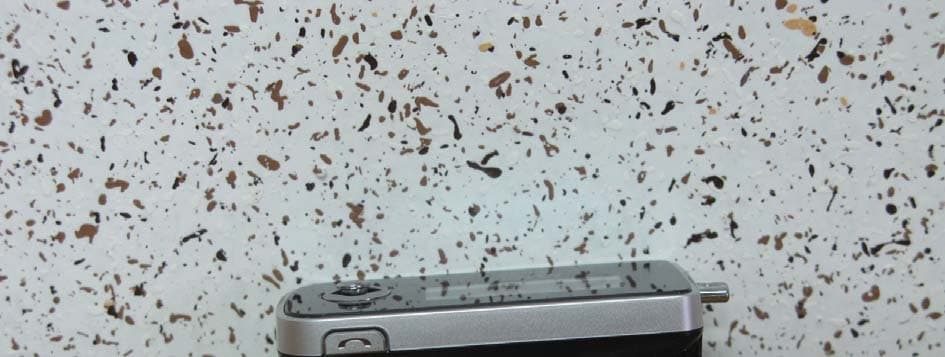
UG9UBHS-PH2
Nov 08, 2007BLUETOOTH STEREO HEADSET
Equipment Class
DSS - Part 15 Spread Spectrum Transmitter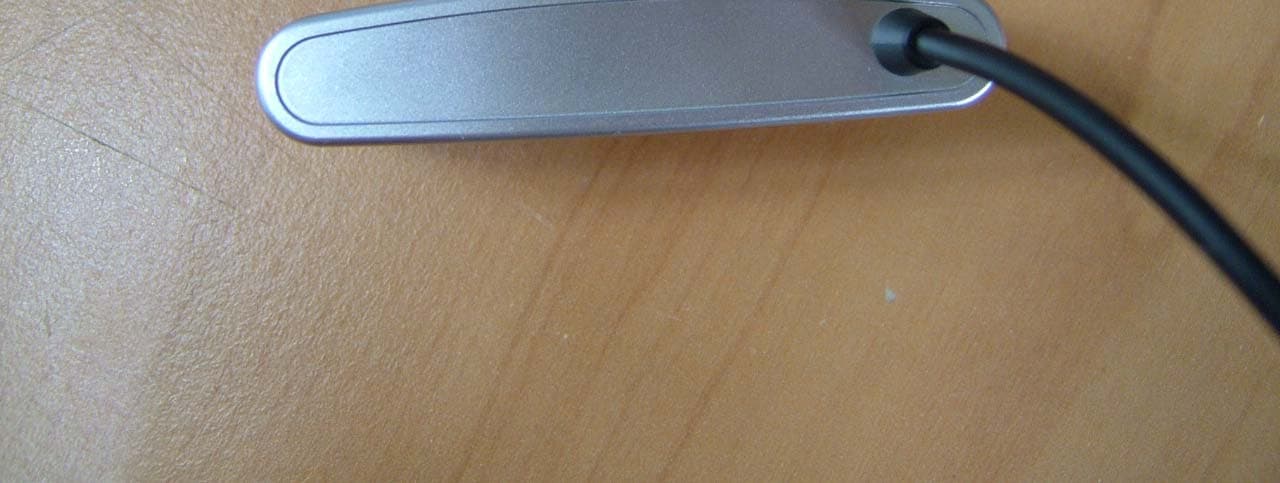
UG9UBHS-LC1
Aug 02, 2006BLUETOTH HEADSET
Equipment Class
DSS - Part 15 Spread Spectrum Transmitter
UG9UBHS-NC1
Aug 02, 2006BLUETOOTH HEADSET
Equipment Class
DSS - Part 15 Spread Spectrum Transmitter