UXZHCM100Bluetooth Headset
Clipcomm, Inc.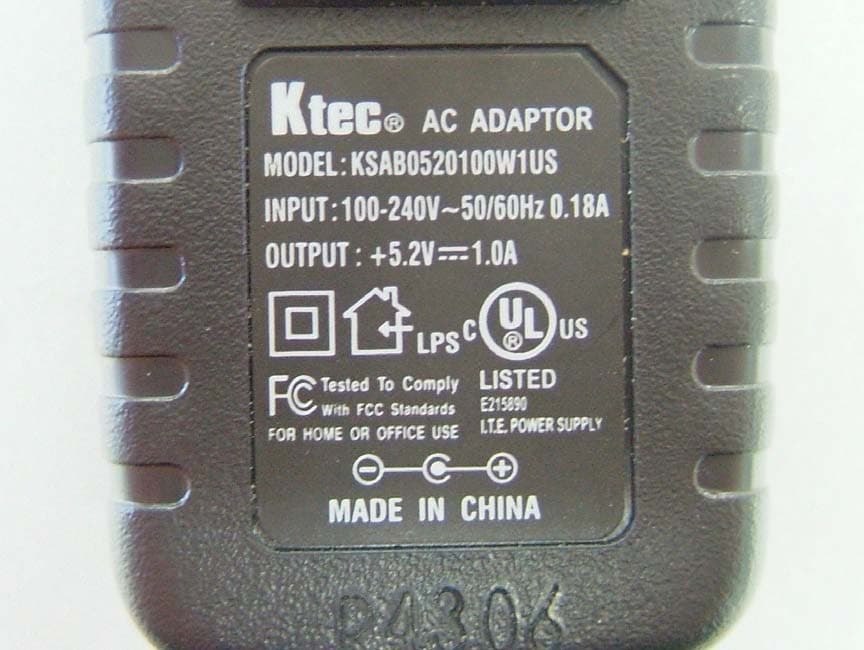
Click to zoom
Application Details
- Equipment Class
- DSS - Part 15 Spread Spectrum Transmitter
- Date of Grant
- Feb 19, 2007
- Application Purpose
- Original Equipment
- Date of Application
- Feb 18, 2007
- Equipment Note
- Bluetooth Headset
- Frequency Range
- 2402.00000000 - 2480.00000000
- Company
- Clipcomm, Inc.
- Country
- South Korea
Documents & Files
Document Text
Text extracted from the exhibit documents filed with the FCC. Open a document above to read the original.
Users Manual
Bluetooth Mono Headset HCM-100 User manual 2 All rights reserved For the best performance and prevention of any damage to, or misuse of the HCM-100, please read the entire information prior to using the HCM-100. Any modifications or changes to this manual due to typographical errors or inaccuracies of stated information shall only be made by Clipcomm Inc. 3 Table of Content 2 3 3 3 4 5 5 5 6 6 7 7 8 8 9 10 11 12 13 14 16 18 19 Introduction ------------------------------------------------------------------------------------------------------- Part description--------------------------------------------------------------------------------------------------- Using the headset----------------------------------------------------------------------------------------------- 1. Wearing--------------------------------------------------------------------------------------------- 2. Charging ------------------------------------------------------------------------------------------- 3. Low battery ---------------------------------------------------------------------------------------- 4. Turning on ----------------------------------------------------------------------------------------- 5. Turning off ----------------------------------------------------------------------------------------- Pairing ------------------------------------------------------------------------------------------------------------- 1. Initial paring process of headset with a mobile phone --------------------------------- 2. Auto-connection---------------------------------------------------------------------------------- 3. Volume control------------------------------------------------------------------------------------ Making/Ending calls -------------------------------------------------------------------------------------------- 1. Receiving, making calls/Voice calling------------------------------------------------------- 2. Re-dialing/ Ending calls------------------------------------------------------------------------- Additional function during calls------------------------------------------------------------------------------- Summary of Button functions -------------------------------------------------------------------------------- LED indication --------------------------------------------------------------------------------------------------- Troubleshooting ------------------------------------------------------------------------------------------------- Caution------------------------------------------------------------------------------------------------------------- Additional information------------------------------------------------------------------------------------------- Standard and specification ----------------------------------------------------------------------------------- Warranty----------------------------------------------------------------------------------------------------------- 4 Introduction The Clipcomm Bluetooth headset HCM-100 is a light weight wireless headset utilizing Bluetooth technology. This product can be used as an audio accessory for devices supporting either the Bluetooth Headset or Handsfree Profiles. Included in package [Included in package] Make sure if below items are fully included in the package prior to use and contact the seller if any item is excluded. Bluetooth Headset User manual Charger 5 Part description Ear loop Charging port Status LED Multifunction Button Volume Controls MIC Using the headset [Wearing a headset] You can wear the headset with the adjustable ear loop that can be worn on the left or right ear as below. Left Right [Charging] - Remove the cover on the charging port as below and connect the charger. 6 z When the charger is connected properly, the LED indicator will show a solid red light. (With power on, the headset will turn off while connected to the charger.) z The button stops working while the device is charging. z 2 hours of charging time is estimated to charge the headset fully. z When charging is completed, the LED indicator will turn off. !note: Do not use other chargers except the approved charger. Using other brand charger will cause a malfunction or damage of the device. [Low battery] If the headset’s rechargeable battery is less than 5% out of full charging, the red light on The LED indicator will flash and a short tone will sound. z Battery charging is needed in above case. z When the battery is not charged, the LED indicator will flash red and then turn off. [Turning on] z To turn the headset on, press and hold the multifunction button for 2 seconds. z Short and high-pitched tones will sound, and then the blue light on LED will flash fast 5 times. [Turning off] z To turn the headset off, press and hold the multifunction button for 5 seconds. z Short and low-pitched tone will sound, and then the blue light will flash 5 times. When it stops flashing, the headset turns off. Paring Paring is the process of associating Bluetooth devices with each other. When two devices are paired, they establish a permanent, secure link with each other, enabling quick access to services provided without having to enter passwords every time either device is activated. Paired devices remain paired even when one of the devices is not powered up, the service connection is stopped or interrupted, or one or both of the devices are rebooted. [Initial Paring] When you connect the HCM-100 with Bluetooth-enabled mobile phone, you need to go through the paring process. Follow the below instruction for paring. z With the HCM-100 off, press and hold the multifunction button for 5 seconds. z Two short and high-pitched tones will sound with the LED indicator flickering in red and blue alternately when the device enters into the pairing mode. z Find the Bluetooth Menu from the Bluetooth-enabled mobile phone and "search for" or "add” a new device. z Select the ”Clipcomm HCM-100” from the list of devices. z Enter “0000” (4 zeros, the default PIN of the headset) on the mobil…
Text truncated - open the document above for the full version.
Cover Letter(s)
2 nd Fl. E.S.T Bldg. 229-15, Nonhyeon-dong, Gangnam-gu, Seoul, Korea February 12, 2007 Timco Engineering, Inc. 849 N.W. State Road 45 P.O. Box 370 Newberry, Florida 32669 USA In re: Clipcomm, Inc. FCC ID: UXZHCM100 Request for Confidentiality Gentlemen: In accordance with 0.459 of CFR 47, Clipcomm, Inc. hereby requests confidentiality of the Block diagram(Block Diagram_UXZHCM100.pdf), Schematics(Schematic_ UXZHCM100.pdf), Parts list(Part List_ UXZHCM100.pdf) and Operational description(Operational Description_ UXZHCM100.pdf). These documents contain detailed system and equipment description and related information about the product which Clipcomm, Inc. considers to be proprietary, confidential, and a custom design and, otherwise, would not release to the general public. Since this design is a basis from which future technological products will evolve, Clipcomm, Inc. considers that this information would be of benefit to its competitors, and that the disclosure of the information in these documents would give competitors an unfair advantage in the market. Sincerely, Tae-Yoon Lim Assistant Manager
Cover Letter(s)
2 nd Fl. E.S.T Bldg. 229-15, Nonhyeon-dong, Gangnam-gu, Seoul, Korea February 12, 2007 Timco Engineering, Inc. 849 N.W. State Road 45 P.O. Box 370 Newberry, Florida 32669 USA In re: Clipcomm, Inc. FCC ID: UXZHCM100 Request for Short-Term Confidentiality To Whom It May Concern: In accordance with 0.457 and 0.459 of CFR 47, Clipcomm, Inc. requests short-term confidentiality of following sections of this application for a period of 45 days after grant is issued. Test setup photos(Test Photo_ UXZHCM100.pdf) External photos(Ext Photo_ UXZHCM100.pdf) Internal photos(Int Photo_ UXZHCM100.pdf)) User’s manual(User Manual_ UXZHCM100.pdf)) These documents contain detailed system and equipment descriptions and related information about the product, which Clipcomm, Inc. considers to be proprietary, confidential, and a custom design and otherwise, would not release to the general public. Since this design is a basis from which future technological products will evolve, Clipcomm, Inc. feels that this information would be of benefit to its competitors, and that the disclosure of the information in these documents would give our competitors an unfair advantage in the market. Sincerely, Tae-Yoon Lim Assistant Manager
External Photos
FCCID: UXZHCM100 Copyright Ⓒ 2007, DIGITAL EMC Co., Ltd. View 1 FCCID: UXZHCM100 Copyright Ⓒ 2007, DIGITAL EMC Co., Ltd. View 2 FCCID: UXZHCM100 Copyright Ⓒ 2007, DIGITAL EMC Co., Ltd. View 3 FCCID: UXZHCM100 Copyright Ⓒ 2007, DIGITAL EMC Co., Ltd. View 4
ID Label/Location Info
FCC ID: UXZHCM100 FCC ID SAMPLE LABEL & LOCATION LABELLING REQUIREMENTS PER §2.925 The Label shown shall be permanently affixed at a conspicuous location on the device and be readily visible to the user at the time of purchase
Internal Photos
FCC ID: UXZHCM100 Copyright Ⓒ 2007, DIGITAL EMC Co., Ltd. View 1 FCC ID: UXZHCM100 Copyright Ⓒ 2007, DIGITAL EMC Co., Ltd. View 2 FCC ID: UXZHCM100 Copyright Ⓒ 2007, DIGITAL EMC Co., Ltd. View 3 FCC ID: UXZHCM100 Copyright Ⓒ 2007, DIGITAL EMC Co., Ltd. View 4 FCC ID: UXZHCM100 Copyright Ⓒ 2007, DIGITAL EMC Co., Ltd. View 5
Test Report
DEMC#DR50110702B Copyright ○ c 2007, DIGITAL EMC Co., Ltd. Page 1 of 42 DIGITAL EMC CO., LTD. 683-3, Yubang-Dong, Yongin-Si, Kyunggi-Do, Korea. 449-080 Tel: +82-31-321-2664 Fax: +82-31-321-1664 http://www.digitalemc.com CERTIFICATION OF COMPLIANCE Clipcomm, Inc. 2 nd Fl. E.S.T Bldg. 229-15, Nonhyeon-dong, Gangnam-gu, Seoul 135-830, Korea Dates of Tests: January 31 ~ February 7, 2007 Test Report S/N: DR50110702B Test Site : DIGITAL EMC CO., LTD. FCC ID APPLICANT FCC Classification : Frequency Hopping Spread Spectrum (FHSS) Device name : Bluetooth Headset Manufacturer : Clipcomm, Inc. FCC ID : UXZHCM100 Model name : HCM-100 Test Device Serial number : Identical prototype FCC Rule Part(s) : FCC Part 15.247 Subpart C ANSI C-63.4-2003 Frequency Range : 2402 ~ 2480 MHz Max. Output power : 2.41dBm Conducted Data of issue : February 8, 2007 I attest to the accuracy of data. All measurements reported herein were performed by me or were made under my supervision and are correct to the best of my knowledge and belief. I assume full responsibility for the completeness of these measurements and vouch for the qualifications of all persons taking them. UXZHCM100 Clipcomm, Inc. DEMC#DR50110702B Copyright ○ c 2007, DIGITAL EMC Co., Ltd. Page 2 of 42 TABLE OF CONTENTS 1. GENERAL INFORMATION -------------------------------------------------------------------------- 2. INFORMATION ABOUT TEST ITEM ------------------------------------------------------------- 3. TEST REPORT --------------------------------------------------------------------------------------------- 3.1 SUMMARY OF TESTS ------------------------------------------------------------------------------ 3.2 TRANSMITTER REQUIREMENTS --------------------------------------------------------------- 3.2.1 CARRIER FREQUENCY SEPARATION ---------------------------------------------------- 3.2.2 NUMBER OF HOPPING FREQUENCIES -------------------------------------------------- 3.2.3 20 dB BANDWIDTH ---------------------------------------------------------------------------- 3.2.4 TIME OF OCCUPANCY (Dwell Time) ------------------------------------------------------- 3.2.5 PEAK OUTPUT POWER ----------------------------------------------------------------------- 3.2.6 CONDUCTED SPURIOUS EMISSIONS ---------------------------------------------------- 3.2.7 RADIATED EMISSIONS --------------------------------------------------------------------------- 3.2.8 AC LINE CONDUCTED EMISSIONS ------------------------------------------------------- APPENDIX TEST EQUIPMENT FOR TESTS -------------------------------------------------------- 3 4 5 5 6 6 8 11 14 18 21 28 35 40 DEMC#DR50110702B Copyright ○ c 2007, DIGITAL EMC Co., Ltd. Page 3 of 42 1. General information This report contains the result of tests performed by: DIGITAL EMC CO., LTD. Address : 683-3, Yubang-Dong, Yongin-Si, Kyunggi-Do, Korea. 449-080 http://www.digitalemc.com E-mail : [email protected] Tel: +82-31-321-2664 Fax: +82-31-321-1664 Quality control in the testing laboratory is implemented as per ISO/IEC 17025 which is the “General requirements for the competent of calibration and testing laboratory”. This laboratory is accredited by NVLAP for NVLAP Lab. Code : 200559-0. Test operator: engineer February 8, 2007 Dong -Chul CHA Data Name Signature Report Reviewed By: manager February 8, 2007 Harvay Sung Data Name Signature Ordering party: Company name : Clipcomm, Inc. Address : 2 nd Fl. E.S.T Bldg. 229-15, Nonhyeon-dong, Gangnam-gu City/town : Seoul Country : Korea Zip code : 135-830 Date of order : January 25, 2007 DEMC#DR50110702B Copyright ○ c 2007, DIGITAL EMC Co., Ltd. Page 4 of 42 2. Information about test item UXZHCM100 2.1 Equipment information Equipment model no. HCM-100 Equipment serial no. Identical prototype Type of equipment Bluetooth Headset Frequency band 2402 ~ 2480 MHz Type of Modulation GFSK Channel Access Protocol Frequency Hopping Channel Spacing 1.0 MHz Type of antenna Chip Antenna 2.2 Tested frequency Frequency TX RX Low frequency 2402MHz 2402MHz Middle frequency 2441MHz 2441MHz High frequency 2480MHz 2480MHz 2.3 Tested environment Temperature : 15 ~ 35 ( o C) Relative humidity content : 20 ~ 75 % Air pressure : 86 ~ 103 kPa Details of power supply : 3.7 VDC 2.4 Ancillary Equipment Equipment Model No. Serial No. Manufacturer Adaptor KSAB0520100W1USN/A Ktec - - - - - - - - 2.5 EMI Suppression Device(s)/Modifications EMI suppression device(s) added and/or modifications made during testing -> None DEMC#DR50110702B Copyright ○ c 2007, DIGITAL EMC Co., Ltd. Page 5 of 42 3. Test Report 3.1 Summary of tests FCC Part Section(s) Parameter Limit Test Condition Status (note 1) I. Test Items Carrier Frequency Separation > 25 kHz C Number of Hopping Frequencies > 75 hops C 20 dB Bandwidth < 1 MHz C 15.247(a) Dwell Time 0.4 seconds within a 30 second period per any frequency C 15.247(b) Transmitter Output Power < 1Watt C Band-edge /Conducted C 15.247(c) Conducted Spurious Emissions The radiated emission to any 100 kHz of outband shall be at least 20dB below the highest inband spectral density. Conducted C 15.205 15.209 Radiated Emissions FCC 15.209 Limits Radiated C 15.207 AC Conducted Emissions EN 55022 AC Line Conducted C Note 1: C=Complies NC=Not Complies NT=Not Tested NA=Not Applicable The sample was tested according to the following specification: FCC Parts 15.247; ANSI C-63.4-2003 DEMC#DR50110702B Copyright ○ c 2007, DIGITAL EMC Co., Ltd. Page 6 of 42 3.2 Transmitter requirements 3.2.1 Carrier Frequency Separation Procedure: The carrier frequency separation was measured with a spectrum analyzer connected to the antenna terminal, while EUT had its hopping function enabled. After the trace being stable, the reading value between the peaks of the adjacent channels using the marker-delta function was recorded as the measurement results. The spectrum analyzer is set to: Span = 3 MHz (wide enough to capture the peaks of two adjacent channels) RBW = 30 kHz (1% of the span or more) Sweep = auto V…
Text truncated - open the document above for the full version.
Test Setup Photos
FCC ID: UXZHCM100 Copyright Ⓒ 2007, DIGITAL EMC Co., Ltd. View 1 FCC ID: UXZHCM100 Copyright Ⓒ 2007, DIGITAL EMC Co., Ltd. View 1
Contact Information
Applicant
Tae-Yoon Lim(Engineer)
Test Firm
DT&C Co.,Changho Lee
Technical Specifications
| # | Rule Parts | Frequency Range | Power Output |
|---|---|---|---|
| 1 | 15C | 2.40 GHz - 2.48 GHz | 1.70 mW |
Other Applications from Clipcomm, Inc.
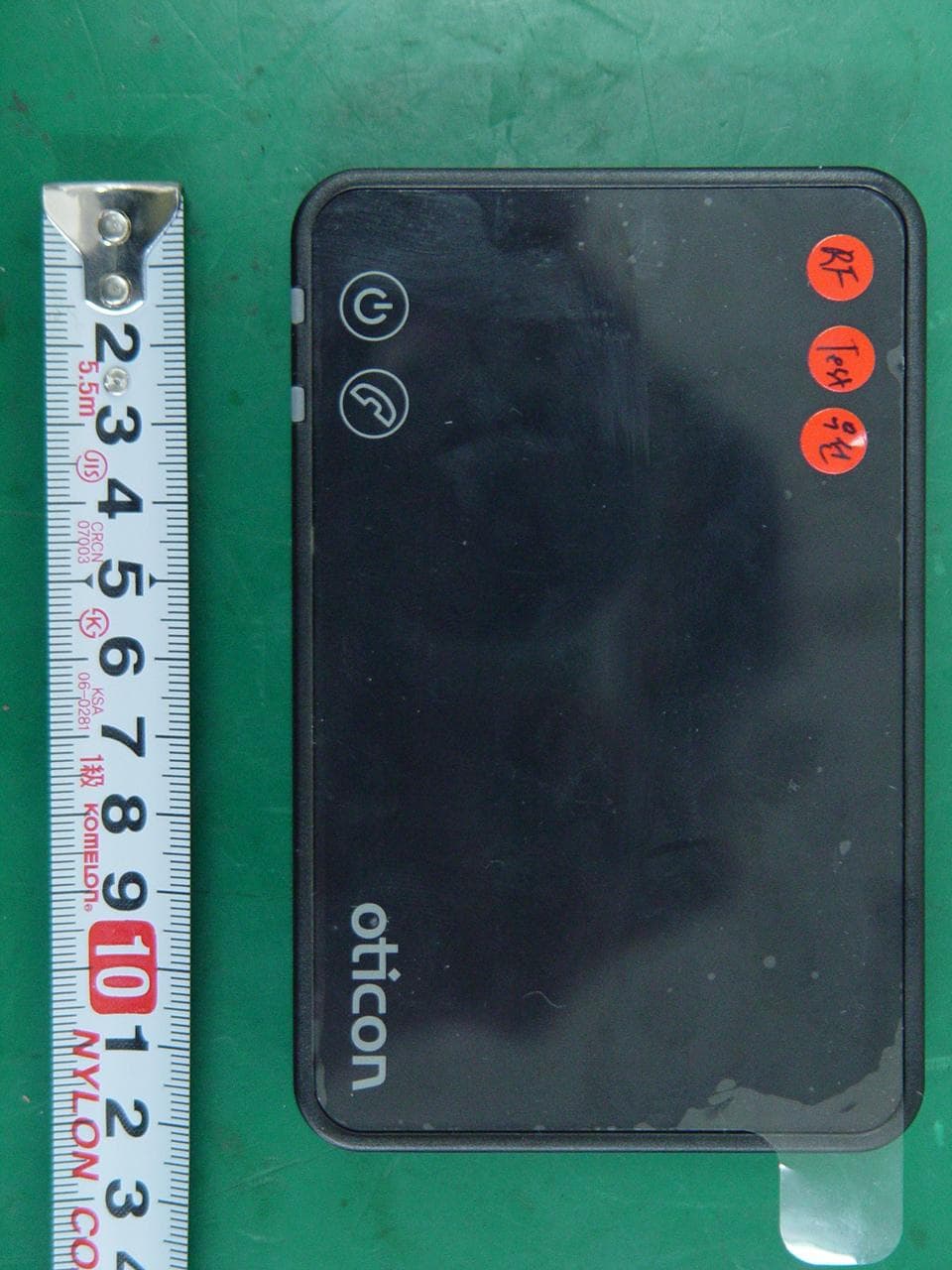
UXZBSH200
Oct 14, 2012Bluetooth Analog Telephone adapter
Equipment Class
DSS - Part 15 Spread Spectrum Transmitter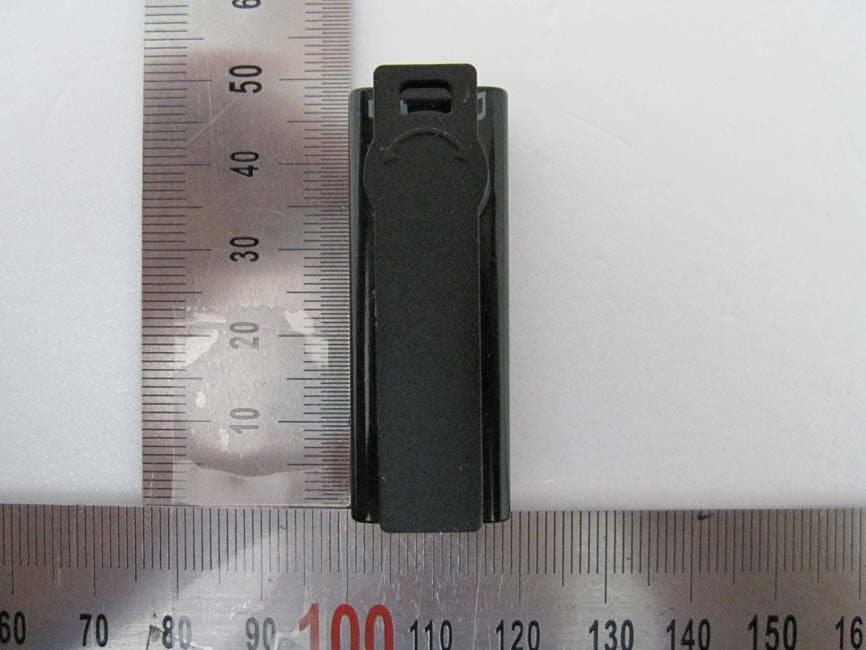
UXZBSM100
Aug 12, 2010Bluetooth Mic
Equipment Class
DSS - Part 15 Spread Spectrum Transmitter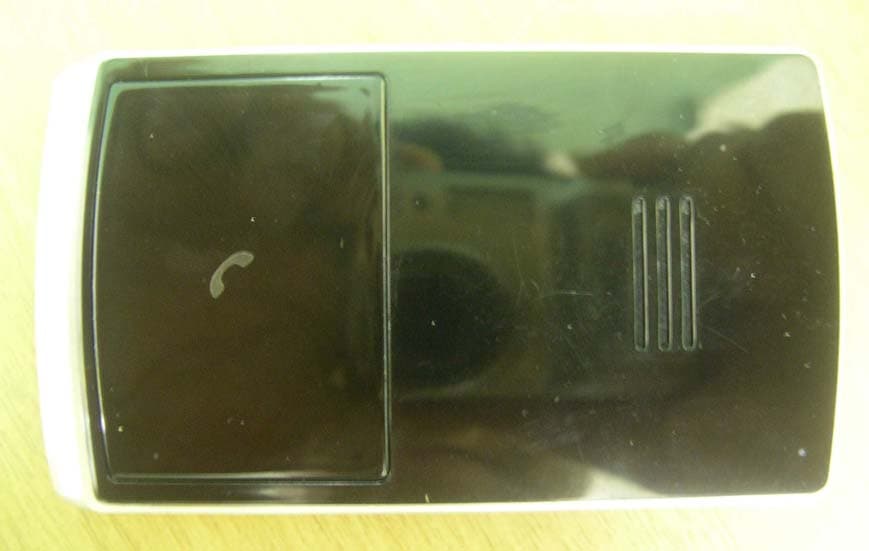
UXZHCC100
Jul 01, 2007Bluetooth Hands Free Car Kit
Equipment Class
DSS - Part 15 Spread Spectrum Transmitter
UXZEDR-AP
Jan 25, 2007Bluetooth Access Point
Equipment Class
JBP - Part 15 Class B Computing Device Peripheral