VXPGDP-04GSM DESKTOP PHONE
JABLOCOM S.R.O.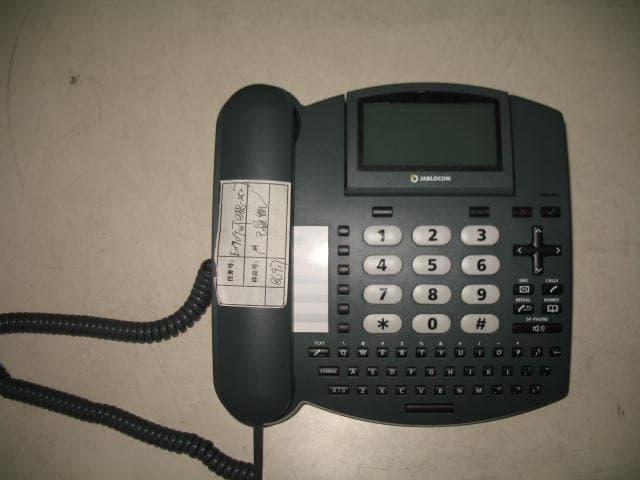
Click to zoom
Application Details
- Equipment Class
- JBP - Part 15 Class B Computing Device Peripheral
- Date of Grant
- Feb 03, 2008
- Application Purpose
- Original Equipment
- Date of Application
- Feb 03, 2008
- Equipment Note
- GSM DESKTOP PHONE
- Company
- JABLOCOM S.R.O.
- Country
- Czech Republic
Documents & Files
Document Text
Text extracted from the exhibit documents filed with the FCC. Open a document above to read the original.
Users Manual
GSM Desktop Phone GDP-04 User’s Guide JM50114_ENG.doc 2 SAFETY INSTRUCTIONS Read these guidelines. Not following them may be dangerous and/or illegal. You alone are responsible for how you use your phone and any consequences of its use. Do not switch the phone on wherever the use of a wireless phone is prohibited or when it may cause interference or danger. Small Children Do not leave your phone and its accessories within the reach of small children or allow them to play with it. They could hurt themselves or others, or could accidentally damage the phone. Your phone contains small parts with sharp edges that may cause an injury or which could become detached and create a choking hazard. Interference Your phone contains a transmitter and a receiver. When it is ON, it receives and transmits RF energy. Care must be taken when using the phone in close proximity to personal medical devices, such as pacemakers and hearing aids. All wireless phones are susceptible to interference, which could affect performance. We (Jablocom) are not responsible for any radio or TV interference caused by unauthorized modifications to this equipment. Such modifications could void the user’s authority to operate the equipment. Your phone is designed not to exceed the limits for exposure to radio waves recommended by international guidelines. These guidelines were developed by the independent scientific organization ICNIRP and include safety margins designed to assure the protection of all persons, regardless of age and health. NOTE: This equipment has been tested and found to comply with the limits for a Class B digital device, pursuant to part 15 of the FCC Rules. These limits are designed to provide reasonable protection against harmful interference in a residential installation. This equipment generates, uses and can radiate radio frequency energy, and if not installed and used in accordance with the instructions, may cause harmful interference to radio communications. However, there is no guarantee that interference will not occur in a particular installation. If this equipment does cause harmful interference to radio or television reception, which can be determined by turning the equipment off and on, the user is encouraged to try to correct the interference by one or more of the following measures: - Reorient or relocate the receiving antenna. - Increase the separation between the equipment and receiver. - Connect the equipment into an outlet on a circuit different from that to which the receiver is connected. - Consult the dealer or an experienced radio/TV technician for help. Pacemakers Pacemaker manufacturers recommend that a minimum separation of 15 cm be maintained between a mobile phone and a pacemaker to avoid potential interference with the pacemaker. To achieve this use the phone body in distance more than 15cm from your pacemaker. Hearing Aids People with hearing aids or other cochlear implants may experience interfering noises when using wireless devices or when one is nearby. The level of interference will depend on the type of hearing device and the distance from the interference source, increasing the separation between them may reduce the interference. You may also consult your hearing aid manufacturer to discuss alternatives. Medical devices Please consult your doctor and the device manufacturer to determine if operation of your phone may interfere with the operation of your medical device. Hospitals Switch off your wireless device when requested to do so in hospitals, clinics or health care facilities. These requests are designed to prevent possible interference with sensitive medical equipment. Wireless devices can cause interference in aircraft. Explosive environments In locations with potentially explosive atmospheres, obey all posted signs to turn off wireless devices such as your phone or other radio equipment. Areas with potentially explosive atmospheres include fuelling areas, below decks on boats, fuel or chemical transfer or storage facilities, areas where the air contains chemicals or particles, such as grain, dust, or metal powders. Blasting Caps and Areas Turn off your mobile phone or wireless device when in a blasting area or in areas posted turn off “two-way radios” or “electronic devices” to avoid interfering with blasting operations. Observe restrictions, and follow all regulations and rules. Use only the normal position. When placing or receiving a phone call, hold your phone handset to your ear, with the bottom towards your mouth or as you would any other fixed line phone. Do not attempt to disassemble your phone or its accessories - only qualified personal may install or repair phone equipment. If your phone or its accessory has been submerged in water, punctured, or subjected to a severe fall, do not use it until you have taken it to be checked at an authorized service centre. Always treat your phone and its accessories with care and keep it in a clean and dust-free place. Do not paint your phone or its accessories. Do not expose your phone or its accessories to open flames or lit tobacco products. Do not expose your phone or its accessories to liquid, moisture or high humidity. Do not drop, throw or try to bend your phone or its accessories. Do not use harsh chemicals, cleaning solvents, or aerosols to clean the device or its accessories. Do not expose your phone or its accessories to extreme temperatures, minimum -10 and maximum +55 degrees Celsius. Battery and Charger Handling & Safety Use only Jablocom approved accessories and batteries. Do not connect incompatible products or accessories. Take care not to touch or allow metal objects, such as coins or key rings, to contact or short-circuit the battery terminals. Use the battery and power adaptor only for its intended purpose. Never use any adaptor or battery that is damaged. The phone is designed to be powered from the power adaptor. The limited capacity of the backup battery should only cover emergency calls in ca…
Text truncated - open the document above for the full version.
Block Diagram
BLOCK DIAGRAM OF GDP-04(A) Microprocessor Supply Circuit GSM Module Battery Power Adaptor SIM Card User Interface Crystal Oscillator 18.432MHz Handset Handsfree Analog Line LCD USB
Block Diagram
BLOCK DIAGRAM OF GDP-04(A) Microprocessor Supply Circuit GSM Module Battery Power Adaptor SIM Card User Interface Crystal Oscillator 18.432MHz Handset Handsfree Analog Line LCD USB HANDSFREE BLOCK DIAGRAM Handfree means speakerphone without handreceicer GSM Module Audio Power Amplifier Bias Circuit Microprocessor HF SpeakerHF Microphone Ringing Tones
External Photos
VXPGDP-04 OUTER PHOTOS
ID Label/Location Info
FCC ID Label Sample_ Contains GSM Module FCC ID: QIPMC56 FCC ID: VXPGDP-04 This device complies with Part 15 of the FCC Rules. Operation is subject to the following two conditions: (1) this device may not cause harmful interference, and (2) this device must accept any interference received, including interference that may cause undesired operation.
ID Label/Location Info
FCC ID LABEL LOCATION FCC ID LABEL
Internal Photos
VXPGDP-04 INTERNAL PHOTO
Operational Description
Short Technical Description of GDP-04(A) 1.The supply circuit provides voltages for all blocks and also voltage for battery charging. 2.The GSM module transmitts and receives data from / to GSM network and communicates directly with the microprocessor. 3.Used antenna – external PCB connect to the main PCB with coaxial cable RG-178. 4.Audio signals are acuired / generated by external handset, internal handsfree and external analogue line. 5.Clock frequency is provided by crystal oscillator 18.432MHz connected directly to the microprocessor. 6.Momochromatic LCD (132*65 dots) is driven directly by the microprocessor. 7.USB interface is provided directly by the microprocessor.
Test Report
FCCID: VXPGDP-04 Report Number: 200707-0017-FCC Page 1 of 23 Test Report Applicant: JabloCOM s.r.o. Address of Applicant: Jablonec nad Nisou,Pod Skalkou 4567/33,466 01 Equipment Under Test (EUT): EUT Name: GSM desktop phone Model No.: GDP-04A Serial No.: Not supplied by client (IEMI No.:352023005364043) Standards: FCC PART15 SUBPART B:2007 Date of Receipt: Sep 17, 2007 Date of Test: Dec 26, 2007 Date of Issue: Dec 28, 2007 Test Result : PASS* Testing Engineer: Sandy Yu * In the configuration tested, the EUT complied with the standards specified above. Authorized Signature: Henly.xie / Manager This report refers to the General Conditions for Inspection and Testing Services, printed overleaf This report details the results of the testing carried out on one sample. The results contained in this test report do not relate to other samples of the same product. The manufacturer should ensure that all products in series production are in conformity with the product sample detailed in this report. This report may only be reproduced and distributed in full. If the product in this report is used in any configuration other than that detailed in the report, the manufacturer must ensure the new system complies with all relevant standards. The report must not be used by the client to claim product certification, approval, or endorsement by NVLAP, NIST, or any agency of the federal government. All test results in this report can be traceable to National or International Standards. The test report prepare by: Guangzhou Huesent Testing Service Co.,Ltd. Self-ordained 68# courtyard, No.91, Dongguanzhuang Road,Guangzhou,China. Tel: 86-20-87221453 Fax: 86-20-87221905 http://www.hst.org.cn E-mail:[email protected] FCCID: VXPGDP-04 Report Number: 200707-0017-FCC Page 2 of 23 2. Test Summary Test Test RequirementTest Method Class / Severity Result Radiated Emission (30MHz to 1GHz) FCC PART 15, SUBPART B: 2007 ANSI C63.4:2003 Class B PASS Conducted Emission (150KHz to 30MHz) FCC PART 15, SUBPART B: 2007 ANSI C63.4:2003 Class B PASS FCCID: VXPGDP-04 Report Number: 200707-0017-FCC Page 3 of 23 3. Contents TITLE PAGE 1 COVER PAGE.....................................................................................................................1 2. TEST SUMMARY.....................................................................................................................................2 3. CONTENTS...............................................................................................................................................3 4. GENERAL INFORMATION....................................................................................................................4 4.1 CLIENT INFORMATION...................................................................................................................... 4 4.2 GENERAL DESCRIPTION OF E.U.T. ................................................................................................... 4 4.3 DETAILS OF E.U.T............................................................................................................................ 4 4.4 DESCRIPTION OF SUPPORT UNITS..................................................................................................... 4 4.5 STANDARDS APPLICABLE FOR TESTING........................................................................................... 4 4.6 TEST LOCATION...............................................................................................................................4 4.8 DEVIATION FROM STANDARDS......................................................................................................... 4 4.9 ABNORMALITIES FROM STANDARD CONDITIONS............................................................................. 4 5. EQUIPMENTS USED DURING TEST..................................................................................................5 6. TEST RESULTS.......................................................................................................................................6 6.1 CONDUCTED EMISSIONS MAINS TERMINALS, 150 KHZ TO 30MHZ........................................................ 6 6.1.1 E.U.T. Operation........................................................................................................................6 6.1.2 Plan View of Test Setup...........................................................................................................6 6.1.3 Measurement Data....................................................................................................................6 6.2 RADIATED EMISSIONS, 30MHZ TO 1GHZ............................................................................................. 11 6.2.1 E.U.T. Operation......................................................................................................................11 6.2.2 Test Setup.................................................................................................................................11 6.2.3 Measurement Data..................................................................................................................11 7. PHOTOGRAPHS....................................................................................................................................14 7.1 CONDUCTED EMISSION TEST SETUP..................................................................................................... 14 7.2 RADIATED EMISSION TEST SETUP........................................................................................................ 16 7.3 EUT CONSTRUCTIONAL DETAILS....................................................................................................17-23 FCCID: VXPGDP-04 Report Number: 200707-0017-FCC Page 4 of 23 4. General Information 4.1 Client Information Applicant: JabloCOM s.r.o. Address of Applicant: Jablonec nad Nisou,Pod Skalkou 4567/33,466 01 4.2 General Description of E.U.T. EUT Name: GSM desktop…
Text truncated - open the document above for the full version.
Test Setup Photos
Report Number: 200707-0017-FCC Page 16 of 20 7. Photographs 7.1 Conducted Emission Test Setup Report Number: 200707-0017-FCC Page 17 of 20 Report Number: 200707-0017-FCC Page 18 of 20 7.2 Radiated Emission Test Setup Report Number: 200707-0017-FCC Page 19 of 20
Contact Information
Applicant
FILIP KOPRIVA(HW ENGINEER)
Test Firm
China CEPREI LaboratoryLihui Chen
Technical Specifications
| # | Rule Parts | Frequency Range | Power Output |
|---|---|---|---|
| 1 | 15B | - | - |
Other Applications from JABLOCOM S.R.O.
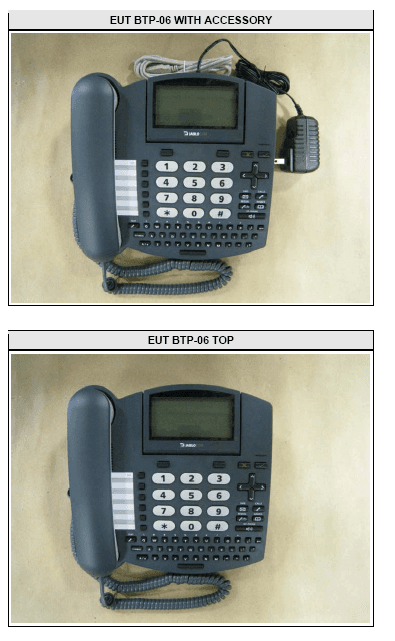
VXPBTP-06
Oct 13, 2011Bluetooth Desktop Phone
Equipment Class
DSS - Part 15 Spread Spectrum Transmitter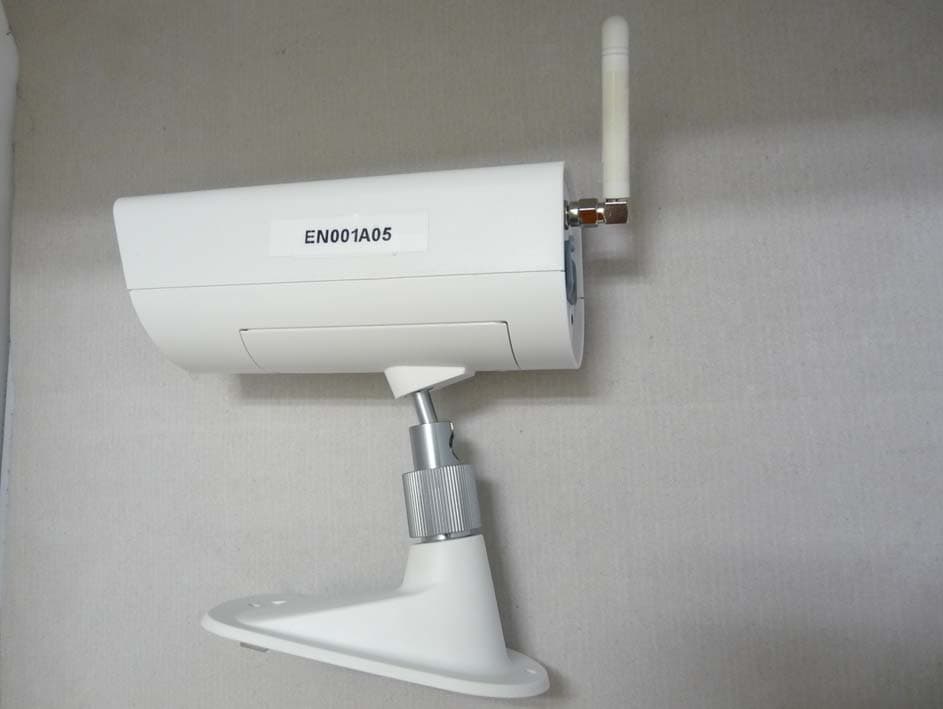
VXPEYE-02
May 18, 2010GSM Security Camera
Equipment Class
JBP - Part 15 Class B Computing Device Peripheral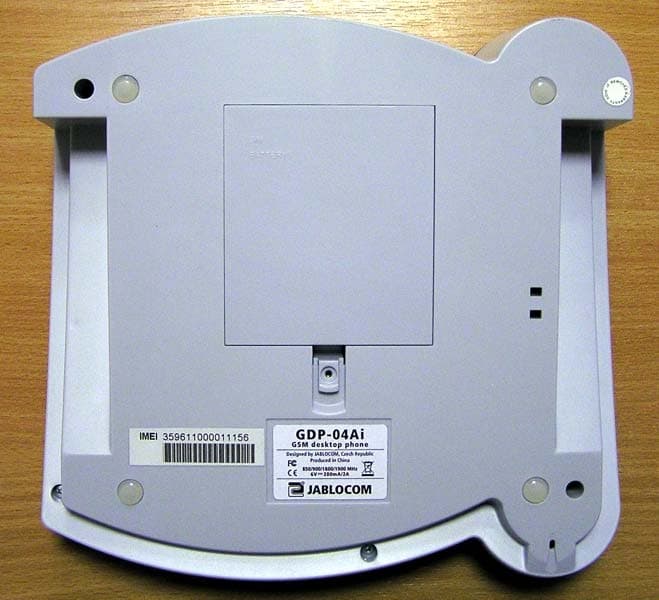
VXPGDP-04I
Mar 18, 2010GSM Desktop Phone
Equipment Class
JBP - Part 15 Class B Computing Device Peripheral