WMSBETXSABE1283 OPTICAL SMOKE ALARM
Bellman & Symfon Europe AB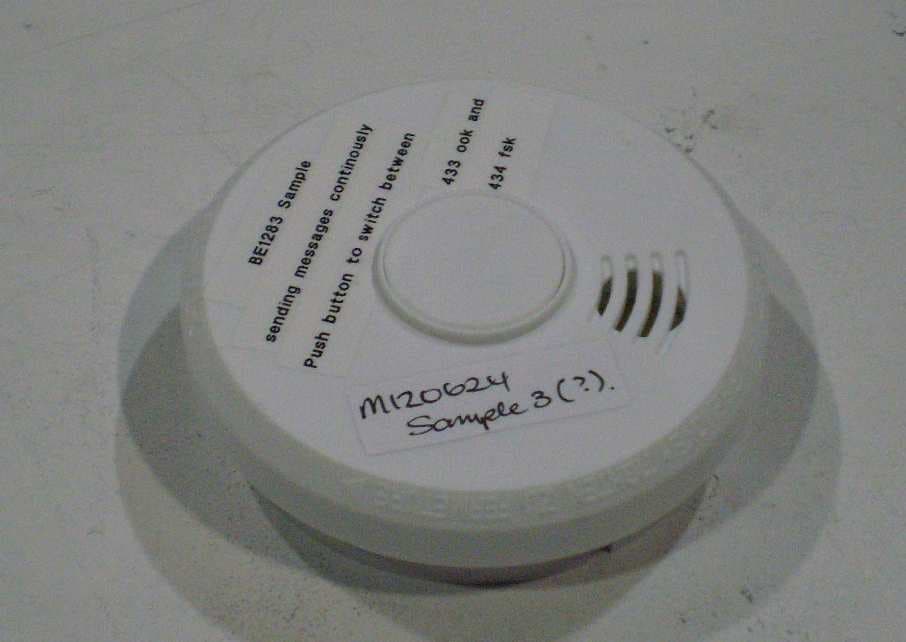
Click to zoom
Application Details
- Equipment Class
- DSC - Part 15 Security/Remote Control Transmitter
- Date of Grant
- Dec 10, 2012
- Application Purpose
- Original Equipment
- Date of Application
- Dec 10, 2012
- Equipment Note
- BE1283 OPTICAL SMOKE ALARM
- Frequency Range
- 434.30000000 - 434.30000000
- Company
- Bellman & Symfon Europe AB
- Country
- Sweden
Documents & Files
Document Text
Text extracted from the exhibit documents filed with the FCC. Open a document above to read the original.
Users Manual
Smoke alarm User manual Wireless interconnected optical smoke alarm with hush feature Contents of this instruction manual 1. Introduction 2. Positioning 3. Important information about radio transmission 4. Coding 5. Installation/Mounting 6. Main features 7. Low battery warning & Battery replacement 8. Testing & Maintenance 9. Alarm signal & LED indication 10. Important fire safety information 11. Technical specification 12. Service & Warranty 1. Introduction Bellman & Symfon wireless interconnected optical smoke alarm BE1283 is designed to fast and reliable detect the presence of smoke particles in the air. In larger dwellings interconnected alarms provide early warning against fire and in- creases your ability to hear an alarm any- where, regardless of where the fire starts, giving your family more time to escape. These smoke alarms are equipped with a very sophisticated and reliable radio system. Due to the use of modern and advanced components, the range and penetration is high, while the current consumption is extremely low, giving a long battery life. To enable radio trans- mission of alarms, including during seve- re radio conditions such as radio interfe- rence etc., each smoke alarm has a code switch to reduce the risk of interference of (or to) similar systems nearby (code switch only available in some countries). 2. Positioning A smoke alarm should be fitted in centre of ceiling in the immediate area of the bedrooms, and areas such as hall- and stairways. If more than one sleeping area exists, locate additional smoke alarm in each sleeping area. Locate at least one alarm on every floor. Additional smoke alarms gives better coverage. Ensure that the alarm can easily be heard from the bedrooms. The distance between two smoke alarms in a typical dwelling should not exceed 10–12m, were each alarm should not cover more than 60m 2 . Avoid placement near kitchens or gara- ges, where combustion particles from cooking or exhaust fumes may trigger an alarm. Also avoid placement in damp or hu- mid areas, such as unfinished attics. Nor clo- se to ceiling fans or fresh air vents, draughts can blow smoke away from the alarm. Dead air space When mounting on peaked or sloped ceilings, at least 1 m horizontally from the highest point Minimum protection Additional protection Dead air space When mounting on peaked or sloped ceilings, at least 1 m horizontally from the highest point Minimum protection Additional protection Dead air space When mounting on peaked or sloped ceilings, at least 1 m horizontally from the highest point Minimum protection Additional protection 3. Important information about radio transmission Regularly check the range and function, so that the smoke alarm could be heard sufficiently in the bedrooms, both before and after installation. Please note that radio conditions and interference etc. can change over time, therefore no guarantee can be given about a specific transmission range etc. Each time, place and building are unique from a radio transmission point of view. 4. Coding (only available in some countries) In a smoke alarm system, in order for all units to alarm, they must be set to the same code. The factory pre-set code is ”0” and to prevent interference from other systems, we recommend that you chan- ge the code on all units on installation. The same is recommended if you – for any reason incur problems suspected to be nuisance alarms from a similar system nearby operating on the same channel (or on channel “0” ). When new codes are set, each unit and the whole system should be tested again (Please refer to the “Testing & Maintenance” section.) Special alarm functions for code “0” . If a smoke alarm has code “0” this unit will receive an alarm from units with all other codes after a 3-minute delay, If an unit alarms for more than 3 minutes this will be transmitted to units with code ”0”. This special feature could be used in several applications, it could be used for escape purposes, for example it could be given to a smoke alarm in a staircase of a HMO building. If a smoke alarm coded with code ”0” sounds, which has special “priority” functions, then all other units regardless of codes will sound. This chan- nel setting could be especially suitable in the immediate area of the children’s bedroom. 5. Installation/Mounting Remove the mounting plate by turning it slightly counterclockwise. Insert battery and connect the snap-on contact. Red LED is lit under the test button the unit sounds for a brief moment shortly after. If audible signal is obtained, all functions are accurately tested and your alarm is now ready to be fitted. Tip! Before fitting mounting plate, make sure all units are within radio communi- cation range. Try switching two or more unit’s location if the range proves to be insufficient (please refer to the “TESTING & MAINTENANCE” section). Now fit the mounting plate to the ceiling or wall using the screws provided and twist your smoke alarm into place. 6. Main features Alarm - Pre-alarm - Alarm memory There are two different alarm sounds to differentiate which unit is the source of the alarm and what type of alarm has oc- curred. In the detecting (primary) smoke alarm there is a characteristic sound for the smoke detection. In all other (secon- dary) detectors the alarm sound has a different characteristic; before fully aler- ting, a pre-alarm occurs emitting short chirps every 6s as LED flashes periodi- cally during 30s – in order for you to stop any unwanted alarms. The alarm sound could be silenced in two ways, either by pushing the test/ silencer button in one secondary unit, and if so, only this unit will be silenced, (all other units will conti- nue to sound as long as the primary unit senses smoke). Or by pushing the test/ silencer button in the primary unit. The primary unit will stop alarm immediately, and the other secondary units will stop after a short (25-40 seconds) delay. The detecting (primary) unit which triggered the alarm has a al…
Text truncated - open the document above for the full version.
Cover Letter(s)
EMC Technologies Pty Ltd, 176 Harrick VIC 3043 Australia Ph: +613 9365 1000 Fax: +613 9331 7455www.emctech.com.au EMC Technologies Pty Ltd ABN 82 057 105 549 176 Harrick Road, Keilor Park Victoria Australia 3042 Ph: + 613 9365 1000 Fax: + 613 9331 7455 email: [email protected] To: Federal Communications Commission and Industry Canada Attention: Certification Manager No. of pages: 1 From: Chieu Huynh Date: 19 th November 2012 EMC Ref: M120624_Certification Subject:FCC & IC APPROVAL–FCC ID: WMSBETXSA (IC: 6693A-BETXSA) Please receive EMC Technologies’ Report M120624_Certification and certification files for review. The EUT is an Optical Smoke Alarm, Model: BE1283. The intention of this application is to FCC and IC certifies an Optical Smoke Alarm, Model: BE1283 to FCC 15.231 and RSS 210. EMC Technologies Pty Ltd is acting as agent for Bellman & Symfon AB during this product approval. Regards ______________ Chieu Huynh Senior EMC Engineer EMC Technologies Pty Ltd
External Photos
FCC ID: WMSBETXSA (IC: 6693A-BETXSA) ______________________________________________________________________ EMC Technologies Pty. Ltd., 176 Harrick Road, Keilor Park, VIC, 3042, Australia. Phone: +61 3 9365 1000 Fax: +61 3 9331 7455 www.emctech.com.au ATTACHMENT 1 EXTERNAL PHOTOS
ID Label/Location Info
Paper label BE1283 NAM Bellman Visit 433 Smoke alarm BE1283 For product or warranty enquires, contact Bellman & Symfon AB, S. Långebergsgatan 30, SE421 32 Västra Frölunda, Sweden. [email protected] bellman.com BE1283_013LBL001 MFG date: Replace by: Batch no. MADE IN CHINA 9V Photoelectric smoke alarm. For installation see owners manual. No user servicable parts inside. Use only CAUTION battery life. Test the alarm for correct operation using the test facility, whenever the battery is replaced. Replace the battery with Duracell #MX1604, Energizer #522, Ultralife U9VL-J-P or FDK CP-V9J. Aural alarm signal ISO7731 at 85 dB/3m. Test unit weekly. Clean with vacuum. Return to supplier for service. Replace this alarm after 10 years. This device complies with Part 15 of the FCC Rules and Industry Canada license-exempt RSS standard(s). Operation is subject to the following two conditions: (1) this device may not cause harmful interference, and (2) this device must accept any interference received, including interference that may cause undesired operation. M/N: BE1283; FCC ID: WMSBETXSA; IC: 6693A-BETXSA Material: Indelible tamper-proof Label
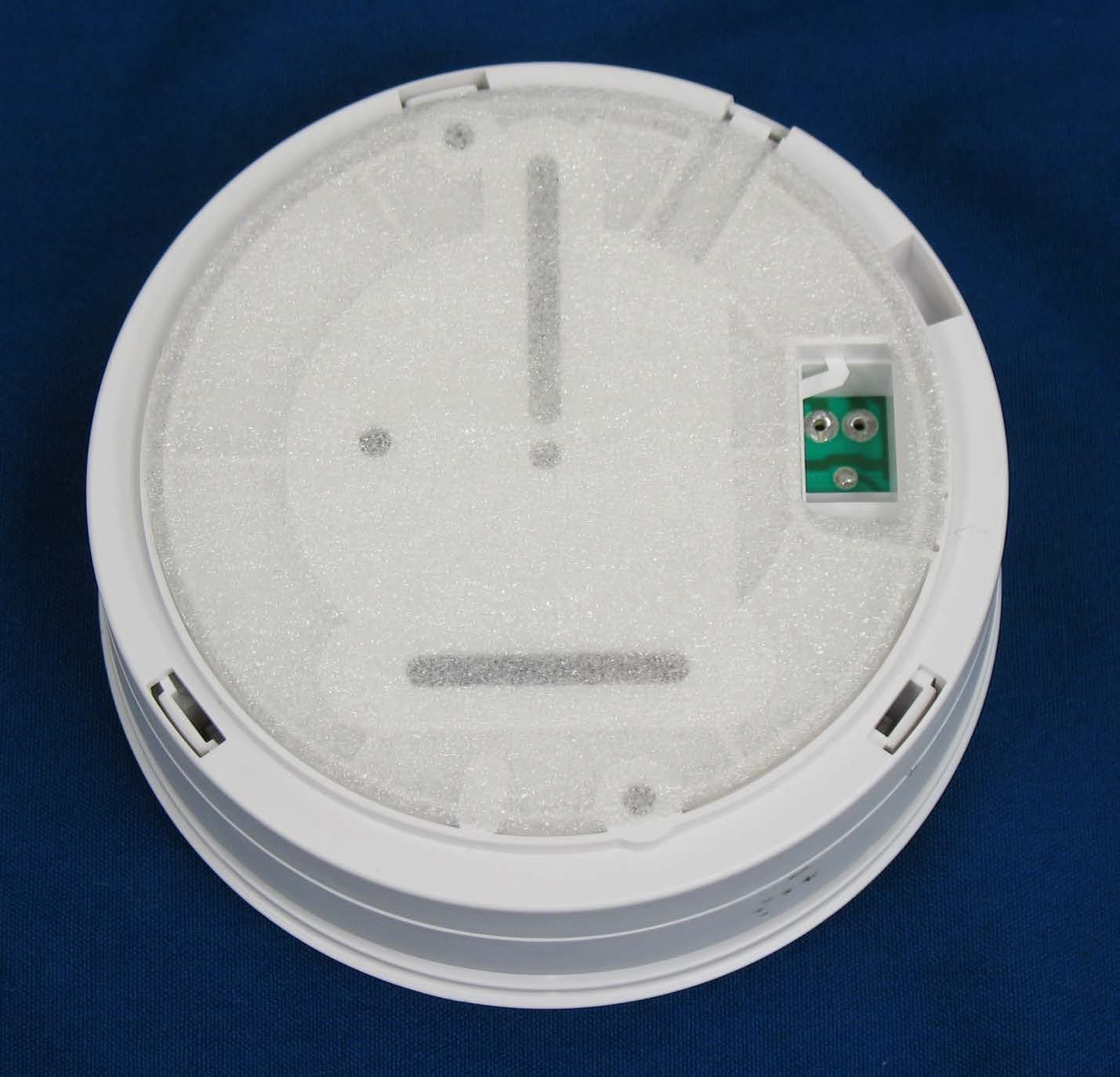
Internal Photos
FCC ID: WMSBETXSA (IC: 6693A-BETXSA) ______________________________________________________________________ EMC Technologies Pty. Ltd., 176 Harrick Road, Keilor Park, VIC, 3042, Australia. Phone: +61 3 9365 1000 Fax: +61 3 9331 7455 www.emctech.com.au ATTACHMENT 2 INTERNAL PHOTOS FCC ID: WMSBETXSA (IC: 6693A-BETXSA) ______________________________________________________________________ EMC Technologies Pty. Ltd., 176 Harrick Road, Keilor Park, VIC, 3042, Australia. Phone: +61 3 9365 1000 Fax: +61 3 9331 7455 www.emctech.com.au ATTACHMENT 2 INTERNAL PHOTOS
Test Report
EMI TEST REPORT for CERTIFICATION to FCC PART 15.231 & RSS-210 FCC ID:WMSBETXSA Industry Canada ID:6693A-BETXSA Test Sample: Optical Smoke Alarm Model: BE1283 Tested for: Bellman & Symfon AB Report Number: M120624_Certification Issue Date: 24 th October 2012 EMC Technologies Pty Ltd reports apply only to the specific samples tested under stated test conditions. It is the manufacturer’s responsibility to assure that additional production units of this model are manufactured with identical electrical and mechanical components. EMC Technologies Pty Ltd shall have no liability for any deductions, inferences or generalisations drawn by the client or others from EMC Technologies Pty Ltd issued reports. This report shall not be used to claim, constitute or imply product endorsement by EMC Technologies Pty Ltd. Accredited for compliance with ISO/IEC 17025. The results of the test, calibrations and/or measurement included in this document are traceable to Australian/national standards.NATA is a signatory to the ILAC Mutual Recognition Arrangement for the mutual recognition of the equivalence of testing, calibration and inspection reports. This document shall only be reproduced in full, with the exception of the certificate on p3 EMC Technologies Pty Ltd ABN 82 057 105 549 176 Harrick Road Keilor Park Victoria Australia 3042 Ph:+ 613 9365 1000 Fax: + 613 9331 7455 email: [email protected] FCC ID: WMSBETXSA (IC: 6693A-BETXSA)Report No. M120624_CertificationPage 2 of 16 Accredited for compliance with ISO/IEC 17025. The results of the test, calibrations and/or measurement included in this document are traceable to Australian/national standards. NATA is a signatory to the ILAC Mutual Recognition Arrangement for the mutual recognition of the equivalence of testing, calibration and inspection reports. This document shall only be reproduced in full, with the exception of the certificate on p3 EMI TEST REPORT FOR CERTIFICATION to FCC Part 15.231 & RSS-210 EMC Technologies Report No. M120624_Certification Issue Date: 24 th October 2012 CONTENTS 1.0INTRODUCTION 2.0GENERAL INFORMATION 3.0CONDUCTED EMI MEASUREMENTS 4.0RADIATED EMI MEASUREMENTS 5.0BANDWIDTH MEASUREMENTS 6.0ANTENNA REQUIREMENT 7.0COMPLIANCE STATEMENT 8.0MEASUREMENT UNCERTAINTIES APPENDIX A MEASUREMENT INSTRUMENT APPENDIX B GRAPHS of EMI MEASUREMENTS APPENDIX C BANDWIDTH PLOT ATTACHMENT 1EXTERNAL PHOTOGRAPHS ATTACHMENT 2INTERNAL PHOTOGRAPHS ATTACHMENT 3TEST SETUP PHOTOGRAPHS ATTACHMENT 4LABEL ATTACHMENT 5USER MANUAL CONFIDENTIAL 1OPERATIONAL DESCRIPTION CONFIDENTIAL 2BLOCK DIAGRAM CONFIDENTIAL 3SCHEMATICS FCC ID: WMSBETXSA (IC: 6693A-BETXSA)Report No. M120624_CertificationPage 3 of 16 Accredited for compliance with ISO/IEC 17025. The results of the test, calibrations and/or measurement included in this document are traceable to Australian/national standards. NATA is a signatory to the ILAC Mutual Recognition Arrangement for the mutual recognition of the equivalence of testing, calibration and inspection reports. This document shall only be reproduced in full, with the exception of the certificate on p3 EMI TEST REPORT FOR CERTIFICATION to FCC PART 15.231 & RSS-210 Report Number:M120624_Certification Test Sample: Optical Smoke Alarm Model: BE1283 Manufacturer: Home Watch Ltd – Hong Kong FCC ID: WMSBETXSA Industry Canada ID: 6693A-BETXSA Equipment Type: Intentional Radiator Tested for: Bellman & Symfon AB Address: Sodra Langebergsgatan 30 421 32 Vastra Frolunda, Sweden Phone: +46 31 68 28 20 Fax: +46 31 68 28 90 Contact: Peter Jungvid Email: [email protected] Test Standards: FCC Part 15, Subpart C – Intentional Radiators FCC Part 15.231: Periodic operation in the band 40.66-40.70 MHz and above 70 MHz ANSI C63.4 – 2009 RSS-210 Issue 8 - Licence-Exempt RadioCommunication Apparatus (All Frequency Bands): Category I Equipment Annex 1: Momentarily Operated Devices and Remote Control RSS-GEN Issue 3 - General Requirements and Information for the Certification of Radiocommunication Equipment Test Dates: 2 nd to 10 th October 2012 Test Engineer:Chieu Huynh Attestation: I hereby certify that the device(s) described herein were tested as described in this report and that the data included is that which was obtained during such testing. Authorised Signatory:Chieu Huynh Senior EMC Engineer EMC Technologies Pty Ltd FCC ID: WMSBETXSA (IC: 6693A-BETXSA)Report No. M120624_CertificationPage 4 of 16 Accredited for compliance with ISO/IEC 17025. The results of the test, calibrations and/or measurement included in this document are traceable to Australian/national standards. NATA is a signatory to the ILAC Mutual Recognition Arrangement for the mutual recognition of the equivalence of testing, calibration and inspection reports. This document shall only be reproduced in full, with the exception of the certificate on p3 EMI TEST REPORT FOR CERTIFICATION to FCC PART 15.231 & RSS-210 1.0INTRODUCTION This report details the results of EMI tests and measurements performed on the Optical Smoke Alarm, Model: BE1283. Test results and procedures were performed in accordance with the following Federal Communications Commission (FCC) standards/regulations: 47 CFR, Part 15, Subpart C:Rules for intentional radiators (particularly section 15.231) Section 15.203:Antenna requirements Section 15.205:Restricted bands of operation Section 15.207:Conducted Emission Limits Section 15.209:Radiated Emission Limits (General requirements) Section 15.231:Periodic operation in the band 40.66-40.70 MHz and above 70 MHz The test samplecompliedwith the requirements of 47 CFR, Part 15 Subpart C - Section 15.231. The test sample also complied with the Industry Canada RSS-210 issue 8 - Licence-Exempt Radiocommunication Apparatus (All Frequency Bands) Category I Equipment, Annex 1 1.1Summary of Results FCC Part 15, Subpart C Clauses IC RSS-210 and RSS-Gen Clauses Test PerformedResult 15.203 RSS-Gen (7.1.4)Antenna Requirement Not Applicable 15.205 RSS-Gen (7.2.2)Operation in Restricted Band Complied 15…
Text truncated - open the document above for the full version.
Test Setup Photos
FCC ID: WMSBETXSA (IC: 6693A-BETXSA) ______________________________________________________________________ EMC Technologies Pty. Ltd., 176 Harrick Road, Keilor Park, VIC, 3042, Australia. Phone: +61 3 9365 1000 Fax: +61 3 9331 7455 www.emctech.com.au ATTACHMENT 3 TEST SETUP PHOTOS FCC ID: WMSBETXSA (IC: 6693A-BETXSA) ______________________________________________________________________ EMC Technologies Pty. Ltd., 176 Harrick Road, Keilor Park, VIC, 3042, Australia. Phone: +61 3 9365 1000 Fax: +61 3 9331 7455 www.emctech.com.au ATTACHMENT 3 TEST SETUP PHOTOS
Contact Information
Applicant
Aki Tapani Nummela(CTO)
Test Firm
EMC Technologies Pty. Ltd.Chris Zombolas
Technical Specifications
| # | Rule Parts | Frequency Range | Power Output |
|---|---|---|---|
| 2 | 15.231 | 434.3 MHz - 434.3 MHz | - |
Other Applications from Bellman & Symfon Europe AB
WMSBETXSA2
Aug 18, 2015BE1281 Optical Smoke Alarm Transmitter
Equipment Class
DSC - Part 15 Security/Remote Control Transmitter
WMSBETX2
Feb 08, 2011Pushbuton Transmitter
Equipment Class
DSC - Part 15 Security/Remote Control Transmitter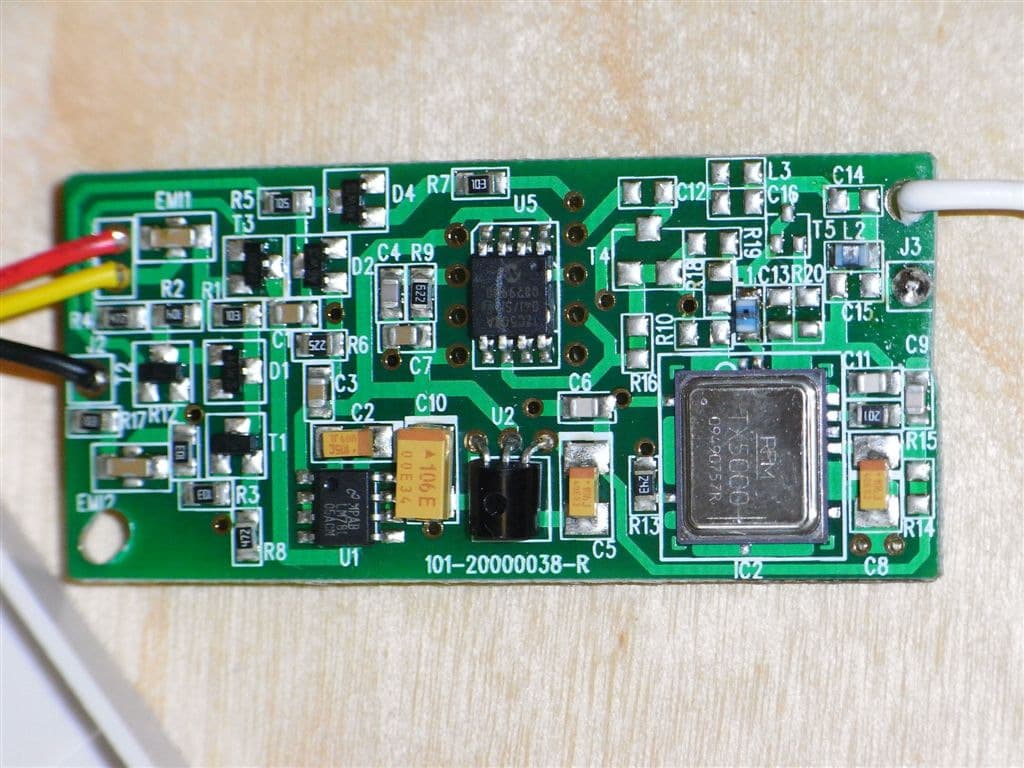
WMSBETX1
May 11, 2010Optical Smoke Alarm
Equipment Class
DSC - Part 15 Security/Remote Control Transmitter