WY7-0MX2Dual Control Lever
SHIMANO INC.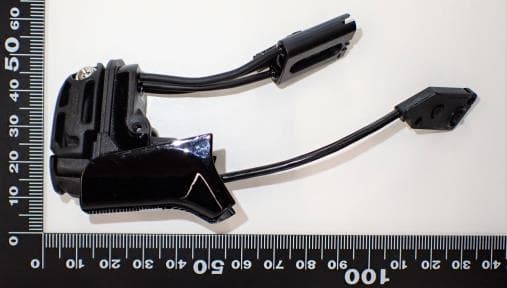
Click to zoom
Application Details
- Equipment Class
- DTS - Digital Transmission System
- Date of Grant
- Dec 09, 2023
- Application Purpose
- Original Equipment
- Date of Application
- Dec 09, 2023
- Equipment Note
- Dual Control Lever
- Frequency Range
- 2478.00000000 - 2478.00000000
- Company
- SHIMANO INC.
- Country
- Japan
Documents & Files
Document Text
Text extracted from the exhibit documents filed with the FCC. Open a document above to read the original.
Users Manual
(English) UM-0MX0A-005 User's Manual Dual Control Lever (Di2) https://si.shimano.com Contents IMPORTANT NOTICE........................................................................................3 Important safety information........................................................................4 Notice...............................................................................................................9 FCC.................................................................................................................11 Regular inspections before riding the bicycle............................................12 Names of parts..............................................................................................13 How to operate.............................................................................................14 Gear shifting operation.....................................................................................14 Hood button (default setting)..........................................................................14 Rear shift switch operation (default setting)...................................................14 Front shift switch operation (default setting)..................................................14 Operating the brakes.........................................................................................15 Selecting/confirming the shift mode................................................................15 Switching to the adjustment mode..................................................................15 Checking the shift switch battery level.............................................................16 About battery replacement..........................................................................17 Before replacing the battery.............................................................................17 Replacing the battery........................................................................................17 Recovery function using wireless function.................................................19 Method for pairing with the rear derailleur...............................................20 How to perform bed-in................................................................................21 Specifications................................................................................................22 2 IMPORTANT NOTICE For safety, be sure to read this user's manual thoroughly before use, follow it for correct use, and store it so that it can be referenced at any time. DANGER Failure to follow the instructions will result in death or serious injury. WARNING Failure to follow the instructions could result in death or serious injury. CAUTION Failure to follow the instructions could cause personal injury or physical damage to equipment and surroundings. Contact the place of purchase or a distributor for information on installation, adjustment, and replacement of the products which are not found in the user's manual. A dealer's manual for professional and experienced bicycle mechanics is available on our website (https://si.shimano.com). Please observe the appropriate rules and regulations of the country, state or region in which you conduct your business as a dealer. IMPORTANT NOTICE 3 Important safety information Important safety information 4 Because each bicycle may handle slightly differently depending on the model, be sure to learn the proper braking technique (including brake lever pressure and bicycle control characteristics) and operation of your bicycle. Improper use of your bicycle's brake system may result in a loss of control, which could lead to serious injury due to a fall or collision. Do not disassemble or modify the product. This may cause the product to not operate correctly, and you may suddenly fall and be seriously injured. Use only the battery specified. Using an incorrect battery may cause the battery to burst or leak fluid, resulting in fire, injury, or defacement in the surrounding area. Do not use the battery outside its operating temperature ranges. If a battery is used or stored in temperatures which are outside these ranges, fire, injury or problems with operation may occur. Do not throw or subject this product to strong shocks. If this is not observed, bursting, overheating or problems with operation may occur. Do not let grease adhere to the metal terminals. A conduction failure may result. Do not use the battery if leakages, discoloration, deformation or any other abnormalities occur. If this is not observed, bursting, overheating or problems with operation may occur. If any leaked fluid gets on your skin or clothes, wash it off immediately with clean water. The leaked fluid may damage your skin. Coin batteries are hazardous and must be kept away from children. Never put batteries in mouth or in any part of the body. Severe or fatal injuries can occur within 2 hours if swallowed or placed inside the body. If this occurs or is suspected, seek medical attention immediately. Do not use this equipment in locations where children are likely to be present. If the included coin batteries are swallowed by mistake, seek medical attention immediately. Dispose of the coin batteries according to proper country and/or state disposal regulations. Disposal of this product into fire or a hot oven, or mechanically crushing or cutting it, can result in an explosion of the coin batteries. When operating the shift switch, be careful not to allow your fingers to be caught in the derailleur. The powerful motor which drives the electronic gear shifting derailleur will operate without stopping until Important safety information 5 the shifting position is reached. This hydraulic brake system has different braking characteristics from those of the rim brake type, demonstrating relatively high braking force at the beginning of braking (higher than the rim brake type); familiarize yourself sufficiently with the braking …
Text truncated - open the document above for the full version.
Users Manual
Important Product Information (ENG) Dual Control Lever (Di2) Hydraulic Disc Brake Type SHIMANO will be going green with digital user's manuals. Join us in our effort to protect the environment by going paperless. •Scan the above QR code to view the user's manual. For safety, be sure to read the user's manual thoroughly before use, follow it for correct use, and store it so that it can be referenced at any time. •Alternatively, you may visit our website https://si.shimano.com to download the user's manual. •For consumers who do not have easy access to the internet, please contact your place of purchase or any of the SHIMANO offices listed above to obtain a hardcopy of the user's manual. * QR Code is a registered trademark of DENSO WAVE INCORPORATED. Important safety information WARNING •Because each bicycle may handle slightly differently depending on the model, be sure to learn the proper braking technique (including brake lever pressure and bicycle control characteristics) and operation of your bicycle. Improper use of your bicycle's brake system may result in a loss of control, which could lead to serious injury due to a fall or collision. •Do not disassemble or modify the product. This may cause the product to not operate correctly, and you may suddenly fall and be seriously injured. •Use only the battery specified. Using an incorrect battery may cause the battery to burst or leak fluid, resulting in fire, injury, or defacement in the surrounding area. •Do not use the battery outside its operating temperature ranges. If a battery is used or stored in temperatures which are outside these ranges, fire, injury or problems with operation may occur. •Do not throw or subject this product to strong shocks. If this is not observed, bursting, overheating or problems with operation may occur. •Do not let grease adhere to the metal terminals. A conduction failure may result. •Do not use the battery if leakages, discoloration, deformation or any other abnormalities occur. If this is not observed, bursting, overheating or problems with operation may occur. •If any leaked fluid gets on your skin or clothes, wash it off immediately with clean water. The leaked fluid may damage your skin. •Coin batteries are hazardous and must be kept away from children. Never put batteries in mouth or in any part of the body. Severe or fatal injuries can occur within 2 hours if swallowed or placed inside the body. If this occurs or is suspected, seek medical attention immediately. •Do not use this equipment in locations where children are likely to be present. If the included coin batteries are swallowed by mistake, seek medical attention immediately. •Dispose of the coin batteries according to proper country and/or state disposal regulations. Disposal of this product into fire or a hot oven, or mechanically crushing or cutting it, can result in an explosion of the coin batteries. •When operating the shift switch, be careful not to allow your fingers to be caught in the derailleur. The powerful motor which drives the electronic gear shifting derailleur will operate without stopping until the shifting position is reached. •This hydraulic brake system has different braking characteristics from those of the rim brake type, demonstrating relatively high braking force at the beginning of braking (higher than the rim brake type); familiarize yourself sufficiently with the braking characteristics before using it. If you ride the bicycle without becoming sufficiently familiar with the braking characteristics, braking may cause you to fall off the bicycle, potentially causing serious injury or a fatal accident. •Riders must become accustomed to the higher performance of this brake before riding the bicycle. Using larger diameter disc brake rotors provides a higher braking force than smaller diameter disc brake rotors. If you ride the bicycle without becoming sufficiently familiar with the braking characteristics, braking may cause you to fall off the bicycle, potentially causing serious injury or a fatal accident. •Keep your fingers away from rotating disc brake rotors. The disc brake rotor is sharp enough to inflict severe injury to your fingers if caught within the openings of moving rotor. •Do not touch the calipers or disc brake rotor while riding or immediately after dismounting from the bicycle. The calipers and disc brake rotor will become hot when the brakes are operated, so you may get burned if you touch them. •Do not allow any oil or grease to get onto the disc brake rotor and brake pads. Riding the bicycle with oil or grease on the brake shoes may prevent the brakes from operating and result in serious injury due to a fall or collision. •Check the thickness of the brake pads and do not use them if they have a thickness of 0.5 mm or less. Doing so may prevent the brakes from operating and result in serious injury. 2 mm0.5 mm •Do not use the disc brake rotor if it is cracked or deformed. The disc brake rotor may break, and result in serious injury due to a fall. •Do not use the disc brake rotor if its thickness is 1.5 mm or less. Also do not use it if the aluminum surface becomes visible. The disc brake rotor may break, and result in serious injury due to a fall. •Do not continuously apply the brakes. Doing so may cause a sudden increase in the brake lever stroke, preventing the brakes from operating and resulting in serious injury. •Do not use the brakes with fluid leaking. Doing so may prevent the brakes from operating and result in serious injury due to a fall or collision. •Do not apply the front brake too strongly. If you do so, the front wheel may lock and the bicycle may fall forward, and serious injury may result. •Because the required braking distance will be longer during wet weather, reduce your speed and apply the brakes early and gently. You may fall or collide and be seriously injured. •A wet road surface may cause tires to lose traction; therefore, to avoid this, reduce your speed and apply the brake…
Text truncated - open the document above for the full version.
External Photos
< TOP SIDE VIEW > < LEFT SIDE VIEW >< FRONT SIDE VIEW >< RIGHT SIDE VIEW >< BACK SIDE VIEW > < BOTTOM SIDE VIEW > CLOSE UP OF THE LABEL Photos of the Outside:Dual Control Lever 0MX2 2023/8/3 SHIMANO
ID Label/Location Info
Label info These markings are molded. CONFIDENTIAL 0MX2 These markings are printed. The marking durability is enough to keep in the product lifetime. These markings are printed. *After obtained the certificate, XXX will be replaced by official certificate number. *The font size of FCC ID is 4pt FCC ID:WY7-0MX2 IC:8117A-0MX2 Topside Under side
Internal Photos
Internal Photos for 0MX2 PCB RF IC Antenna CONFIDENTIAL
RF Exposure Info
UL Japan, Inc. Ise EMC Lab 4383-326 Asama-cho, Ise-shi, Mie 516-0021 Japan T:: +81.596.24.8999 / F:: +81.596.24.8124 / W:: japan.ul.com August 23, 2023 FCC ID: WY7-0MX2 To whom it may concern, We, UL Japan, Inc, hereby declare that Dual Control Lever, model: 0MX2 (FCC ID: WY7-0MX2) of SHIMANO INC. is exempt from RF exposure SAR evaluation as its output power meets the exclusion limits stated in KDB 447498D01(v06). KDB 447498D01(v06) has the following exclusion for portable devices: The 1g and 10g SAR test exclusion thresholds for 100 MHz to 6 GHz at test separation distances ≤ 50 mm are determined by: [(max. power of channel, including tune-up tolerance, mW)/(min. test separation distance, mm)] ꞏ[√f(GHz)] ≤ 3.0 for 1-g SAR and ≤ 7.5 for 10-g extremity SAR, where •f(GHz) is the RF channel transmit frequency in GHz •Power and distance are rounded to the nearest mW and mm before calculation •The result is rounded to one decimal place for comparison The test exclusions are applicable only when the minimum test separation distance is ≤ 50 mm and for transmission frequencies between 100 MHz and 6 GHz. When the minimum test separation distance is < 5 mm, a distance of 5 mm is applied to determine SAR test exclusion. Since this device is used with only limbs, ≤ 7.5 is applied as extremity SAR test exclusion. This device has f = 2.478 GHz and distance = 5 mm (minimum separation distance: 5 mm was used in the calculation) and the maximum average output power (Burst power average) was 7 mW So for this device: 7 mW[maximum average output power]/5 mm[minimum separation distance]*√2.478 = 2.2 *This is less than 7.5, so no SAR is required. Even taking into account the tolerance, this device can be satisfied with the limits. Thank you for your attention to this matter. Takayuki Shimada Leader
Test Report
Test Report No. 14869862H-C-R1 Page 1 of 26 UL Japan, Inc. Ise EMC Lab. 4383-326 Asama-cho, Ise-shi, Mie-ken 516-0021 Japan / +81-596-24-8999 RADIO TEST REPORT Test Report No. 14869862H-C-R1 Customer SHIMANO INC. Description of EUT Dual Control Lever Model Number of EUT 0MX2 FCC ID WY7-0MX2 Test Regulation FCC Part 15 Subpart C Test Result Complied Issue Date December 8, 2023 Remarks - Representative Test Engineer Approved By Kiyoshiro Okazaki Engineer Takayuki Shimada Leader CERTIFICATE 5107.02 The testing in which "Non-accreditation" is displayed is outside the accreditation scopes in UL Japan, Inc. There is no testing item of "Non-accreditation". Report Cover Page - Form-ULID-003532 (DCS:13-EM-F0429) Issue# 22.0 Test Report No. 14869862H-C-R1 Page 2 of 26 UL Japan, Inc. Ise EMC Lab. 4383-326 Asama-cho, Ise-shi, Mie-ken 516-0021 Japan / +81-596-24-8999 ANNOUNCEMENT REVISION HISTORY Original Test Report No.: 14869862H-C This report is a revised version of 14869862H-C. 14869862H-C is replaced with this report. Revision Test Report No. Date Page Revised Contents - (Original) 14869862H-C August 22, 2023 - 1 14869862H-C-R1 December 8, 2023 Clause 4.1 Added information of software (Date and Storage location): “Date: 2023.7.10, Storage location: EUT memor y” 1 14869862H-C-R1 December 8, 2023 Clause 4.2 Added explanatory note: “* Jig battery (DC 7.4 V) was ... to RF part re gardless of input voltage.” This test report shall not be reproduced in full or partial, without the written approval of UL Japan, Inc. The results in this report appl y only to the sample tested. (Laboratory was not involved in sampling.) This sample tested is in compliance with the limits of the above re gulation. The test results in this test report are traceable to the national or international standards. This test report must not be used by the customer to claim product certification, approval, or endorsement b y the A2LA accreditation body. This test report covers Radio technical requirements. It does not cover administrative issues such as Manual or non-Radio test related Requirements. (if applicable) The all test items in this test report are conducted b y UL Japan, Inc. Ise EMC Lab. The opinions and the interpretations to the result of the description in this report are outside scopes where UL Japan, Inc. has been accredited. The information provided from the customer for this report is identified in Section 1. For test report (s) referred in this report, the latest version (including any revisions) is always referred. Test Report No. 14869862H-C-R1 Page 3 of 26 UL Japan, Inc. Ise EMC Lab. 4383-326 Asama-cho, Ise-shi, Mie-ken 516-0021 Japan / +81-596-24-8999 Reference: Abbreviations (Including words undescribed in this report) A2LA The American Association for Laboratory Accreditation ICES Interference-Causing Equipment Standard AC Alternating Current IEC International Electrotechnical Commission AFH Adaptive Frequency Hopping IEEE Institute of Electrical and Electronics Engineers AM Amplitude Modulation IF Intermediate Frequency Amp, AMP Amplifier ILAC International Laboratory Accreditation Conference ANSI American National Standards Institute ISED Innovation, Science and Economic Development Canada Ant, ANT Antenna ISO International Organization for Standardization AP Access Point JAB Japan Accreditation Board ASK Amplitude Shift Keying LAN Local Area Network Atten., ATT Attenuator LIMS Laboratory Information Management System AV Average MCS Modulation and Coding Scheme BPSK Binary Phase-Shift Keying MRA Mutual Recognition Arrangement BR Bluetooth Basic Rate N/A Not Applicable BT Bluetooth NIST National Institute of Standards and Technology BT LE Bluetooth Low Energy NS No signal detect. BW BandWidth NSA Normalized Site Attenuation Cal Int Calibration Interval NVLAP National Voluntary Laboratory Accreditation Pro gram CCK Complementary Code Keying OBW Occupied Band Width Ch., CH Channel OFDM Orthogonal Frequency Division Multiplexing CISPR Comite International Special des Perturbations Radioelectriques P/M Power meter CW Continuous Wave PCB Printed Circuit Board DBPSK Differential BPSK PER Packet Error Rate DC Direct Current PHY Physical Layer D-factor Distance factor PK Peak DFS Dynamic Frequency Selection PN Pseudo random Noise DQPSK Differential QPSK PRBS Pseudo-Random Bit Sequence DSSS Direct Sequence Spread Spectrum PSD Power Spectral Density EDR Enhanced Data Rate QAM Quadrature Amplitude Modulation EIRP, e.i.r.p. Equivalent Isotropically Radiated Power QP Quasi-Peak EMC ElectroMagnetic Compatibility QPSK Quadri-Phase Shift Keying EMI ElectroMagnetic Interference RBW Resolution Band Width EN European Norm RDS Radio Data System ERP, e.r.p. Effective Radiated Power RE Radio Equipment EU European Union RF Radio Frequency EUT Equipment Under Test RMS Root Mean Square Fac. Factor RSS Radio Standards Specifications FCC Federal Communications Commission Rx Receiving FHSS Frequency Hopping Spread Spectrum SA, S/A Spectrum Analyzer FM Frequency Modulation SG Signal Generator Freq. Frequency SVSWR Site-Voltage Standing Wave Ratio FSK Frequency Shift Keying TR Test Receiver GFSK Gaussian Frequency-Shift Keying Tx Transmitting GNSS Global Navigation Satellite System VBW Video BandWidth GPS Global Positioning System Vert. Vertical Hori. Horizontal WLAN Wireless LAN Test Report No. 14869862H-C-R1 Page 4 of 26 UL Japan, Inc. Ise EMC Lab. 4383-326 Asama-cho, Ise-shi, Mie-ken 516-0021 Japan / +81-596-24-8999 CONTENTS PAGE SECTION 1: Customer Information ......................................................................................... 5 SECTION 2: Equipment Under Test (EUT) .............................................................................. 5 SECTION 3: Test Specification, Procedures & Results ........................................................ 6 SECTION 4: Operation of EUT during testing ........................................................................ 9 SECTION 5: Radiated…
Text truncated - open the document above for the full version.
Test Setup Photos
Test Report No. 14869862H-C-R1 Page 24 of 26 UL Japan, Inc. Ise EMC Lab. 4383-326 Asama-cho, Ise-shi, Mie-ken 516-0021 Japan / +81-596-24-8999 APPENDIX 3: Photographs of Test Setup Radiated Spurious Emission Photo 1 Photo 2 Test Report No. 14869862H-C-R1 Page 25 of 26 UL Japan, Inc. Ise EMC Lab. 4383-326 Asama-cho, Ise-shi, Mie-ken 516-0021 Japan / +81-596-24-8999 Worst Case Position X-axis Y-axis Z-axis Test Range Horizontal Vertical Below 1 GHz X-axis X-axis Above 1 GHz X-axis Z-axis Test Report No. 14869862H-C-R1 Page 26 of 26 UL Japan, Inc. Ise EMC Lab. 4383-326 Asama-cho, Ise-shi, Mie-ken 516-0021 Japan / +81-596-24-8999 Antenna Terminal Conducted Tests Photo 1 Photo 2 End of Report
Contact Information
Applicant
Osamu Kariyama(Assistant Vice President)
Technical Contact
UL Japan, Inc.Takayuki Shimada
[email protected]81-596-24-8999
4383-326 Asama-cho, Ise-shi · Mie-ken · Japan
Test Firm
UL Japan, Inc.(Ise)Takayuki Shimada
Technical Specifications
| # | Rule Parts | Frequency Range | Power Output |
|---|---|---|---|
| 1 | 15C | 2.48 GHz - 2.48 GHz | 7.60 mW |
Other Applications from SHIMANO INC.
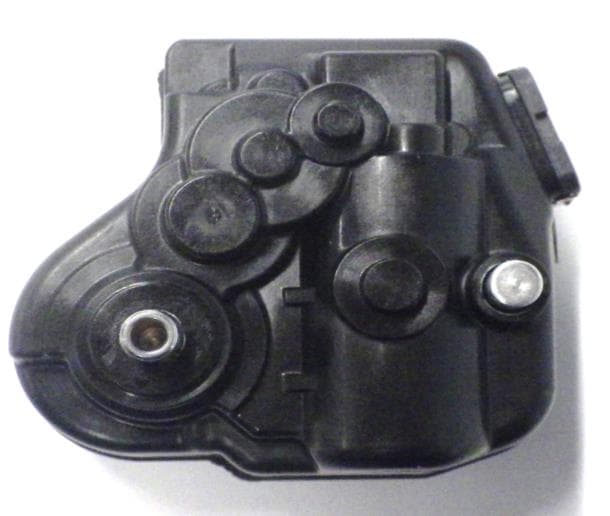
WY7-3GK1
Jan 25, 2021Rear Derailleur
Equipment Class
DTS - Digital Transmission System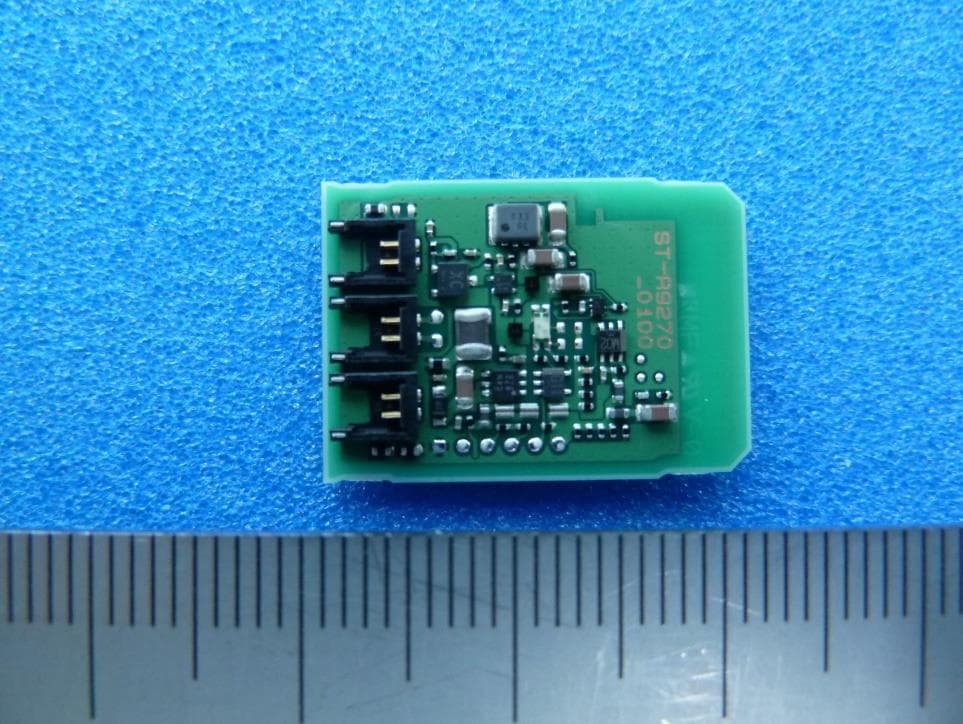
WY7-927A
Jan 24, 2021Wireless Module
Equipment Class
DTS - Digital Transmission System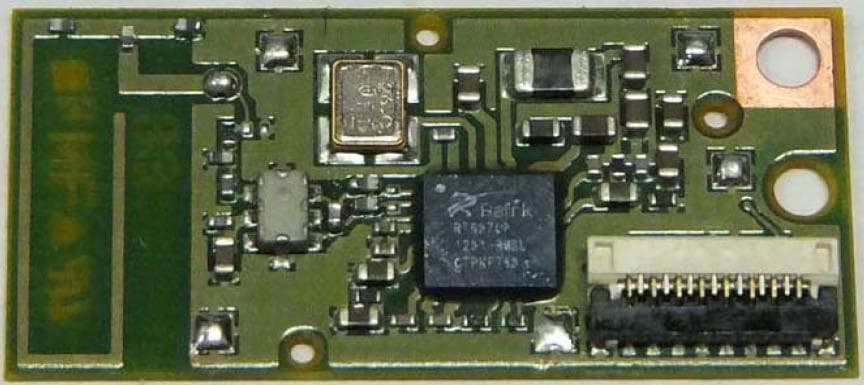
WY7-21
Feb 25, 2014Wireless LAN Module
Equipment Class
DTS - Digital Transmission System
WY7-11
Dec 26, 2013Wireless Unit
Equipment Class
DXX - Part 15 Low Power Communication Device Transmitter
WY7-SWAN1
May 21, 2012Wireless Module
Equipment Class
DXX - Part 15 Low Power Communication Device Transmitter