XQLSD1006427Bluetooth Keyboard
Guangzhou Sunday Electronics Co., Ltd.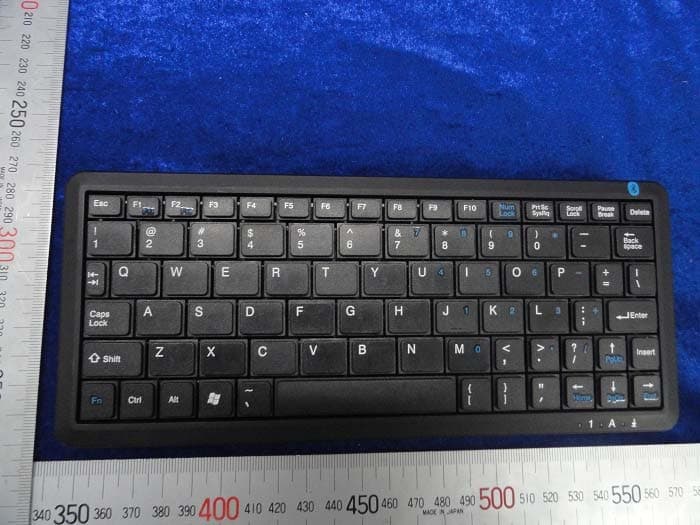
Click to zoom
Application Details
- Equipment Class
- DSS - Part 15 Spread Spectrum Transmitter
- Date of Grant
- Aug 17, 2010
- Application Purpose
- Original Equipment
- Date of Application
- Aug 17, 2010
- Equipment Note
- Bluetooth Keyboard
- Frequency Range
- 2402.00000000 - 2480.00000000
- Country
- China
Documents & Files
Document Text
Text extracted from the exhibit documents filed with the FCC. Open a document above to read the original.
Users Manual
Changes or modifications not expressly approved by the party responsible for compliance could void theuser's authority to operate the equipment.This equipment has been tested and found to comply with the limits for a Class B digital device, pursuantto Part 15 of the FCC Rules. These limits are designed to provide reasonable protection against harmful interference in a residential installation. This equipment generates uses and can radiate radio frequencyenergy and, if not installed and used in accordance with the instructions, may cause harmful in terference to radio communications.However, there is no guarantee that interference will not occur in a particularinstallation. If this equipment does cause harmful interference to radio or television reception, which canbe determined by turning the equipment off and on, the user is encouraged to try to correct the interferenceby one or more of the following measures:-- Reorient or relocate the receiving antenna.-- Increase the separation between the equipment and receiver. -- Connect the equipment into an outlet on a circuit different from that to which the receiver is connected. -- Consult the dealer or an experienced radio/TV technician for help FCC Radiation Exposure Statement The antennas used for this transmitter must be installed to provide a separation distance of at least 20 cm from all persons and must not be collocated or operating in conjunction with any other antenna or transmitter.
Operational Description
Operation Description This Bluetooth keyboard gets power from 3.7V 320mA Lithium Battery. Through PJ1134B 332M2 to converted 3.3V to supply power for main IC chip BCM2042. The main keyboard IC is BCM2042, and the ID code is stored in EEPROM (M24C128). The working frequency of Bluetooth IC BCM2042 is 24MHz, and there are 79 channels in 2 groups hopping channels from 2.4GHz to 2.4835GHz. Compliant Bluetooth Specification 2.0 There are three modes when the keyboard is in funct-ion, normal mode, idle mode and sleep mode. In normal mode, the power is not higher than 3.7V 3mA. When it is not in use for 1 seconds, it changes to idle mode, and the power is not higher than 3.7V 1mA. After 2 hours in idle mode, it changes to sleep mode, and the power is not higher than 3.7V 20uA. Modulation Type: FHSS Operational Frequency Range: 2402-2480MHz Input Voltage: DC3.7V Antanna: PCB Printed Antenna with gain 1.49dBi
Test Report
ISO/IEC17025Accredited Lab. Report No: FCC 1005348 File reference No: 2010-07-28 Applicant: Guangzhou Sunday Electronics Co., Ltd. Product: Bluetooth Keyboard Model No: S-KW427B Trademark: Sunday Test Standards: FCC Part 15 Subpart C, Paragraph 15.247 Test result: It is herewith confirmed and found to comply with the requirements set up by ANSI C63.4&FCC Part 15 Subpart C, Paragraph 15.247 regulations and RSS-210 for the evaluation of electromagnetic compatibility Approved By Jack Chung Manager Dated: July 28, 2010 Results appearing herein relate only to the sample tested The technical reports is issued errors and omissions exempt and is subject to withdrawal at SHENZHEN TIMEWAY TECHNOLOGY CONSULTING CO LTD 5/F,Block 4, Anhua Industrial Zone.,No.8 TaiRan Rd.CheGongMiao,FuTian District, Shenzhen,CHINA. Tel (755) 83448688 Fax (755) 83442996 Report No: 1005348 Page 2 of 56 Date: 2010-07-28 TEST REPORT The report refers only to the sample tested and does not apply to the bulk. This report is issued in confidence to the client and it will be strictly treated as such by the Shenzhen Timeway Technology Consulting Co .,Ltd. It may not be reproduced rather in its entirety or in part and it may not be used for adverting. The client to whom the report is issued may, however, show or send it . or a certified copy there of prepared by the Shenzhen Timeway Technology Consulting co .,Ltd to his customer. Supplier or others persons directly concerned. Shenzhen Timeway Technology Consulting co .,Ltd will not, without the consent of the client enter into any discussion of correspondence with any third party concerning the contents of the report. In the event of the improper use of the report. The Shenzhen Timeway Technology Consulting co .,Ltd reserves the rights to withdraw it and to adopt any other remedies which may be appropriate. Special Statement: The testing quality ability of our laboratory meet with "Quality Law of People's Republic of China" Clause 19. The testing quality system of our laboratory meets with ISO/IEC-17025 requirements, which is approved by CNAS. This approval result is accepted by MRA of APLAC. Our test facility is recognized, certified, or accredited by the following organizations: CNAS-LAB Code: L2292 The EMC Laboratory has been assessed and in compliance with CNAS-CL01 accreditation criteria for testing Laboratories (identical to ISO/IEC 17025:1999 General Requirements) for the Competence of testing Laboratories. FCC-Registration No.: 899988 The EMC Laboratory has been registered and fully described in a report filed with the (FCC) Federal Communications commission. The acceptance letter from the FCC is maintained in our files. Registration No.:899988. IC- Registration No.: IC5205A-01 The EMC Laboratory has been registered and fully described in a report filed with the (IC) Industry Canada. The acceptance letter from the IC is maintained in our files. Registration No.: IC 5205A-01. Report No: 1005348 Page 3 of 56 Date: 2010-07-28 TEST REPORT The report refers only to the sample tested and does not apply to the bulk. This report is issued in confidence to the client and it will be strictly treated as such by the Shenzhen Timeway Technology Consulting Co .,Ltd. It may not be reproduced rather in its entirety or in part and it may not be used for adverting. The client to whom the report is issued may, however, show or send it . or a certified copy there of prepared by the Shenzhen Timeway Technology Consulting co .,Ltd to his customer. Supplier or others persons directly concerned. Shenzhen Timeway Technology Consulting co .,Ltd will not, without the consent of the client enter into any discussion of correspondence with any third party concerning the contents of the report. In the event of the improper use of the report. The Shenzhen Timeway Technology Consulting co .,Ltd reserves the rights to withdraw it and to adopt any other remedies which may be appropriate. Test Report Conclusion Content 1.0 General Details ................................................................................................ 4 1.1 Test Lab Details................................................................................................ 4 1.2 Applicant Details.............................................................................................. 4 1.3 Description of EUT .......................................................................................... 4 1.4 Submitted Sample............................................................................................. 4 1.5 Test Duration.................................................................................................... 4 1.6 Test Uncertainty.................................................................................................4 1.7 Test By.......................................................................................................... 5 2.0 List of Measurement Equipment......................................................................... 5 3.0 Technical Details............................................................................................. 7 3.1 Summary of Test Results..................................................................................... 7 3.2 Test Standards.................................................................................................. 7 4.0 EUT Modification............................................................................................. 7 5.0 Power Line Conducted Emission Test...................................................................... 8 5.1 Schematics of the Test........................................................................................ 8 5.2 Test Method and Test Procedure............................................................................ 8 5.3 Configuration of the EUT.................................................................................... 8 5.4 EUT Operating Condition...................…
Text truncated - open the document above for the full version.
Contact Information
Applicant
Judy Chu(Sales)
Technical Contact
Guangzhou Sunday Electronics Co., Ltd.Judy Chu
[email protected]+86-20-87071000
Building 5, Gaotang Commercial Zone, No.128, · Guangzhou · China
Non-Technical Contact
Guangzhou Sunday Electronics Co., Ltd.Judy Chu
[email protected]+86-20-87071000
Test Firm
Shenzhen Timeway Testing LaboratoriesJack Chung
Technical Specifications
| # | Rule Parts | Frequency Range | Power Output |
|---|---|---|---|
| 1 | 15C | 2.40 GHz - 2.48 GHz | 570.00 µW |
Other Applications from Guangzhou Sunday Electronics Co., Ltd.
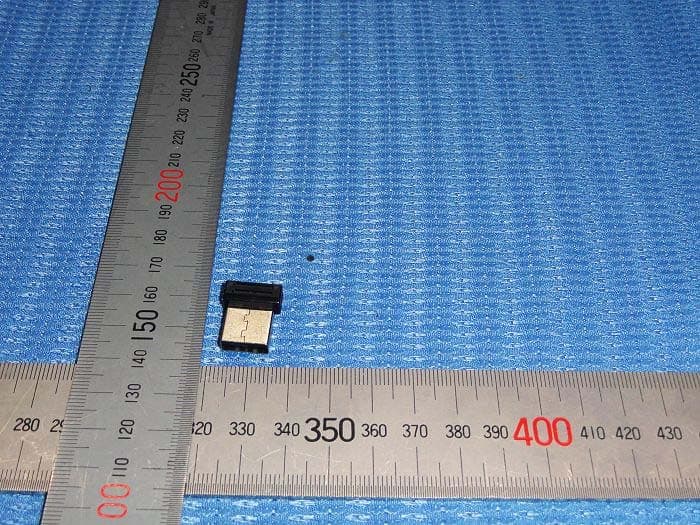
XQLS-KW258SL-D
Sep 19, 2014Receiver of Wireless Keyboard
Equipment Class
DXX - Part 15 Low Power Communication Device Transmitter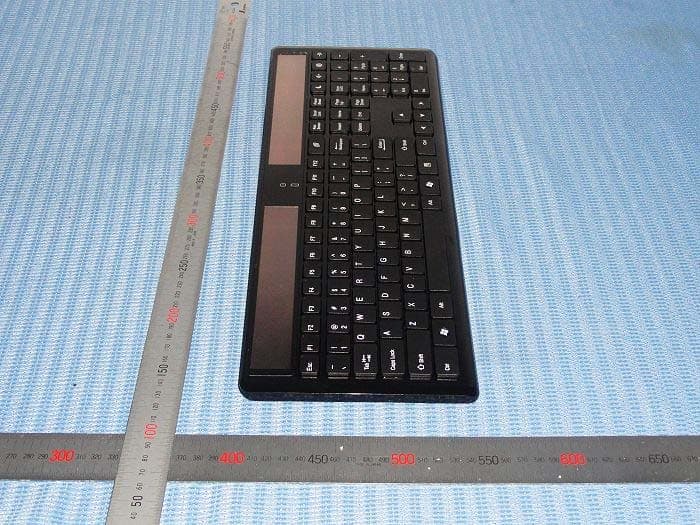
XQLS-KW258SL
Sep 19, 2014Solar Keyboard
Equipment Class
DXX - Part 15 Low Power Communication Device Transmitter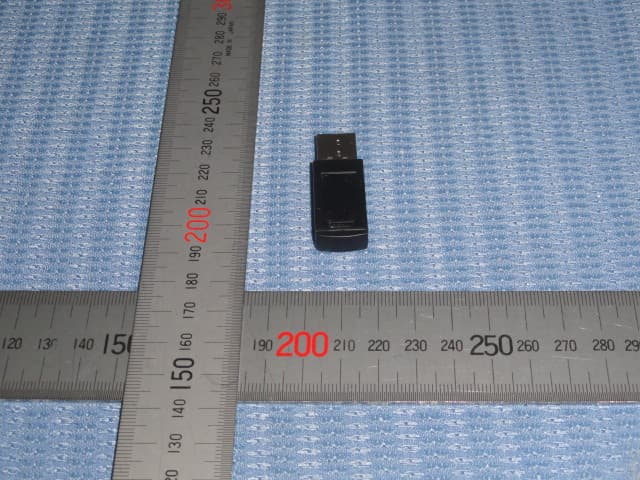
XQLSD1115101
Dec 23, 2013Wireless Receiver
Equipment Class
DXX - Part 15 Low Power Communication Device Transmitter
XQLSD1115425
Dec 22, 20132.4G Wireless Touchpad Keyboard
Equipment Class
DXX - Part 15 Low Power Communication Device Transmitter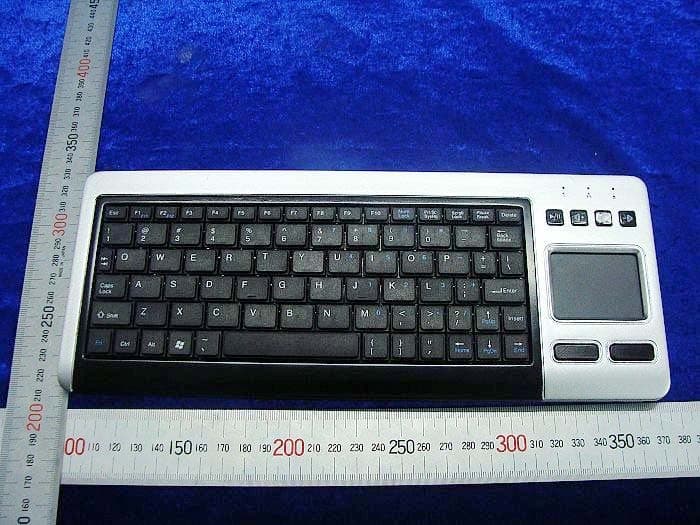
XQLSD0912425
Jan 18, 2010Wireless Keyboard with Touchpad
Equipment Class
DXX - Part 15 Low Power Communication Device Transmitter