2AJRDIT-36Wireless Sports Earbuds
Haven Technologies, Inc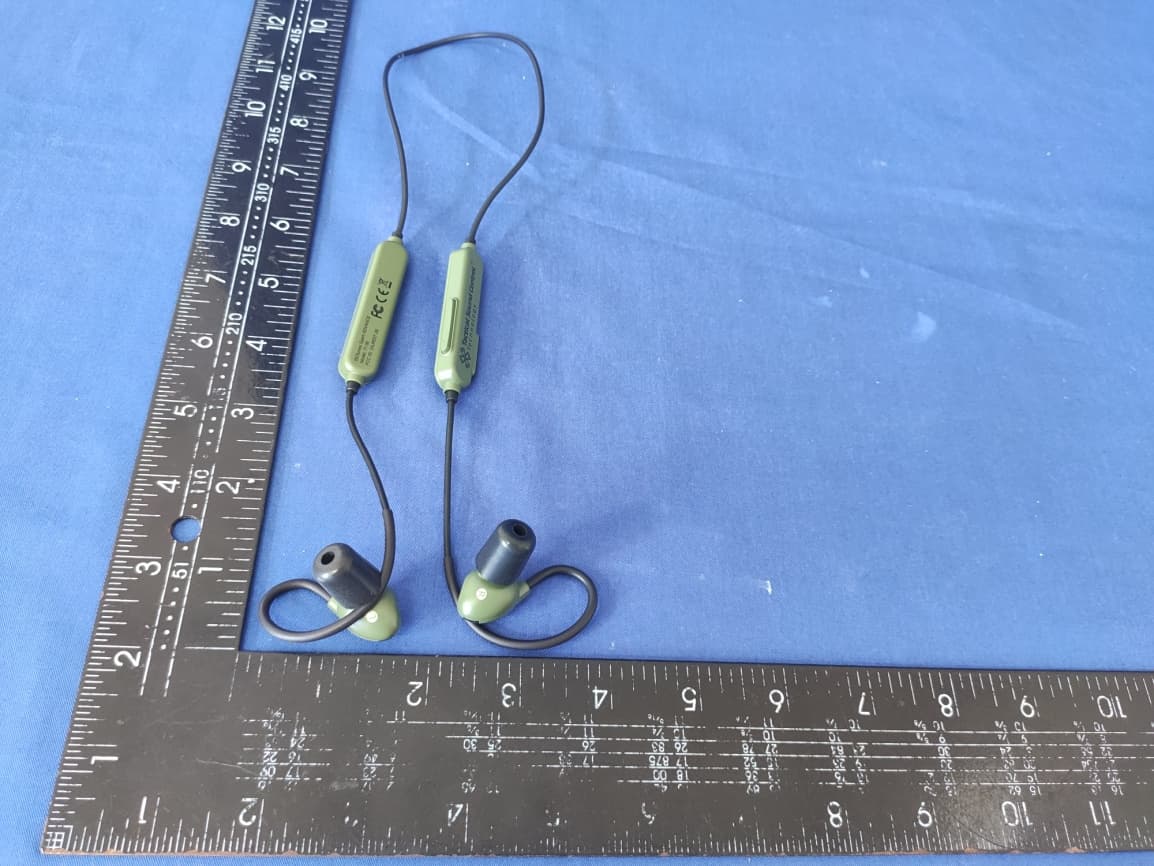
Click to zoom
Application Details
- Equipment Class
- DSS - Part 15 Spread Spectrum Transmitter
- Date of Grant
- Nov 12, 2020
- Application Purpose
- Original Equipment
- Date of Application
- Nov 11, 2020
- Equipment Note
- Wireless Sports Earbuds
- Frequency Range
- 2402.00000000 - 2480.00000000
- Company
- Haven Technologies, Inc
- Country
- United States
Documents & Files
Document Text
Text extracted from the exhibit documents filed with the FCC. Open a document above to read the original.
Users Manual
“Project Geronimo” Manual Location of Controls 1. Volume Up 2. Multi-Function Button (MFB) 3. Volume Down 4. TSC Volume Up 5. TSC Volume Down 6. Bluetooth Mic 7. Charge Indicator 8. Left/Right Earbud Magnets 9. Charge Port Power On/Off/Pair ● Power On : Press and hold MFB for 3 seconds ● Power Off: Press and hold MFB for 3 seconds ● Pair: Open your Bluetooth settings on your device. Search “Geronimo”. Pair and connect. LED Indicators: ● Blue Flash When Powering ON ● Red Flash When Powering Off ● Red/Blue Alternating - Pairing Mode ● Solid Red - Charging (Cable plugged in) ● Solid Blue - Charge Complete (Cable plugged in) Music ● Play/Pause: Short Single Press MFB ● Next Track: Short Double Press MFB ● Previous Track : Short Triple Press MFB ● Siri/Google Assistant: Double Press MFB Phone: ● Answer/End Call: Short Press MFB ● Reject Call: Press and hold MFB Volume: ● Press + or – button Tactical Sound Control (TSC): This product includes TSC - Tactical Sound Control. TSC is a microphone technology that allows the user to hear the world around them, but always at a safe listening level. When ambient noise breaches a safe listening level, the microphone technology immediately responds and attenuates to a safe level. TSC automatically turns on when the product turns on. Adjusting the TSC volume is easy, simply press the TSC Volume Up and Down Button. Charging Please charge Geronimo with the included Micro USB charing cable. When plugged in, the Red Light indicates the product is charging, the blue light indicates the product is charged. Adjusting the Fit Geronimo comes with 4 sets of TRILOGYTM foam eartips (XS,S,M,L) and 3 sets of silicone eartips (S,M,L). The TRILOGYTM foam eartips are designed for superior comfort, superior noise blocking and superior sound quality. Choose the size that fits most snugly in your ear canal. Remember, the snugger the fit, the better the noise blocking. The silicone eartips are intended for use when NOT in noisy situations. ISOtunes® TRILOGYTM foam eartips have a threaded core and the sound port on the earbud is also threaded. 1. Twist the foam eartip counterclockwise to remove and clockwise to place on a new foam eartip. 2 2. Carefully compress the foam eartip on the stem/sound port. 3. Insert the foam/eartip into your ear as deeply as is comfortable and hold for 5 seconds while the foam expands. 4. Repeat with second eartip. Hint: To open your ear canal wider, lift the top of your ear up and away from your head, as shown in the diagram. Noise Attenuation APPROVAL: ISOtunes® Geronimo is tested and approved in accordance with ANSI S3.19- 1974 Specifications. NRR Testing The level of noise entering a person’s ear, when ISOtunes® XTRA 2.0headphones are worn as directed, is closely approximated by the difference between the A-weighted environmental noise level and the Noise Reduction Rating (NRR). Improper fit of this device will reduce its effectiveness in attenuating noise. Consult the enclosed instructions for proper fitting. Example: 1. The surrounding noise level measured at the ear is 100 dB. 2. The NRR of ISOtunes® XTRA 2.0is 27 dB. 3. The noise level entering the ear is approximately equal to 73 dB. Please note that the NRR is based on the attenuation of continuous noise and may not be an accurate indicator of the protection attainable against impulsive noise, such as gunfire. Wearer Information ● The headphone limits the audio output to 85 dB(A). ● To prevent damage to the headset function, do not subject it to rough handling. 3 ● The ability to hear warning signals in certain environments may be impaired while listening to music. ● The wearer should check for proper function before usage. If distortion or failure is detected, the wearer should first check the battery level and then refer to the manual’s troubleshooting section. Warning ● Performance may deteriorate with battery usage. The typical period of continuous use that can be expected from the headset is around 12 hours. ● The output of the electrical audio circuit of this hearing protector may exceed the daily limited sound level. ● For best performance, the headset are fitted, adjusted and maintained in accordance to the manufacturer’s instruction. ● It is important to wear the headset at all times in loud environments to avoid the risk of hearing damage. ● Regularly inspect the headset regularly for deterioration or damage. ● If the recommendations given above are not followed, the protection by the earmuffs will be impaired. Storage ● Do not store the hearing protector at temperatures exceeding +55°C (131°F), for example on a dashboard or windowsill. ● Do not store the hearing protector at temperature below -20°C (-4°F). Under extremely cold conditions, warm the hearing protector before using. Cleaning ● Certain chemical substances (e.g. bug spray, sunscreen) may adversely affect this product. Simply wipe it with a soft cloth moistened with a mild soap or water. Safety ● This headset is intended to protect your hearing. ● Loud music can cause hearing damage. ● Avoid working in a loud environment over extended periods of time. ● Wear the hearing protection when working at a loud workplace. ● Acoustical warning, indication signals and environmental noises can sound different when wearing hearing protection. 4 ● The perception of warning signals in certain workplaces may be affected when listening to music through the earmuffs. Notes ● Failure to follow these instructions or misuse of the headset can result in damage and/or loss. ● If the recommendation given under “Adjusting the Fit” is not followed, the protection given by the earmuffs will be severely impaired. ● Headband and cushions are non-removable and non-replaceable so do not tear it off, as it will damage the headset. ● Certain chemical substances may adversely affect this product. Further information should be sought from the manufacturer ● When hygiene covers are put on to the cushions, it may affect the acoustic performance of the e…
Text truncated - open the document above for the full version.
Cover Letter(s)
FCC ID: 2AJRDIT-36 Haven Technologies, Inc Model Difference Model No.: IT-38(ISOtunes PRO 2.0 + Aware, 85dB) IT-36(ISOtunes Sport ADVANCE, 85dB), IT-39(ISOtunes PRO 2.0 + Aware EN352, 79dB) All models have same circuits diagram, PCB Layout, construction and rated power; Only different is the model name and Appearance color. Sincerely, Name: Pete Murphy Company: Haven Technologies, Inc Address: 1025 Pine Hill Way, Carmel, Indiana 46021 USA Phone: 317 490 7197 Fax: 317 490 7197 E-Mail: [email protected]
Cover Letter(s)
Haven Technologies, Inc for Certification Service in USA Federal Communication Commission Equipment Authorization Division, Application Processing Branch 7435 Oakland Mills Road Columbia, MD 21046 <2020-11-11> TO WHOM IT MAY CONCERN Pursuant to Paragraphs §0.457 and 0.459 of the Commission’s Rules (47 C.F.R.) and Section §552(b)(4) of the Freedom of Information Act, we requests confidentiality for the following products: FCC ID Model name 2AJRDIT-36 IT-38(ISOtunes PRO 2.0 + Aware, 85dB), IT-36(ISOtunes Sport ADVANCE, 85dB), IT-39(ISOtunes PRO 2.0 + Aware EN352, 79dB) For the product stated above, we request that the following information be held confidential; Exhibits Long-Term Confidentiality Short-Term Confidentiality Short-Term Confidentiality Days External Photos Internal Photos Block Diagram Schematics Test Setup Photos User’s Manual Parts List Tune Up Operational Descriptions The long-term confidentiality exhibits contain our trade secrets and proprietary information that could be of benefit to our competitors. The short-term confidentiality on the basis of ensuring that business sensitive information remains confidential until the actual marketing of our new device. If you have any questions, please feel free to contact me at the address shown below. Sincerely, ------------------------------------ Name: Pete Murphy Company: Haven Technologies, Inc Address: 1025 Pine Hill Way, Carmel, Indiana 46021 USA Phone: 317 490 7197 Fax: 317 490 7197 E-Mail: [email protected]
Cover Letter(s)
Haven Technologies, Inc 1025 Pine Hill Way, Carmel, Indiana 46021 USA Tel: 317 490 7197 Fax: 317 490 7197 Federal Communications Commission Authorization and Evaluation Division Equipment Authorization Branch 7435 Oakland Mills Road Columbia, MD 21046 2020/11/11 To whom it may concern: We, the undersigned, hereby authorize Eurofins Product Service GmbH to act on our behalf in all matters relati ng to applications for equipment authorization FCC ID: [2AJRDIT-36] including the signing of all documents related to these matters. Any and all acts carried out by Eurofins Product Service GmbH on our behalf shall have the same effect as acts of our own. We also hereby certify that no party to this application is subject to a denial of benefits, including FCC benefits, pursuant to Section 5301 of the Anti-Drug Abuse Act of 1988, 21 U.S.C. 862. Sincerely, Name: Pete Murphy Company: Haven Technologies, Inc Address: 1025 Pine Hill Way, Carmel, Indiana 46021 USA Phone: 317 490 7197 Fax: 317 490 7197 E-Mail: [email protected]
External Photos
FCC ID: 2AJRDIT-36 FCC ID: 2AJRDIT-36 FCC ID: 2AJRDIT-36 FCC ID: 2AJRDIT-36 FCC ID: 2AJRDIT-36 FCC ID: 2AJRDIT-36
ID Label/Location Info
FCC ID LOCATION
Internal Photos
FCC ID: 2AJRDIT-36 BT ANT FCC ID: 2AJRDIT-36
RF Exposure Info
RF Exposure evaluation FCC ID: 2AJRDIT-36 1.1. Applicable Standard According to §1.1307(b)(1), systems operating under the provisions of this section shall be operated in a manner that ensures that the public is not exposed to radio frequency energy level in excess of the Commission’s guidelines. According to §1.1310 and §2.1093 RF exposure is calculated. KDB447498 v06: Mobile and Portable Devices RF Exposure Procedures and Equipment Authorization Policies. 1.2. Requirement According to KDB447498 D01 General RF Exposure Guidance v06 Section 4.3.1 Standalone SAR test exclusion considerations: “Unless specifically required by the published RF exposure KDB procedures, standalone 1-g head or body and 10-g extremity SAR evaluation for general population exposure conditions, by measurement or numerical simulation, is not required when the corresponding SAR Test Exclusion Threshold condition, listed below, is satisfied. These test exclusion conditions are based on source-based time-averaged maximum conducted output power of the RF channel requiring evaluation, adjusted for tune-up tolerance, and the minimum test separation distance required for the exposure conditions.22 The minimum test separation distance is determined by the smallest distance from the antenna and radiating structures or outer surface of the device, according to the host form factor, exposure conditions and platform requirements, to any part of the body or extremity of a user or bystander (see 5) of section 4.1). To qualify for SAR test exclusion, the test separation distances applied must be fully explained and justified by the operating configurations and exposure conditions of the transmitter and applicable host platform requirements, typically in the SAR measurement or SAR analysis report, according to the required published RF exposure KDB procedures. When no other RF exposure testing or reporting is required, a statement of justification and compliance must be included in the equipment approval, in lieu of the SAR report, to qualify for the SAR test exclusion. When required, the device specific conditions described in the other published RF exposure KDB procedures must be satisfied before applying these SAR test exclusion provisions; for example, handheld PTT two-way radios, handsets, laptops & tablets etc.23 “ [(max. power of channel, including tune-up tolerance, mW)/ (min. test separation distance, mm)] · [√f (GHz)] ≤ 3.0 for 1-g SAR and ≤ 7.5 for 10-g extremity SAR, where: • f (GHz) is the RF channel transmit frequency in GHz • Power and distance are rounded to the nearest mW and mm before calculation • The result is rounded to one decimal place for comparison • 3.0 and 7.5 are referred to as the numeric thresholds in the step 2 below The test exclusions are applicable only when the minimum test separation distance is ≤ 50 mm and for transmission frequencies between 100 MHz and 6 GHz. When the minimum test separation distance is < 5 mm, a distance of 5 mm according to 5) in section 4.1 is applied to determine SAR test exclusion. 1.3. Manufacturing tolerance 2.1. Evaluation Result Band/ Mode f (GHz) Antenna Distance (mm) RF output power (including tune-up tolerance) SAR Test Exclusion Threshold SAR Test Exclusion dBm mW BT 2.480 5 6 3.98 1.25<3.0 Yes Note: Result=P F /D P=Maximum turn-up power in mW F=Channel frequency in GHz D=Mininmun test separation distance in mm 3.1. Conclusion The measurement results comply with the FCC Limit per 47 CFR 2.1093 for the uncontrolled RF Exposure and SAR Exclusion Threshold per KDB 447498 v06, No SAR is required. GFSK(Peak) Channel Channel 00 Channel 39 Channel 78 Target (dBm) 4.0 4.0 5.0 Tolerance ±(dB) 1.0 1.0 1.0 π/4 DQPSK(Peak) Channel Channel 00 Channel 39 Channel 78 Target (dBm) 3.0 3.0 3.0 Tolerance ±(dB) 1.0 1.0 1.0 8DPSK(Peak) Channel Channel 00 Channel 39 Channel 78 Target (dBm) 3.0 3.0 3.0 Tolerance ±(dB) 1.0 1.0 1.0
Test Report
Page 1 of 51 Report No.: UNIA20102707ER-01 FCC RADIO TEST REPORT FCC ID: 2AJRDIT-36 Product: Wireless Sports Earbuds Trade Name: ISOtunes Model Name: IT-38(ISOtunes PRO 2.0 + Aware, 85dB) Series Model: IT-36(ISOtunes Sport ADVANCE, 85dB), IT-39(ISOtunes PRO 2.0 + Aware EN352, 79dB) Report No.: UNIA20102707ER-01 Prepared for Haven Technologies, Inc 1025 Pine Hill Way, Carmel, Indiana 46021 USA Prepared by Shenzhen United Testing Technology Co., Ltd. 2F, Annex Bldg, Jiahuangyuan Tech Park, #365 Baotian 1 Rd, Tiegang Community, Xixiang Str, Bao'an District, Shenzhen, China Page 2 of 51Report No.: UNIA20102707ER-01 TEST RESULT CERTIFICATION Applicant’s name ................. : Haven Technologies, Inc Address ................................. : 1025 Pine Hill Way, Carmel, Indiana 46021 USA Manufacture's Name ............ : ASKA Electronics Co., Ltd Address ................................. : No.5 Puxin Road, Keyuancheng Industrial Tangxia Town, Dongguan, Guangdong, China Product description Product name ............................ : Wireless Sports Earbuds Trade Mark ............................ : ISOtunes Model and/or type reference : IT-36(ISOtunes Sport ADVANCE, 85dB), IT-38(ISOtunes PRO 2.0 + Aware, 85dB), IT-39(ISOtunes PRO 2.0 + Aware EN352, 79dB) Standards ............................. : FCC Rules and Regulations Part 15 Subpart C Section 15.247, ANSI C63.10: 2013 This device described above has been tested by Shenzhen United Testing Technology Co., Ltd., and the test results show that the equipment under test (EUT) is in compliance with the FCC requirements. And it is applicable only to the tested sample identified in the report. This report shall not be reproduced except in full, without the written approval of UNI, this document may be altered or revised by Shenzhen United Testing Technology Co., Ltd., personnel only, and shall be noted in the revision of the document. D ate of Test ........................................... : Date (s) of performance of tests ............. : Oct. 19 ~ 27, 2020 Date of Issue .......................................... : Oct. 28, 2020 Test Result.............................................. : Pass Tested by: Kahn yang/Engineer Reviewer: Sherwin Qian/Supervisor Approved & Authorized Signer: Liuze/Manager Page 3 of 51 Report No.: UNIA20102707ER-01 Table of Contents Page 1. TEST SUMMARY ....................................................................................................... 5 1.1 TEST PROCEDURES AND RESULTS ........................................................................ 5 1.2 TEST FACILITY ........................................................................................................... 5 1.3 MEASUREMENT UNCERTAINTY ............................................................................... 5 2. GENERAL INFORMATION ........................................................................................ 6 2.1 GENERAL DESCRIPTION OF EUT ............................................................................ 6 2.2 Carrier Frequency of Channels ..................................................................................... 7 2.3 Operation of EUT during testing .................................................................................. 7 2.4 DESCRIPTION OF TEST SETUP ............................................................................... 7 2.5 MEASUREMENT INSTRUMENTS LIST ....................................................................... 8 3. CONDUCTED EMISSIONS TEST ............................................................................. 9 3.1 Conducted Power Line Emission Limit .......................................................................... 9 3.2 Test Setup ..................................................................................................................... 9 3.3 Test Procedure .............................................................................................................. 9 3.4 Te s t Result .................................................................................................................... 9 4. RADIATED EMISSION TEST ................................................................................... 12 4.1 Radiation Limit ............................................................................................................ 12 4.2 Test Setup ................................................................................................................... 12 4.3 Test Procedure ............................................................................................................ 13 4.4 Test Result .................................................................................................................. 13 5. BAND EDGE ............................................................................................................ 18 5.1 Limits .......................................................................................................................... 18 5.2 Test Procedure ............................................................................................................ 18 5.3 Test Result .................................................................................................................. 18 6. OCCUPIED BANDWIDTH MEASUREMENT ........................................................... 20 6.1 Test Setup ................................................................................................................... 20 6.2 Test Procedure ............................................................................................................ 20 6.3 Measurement Equipment Used ................................................................................... 20 6.4 Test Result .................................................................................................................. 20 7. MAXIMUM PEAK OUTPUT POWER ........................................................…
Text truncated - open the document above for the full version.
Test Setup Photos
FCC ID: 2AJRDIT-36 Radiated Emission (Below 1G) Radiated Emission (Above 1G) FCC ID: 2AJRDIT-36 Conducted Emission
Contact Information
Applicant
Austin Chen
Test Firm
Shenzhen United Testing Technology Co., Ltd.Liu Ze
[email protected]86-755-86180996
Technical Specifications
| # | Rule Parts | Frequency Range | Power Output |
|---|---|---|---|
| 1 | 15C | 2.40 GHz - 2.48 GHz | 2.50 mW |
Other Applications from Haven Technologies, Inc
2AJRDIT-92
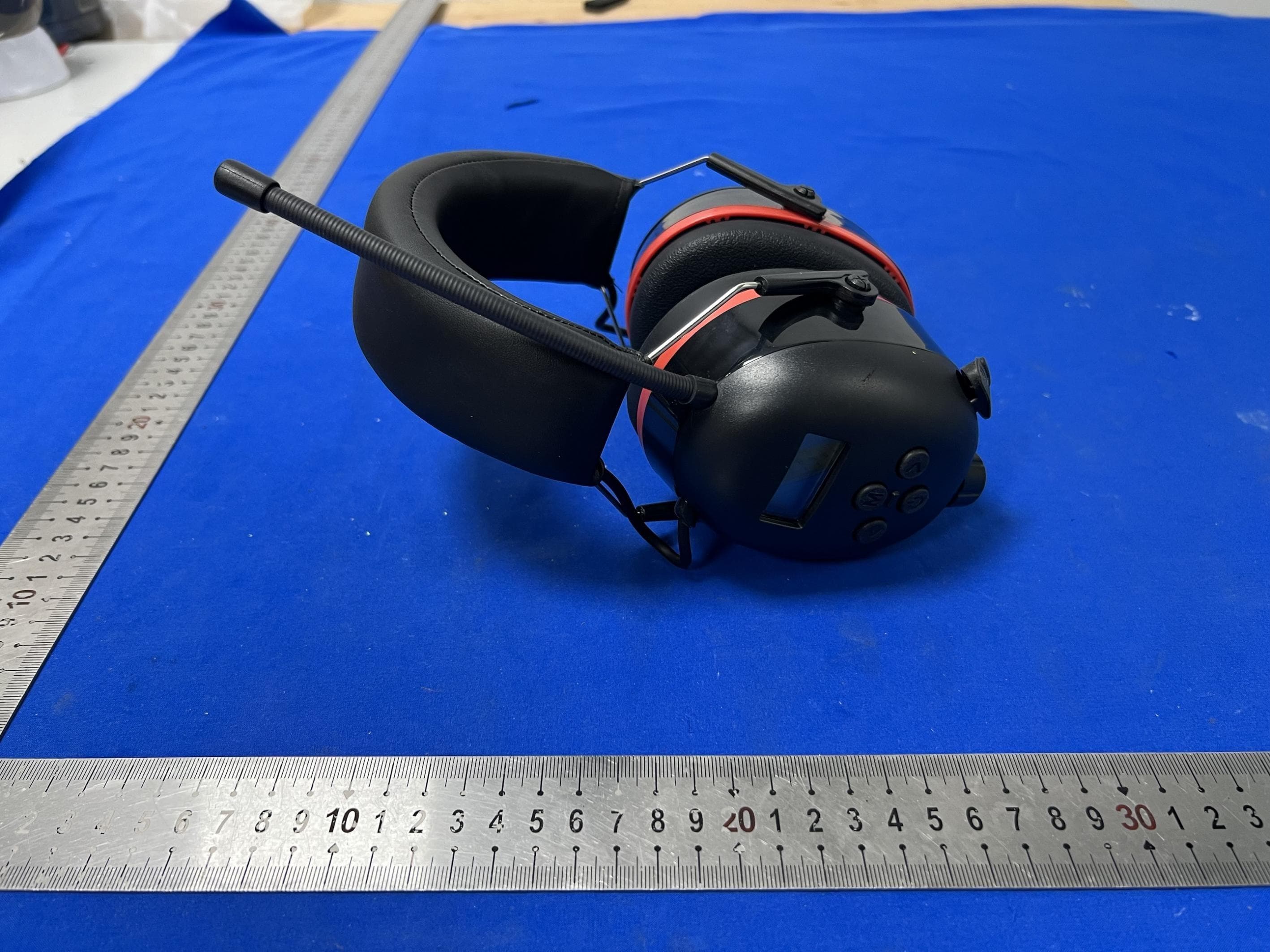
Jan 12, 2024Bluetooth AM/FM Radio Headphones
Equipment Class
DSS - Part 15 Spread Spectrum Transmitter
2AJRDIT-75
Mar 01, 2023Hearing Protection Earbuds
Equipment Class
DSS - Part 15 Spread Spectrum Transmitter
2AJRDIT-72
Jun 08, 2022ISOtunes Free 2.0
Equipment Class
DSS - Part 15 Spread Spectrum Transmitter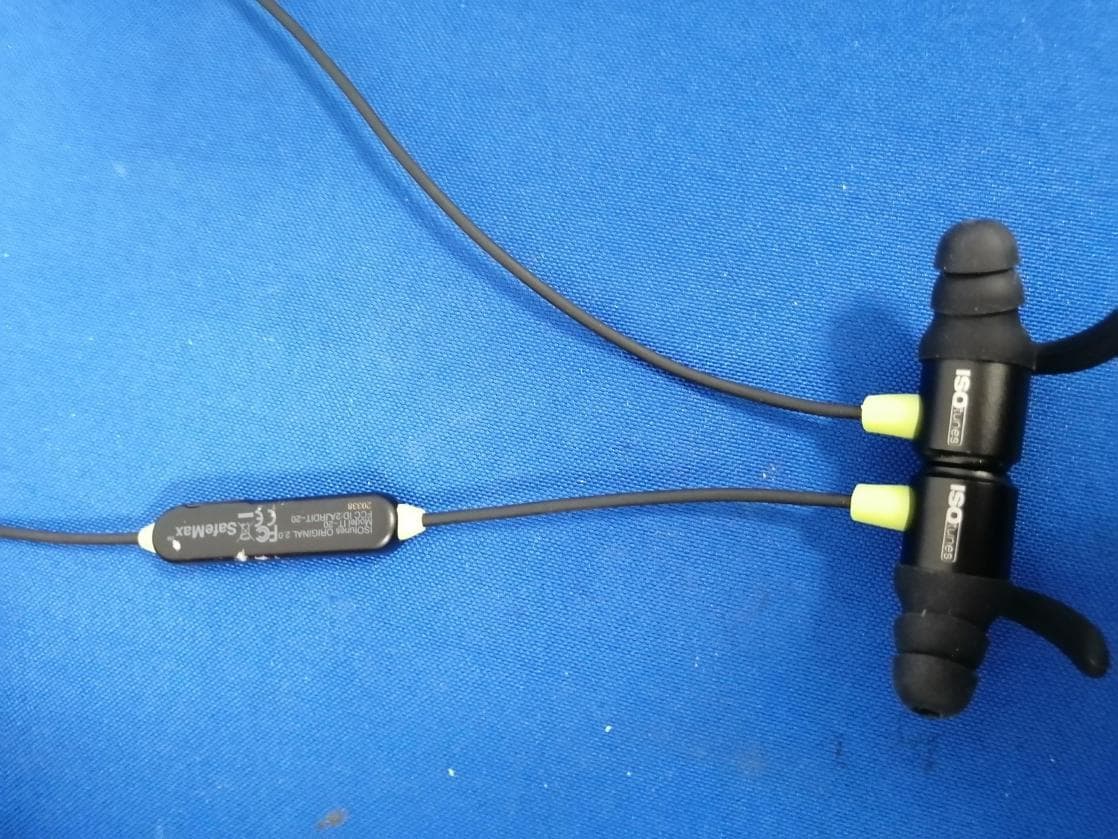
2AJRD-ISOTUNES
Feb 19, 2021ISOtunes ORIGINAL 2.0
Equipment Class
DTS - Digital Transmission System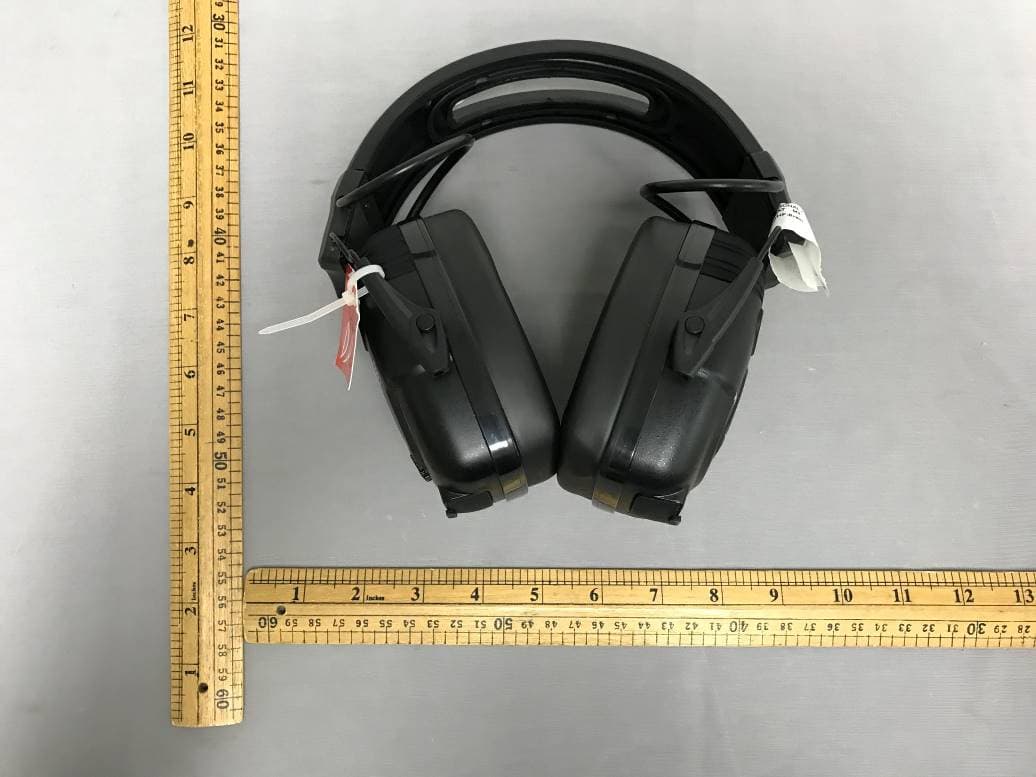
2AJRDIT-30
Oct 28, 2020HEADSET
Equipment Class
DSS - Part 15 Spread Spectrum Transmitter