AL8-E230Bluetooth Headset
HP Inc.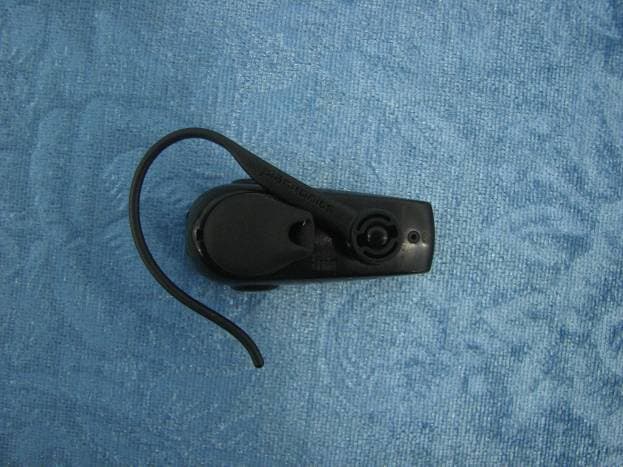
Click to zoom
Application Details
- Equipment Class
- DSS - Part 15 Spread Spectrum Transmitter
- Date of Grant
- Mar 06, 2008
- Application Purpose
- Original Equipment
- Date of Application
- Mar 06, 2008
- Equipment Note
- Bluetooth Headset
- Frequency Range
- 2402.00000000 - 2480.00000000
- Company
- HP Inc.
- Country
- United States
Documents & Files
Document Text
Text extracted from the exhibit documents filed with the FCC. Open a document above to read the original.
Users Manual
Plantronics Explorer ® 230 User Guide iiiii Welcome Congratulations on purchasing a Plantronics headset. This User Guide contains instructions for setting up and using your Plantronics Explorer ® 230 headset. Please refer to the separate Safety Instructions booklet for important product safety information prior to installation or use of the product. Getting Assistance The Plantronics Technical Assistance Center is ready to assist you. You can find answers to frequently asked questions, ask a question using e-mail, receive service over the Internet, or speak directly with a representative. Visit www.plantronics.com/support Registering Your Product Visit www.plantronics.com/product registration to register your product online so we can provide you with the best service and technical support. Contents Welcome ...............................................................................................ii What is Bluetooth ® ? ............................................................................iv Package Contents, Features and Accessories .....................................1 Charging Your Headset ........................................................................2 How to Charge Your Headset Using the AC Charger ..................2 Pairing Your Headset ...........................................................................4 Plantronics QuickPair™ Technology ...........................................4 How to Pair Your Phone With Your Headset for the First Time .....5 How to Pair Your Headset if it Has Been Previously Paired With Another Device ...........................................................................6 Adjusting the Fit ...................................................................................7 Headset Controls .................................................................................8 Range ..................................................................................................9 Indicator Lights ..................................................................................10 Hands-Free Features .........................................................................11 Troubleshooting .................................................................................12 Product Specifications .......................................................................13 Limited Warranty ................................................................................14 Regulatory Notices ............................................................................15 1 Package Contents and Features Plantronics Explorer ® 230 Accessories* Headset Front AC Charger 100 – 240V Indicator Light * Not included. To order, please contact your Plantronics supplier or go to www.plantronics.com What is Bluetooth ® ? Bluetooth wireless technology provides a way for devices to communicate with each other using short-range radio frequency instead of wires. Any two Bluetooth devices can communicate as long as they both have Bluetooth turned on, they are within range and they have been paired — a quick “handshake” process that connects the two devices. Bluetooth range is up to 33 feet (10 meters). Obstructions such as walls or other electronics devices can cause interference or shorten the effective range. NOTE For optimal performance, place your headset and phone on the same side of your body. Headset Back Microphone Eartip Charging Jack Volume Control Swivel Earloop Call Control Button (on/off) Vehicle Charging Adapter #76777-01 USB Headset Charger #76016-01 Vehicle Power Charger #78583-01 23 How to Charge Your Headset Using Only the AC Charger Before using your headset for the first time, charge it for at least 20 minutes. A full charge takes approximately two hours. 1 Connect the AC charger to a power outlet. 2 Plug the AC jack into the charging jack on the headset. While your headset is charging, the indicator glows red. When your headset is fully charged, the indicator turns off. WARNiNG Do not use your headset while it is connected to the charger. Charging Your Headset Charging time 2 hours ................... Full charge 20 minutes .............. minimum charge before first use 1 2 Pairing Your Headset Pairing is the process of introducing your headset to your phone. Before using your headset for the first time, you must pair it with your Bluetooth phone. Normally, you need to pair your headset with your phone only once. To see a demo of the pairing process, visit www.plantronics.com/ EasyToPair Plantronics QuickPair ™ Technology Your new headset includes Plantronics QuickPair technology to simplify the Bluetooth setup process. The first time you turn your headset on, your headset automatically enters pairing mode for 10 minutes. Once paired successfully, your headset stays on for instant use. If not sucessfully paired after 10 minutes, your headset automatically powers off. When you turn the headset on again, it automatically goes into pairing mode until successfully paired with a Bluetooth phone. 45 1 How to Pair Your Phone With Your Headset for the First Time 1 Turn on the Bluetooth feature on your phone. For most phones, select Settings/Tools > Connections > Bluetooth > On. See your phone’s user guide for more information. 2 Turn the headset on. Press and hold the call control button until the indicator flashes red/blue. The headset is now in pairing mode. If you don’t see the red/blue flash, press and hold the call control button to turn your headset off, and then press and hold the call control button again until you see the red/blue flash. 3 Use the commands on your phone to locate your headset. For most phones, select Settings/Tools > Connections > Bluetooth > Search > 2XXPlantronics. See your phone’s user guide for more information. When prompted for the passkey, enter 0000. Pairing is successful when the indicator on your headset flashes blue. Your headset is now connected and ready to use. Pairing Your Headset 3 SETTINGS SETTINGS Time…
Text truncated - open the document above for the full version.
Attestation Statements
Worldwide Headquarters 345 Encinal Street z P.O. Box 635 Santa Cruz, CA 95060 Bluetooth Declaration Per FCC 15.247 Requirements 1 Output power and channel separation of a Bluetooth device in the different operating modes: The different operating modes (data-mode, acquisition-mode) of a Bluetooth device don’t influence the output power and the channel spacing. There is only one transmitter which is driven by identical input parameters concerning these two parameters. Only a different hopping sequence will be used. For this reason the check of these RF parameters in one op-mode is sufficient. 2 Frequency range of a Bluetooth device: Hereby we declare that the maximum frequency of this device is: 2402 – 2480 MHz. This is according the Bluetooth Core Specification V 2.0 + EDR for devices which will be operated in the USA. This was checked during the Bluetooth Qualification tests (Test Case: TRM/CA/04-E). Other frequency ranges ( e.g. for Spain, France, Japan) which are allowed according the Core Specification are not supported by this device. 3 Co-ordination of the hopping sequence in data mode to avoid simultaneous occupancy by multiple transmitters: Bluetooth units which want to communicate with other units must be organized in a structure called piconet. This piconet consist of max. 8 Bluetooth units. One unit is the master the other seven are the slaves. The master co-ordinates frequency occupation in this piconet for all units. As the master hop sequence is derived from it’s BD address which is unique for every Bluetooth device, additional masters intending to establish new piconets will always use different hop sequences. 4 Example of a hopping sequence in data mode: Example of a 79 hopping sequence in data mode: 40, 21, 44, 23, 42, 53, 46, 55, 48, 33, 52, 35, 50, 65, 54, 67, 56, 37, 60, 39, 58, 69, 62, 71, 64, 25, 68, 27, 66, 57, 70, 59, 72, 29, 76, 31, 74, 61, 78, 63, 01, 41, 05, 43, 03, 73, 07, 75, 09, 45, 13, 47, 11, 77, 15, 00, 64, 49, 66, 53, 68, 02, 70, 06, 01, 51, 03, 55, 05, 04 5 Equally average use of frequencies in data mode and behaviour for short transmissions: The generation of the hopping sequence in connection mode depends essentially on two input values: 1. LAP/UAP of the master of the connection 2. Internal master clock The LAP (lower address part) are the 24 LSB’s of the 48 BD_ADDRESS. The BD_ADDRESS is an unambiguous number of every Bluetooth unit. The UAP (upper address part) are the 24 MSB’s of the 48 BD_ADDRESS. Worldwide Headquarters 345 Encinal Street z P.O. Box 635 Santa Cruz, CA 95060 The internal clock of a Bluetooth unit is derived from a free running clock which is never adjusted and is never turned off. For synchronisation with other units only offset are used. It has no relation to the time of the day. Its resolution is at least half the RX/TX slot length of 312.5 μs. The clock has a cycle of about one day (23h30). In most case it is implemented as 28 bit counter. For the deriving of the hopping sequence the entire LAP (24 bits), 4 LSB’s (4 bits) (Input 1) and the 27 MSB’s of the clock (Input 2) are used. With this input values different mathematical procedures (permutations, additions, XOR- operations) are performed to generate the sequence. This will be done at the beginning of every new transmission. Regarding short transmissions the Bluetooth system has the following behaviors: The first connection between the two devices is established, a hopping sequence was generated. For transmitting the wanted data the complete hopping sequence was not used. The connection ended. The second connection will be established. A new hopping sequence is generated. Due to the fact that the Bluetooth clock has a different value, because the period between the two transmission is longer (and it cannot be shorter) than the minimum resolution of the clock (312.5 μs). The hopping sequence will always differ from the first one. 6 Receiver input bandwidth and behaviors for repeated single or multiple packets: The input bandwidth of the receiver is 1 MHz. In every connection one Bluetooth device is the master and the other one is the slave. The master determines the hopping sequence (see chapter 5). The slave follows this sequence. Both devices shift between RX and TX time slot according to the clock of the master. Additionally the type of connection (e.g. single or multislot packet) is set up at the beginning of the connection. The master adapts its hopping frequency and its TX/RX timing according to the packet type of the connection. Also the slave of the connection will use these settings. Repeating of a packet has no influence on the hopping sequence. The hopping sequence generated by the master of the connection will be followed in any case. That means, a repeated packet will not be send on the same frequency, it is send on the next frequency of the hopping sequence. 7 Dwell time in data mode The dwell time of 0.3797s within a 30 second period in data mode is independent from the packet type (packet length). The calculation for a 30 second period is a follows: Dwell time = time slot length * hop rate / number of hopping channels *30s Example for a DH1 packet (with a maximum length of one time slot) Dwell time = 625 μs * 1600 1/s / 79 * 30s = 0.3797s (in a 30s period) For multislot packet the hopping is reduced according to the length of the packet. Example for a DH5 packet (with a maximum length of five time slots) Dwell time = 5 * 625 μs * 1600 * 1/5 *1/s / 79 * 30s = 0.3797s (in a 30s period) This is according the Bluetooth Core Specification V 1.0B (+ critical errata) for all Worldwide Headquarters 345 Encinal Street z P.O. Box 635 Santa Cruz, CA 95060 Bluetooth devices. There for all Bluetooth devices comply with the FCC dwell time requirement in data mode. This was checked during the Bluetooth Qualification tests. The Dwell time in hybrid mode is measured and stated in the test report. 8 Channel Separation in hybrid mode The nominal channel spacing of the Bluetooth s…
Text truncated - open the document above for the full version.
Cover Letter(s)
Date :28-Feb-08 Compliance Certification Services Certification Division 47173 Benicia Street Fremont CA 94538, USA To whom it may concern: I, the undersigned, hereby authorize Mr. Miro Chueh/EMC Manager of Compliance Certi- fication Services(Kunshan) Inc., d.b.a. Compliance Certification Services and hereafter referred to as CCS, to act on our behalf in all manners relating to application for equipment authorization, including signing of all documents relating to these matters. Any and all acts carried out by Mr. Miro Chueh of CCS on our behalf shall have the same effect as acts of our own. I, the undersigned, hereby certify that we are not subject to a denial of federal benefits, that includes FCC benefits, pursuant to Section 5301 of the Anti-Drug Abuse Act of 1988, 21 U.S.C. 853(a). In authorizing Compliance Certification Services (Kunshan) Inc. as our agent, we still recognize that we are responsible to: a) comply with the relevant provisions of the certification program; b) make all necessary arrangements for the conduct of the evaluation, including provision for examining documentation and access to all areas, records (including internal audit reports) and personnel for the purposes of evaluation (e.g. testing, inspection, assessment, surveillance, reassessment) and resolution of complaints; c) make claims regarding certification only in respect of the scope for which certification has been granted; d) do not use our product certification in such a manner as to bring the Certification Division into disrepute and not make any statement regarding our product certification which the Certification Division may consider misleading or unauthorized; e) upon suspension or cancellation of certification, discontinue use of all advertising matter that contains any reference thereto and return any certification documents as required by the Certification Division; f) use certification only to indicate the products are certified as being in conformity with specified standards; g) endeavor to ensure that no certificate or report nor any part thereof is used in a misleading manner; h) ensure that any reference to our product certification in communication media such as documents, brochures or advertising, complies with the requirements of the Certification Division; i) keep a record of all complaints made known to the us relating to the product’s compliance with requirements of the relevant standard and to make these records available to the Certification Division when requested; j) take appropriate action with respect to such complaints and any deficiencies found in products or services that affect compliance with the requirements for certification; k) document the actions taken. This authorization is valid until further written notice from the applicant. Sincerely Yours, Alvin Ilarina Compliance Engineer Plantronics, Inc. 28-Feb-08 345 Encinal Street Santa Cruz, CA 95060
Cover Letter(s)
Federal Communications Commission 7435 Oakland Mills Road Columbia MD 21046 Subject: Request for Confidentiality FCC ID: AL8-E230 To Whom It May Concern: Pursuant to the provisions of Sections 0.457 and 0.459 of the Commission’s rules (47 CFR § 0.457, 0.459), we are requesting the Commission to withhold the following attachments as confidential document from public disclosure indefinitely. Schematic Diagram Block Diagram Theory of Operation Part List Above mentioned document contains detailed system and equipment description are considered as proprietary information in operation of the equipment. The public disclosure of above documents might be harmful to our company and would give competitor an unfair advantage in the market. In additional to above mentioned documents, pursuant to Public Notice DA 04-1705 of the Commission’s policy, in order to comply with the marketing regulations in 47 CFR §2.803 and the importation rules in 47 CFR §2.1204, while ensuring that business sensitive information remains confidential until the actual marketing of newly authorized devices. We are requesting the commission to grant short-term confidentiality request on the following attachments until 28-Jul-08 External Photos Internal Photos Test Setup Photos User Manual It is our understanding that all measurement test reports, FCC ID label format and correspondent during certification review process cannot be granted as confidential documents and those information will be available for public review once the grant of equipment authorization is issued. Best Regards Alvin Ilarina Compliance Engineer Plantronics, Inc. 28-Feb-08 345 Encinal Street Santa Cruz, CA 95060 Worldwide Headquarters
External Photos
Compliance Certification Services (Kunshan) Inc. Report No.: KS080130A04-RP FCC ID: AL8-E230 Date of Issue: February 25, 2008 EXTERNAL PHOTOGRAPHS OF EUT Explorer 230 Compliance Certification Services (Kunshan) Inc. Report No.: KS080130A04-RP FCC ID: AL8-E230 Date of Issue: February 25, 2008 Explorer 232 Compliance Certification Services (Kunshan) Inc. Report No.: KS080130A04-RP FCC ID: AL8-E230 Date of Issue: February 25, 2008 Compliance Certification Services (Kunshan) Inc. Report No.: KS080130A04-RP FCC ID: AL8-E230 Date of Issue: February 25, 2008 Compliance Certification Services (Kunshan) Inc. Report No.: KS080130A04-RP FCC ID: AL8-E230 Date of Issue: February 25, 2008
Internal Photos
Compliance Certification Services (Kunshan) Inc. Report No.: KS080130A04-RP FCC ID: AL8-E230 Date of Issue:February 26, 2008 INTERNAL PHOTOGRAPHS OF EUT Compliance Certification Services (Kunshan) Inc. Report No.: KS080130A04-RP FCC ID: AL8-E230 Date of Issue:February 26, 2008 Compliance Certification Services (Kunshan) Inc. Report No.: KS080130A04-RP FCC ID: AL8-E230 Date of Issue:February 26, 2008 Compliance Certification Services (Kunshan) Inc. Report No.: KS080130A04-RP FCC ID: AL8-E230 Date of Issue:February 26, 2008 Bluetooth Antenna Bluetooth Module
Parts List/Tune Up Info
Page 1 / 4 Antenna TEST Data for Antenna MODEL: Explorer 230 ; Explorer 232 Issued for PLANTRONICS Issued by: Compliance Certification Services Inc. Kun shan Laboratory No.10 Weiye Rd., Innovation park, Eco&Tec, Development Zone, Kunshan City, Jiangsu, P.R.O.C TEL: 86-512-57355888 FAX: 86-512-57370818 Page 2 TEST RESULTS: Page 3 Page 4 Note: The max antenna gain is 4.18dBi.
Test Report
Compliance Certification Services Inc. Report No.: KS080130A04-RP FCC ID: AL8-E230 Date of Issue:February 26, 2008 Note: This report shall not be reproduced except in full, without the written approval of Compliance Certification Services Inc. This document may be altered or revised by Compliance Certification Services Inc. personnel only, and shall be noted in the revision section of the document. Page 1 Total Page: 42 Rev. 00 FCC 47 CFR PART 15 SUBPART C TEST REPORT For Bluetooth headset Model: Explorer 230 ; Explorer 232 Trade Name: PLANTRONICS Prepared for Plantronics, Inc. 345 Encinal Street , Santa Cruz, CA 95060, USA Issued by COMPLIANCE CERTIFICATION SERVICES (KUNSHAN) INC. 10#Weiye Rd, Innovation Park Eco. & Tec. Development Zone Kunshan city JiangSu, (215300) CHINA TEL: 86-512-57355888 FAX: 86-512-57370818 Compliance Certification Services Inc. Report No.: KS080130A04-RP FCC ID: AL8-E230 Date of Issue:February 26, 2008 Page 2 Rev. 00 TABLE OF CONTENTS 1. TEST RESULT CERTIFICATION............................................................................................. 3 2. EUT DESCRIPTION .................................................................................................................... 4 3. TEST METHODOLOGY ............................................................................................................. 5 3.1 EUT CONFIGURATION......................................................................................................................5 3.2 EUT EXERCISE..................................................................................................................................5 3.3 GENERAL TEST PROCEDURES...........................................................................................................5 3.4 MEASUREMENT UNCERTAINTY .............................................................................................5 3.5 FCC PART 15.205 RESTRICTED BANDS OF OPERATIONS ......................................................6 3.6 DESCRIPTION OF TEST MODES.........................................................................................................7 4. INSTRUMENT CALIBRATION................................................................................................. 7 5. FACILITIES AND ACCREDITATIONS ................................................................................... 8 5.1 FACILITIES..................................................................................................................................... 8 5.2 EQUIPMENT......................................................................................................................................8 5.3 TABLE OF ACCREDITATIONS AND LISTINGS.....................................................................................9 6. SETUP OF EQUIPMENT UNDER TEST ................................................................................ 10 6.1 SETUP CONFIGURATION OF EUT.....................................................................................................10 6.2 SUPPORT EQUIPMENT .............................................................................................................10 7. FCC PART 15.247 REQUIREMENTS...................................................................................... 11 7.1 PEAK POWER..................................................................................................................................11 7.2 BAND EDGES MEASUREMENT ..............................................................................................12 7.3 FREQUENCY SEPARATION .....................................................................................................18 7.4 NUMBER OF HOPPING FREQUENCY.....................................................................................21 7.5 TIME OF OCCUPANCY (DWELL TIME) .................................................................................23 7.6 RADIO FREQUENCY EXPOSURE......................................................................................................27 7.7 SPURIOUS EMISSIONS...............................................................................................................28 7.9 POWERLINE CONDUCTED EMISSIONS.............................................................................................39 Compliance Certification Services Inc. Report No.: KS080130A04-RP FCC ID: AL8-E230 Date of Issue:February 26, 2008 Page 4 Rev. 00 2. EUT DESCRIPTION Product Bluetooth headset Trade Name PLANTRONICS Model Number Explorer 230; Explorer 232 Model discrepancy Just for marketing purpose and changes in the surface casing Bluetooth module Model Number BC04 Audio-ROM Bluetooth module Brand name CSR Power Supply Built-in li-battery 3.75V 120mAh Charger: Trade name: PLANTRONICS Model number: SSA-3W-05 050018F Input: 100-240V, 50/60Hz, 0.2A Output: 5V, 180mA; Frequency Range 2402 ~ 2480 MHz Transmit Power 0.25 dBm Modulation Technique FHSS Transmit Data Rate GFSK(1 Mbps) Number of Channels 79 Channels Antenna Specification Antenna / Gain: 4.18 dBi Remark: This submittal(s) (test report) is intended for FCC ID: AL8-E230 filing to comply with Section 15.207, 15.209 and 15.247 of the FCC Part 15, Subpart C Rules. Compliance Certification Services Inc. Report No.: KS080130A04-RP FCC ID: AL8-E230 Date of Issue:February 26, 2008 Page 5 Rev. 00 3. TEST METHODOLOGY The tests documented in this report were performed in accordance with ANSI C63.4 and FCC CFR 47 2.1046, 2.1047, 2.1049, 2.1051, 2.1053, 2.1055, 2.1057, 15.207, 15.209 and 15.247. 3.1 EUT CONFIGURATION The EUT configuration for testing is installed on RF field strength measurement to meet the Commissions requirement and operating in a manner that intends to maximize its emission characteristics in a continuous normal application. 3.2 EUT EXERCISE The EUT was operated in the engineering mode to fix the TX frequency that was for the purpose of the measurements.…
Text truncated - open the document above for the full version.
Test Setup Photos
Compliance Certification Services (Kunshan) Inc. Report No.: KS080130A04-RP FCC ID: AL8-E230 Date of Issue: February 25, 2008 TEST SETUP PHOTOGRAPHS OF EUT AC POWER LINE CONDUCTED EMISSION TEST Compliance Certification Services (Kunshan) Inc. Report No.: KS080130A04-RP FCC ID: AL8-E230 Date of Issue: February 25, 2008 RADIATED EMISSION TEST
Contact Information
Applicant
Richard Tarsio(US/CAN TRSE Worldwide Technical Regulations)
Test Firm
Compliance Certification Services (Kunshan) Inc.Eric Lin
Technical Specifications
| # | Rule Parts | Frequency Range | Power Output |
|---|---|---|---|
| 1 | 15C | 2.40 GHz - 2.48 GHz | 1.06 mW |
Other Applications from HP Inc.
AL8-PWPTF620P
Feb 03, 2026Wireless Charge Stand
Equipment Class
DCD - Part 15 Low Power Transmitter Below 1705 kHzAL8-PBF620F
Jan 23, 2026Bluetooth Headset
Equipment Class
DTS - Digital Transmission SystemAL8-PBVOYX2
Jun 20, 2024Bluetooth Base
Equipment Class
DTS - Digital Transmission System
AL8-VF2R
Mar 07, 2024Wireless Bluetooth Earphones
Equipment Class
DTS - Digital Transmission System
AL8-CBVS1
Oct 16, 2023Wireless Charge Stand
Equipment Class
DXX - Part 15 Low Power Communication Device Transmitter