AL8-M3500BT Headset
HP Inc.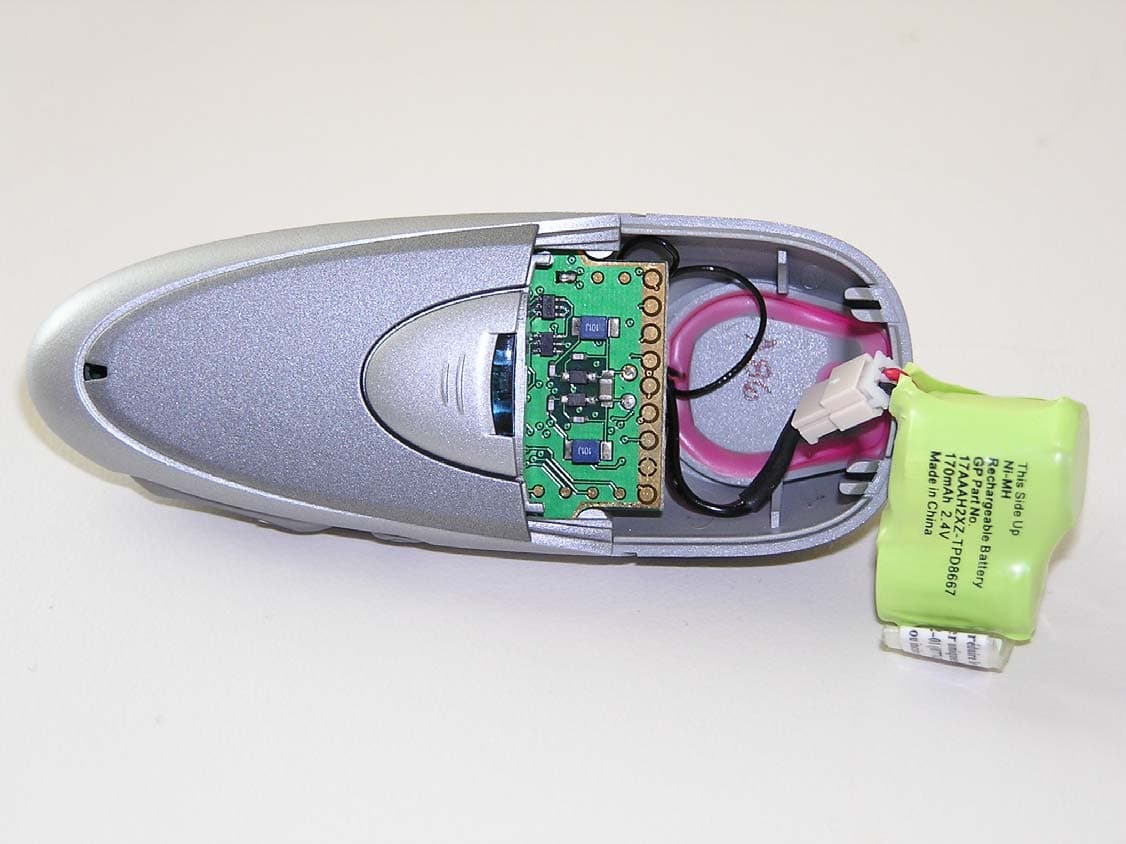
Click to zoom
Application Details
- Equipment Class
- DSS - Part 15 Spread Spectrum Transmitter
- Date of Grant
- Nov 16, 2003
- Application Purpose
- Original Equipment
- Date of Application
- Nov 16, 2003
- Equipment Note
- BT Headset
- Frequency Range
- 2402.00000000 - 2480.00000000
- Company
- HP Inc.
- Country
- United States
Documents & Files
Document Text
Text extracted from the exhibit documents filed with the FCC. Open a document above to read the original.
Users Manual
BLUETOOTH™ HEADSET FROM PLANTRONICS M3500QUICK START AND INFORMATION GUIDE PARTS AND ACCESSORIES MAINTENANCE / TROUBLESHOOTING PARTS AND ACCESSORIES WARRANTY IMPORTANT SAFETY INFORMATION IMPORTANT SAFETY INFORMATION ABOUT THE PLANTRONICS M3500 BLUETOOTH ™ HEADSET 345 Encinal Street, Santa Cruz, CA 95060 (800) 544-4660 • www.plantronics.com 64625-01 04.03 M3500 BATTERYM3500 EARLOOP SETM3500 EXTRA COMFORT EARLOOP SET AC ADAPTER CAR LIGHTER ADAPTER CARRY CASE TRAVEL AC ADAPTER Standard AC adapter (120VAC). Lightweight multi-voltage (100-240VAC) adapter.European and UK versions available. Soft case to protect your headset. Includes belt clip. Car lighter adapter allows you to charge and use yourM3500 headset from any 12-volt car lighter socket. HEADBAND NECKBAND Behind-the-head neckband for discreet long-termwearing comfort. Over-the-head headband for long-term wearing comfort. A set of three earloops (small, medium and large). One large and one small replacement earloops.Replacement headset battery pack. Items shown are optional accessories available for your M3500 Bluetooth headset that may be purchased separately. Call 1.800.544.4660 or visit www.plantronics.com for ordering information. Items shown are optional accessories available for your M3500 Bluetooth headset that may be purchased separately. Call 1.800.544.4660 or visit www.plantronics.com for ordering information. Your Plantronics M3500 headset utilizes 2.4GHz Bluetooth technology toprovide lightweight, hands-free, private and secure communication — withoutthe hassle of wires.Designed to provide maximum comfort and ease of use, this wireless headsetcontains many advanced features tailored to suit your mobile lifestyle. This guidewill help you set up and use your Bluetooth headset.This product is compatible with devices that support Bluetooth Headset and/orHandsfree Profiles. For information on compatibility, visit www.plantronics.com . Register your headset online! To receive important updates and other valuableinformation, visit www.plantronics.com and click on on-line registration. Check local laws regarding use of a mobile phoneand headset while driving.If you use the product while driving ensure yourattention and focus remains on your responsibilityof driving safely.CHILDREN. Never allow children to play withthe headset—small parts may be a choking hazard.Batteries can be swallowed by children and aredangerous if swallowed. Always store and disposeof batteries where children can’t reach them.Observe all signs that require an electrical device orRF radio product to be switched off in designatedareas. These could include hospitals, blasting areas,and potentially explosive atmospheres.Turn off your headset prior to boarding an aircraft.Do not use your headset in an aircraft.Never mount or store your headset over any airbag deployment area as serious injury may resultwhen an air bag deploys. CAUTION: To reduce the risk of fire or injury to persons, read and follow these instructions. 1. Use only the battery pack supplied with this product. 2. Do not dispose of battery in a fire. The cells may explode. Check with local codes for possible dis-posal instructions. 3. Do not open or mutilate the battery pack. Released electrolyte is corrosive and may cause damage toeyes or skin and may be toxic if swallowed. 4. Exercise care in handling the battery in order not to "short" the battery contacts with conducting materi-als such as rings, bracelets, or keys. The battery orconductor may overheat and cause burns. 5. Charge the battery in accordance with instructions supplied with this unit. 6. Observe proper orientation between battery and charger contacts. CAUTION: Use only the supplied Class 2 AC adapter to charge the headset from an AC voltageor wall outlet. CAUTION: If the headset becomes hot during charging, disconnect the AC adapter from the walland contact qualified service personnel. CAUTION: Do not disassemble the AC adapter of this product as it may expose you todangerous voltages or other risks. Incorrectreassembly can cause electric shock when theproduct is subsequently used. CAUTION: Do not use the charger outdoors or in damp areas.Only charge the headset battery in accordancewith the instructions of this manual.Charger Output: 5V/180mA maximum, centercontact positive.Never submerge your headset in water or other liquids.Protect your headset from spills, excessive rain,and wet locations.Do not use liquid cleaners or aerosol cleaners asthey may damage the headset or finish of theheadset. Use a dry cloth to clean the externalportions of the headset.Do not stick anything inside the product as thismay damage internal components. The radiated output power of this internal wirelessradio is far below the FCC radio frequency exposurelimits. Nevertheless, the wireless radio shall be used as described in the manual.The internal wireless radio operates within guide-lines found in radio frequency safety standards andrecommendations, which reflect the consensus of the scientific community. Plantronics therefore believes the internal wirelessradio is safe for use by consumers. The level of energy emitted is far less than the electromagneticenergy emitted by wireless devices such as mobilephones. However, the use of wireless radios may be restricted in some situations or environments, such as aboard airplanes. If you are unsure of restric-tions, you are encouraged to ask for authorizationbefore turning on the wireless radio.NOTE: Modifications not expressly approved by Plantronics, Inc. could void the user’s authority to operate the equipment. This device complies with Part 15 of the FCC Rules.Operation is subject to the following two conditions:1. This device may not cause harmful interference; and 2. This device must accept any interference received, including interference that may cause undesiredoperation. This equipment has been tested and found to complywith the limits for a Class B digital device, pursuant toPart 15 of the FCC Rules. The…
Text truncated - open the document above for the full version.
External Photos
Plantronics Model# M3500 EUT – Top view Plantronics Model# M3500 EUT – Bottom view (Label shows wrong model#, actual model# M3500) Plantronics Model# M3500 EUT – Profile view showing DC power port Plantronics Model# M3500 EUT – Profile view showing control pad Plantronics Model# M3500 EUT – Open view showing battery
Internal Photos
Plantronics Model# M3500 PCB – Top view Plantronics Model# M3500 PCB – Bottom view
Operational Description
Technical Description of the M3500 Headset Ed Goldstein 10/15/03 The Plantronics M3500 is a Bluetooth™ Class 2 (2.5mW maximum) device, which receives and transmits in the frequency range of 2.402-2.480GHz and is a spread spectrum (frequency hopping) device that utilizes 79 channels each 1MHz wide. The Plantronics M3500 is similar to the Plantronics M3000 except that the identical Cambridge Silicon Radio Integrated Circuit BC02A Crystal runs at 32 MHz for the M3500 rather than at 16 MHz for the Plantronics M3000 and the Plantronics M3500 has a dspfactory BelaSigna™ 200 Digital Signal Processing Integrated Circuit to deliver superior sound quality to both the User and the Caller. The User is also able to hear the quality of their transmission like the side tone a telephone handset. The Plantronics M3500, like the Plantronics M3000 communicates with other Bluetooth™ products using a Time division duplex scheme that alternates transmission and receive functions, and uses the same 0dBi omni directional antenna to receive and transmit. The headset can communicate with other Bluetooth ™ products that support either the Bluetooth™ Headset or Hands Free Profile. See the user guide for basic operation. The Bluetooth™ BC02A Integrated Circuit also controls the charging of the 170 mAH NiMH rechargeable batteries for up to 3.5 hours talk time with preferential HV3 packets. Battery charging is accomplished using a wall adapter or cigarette lighter adapter to provide 5 VDC to the headset, which uses a linear current source to regulate current and charge the batteries.
Test Report
TTI-P-G 081/94-A0 Accredited according to ISO/IEC 17025 Bluetooth Qualification Test Facility (BQTF) FCC listed # 101450 IC recognized # 3925 CETECOM Inc. 411 Dixon Landing Road Milpitas, CA 95035 U.S.A. Phone: + 1 (408) 586 6200 Fax: + 1 (408) 586 6299 E-mail: [email protected] http://www.cetecom.com CETECOM Inc. is a Delaware Corporation with Corporation number: 2113686 Board of Directors: Dr. Harald Ansorge, Dr. Klaus Matkey, Hans Peter May V1.1 2003-03-01 The BLUETOOTH trademarks are owned by Bluetooth SIG, Inc., U.S.A. and licensed to CETECOM Inc. © Copyright by CETECOM FCC Test Report Test report no.: EMC_ 570FCC15.247_2003_M3500 FCC Part 15.247 for FHSS systems / CANADA RSS-210 Model: (M3500) FCC ID: AL8-M3500 IC: 457A-M3500 Test report no.: EMC_570FCC15.247_2003_M3500 Issue date: 2003-11-04 Page 2 (60) Table of Contents 1 General information 1.1 Notes 1.2 Testing laboratory 1.3 Details of applicant 1.4 Application details 1.5 Test item 1.6 Test standards 2 Technical test 2.1 Summary of test results 2.2 Test report 1 General information 1.1 Notes The test results of this test report relate exclusively to the test item specified in 1.5. The CETECOM Inc. USA does not assume responsibility for any conclusions and generalizations drawn from the test results with regard to other specimens or samples of the type of the equipment represented by the test item. The test report may only be reproduced or published in full. Reproduction or publication of extracts from the report requires the prior written approval of the CETECOM Inc USA. TEST REPORT PREPARED BY: EMC Engineer: Harpreet Sidhu 1.2 Testing laboratory CETECOM Inc. 411 Dixon Landing Road, Milpitas, CA-95035, USA Phone: +1 408 586 6200 Fax: +1 408 586 6299 E-mail: [email protected] Internet: www.cetecom.com Test report no.: EMC_570FCC15.247_2003_M3500 Issue date: 2003-11-04 Page 3 (60) 1.3 Details of applicant Name : Plantronics Inc. Street : 345 Encinal Street City / Zip Code : Santa Cruz, Ca 95060 Country : USA Contact : Ed Goldstein / Myhassan Bakrim Telephone : +831 458 7573 / +831 458 7618 Tele-fax : +831 429 5731 e-mail : [email protected] / [email protected] 1.4 Application details Date of receipt test item : 2003-10-27 Date of test : 2003-10-28/29/30 1.5 Test item Manufacturer : Applicant Marketing Name : M3500 Model No. : M3500 Description : Bluetooth Headset with Digital Signal Processing FCC-ID : AL8-M3500 IC ID : 457A-M3500 Additional information Frequency : 2402MHz – 2480MHz Type of modulation : GFSK Number of channels : 79 Antenna : Integral Power supply : Battery Output power : 3.06dBm (2.02mW) conducted peak power Extreme vol. Limits : 2.2 – 2.9VDC (2.5VDC nominal) Extreme temp. Tolerance : 0ºC-55ºC 1.6 Test standards: FCC Part 15 §15.247 (DA00-705) / RSS 210 Note: All radiated measurements were made in all three orthogonal planes. The values reported are the maximum values. Test report no.: EMC_570FCC15.247_2003_M3500 Issue date: 2003-11-04 Page 4 (60) 2 Technical test 2.1 Summary of test results No deviations from the technical specification(s) were ascertained in the course of the tests Performed Final Verdict: (only “passed” if all single measurements are “passed”) Passed Technical responsibility for area of testing: 2003-11-04 EMC & Radio Siegfried Lehmann (Technical Manager) Date Section Name Signature Responsible for test report and project leader: 2003-11-04 EMC & Radio Harpreet Sidhu (EMC Engineer) Date Section Name Signature Test report no.: EMC_570FCC15.247_2003_M3500 Issue date: 2003-11-04 Page 5 (60) 2.2 Test report TEST REPORT Test report no.: EMC_570FCC15.247_2003_M3500 (Model: M3500) Test report no.: EMC_570FCC15.247_2003_M3500 Issue date: 2003-11-04 Page 6 (60) TEST REPORT REFERENCE LIST OF MEASUREMENTS PAGE CARRIER FREQUENCY SEPERATION §15.247(a) 7 NUMBER OF HOPPING CHANNELS §15.247(a) 8 TIME OF OCCUPANCY (DWELL TIME) §15.247(a) 12 SPECTRUM BANDWIDTH OF FHSS SYSTEM §15.247(a) 15 POWER SPECTRAL DENSITY §15.247 (d) 19 MAXIMUM PEAK OUTPUT POWER § 15.247 (b) (1) 23 BAND EDGE COMPLIANCE §15.247 (c) 31 EMISSION LIMITATIONS § 15.247 (c) (1) 35 CONDUCTED EMISSIONS § 15.107/207 52 RECEIVER SPURIOUS RADIATION § 15.209 53 TEST EQUIPMENT AND ANCILLARIES USED FOR TESTS 58 BLOCK DIAGRAMS 59 Test report no.: EMC_570FCC15.247_2003_M3500 Issue date: 2003-11-04 Page 7 (60) CARRIER FREQUENCY SEPERATION §15.247(a) Test report no.: EMC_570FCC15.247_2003_M3500 Issue date: 2003-11-04 Page 8 (60) NUMBER OF HOPPING CHANNELS §15.247(a) The number of hopping channels is 79 (see next 4 plots) The right red line corresponds to the left red line from the next plot. Plot 1: Total 22 Test report no.: EMC_570FCC15.247_2003_M3500 Issue date: 2003-11-04 Page 9 (60) Plot 2: Total 25 Test report no.: EMC_570FCC15.247_2003_M3500 Issue date: 2003-11-04 Page 10 (60) Plot 3: Total 20 Test report no.: EMC_570FCC15.247_2003_M3500 Issue date: 2003-11-04 Page 11 (60) Plot 4: Total 12 Test report no.: EMC_570FCC15.247_2003_M3500 Issue date: 2003-11-04 Page 12 (60) TIME OF OCCUPANCY (DWELL TIME) §15.247(a) DH1 – Packet The system makes worst case 1600 hops per second or 1 time slot has a length of 625μs with 79 channels. A DH1 Packet need 1 time slot for transmitting and 1 time slot for receiving. Then the system makes worst case 800 hops per second with 79 channels. So you have each channel 10.13 times per second and so for 31.6 seconds you have 320.108 times of appearance. Each Tx-time per appearance is 436μs. So we have 320.108 * 436μs = 139.56ms per 31.6 seconds. Test report no.: EMC_570FCC15.247_2003_M3500 Issue date: 2003-11-04 Page 13 (60) TIME OF OCCUPANCY (DWELL TIME) §15.247(a) DH3 – Packet A DH3 Packets need 3 time slots for transmit and 1 for receiving, then the system makes worst case 400 hops per second with 79 channels. So you have each channel 5.1 times per second and so for 31.6 seconds you have 161.16 times of appearance. Each Tx-time per appearance is 1.69ms. So we have 161.16 *…
Text truncated - open the document above for the full version.
Test Setup Photos
Plantronics Model# M3500 Test setup – Radiated Emissions Plantronics Model# M3500 Test setup – AC Line Conducted Emissions Plantronics Model# M3500 Test fixture – Conducted measurements (EUT is placed in the slot at top of fixture and RF output is taken at sma-f port marked as RF in photo)
Contact Information
Applicant
Richard Tarsio(US/CAN TRSE Worldwide Technical Regulations)
Technical Contact
CETECOM Inc.Lothar Schmidt
[email protected]+1 408 586 6214
411 Dixon Landing Road · Milpitas, California · United States
Non-Technical Contact
CETECOM Inc.Lothar Schmidt
[email protected]+1 408 586 6214
Test Firm
Cetecom Inc.Lothar Schmidt
Technical Specifications
| # | Rule Parts | Frequency Range | Power Output |
|---|---|---|---|
| 1 | 15C | 2.40 GHz - 2.48 GHz | 2.00 mW |
Other Applications from HP Inc.
AL8-PWPTF620P
Feb 03, 2026Wireless Charge Stand
Equipment Class
DCD - Part 15 Low Power Transmitter Below 1705 kHzAL8-PBF620F
Jan 23, 2026Bluetooth Headset
Equipment Class
DTS - Digital Transmission SystemAL8-PBVOYX2
Jun 20, 2024Bluetooth Base
Equipment Class
DTS - Digital Transmission System
AL8-VF2R
Mar 07, 2024Wireless Bluetooth Earphones
Equipment Class
DTS - Digital Transmission System
AL8-CBVS1
Oct 16, 2023Wireless Charge Stand
Equipment Class
DXX - Part 15 Low Power Communication Device Transmitter