AL8-S73X0TWireless DECT Headset
HP Inc.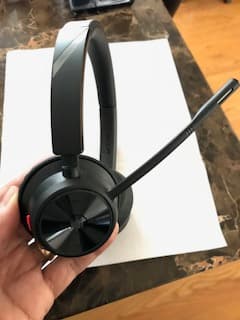
Click to zoom
Application Details
- Equipment Class
- PUE - Part 15 Unlicensed PCS portable Tx held to ear
- Date of Grant
- May 14, 2020
- Application Purpose
- Original Equipment
- Date of Application
- May 14, 2020
- Equipment Note
- Wireless DECT Headset
- Frequency Range
- 1921.53600000 - 1928.44800000
- Company
- HP Inc.
- Country
- United States
Documents & Files
Document Text
Text extracted from the exhibit documents filed with the FCC. Open a document above to read the original.
Users Manual
QUICK START S A V I 7 3 1 0 / 7 3 2 0 O F F I C E F O R C O M P U T E R A N D D E S K P H O N E Subscribe :04 © 2020 Plantronics, Inc. All rights reserved. Poly, the propeller design, and the Poly logo are trademarks of Plantronics, Inc. All other trademarks are the property of their respective owners. Manufactured by Plantronics, Inc. 215720-03 05.20 Savi 7310/7320 Office has a CB7321 CD/-M CD base, (may be followed by /A or /S) and a S7310T/S7320T headset (may be followed by /A or /S). Subscribe status Desk phone Computer Battery status FRONT OR NO HEADSET PORT HEADSET PORT poly.com/support poly.com/support Poly Hub for Windows/Mac ENGLISH HOOK UP SYSTEM Using the diagram, connect your headset system. Connect the base to your desk phone's headset port, if available. Otherwise, connect the base to your handset port. See user guide to set up optional HL10 lifter or EHS cable. CHARGE YOUR HEADSET Charge your headset for a minimum of 20 minutes by placing it in the cradle. The base battery icon flashes green when charging. POWER ON HEADSET To turn on the headset, slide the Power button. ADJUST THE MIC For the best sound position boom so that the microphone is two finger-widths from the corner of your mouth. DOWNLOAD SOFTWARE Poly Hub for Windows/Mac is required for softphone call control. Download: poly.com/software. HOW TO On the base there are 2 Audio buttons: computer and desk phone . These buttons allow you to switch to a different audio source. Make a call 1Tap an Audio button on the display panel. You hear a dial tone. Desk phone only: Press phone's Headset button or manually remove handset if you don't have HL10 lifter or EHS cable. 2Dial from your softphone or desk phone. End/take a call To answer or end a call, tap the corresponding Audio button or tap the headset call button. Desk phone only: If you don't have an HL10 lifter or EHS cable, press your phone's Headset button or remove the handset when answering a call and hang up when ending a call. TIP Headset call control for the computer requires Plantronics software and softphone compatibility. See “Download software.” STREAM MEDIA To stream media from your computer, first press the base's Computer Audio button and then play the media. TROUBLESHOOTING No call audio? Ensure your headset is powered on. No call audio from desk phone? Adjust the switch on the bottom of your base to letter A for most phones. Adjust to letter D for Cisco phones that don't use an EHS cable. Need more help? poly.com/compatibility-guide. Is headset sound distorted/echoing? Lower Listening or Speaking volume on the bottom of your base. Lower desk phone volume. Headset not subscribed? To automatically subscribe (connect) your headset to the base, place it in the cradle. Need more help? View complete user guide: poly.com/support DANSK TILSLUT SYSTEMET Tilslut dit headset-system ved hjælp af diagrammet. Forbind baseenheden til din bordtelefons headsetport, hvis den er tilgængelig. Ellers, forbind baseenheden til telefonrørets stik. Se brugervejledning til opsætning af valgfri HL10 håndsætløfter eller EHS-kabel. OPLAD DIT HEADSET Oplad dit headset i minimum 20 minutter ved at placere det i opladningsgaflen. Baseenhedens batteriikon blinker grønt under opladning. TÆND HEADSET For at tænde headsettet, skal du skubbe tænd/sluk-knappen. JUSTERING AF MIKROFONEN For at opnå den bedste lydgengivelse skal du placere mikrofonarmen, så mikrofonen er placeret to fingerbredder fra mundvigen. DOWNLOAD SOFTWARE Poly Hub for Windows/Mac is required for softphone call control. Download: poly.com/software. HOW TO On the base there are 2 Audio buttons: computer and desk phone . These buttons allow you to switch to a different audio source. Foretag et opkald 1. Tryk på en lydknap på displayet. Du vil kunne høre en klartone. Kun bordtelefon: Tryk på telefonens headsetknap , eller løft telefonrøret manuelt, hvis du ikke har en HL10-håndsætløfter eller et EHS-kabel. 2. Ring fra din softphone eller bordtelefon Afslut/besvar et opkald For at besvare eller afslutte et opkald skal du trykke på den tilsvarende lydknap eller trykke på opkaldsknappen på headsettet. Kun bordtelefon: Hvis du ikke har en HL10-håndsætløfter eller et EHS-kabel, skal du trykke på telefonens headsetknap eller løfte telefonrøret, når du besvarer et opkald, og lægge røret på, når du afslutter et opkald. TIP Headset-opkaldsstyring til computeren kræver Plantronics-software og softphone-kompatibilitet. Se "Download software". STREAM MEDIA To stream media from your computer, first press the base's Computer Audio button and then play the media. TROUBLESHOOTING No call audio? Ensure your headset is powered on. No call audio from desk phone? Adjust the switch on the bottom of your base to letter A for most phones. Adjust to letter D for Cisco phones that don't use an EHS cable. Need more help? poly.com/compatibility-guide. Is headset sound distorted/echoing? Lower Listening or Speaking volume on the bottom of your base. Lower desk phone volume. Headset not subscribed? To automatically subscribe (connect) your headset to the base, place it in the cradle. Brug for mere hjælp? Se komplet brugervejledning: poly.com/support DEUTSCHE ANSCHLIESSEN DES SYSTEMS Schließen Sie Ihr Headset-System wie in der Abbildung gezeigt an. Schließen Sie die Basis an den Headset-Anschluss Ihres Tischtelefons an, falls verfügbar. Verbinden Sie ansonsten die Basis mit dem Handgerät-Anschluss. Informationen zum Einrichten des optionalen HL10-Lifters oder EHS-Kabels finden Sie im Benutzerhandbuch. LADEN DES HEADSETS Laden Sie Ihr Headset mindestens 20 Minuten lang auf, indem Sie es in die Basisstation einsetzen. Das Akkusymbol an der Basis blinkt während des Ladevorgangs grün. EINSCHALTEN DES HEADSETS Um das Headset einzuschalten, verschieben Sie die Ein-/Aus-Taste. MIKROFON ANPASSEN Positionieren Sie für optimalen Klang den Mikrofonarm so, dass das Mikrofon zwei Fingerbreiten vom Mundwinkel entfernt ist. DOWNLOAD SOFTWARE Poly Hub for Windows/Ma…
Text truncated - open the document above for the full version.
Users Manual
Regulatory Compliance Information DECT™ en Caution – Important DECT information. DECT products should never be used outside the region in which they were originally purchased and intended to be used. da Advarsel – Vigtige DECT-oplysninger. DECT-produkter bør aldrig bruges uden for det område, hvor de oprindeligt blev købt og beregnet til at blive brugt. de Achtung: wichtige DECT-Informationen. DECT-Produkte sollten niemals außerhalb der Region verwendet werden, in der sie ursprünglich gekauft wurden und deren Verwendung beabsichtigt ist. es Precaución: información importante sobre DECT. Los productos DECT nunca deben usarse fuera de la región en la que se compraron originalmente y están destinados a ser utilizados. es-xl Precaución: Información importante de DECT. Los productos DECT nunca deben usarse fuera de la región en la que se compraron originalmente y están destinados a ser utilizados. fi Varoitus – tärkeitä DECT-tietoja. DECT-tuotteita ei saa koskaan käyttää sen alueen ulkopuolella, jossa ne on alun perin ostettu ja tarkoitettu käytettäväksi. fr AVERTISSEMENT – Informations importantes sur la DECT. Les produits DECT ne doivent jamais être utilisés en dehors de la région dans laquelle ils ont été achetés et destinés à être utilisés. fr-ca Avertissement : Information importante sur la technologie DECT. Les produits DECT ne doivent jamais être utilisés en dehors de la région dans laquelle ils ont été achetés et destinés à être utilisés. it Attenzione: sono disponibili importanti informazioni su DECT. I prodotti DECT non dovrebbero mai essere utilizzati al di fuori della regione in cui sono stati originariamente acquistati e destinati ad essere utilizzati. nl Let op – Belangrijke DECT-informatie. DECT-producten mogen nooit worden gebruikt buiten de regio waar ze oorspronkelijk zijn gekocht en bedoeld zijn om te worden gebruikt. no Varsel – viktig DECT-informasjon. DECT-produkter skal aldri brukes utenfor regionen der de ble opprinnelig kjøpt og ment å bli brukt. pt Atenção: informações importantes sobre a norma DECT. Os produtos DECT nunca devem ser usados fora da região em que foram originalmente comprados e destinados a serem usados. Mexico Requisitos del IFT Su uso está sujeto a las dos condiciones siguientes: 1. Este dispositivo no puede causar interferencias nocivas. 2. Este dispositivo debe aceptar todas las interferencias recibidas, incluidas aquellas que puedan causar un funcionamiento no deseado. RussiaSingapore Complies with IMDA Standards DA101619 Turkey EEE Yönetmeliğine Uygundur sk Symbol prečiarknutého odpadového kontajnera na kolieskach označuje, že odpadové elektrické a elektronické zariadenia a batérie sa nesmú likvidovať spolu s iným netriedeným komunálnym odpadom, ale musia sa zhromažďovať samostatne. Podrobnejšie informácie nájdete na webovej stránke plantronics.com. sl Simbol prečrtanega smetnjaka pomeni, da odpadne električne in elektronske opreme ter baterij ni dovoljeno odlagati kot nerazvrščene komunalne odpadke, ampak jih je treba zbirati ločeno. Za podrobnejše informacije obiščite spletno stran plantronics.com. sv Den överkorsade soptunnan innebär att elektriskt och elektroniskt avfall och batterier inte får kasseras med osorterat hushållsavfall, utan ska samlas in separat enligt lokala lagar och förordningar. Mer detaljerad information finns på plantronics.com. tr Üzerine çarpı işareti çizilmiş bir çöp konteyneri simgesi, elektrikli ve elektronik ekipman atıklarının ve pillerin ev çöpleriyle birlikte atılmaması ve ayrı olarak toplan-ması gerektiğini belirtir. Daha ayrıntılı bilgi için plantronics.com adresini ziyaret edin. STATEMENT FOR: Energy efficiency – EuP framework Directive 2005/32/EC and implementing measure 1275/2008 incorporating commission regulation 801/2013: Once the headset battery is fully charged the product enters a networked standby mode. The period of time taken to enter this mode depends on how long the battery takes to fully charge. In networked standby mode the product consumes X.X Watts. The wireless network port(s) of this product are designed to be always active. ©2020 Plantronics, Inc. All rights reserved. Poly, the propeller design, and the Poly logo are trademarks of Plantronics, Inc. DECT is a trademark of ETSI. All other trademarks are the property of their respective owners. Manufactured by Plantronics, Inc. 215543-06 03.20 Savi 7310/7320 Office has a CB7321 CD/CB7321-M CD base, (may be followed by /A or /S) and a S7310T/S7320T headset (may be followed by /A or /S). pt-br Atenção: informações importantes sobre a norma DECT. Os produtos DECT nunca devem ser usados fora da região em que foram originalmente comprados e destinados a serem usados. sv Varning – Viktig DECT-information. DECT-produkter ska aldrig användas utanför det område där de ursprungligen köptes och avsedda att användas. United States 81242 5011639 I.T.E BC FCC Regulatory Information This device complies with part 15 of the FCC Rules. Operation is subject to the following two conditions: (1) This device may not cause harmful interference, and (2) this device must accept any interference received, including interference that may cause undesired operation. Changes or modifications not expressly approved by the party responsible for compliance could void the user’s authority to operate the equipment. This equipment complies with FCC radiation exposure limits set forth for an uncontrolled environment. Exposure to RF Radiation The internal wireless radio operates within the guidelines found in radio frequency safety standards and recommendations, which reflect the consensus of the scientific community. Independent studies have shown that the internal wireless radio is safe for use by consumers. Visit plantronics.com for more information. In order to comply with FCC and IC RF Exposure requirements, the base must be installed and operated such that a minimum separation distance of 20 cm is maintained between the base and all persons during normal operation. NOTE: Modi…
Text truncated - open the document above for the full version.
Cover Letter(s)
Plantronics Inc 345 Encinal Street Santa Cruz, CA 95060 +1 (831) 426-5858 poly.com Federal Communications Commission 7435 Oakland Mills Road Columbia MD 21046 Subject: Request for Confidentiality F CC ID: AL8-S73X0T To Whom It May Concern: Pursuant to the provisions of Sections 0.457 and 0.459 of the Commission’s rules (47 CFR §§ 0.457, 0.459), we are requesting the Commission to withhold the following attachments as confidential document from public disclosure indefinitely. Schematic Diagram Block Diagram Theory of Operation Antenna Specification Tune-Up Procedure Above mentioned document contains detailed system and equipment description are considered as proprietary information in operation of the equipment. The public disclosure of above documents might be harmful to our company and would give competitor an unfair advantage in the market. In additional to above mentioned documents, pursuant to Public Notice DA 04-1705 of the Commission’s policy, in order to comply with the marketing regulations in 47 CFR §2.803 and the importation rules in 47 CFR §2.1204, while ensuring that business sensitive information remains confidential until the actual marketing of newly authorized devices. We are requesting the commission to grant short-term confidentiality request on the following attachments until October 27, 2020: External Photos I nternal Photos Test Setup Photos User Manual It is our understanding that all measurement test reports, FCC ID label format and correspondent during certification review process cannot be granted as confidential documents and those information will be available for public review once the grant of equipment authorization is issued. Best Regards Mark Lawson Senior Manager, Global Compliance Plantronics Inc. April 27, 2020
External Photos
Stereo headset front: Stereo headset side: Stereo headset bottom boom side: Stereo headset back: Mono headset back: Mono headset side: Mono headset bottom: Mono headset front: Mono headset pad side:
ID Label/Location Info
2019 Mario Ayala214507-00B Artmaster, Regulatory Marking, S7310T, NA03/23/2020 7 Yoke Inner Scale: 1:1 I C : 4 5 7 A - S 7 3 X 0 T M O D E L : S 7 3 1 0 T F C C I D : A L 8 - S 7 3 X 0 T Made In Mexico I C : 4 5 7 A - S 7 3 X 0 T M O D E L : S 7 3 1 0 T F C C I D : A L 8 - S 7 3 X 0 T Made In Mexico 2019 Mario Ayala214507-00B Artmaster, Regulatory Marking, S7320T, NA03/23/2020 8 Yoke Inner Scale: 1:1 I C : 4 5 7 A - S 7 3 X 0 T M O D E L : S 7 3 2 0 T F C C I D : A L 8 - S 7 3 X 0 T Made In Mexico I C : 4 5 7 A - S 7 3 X 0 T M O D E L : S 7 3 2 0 T F C C I D : A L 8 - S 7 3 X 0 T Made In Mexico
Internal Photos
Headset side A (S7310T, ST7310/A, S7320T, S7320T/A): Headset side B (S7310T, ST7310/A, S7320T, S7320T/A): Headset side B shield removed (S7310T, ST7310/A, S7320T, S7320T/A): Headset (passive side) side A (S7320T, S7320T/A): Headset (passive side) side B(S7320T, S7320T/A): Flex cable side A (S7310T, ST7310/A, S7320T, S7320T/A): Flex cable side B(S7310T, ST7310/A, S7320T, S7320T/A):
RF Exposure Info
© CTC advanced GmbH Page 1 of 34 BNetzA - CAB - 02/21 - 102 D - P L - 1 2 0 7 6 - 0 1 - 0 3 TEST REPORT Test Report No.: 1-0066/20-02-05-A Testing Laboratory Applicant CTC advanced GmbH Untertuerkheimer Strasse 6 – 10 66117 Saarbruecken/Germany Phone: + 49 681 5 98 - 0 Fax: + 49 681 5 98 - 9075 Internet: http://www.ctcadvanced.com e-mail: [email protected] Accredited Test Laboratory: The testing laboratory (area of testing) is accredited according to DIN EN ISO/IEC 17025 (2005) by the Deutsche Akkreditierungsstelle GmbH (DAkkS) The accreditation is valid for the scope of testing procedures as stated in the accreditation certificate with the registration number: D-PL-12076-01-03 Plantronics Inc. 345 Encinal Street CA 95060 Santa Cruz/UNITED STATES Contact: Rafael Blanco e-mail: [email protected] Phone: +52 664 979 4517 Manufacturer Plamex S.A. de C.V. Boulevard Bellas Artes No. 20308, Col. Ciudad Industrial 22444 Tijuana/MEXICO Test Standards IEEE 1528-2013 Recommended Practice for Determining the Peak Spatial-Average Specific Absorption Rate (SAR) in the Human Head from Wireless Communications Devices: Measurement Techniques RSS-102 Issue 5 Radio Frequency Exposure Compliance of Radiocommunication Apparatus (All Frequency Bands) For further applied test standards please refer to section 3 of this test report. Test Item Kind of test item: DECT Headset Device type: portable device Model name: S7310T / S7320T S/N serial number: 215201-01 (00WAN2) FCC-ID: AL8-S73X0T ISED Number: 457A-S73X0T Product Marketing Name (PMN): Savi 7310 Office, Savi 7320 Office Hardware Version Identification No. (HVIN): S7310T, S7320T Hardware status: VB2 Software status: V0056 Frequency: DECT (proprietary in UPCS 1925 MHz range) Antenna: Two integrated antennas Battery option: integrated battery Accessories: -- Test sample status: identical prototype Exposure category: general population / uncontrolled environment This test report is electronically signed and valid without handwriting signature. For verification of the electronic signatures, the public keys can be requested at the testing laboratory. Test Report authorised: Test performed: Alexander Hnatovskiy Marco Scigliano Lab Manager Testing Manager Radio Communications Radio Communications Test report no.: 1-0066/20-02-05-A © CTC advanced GmbH Page 2 of 34 1 Table of contents 1 Table of contents ....................................................................................................................................... 2 2 General information .................................................................................................................................. 3 2.1 Notes and disclaimer ..................................................................................................................... 3 2.2 Application details ......................................................................................................................... 3 2.3 Statement of compliance ............................................................................................................... 3 2.4 Technical details ............................................................................................................................ 4 3 Test standards/ procedures references .................................................................................................. 5 3.1 RF exposure limits ......................................................................................................................... 6 4 Summary of Measurement Results ......................................................................................................... 7 5 Test Environment ...................................................................................................................................... 7 6 Test Set-up ................................................................................................................................................. 8 6.1 Measurement system ..................................................................................................................... 8 6.1.1 System Description ................................................................................................................ 8 6.1.2 Test environment ................................................................................................................... 9 6.1.3 Probe description ................................................................................................................... 9 6.1.4 Phantom description ............................................................................................................ 10 6.1.5 Device holder description .................................................................................................... 11 6.1.6 Scanning procedure ............................................................................................................ 12 6.1.7 Comparison of DASY 52 NEO and cDASY6 ....................................................................... 16 6.1.8 Spatial Peak SAR Evaluation .............................................................................................. 17 6.1.9 Data Storage and Evaluation............................................................................................... 20 6.1.10 Tissue simulating liquids: dielectric properties .................................................................... 22 6.1.11 Tissue simulating liquids: parameters ................................................................................. 22 6.1.12 Measurement uncertainty evaluation for SAR test .............................................................. 23 6.1.13 Measurement uncertainty evaluation for System Check ..................................................... 25 6.1.14 System check ...................................................................................................................... 26 6.1.1…
Text truncated - open the document above for the full version.
RF Exposure Info
Page 1 of 33 Annex D Appendix to Test Report No.: 1-0066/20-02-05-A Testing Laboratory CTC advanced GmbH Untertürkheimer Straße 6 – 10 66117 Saarbrücken/Germany Phone: + 49 681 5 98 - 0 Fax: + 49 681 5 98 - 9075 Internet: http://www.ctcadvanced.com e-mail: [email protected] Accredited Test Laboratory: The testing laboratory (area of testing) is accredited according to DIN EN ISO/IEC 17025 (2005) by the Deutsche Akkreditierungsstelle GmbH (DAkkS) The accreditation is valid for the scope of testing procedures as stated in the accreditation certificate with the registration number: D-PL-12076-01-01 Appendix with Calibration data, Phantom certificate and system check information 2012-01-16 Test report no.: 1-0066/20-02-05-A Page 2 of 33 1 Table of contents 1 Table of contents ....................................................................................................................................... 2 2 Calibration report “Probe EX3DV4” ........................................................................................................ 3 3 Calibration report “1900 MHz System validation dipole” .................................................................... 13 4 Calibration certificate of Data Acquisition Unit (DAE) ........................................................................ 25 5 Certificate of “SAM Twin Phantom V4.0/V4.0C’’ ................................................................................. 26 6 Application Note System Performance Check ..................................................................................... 27 6.1 Purpose of system performance check ..................................................................................... 27 6.2 System Performance check procedure ...................................................................................... 27 6.3 Uncertainty Budget ...................................................................................................................... 28 6.4 Power set-up for validation ......................................................................................................... 32 6.5 Laboratory reflection ................................................................................................................... 33 6.6 Additional system checks ........................................................................................................... 33 Test report no.: 1-0066/20-02-05-A Page 3 of 33 2 Calibration report “Probe EX3DV4” Test report no.: 1-0066/20-02-05-A Page 4 of 33 Test report no.: 1-0066/20-02-05-A Page 5 of 33 Test report no.: 1-0066/20-02-05-A Page 6 of 33 Test report no.: 1-0066/20-02-05-A Page 7 of 33 Test report no.: 1-0066/20-02-05-A Page 8 of 33 Test report no.: 1-0066/20-02-05-A Page 9 of 33 Test report no.: 1-0066/20-02-05-A Page 10 of 33 Test report no.: 1-0066/20-02-05-A Page 11 of 33 Test report no.: 1-0066/20-02-05-A Page 12 of 33 Test report no.: 1-0066/20-02-05-A Page 13 of 33 3 Calibration report “1900 MHz System validation dipole” Test report no.: 1-0066/20-02-05-A Page 14 of 33 Test report no.: 1-0066/20-02-05-A Page 15 of 33 Test report no.: 1-0066/20-02-05-A Page 16 of 33 Test report no.: 1-0066/20-02-05-A Page 17 of 33 Test report no.: 1-0066/20-02-05-A Page 18 of 33 Test report no.: 1-0066/20-02-05-A Page 19 of 33 Test report no.: 1-0066/20-02-05-A Page 20 of 33 Test report no.: 1-0066/20-02-05-A Page 21 of 33 Antenna Parameters with Head TSL From cal. data Measured 2018-07-19 Impedance; transformed to feed point 51.2Ω +2.6jΩ 51.3Ω +2.2jΩ Return Loss -30.9dB -32.2dB Test report no.: 1-0066/20-02-05-A Page 22 of 33 Antenna Parameters with Body TSL From cal. data Measured 2018-07-19 Impedance; transformed to feed point 46.1Ω +3.2jΩ 46.5Ω + 2.9jΩ Return Loss -25.6dB -26.5dB Test report no.: 1-0066/20-02-05-A Page 23 of 33 Antenna Parameters with Head TSL From cal. data Measured 2019-09-10 Impedance; transformed to feed point 51.2 Ω + 2.6 jΩ 50.2 Ω + 3.8 jΩ Return Loss -30.9 dB -28.5 dB Test report no.: 1-0066/20-02-05-A Page 24 of 33 Antenna Parameters with Body TSL From cal. data Measured 2019-09-10 Impedance; transformed to feed point 46.1 Ω + 3.2 jΩ 46.7 Ω + 2.9 jΩ Return Loss -25.6 dB -26.8 dB Test report no.: 1-0066/20-02-05-A Page 25 of 33 4 Calibration certificate of Data Acquisition Unit (DAE) Test report no.: 1-0066/20-02-05-A Page 26 of 33 5 Certificate of “SAM Twin Phantom V4.0/V4.0C’’ Test report no.: 1-0066/20-02-05-A Page 27 of 33 6 Application Note System Performance Check 6.1 Purpose of system performance check The system performance check verifies that the system operates within its specifications. System and operator errors can be detected and corrected. It is recommended that the system performance check is performed prior to any usage of the system in order to guarantee reproducible results. The measurement of the Specific Absorption Rate (SAR) is a complicated task and the result depends on the proper functioning of many components and the correct settings of many parameters. Faulty results due to drift, failures or incorrect parameters might not be recognized, since they often look similar in distribution to the correct ones. The Dosimetric Assessment System DASY5 incorporates a system performance check procedure to test the proper functioning of the system. The system performance check uses normal SAR measurements in a simplified setup (the flat section of the SAM Twin Phantom) with a well characterized source (a matched dipole at a specified distance). This setup was selected to give a high sensitivity to all parameters that might fail or vary over time (e.g., probe, liquid parameters, and software settings) and a low sensitivity to external effects inherent in the system (e.g., positioning uncertainty of the device holder). The system performance check does not replace the calibration of the components. The accuracy of the system performance check is not sufficient for calibration purposes. It is p…
Text truncated - open the document above for the full version.
Test Report
2020-04-20 Page 1 of 71 TEST REPORT Test Report No.: 1-0066/20-02-06 Testing Laboratory Applicant CTC advanced GmbH Untertürkheimer Straße 6 – 10 66117 Saarbrücken/Germany Phone: + 49 681 5 98 - 0 Fax: + 49 681 5 98 - 9075 Internet: http://www.ctcadvanced.com e-mail: [email protected] Accredited Test Laboratory: The testing laboratory (FCC part 15 D) is accredited according to DIN EN ISO/IEC 17025 (2005) by the Deutsche Akkreditierungsstelle GmbH (DAkkS) The accreditation is valid for the scope of testing procedures as stated in the accreditation certificate with the registration number: D-PL-12076-01-04 / -05 Plantronics Inc. 345 Encinal Street CA 95060 , Santa Cruz UNITED STATES Contact: Mr. Rafael Blanco e-mail: [email protected] Phone: +52 664 979 4517 Manufacturer Plantronics Mexico (PLAMEX S.A. de C.V) Boulevard Bellas Artes No. 20308 22444 Tijuana / MEXICO Test Standard/s FCC Part 15, subpart D: 2016 Isochronous UPCS Device 1920 – 1930 MHz Industry Canada RSS-213, Issue 3: 2015 2 GHz Licence-exempt Personal Communication Service Devices (LE-PCS) Test Item Kind of product: UPCS Headset Product name: S7310T, S7320T HVIN: PMN: FVIN: HMN: FCC ID: S7310T, S7320T Savi 7310 Office, Savi 7320 Office / / AL8-S73X0T IC: 457A-S73X0T S/N serial number: Radiated: / Conducted: / HW hardware status: VB2 SW software status: V0056 Frequency [MHz]: 1920 -1930 Type of Modulation: GFSK, π/2-DBSK, π/4-DQPSK, π/8-D8PSK Number of channels: 5 RF Channels, 5x12 = 60 TDMA Duplex Channels Antenna: Two integrated antennas Power Supply: LiIon battery Temperature Range: -20°C to 50°C Test Report authorised: Test performed: 2020-04-20 Lenjoint, Marco 2020-04-20 Wolf, Joachim Lab Manager RC Head of Department EPNS Test report no.: 1-0066/20-02-06 2020-04-20 Page 2 of 71 1 Table of contents 1 Table of contents ......................................................................................................................................... 2 2 General information .................................................................................................................................... 3 2.1 Notes and disclaimer ....................................................................................................................... 3 2.2 Application details ........................................................................................................................... 3 3 Test standard/s: ........................................................................................................................................... 3 4 Test Environment ........................................................................................................................................ 4 5 Summary of Measurement Results ........................................................................................................... 5 6 Test Set-up ................................................................................................................................................... 6…
Text truncated - open the document above for the full version.
Contact Information
Applicant
Richard Tarsio(US/CAN TRSE Worldwide Technical Regulations)
Test Firm
cetecom advanced GmbHGerald Schmidt
Technical Specifications
| # | Rule Parts | Frequency Range | Power Output | Tolerance |
|---|---|---|---|---|
| 1 | 15D | 1.92 GHz - 1.93 GHz | 59.00 mW | 8.9000000000 ppm |
Other Applications from HP Inc.
AL8-PWPTF620P
Feb 03, 2026Wireless Charge Stand
Equipment Class
DCD - Part 15 Low Power Transmitter Below 1705 kHzAL8-PBF620F
Jan 23, 2026Bluetooth Headset
Equipment Class
DTS - Digital Transmission SystemAL8-PBVOYX2
Jun 20, 2024Bluetooth Base
Equipment Class
DTS - Digital Transmission System
AL8-VF2R
Mar 07, 2024Wireless Bluetooth Earphones
Equipment Class
DTS - Digital Transmission System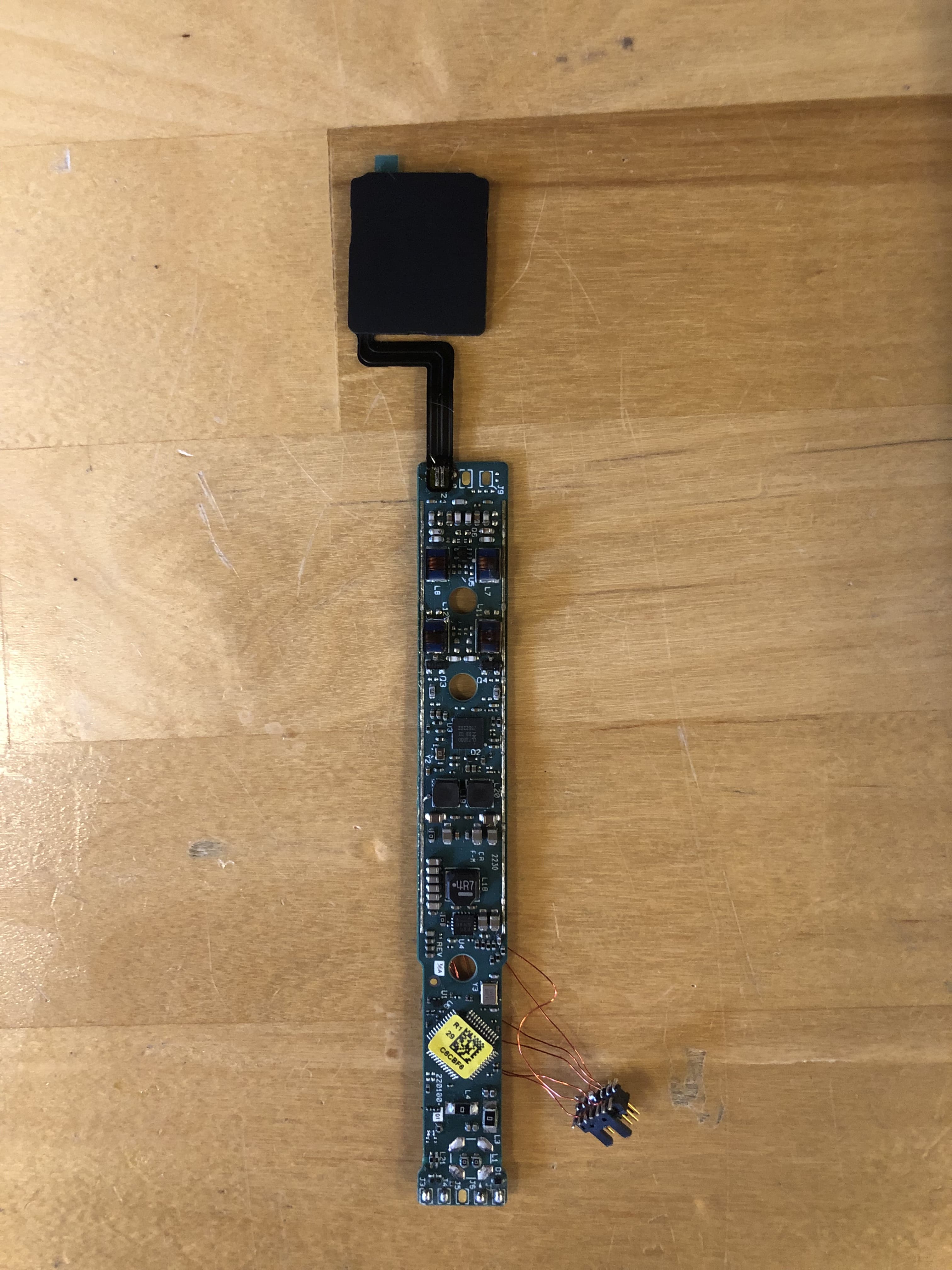
AL8-CBVS1
Oct 16, 2023Wireless Charge Stand
Equipment Class
DXX - Part 15 Low Power Communication Device Transmitter