NCMOGX0301EMultimode GSM/GPRS/EDGE/UMTS/HSDPA PCMCIA Card
Option (Crescent NV)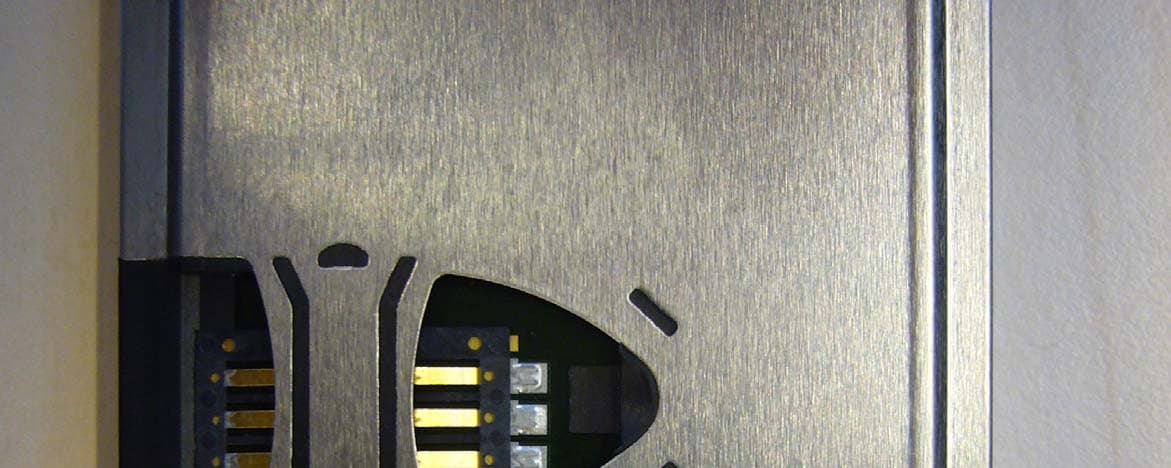
Click to zoom
Application Details
- Equipment Class
- PCB - PCS Licensed Transmitter
- Date of Grant
- Jul 26, 2007
- Application Purpose
- Original Equipment
- Date of Application
- Jul 26, 2007
- Equipment Note
- Multimode GSM/GPRS/EDGE/UMTS/HSDPA PCMCIA Card
- Frequency Range
- 1852.40000000 - 1907.60000000
- Company
- Option (Crescent NV)
- Country
- Belgium
Documents & Files
Document Text
Text extracted from the exhibit documents filed with the FCC. Open a document above to read the original.
Users Manual
Safety manual: Option GX0301 Version 2.0 4/25/2007 About this document Overview and Purpose This document describes the safety measurements that have to be taken into account when using an Option Globetrotter data card. Version History Date Version Author(s) Revision(s)Remarks Phase 15/09/05 1.0 – Draft RoelT Initial version 1.0.0 6/10/06 1.1 JoeriB Final version 15/02/07 1.2 ThomasG Added external antenna distance 20/02/07 1.3 RoelT Added SAR values 12/03/07 1.4 RoelT Adapted to GE020x 03/04/07 2.0 RoelT Changes requested by Paul Hardwick Table of contents TABLE OF CONTENTS............................................................................................................................. 3 1. INTRODUCTION.................................................................................................................................... 4 1.1 YOUR DATACARD IS LIKE A MOBILE PHONE.......................................................................................... 4 2. SAFETY MEASUREMENTS................................................................................................................. 5 2.1 GENERAL RECOMMENDATIONS FOR USE.............................................................................................. 5 2.2 TRAVELING........................................................................................................................................... 5 2.3 AMBIENT TEMPERATURES.................................................................................................................... 5 2.4 EXPLOSIVE ATMOSPHERE..................................................................................................................... 5 2.5 BLASTING AREAS – CONSTRUCTION SITES............................................................................................ 5 2.6 DO NOT USE ON AIRCRAFT.................................................................................................................... 6 2.7 DO NOT USE IN HOSPITALS................................................................................................................... 6 2.8 INTERFERENCE FROM RADIO SIGNALS................................................................................................. 6 2.9 IMMUNITY TO INTERFERENCE.............................................................................................................. 6 2.10 CARDIAC PACEMAKERS, IMPLANTED DEFIBRILLATORS & OTHER MEDICAL IMPLANT DEVICES......... 6 2.11 HEARING DEVICES............................................................................................................................. 7 2.12 CHILDREN.......................................................................................................................................... 7 2.13 DRIVING............................................................................................................................................. 7 2.14 SIM CARDS........................................................................................................................................ 7 2.15 ACCESSORIES.................................................................................................................................... 7 2.16 SAFE DISTANCE.................................................................................................................................. 7 2.17 SUPPLY VOLTAGE.............................................................................................................................. 8 1. Introduction This document contains very important information about the safe operation of your Option datacard. We recommend you read this entire document before using the card. Ignoring these guidelines may be dangerous or illegal. 1.1 Your datacard is like a mobile phone Your datacard uses the same technology as a mobile phone. It is important that you always obey all safety regulations related to mobile phone use. If you have any doubt about the safe operation of your datacard you should remove the datacard from the PC and seek advice from authorized personnel. 2. Safety Measurements Please read the following guidelines carefully. Not following these guidelines can cause harm to the card, yourself or other persons. 2.1 General recommendations for use Always treat your product with care and keep in a clean and dust-free place. Do not expose your product to open flames or lit tobacco products. Do not expose to liquid, moisture or humidity. Do not expose the datacard to rain, or other liquids. Do not drop, throw or try to bend your product. Do not paint your product. Do not attempt to disassemble your product. Doing so may be dangerous and it will void the warranty. Do not touch the antenna unnecessarily. 2.2 Traveling Handle the card with care while traveling. It is recommended to remove the card from the laptop. 2.3 Ambient temperatures Do not expose the datacard or the antenna to ambient temperatures beyond the range of -25 and +50 degrees Celsius. 2.4 Explosive atmosphere Turn off your PC in any area with a potentially explosive atmosphere. It is rare, but your PC could generate sparks, which could cause an explosion or fire. Areas with a potentially explosive atmosphere are not always clearly marked. They include fuelling areas (petrol filling stations), below deck on boats, fuel or chemical transfer or storage facilities, and areas where the air contains chemicals or particles, such as grain, dust, or metal powders. Do not transport or store your PC and accessories in the compartment of a vehicle, which contains flammable gas, liquid, or explosives. 2.5 Blasting areas – construction sites Turn off your PC when in a blasting area in order to avoid interfering with two-way radios used in blasting operations. 2.6 Do not use on aircraft Using a wireless devices on aircraft can cause interference and is illegal. Remove your datacard if you intend to use your PC whilst in an aircraft…
Text truncated - open the document above for the full version.
Users Manual
--------- - - -- - - - - - - - - - - - - - - - - - - - - - - - --- globetrotter mobilitymanager manual in cn / d / e / f / i / nl / p on cd Warning ! Do not insert the card ! Registering your card is of great value to you. As soon as you register, you will qualify for: > Validation of warranty, which includes repair or replacement if faulty > After-sales customer care > Advanced bulletins on product updates and software upgrades During the installation process, you will have the possibility to register online or via e-mail. You may also register on-line at: http://www.option.com/registration/4_3_registration.shtml 3 register with option do not print this page Register with Option3 Introduction4 System Requirements5 Installation8 Getting Started10 Trouble shooting33 Safety Information34 contents Congratulations on your purchase of the Option GlobeTrotter card. GlobeTrotter together with the GlobeTrotter Mobility Manager software is the ultimate high performance solution for providing mobile wireless connectivity to Laptops and Notebooks. The GlobeTrotter solution enables users to browse the Internet, send and receive e-Mails, send and receive SMS text messages and all with SIM management seamlessly integrated with Microsoft Outlook™. The technology in your Option GlobeTrotter card supports real time remote connectivity and is ideal for the synchronization of mobile devices with the office or home computer. GlobeTrotter is designed to support IPsec client software providing secure remote IP mobile access to corporate networks. This guide describes how to install the GlobeTrotter Mobility Manager (GTMM) software on your PC and how to start using it. For more detailed information, consult the GTMM Online Help Guide. Contents of the sales package In the sales package, you will find the following items: > Option GlobeTrotter card > A CD-Rom containing the software To overcome any installation and usage barriers and to enhance the user experience, the following documentation is also included: > This Quick Start Guide, which gives the installation of the GlobeTrotter Mobility Manager Software in a limited number of steps, and assists the user in making his/her first data call > Online User Manual, which describes a number of common usage scenarios. The online User manual can be accessed at all times through the Help menu of the software. introduction 4 The GlobeTrotter Mobility Manager software requires: Processor > Client (a computer not working in a server capacity): Min. 90-megahertz (MHz) Intel Pentium II-class processor or higher > Server (a computer working in a server capacity): Min.133-MHz Intel Pentium- class processor Operating System > Windows XP Professional > Windows XP Home Edition > Windows 2000 > Windows ME > Windows 98SE Memory > Client: 64 megabytes (MB) of RAM, 96 MB recommended > Server: 128 MB of RAM, 256 MB recommended Hard Disk Min. 40 MB for installation of SW & Drivers Display 800 x 600 or higher-resolution display with 256 colors Input Device Microsoft mouse or compatible pointing device system requirements (minimum requirements) 5 Communications software When you run the installation program, the following programs will be installed on your computer: > Windows GlobeTrotter device drivers > The GlobeTrotter Mobility Manager The GlobeTrotter Mobility Manager The GlobeTrotter Mobility Manager GTMM simplifies SMS messaging and the configuration of GPRS settings for applications such as downloading e-mail or browsing the Internet. It also gives the possibility to manage a WLAN connection. The GTMMapplication incorporates a powerful SMS editor and a viewer for reading SMS messages. Incoming and outgoing messages are listed in Outlook™-style directories. The Setup pagegives users a quick and easy way to set up any type of connection (GSM, GPRS or 3G). The WLAN pagegives users a quick and easy way to scan and connect on a WLAN network. system requirements (minimum requirements) 7 Other requirements > Microsoft Internet Explorer 6.00 or later > The latest Windows service packs and critical updates from the Windows Update site. > The target system may not have any version of the ‘Funk Odyssey’ WLAN client installed, otherwise the installation will fail Please refer to the GlobeTrotter datacard Product Sheet for datacard system requirements. Network services To use your Option GlobeTrotter card, you must first activate an account with a mobile phone Service Provider and have received a Subscriber Identity Module (SIM) card. Often the GlobeTrotter is supplied as a package with an airtime agreement. If you do not already have an airtime agreement, please ask your supplier about obtaining one for a compatible network. Please refer to the GlobeTrotter datacard Product Sheet which will detail the types of network and services it is compatible with. Some service providers may not provide all communications services. Contact your service provider for further information about the availability and details of the services in your home network. Additional information may be required from your service provider to activate the data functionality of the Option GlobeTrotter card such as: > User Name - if applicable > Password - if applicable > Access Point Name (APN) > IP Address - if not dynamic > DNS Address - if not dynamic system requirements (minimum requirements) 6 10.At the end of the installation you will have to reboot the PC and if you have selected automatic start up, the GTMM application will start up after the reboot. 11. Insert the Option GlobeTrotter card into the PCMCIA slot of your PC. 12. Wait until the system has recognized the card. 13. You will now be asked to register the product. Registration is required to benefit from the warranty and customer care. By connecting to the Internet you can register online immediately athttp://www.option.com/registration/4_3_registration.shtml Choose Cancelif you want to register later. You will be able to start the registration from the h…
Text truncated - open the document above for the full version.
Users Manual
GX0301 AGENCY REQUIREMENTS Licensed by QUALCOMM Incorporated under one or more of the following United States Patents and/or their counterparts in other nations: 4,901,307; 5,490,165; 5,056,109; 5,504,773; 5,101,501; 5,506,865; 5,109,390; 5,511,073; 5,228,054; 5,535,239; 5,267,261; 5,544,196; 5,267,262; 5,568,483; 5,337,338; 5,600,754; 5,414,796; 5,657,420; 5,416,797; 5,659,569; 5,710,784; 5,778,338 Federal communications commission notice This equipment has been tested and found to comply with the limits for a Class B digital device, pursuant to Part 22 and 24 of the FCC Rules. These limits are designed to provide reasonable protection against harmful interference in a residential installation. This equipment generates, uses, and can radiate radio frequency energy and, if not installed and used in accordance with the instructions, may cause harmful interference to radio communications. However, there is no guarantee that interference will not occur in a particular installation. If this equipment does cause harmful interference to radio or television reception, which can be determined by turning the equipment off and on, the user is encouraged to try to correct the interference by one or more of the following measures: > Reorient or relocate the receiving antenna. > Increase the separation between the equipment and receiver. > Connect the equipment into an outlet on a circuit different from that to which the receiver is connected. > Consult the dealer or an experienced radio or television technician for help. Modifications The FCC requires the user to be notified that any changes or modifications made to this device that are not expressly approved by Option could void the user's authority to operate the equipment. Declaration of Conformity for products marked with the FCC logo - United States only This device complies with Part 15 of the FCC rules. Operation is subject to the following two conditions: (1) this device may not cause harmful interference, and (2) this device must accept any interference received, including interference that may cause undesired operation. For questions regarding your product or FCC declaration, contact: Option | Gaston Geenslaan 14 | 3001 Leuven | Belgium www.option.com To identify this product, refer to the Part, Series, or Model number found on the product. This product has successfully completed the PTCRB requirements governing the release of new GSM 850/1900 capable products into the North American market. Exposure Information to Radio Frequency Energy This PCMCIA card has been tested in 3 different notebooks for compliance with the SAR requirements. Measured SAR values according to the CE regulations: The maximum measured body SAR value (averaged over a mass of 10 g and distance between phantom and antenna of 15 mm) is well below the limit of 2 W/kg. Measured SAR values according to the FCC regulations: The maximum measured body SAR value (averaged over a mass of 1 g and no distance between phantom and bottom of the notebook) is well below the limit of 1.6 W/kg. This device contains 900/1800 MHz GSM/EDGE and 2100Mhz WCDMA functions that are not operational in U.S. Territories. For safe and efficient use the user should keep the antenna of the card at a minimum distance of 20 cm away from his body. CAUTION: Users concerned with the risk of Radio Frequency exposure may wish to limit the duration of their calls and to position the antenna as far away from the body as is practical. European Union declaration of conformity CE 0700 Products bearing the CE marking comply with the R&TTE Directive (99/5/EC), EMC Directive (89/336/EEC) and the Low Voltage Directive (73/23/EEC) issued by the Commission of the European Community. Compliance with these directives implies conformity to the following European Norms (in parentheses are the equivalent international standards and regulations): Radio Frequency spectrum efficiency: > EN 301 511, v9.0.2 > EN 301 908-1&2, v2.2.1 Electromagnetic Compatibility > EN 301 489-7/-24: 2002 Safety and Health > EN 60950-1/A11: 2004 This product may be used in the following countries: > All EU Member states > Iceland > Switzerland > Norway > United States of America Manufacturer's Disclaimer Statement The information in this document is subject to change without notice and does not represent a commitment on the part of the vendor. No warranty or representation, either expressed or implied, is made with respect to the quality, accuracy, or fitness for any particular purpose of this document. The manufacturer reserves the right to make changes to the content of this document and/or the products associated with it at any time without obligation to notify any person or organization of such changes. In no event will the manufacturer be liable for direct, indirect, special, incidental, or consequential damages arising out of the use or inability to use this product or documentation, even if advised of the possibility of such damages. For questions regarding your product or declaration, contact: Option | Gaston Geenslaan 14 | 3001 Leuven | Belgium www.option.com SYSTEM REQUIREMENTS > Type II PC-Card slot with cardbus interface > Must be supplied by a SELV (Safety Extra Low Voltage) circuit with limited power.
Cover Letter(s)
Request for Confidentiality PHOENIX TESTLAB GmbH Date: 2007-06-20 Product Certification Kbnigswinkel 10 o 32825 Blomberg RE: Certification Application FCC 10: NCMOGX0301 E Confidentiality Request Pursuant to Sections 0.457 and 0.459 of the Commission's Rule, the applicant hereby requests confidential treatment of information accompanying this application as outlined below: Permanent confidential: • Schematics • Block Diagram • Parts List • Operational Description Short-term confidentiaI: • Internal Photos • User Manual The above materials contain trade secrets and proprietary information not customarily released to the public, The public disclosure of these matters might be harmful to the applicant and provide unjustified benefits to its competitors. The applicant understands that pursuant to rule 0.457, disclosure of this application and all accompanying documentation will not be made before the date of the GRANT for this application, Thank you for your attention in this matter, Applicant's Company 7Layers AG address Borsigstr, 11,,40,880 Ratingen, Germany Signature Yao Jing /:'7 t Job Title and Dept. Project Manager, Test & Certification Management
ID Label/Location Info
Rev:Sap Mat NR : Part Name: Page: Size:Scale: Drawn: Top Mat Nr: Date: Project: Gaston Geenslaan 14 - B3001 Leuven - Belgium DATE APPROVED ISSUEDDESCRIPTION REV ECP 1/1 A4 1:1 22/05/07 Eric Vandeputte MANF LBL ETNA EX Generic Ireland R0.1Etna Ex 2002067 1 2002067 EV 22/05/07 First version (based upon Fuji Ex) 1 Pre-printedSuggestion Thermal print 1.Overall dimensions: 54.52mm x 23.43mm / Radius Corners: 2.4mm and 0.5mm 2.To be supplied in the format shown, on reels, copy position 2, internal core dia 38mm 3.Quantity per roll: 1000 or max o/d 4” 4.Each roll to be packed in bubble wrap and sealed in a polythene bag containing no other shedding material. Reels then to be packed in a box, each box to contain 4 reels. The outside of the box to be clearly labelled with the following information: - Option Part number - Quantity in box - Date produced 5.Liner to be 6.Label thickness: 50 XXmm wide. Vertical gap between labels XXmm. μm max. 7.Label to be silver and suitable for thermal transfer printing. 8.Label to be printed with artwo 9.Printing be resistant to rubbing and alcohol cleaning. 10.Raw material: FLEXcon THERMLfilm MM 200 satin silver TC-712 L-344 40 White Glassine 11. Artwork use Black 32364 12.To be used with print ribbon: Armor AXR7+ or equivalent. rk 2002067_1_2002067_art.* FCC ID NCMOGX0301E IMEI : 4256231313666 SNR : 4256231313 Model: GE0301 2 0 0 2 0 6 7 _ 1 _ 2 0 0 2 0 6 7 Designed in E.U. by Option Made in Ireland by Option QUALCOMM 3G CDMA 07000700 Designed in E.U. by Option Made in Ireland by Option QUALCOMM 3G CDMA 07000700 2 0 0 2 0 6 7 _ 1 _ 2 0 0 2 0 6 7
RF Exposure Info
DAT-P-152/98-01 SAR Report_7layers_6620_632_FCC_850_1900_WCDMA II_V_SAR Plots_Globetrotter GT E Page 1 of 21 Appendix for the Report Dosimetric Assessment of the GlobeTrotter GT from Option (FCC ID: NCMOGX0301E) According to the FCC Requirements SAR Distribution Plots July 25, 2007 IMST GmbH Carl-Friedrich-Gauß-Str. 2 D-47475 Kamp-Lintfort Customer 7layers AG Borsigstrasse 11 D-40880 Ratingen The test results only relate to the items tested. This report shall not be reproduced except in full without the written approval of the testing laboratory. dasy_report_fcc_850_1900_plots_1.1.doc/04.07.2005/CH SAR Report_7layers_6620_632_FCC_850_1900_WCDMA II_V_SAR Plots_Globetrotter GT E Page 2 of 21 dasy_report_fcc_850_1900_plots_1.1.doc/04.07.2005/CH Table of Contents 1 SAR DISTRIBUTION PLOTS, GPRS 850 BODY....................................................................................... 3 2 SAR DISTRIBUTION PLOTS, GPRS 1900 BODY..................................................................................... 6 3 SAR DISTRIBUTION PLOTS, WCDMA II (FDD) BODY........................................................................... 9 4 SAR DISTRIBUTION PLOTS, WCDMA V (FDD) BODY......................................................................... 13 5 SAR Z-AXIS SCANS (VALIDATION)......................................................................................................... 17 6 SAR Z-AXIS SCANS (MEASUREMENTS)................................................................................................ 20 SAR Report_7layers_6620_632_FCC_850_1900_WCDMA II_V_SAR Plots_Globetrotter GT E Page 3 of 21 dasy_report_fcc_850_1900_plots_1.1.doc/04.07.2005/CH 1 SAR Distribution Plots, GPRS 850 Body Test Laboratory: IMST GmbH, DASY Blue (I); File Name: 542_bahm_1_latitude.da4 DUT: Option ; Type: Etna GT; Serial: 004401440467542 Program Name: Body Worn Communication System: GPRS 850; Frequency: 836.6 MHz;Duty Cycle: 1:2.66 Medium parameters used: f = 836.6 MHz; σ = 1 mho/m; ε r = 54.1; ρ = 1000 kg/m 3 Phantom section: Flat Section DASY4 Configuration: - Probe: EX3DV4 - SN3536; ConvF(9.94, 9.94, 9.94); Calibrated: 27.09.2006 - Sensor-Surface: 4mm (Mechanical Surface Detection) - Electronics: DAE4 Sn631; Calibrated: 11.07.2006 - Phantom: SAM Sugar 1059; Type: Speag; Serial: 1059 - Measurement SW: DASY4, V4.7 Build 53; Postprocessing SW: SEMCAD, V1.8 Build 172 Body Worn/Area Scan (8x10x1): Measurement grid: dx=15mm, dy=15mm Maximum value of SAR (measured) = 0.714 mW/g Body Worn/Zoom Scan (7x7x7)/Cube 0: Measurement grid: dx=5mm, dy=5mm, dz=5mm Reference Value = 22.4 V/m; Power Drift = 0.149 dB Peak SAR (extrapolated) = 1.24 W/kg SAR(1 g) = 0.829 mW/g; SAR(10 g) = 0.479 mW/g Maximum value of SAR (measured) = 0.900 mW/g Fig. 1: SAR distribution for GPRS 850 (Class 11), channel 190, Lap Held Position (DELL Latitude C810, April 18, 2007; Ambient Temperature: 22.4°C; Liquid Temperature: 21.4°C). SAR Report_7layers_6620_632_FCC_850_1900_WCDMA II_V_SAR Plots_Globetrotter GT E Page 4 of 21 dasy_report_fcc_850_1900_plots_1.1.doc/04.07.2005/CH Test Laboratory: IMST GmbH, DASY Blue (I); File Name: 542_bahm_1_acer.da4 DUT: Option ; Type: Etna GT; Serial: 004401440467542 Program Name: Body Worn Communication System: GPRS 850; Frequency: 836.6 MHz;Duty Cycle: 1:2.66 Medium parameters used: f = 836.6 MHz; σ = 1 mho/m; ε r = 54.1; ρ = 1000 kg/m 3 Phantom section: Flat Section DASY4 Configuration: - Probe: EX3DV4 - SN3536; ConvF(9.94, 9.94, 9.94); Calibrated: 27.09.2006 - Sensor-Surface: 4mm (Mechanical Surface Detection) - Electronics: DAE4 Sn631; Calibrated: 11.07.2006 - Phantom: SAM Sugar 1059; Type: Speag; Serial: 1059 - Measurement SW: DASY4, V4.7 Build 53; Postprocessing SW: SEMCAD, V1.8 Build 172 Body Worn/Area Scan (8x10x1): Measurement grid: dx=15mm, dy=15mm Maximum value of SAR (measured) = 0.314 mW/g Body Worn/Zoom Scan (7x7x7)/Cube 0: Measurement grid: dx=5mm, dy=5mm, dz=5mm Reference Value = 16.3 V/m; Power Drift = -0.115 dB Peak SAR (extrapolated) = 0.452 W/kg SAR(1 g) = 0.309 mW/g; SAR(10 g) = 0.209 mW/g Maximum value of SAR (measured) = 0.331 mW/g Body Worn/Zoom Scan (7x7x7)/Cube 1: Measurement grid: dx=5mm, dy=5mm, dz=5mm Reference Value = 16.3 V/m; Power Drift = -0.115 dB Peak SAR (extrapolated) = 0.229 W/kg SAR(1 g) = 0.163 mW/g; SAR(10 g) = 0.116 mW/g Maximum value of SAR (measured) = 0.174 mW/g Fig. 2: SAR distribution for GPRS 850 (Class 11), channel 190, Lap Held Position (Acer TravelMate, April 18, 2007; Ambient Temperature: 22.4°C; Liquid Temperature: 21.4°C). SAR Report_7layers_6620_632_FCC_850_1900_WCDMA II_V_SAR Plots_Globetrotter GT E Page 5 of 21 dasy_report_fcc_850_1900_plots_1.1.doc/04.07.2005/CH Test Laboratory: IMST GmbH, DASY Blue (I); File Name: 542_bahh_1_hp.da4 DUT: Option ; Type: Etna GT; Serial: 004401440467542 Program Name: Body Worn Communication System: GPRS 850; Frequency: 848.8 MHz;Duty Cycle: 1:2.66 Medium parameters used: f = 848.8 MHz; σ = 1 mho/m; ε r = 54.1; ρ = 1000 kg/m 3 Phantom section: Flat Section DASY4 Configuration: - Probe: EX3DV4 - SN3536; ConvF(9.94, 9.94, 9.94); Calibrated: 27.09.2006 - Sensor-Surface: 4mm (Mechanical Surface Detection) - Electronics: DAE4 Sn631; Calibrated: 11.07.2006 - Phantom: SAM Sugar 1059; Type: Speag; Serial: 1059 - Measurement SW: DASY4, V4.7 Build 53; Postprocessing SW: SEMCAD, V1.8 Build 172 Body Worn/Area Scan (8x10x1): Measurement grid: dx=15mm, dy=15mm Maximum value of SAR (measured) = 1.23 mW/g Body Worn/Zoom Scan (7x7x7)/Cube 0: Measurement grid: dx=5mm, dy=5mm, dz=5mm Reference Value = 27.9 V/m; Power Drift = -0.049 dB Peak SAR (extrapolated) = 2.12 W/kg SAR(1 g) = 1.28 mW/g; SAR(10 g) = 0.772 mW/g Maximum value of SAR (measured) = 1.40 mW/g Fig. 3: SAR worst case distribution for GPRS 850 (Class 11), channel 251, Lap Held Position (HP Compaq nc6320, April 18, 2007; Ambient Temperature: 22.4°C; Liquid Temperature: 21.4°C). SAR Report_7layers_6620_632_FCC_850_1900_WCDMA II_V_SAR Plots_Globetrotter GT E Page 6 of 21…
Text truncated - open the document above for the full version.
RF Exposure Info
DAT-P-152/98-01 SAR Report_7layers_6620_632_FCC_Body_850_1900_WCDMA II_V_Globetrotter GT E Page 1 of 44 Report Dosimetric Assessment of the Portable Device Globetrotter GT from Option (FCC ID: NCMOGX0301E) tested in three host products According to the FCC Requirements July 25, 2007 IMST GmbH Carl-Friedrich-Gauß-Str. 2 D-47475 Kamp-Lintfort Customer 7layers AG Borsigstrasse 11 D-40880 Ratingen The test results only relate to the items tested. This report shall not be reproduced except in full without the written approval of the testing laboratory. Dasy_Report_FCC_Body_Card_GSM850_GSM1900_WCDMA_II_V_1.2.doc/24.04.2007/ABo SAR Report_7layers_6620_632_FCC_Body_850_1900_WCDMA II_V_Globetrotter GT E Page 2 of 44 Dasy_Report_FCC_Body_Card_GSM850_GSM1900_WCDMA_II_V_1.2.doc/24.04.2007/ABo Executive Summary The device Globetrotter GT is a new PCMCIA Card from Option operating in the 850 MHz, 900 MHz, 1800 MHz and 1900 MHz frequency range. The device has a extractable antenna with one intended use position and the system concepts used are the GPRS 850 (Class 11), GPRS 900 (Class 11), GPRS 1800 (Class 12), GPRS 1900 (Class 12), WCDMA I (FDD), WCDMA II (FDD) and WCDMA V (FDD) standards. The card provides HSDPA in WCDMA. The objective of the measurements done by IMST was the dosimetric assessment of one device in body worn configuration in the GPRS 850 (Class 11), GPRS 1900 (Class 11), WCDMA II (FDD) and WCDMA V (FDD) standards. The measurements were performed in combination with three different host products (DELL Latitude C810, Acer TravelMate and HP Compaq nc 6320). The device was tested in lap held position with the bottom of the computer in direct contact against the flat phantom. The examinations have been carried out with the dosimetric assessment system „DASY4“. The measurements were made according to the Supplement C to OET Bulletin 65 of the Federal Communications Commission (FCC) Guidelines [OET 65] for evaluating compliance of mobile and portable devices with FCC limits for human exposure (general population) to radiofrequency emissions. Additional information and guidelines given by the following FCC document were used: SAR Measurement Procedures for 3G Devices [3G Devices]. All measurements have been performed in accordance to the recommendations given by SPEAG. The Option Globetrotter GT PCMCIA Card (FCC ID: NCMOGX0301E) is in compliance with the Federal Communications Commission (FCC) Guidelines [OET 65] for uncontrolled exposure. The PCMCIA Card was tested for the following configurations: Body Worn for GPRS 850 (Class 11), GPRS 1900 (Class 12), WCDMA II (FDD) and WCDMA V (FDD) in lap held position with the bottom of the computer in direct contact against the flat phantom. In addition, body SAR was also measured in HSDPA, using the highest body SAR configuration without HSDPA. The card was tested with three host products (DELL Latitude C810, Acer TravelMate and HP Compaq nc 6320). Due to the used power reduction on GSM 850 in GPRS Class 12, the tests for this band was conducted with GPRS Class 11 to cover the worst case. prepared by: ........................................... reviewed by:............................................. Alexander Rahn André van den Bosch test engineer quality assurance engineer SAR Report_7layers_6620_632_FCC_Body_850_1900_WCDMA II_V_Globetrotter GT E Page 3 of 44 Dasy_Report_FCC_Body_Card_GSM850_GSM1900_WCDMA_II_V_1.2.doc/24.04.2007/ABo Table of Contents 1 SUBJECT OF INVESTIGATION.................................................................................................................... 4 2 THE IEEE STANDARD C95.1 AND THE FCC EXPOSURE CRITERIA................................................. 4 2.1 DISTINCTION BETWEEN EXPOSED POPULATION, DURATION OF EXPOSURE AND FREQUENCIES........... 5 2.2 DISTINCTION BETWEEN MAXIMUM PERMISSIBLE EXPOSURE AND SAR LIMITS....................................... 5 2.3 SAR LIMIT............................................................…
Text truncated - open the document above for the full version.
Contact Information
Applicant
Joost van der Velden(CEO)
Test Firm
7layers AGRobert Machulec
Technical Specifications
| # | Rule Parts | Frequency Range | Power Output | Emission | Tolerance |
|---|---|---|---|---|---|
| 6 | 24E | 1.85 GHz - 1.91 GHz | 692.00 mW | 4M20F9W | 0.1 ppm |
Other Applications from Option (Crescent NV)

NCM-CG2132
Sep 21, 2022LoRaWAN 86x/9xx Expansion card
Equipment Class
DTS - Digital Transmission System
NCM-WT500
Jun 06, 2021Water and Temperature Sensor
Equipment Class
DSS - Part 15 Spread Spectrum Transmitter
NCMOCG2101
Feb 27, 2013CloudGate 802.11abgn Wireless LAN Card
Equipment Class
NII - Unlicensed National Information Infrastructure TX
NCMOMO6792
Feb 24, 2013GTM679W
Equipment Class
JBP - Part 15 Class B Computing Device PeripheralNCMOGI0644
Jun 17, 2012GSM/UMTS/WLAN USB Modem GI0644
Equipment Class
PCB - PCS Licensed Transmitter