NPQMTD3800Dual-Mode Cellular Telephone
Telian Corporation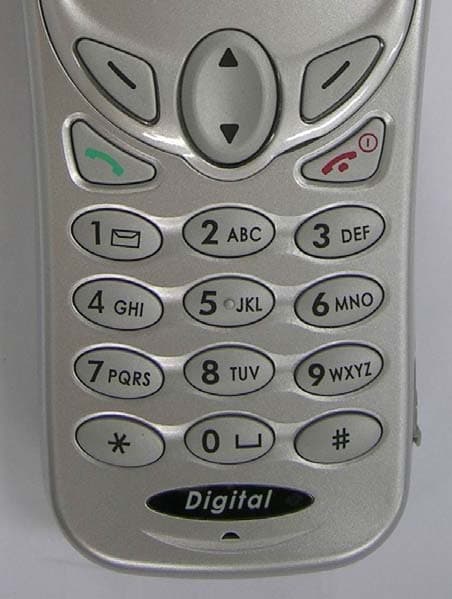
Click to zoom
Application Details
- Equipment Class
- TNE - Licensed Non-Broadcast Transmitter Held to Ear
- Date of Grant
- Aug 22, 2004
- Application Purpose
- Original Equipment
- Date of Application
- Aug 22, 2004
- Equipment Note
- Dual-Mode Cellular Telephone
- Frequency Range
- 824.04000000 - 848.97000000
- Company
- Telian Corporation
- Country
- South Korea
Documents & Files
Document Text
Text extracted from the exhibit documents filed with the FCC. Open a document above to read the original.
Users Manual
- 1 - D D U U A A L L - - M M O O D D E E T T D D M M A A P P H H O O N N E E MODEL : MTD-3800 PRELIMINARY 040719 – Rev. 00a - 2 - C o n t e n t s 1. SAFETY INFORMATION............................................................................... 8 2. PREPARING YOUR PHONE FOR USE ...................................................... 12 2.1 Install the battery .................................................................................................. 12 2.2 Remove the battery .............................................................................................. 12 2.3 Charge the battery ................................................................................................ 12 3. HIGHLIGHTS OF FEATURES..................................................................... 14 4. ABOUT THE PHONE................................................................................... 15 4.1 Name and function ............................................................................................... 15 4.2 Key functions ........................................................................................................ 16 4.2.1 Selection keys ....................................................................................................... 16 4.2.2 Send Key ........................................................................................................................ 16 4.2.3 End Key........................................................................................................................... 16 4.2.4 ~ Number keys......................................................................... 16 4.2.5 Scroll keys ........................................................................................................ 16 4.2.6 Using the selection keys .......................................................................................................... 16 4.2.7 Using the scroll keys ................................................................................................................ 17 4.3 About display indicators and icons.................................................................... 17 4.3.1 Start screen ............................................................................................................................... 17 4.3.2 Scroll bar ................................................................................................................................... 17 4.4 Indicators and icons............................................................................................. 17 5. BASIC OPERATIONS ................................................................................. 19 - 3 - 5.1 Switch the phone ON or OFF ............................................................................... 19 5.2 Make a call............................................................................................................. 19 5.3 Answering a call ................................................................................................... 19 5.4 Adjusting the earpiece volume ............................................................................ 20 5.5 Redial the last-dialed number .............................................................................. 20 5.6 Use Caller ID.......................................................................................................... 20 6. USE PHONE MENUS .................................................................................. 21 6.1 Navigate menus .................................................................................................... 21 6.1.1 Scroll through menus............................................................................................................... 21 6.1.2 Use a shortcut ........................................................................................................................... 21 6.1.3 Exit menu levels........................................................................................................................ 21 6.2 List of shortcuts.................................................................................................... 22 7. ENTER LETTERS AND NUMBERS............................................................ 25 7.1 Enter letters........................................................................................................... 25 7.1.1 Edit name ................................................................................................................................... 25 7.1.2 Change from capital (uppercase) letters y number............................................................... 25 7.1.3 Use punctuation and special characters................................................................................ 26 7.2 Enter number ........................................................................................................ 26 7.2.1 List of special characters......................................................................................................... 27 8. USE THE PHONE BOOK ............................................................................ 28 8.1 About the phone book.......................................................................................... 28 8.2 Use phone book menus ....................................................................................... 28 8.3 Add names and numbers ..................................................................................... 28 8.4 Change a stored telephone number.................................................................... 29 8.5 Recall and dial stored numbers........................................................................... 29 8.6 Erase stored names and numbers ...................................................................... 30 8.7 Erase the entire phone book.........................................................................…
Text truncated - open the document above for the full version.
Attestation Statements
APPLICANT: TELIAN Corp. FCC ID: NPQMTD3800 EXHIBIT 7 911 CALL PROCESSING METHOD COMPLIANCE STATEMENT Method Used The Telian TDMA phone uses the “Automatic A/B Roaming-IR” method for providing Enhanced 911 Emergency Calling support in compliance with the FCC mandate. User Interface While in the process of attempting to complete a 911 call the Telian TDMA phone provides visual feedback to the caller. The display of the phone will show the text “Emergency” while the phone is attempting to find a carrier system to complete the call. The display will continue to read “Emergency” through the duration of the call. System Description When a 911 call is initiated, the Telian TDMA phone ignores all programmed restrictions with regard to which systems; both analog and digital are useable for completing the call. If the Telian TDMA phone has acquired service on a system at the time the 911 call is initiated it will attempt to complete the call using that system. If the phone is not in service on a system it will initially attempt to complete the call using any available system it can find, which may exist on any frequency band or mode, supported by the handset. The phone will continue attempting to complete the ‘911’ call until the call is completed, the user has ended the call, or the battery is exhausted.
Attestation Statements
APPLICANT: TELIAN Corp. FCC ID: NPQMTD3800 EXHIBIT 2 INFORMATION REGARDING ELECTRONIC SERIAL NUMBER (ESN) This cellular transceiver uses a microprocessor to control its call processing operation. This microprocessor accesses a programmable memory area, which is used to store an encrypted data block that contains the Electronic Serial Number (ESN). A proprietary scheme is used to create this data block whereby it is encrypted using methods similar to known public key cryptography methods. It is emphasized that the method used is similar to but different from these known methods and the actual method used is kept proprietary to provide the essential security for the ESN. Access is controlled to both the method of encryption and to the production/repair equipment that has the ability to program the encrypted data block.
Cover Letter(s)
-----Original Message----- From: Roland Gubisch ES-Box Sent: Wednesday, August 18, 2004 2:18 PM To: David Chernomordik ES-Mpk; Bryan Taylor ES-Lex Cc: Danielle Fontaine ES-Box Subject: RE: Telian FCC ID: NPQMTD3800 David, It was not obvious that the power reported in Section 3.0 of the SAR report was measured at the time of SAR testing, rather than just taken from the Part 22 report. Knowing that, we can accept the SAR report as sufficient. But in the future, you might want to think of a way of stating the output power in Section 3.0 to make the point more clearly. Certification will proceed shortly. Thanks, Roland -----Original Message----- From: David Chernomordik ES-Mpk Sent: Wednesday, August 18, 2004 1:02 PM To: Roland Gubisch ES-Box; Bryan Taylor ES-Lex Subject: RE: Telian FCC ID: NPQMTD3800 In the SAR report, the measured maximum conducted power (from this file) for both modes is reported. David -----Original Message----- From: Roland Gubisch ES-Box Sent: Wednesday, August 18, 2004 11:54 AM To: David Chernomordik ES-Mpk Cc: Danielle Fontaine ES-Box; Bryan Taylor ES-Lex Subject: RE: Telian FCC ID: NPQMTD3800 Importance: High David, If the "Conducted Output Power.pdf" file was measured during SAR testing, it provides an excellent correlation between Part 22 and SAR testing. Otherwise, there is no data that I can find to show that the EUT had the same power output during Part 22 and SAR testing. If you still want to delete the "Conducted Output Power.pdf" file, you will need to point me to where else the output power was measured during SAR testing. Thanks for the updated Confidentiality request. Regards, Roland -----Original Message----- From: David Chernomordik ES-Mpk Sent: Wednesday, August 18, 2004 11:31 AM To: Roland Gubisch ES-Box Cc: Danielle Fontaine ES-Box; Bryan Taylor ES-Lex Subject: RE: Telian FCC ID: NPQMTD3800 Hello Roland, Please find attached the revised Confidentiality request from Telian with the short-term confidentiality added. The "Conducted Output Power.pdf" file is an internal document, prepared during the testing; it was submitted mistakenly and should not be uploaded. Thank you David << File: MTD3800 confidential Letter_rev.pdf >> Bryan, Thank you very much. No action is needed at this time, but in future SAR reports the publication date of the IEEE Std. 1528 should be updated from 200X to 2003. We are waiting for the updated request for confidentiality letter. Regards, Roland -----Original Message----- From: Bryan Taylor ES-Lex Sent: Tuesday, August 17, 2004 8:56 AM To: Roland Gubisch ES-Box; David Chernomordik ES-Mpk Cc: Danielle Fontaine ES-Box Subject: RE: Telian FCC ID: NPQMTD3800 All, Attached is the SAR report with a clause under the evaluation procedures stating that the phantom was filled to a depth of 15cm. Let me know if there are any more questions. Best regards, Bryan << File: MTD3800 SAR Report.pdf >> -----Original Message----- From: Roland Gubisch ES-Box Sent: Monday, August 16, 2004 5:45 PM To: Bryan Taylor ES-Lex; David Chernomordik ES-Mpk Cc: Danielle Fontaine ES-Box Subject: RE: Telian FCC ID: NPQMTD3800 Bryan, Thank you. In that case the EMC and SAR conducted measurements are extremely close. Roland -----Original Message----- From: Bryan Taylor ES-Lex Sent: Monday, August 16, 2004 5:29 PM To: Roland Gubisch ES-Box; David Chernomordik ES-Mpk Cc: Danielle Fontaine ES-Box Subject: RE: Telian FCC ID: NPQMTD3800 Roland, The "Conducted Output Power.pdf" file contains the conducted output power measurements that we did in Lexington during the SAR testing. I will add the 15cm fluid depth statement tomorrow and send the revised report to everyone. Best regards, Bryan -----Original Message----- From: Roland Gubisch ES-Box Sent: Monday, August 16, 2004 5:12 PM To: David Chernomordik ES-Mpk; Bryan Taylor ES-Lex Cc: Danielle Fontaine ES-Box Subject: Telian FCC ID: NPQMTD3800 Gentlemen: Review of this application is complete and the following points are noted: ADMINISTRATIVE - Please submit a revised Request for Confidentiality letter, referencing the specific FCC Rule sections 0.457 and 0.459 that provide authorization. The letter should follow the attached pro forma, with the section on short-term confidentiality deleted if it is not requested. EMC REPORT - A separate exhibit named "Conducted Output Power.pdf" contains measurements which are also in the "Part 22 Report.pdf," and in a few cases the measurements are not identical. Please explain. SAR REPORT 1. Please indicate how conducted power or ERP was measured during SAR testing, to establish that the EUT was operating consistently with the output power values obtained in the Part 22 test report. Also provide the measured values. 2. Reference to the 15 cm fluid depth appropriate for SAR testing cannot be found; please indicate where this information is located. Certification can proceed as soon as these issues are addressed. Thank you, Roland << File: Confidentiality pro forma (short-term added).doc >>
External Photos
APPLICANT: TELIAN Corp. FCC ID: NPQMTD3800 EXHIBIT 3 Front view Rear View, with battery removed to show Equipment ID Label.
ID Label/Location Info
APPLICANT: TELIAN Corp. FCC ID: NPQMTD3800 TELIAN CONFIDENTIAL EXHIBIT 1 FCC IDENTIFICATION (NAMEPLATE) INFORMATION The FCC label shown is representative of the label that will appear on the radio when in production. It will be placed outside of the equipment as shown in Exhibit 3. Other information may also be included on this label.
Internal Photos
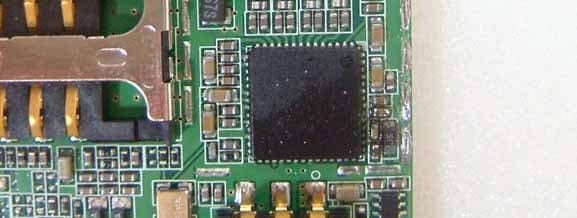
APPLICANT: TELIAN Corp. FCC ID: NPQMTD3800 EXHIBIT 9 Front View (Display Removed) Rear View (Shields Removed) APPLICANT: TELIAN Corp. FCC ID: NPQMTD3800 EXHIBIT 9 Inside the Front Housing Inside the Rear Housing
RF Exposure Info
Figure 1: TDMA 848.97 Right Cheek Touch Figure 2: TDMA 848.97 Right Cheek Tilt Figure 3: TDMA 848.97 Left Cheek Touch Figure 4: TDMA 848.97 Left Cheek Tilt Figure 5: TDMA 848.97 Body Front Side Figure 6: TDMA 848.97 Body Back Side Figure 7: TDMA 836.52 Right Cheek Touch Figure 8: TDMA 836.52 Right Cheek Tilt Figure 9: TDMA 836.52 Left Cheek Touch Figure 10: TDMA 836.52 Left Cheek Tilt Figure 11: TDMA 836.52 Body Front Side Figure 12: TDMA 836.52 Body Back Side Figure 13: TDMA 824.04 Right Cheek Touch Figure 14: TDMA 824.04 Right Cheek Tilt Figure 15: TDMA 824.04 Left Cheek Touch Figure 16: TDMA 824.04 Left Cheek Tilt Figure 17: TDMA 824.04 Body Front Side Figure 18: TDMA 824.04 Body Back Side Figure 19: AMPS 848.97 Right Cheek Touch Figure 20: AMPS 848.97 Right Cheek Tilt Figure 21: AMPS 848.97 Left Cheek Touch Figure 22: AMPS 848.97 Left Cheek Tilt Figure 23: AMPS 848.97 Body Front Side Figure 24: AMPS 848.97 Body Back Side Figure 25: AMPS 836.52 Right Cheek Touch Figure 26: AMPS 836.52 Right Cheek Tilt Figure 27: AMPS 836.52 Left Cheek Touch Figure 28: AMPS 836.52 Left Cheek Tilt Figure 29: AMPS 836.52 Body Front Side Figure 30: AMPS 836.52 Body Back Side Figure 31: AMPS 824.04 Right Cheek Touch Figure 32: AMPS 824.04 Right Cheek Tilt Figure 33: AMPS 824.04 Left Cheek Touch Figure 34: AMPS 824.04 Left Cheek Tilt Figure 35: AMPS 824.04 Body Front Side Figure 36: AMPS 824.04 Body Back Side Figure 37: 900MHz Dipole 7_29 Figure 38: 900MHz Dipole 7_28
RF Exposure Info
This report may be reproduced only with the written permission of Intertek and if reproduced must be reproduced in its entirety. This report must not be used to claim product endorsement by NVLAP or any agency of the U.S. Government. The results contained in this report were derived from measurements performed on the identified test samples. Any implied performance of other samples based on this report is dependent on the representative adequacy of the samples tested. 8/3/2004 8/3/2004 SPECIFIC ABSORPTION RATE (SAR) TEST REPORT Telian Corporation 5th FL. Namjeun Bldg, 53-3 Haan-Dong, Kwnagmyung-Si, Kyunggi-Do, Korea Product: Dual Mode AMPS/TDMA Cellular Phone Model: MTD3800 FCC ID: NPQMTD3800 Tested to the SAR Criteria in FCC OET Bulletin 65, Supplement C (Edition 01-01) For Telian Corporation Test Performed by: Test Authorized by: Intertek 731 Enterprise Drive Lexington, KY 40510 Telian Corporation 5th FL. Namjeun Bldg, 53-3 Haan-Dong, Kwnagmyung-Si, Kyunggi-Do,, Korea Prepared By: _______________________________Date:____________________ Vinay Kutty, Project Engineer Approved By: ______________________________Date:____________________ Bryan C. Taylor, Team Leader - Engineering Intertek Testing Services NA, Inc. 731 Enterprise Drive, Lexington, KY 40510 Telephone: 859-226-1000 Fax: 859-226-1040 Web: www.etlsemko.com 731 Enterprise Drive, Lexington KY 40510 Telian Corporation, Model No: MTD3800 FCC ID: NPQMTD3800 File: 3062948 Page 2 of 17 FCC Part 2 & RSS-102 SAR Evaluation TABLE OF CONTENTS 1.0 Document History .......................................................................................................................... 3 2.0 References....................................................................................................................................... 3 3.0 Test Sample Information............................................................................................................... 4 Test Sample Photographs................................................................................................................. 5 4.0 Declaration of Compliance............................................................................................................ 6 Modifications required for compliance............................................................................................ 6 5.0 Test Site Description ...................................................................................................................... 6 Measurement Equipment ................................................................................................................. 7 Measurement Uncertainty ................................................................................................................ 8 Measurement Traceability ............................................................................................................... 9 6.0 Evaluation Procedures................................................................................................................. 10 Tissue Simulating Liquid Depth: ................................................................................................... 10 Test Positions:................................................................................................................................ 10 Reference Power Measurement: ....................................................................................................10 Coarse Scan: .................................................................................................................................. 10 Zoom Scan: .................................................................................................................................... 10 Data Extrapolation: ........................................................................................................................ 10 Reference Power Measurement: ....................................................................................................11 RF Ambient Activity: .................................................................................................................... 11 7.0 Simulating Tissue Validation ...................................................................................................... 12 Simulating Tissue Validation Results ............................................................................................13 Dipole System Validation Results ................................................................................................. 14 8.0 Engineering Judgments ............................................................................................................... 15 9.0 Criteria.......................................................................................................................................... 15 10.0 Tabular Test Results.................................................................................................................... 15 731 Enterprise Drive, Lexington KY 40510 Telian Corporation, Model No: MTD3800 FCC ID: NPQMTD3800 File: 3062948 Page 3 of 17 FCC Part 2 & RSS-102 SAR Evaluation 1.0 Document History Revision/ Job Number Date Change 1.0 /3062948 Original document 2.0 References 1] ANSI, ANSI/IEEE C95.1-1991: IEEE Standard for Safety Levels with Respect to Human Exposure to Radio Frequency Electromagnetic Fields, 3kHz to 300 GHz, The Institute of electrical and Electronics Engineers, Inc., New York, NY 10017, 1992 [2] Federal Communications Commission, “Evaluating Compliance with FCC Guidelines for Human Exposure to Radiofrequency Electromagnetic Fields”, OET Bulletin 65, FCC, Washington, D.C. 20554, 1997 [3] Thomas Schmid, Oliver Egger, and Niels Kuster, “Automated E-field scanning system for dosimetric assessments”, IEEE Transaction on Microwave Theory and Techniques, vol. 44, pp. 105-113, Jan. 1996. [4] Niels Kuster, Ralph Kastle, and Thomas Schmid, “Dosimetic…
Text truncated - open the document above for the full version.
Test Report
EMC Report for Telian Cor. on the Cellphone, Model: MTD-3800 File: 30629481 Page 1 of 74 Test Report Report Number: 30629481 Project Number: 3062948 July 30, 2004 Testing performed on the Cellular Phone Model Number: MTD-3800 FCC ID: NPQMTD3800 to FCC Part 22 Subpart H and FCC Part 15 Subpart B for Telian Corporation A2LA Certificate Number: 1755-01 Test Performed by: Test Authorized by: Intertek Testing Services NA, Inc. 1365 Adams Court Menlo Park, CA 94025 Telian Corporation 5 th Floor Namjeun Bldg 53-3 Haan-Dong, Kwangnyung, Kyunggi-D, Korea Prepared by: Date: 7/30/04 David Chernomordik, EMC Technical Manager Reviewed by: Date: 7/30/04 Ollie Moyrong, EMC Manager This report is for the exclusive use of Intertek's Client and is provided pursuant to the agreement between Intertek and its Client. Intertek's responsibility and liability are limited to the terms and conditions of the agreement. Intertek assumes no liability to any party, other than to the Client in accordance with the agreement, for any loss, expense or damage occasioned by the use of this report. Only the Client is authorized to copy or distribute this report and then only in its entirety. Any use of the Intertek name or one of its marks for the sale or advertisement of the tested material, product or service must first be approved in writing by Intertek. The observations and test results in this report are relevant only to the sample tested. This report by itself does not imply that the material, product, or service is or has ever been under an Intertek certification program. This report must not be used to claim product endorsement by A2LA, NIST nor any other agency of the U.S. Government. EMC Report for Telian Cor. on the Cellphone, Model: MTD-3800 File: 30629481 Page 2 of 74 TABLE OF CONTENTS 1.0 Introduction................................................................................................................................. 4 1.1 Test Summary ................................................................................................................. 4 1.2 Product Description ........................................................................................................ 5 1.3 Related Submittal(s) Grants ............................................................................................ 5 2.0 RF Power Output, ....................................................................................................................... 6 2.1 Test Procedure ................................................................................................................6 2.2 Test Equipment ............................................................................................................... 6 2.3 Test Results..................................................................................................................... 6 3.0 Radiated Power ......................................................................................................................... 13 3.1 Test Procedure .............................................................................................................. 13 3.2 Test Equipment ............................................................................................................. 13 3.3 Test Results...................................................................................................................13 4.0 Modulation Deviation Limiting ............................................................................................... 15 4.1 Test Procedure .............................................................................................................. 15 4.2 Test Equipment ............................................................................................................. 15 4.3 Test Results...................................................................................................................15 5.0 Audio Filter Characteristics..................................................................................................... 17 5.1 Test Procedure .............................................................................................................. 17 5.2 Test Equipment ............................................................................................................. 18 5.3 Test Results...................................................................................................................18 6.0 Emission Limitations, Occupied Bandwidth .......................................................................... 21 6.1 Test Procedure .............................................................................................................. 21 6.2 Test Equipment ............................................................................................................. 22 6.3 Test Results...................................................................................................................22 7.0 Out of Band Emissions at Antenna Terminal ........................................................................ 30 7.1 Test Procedure .............................................................................................................. 30 7.2 Test Equipment ............................................................................................................. 30 7.3 Test Results...................................................................................................................31 8.0 Field Strength of Spurious Radiation...................................................................................... 62 8.1 Test Procedure .............................................................................................................. 62 8.2 Test Equipment ............................................................................................................. 62 8.3 Test Results..........................................................…
Text truncated - open the document above for the full version.
Test Setup Photos
FCC ID: NPQMTD3800
Contact Information
Applicant
Wayne Hwang(CTO)
Technical Contact
Intertek Testing ServicesDavid Chernomordik
[email protected]650 463 2910
1365 Adams Court · Menlo Park, California · United States
Non-Technical Contact
Intertek Testing ServicesDavid Chernomordik
[email protected]650 463 2910
Test Firm
Intertek Testing Services NA Inc.John Quigley
Technical Specifications
| # | Rule Parts | Frequency Range | Power Output | Emission | Tolerance |
|---|---|---|---|---|---|
| 3 | 22H | 824.04 MHz - 848.97 MHz | 645.00 mW | 3OK0DXW | 0.5 ppm |
Other Applications from Telian Corporation
NPQK1000
Jan 24, 2008GSM850/PCS1900 Dual Band GPRS Terminal Equip. w/BT
Equipment Class
PCE - PCS Licensed Transmitter held to ear
NPQI405
Aug 06, 2007GSM850 / PCS1900 Dual Band GPRS Terminal with BT
Equipment Class
DSS - Part 15 Spread Spectrum Transmitter
NPQI170
Jun 05, 2007GSM850/PCS1900 Dual Band GPRS Terminal with BT
Equipment Class
PCE - PCS Licensed Transmitter held to ear
NPQMGQ9180
Mar 13, 2007Quad-Band GSM/GPRS Handset with Bluetooth
Equipment Class
DSS - Part 15 Spread Spectrum Transmitter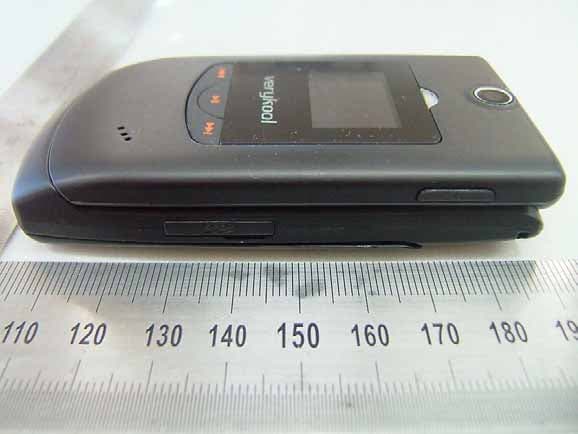
NPQMGQ7180
Feb 27, 2007Quad-Band GSM/GPRS Handset with Bluetooth
Equipment Class
PCE - PCS Licensed Transmitter held to ear