O2SNURIT3010APoint of Sale Device
Verifone Inc.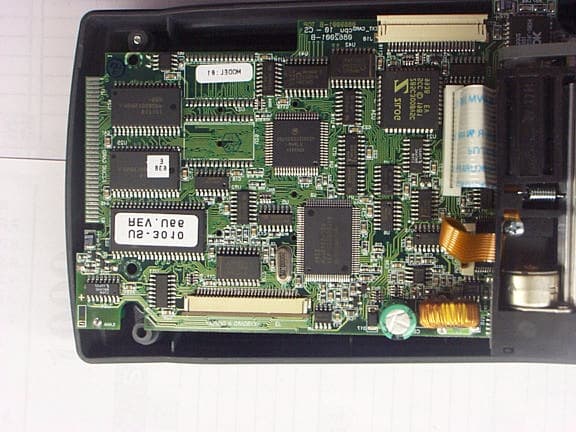
Click to zoom
Application Details
- Equipment Class
- TNB - Licensed Non-Broadcast Station Transmitter
- Date of Grant
- Nov 05, 2000
- Application Purpose
- Original Equipment
- Date of Application
- Sep 12, 2000
- Equipment Note
- Point of Sale Device
- Frequency Range
- 806.00000000 - 821.00000000
- Company
- Verifone Inc.
- Country
- United States
Documents & Files
Document Text
Text extracted from the exhibit documents filed with the FCC. Open a document above to read the original.
Users Manual
August 2000 APREL Project No.: LPMB-NURIT 3010 Exhibit 9 Nurit 3010 ARDIS DataTAC Point of Sale Device Lipman USA FCC ID: O2SNURIT3010A User’s Manual 082-32-001 NURIT /3010 User Manual1 NURIT 3010 POS/EDC TERMINAL USER MANUAL NURIT 3010 POS/EDC TERMINAL USER MANUAL NOTICEThe information contained in this publication is for informational purposes only and subject to change without notice. It does not represent a commitment on the part of Lipman USA Inc. or Lipman Electronic Engineering Ltd. No part of this publication may be reproduced, transmitted, transcribed, stored in a retrieval system, or translated to any language in any form by any means without the prior written permission of Lipman. Copyright © 1999 by Lipman Electronic Engineering Ltd. All rights reserved. TRADEMARKSTrademarks and trade names contained in this manual belong to their respective companies. LIPMAN USA INC.January 1999 50 Gordon DriveOriginal Syosset, NY 11791Publication No. 082-32-001 Tel: (1) 516-484-9898 Fax: (1) 516-484-9057 E-mail: [email protected] 082-32-001 WARNING Changes or modifications to this unit not expressly approved by the party responsible for compliance could void the user's authority to operate the equipment. FCC compliance statement This equipment has been tested to be found to comply with the limits for class A digital device, pursuant to Part 15 of the FCC Rules. Operation is subject to the following conditions: (1) This device may not cause harmful interference, and (2) this device must accept any interference received, including interference that may cause undesired operation. Class A limits are designed to provide reasonable protection against harmful interference in a residential installation. This equipment generates, uses and can radiate radio frequency energy and, if not installed and used in accordance with the instructions, may cause interference to radio communications. However, there is no guarantee that interference will not occur in a particular installation. If this equipment does cause harmful interference to radio or television reception, which can be determined by turning the equipment off and on, the user is encouraged to try to correct the interference by one or more of the following measures: • Reorient or relocate the receiving antenna. • Increase the separation between the equipment and the receiver. • Connect the equipment into an outlet on a circuit different from that to which the receiver is connected. • Consult your dealer or an experienced technician for help. FCC requirements The Federal Communications Commission (FCC) has established rules permitting this device to be directly connected to the telephone network. Standardized jacks are used for these connections. This equipment should not be used on party or coin lines. If this devise is malfunctioning, it may be causing harm to the telephone network; this devise should be disconnected until the source of the problem can be determined and until repair has been made. If this is not done, the telephone company may temporarily disconnect service. The telephone company may make changes in its technical operations and procedures; if such changes affect the compatibility or use of this devise, the telephone company is required to give adequate notice of the changes. You will be advised to file a complaint with the FCC. If the telephone company requests information on what equipment is connected to their lines, inform them of: One. The telephone number this unit is connected to Two. The ringer equivalence number: 0.3B Three. The USOC jack required: RJ-11C Four. The FCC Registration number: 3D7ISR-25066-DT-E The Ringer Equivalence Number (REN) is used to determine how many devices can be connected to your telephone line. In most areas, the sum of the RENs of all devices on any one line should not exceed five (5). If too many devices are attached, they may not ring properly. FCC Part 15 Requirements Notice • This device must not be installed on coin-operated telephone lines or party lines. • This device (equipment) complies with the requirements in Part 15 of FCC Rules of a Class B computing device. Operation of this device (equipment) is subject to the following two conditions: o This device (equipment) may not cause harmful interference, and o This device (equipment) must accept any interference received, including interference that may cause undesired operation. • If this device (equipment) is used in a residential area, it may cause unacceptable interference to radio and TV reception requiring the operator to take whatever steps necessary to correct the interference. • Repair work on this device (equipment) must by done by Lipman USA, Inc, or an authorized repair station. 082-32-001 LIPMAN USA - NURIT /3010 Limited Warranty Lipman USA Inc. will repair this product with new or rebuilt parts, free of charge, in the U.S.A. for one (1) year from the date of original purchase in the event of a defect in materials or workmanship. Carry-in or mail-in service in the continental U.S.A. can be obtained during the warranty period from our N.Y. Service Center or call 1-800-4-LIPMAN toll free. In New York State call (516) 484-9898. This warranty is extended only to the original purchaser. A purchase receipt or other proof of date of original purchase will be required in order to exercise your rights under this warranty. This warranty only covers failures due to defects in materials or workmanship which occur during normal use. It does not cover damage which occurs in shipment; failures which are caused by products not supplied by Lipman USA; or failures which result from accident, misuse, abuse, neglect, mishandling, misapplication, alteration or modification; service by anyone other than the Lipman USA Service Center or accredited service centers, or damage that is attributable to acts of God. Limits and Exclusions There are no express warranties except as listed above. LIPMAN USA SHALL NOT BE LIABLE FOR INCIDENTAL OR CONSE…
Text truncated - open the document above for the full version.
Users Manual
082-32-001 NURIT /3010 User Manual1 NURIT 3010 POS/EDC TERMINAL USER MANUAL NURIT 3010 POS/EDC TERMINAL USER MANUAL NOTICEThe information contained in this publication is for informational purposes only and subject to change without notice. It does not represent a commitment on the part of Lipman USA Inc. or Lipman Electronic Engineering Ltd. No part of this publication may be reproduced, transmitted, transcribed, stored in a retrieval system, or translated to any language in any form by any means without the prior written permission of Lipman. Copyright © 1999 by Lipman Electronic Engineering Ltd. All rights reserved. TRADEMARKSTrademarks and trade names contained in this manual belong to their respective companies. LIPMAN USA INC.January 1999 50 Gordon DriveOriginal Syosset, NY 11791Publication No. 082-32-001 Tel: (1) 516-484-9898 Fax: (1) 516-484-9057 E-mail: [email protected] 082-32-001 WARNING Changes or modifications to this unit not expressly approved by the party responsible for compliance could void the user's authority to operate the equipment. FCC compliance statement This equipment has been tested to be found to comply with the limits for class A digital device, pursuant to Part 15 of the FCC Rules. Operation is subject to the following conditions: (1) This device may not cause harmful interference, and (2) this device must accept any interference received, including interference that may cause undesired operation. Class A limits are designed to provide reasonable protection against harmful interference in a residential installation. This equipment generates, uses and can radiate radio frequency energy and, if not installed and used in accordance with the instructions, may cause interference to radio communications. However, there is no guarantee that interference will not occur in a particular installation. If this equipment does cause harmful interference to radio or television reception, which can be determined by turning the equipment off and on, the user is encouraged to try to correct the interference by one or more of the following measures: • Reorient or relocate the receiving antenna. • Increase the separation between the equipment and the receiver. • Connect the equipment into an outlet on a circuit different from that to which the receiver is connected. • Consult your dealer or an experienced technician for help. FCC requirements The Federal Communications Commission (FCC) has established rules permitting this device to be directly connected to the telephone network. Standardized jacks are used for these connections. This equipment should not be used on party or coin lines. If this devise is malfunctioning, it may be causing harm to the telephone network; this devise should be disconnected until the source of the problem can be determined and until repair has been made. If this is not done, the telephone company may temporarily disconnect service. The telephone company may make changes in its technical operations and procedures; if such changes affect the compatibility or use of this devise, the telephone company is required to give adequate notice of the changes. You will be advised to file a complaint with the FCC. If the telephone company requests information on what equipment is connected to their lines, inform them of: One. The telephone number this unit is connected to Two. The ringer equivalence number: 0.3B Three. The USOC jack required: RJ-11C Four. The FCC Registration number: 3D7ISR-25066-DT-E The Ringer Equivalence Number (REN) is used to determine how many devices can be connected to your telephone line. In most areas, the sum of the RENs of all devices on any one line should not exceed five (5). If too many devices are attached, they may not ring properly. FCC Part 15 Requirements Notice • This device must not be installed on coin-operated telephone lines or party lines. • This device (equipment) complies with the requirements in Part 15 of FCC Rules of a Class B computing device. Operation of this device (equipment) is subject to the following two conditions: o This device (equipment) may not cause harmful interference, and o This device (equipment) must accept any interference received, including interference that may cause undesired operation. • If this device (equipment) is used in a residential area, it may cause unacceptable interference to radio and TV reception requiring the operator to take whatever steps necessary to correct the interference. • Repair work on this device (equipment) must by done by Lipman USA, Inc, or an authorized repair station. WARNING: To comply with FCC RF exposure requirements, users must limit device operations to no more than one transaction in any 3 second time period and must keep the device at least 4cm away from bystanders or parts of the user's body other than their hands. 082-32-001 LIPMAN USA - NURIT /3010 Limited Warranty Lipman USA Inc. will repair this product with new or rebuilt parts, free of charge, in the U.S.A. for one (1) year from the date of original purchase in the event of a defect in materials or workmanship. Carry-in or mail-in service in the continental U.S.A. can be obtained during the warranty period from our N.Y. Service Center or call 1-800-4-LIPMAN toll free. In New York State call (516) 484-9898. This warranty is extended only to the original purchaser. A purchase receipt or other proof of date of original purchase will be required in order to exercise your rights under this warranty. This warranty only covers failures due to defects in materials or workmanship which occur during normal use. It does not cover damage which occurs in shipment; failures which are caused by products not supplied by Lipman USA; or failures which result from accident, misuse, abuse, neglect, mishandling, misapplication, alteration or modification; service by anyone other than the Lipman USA Service Center or accredited service centers, or damage that is attributable to acts of God. Limits and Exclusions …
Text truncated - open the document above for the full version.
Attestation Statements
August 2000 APREL Project No.: LPMB-NURIT-3010 Exhibit 1 Nurit 3010/ARDIS Point of Sale Device Lipman USA, Inc. FCC ID: O2SNURIT3010A Authorization letter Letter requesting Confidentiality Letter from Research in Motion authorizing to use ARDIS modem in Lipman Nurit 3010 product
Attestation Statements
August 2000 APREL Project No.: LPMB-NURIT-3010 Consulting * Research * Training * Certification Testing Since 1981 Exhibit 11 Wireless Modem Nurit 3010 ARDIS DataTAC Lipman USA, Inc. FCC ID: O2SNURIT3010A FCC Part 15, Subpart B, Class B Declaration of Conformity Certificate (DoC)
Cover Letter(s)
August 2000 APREL Project No.: LPMB-NURIT 3010 Table of Contents Lipman USA Point of Sale Device Nurit 3010 ARDIS with a Research in Motion R802D Transmitter ARDIS/DataTAC FCC ID: O2SNURIT3010A C C O O V V E E R R L L E E T T T T E E R R Exhibit 1: a. Authorization Letter b. Request for confidentiality c. Letter from Research in Motion authorizing to use ARDIS modem in Lipman USA Product Exhibit 2/A: Engineering Report for ERP (Includes Test Set-up Photos) Exhibit 2/B: Engineering Report for Spurious (Includes Test Set-up Photos) Exhibit 3: Technical Descriptions and Tune-up Procedure Exhibit 4: FCC ID Label Exhibit 5: Photographs of the Equipment Internal & External Exhibit 6: Block Diagram (Confidential) Exhibit 7: Schematic Diagram (Confidential) Exhibit 8: Parts List (Confidential) Exhibit 9: User’s Manual Exhibit 10: SAR Report (Includes Test Set-up Photographs) Exhibit 11: FCC Part 15, Subpart B, DoC letter
External Photos
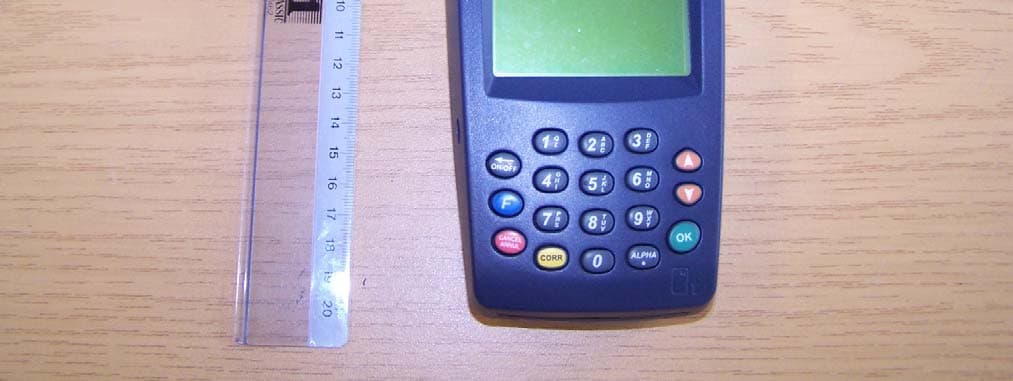
August 2000 APREL Project No.: LPMB-NURIT-3010 Exhibit 5 Nurit 3010 ARDIS DataTAC Point of Sale Terminal Lipman USA FCC ID: O2SNURIT3010A Photographs of the Equipment Internal External August 2000 APREL Project No.: LPMB-NURIT-3010 Lipman USA, Inc. Nurit 3010 August 2000 APREL Project No.: LPMB-NURIT-3010 August 2000 APREL Project No.: LPMB-NURIT-3010 Lipman USA, Ltd. Nurit 3010 Battery compartment open August 2000 APREL Project No.: LPMB-NURIT-3010 Lipman USA, Ltd. Nurit 3010: Front August 2000 APREL Project No.: LPMB-NURIT-3010 Lipman USA, Ltd. Nurit 3010: Ports August 2000 APREL Project No.: LPMB-NURIT-3010 Lipman USA, Ltd. Nurit 3010: Open August 2000 APREL Project No.: LPMB-NURIT-3010 Lipman USA, Ltd. Nurit 3010: Back of screen and keyboard August 2000 APREL Project No.: LPMB-NURIT-3010 Lipman USA, Ltd. Nurit 3010: Ports August 2000 APREL Project No.: LPMB-NURIT-3010 Lipman USA, Ltd. Nurit 3010: Board over modem August 2000 APREL Project No.: LPMB-NURIT-3010 Lipman USA, Ltd. Nurit 3010 with DataTAC modem
ID Label/Location Info
August 2000 APREL Project No.: LPMB-NURIT-3010 Exhibit 4 Nurit 3010 ARDIS DataTAC Point of Sale Device Lipman USA FCC ID: O2SNURIT3010A FCC ID LABEL NOTICE This device complies with Part 15 of FCC Rules. Operation is subject to the following two conditions: (1) this device may cause harmful interference, and (2) this device must accept any interference received, including interference that may cause undesired operation. Lip Lipman USA, Incorporated P/N: 3010-US-02-GRY-A04 MODEL: NURIT 3010 RIM FCC ID: O2SNURIT3010A MOBITEX ESN: 031/02/107719
RF Exposure Info
Certification Report on Specific Absorption Rate (SAR) Experimental Analysis on Hand Lipman USA Inc. Nurit 3010 DataTAC/Ardis Point of Sale Device Test Date: 8 Aug 2000 51 Spectrum Way Nepean ON K2R 1E6 Tel: (613) 820-2730 Fax: (613) 820-4161 email: [email protected] This report shall not be reproduced, except in full, without the express written permission of APREL Laboratories LPMB-NURIT 3010 DataTAC-3516U Page 2 of 24Project #: LPMB-Nurit 3010 DataTAC-3516U 51 Spectrum WayTel. (613) 820-2730 Nepean, Ontario, K2R 1E6Fax (613) 820 4161 e-mail: [email protected] © APREL 2000 This report shall not be reproduced, except in full,without the express written approval of APREL Laboratories. FCC ID: O2SNURIT3010A Applicant:Lipman USA Inc. Equipment:Wireless Point of Sale Terminal with a Research in Motion R802D-2-O Radio Modem (DataTAC / Ardis network) Model:Nurit 3010, Data TAC / Ardis Standard:FCC 96 –326, Guidelines for Evaluating the Environmental Effects of Radio- Frequency Radiation ENGINEERING SUMMARY This report contains the results of the engineering evaluation performed on a Lipman Nurit 3010 wireless point of sale terminal (POS) operating with a built-in Research in Motion R802-2-D DataTAC/Ardis radio modem. This report is supplementary to the engineering evaluation for bystander exposure, report LPMB-Nurit 3010 DataTAC-3516B. The measurements were carried out in accordance with FCC 96-326. The POS was evaluated at its nominal maximum power level (2W / 33dBm). The duty factor of the production R802D- 2-O modems will be controlled to be intrinsically restricted to 25% (see Appendix F). For the SAR Analysis for the User, the Lipman Nurit 3010 wireless point of sale terminal (POS) was tested at low, middle and high channels with the antenna oriented in one position (at the antenna side of the terminal, 0 o , where it is most likely to come in contact with the user’s hand). The maximum SAR (4.45 W/kg) was found to coincide with the peak performance RF output power of channel 2000 (low, 806 MHz), with the antenna side of the DUI facing up against the bottom of the phantom. Test data and graphs are presented in this report. Based on the test results and on how the device will be used, with the duty factor of the POS intrinsically limited to less than 3% (see Appendix G), it is certified that the product meets the requirements as set forth in the above specifications, for an uncontrolled RF exposure environment for extremities (hand). (The results presented in this report relate only to the sample tested.) Page 3 of 24Project #: LPMB-Nurit 3010 DataTAC-3516U 51 Spectrum WayTel. (613) 820-2730 Nepean, Ontario, K2R 1E6Fax (613) 820 4161 e-mail: [email protected] © APREL 2000 This report shall not be reproduced, except in full,without the express written approval of APREL Laboratories. TABLE OF CONTENTS 1.Introduction........................................................................................................................4 2.Applicable Documents.......................................................................................................4 3.Equipment Under Investigation.........................................................................................4 4.Test Equipment..................................................................................................................5 5.Test Methodology..............................................................................................................5 6.Test Results........................................................................................................................6 6.1.Transmitter Characteristics........................................................................................6 6.2.SAR Measurements....................................................................................................7 7.Duty Factors.......................................................................................................................9 8.Conclusions......................................................................................................................10 APPENDIX A. Measurement Setup and SAR Graphs............................................................11 APPENDIX B. Manufacturer’s Specifications........................................................................17 APPENDIX C. Uncertainty Budget.........................................................................................18 APPENDIX D. Simulated Muscle Tissue Material and Calibration Technique......................19 APPENDIX E. Validation Scans on a Flat Phantom...............................................................22 APPENDIX F. Duty Factor Limiting Algorithm for the OEM Radio Module R802D-2-O...23 APPENDIX G. Duty Factor Limitation of Lipman Nurit 3010 POS......................................24 TABLES AND FIGURES Table 1. Sampled Radiated RF Power.......................................................................................6 Figure 1. Setup and Setup closeup...........................................................................................11 Figure 2. Grid inside the Phantom............................................................................................11 Figure 3. Contour Plot of the Area Scan 2.5mm Above Phantom Surface..............................12 Figure 4. Surface Plot of the Area Scan 2.5mm Above Phantom Surface...............................12 Figure 5. Contour Plot of the Area Scan 12.5mm Above Phantom Surface............................13 Figure 6. Surface Plot of the Area Scan 12.5mm Above Phantom Surface.............................13 Figure 7. Zoom Scan 2.5mm Above Phantom Surface............................................................14 Figure 8. Zoom Scan 7.5mm Above Phantom Surface............................................................14 Figure 9. Zoom Scan 12.5mm Above Phantom Surface..........................................................14 Figu…
Text truncated - open the document above for the full version.
RF Exposure Info
Certification Report on Specific Absorption Rate (SAR) Experimental Analysis for the Bystander Lipman USA Inc. Nurit 3010 DataTAC/Ardis Point of Sale Device Test Date: 8 Aug 2000 51 Spectrum Way Nepean ON K2R 1E6 Tel: (613) 820-2730 Fax: (613) 820-4161 email: [email protected] This report shall not be reproduced, except in full, without the express written permission of APREL Laboratories LPMB-NURIT 3010 DataTAC-3516B Page 2 of 25Project #: LPMB-Nurit 3010 DataTAC-3516B 51 Spectrum WayTel. (613) 820-2730 Nepean, Ontario, K2R 1E6Fax (613) 820 4161 e-mail: [email protected] © APREL 2000 This report shall not be reproduced, except in full,without the express written approval of APREL Laboratories. FCC ID: O2SNURIT3010A Applicant:Lipman USA Inc. Equipment:Wireless Point of Sale Terminal with a Research in Motion R802D-2-O Radio Modem (DataTAC / Ardis network) Model:Nurit 3010, Data TAC / Ardis Standard:FCC 96 –326, Guidelines for Evaluating the Environmental Effects of Radio- Frequency Radiation ENGINEERING SUMMARY This report contains the results of the engineering evaluation performed on a Lipman Nurit 3010 wireless point of sale terminal (POS) operating with a built-in Research in Motion R802-2-D DataTAC/Ardis radio modem. This report is supplementary to the engineering evaluation for user's hand exposure, report LPMB-Nurit 3010 DataTAC-3516U. The measurements were carried out in accordance with FCC 96-326. The POS was evaluated at its nominal maximum power level (2W / 33dBm). ). The duty factor of the production R802D-2-O modems will be controlled to be intrinsically restricted to 25% (see Appendix F). For the SAR Analysis for the Bystander, the Lipman Nurit 3010 wireless point of sale terminal (POS) was tested at low, middle and high channels with the antenna oriented in two positions (at the antenna side of the terminal, 0 o , and pointing straight out, 180 o ) as well as the keyboard, battery, antenna, right and top sides. The maximum SAR (8.59 W/kg) was found to coincide with the peak performance RF output power of channel 2000 (low, 806 MHz), with the antenna side of the DUI facing up against the bottom of the phantom and the antenna pointing straight out. Test data and graphs are presented in this report. Based on the test results and on how the device will be used, with the duty factor of the POS intrinsically limited to less than 3% (see Appendix G), it is certified that the product meets the requirements as set forth in the above specifications, for an uncontrolled RF partial body exposure environment. (The results presented in this report relate only to the sample tested.) Page 3 of 25Project #: LPMB-Nurit 3010 DataTAC-3516B 51 Spectrum WayTel. (613) 820-2730 Nepean, Ontario, K2R 1E6Fax (613) 820 4161 e-mail: [email protected] © APREL 2000 This report shall not be reproduced, except in full,without the express written approval of APREL Laboratories. TABLE OF CONTENTS 1.Introduction........................................................................................................................4 2.Applicable Documents.......................................................................................................4 3.Equipment Under Investigation.........................................................................................4 4.Test Equipment..................................................................................................................5 5.Test Methodology..............................................................................................................5 6.Test Results........................................................................................................................6 6.1.Transmitter Characteristics........................................................................................6 6.2.SAR Measurements....................................................................................................7 7.Separation at 100% DF......................................................................................................9 8.Conclusions......................................................................................................................11 APPENDIX A. Measurement Setup and SAR Graphs............................................................12 APPENDIX B. Manufacturer’s Specifications........................................................................18 APPENDIX C. Uncertainty Budget.........................................................................................19 APPENDIX D. Simulated Muscle Tissue Material and Calibration Technique......................20 APPENDIX E. Validation Scans on a Flat Phantom...............................................................23 APPENDIX F. Duty Factor Limiting Algorithm for the OEM Radio Module R802D-2-O...24 APPENDIX G. Duty Factor Limitation of Lipman Nurit 3010 POS......................................25 TABLES AND FIGURES Table 1. Sampled Radiated RF Power.......................................................................................6 Table 2. SAR Measurements for the Bystander.........................................................................8 Table 3. SAR versus DUI Separation.........................................................................................8 Figure 1. Setup and Close up of the Setup...............................................................................12 Figure 2. Grid inside the Phantom............................................................................................12 Figure 3. Contour Plot of the Area Scan 2.5mm Above Phantom Surface..............................13 Figure 4. Surface Plot of the Area Scan 2.5mm Above Phantom Surface...............................13 Figure 5. Contour Plot of the Area Scan 12.5mm Above Phantom Surface............................14 Figure 6. Surface Plot of the Area Scan 12.5mm Above Phantom Surface.............................14 Figure 7. Zoom Scan 2…
Text truncated - open the document above for the full version.
RF Exposure Info
* Consulting * Research * Training * Certification Testing Since 1981 51 Spectrum Waytel: (613) 820-2730 Nepean, Ontariovisit our Web Pages: www.aprel.comfax: (613) 820-4161 Canada K2R 1E6email: [email protected] 02 October, 2000 Mr. Joe Dichoso FCC Application Processing Branch Re:Questions from the FCC FCC ID:O2SNURIT3010A Correspondence Reference Number:16217 731 Confirmation NumberEA98745 Date of Original E-Mail:09/20/2000 Dear Mr. Dichoso: Pursuant to your e-mail to Lipman USA’s John Carpino, I am forwarding to you our responses. The relevant portions of the FCC’s e-mail follow with our responses inserted in the appropriate place: Sent:Wednesday, September 20, 2000 4:46 PM To:John Carpino, [email protected] Lipman USA, inc. From:Joe Dichoso, [email protected] FCC Application Processing Branch Re:FCC ID O2SNURIT3010A Applicant:LIPMAN USA, INC. Correspondence Reference Number:16217 731 Confirmation Number:EA98745 Date of Original E-Mail:09/20/2000 1. It is indicated in the SAR report that the device may be carried in a case that hooks onto a belt. Please confirm if the device may transmit in body-worn configurations and if so, verify that the 3.2 cm separation needed separation determined for 1-g SAR compliance can be provided by this belt-worn configuration. The plastic of the holster actually prevents a credit card from being swiped and therefore the terminal cannot transmit when in the holster. 2. Duty factor info indicates regular transaction time is 6 seconds and it takes another 10 seconds before the next transaction can occur. This would result in a typical transmission duty factor of 6/16 = 37.5%. Note: For RF exposure purposes, maximum duty factor is need. Depending on the transmission protocol and network implementation, byte counts may not always be applicable for determining RF exposure duty factor; especially when RF carrier stays on when no bytes are sent at certain intervals. Please clarify and provide additional info that is applicable for determining the worst case source-based time-averaging duty factor (see 2.1093). * Consulting * Research * Training * Certification Testing Since 1981 51 Spectrum Waytel: (613) 820-2730 Nepean, Ontariovisit our Web Pages: www.aprel.comfax: (613) 820-4161 Canada K2R 1E6email: [email protected] The POS does not in fact transmit for the whole 6 seconds. It only transmits a maximum of 500 bytes of data, which would take about 200 milliseconds of the 6 seconds at 19200bps. The fastest possible transaction duration is 3 seconds which includes: swiping the credit card/debit card, keying in the transaction amount, keying transmit, transmitting, printing out and tearing off the transaction slip. The absolute maximum duty factor in this case would be 6.94% for a 500 byte transaction. 3. The SAR report has indicated that the manufacturer of this POS device will implement additional software to limit the maximum duty factor to 2.1% but t…
Text truncated - open the document above for the full version.
Contact Information
Applicant
Andrey Glemb(Certificate Engineer)
Technical Contact
Non-Technical Contact
Lipman USA, inc.John R Carpino
[email protected]516-484-9898
Test Firm
APREL LaboratoriesJay Sarkar
Technical Specifications
| # | Rule Parts | Frequency Range | Power Output | Emission | Tolerance |
|---|---|---|---|---|---|
| 1 | 90 | 806 MHz - 821 MHz | 2.399 W | 20K0F1D | 2.5000000000 ppm |
Other Applications from Verifone Inc.
O2SNURIT8000SSQ
Dec 12, 2005Hand held Payment Terminal
Equipment Class
PCB - PCS Licensed Transmitter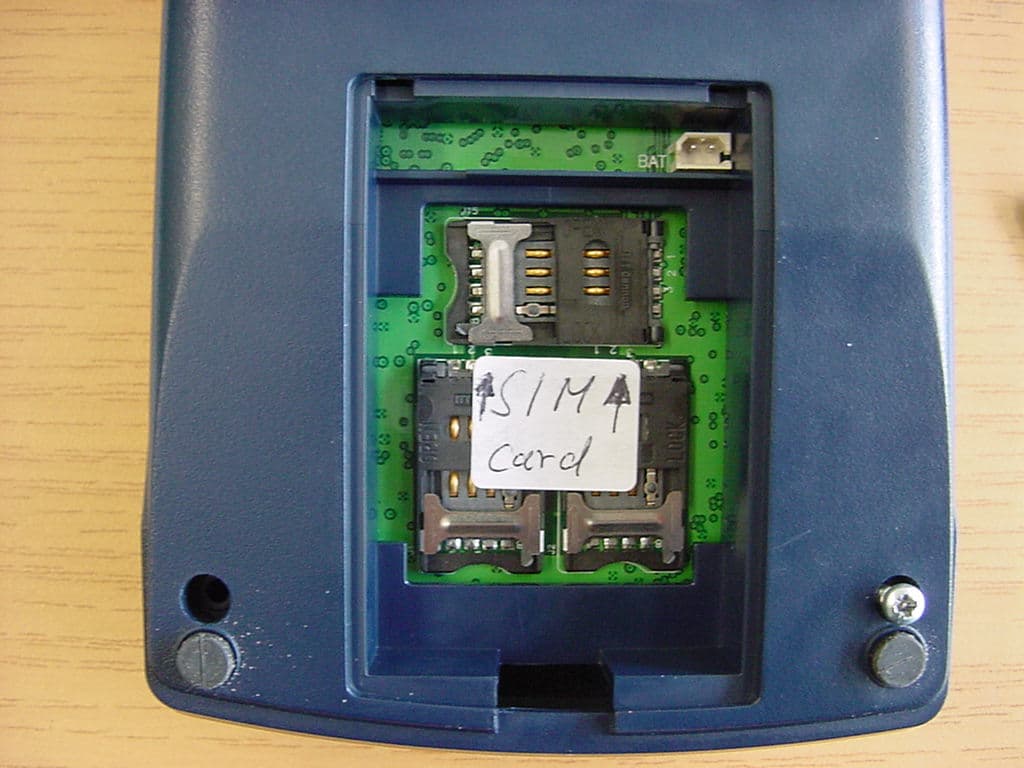
O2SNURIT8320S4
Jul 04, 2005PCS Payment Terminal
Equipment Class
PCB - PCS Licensed Transmitter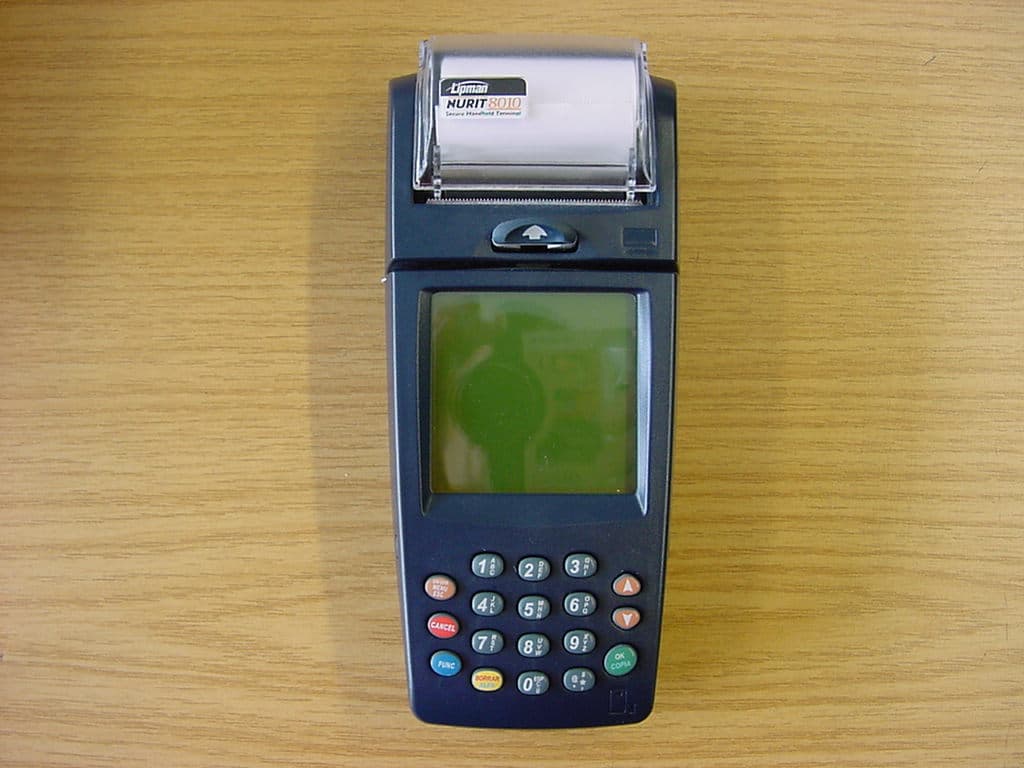
O2SNURIT8000SSG
May 26, 2004PCSPayment Terminal
Equipment Class
PCB - PCS Licensed Transmitter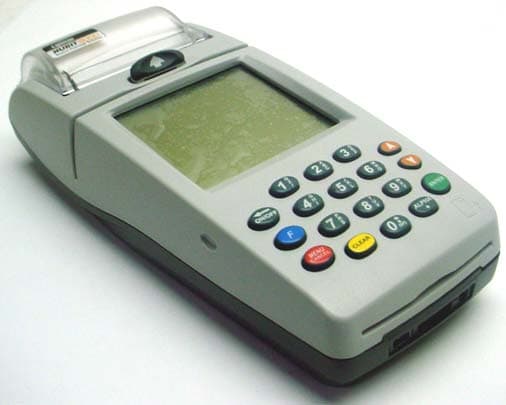
O2SNURIT8000SWD
Apr 04, 2004Hand Held Point of Sale Device
Equipment Class
TNB - Licensed Non-Broadcast Station Transmitter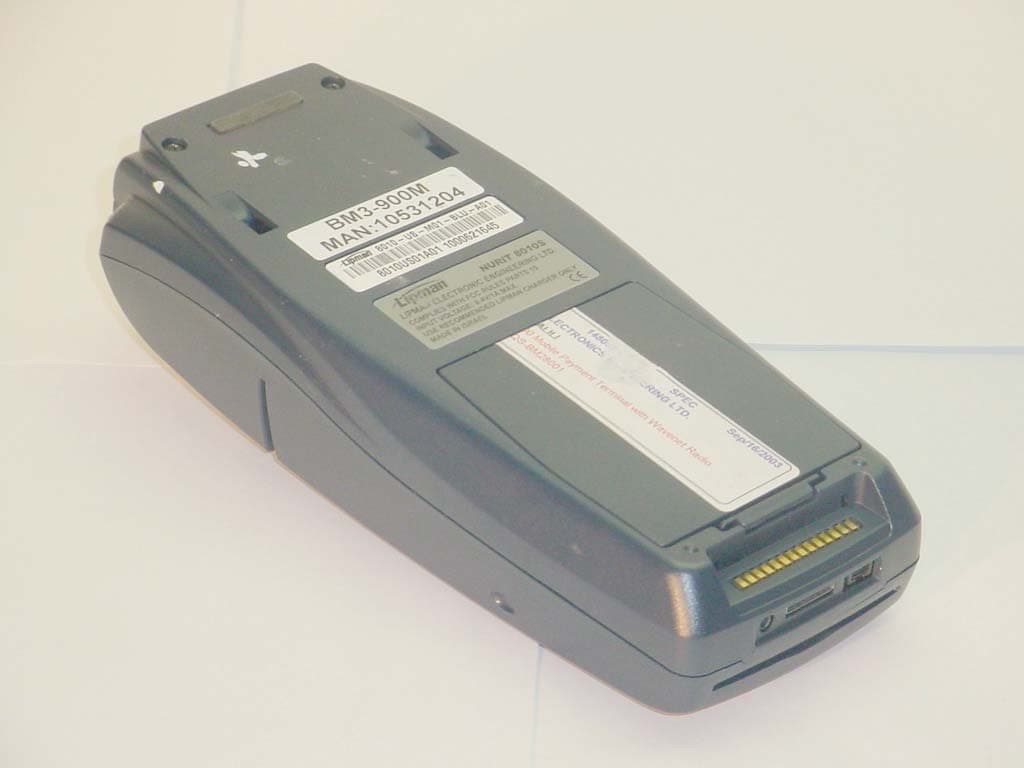
O2SNURIT8000SWM
Feb 12, 2004POINT OF SALE DEVICE
Equipment Class
TNB - Licensed Non-Broadcast Station Transmitter