O4XB07
Elpas Solutions Ltd.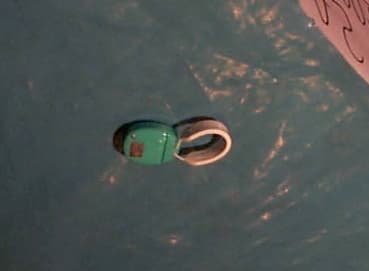
Click to zoom
Application Details
- Equipment Class
- DSC - Part 15 Security/Remote Control Transmitter
- Date of Grant
- Nov 06, 2000
- Application Purpose
- Original Equipment
- Date of Application
- Jul 19, 2000
- Frequency Range
- 433.92000000 - 433.92000000
- Company
- Elpas Solutions Ltd.
- Country
- Israel
Documents & Files
Document Text
Text extracted from the exhibit documents filed with the FCC. Open a document above to read the original.
Users Manual
Baby Tag Instruction Manual and Spec-Sheet FCC Compliance The FCC Wants You to Know This equipment has been tested and found to comply with the limits for a Class B digital device, pursuant to Part 15 of the FCC rules. These limits are designed to provide reasonable protection against harmful interference in a residential installation. This equipment generates, uses and can radiate radio frequency energy and, if not installed and used in accordance with the instructions, may cause harmful interference to radio communications. However, there is no guarantee that interference will not occur in a particular installation. If this equipment does cause harmful interference to radio or television reception, which can be determined by tuning the equipment off and on, the user is encouraged to try to correct the interference by one or more of the following measures: a) Reorient or relocate the receiving antenna. b) Increase the separation between the equipment and receiver. c) Connect the equipment to an outlet on a circuit different from that to which the receiver is connected. d) Consult the dealer or an experienced radio/TV technician. FCC Warning Modifications not expressly approved by manufacturer could void the user authority to operate the equipment under FCC rules. IR and RF Baby Tag P/N: BKB00001 (433.92 MHz) Baby Tag Description A small tag, attachable to a baby’s ankle, capable of transmitting Infra Red signals in addition to RF signals in the frequency of 433.92 MHz. The tag is used for security monitoring (abductio n and mismatch prevention) of infants whereabouts in real time, in hospitals’ Maternity Wards. The tag sends a unique message when the ankle band has been tampered with and disconnected. Recommended use is with the ELPAS BabyWatch system. General Electrical power source One 3-Volt lithium battery Battery type CR 2032 Renata Transmission rate A. Every 1.6 seconds, when the tag is in normal operation mode - i.e. affixed to a baby. (IR is transmitted on every 3 rd RF transmission, and RF is transmitted 200ms after IR). B. Every 60 seconds (RF), when the tag is not affixed to a baby, and is motionless. C. Every 4 seconds (200 ms apart), when the tag is not affixed to a baby, but is in motion. D. Four times every 0.4 seconds, immediately after tampering, or after affixing to baby (B2 indicates that the band is either on or off). Then, as either B or C, depending on mode of operation. Battery life In regular use, battery life will be approximately three months, based on a combination of A,B,C: A. Six weeks when the tag is affixed to a baby. B. Over three years when the tag is not affixed to a baby and is motionless. C. Six weeks when the tag is not affixed to a baby, but the tag is in constant motion. LED indicator on badge Activated with every RF and IR message Tag ID Unique factory-programmed (ID code, transmit rate, motion sensor activation and deactivation, etc.) Data rate 19,200 bits per second Message protocol 4 bytes proprietary format Message duration 2.08 ms Dimensions 39.4 x 31.5 x 14.8 mm Tag re-usability After each use, the baby tag needs to be cleaned and prepared for next use using the Baby Tag disposable kit’s contents. The tag can be re-used up to 100 times (this is solely because of connector restrictions). Tag’s Disposable components • Light green snap-on cover • Disposable band • White connector • Assembly set • Insulator • Sticker Weight (when assembled) 20 gram Temperature: Operating -10 to 70°C Temperature: Storage -20 to 60°C Water resistance Waterproof Accessories Baby Tag Disposable Kit P/N BKB09001 IR Transmission Peak optical transmitted power 500mW Peak transmission wavelength 880nm Peak radiant intensity 120 mW/Sr Frequency of transmission Carrier at 455 KHz Transmission angle 360° badge plane. ±60° to badge perpendicular axis RF Transmission 433.92 MHz RF Modulation ASK (Amplitude Shift Keying of 433.92 MHz carrier) Average effective radiated power In motion: less than –35 dbm. Motionless: less than – 45 dbm Stability +/- 20ppm Peak ERP -15 dbm (max) Transmission pattern Omnidirectional FCC compliance FCC Part 15.231 Level C I-ETS EE 300 220-1 Using the Baby Tag The following is a set of procedures to ensure proper use of the Baby Tag. To use the Baby Tag: 1. Place the Baby Tag band around the baby's ankle. 2. Gently pull at both loose ends of wire until the strap is well wrapped (but not tightened) around the baby’s ankle. 3. Hold the Baby Tag using two fingers of one hand, ensuring that the activating set, comprising of the thumbscrew and hook, is held straight. 4. Close the thumbscrew. 5. Rotate the thumbscrew in a counterclockwise directio n, as if closing a water tap, until the lamp on the wall is switched on displaying a green light. 6. Cut excess loose wires. 7. Open the thumbscrew slightly and remove the activating set. 8. Align the wire in the loop on the back of the tag, and snap the tag’s over onto the tag.
Users Manual
Baby Tag Instruction Manual and Spec-Sheet FCC Compliance The FCC Wants You to Know This equipment has been tested and found to comply with the limits for a Class B digital device, pursuant to Part 15 of the FCC rules. These limits are designed to provide reasonable protection against harmful interference in a residential installation. This equipment generates, uses and can radiate radio frequency energy and, if not installed and used in accordance with the instructions, may cause harmful interference to radio communications. However, there is no guarantee that interference will not occur in a particular installation. If this equipment does cause harmful interference to radio or television reception, which can be determined by tuning the equipment off and on, the user is encouraged to try to correct the interference by one or more of the following measures: a) Reorient or relocate the receiving antenna. b) Increase the separation between the equipment and receiver. c) Connect the equipment to an outlet on a circuit different from that to which the receiver is connected. d) Consult the dealer or an experienced radio/TV technician. FCC Warning Modifications not expressly approved by manufacturer could void the user authority to operate the equipment under FCC rules. 15.9 (a) Labeling Requirements This device complies with Part 15 of the FCC Rules. Operation is subject to the following two conditions. (1) This device may not cause harmful interference, and (2) this device must accept any interference received, including interference that may cause undesired operation. IR and RF Baby Tag P/N: BKB00001 (433.92 MHz) Baby Tag Description A small tag, attachable to a baby’s ankle, capable of transmitting Infra Red signals in addition to RF signals in the frequency of 433.92 MHz. The tag is used for security monitoring (abductio n and mismatch prevention) of infants whereabouts in real time, in hospitals’ Maternity Wards. The tag sends a unique message when the ankle band has been tampered with and disconnected. Recommended use is with the ELPAS BabyWatch system. General Electrical power source One 3-Volt lithium battery Battery type CR 2032 Renata Transmission rate A. Every 1.6 seconds, when the tag is in normal operation mode - i.e. affixed to a baby. (IR is transmitted on every 3 rd RF transmission, and RF is transmitted 200ms after IR). B. Every 60 seconds (RF), when the tag is not affixed to a baby, and is motionless. C. Every 4 seconds (200 ms apart), when the tag is not affixed to a baby, but is in motion. D. Four times every 0.4 seconds, immediately after tampering, or after affixing to baby (B2 indicates that the band is either on or off). Then, as either B or C, depending on mode of operation. Battery life In regular use, battery life will be approximately three months, based on a combination of A,B,C: A. Six weeks when the tag is affixed to a baby. B. Over three years when the tag is not affixed to a baby and is motionless. C. Six weeks when the tag is not affixed to a baby, but the tag is in constant motion. LED indicator on badge Activated with every RF and IR message Tag ID Unique factory-programmed (ID code, transmit rate, motion sensor activation and deactivation, etc.) Data rate 19,200 bits per second Message protocol 4 bytes proprietary format Message duration 2.08 ms Dimensions 39.4 x 31.5 x 14.8 mm Tag re-usability After each use, the baby tag needs to be cleaned and prepared for next use using the Baby Tag disposable kit’s contents. The tag can be re-used up to 100 times (this is solely because of connector restrictions). Tag’s Disposable components • Light green snap-on cover • Disposable band • White connector • Assembly set • Insulator • Sticker Weight (when assembled) 20 gram Temperature: Operating -10 to 70°C Temperature: Storage -20 to 60°C Water resistance Waterproof Accessories Baby Tag Disposable Kit P/N BKB09001 IR Transmission Peak optical transmitted power 500mW Peak transmission wavelength 880nm Peak radiant intensity 120 mW/Sr Frequency of transmission Carrier at 455 KHz Transmission angle 360° badge plane. ±60° to badge perpendicular axis RF Transmission 433.92 MHz RF Modulation ASK (Amplitude Shift Keying of 433.92 MHz carrier) Average effective radiated power In motion: less than –35 dbm. Motionless: less than – 45 dbm Stability +/- 20ppm Peak ERP -15 dbm (max) Transmission pattern Omnidirectional FCC compliance FCC Part 15.231 Level C I-ETS EE 300 220-1 Using the Baby Tag The following is a set of procedures to ensure proper use of the Baby Tag. To use the Baby Tag: 1. Place the Baby Tag band around the baby's ankle. 2. Gently pull at both loose ends of wire until the strap is well wrapped (but not tightened) around the baby’s ankle. 3. Hold the Baby Tag using two fingers of one hand, ensuring that the activating set, comprising of the thumbscrew and hook, is held straight. 4. Close the thumbscrew. 5. Rotate the thumbscrew in a counterclockwise directio n, as if closing a water tap, until the lamp on the wall is switched on displaying a green light. 6. Cut excess loose wires. 7. Open the thumbscrew slightly and remove the activating set. 8. Align the wire in the loop on the back of the tag, and snap the tag’s cover onto the tag.
Users Manual
Baby Tag Instruction Manual and Spec-Sheet FCC Compliance The FCC Wants You to Know This equipment has been tested and found to comply with the limits for a Class B digital device, pursuant to Part 15 of the FCC rules. These limits are designed to provide reasonable protection against harmful interference in a residential installation. This equipment generates, uses and can radiate radio frequency energy and, if not installed and used in accordance with the instructions, may cause harmful interference to radio communications. However, there is no guarantee that interference will not occur in a particular installation. If this equipment does cause harmful interference to radio or television reception, which can be determined by tuning the equipment off and on, the user is encouraged to try to correct the interference by one or more of the following measures: a) Reorient or relocate the receiving antenna. b) Increase the separation between the equipment and receiver. c) Connect the equipment to an outlet on a circuit different from that to which the receiver is connected. d) Consult the dealer or an experienced radio/TV technician. FCC Warning Modifications not expressly approved by manufacturer could void the user authority to operate the equipment under FCC rules. 15.9 (a) Labeling Requirements This device complies with Part 15 of the FCC Rules. Operation is subject to the following two conditions. (1) This device may not cause harmful interference, and (2) this device must accept any interference received, including interference that may cause undesired operation. IR and RF Baby Tag P/N: BKB00001 (433.92 MHz) Baby Tag Description A small tag, attachable to a baby’s ankle, capable of transmitting Infra Red signals in addition to RF signals in the frequency of 433.92 MHz. The tag is used for security monitoring (abductio n and mismatch prevention) of infants whereabouts in real time, in hospitals’ Maternity Wards. The tag sends a unique message when the ankle band has been tampered with and disconnected. Recommended use is with the ELPAS BabyWatch system. General Electrical power source One 3-Volt lithium battery Battery type CR 2032 Renata Transmission rate A. Every 10 seconds, when the tag is in normal operation mode - i.e. affixed to a baby. (RF is transmitted 200ms after IR). B. Every 60 seconds (IR and RF), when the tag is not affixed to a baby, and is motionless. C. Four times every 0.4 seconds, immediately after tampering, or after affixing to baby (B2 indicates that the band is either on or off). Then, as either B or C, depending on mode of operation. Battery life In regular use, battery life will be approximately three months, based on a combination of A,B,C: A. Six weeks when the tag is affixed to a baby. B. Over three years when the tag is not affixed to a baby and is motionless. C. Six weeks when the tag is not affixed to a baby, but the tag is in constant motion. LED indicator on badge Activated with every RF and IR message Tag ID Unique factory-programmed (ID code, transmit rate, motion sensor activation and deactivation, etc.) Data rate 19,200 bits per second Message protocol 4 bytes proprietary format Message duration 2.08 ms Dimensions 39.4 x 31.5 x 14.8 mm Tag re-usability After each use, the baby tag needs to be cleaned and prepared for next use using the Baby Tag disposable kit’s contents. The tag can be re-used up to 100 times (this is solely because of connector restrictions). Tag’s Disposable components • Light green snap-on cover • Disposable band • White connector • Assembly set • Insulator • Sticker Weight (when assembled) 20 gram Temperature: Operating -10 to 70°C Temperature: Storage -20 to 60°C Water resistance Waterproof Accessories Baby Tag Disposable Kit P/N BKB09001 IR Transmission Peak optical transmitted power 500mW Peak transmission wavelength 880nm Peak radiant intensity 120 mW/Sr Frequency of transmission Carrier at 455 KHz Transmission angle 360° badge plane. ±60° to badge perpendicular axis RF Transmission 433.92 MHz RF Modulation ASK (Amplitude Shift Keying of 433.92 MHz carrier) Average effective radiated power In motion: less than –35 dbm. Motionless: less than – 45 dbm Stability +/- 20ppm Peak ERP -15 dbm (max) Transmission pattern Omnidirectional FCC compliance FCC Part 15.231 Level C I-ETS EE 300 220-1 Using the Baby Tag The following is a set of procedures to ensure proper use of the Baby Tag. To use the Baby Tag: 1. Place the Baby Tag band around the baby's ankle. 2. Gently pull at both loose ends of wire until the strap is well wrapped (but not tightened) around the baby’s ankle. 3. Hold the Baby Tag using two fingers of one hand, ensuring that the activating set, comprising of the thumbscrew and hook, is held straight. 4. Close the thumbscrew. 5. Rotate the thumbscrew in a counterclockwise directio n, as if closing a water tap, until the lamp on the wall is switched on displaying a green light. 6. Cut excess loose wires. 7. Open the thumbscrew slightly and remove the activating set. 8. Align the wire in the loop on the back of the tag, and snap the tag’s cover onto the tag.
Users Manual
Baby Tag Instruction Manual and Spec-Sheet FCC Compliance The FCC Wants You to Know This equipment has been tested and found to comply with the limits for a Class B digital device, pursuant to Part 15 of the FCC rules. These limits are designed to provide reasonable protection against harmful interference in a residential installation. This equipment generates, uses and can radiate radio frequency energy and, if not installed and used in accordance with the instructions, may cause harmful interference to radio communications. However, there is no guarantee that interference will not occur in a particular installation. If this equipment does cause harmful interference to radio or television reception, which can be determined by tuning the equipment off and on, the user is encouraged to try to correct the interference by one or more of the following measures: a) Reorient or relocate the receiving antenna. b) Increase the separation between the equipment and receiver. c) Connect the equipment to an outlet on a circuit different from that to which the receiver is connected. d) Consult the dealer or an experienced radio/TV technician. FCC Warning Modifications not expressly approved by manufacturer could void the user authority to operate the equipment under FCC rules. 15.9 (a) Labeling Requirements This device complies with Part 15 of the FCC Rules. Operation is subject to the following two conditions. (1) This device may not cause harmful interference, and (2) this device must accept any interference received, including interference that may cause undesired operation. IR and RF Baby Tag P/N: BKB00001 (433.92 MHz) Fiemware ver2 Baby Tag Description A small tag, attachable to a baby’s ankle, capable of transmitting Infra Red signals in addition to RF signals in the frequency of 433.92 MHz. The tag is used for security monitoring (abductio n and mismatch prevention) of infants whereabouts in real time, in hospitals’ Maternity Wards. The tag sends a unique message when the ankle band has been tampered with and disconnected. Recommended use is with the ELPAS BabyWatch system. General Electrical power source One 3-Volt lithium battery Battery type CR 2032 Renata Transmission rate A. Every 10 seconds (IR and RF), when the tag is in operation mode - i.e. affixed to a baby. B. Every 60 seconds (IR and RF), when the tag is not affixed to a baby, and is motionless. C. Immediately after tampering, or after affixing to a baby a IR message is transmitted Battery life In regular use, battery life will be approximately nine month LED indicator on badge Activated with every message Tag ID Unique factory-programmed Data rate 19,200 bits per second Message protocol 4 bytes proprietary format Message duration 2.08 ms Dimensions 39.4 x 31.5 x 14.8 mm Tag re-usability After each use, the baby tag needs to be cleaned and prepared for next use using the Baby Tag disposable kit’s contents. The tag can be re-used up to 100 times (this is solely because of connector restrictions). Tag’s Disposable components • Light green snap-on cover • Disposable band • White connector • Assembly set • Insulator • Sticker Weight (when assembled) 20 gram Temperature: Operating -10 to 70°C Temperature: Storage -20 to 60°C Water resistance Waterproof Accessories Baby Tag Disposable Kit P/N BKB09001 IR Transmission Peak optical transmitted power 500mW Peak transmission wavelength 880nm Peak radiant intensity 120 mW/Sr Frequency of transmission Carrier at 455 KHz Transmission angle 360° badge plane. ±60° to badge perpendicular axis RF Transmission 433.92 MHz RF Modulation ASK (Amplitude Shift Keying of 433.92 MHz carrier) Average effective radiated power Less than –70 dbm max Stability +/- 20ppm Peak ERP -20 dbm (max) Transmission pattern Omnidirectional FCC compliance FCC Part 15.231 I-ETS EE 300 220-1 Using the Baby Tag The following is a set of procedures to ensure proper use of the Baby Tag. To use the Baby Tag: 1. Place the Baby Tag band around the baby's ankle. 2. Gently pull at both loose ends of wire until the strap is well wrapped (but not tightened) around the baby’s ankle. 3. Hold the Baby Tag using two fingers of one hand, ensuring that the activating set, comprising of the thumbscrew and hook, is held straight. 4. Close the thumbscrew. 5. Rotate the thumbscrew in a counterclockwise directio n, as if closing a water tap, until the lamp on the wall is switched on displaying a green light. 6. Cut excess loose wires. 7. Open the thumbscrew slightly and remove the activating set. 8. Align the wire in the loop on the back of the tag, and snap the tag’s cover onto the tag.
Cover Letter(s)
October 26, 2000 11 Hasadna St., Industrial Zone, P.O.B 2571, Raanana 43650, ISRAEL Te l : 972 9 7760200 Fax: 972 9 7460593 E-mail: [email protected] Saved: 10/26/00 3:10 PM Printed: 10/26/00 3:22 PM` Shlomo Yasur Confidentiality- FCC ID O4XB07.doc Federal Communications Commission Equipment Approval Services P.O. Box 358315 Pittsburgh, PA 15251-5315 Subject: Confidentiality for FCC Application FCC ID O4XB07 Confirmation Number EA98234 of ELPAS Electro-optic Systems Ltd. Dear Madam/Sir, Due to the proprietary design developed by ELPAS Electro-optic systems Ltd. that is unique to the industry, ELPAS Electro-optic Systems Ltd. Is requesting confidentiality for the following exhibits of ELPAS Electro-optic systems Ltd.: FCC ID: O4XB07 Confirmation No.: EA98234 Report No.: E36114.00 1. Block Diagram. 2. Schematics. 3. Bill Of Materials. Please feel free to contact me with any questions. Best Regards, Shlomo Yasur V. P Engineering & Operations
External Photos
BKB Baby Tag External Photo External Photo Top View External Photo Bottom View
ID Label/Location Info
BKB Baby Tag Product Labeling FCC Label Location of Label on EUT
ID Label/Location Info
BKB Baby Tag Product Labeling FCC Label Location of Label on EUT
Internal Photos
BKB Baby Tag Internal Photo PCB
Operational Description
BKB Baby Tag Product Description A small tag, attachable to a baby’s ankle, capable of transmitting Infra Red signals in addition to RF signals in the frequency of 433.92 MHz. The tag is used for security monitoring (abduction and mismatch prevention) of infants whereabouts in real time, in hospital Maternity Wards. The tag sends a unique message when the ankle band has been tampered with and disconnected. Recommended use is with the ELPAS BabyWatch system.
Test Report
FCC ID O4XB07 Electrical (EMC) Test Report E36114.00ELPAS - Electro-optic Systems Ltd. Page 1 of 34 FCC DOC M Ver 1.12 04 April 2000 DATE: 09 July 2000 I.T.L. (PRODUCT TESTING) LTD. FCC EMC Test Report for ELPAS - Electro-optic Systems Ltd. Equipment under test: Baby IR/RF 433 Tag BKB00001 Approved by:_____________________________ Y. Mordukhovitch , Test Engineer Approved by:_____________________________ I. Raz, EMC Laboratory Manager This report must not be reproduced, except in full, without the written permission of I.T.L. (Product Testing) Ltd. This report relates only to items tested. . FCC ID: O4XB07 Test Report E36114.00ELPAS - Electro-optic Systems Ltd. Page 2 of 34 FCC DOC M Ver 1.12 04 April 2000 Measurement/Technical Report for ELPAS - Electro-optic Systems Ltd. Equipment under test: Baby IR/RF 433 Tag P/N BKB00001 FCC ID: O4XB07 DATE: 09 July 2000 This report concerns:Original Grant x Class II change ___ Class B verification Class A verification Class I change ____ Equipment type: Radio Telemetry Transmitter Request Issue of Grant: x Immediately upon completion of review Limits used: CISPR 22 Part 15 x Measurement procedure used is ANSI C63.4-1992. Application for Certification Applicant for this device: prepared by:(different from "prepared by") Ishaiahou RazShlomo Yasur ITL (Product Testing) Ltd.ELPAS–Electro-optic Systems Ltd. POB 21111 Hasadna St. Or Yehuda 60251Raanana 43650 IsraelIsrael Tel: 972-3-533 9022Tel: 972-9-776 0200 Fax:+972-3-5339019Fax: 972-9-746 0593 FCC ID: O4XB07 Test Report E36114.00ELPAS - Electro-optic Systems Ltd. Page 3 of 34 FCC DOC M Ver 1.12 04 April 2000 TABLE OF CONTENTS 1.GENERAL INFORMATION -----------------------------------------------------------------------------4 1.1Product Description.................................................................................... 4 1.2Test Methodology...................................................................................... 5 1.3Test Facility............................................................................................... 5 1.4Measurement Uncertainty ........................................................................... 5 PRODUCT LABELING------------------------------------------------------------------------------------------6 3.SYSTEM TEST CONFIGURATION-------------------------------------------------------------------7 3.1Justification................................................................................................ 7 3.2EUT Exercise Software .............................................................................. 7 3.3Special Accessories ................................................................................... 7 3.4Equipment Modifications ............................................................................. 7 Configuration of Tested System............................................................................ 7 4.BLOCK DIAGRAM ---------------------------------------------------------------------------------------8 4.1Schematic Block/Connection Diagram.......................................................... 8 5.RADIATED EMISSION DATA --------------------------------------------------------------------------9 5.1Radiated Emission 10KHz-1000 MHz, Below 1GHz...................................... 9 5.2Measured Data.......................................................................................... 9 5.3Test Instrumentation Used, Radiated Measurements .................................. 12 5.4Field Strength Calculation ......................................................................... 13 6.RADIATED EMISSION DATA ------------------------------------------------------------------------ 14 6.1Radiated Emission Above 1 GHz............................................................... 14 6.2Test Data ................................................................................................ 14 6.3Test Instruments used, Radiated Measurement Above 1 GHZ ..................... 17 6.4Field Strength Calculation ......................................................................... 18 7.FUNDAMENTAL EMISSION BANDWIDTH-------------------------------------------------------- 19 7.1Test Specification..................................................................................... 19 7.2Test Procedure........................................................................................ 19 7.3Measured Data........................................................................................ 19 7.4Test Instrumentation Used, Fundamental Emission Band Width.................... 23 8.PHOTOGRAPHS OF TESTED E.U.T. ------------------------------------------------------------- 24 9.SIGNATURES OF THE E.U.T'S TEST ENGINEERS ------------------------------------------- 28 10.APPENDIX A - CORRECTION FACTORS--------------------------------------------------------- 29 10.1 Correction factors for CABLE................................................................... 29 10.2 Correction factors for CABLE................................................................... 30 10.3 Correction factors for LOG PERIODIC ANTENNA ..................................... 31 10.4 Correction factors for BICONICAL ANTENNA............................................. 32 10.5 Correction factors for BICONICAL ANTENNA Type 3109............................ 33 10.6 Correction factors for BICONICAL ANTENNA Type 3109............................ 34 10.7 Correction factors for SAS ANTENNA, 3 meter range................................. 35 FCC ID: O4XB07 Test Report E36114.00ELPAS - Electro-optic Systems Ltd. Page 4 of 34 FCC DOC M Ver 1.12 04 April 2000 1. General Information 1.1 Product Description A small tag, attachable to a baby’s ankle, capable of transmitting Infra Red signals in addition to RF signals in the frequency of 433.92 MHz. The tag is used for security monitoring (abduction and mismatch prevention) of infants whereabouts in real time, in hospit…
Text truncated - open the document above for the full version.
Test Setup Photos
BKB Baby Tag Setup Photos Front/Top View Side View
Contact Information
Applicant
Arick Elshtein(International Compliance Manager)
Technical Contact
Israel Testing Laboratories - Kfar Bin NunShaike Raz
[email protected]972-89797799
11 Hasadna St. · Or Yehuda · Israel
Non-Technical Contact
ELPAS - Electro-optic Systems Ltd.Shlomo Yasur
972-7760200
Test Firm
Israel Testing LaboratoriesIIan Cohen
Technical Specifications
| # | Rule Parts | Frequency Range | Power Output |
|---|---|---|---|
| 1 | 15.231(e) | 433.92 MHz - 433.92 MHz | - |
Other Applications from Elpas Solutions Ltd.
O4X5-WTG411210
Aug 27, 2015Quad Technology Wrist Tag
Equipment Class
DCD - Part 15 Low Power Transmitter Below 1705 kHz
O4X5-LW2410370
Apr 27, 2015Lone Worker Active RFID Tag
Equipment Class
DSR - Part 15 Remote Control/Security Device Transceiver
O4X5-LCA004331
Apr 01, 2015Enhanced Local Controller
Equipment Class
DSR - Part 15 Remote Control/Security Device Transceiver
O4X5-ALC01121-0
Mar 17, 2015ALC LF BUS Beacon, indoor/outdoor 125 kHz + 433 MHz
Equipment Class
DSR - Part 15 Remote Control/Security Device Transceiver
O4X5-ALC01021-0
Feb 11, 2015ALC LF BUS Beacon 5-ALC01021-0, 5-ALC11021-0
Equipment Class
DCD - Part 15 Low Power Transmitter Below 1705 kHz