O9BARVAADVAvalanche Beacon
ASTEELFLASH FRANCE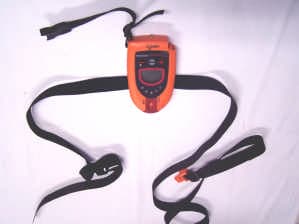
Click to zoom
Application Details
- Equipment Class
- DCD - Part 15 Low Power Transmitter Below 1705 kHz
- Date of Grant
- Feb 06, 2005
- Application Purpose
- Original Equipment
- Date of Application
- Feb 06, 2005
- Equipment Note
- Avalanche Beacon
- Frequency Range
- 0.45700000 - 0.45700000
- Company
- ASTEELFLASH FRANCE
- Country
- France
Documents & Files
Document Text
Text extracted from the exhibit documents filed with the FCC. Open a document above to read the original.
Users Manual
using the arvaA The ARVA ADVANCED has two operating modes: ■ Standard (numerical), involving use of the right and left directional arrows. The device automatically locks on to the closest victim. Follow the indi- cations given in the form of figures and the direction shown by the red diode. If pictogram 6 lights up, the device has detected multiple victims. ■ Advanced (analogue with numerical aids), in which receiver sen- sitivity is adjusted with the + and - buttons. In analogue mode, the Advanced symbol is displayed on the screen with a sensitivity level value (1,2,3,4,5,6,7,8 or 9). 9 corresponds to greatest sensitivity (distant search) and 1 to lowest sensitivity (close search). In this mode, the device shows all the signals received. If there are multiple victims, it indicates the estimated distances to each one. description of the unit ■ Top: 1 On/Off strap switch 2 Transmit/Receive switch (SOS / Search) 3 Directional arrows 4 Loudspeaker 5 Receiver intensity/sensitivity adjustment (Advanced=analogue mode) ■ LCD screen 6 Indicator showing simultaneous detection of multiple victims 7 Initial search distance indicator 8 Battery status/distance indicator 9 Battery status indicator 10 Indicator showing use of Advanced (=analogue) mode with sensitivity level (9=max. sensitivity, 1=min. sensitivity) ■ Underside: 11 Battery compartment cover 12 Reminder: Attachment of straps - Switching on - Switching to receive mode - Simulation of initial search by one or more rescuers 1 - Secon- dary search 2 - Final search (last cross) 3 installing batteries The ARVA ADVANCED operates exclusively with four standard LR03 alkaline batte- ries. Open the battery compartment cover 11 with a screwdriver or coin. The four batteries should be of the same brand and be replaced at the same time. Insert the batteries carefully in the order shown inside the compartment. N.B.: Do not store the unit at a temperature of less than 0°C to avoid damaging the batteries. DO NOT USE rechargeable batteries. Remove the batteries if the unit is not used for any length of time. switching the unit on ■ Fasten the On/Off strap 1 ■ Auto-control: the direction diodes 3 light up from left to right, and the LCD screen comes on. 3 beeps are emitted if the loudspeaker is in working order. ■ Check your batteries using the battery life indicator scale levels 8 9 11 levels: 99,90, 80, 70, 60, 50, 40, 30, 20, 10, 0. ■ The LCS screen then goes off and the central diode 3 flashes to indicate that the unit is in transmit mode. ■ Check Transmit/Receive functions before setting out. The per- son checking the unit puts his ARVA in transmit mode and all the other members of the group check that their ARVAs detect the signal properly in receive mode . The operation is to be repeated in the opposite direction so that ALL the ARVA units in the group are checked in both transmit and receive modes. Possible anomalies... The ARVA ADVANCED performs a self-test every 5 minutes to check the state of the batteries, frequency setting, transmission power, etc. If the unit detects an anomaly, a 5-second beep is emitted, 3 times, separated by 5 minute intervals. This means one of two things: • The battery charge has dropped to 20% (the unit can still transmit for 48 hours or search for half an hour). After the 5-second beeps, 20% will stay displayed on the LCD screen to remind you to change the batteries as soon as possible. • Technical problems connected with transmission or programming: after the 5-second beeps, the LCD screen displays Er (= Error). Do not set out with any unit displaying this message. useful information: Move forward SLOWLY to avoid going too hastily in the wrong direction. The entire surface of the avalanche must be investigated. When searching for a victim or testing the unit, stay away from electrical equipment (high-voltage power lines, radios, mobile phones, etc.) or impose radio silence (these are just a few examples). This is applicable when using any ARVA-type transmitter-receiver. The distance indicator indicates progress along a field line and not a distance in metres. information for your own safety Whenever you leave marked-out ski runs or trails, you are in an area where there are certain risks, particularly of avalanches. When moving around in the mountains, you do so at your own risk: • Before setting out, check the local weather with a reliable weather station or pro- fessional mountain guides and carry the right equipment. In particular, take an ARVA and carry a shovel and a probe. But remember, this equipment will not detect avalanches or provide complete protection and to be fully effective, you need to familiarise yourself with the use of the ARVA beforehand! • Never go off on your own and do not follow any trail you happen to see: they are no guarantee of safety. If there is any doubt about the stability of a slope you have to cross, YOU MUST leave a good distance between one another or better, cross it one by one. Keep a good eye on one another. • Finally, it is best to give up if you are not sure! Be careful: snow conditions change, and with them the risk of avalanches. Get to know about avalanches. In France, a free cata- logue and documentation can be obtained from ANENA (Association Nationale pour l’Etude de la Neige et des Avalanches, - tel. 04 76 51 39 39 / www.anena.org). Exclusive features of the ARVA Advanced: • A powerful 457 kHz ±20 Hz transmitter with transmission level inde- pendent of battery power. • In numerical (standard) mode, the search band width is 40 m. • Multiple victim indicator and automatic synchronisation on closest victim. • In Advanced (= analogue) mode, indication of a scale of progress and, in multiple victim situations, indication of estimated distances along field lines. • Auto-control of frequency adjustment and transmission level every 5 minutes. • 16 bit processor with extremely fast analysis speed. A standard (nu- merical) mode ■ Primary search (approach phase) (cf D1) • Pull 2 SE…
Text truncated - open the document above for the full version.
Users Manual
Appareil de Recherche de Victimes d’Avalanches Un sauveteur One rescuer Ein suchender (Retter) Un salvador Uno soccorritore recherche primaire primary search erfassung der anwesenheit des betroffenen detección de la presencia de la victima o victimas rivelazione della presenza di vittime Plusieurs sauveteurs Several rescuers Mehrere suchende (Retter) Mucho salvadores Alcuni soccorritores 1 4 5 3 2 6 7 8 9 10 12 A BC 11 05 15 1,6 0,7 1,4 1,7 1,5 30 primary search secondary search pinpoint search recherche finale recherche secondaire recherche primaire D 35 45 1,6 0,7 1,4 1,7 1,5 1,6 0,7 1,4 1,7 1,5 � � 20 10 �� �� 15 15 30 �� �� ��� ��� 13 23 13 �� �� ��� ��� F E 1 E 2 ©Dessin ANENA©Dessin ANENA utilisation L’ARVA ADVANCED possède deux modes de fonctionnement : ■ Le mode standard (numérique) avec utilisation des flèches de direction droite et gauche. L’appareil se calera automatiquement sur la victime la plus proche. L’utilisateur suit les indications chiffrées et la direction indiquée par la diode rouge qui s’allume. Si le pictogramme 6 apparaît, l’appareil détecte un cas de multi-ensevelissements. ■ Le mode Advanced (analogique et aides numériques) avec réglage de la sensibilité du récepteur avec les touches + et -. En mode analogique, le pictogramme Advanced apparaît sur l’appareil avec une valeur du niveau de sensibilité (1,2,3,4,5,6,7,8 ou 9). 9 correspond à la plus grande sensibilité (recherche éloignée) et 1 à la plus petite sensibilité (recherche fine). Dans ce mode l’appareil vous donne tous les signaux reçus. Si vous êtes dans un cas de multi-ensevelissements, l’appareil vous donne des estimations de distances des différentes victimes. Appareil de Recherche de Victimes d’Avalanches description de l’appareil ■ Face Dessus : 1 Boucle sangle Marche/Arrêt 2 Sélecteur Emission/Réception (SOS / Search) 3 Flèches indicatrices de la direction à suivre 4 Haut parleur 5 Réglage intensité/sensibilité du récepteur (mode Advanced=analogique) ■ Ecran LCD 6 Indicateur d’une détection simultanée de plusieurs victimes 7 Indicateur de progression en recherche primaire 8 Indicateur de l’état des piles / de progression 9 Indicateur de l’état des piles 10 Indicateur de l’utilisation du mode Advanced (=analogique) avec niveau de sensibilité (9=sensibilité max, 1=sensibilité min) ■ Face dessous : 11 Trappe d’accès aux piles 12 Rappel : Mise en place des sangles - Mise sous tension – Passage en mode réception - Simulation recherche primaire un ou x sauveteurs 1 - Recherche secondaire 2 - Recherche finale (croix finale) 3 mise en place des piles L’ARVA ADVANCED fonctionne exclusivement avec 4 piles Alcaline LR03 standard. Ouvrez la trappe d’accès aux piles 11 avec un tournevis ou une pièce de mon- naie. Les 4 piles doivent toujours être de même marque et remplacées en même temps. Introduisez les piles soigneusement dans le sens indiqué à l’intérieur du logement. N.B. : Ne pas stocker l’appareil à une température inférieure à 0° C pour ne pas dégrader les piles. EVITER ABSOLUMENT les piles rechargeables. Enlever les piles en cas de non utilisation prolongée. mise en route ■ Bouclez la sangle Marche/Arrêt 1 ■ Auto contrôle de l’appareil : les diodes de direction 3 vont s’allumer de gauche à droite ainsi que tout l’affichage de l’écran LCD. 3 Bips pour le con- trôle du haut parleur vont se faire entendre quand il est en bon état. ■ Contrôlez vos piles grâce à l’échelle de valeur en pourcentage de qualité des piles 8 9 . 11 niveaux (99, 90, 80, 70, 60, 50, 40, 30, 20, 10, 0). ■ Ensuite l’appareil éteint l’écran LCD et la diode centrale clignote 3 pour indiquer que l’appareil est en position émission. ■ Contrôle Réception/Emission à effectuer au départ de chaque sortie. Le contrôleur met son ARVA en émission et chaque membre du groupe vérifie que son ARVA en réception le détecte bien. Opération à renouveler dans l’autre sens pour que TOUS les ARVA du groupe soient contrôlés en émission et réception. Anomalies possibles... L’ARVA ADVANCED procède à un auto-test toutes les cinq minutes vérifiant l’état des piles, le calage de la fréquence, la puissance d’émission, etc. Si l’appareil détecte une anomalie, un long bip de 5 secondes se fait entendre, 3 fois séparées par 5 minutes. Deux cas possibles : • Etat des piles descendu à 20% (l’appareil peut encore émettre 48h ou recher- cher pendant 1⁄2 heure). Après les longs bips de 5 secondes, 20% restera allumé sur l’écran LCD pour vous rappeler de changer les piles au plus vite. • Problèmes techniques d’émission ou de programme, après les longs bips de 5 secondes, l’écran LCD affiche Er (= Error). Ne partez pas avec cet appareil dans ce dernier cas. quelques conseils pour l’utilisation : Evoluer sur le terrain LENTEMENT pour ne pas prendre de fausses directions dans la hâte. La totalité de la surface du dépôt de l’avalanche doit être prospectée. Lors d’une recherche ou d’un contrôle, veillez à : rester éloigné de tout appareil électrique (ligne à haute tension, radio, téléphone portable) ou faire un silence radio. Cette liste est non exhaustive. Ceci s’applique pour tout appareil émetteur-récepteur de type A.R.V.A. L’indicateur de progression donne un indice de progression sur une ligne de champ et non une distance en mètres. informations pour votre sécurité Quand vous sortez des pistes de ski sécurisées, vous entrez dans un monde à risque, où une avalanche, en particulier, peut se produire. Vous circulez alors en montagne sous votre propre responsabilité : • Avant de partir, informez-vous (répondeur téléphonique au au 0 892 68 10 20, www.meteo.fr et professionnels de la montagne) et équipez-vous. En particulier, portez sur vous un ARVA (appareil de recherche de victimes d’avalanche), une pelle et une sonde. Cet équipement n’est pas un détecteur d’avalanche, ni une protection absolue, Mais attention, pour être efficace, il faut être entraîné : exercez- vous donc à utiliser votre ARVA ! • Ne partez jamais seul, ne suivez pas n’importe quelles traces : elles ne sont p…
Text truncated - open the document above for the full version.
Users Manual
FCC ID: O9BARVAADV 1 USER MANUAL This is a copy of the page where the FCC statement is included. It's supplied in the package of the product. FCC requirements : - FCC ID: O9BARVAADV This device complies with part 15 of the FCC Rules. Operation is subject to the following two conditions: (1) This device may not cause harmful interference, (2) this device must accept any interference received, including interference that may cause undesired operation. - information to user : changes or modifications not expressly approved by the party responsible for compliance could void the user's authority to operate the equipment BP 63 74002 Annecy Cedex 11 rue de la barrade 74960 MEYTHET FRANCE Tél : 00 33 4 50 57 13 51 Fax : 00 33 4 50 67 77 95 [email protected] – www.nic-impex.com
External Photos
FCC ID: O9BARVAADV 1 EXTERNAL PHOTOS OF TESTED EUT 1.1 Photos of ARVA General view with garments Front face Rear face Left face right face FCC ID: O9BARVAADV Lower face Upper face
ID Label/Location Info
FCC ID: O9BARVAADV 1 PRODUCT LABELING 1.1 FCC ID Label This is the copy of the label stuck on the product (Size in mm) Labels are indelible (material: polyester metallized) Technology of impression: direct thermics and thermal transfer Label #1 : 3cm Label stuck on the rear face of the product Label #2 : Label stuck into the batteries compartment 0.6cm 5cm 4.2cm FCC ID: O9BARVAADV 1.2 Location of label #1 on EUT Label is stuck on the rear face of the ARVA. Rear Face 1.3 Location of label #2 on EUT Label is stuck into the batteries compartment of the ARVA. Label will be at that location Label will be at that location
Internal Photos
FCC ID: O9BARVAADV 1 INTERNAL PHOTOS OF TESTED EUT 1.1 ARVA Batteries view Front casing removed FCC ID: O9BARVAADV Components side (front face) FCC ID: O9BARVAADV Rear face FCC ID: O9BARVAADV Rear casing without board.
Operational Description
FCC ID: O9BARVAADV 1 GENERAL INFORMATION 1.1 Product description The ARVA is an avalanche beacon; transmitter-receiver systems. The ARVA Advanced is worn on body during mountains climbing or skiing; It emits a beep as long as it is set in S.O.S. mode. In case of somebody buried under an avalanche, a rescue person, can set its ARVA Advanced in receiver mode, locates the victim accurately under snow, and then extricates the victim. A multiple indicator, with automatic synchronization on the nearest victim, tells to the rescuers, when all victims have been rescued. The ARVA Advanced is automatically switch on when inserting the strap into the device. It works with 4 alkaline batteries. The ARVA ADVANCED has two operating modes: - Standard (numerical), involving use of the right and left directional arrows. The device automatically locks on to the closet victim. Follow the indications given in the form of figures and the direction shown by the red diode. - Advanced (analogue with numerical aids): indication of a scale of progress and, in multiple victim situations, indication of estimated distance along field lines. The ARVA Advanced is a product developed by the OPTION Company For more information, see product's data sheet at section 1.6. 1.2 Related Submittal(s) / Grant(s) All host equipment used in the test configuration are FCC granted, when relevant. 1.3 Tested System Details The FCC IDs for all equipment, plus description of all cables used in the tested system are: See test report files. FCC ID: O9BARVAADV 1.4 Test Methodology Both conducted and radiated testing was performed according to the procedures in ANSI C63.4 (2003). Radiated testing was performed at an antenna to EUT distance of 10 meters. During testing, all equipment’s and cables were moved relative to each other in order to identify the worst case set-up. 1.5 Test facility Tests have been performed on October 13 th , 2004. The test facility used to collect all the radiated and conducted data is the SMEE Actions Mesures facility, located ZI des Blanchisseries, 38500 VOIRON, France. This test facility has been fully described in a report and accepted by FCC as compliant with the radiated and AC line conducted test site criteria in ANSI C63.4 in a letter dated July 19, 2002 (registration number 94821). This test facility has also been accredited by COFRAC (French accreditation authority for European Union test lab accreditation organization) according to NF EN ISO/IEC 17025, accreditation number 1-0844 as compliant with test site criteria and competence in 47 CFR Part 15/ANSI C63.4 and EN55022/CISPR22 norms for 89/336/EEC European EMC Directive application. All pertinent data for this test facility remains unchanged. FCC ID: O9BARVAADV 1.6 Data sheet of the ARVA
Test Report
Actions Mesures Z.I. des Blanchisseries – 38500 VOIRON – France – Tél. +33 (0)4 76 65 76 50 – Fax +33 (0)4 76 66 18 30 S.A. au capital de 152 449,02€/ R.C. de Grenoble B 329 901 888 / SIRET 329 901 888 00035 / code APE 332 B / n°TVA :FR29 329 901 888 This test report applies only on equipment described hereafter. Proposal number : 200410-2522 Date of test...................................: October 13 th , 2004 Location.......................................: SMEE Actions Mesures Laboratory - 38 VOIRON Performed by................................: Jacques LORQUIN Customer......................................: OPTION INDUSTRIES Z.I. Champ Roman 20 rue du Tour de l'Eau – BP 307 38407 SAINT-MARTIN D'HERES CEDEX FRANCE Product.........................................: ARVA A.D.vanced Type of test..................................: Radiated and Conducted Emission Test Applied standards or specification: FCC: 47CFR part 15, Subpart C Test objective...............................: Qualification Results.........................................: Samples tested in configuration and description presented in this test report complies with prescriptions and limits of FCC part 15, subpart C, in radiated and conducted emissions. The reproduction of this test report is authorized only under its entire form. This report contents 10 pages Written by.........................: Date : February 4 th , 2005 Jacques LORQUIN Approved by.....................: Jacques LORQUIN EMC TEST REPORT Nr 3191-FCC-A FCC ID : O9BARVAADV Nr 3191-FCC-A October 13th, 2004 page 2 /10 1. System test configuration 1.1. Justification The system was configured for testing in a typical fashion (as a customer would normally use it). A typical ARVA is tested, and I/O port is connected on typical load. 1.2. HARDWARE IDENTIFICATION: Equipment Under Test (EUT): Avalanche Beacon ARVA A.D.vanced Sn : 03165-1C-0002 ÿ Size : 135x30x80mm ÿ Input/output : - 1x analog audio outputs (connector jack) ÿ power supply : four standard LR03 alkaline batteries ÿ Frequencies : crystal: 3.656MHz, 3.640MHz 457kHz, 2kHz (No clock or signal higher than 100MHz) 1.3. Auxiliaries The FCC IDs for all equipment, plus description of all cables used in the tested system (including inserted cards, which have grants) are : Trade Mark – Model Number (Serial number) FCC ID Description Cable description OPTION - ARVA A.D.vanced* (sn: 003165-1C-0002) OB9ARVAADV Avalanche Beacon I/0 cable unshielded Labtec LT-100 (sn: none) None Headset Unshielded cable * : Equipment under test 1.4. Running mode: The analogue audio output is loaded by the headset. Two setup are tested: Å The Avalanche Beacon is switch on transmit mode. Ç The Avalanche Beacon is switch on Receive mode. 1.5. I/O cables - 1x headset cable, unshielded, length: 3m FCC ID : O9BARVAADV Nr 3191-FCC-A October 13th, 2004 page 3 /10 1.6. Equipment modifications No modifications are necessary for achieved test. The unit tested was representative to a production unit. 2. Radiated emission data from 30MHz to 1GHz 2.1. SET-UP Mains: four standard LR03 Alkaline batteries The equipment under test and auxiliaries are set on a non-conducted table of 80cm height, above the ground plane. The distance between equipement under test and auxiliary is 10cm. The installation of EUT is identical for pre-characterization measures in a 3 meters full anechoic chamber and for measures on a 10 meters Open site. 2.2. TEST EQUIPMENT Test Equipment from 30MHz to 1GHz on 10 meters open site: Equipment Company Model Serial Spectrum Analyzer HP 8568B 2732A04140 Quasi-Peak adapter HP 85650A 2811A01136 RF Pre-selector HP 85685A 2833A00773 Biconical Antenna EMCO 3104C 9401-4636 Log Periodic Antenna EMCO 3146 2178 EMCO-1050, 6 meters height antenna mast & EMCO-1060, 3 meters diameter Turntable. A 10 meters Open site located in SMEE Actions Mesures - Voiron (FRANCE). FCC ID : O9BARVAADV Nr 3191-FCC-A October 13th, 2004 page 4 /10 Pre-scan, test Equipment from 30MHz to 1GHz: Equipment Company Model Serial EMC Analyzer HP 8591EM 3536A00384 Amplifier HP 8447F H64 3113A06394 Antenna (30MHz-1GHz) CHASE CBL6111A 1628 2.3. TEST SEQUENCE AND RESULTS – TRANSMIT MODE 2.3.1.Pre-characterization at 3 meters from 30MHz to 1GHz A pre-scan of all the setup has been performed in a 3 meters full anechoic chamber. The distance between EUT and antenna is 3 meters. Test is performed in horizontal (H) and vertical (V) polarization, and on 4 faces of the EUT. See below for graph examples. FCC ID : O9BARVAADV Nr 3191-FCC-A October 13th, 2004 page 5 /10 2.3.2.Pre-characterization at 3 meters below 30MHz A pre-scan of all the setup has been performed in a 3 meters full anechoic chamber. The distance between EUT and antenna is 3 meters. Test is performed in horizontal (H) and vertical (V) axis and the loop antenna position was rotated during the test for maximized the emission measurement. See below for a graph example: Result from 150kHz to 30 MHz FCC ID : O9BARVAADV Nr 3191-FCC-A October 13th, 2004 page 6 /10 Result from 9kHz to 150kHz 2.3.3.Characterization on 10 meters open site from 30MHz to 1GHz The product has been tested according to ANSI C63.4-(2003). Radiated Emission was measured on an open area test site. A description of the facility is on file with the FCC. Interconnecting cables and equipment's were moved to position that maximized emission (device is also tested at 3 orthogonal planes). A summary of the worst case emissions found in all test configurations and modes is shown on clause 2.1. Frequency list has been created with anechoic chamber pre-scan results. No Frequency (MHz) QPeak Lmt (dBμV/m) QPeak (dBμV/m) QPeak-Lmt (dB) Angle (deg) Pol Hgt (cm) Tot Corr (dB) Comments 1 117.426 43.5 29.6 -13.9 120 V 237 16 * 2 188.310 43.5 30.5 -13 20 V 111 18.5 * 3 276.048 46.0 29.9 -16.1 206 V 343 15.9 * * - Measure have been done at 10m distance and corrected following requirements of 15.209.e) FCC ID : O9BARVAADV Nr 3191-FCC-A October 13th, 2004 page 7 /10 2.3.4.Ch…
Text truncated - open the document above for the full version.
Test Setup Photos
FCC ID:O9BARVAADV 1 RADIATED MEASUREMENT PHOTOS 1.1 Radiated emission Rear view Detailed view
Contact Information
Applicant
Vanni Benjamin(Project manager)
Test Firm
LCIE Sud-EstJacques Lorquin
Technical Specifications
| # | Rule Parts | Frequency Range | Power Output |
|---|---|---|---|
| 1 | 15C | 0.457 MHz - 0.457 MHz | - |
Other Applications from ASTEELFLASH FRANCE
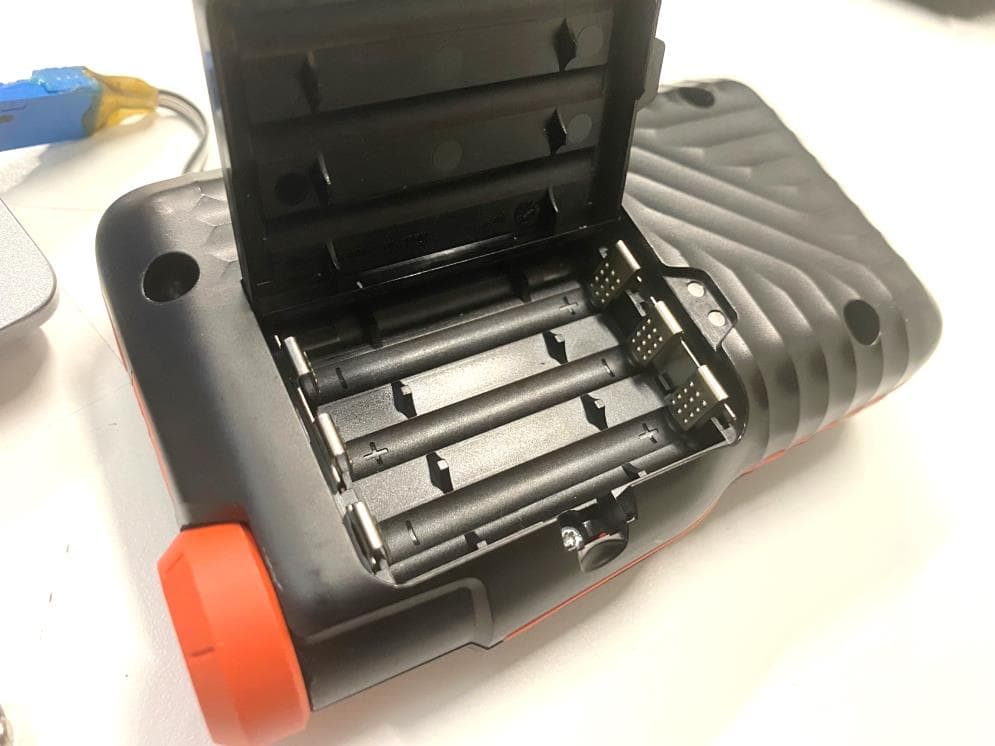
O9BARVAEVOBT
Feb 07, 2024AVALANCHE BEACON
Equipment Class
DCD - Part 15 Low Power Transmitter Below 1705 kHz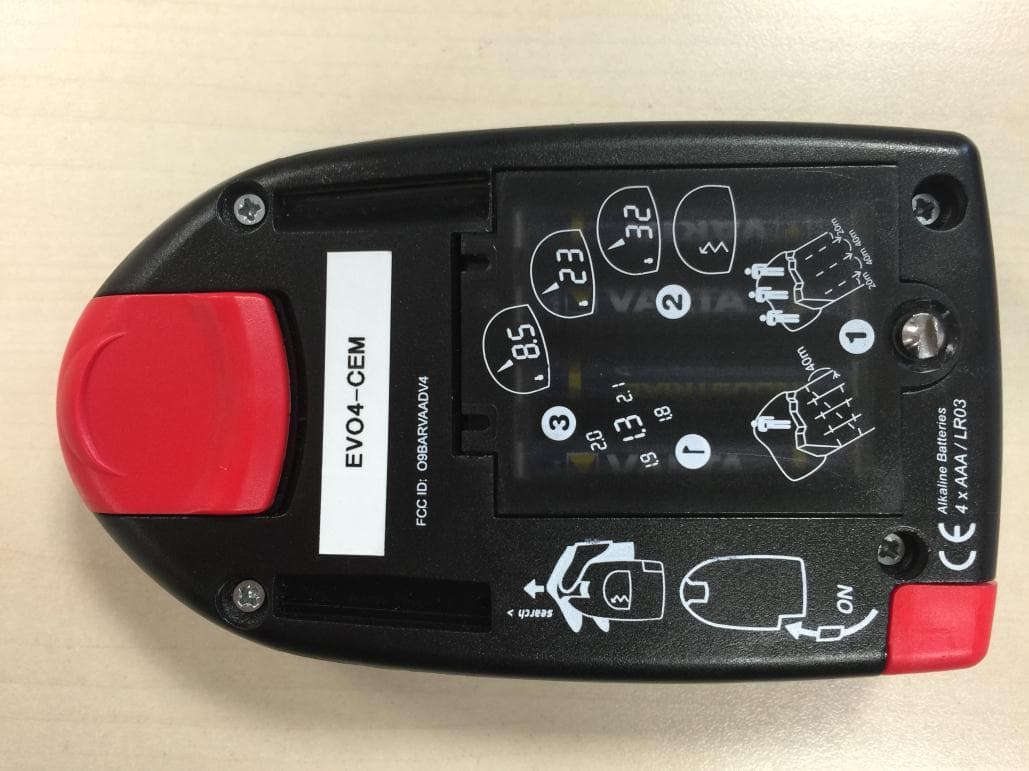
O9BARVAADV4
May 14, 2015Low Power Transmitter Below 1705 kHz
Equipment Class
DCD - Part 15 Low Power Transmitter Below 1705 kHz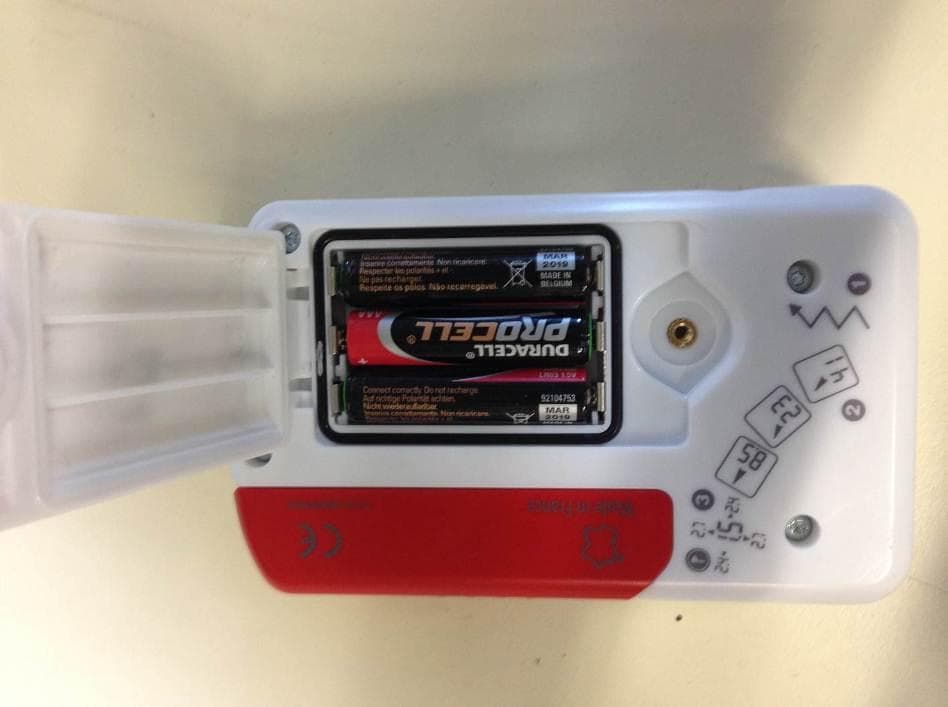
O9BARVANEO
Jul 08, 2014Low Power Transmitter Below 1705 kHz
Equipment Class
DCD - Part 15 Low Power Transmitter Below 1705 kHz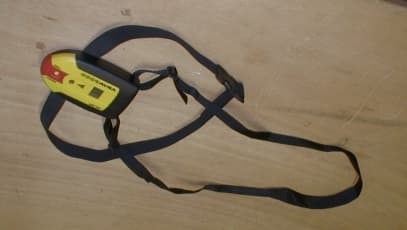
O9BARVA9000
Mar 01, 2001Avalanche transceiver
Equipment Class
DCD - Part 15 Low Power Transmitter Below 1705 kHz