OXTLSE039R2Compact Flash Card Interface to Bluetooth
National Semiconductor Sweden AB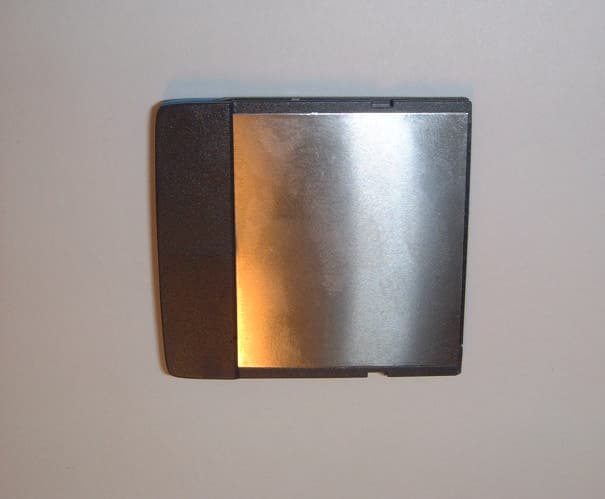
Click to zoom
Application Details
- Equipment Class
- DSS - Part 15 Spread Spectrum Transmitter
- Date of Grant
- May 30, 2002
- Application Purpose
- Original Equipment
- Date of Application
- May 30, 2002
- Equipment Note
- Compact Flash Card Interface to Bluetooth
- Frequency Range
- 2402.00000000 - 2480.00000000
- Country
- Sweden
Documents & Files
Document Text
Text extracted from the exhibit documents filed with the FCC. Open a document above to read the original.
Users Manual
LSE039R2 Bluetooth Compact Flash Card with Software for Windows Pocket PC Release 1.3 User’s Manual 2 DISCLAIMER: This manual is published by National Semiconductor Sweden AB, without any warranty. Improvements and changes to this manual necessitated by typographical errors, inaccuracies of current information or improvements to equipment may be made by National Semiconductor Sweden AB at any time and without notice. Such changes will however be incorporated into new editions of this manual. Hardware, software and firmware mentioned in this document are subject to continuous development and improvement. Consequently, there may be discrepancies between the information in this document and the performance and design of the product. IN NO EVENT SHALL LICENSOR OR ITS SUPPLIERS BE LIABLE FOR ANY SPECIAL, INDIRECT, INCIDENTAL OR CONSEQUENTIAL DAMAGES, (INCLUD ING W ITHOUT L IMITATION, LOSS OF DATA) IN ANY WA Y ARIS ING OUT OF OR RELATED TO THE USE OR INABILITY TO USE THE SOFTWARE, HARDWARE OR FIRMWARE, EVEN IF ADVISED OF THE POSSIBILITY OF SUCH DAMAGES. IN NO EVENT SHALL LICENSOR’S DIRECT DAMAGES TO CUSTOMER EXCEED THE TOTAL LICENSE FEE ACTUALLY PAID BY CUSTOMER FOR SUCH SOFTWARE OR HARDWARE AS WELL AS FIRMWARE. Windows is a registered trademark of Microsoft Corporation. Other trademarks mentioned in this document are trademarks or registered trademarks of their respective owners. Printed in Sweden. Copyright © National Semiconductor Sweden AB, Sweden, 2001 Table of contents 1Introduction ______________________________________________________ 5 1.1Features _______________________________________________________________ 5 1.2Bluetooth Capability Statement _____________________________________________ 5 1.3System Requirements ____________________________________________________ 5 1.4SW and HW compatibility and limitations ______________________________________ 6 2Installation _______________________________________________________ 7 2.1Uninstall previous SW versions _____________________________________________ 7 2.2Install new SW __________________________________________________________ 7 2.3Insert the CF Card _______________________________________________________ 7 3Using the Bluetooth Profile Wizard____________________________________ 8 3.1Serial Port Connection ____________________________________________________ 8 3.2Dial Up Networking _______________________________________________________ 8 3.3Pairing _________________________________________________________________ 9 3.4LAN Access ____________________________________________________________ 9 3.5Serial Port Management __________________________________________________ 10 3.6Local Configuration______________________________________________________ 10 4The File Transfer Application _______________________________________ 11 5The Wireless Printing Application____________________________________ 11 6Serial Port Profile Printing__________________________________________ 11 7Advanced configuration using the Control Panel ________________________ 12 7.1Local settings __________________________________________________________ 12 7.2Dial-Up Networking and LAN Access ________________________________________ 12 8Troubleshooting Guide ____________________________________________ 14 8.1Support information______________________________________________________ 14 8.2Installation_____________________________________________________________ 14 8.3Dial-Up networking ______________________________________________________ 14 8.4LAN Access ___________________________________________________________ 14 8.5File Transfer ___________________________________________________________ 15 9Technical Specifications ___________________________________________ 16 9.1Radio Specifications _____________________________________________________ 16 9.2Electrical Characteristics _________________________________________________ 16 9.3Specific Features _______________________________________________________ 16 9.4Security _______________________________________________________________ 16 9.5Mechanical ____________________________________________________________ 17 9.6Environmental __________________________________________________________ 17 9.7Standards Supported ____________________________________________________ 17 9.8Compliance ____________________________________________________________ 17 4 10 Regulations (LSE039R2 Bluetooth Compact Flash Card)_________________ 18 10.1European Compliance ____________________________________ 18 10.2FCC (US) Compliance ___________________________________________________ 18 10.3Exposure to Radio Frequency Radiation _____________________________________ 19 10.4Important Safety Information ______________________________________________ 19 10.4.1Safety Warnings!______________________________________________________ 19 10.4.2Operating Environment _________________________________________________ 20 5 1 Introduction Thank you for purchasing this LSE039R2 Bluetooth Compact Flash Card. It will provide a fast and reliable wireless connection with other Bluetooth enabled computers (PC’s), Handheld or Pocket PC’s etc. This User’s Manual will guide you through the installation steps necessary to make your Bluetooth Compact Flash Card operate This manual assumes that you have a basic understanding of personal, handheld or pocket computers etc., and that you are familiar with the basic terminology and procedures for using Windows and Pocket PC operating systems. NOTE: Hencefort h in this manual t he Bluetoot h Compact Flash Card will be abbreviated ”CF”. 1.1 Features • Bluetooth connectivity • Up to 460 kbps data rate • Integrated antenna • Applications supported: • OBEX FileTransfer, client and server • Serial Port Profile as Device A (initiator) • Dial- up Networking Profile as terminal • LAN Access (together with third party Bluetooth LAN Access Point) • Wireless printing using WPP in conjunction with the LSE019 Bluetooth Printer Adapter • Wireless…
Text truncated - open the document above for the full version.
Attestation Statements
Application Notes LSE039R2 Page 1 (1) Prepared by Document number NSWS Mikael Ohlsson Document responsible/Approved Date Rev NSWS Tomas Blom 2002-01-25 A National Semiconductor Confidential File: O:\Public\Project\P029_BT_products\approval\Regulatory LSE039 R2\FCC_Documentation\Application information\Application Notes LSE039R2.doc Notes, FCC Authorization, LSE039R2 Compact Flash. 1. The Compact Flash, OXTLSE039R2, have to be seen as a modular approval, it is intended for laptop’s, PDA:s, desktop PC’s and other “type 1” compact flash host enabled devices to interface to Bluetooth. The Compact flash fulfills the criteria for modular approval (own RF-shielding, own power supply regulation, permanently affixed antenna, stand-alone test report, own FCC-label etc.) The Compact flash card tested with a laptop computer and an external jigg as a platform must not be seen as a system. The Compact Flash is a unique product. For reference, see the already FCC-approved OXTLSE039 modular approved Compact Flash Card. 2. FCC label – On our previous FCC authorized products it has, due to the label size, been approved to only state: “FCCID:LSE0xx” on the marking label. Since the devices/marking labels are to small to place the required text according to part 15.19(a) (3), the information required by this paragraph will be placed in the user’s manual. This will be FCC accepted according to part 15.19(a) (5). The following text will be added in the user’s manual for OXTLSE044: This device complies with part 15 of the FCC rules. Operation is subject to the following two conditions: (1) This device may not cause harmful interference, and (2) this device must accept any interference received, including interference that may cause undesired operation. Mikael Ohlsson Product Certification National Semiconductor Sweden AB Rissneleden 138, plan 6 S-174 02 Sundbyberg, Sweden Phone: +46 8 7337651 Mobile: +46 733 604044 E-mail: [email protected]
Attestation Statements
BLUETOOTH APPROVALS (re FCC ID: OXTLSE039R2) 1(5) The following exhibit indicates the FCC Spread Spectrum requirements in Sectio n 15.247 for devices meeting the Bluetooth Specifications in the 2.4 GHz band as of February 2001 operating in the USA. The purpose of this exhibit is to help expedite the approval process for Bluetooth devices. This exhibit provides items that vary for each device and also provides a list of items that are commo n to Bluetooth devices that explains the remaining requirements. The list of common items can be submitted for each application for equipment authorizatio n. This exhibit o nly specifies requirements in Section 15.247, requirements in other rule Sections for intentional radiators such as in Section 15.203 or 15.207 must be also be addressed. For each individual device, the follo wing items, 1-7 will vary from one device to another and must be submitted. 1) The occupied bandwidth in Section 15.247(a)(1)(ii). Supplied 2) Conducted output power specified in Section 15.247(b)(1). Supplied 3) EIRP limit in Section 15.247(b)(3). Supplied 4) RF safety requirement in Section 15.247(b)(4) Supplied 5) Spurio us emission limits in Sectio n 15.247(c). Supplied 6) Processing gain and requirements for Hybrids in Section 15.247(f) in the acquisition mode. Supplied for BT module* 7) Power spectral density requirement in Sectio n 15.247(f) in the acquisitio n mode. Supplied *Note: peak output power of FCC ID: OXTLSE039R2 and internal certified Bluetooth module FCC ID: CGK8001001 are identical within measurement tolerances: devicedBm max readingdBm min reading FCC ID: OXTLSE041R2+1.2-1.1 FCC ID: CGK8001001+0.72-1.33 For all devices, the following items, 1-12, are commo n to all Bluetooth devices and will not vary from one device to another. This list can be copied into the filing. 1 Output pow er and channel separation of a Bluetooth device in the different operating modes: The different operating modes (data-mode, acquisition-mode) of a Bluetooth device don’t influence the output po wer and the channel spacing. There is only one transmitter which is driven by identical input parameters co ncerning these two parameters. Only a different hopping sequence will be used. For this reason, the RF parameters in one op-mode is sufficient. 2 Frequency range of a Bluetooth dev ice: The maximum frequency of the device is: 2402 – 2480 MHz. This is according the Bluetooth Core Specification V 1.0B (+ critical errata) for devices which will be operated in the USA. Other frequency ranges ( e.g. for Spain, France, Japan) which are allowed according the Core Specification must not be supported by the device. 3 Co-ordination of the hopping sequence in data mode to avoid simultaneous occupanc y by multiple tra ns mitters : Bluetooth units which want to communicate with other units must be organized in a BLUETOOTH APPROVALS (re FCC ID: OXTLSE039R2) 2(5) structure called piconet. This pico net co nsist of max. 8 Bluetooth units. One unit is the master the other seven are the slaves. The master co-ordinates frequency occupation in this piconet for all units. As the master hop sequence is derived from it’s BD address which is unique for every Bluetooth device, additional masters intending to establish new pico nets wi ll a lways us e dif f erent ho p se q ue nces . BLUETOOTH APPROVALS (re FCC ID: OXTLSE039R2) 3(5) 4 Example of a hopping sequence in data mode: Example of a 79 hopping sequence in data mode: 40, 21, 44, 23, 42, 53, 46, 55, 48, 33, 52, 35, 50, 65, 54, 67, 56, 37, 60, 39, 58, 69, 62, 71, 64, 25, 68, 27, 66, 57, 70, 59, 72, 29, 76, 31, 74, 61, 78, 63, 01, 41, 05, 43, 03, 73, 07, 75, 09, 45, 13, 47, 11, 77, 15, 00, 64, 49, 66, 53, 68, 02, 70, 06, 01, 51, 03, 55, 05, 04 5 Equally average use of frequencies in data mode and short transmissions: The generation of the hopping sequence in co nnectio n mode depends essentially o n two input values: 1. LAP/UAP of the master of the co nnectio n 2. Internal master clock The LAP (lower address part) are the 24 LSB’s of the 48 BD_ADDRESS. The BD_ADDRESS is an unambiguo us number of every Bluetooth unit. The UAP (upper address part) are the 24 MSB’s of the 48 BD_ADDRESS. The internal clock of a Bluetooth unit is derived from a free running clock which is never adjusted and is never turned off. For synchro nization with other units, o nly the offsets are used. It has no relation to the time of the day. Its resolutio n is at least half the RX/TX slot length of 312.5 μs. The clock has a cycle of about one day (23h30). In most case it is implemented as 28 bit counter. For the deriving of the hopping sequence the entire LAP (24 bits), 4 LSB’s (4 bits) (Input 1) and the 27 MSB’s of the clock (Input 2) are used. With this input values different mathematical procedures (permutations, additions, XOR-operations) are performed to generate the sequence. This will be do ne at the beginning of every new transmission. Regarding short transmissions, the Bluetooth system has the following behavior: The first connection between the two devices is established, a hopping sequence is generated. For transmitting the wanted data, the complete hopping sequence is not used and the co nnectio n ends. The seco nd connection will be established. A new hopping sequence is generated. Due to the fact that the Bluetooth clock has a different value, because the period between the two transmission is longer (and it cannot be shorter) than the minimum resolution of the clock (312.5 μs). The hopping sequence will always differ from the first one. 6 Receiver input bandw idth, synchronization and repeated single or multiple packets: The input bandwidth of the receiver is 1 MHz. In every co nnectio n, one Bluetooth device is the master and the other o ne is the slave. The master determines the hopping sequence (see chapter 5). The slave follows this sequence. Both devices shift between RX and TX time slot according to the clock of the master. Additionally the type of connection (e.g…
Text truncated - open the document above for the full version.
Block Diagram
Block Diagram of the ROK 101 007 Ericsson Bluetooth Module (Grey part is the Radio module, PBA 313 01/ 2)
Cover Letter(s)
To: Monica Roos ITS/ES-Sto Cc: Danielle Gravelle ITS/ES-Box Subject: National Semiconductor applications FCC ID: OXTLSE039R2 and OXTLSE041R2 Dear Monica: Technical review of both applications is complete, and I note the following: 1) Both applications: the prior versions of these products, OXTLSE039 and OXTLSE041, were certified as modules. This is appropriate, as both devices require external power and can be used in a variety of applications. The "Application Notes LSE039R2/LSE041R2.pdf" from Mikael Ohlsson indicates that the new applications should also have modular approval. Unfortunately, modular approval requires that the modules be tested for radiated emissions outside of any host device. The prior versions were both tested in a Bluetooth test jig, which is open. The new test reports do not contain any evidence that these devices were tested for radiated emissions outside of the host laptop. The test setup photos all show laptop hosts. For reference, please review the test setup photos for the prior versions of these products. Please provide test setup photos showing the EUTs in an open Bluetooth test jig. Also, we need test setup photos for the conducted emissions tests (preferably using the Bluetootg jig as well). 2) OXTLSE039R2 a) The test report shows the EUT rated both at 0 dBm (p.3), and 1 dBm (pages 15, 16, 17, etc.). The average measured output power is 1.11 mW or 0.45 dBm. I recommend that the report be corrected to show a 0 dBm output rating, which agrees with the Ericsson BT module specification. b) The application information states that this device could be used in cell phones. This is a co-location of transmitters, to which the FCC is sensitive for reasons of RF exposure. We are aware that the FCC thinks it is OK to co-locate a 1 mW BT transmitter and a cell phone, but I will need to contact the FCC to confirm it is OK for us to certify, and for the right wording on the Grant of Authorization. 3) OXTLSE041R2: The block diagram does not show the frequencies of any oscillators, in the relevant blocks. Please amend the diagram to show all oscillator frequencies, and re-submit. The diagram for OXTLSE039R2 is a good example. Thank you, Roland
Cover Letter(s)
FCC ID: OXTLSE039R2 Part 15 Unlicensed Modular Transmitter Approval Justification per DA 00-1407, released: June 26, 2000 re quire me ntre fe re nce 1The modular transmitter must have its ow n RF shielding. Relevant emission requirements are met without additional shielding Enclosure is metal Compact Flash format. See external photos . 2The mod ular trans mitter must have b uffered mod ulation/data i np uts All inputs to the modules are buffered through logic or microprocessor inputs. S e e sc he ma t ic d ia g ra ms . 3The modular transmitter must have its own pow er supply regulation. All power lines derived from the host device are regulated before energizing other circuits internal to the EUT. Se e sche matic diag ra ms. 4The modular transmitter must comply with the antenna requirements of Section 15.203 and 15.204(c). The EUT has a built-in antenna, which is inaccessible to the user. See Internal Photos . 5The modular transmitter must be tested in a stand-alone configuration, i.e., the module must not be inside another device during testing. EUT was tested on a open Bluetooth test bed which provides no shielding. See Test setup photos . 6The modular transmitter must be labeled with its own FCC ID number, and, if the FCC ID is not visible when the module is installed inside another device, then the outside of the device into which the module is installed must also display a label referring to the enclosed mod ule. The EUT carries an FCC ID label whose artwork and label position are clearly indicated; see Ma rking and Label Position exhibits. The EUT is visible when installed. 7The modular transmitter must comply with any specific rule or operating requirements applicable to the trans mi tter a nd the manufacturer must provide adequate instructions along with the module to explain any such requirements. A copy of these instructions must be included in the application for equipment authorization. The EUT incorporates a certified Bluetooth module FCC ID: CGK8001001, whose 15.247 spread spectrum frequency hopping functional parameters cannot be altered by the user. The EUT was tested at its ma xi mum da ta rate. Se e Blue tooth mo dule de scri ptio n . 8The modular transmitter must comply with any applicable RF exposure requirements. For example, FCC Rules in Sections 2.1091, 2.1093 and specific Sections of Part 15, including 15.319(i), 15.407(f), 15.253(f) and 15.255(g), require that Unlicensed PCS, UNII and millimeter wave devices perform routine environmental evaluation for RF Exposure to demonstrate compliance. In addition, spread spectrum transmitters operating under Section 15.247 are required to address RF Exposure compliance in accordance with Section 15.247(b)(4). RF output is 1 mW, w hich complies with the conditions of use of FCC ID: CGK8001001, and constitutes no RF e xpos ure ha zard w he n not co- located with another transmitter. User precautions are provided in the User Manual section 10.3.
External Photos
LSE039 R2 Photo’s Uppgjord (även faktaansvarig om annan) - Prepared (also subject responsible if other) Nr - No. WSS Mikael Ohlsson Dokansv/Godk - Doc respons/Approved Kontr - Checked Datum - Date Rev File 2002-05-25 A LSE 039 R2 Compact Flash, External view: LSE039 R2 Photo’s Uppgjord (även faktaansvarig om annan) - Prepared (also subject responsible if other) Nr - No. WSS Mikael Ohlsson Dokansv/Godk - Doc respons/Approved Kontr - Checked Datum - Date Rev File 2002-05-25 A LSE039 R2 Photo’s Uppgjord (även faktaansvarig om annan) - Prepared (also subject responsible if other) Nr - No. WSS Mikael Ohlsson Dokansv/Godk - Doc respons/Approved Kontr - Checked Datum - Date Rev File 2002-05-25 A LSE039 R2 Photo’s Uppgjord (även faktaansvarig om annan) - Prepared (also subject responsible if other) Nr - No. WSS Mikael Ohlsson Dokansv/Godk - Doc respons/Approved Kontr - Checked Datum - Date Rev File 2002-05-25 A LSE039 R2 Photo’s Uppgjord (även faktaansvarig om annan) - Prepared (also subject responsible if other) Nr - No. WSS Mikael Ohlsson Dokansv/Godk - Doc respons/Approved Kontr - Checked Datum - Date Rev File 2002-05-25 A LSE039 R2 Photo’s Uppgjord (även faktaansvarig om annan) - Prepared (also subject responsible if other) Nr - No. WSS Mikael Ohlsson Dokansv/Godk - Doc respons/Approved Kontr - Checked Datum - Date Rev File 2002-05-25 A LSE039 R2 Photo’s Uppgjord (även faktaansvarig om annan) - Prepared (also subject responsible if other) Nr - No. WSS Mikael Ohlsson Dokansv/Godk - Doc respons/Approved Kontr - Checked Datum - Date Rev File 2002-05-25 A
ID Label/Location Info
Marking plate, LSE 039 R2 Compact Flash. Mikael Ohlsson 2002-01-25 Note! Since the devices/marking labels are to small to place the required text according to part 15.19(a) (3), The information required by this paragraph will be placed in the users manual. This will be FCC accepted according to part 15.19(a) (5). The following text will be added in the User’s Manual for OXTLSE039R2: This device complies with Part 15 of the FCC rules. Operation is subject to the following two conditions: (1) this device may not cause harmful interference, and (2) this device must accept any interference received, including interference that may cause undesired operation. LSE039 R2 Bluetooth Compact Flash Card ETL-Listed. Conforms to ANSI/UL 1950 BD address: xxxxxxxxxxxx Model No. LSE039/9 RRR FCC ID: OXTLSE039R2 2002584 Serial No. xxxxxxxxxxxxxxxx Made in Sweden by National Semiconductor Sweden AB.
ID Label/Location Info
OPEN Assembly drawing1(2) Uppgjord (även faktaansvarig om annan) -Nr – No WSS Victor Kronestedt15186-LSE039/1 Dokansv/Godk - Doc respons/ApprovedKontr - CheckedDatum - DateRevFile WSS Tomas Blom2001-06-14 PA2 P:\P029_BT_products\new documents\CF Card\LSE039_1_RFI\15186-LSE039_1_PA2.doc Label assembly drawing 1 Revision history DateRevNote 2001-05-07PA1New 2001-06-14PA2Product marking label side of card is specified. 2 Orientation The labels should be located and oriented on the card as the following pictures. Tolerance: ±0.3mm FRONT SIDE: PLACE THE FRONT LABEL CENTERED, HORIZONTAL AND VERTICAL.ON THE FRONT OF THE COMPACT FLASH CARD. THE TEXT ORIENTATION SHALL BE AS IN THE PICTURE. TEXT OPEN Assembly drawing2(2) Uppgjord (även faktaansvarig om annan) -Nr – No WSS Victor Kronestedt15186-LSE039/1 Dokansv/Godk - Doc respons/ApprovedKontr - CheckedDatum - DateRevFile WSS Tomas Blom2001-06-14 PA2 P:\P029_BT_products\new documents\CF Card\LSE039_1_RFI\15186-LSE039_1_PA2.doc BACK SIDE, FOR PRODUCT MARKING LABEL: PLACE THE PRODUCT MARKING LABEL CENTERED, HORIZONTAL AND VERTICAL. ON THE BACK OF THE COMPACT FLASH CARD. THE TEXT ORIENTATION SHALL BE AS IN THE PICTURE. TEXT
Internal Photos
LSE039 R2 Photo’s Uppgjord (även faktaansvarig om annan) - Prepared (also subject responsible if other) Nr - No. WSS Mikael Ohlsson Dokansv/Godk - Doc respons/Approved Kontr - Checked Datum - Date Rev File 2002-05-25 A LSE 039 R2 Compact Flash, Internal view: LSE039 R2 Photo’s Uppgjord (även faktaansvarig om annan) - Prepared (also subject responsible if other) Nr - No. WSS Mikael Ohlsson Dokansv/Godk - Doc respons/Approved Kontr - Checked Datum - Date Rev File 2002-05-25 A LSE039 R2 Photo’s Uppgjord (även faktaansvarig om annan) - Prepared (also subject responsible if other) Nr - No. WSS Mikael Ohlsson Dokansv/Godk - Doc respons/Approved Kontr - Checked Datum - Date Rev File 2002-05-25 A
Internal Photos
Internal Bluetooth module FCC ID: CGK8001001 PCB top Internal Bluetooth module FCC ID: CGK8001001 PCB bottom
Operational Description
Preliminary LSE039 R2 Generic Product Datasheet NATIONAL SEMICONDUCTOR SWEDEN AB RISSNELEDEN 138, 6TR P.O. BOX 2043 SE-174 02 SUNDBYBERG TEL:+46 8 733 7600 FAX:+46 8 733 7610 2001 National Semiconductor 1522-LSE039R2 Rev B 2001-12-18 LSE039 R2 Bluetooth Compact Flash Card General Description The LSE039 R2 Compact Flash Card is a plug in unit for PDAs and other Compact Flash Host devices running certain Microsoft Windows Platforms. The LSE039 R2 enables point-to-multipoint communication over Bluetooth. In addition the Compact Flash Card supports wireless printing in conjunction with the LSE019 Printer Adapter as well as serial port profile printing. Installation and configuration tools for a range of Microsoft Windows PC platforms. Features • Bluetooth 1.1 qualified including Software • Bluetooth 1.1 qualified as Hardware component • Piconet (Point-to-multipoint) enabled • Data rates up to 460 kbps • Integrated antenna Bluetooth Application Profiles • Generic Access Profile • Serial Port Profile • File Transfer Profile • Dial-Up Networking Profile • LAN Access Profile Supported Applications • Serial Port Profile Printing (1) • Proprietary Wireless Printing (Requires the LSE019 Printer Adapter) • Fax (1) OEM Customization Options • Color and Labeling • User Interface • Support for other devices/platforms Note (1) : Third party software required. Preliminary LSE039 R2 Generic Product Datasheet NATIONAL SEMICONDUCTOR SWEDEN AB RISSNELEDEN 138, 6TR P.O. BOX 2043 SE-174 02 SUNDBYBERG TEL:+46 8 733 7600 FAX:+46 8 733 7610 2001 National Semiconductor 1522-LSE039R2 Rev B 2001-12-18 Radio Specifications Frequency Range 2.402 - 2.480GHz, Programmable for Specific National Regulations Supported Specification Bluetooth 1.1 RF Output Power 0dBm, Power Class 2 Receiver Sensitivity Better than -70dBm at 0.1% BER Frequency Spectrum Utilization Frequency Hopping Spread Spectrum (FHSS) Modulation Gaussian Frequency Shift Keying (GFSK) Bit-rate 1 Mbps Antenna Integrated Regulative Compliance FCC part 15, UL 1950 (US), ETS 300 328, ETS 300 826, EN 60 950 (Europe) Electrical Characteristics Power Supply 3.3VDC or 5VDC from Flash Card connector Current Consumption 60mA max. 10mA min. Physical Interface Type I Compact Flash Card slot. Supports Compact Flash I/O v1.4 LED Indicator Power On / Data Traffic Mechanical Specifications Dimensions 48 x 43 x 6 (mm) Weight Approx. 15 (g) Environment Operating Temperature ±0º C to +55º C Storage Temperature -20º C to +70º C Humidity 5-95% non-condensing Configuration and Security Supported Operating Systems and Processors Microsoft Windows PC and Pocket PC on selected processors Installation and configuration tools Microsoft Windows PC Platforms Firmware upgrade Via external programming adapter Authentication Supported Encryption Supported For latest information: Trademarks mentioned in this document are trademarks or registered trademarks of their respective owners. This datasheet contains preliminary data. Supplementary data may be published at a later date. National Semiconductor Corporation reserves the right to make changes at any time without notice in order to improve design and supply the best possible product. Life Support Policy NATIONAL’S PRODUCTS ARE NOT AUTHORIZED FOR USE AS CRITICAL COMPONENTS IN LIFE SUPPORT DEVICES OR SYSTEMS WITHOUT THE EXPRESS WRITTEN APPROVAL OF THE PRESIDENT OF NATIONAL SEMICONDUCTOR CORPORATION. As used herein: 1. Life support devices or systems are devices or systems which, (a) are intended for surgical implant into the body, or (b) support or sustain life, and whose failure to perform, when properly used in accordance with instructions for use provided in the labeling, can be reasonably expected to result in a significant injury to the user. 2. A critical component of a life support device or system whose failure to perform can be reasonably expected to cause the failure of the life support device or system, or to affect its safety or effectiveness.
Operational Description
ROK 101 007 Bluetooth Module Description ROK 101 007 is a short-range module for implementing Bluetooth function- ality into various electronic devices. The module consists of three major parts; a baseband controller, a flash memory, and a radio that operates in the globally available 2.4–2.5 GHz free ISM band. Both data and voice transmission is supported by the module. Communica- tion between the module and the host controller is carried out using a high- speed USB interface compliant with USB Specifications 1.1 or an UART/ PCM interface. When using the USB interface, the module appears as a USB slave device and therefore requires no PC resources. ROK 101 007, which is compliant with Bluetooth version 1.0B, is a Class 2 Bluetooth Module (0 dBm) and is type-approved. The module supports all Bluetooth profiles. Key Features • Pre-qualified Bluetooth 1.0B Module • RF output power class 2 • FCC and ETSI approved • 460 kb/s max data rate over UART • Multiple interface for different applications -UART for data -PCM for voice -USB for voice and data •I 2 C interface • Internal crystal oscillator • HCI firmware included • Multi Point Operation • Built-in shielding Suggested Applications • Computers and peripherals • Handheld devices and accessories • Access points ROK 101 007 ROK 101 007 2 Preliminary Figure 1. Block Diagram Figure 2. Actual size of the Ericsson Bluetooth Module, and also showing the HW and FW stack. RX- Balun Radio ASIC ANT T2 TX- Balun Switch Antenna Filter Loop Filter VCO Tank FLASH Memory 13MHz Crystal Voltage Regulation WAKE_UP DETACH GND B3 R1 R2 T1 C6 VCC C4 VCC_IO C2 ON RESET# POR NC NC NC NC NC R4 R5 R6 T4 T5 T6 C3 Radio Module B4 C1 ADDR DATA CTRL R3 C5 NC PBA 313 01/2 Baseband B1 D- D+ B2 USB TXD RTS RXD CTS A5 A6 B5 B6 UART PCM_OUT PCM_CLK PCM_IN PCM_SYNC A1 A2 A3 A4 PCM T3 GND GND GND GND I2C_DATA I2C_CLK 0123 cm Radio Baseband Audio Link Manager HCI ROK 101 007 3 Preliminary Absolute Maximum Ratings ParameterSymbolMinTypMaxUnit Temperature Storage temperatureT Stg -30+85°C Operating temperatureT Amb 0+75°C Power Supply V CC V CC -0.3+5.25V V CC_IO V CC_IO -0.8+3.6V Digital Inputs Input low voltageV IL -0.5V Input high voltageV IH V CC_IO +0.3V Recommended Operating Conditions Temperature Ambient temperature, TestT amb +23°C Power Supply Positive Supply VoltageV CC +3.3V I/O Ports Supply V…
Text truncated - open the document above for the full version.
Contact Information
Applicant
Mikael Ohlsson(Project engineer)
Technical Contact
Non-Technical Contact
SEMKO ABMikael Ohlsson
[email protected]46 8 7337651
Test Firm
Intertek SEMKO ABNiklas Bostrom
Technical Specifications
| # | Rule Parts | Frequency Range | Power Output | Tolerance |
|---|---|---|---|---|
| 1 | 15C | 2.40 GHz - 2.48 GHz | 1.00 mW | 0.0031250000 % |
Other Applications from National Semiconductor Sweden AB
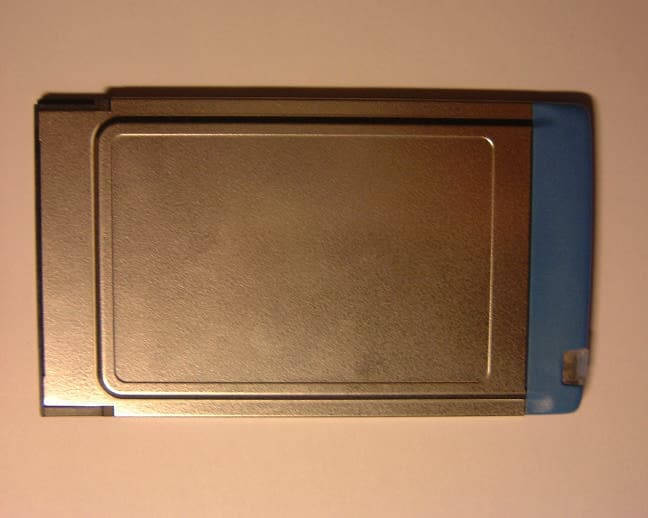
OXTLSE041R2
Apr 16, 2002Bluetooth PC card for Host
Equipment Class
DSS - Part 15 Spread Spectrum Transmitter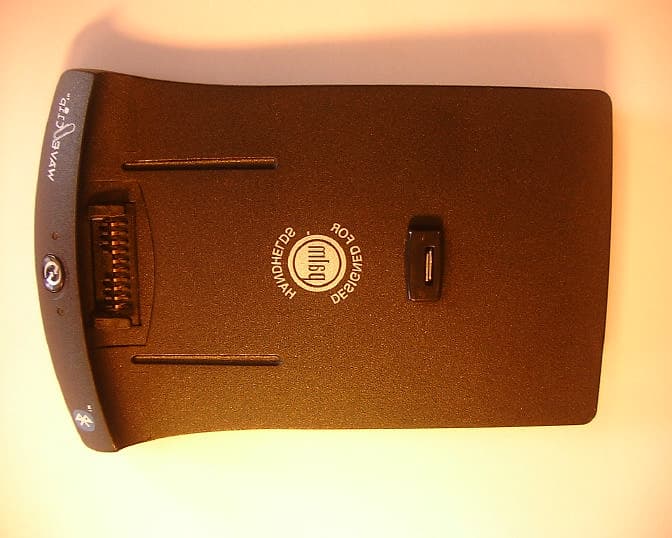
OXTLSE044
Nov 25, 2001Bluetooth Adapter for Palm V Handhelds
Equipment Class
DSS - Part 15 Spread Spectrum Transmitter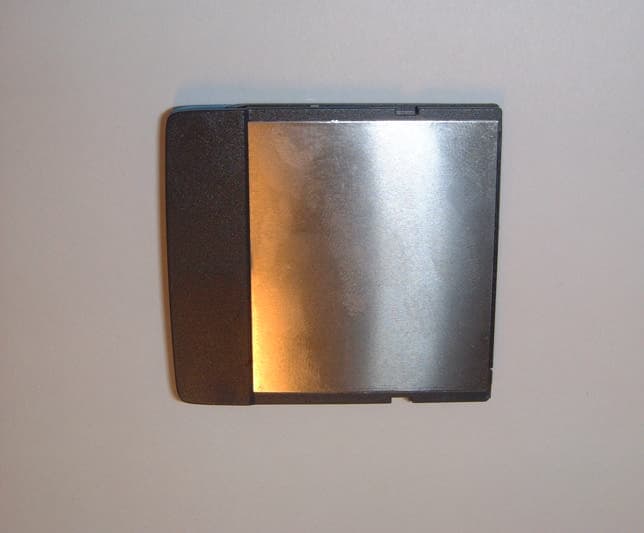
OXTLSE039
Aug 08, 2001PCMCIA Bluetooth Interface
Equipment Class
DSS - Part 15 Spread Spectrum Transmitter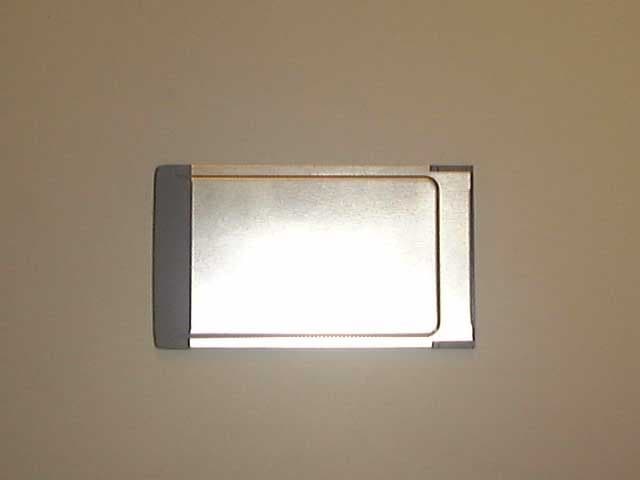
OXTLSE041
Mar 22, 2001PCMCIA card for host enabled Bluetooth devices
Equipment Class
DSS - Part 15 Spread Spectrum Transmitter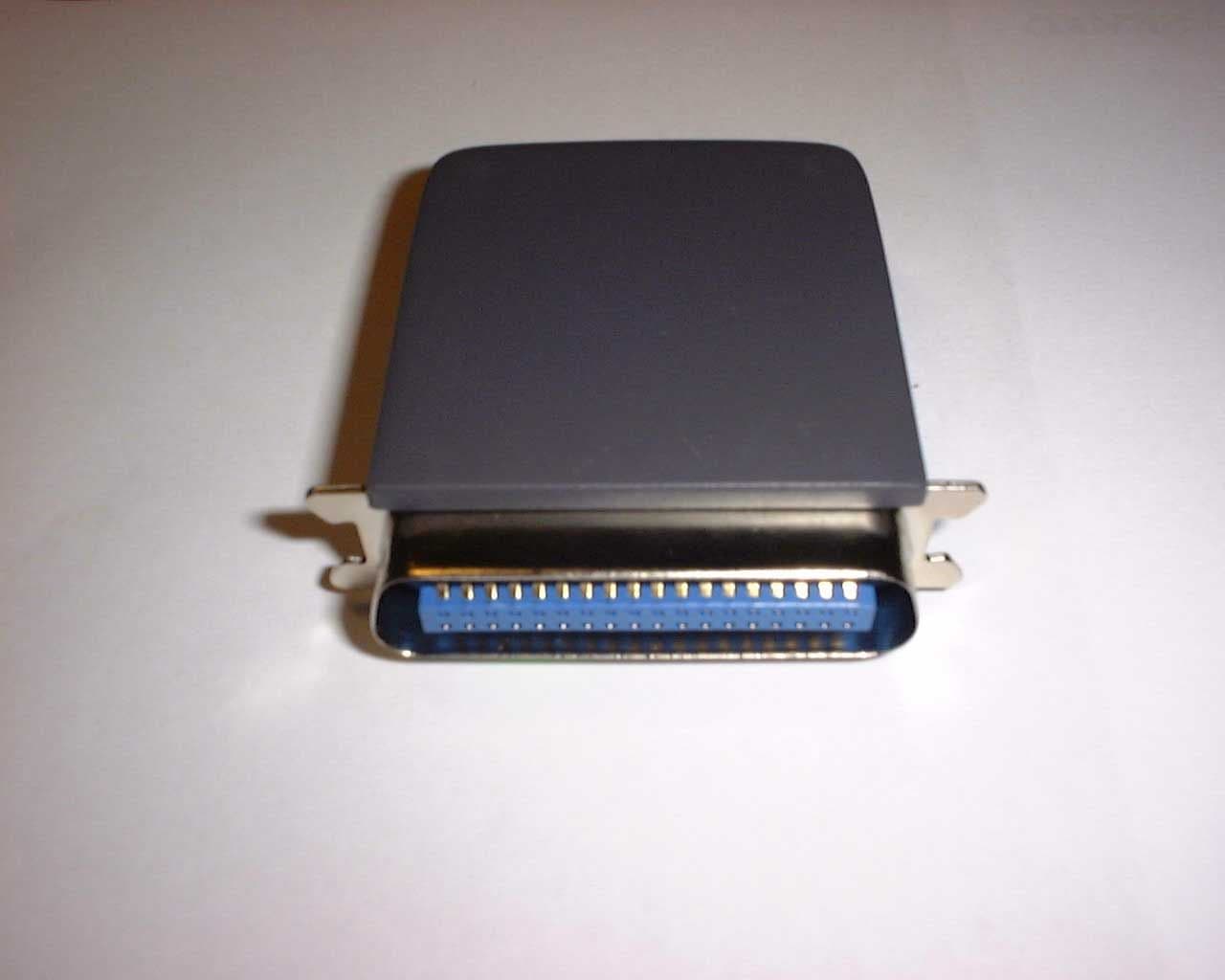
OXTLSE019
Mar 22, 2001Proprietary wireless printer module
Equipment Class
DSS - Part 15 Spread Spectrum Transmitter