PXK-HL2508Mini Mobile
ECORE TECHNOLOGY COMPANY LIMITED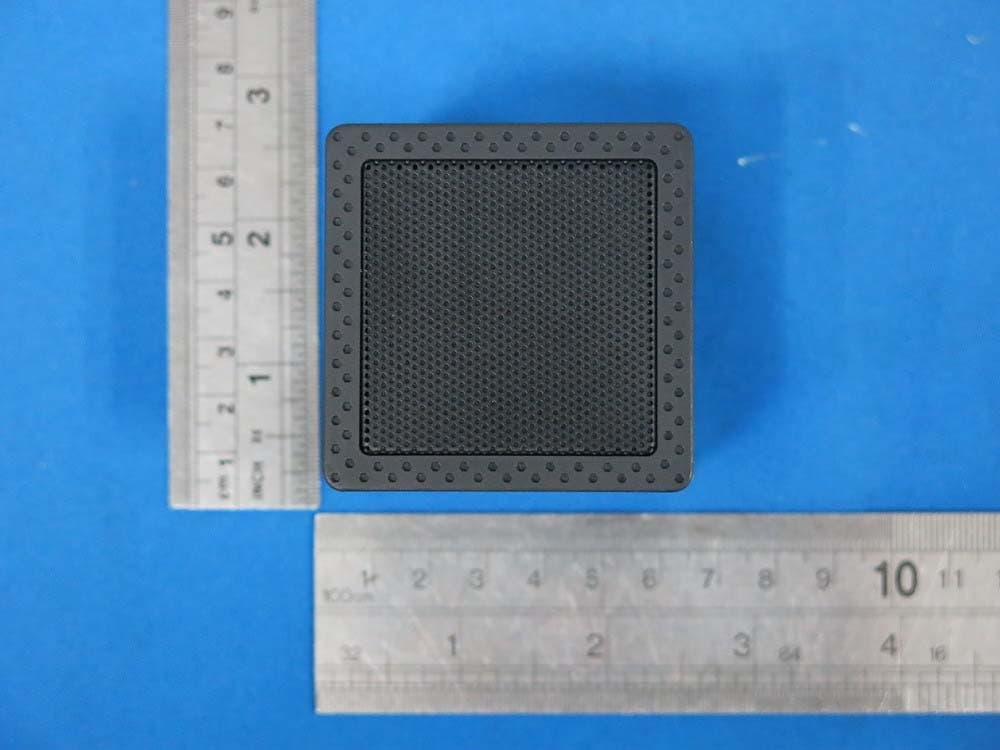
Click to zoom
Application Details
- Equipment Class
- DSS - Part 15 Spread Spectrum Transmitter
- Date of Grant
- Aug 27, 2014
- Application Purpose
- Original Equipment
- Date of Application
- Aug 27, 2014
- Equipment Note
- Mini Mobile
- Frequency Range
- 2402.00000000 - 2480.00000000
- Country
- China
Documents & Files
Document Text
Text extracted from the exhibit documents filed with the FCC. Open a document above to read the original.
Users Manual
Product Overview In order to make sure you get the best possible results from your new Mini Mobile, please thoroughly read and carefully follow all instructions in this User’s Manual or on the product. Keep this User’s Manual in a convenient location for future reference. Package contents: Mini Mobile x 1 Micro USB charging cable x 1 Aux cable x 1 User’s Manual x 1 If any of these were missing or damaged, please visit bemwirelesss.com to obtain replacement. Compatibility All devices enabled with Bluetooth technology, including iPhones, iPads, iPods, smartphones, laptops, tablets and more. Also compatible with any device that has a standard 3.5mm earphone jack such as MP3 players, PSP, mobile phones, etc. Meet the Mini Mobile Before learning about your Mini Mobile, take a moment to look it over and familiarize yourself with its features. Product Interface 1. Driver 2. Volume - 3. Play / Pause 4. Volume + 5. Power 6. Bluetooth © indicator 7. Aux in 8. Micro USB power port 9. Charging Indicator 45 Getting Started We know you are excited to experience your new Mini Mobile. These two easy steps will get you up and running quickly. Step 1: Charge It Connect your Mini Mobile to an outlet using the USB charging cable. The red LED light will slowly flash during charging and goes off when it has reached a complete charge. Step 2: Connect it There are two options for connecting to your Mini Mobile — wirelessly by Bluetooth © or wired using the included aux cable. Connect Wirelessly Once the Mini Mobile is powered on the Bluetooth indicator will light and tone confirming that the unit is currently in Bluetooth pairing mode will sound. Go to the Bluetooth settings on your mobile phone, tablet or computer to find the device named “Mini Mobile”. A tone will sound to confirm the device has paired successfully. Next time the Mini Mobile and connected device will pair automatically. Direct Connection The Mini Mobile can also be connected to any device that has a headphone jack or line out using the included aux cable. Please note the play/pause button will mute the speaker (the microphone still working) when connected via Aux. Operation Details Power on / Power off Hold the power button for 3 seconds until the Bluetooth indicator will light up; the Mini Mobile is on and ready to be paired. Hold the power button for 3 seconds until the Bluetooth indicator go out, the unit is off. Play modes •Bluetooth mode: play an audio signal from the connected Bluetooth device. •AUX mode: play an audio signal from the connected “wired” device. Please note, if an Aux cable is connected to the speaker it will not play music from Bluetooth connected devices. Audio Use Follow the above connection steps to pair a Bluetooth device with the Mini Mobile. At this point you can send any kind of audio signal to your speaker (music, video, gaming, etc.). Just use your device as normal and the audio will play through your Mini Mobile. Controls •Press the Play/Pause button to play or pause the music when using a music player through your Bluetooth connected device. •Pressing the + and - buttons will increase or decrease the volume on the Mini Mobile. Please note that this will not affect the volume levels on the connected device. 67 Operation Details (cont.) Charging the speaker When the Battery is less than 15%, a shot beep will comes out from the Mini Mobile to signify the power is low. Using supplied USB cable connect the Mini Mobile to a USB power source, like USB ports on PC, USB charging port to charge, the power indicator will lights up when it starts charging, and it will goes off when it is fully charged. Troubleshooting Issue: Pairing is unsuccessfully after multiple attempts Solution: •Check if the Bluetooth indicator light is on. If the indicator light is off, please press the power button to turn the unit on. If the Bluetooth indicator light still doesn’t come on after pressing the power button, please charge the unit. •Check for other Bluetooth devices around the surroundings that may interfere with searching and turn devices off. •Power off and then power on the unit to restart the Bluetooth Unplug any cables plugged into the AUX IN, restart all devices and then attempt pairing again. Issue: Interference or static during playback Solution: •Avoid using the device between concrete or other building structures that may interfere with the signal. •Please check if the battery level of the unit and the Bluetooth device and charge if necessary. For more troubleshooting help go to http://bemwireless.com Storage •Power off the Mini Mobile If the unit will not be used for an extended period of time. •Do not set the unit in a damp environment, high temperatures or in direct sunlight. Product Name : Mini Mobile Model Number : HL2508 Output Power: 1.5W X 2 Frequency response: 100Hz-16000KHz S/N ratio (A-W): 60 Db Distortion:<10% THD (1KHz-6 dB Input) Built-in rechargeable battery: 3.7V,320mAh Bluetooth V2.1+EDR , profile Supported: A2DP, AVRCP Working Range: Approximately 25ft, 8m Working atmosphere: 0 ̊C-40 ̊C / 20%-90%RH 89 Maintenance Please follow the instructions below for cleaning your Mini Mobile •Power off the unit and unplug the power adapter from wall outlet •Use a soft, dry, lint-free cloth and wipe gently •Do not use alcohol, benzene, thinners or other chemical detergents as these can cause the casing to be warped or discolored For questions, comments or to purchase more be ̄m wireless products go to bemwireless.com More Info For questions, comments or to purchase more be ̄m wireless products go to: bemwireless.com You can also follow us at: facebook.com/bemwireless twitter.com/bemwirelessco youtube.com/bemwireless For information on your product’s warranty go to: bemwireless.com/support FCC Statement 1. This device complies with Part 15 of the FCC Rules. Operation is subject to the following two conditions: • This device may not cause harmful interference. • This device must accept any interference received, including…
Text truncated - open the document above for the full version.
Cover Letter(s)
SCS-F19: Confidentiality Request Letter Page 1 of 2 Rev 3.0 775 Montague Expressway Milpitas, CA 95035 Tel: 408-526-1188 Fax: 408-526-1088 Email: [email protected] Confidentiality Request Letter Reason for Amendment (current / obsolete) Revision History Approved Date From To Initial Release (obsolete) 1.0 1.0 Nov-14-2006 Adding CFR 2.459 (obsolete) 1.0 2.0 August – 11 - 2008 Updated company template & Added text box (current) 2.0 3.0 Jan-31-2012 SCS-F19: Confidentiality Request Letter Page 2 of 2 Rev 3.0 ECORE TECHNOLOGY COMPANY LIMITED (2014-08-09) To: Federal Communications Commission Authorization and Evaluation Division 7435 Oakland Mills Road Columbia, MD Subject: Permanent Confidentiality Request for FCC ID: PXK-HL2508 We hereby request confidential treatment of information accompanying this application as outlined below: - Block Diagram - Schematics - Operational Description The above materials contain trade secrets and proprietary information not customarily released to the public. The public disclosure of these materials may be harmful to the applicant and provide unjustified benefits to its competitors. The applicant understands that pursuant to Section 0.457 & 0.459 of the Rules, disclosure of this application and all accompanying documentation will not be made before the date of the Grant for this application. Sincerely, Liuchengliu Manager ECORE TECHNOLOGY COMPANY LIMITED North of Bingang East Road, Huahu Development Zone, Ezhou city, Hubei Province, China
ID Label/Location Info
Label Location on EUT
Internal Photos
Antenna
RF Exposure Info
RF EXPOSURE EVALUATION EUT Specification EUT Mini Mobile Model Number HL2508 FCC ID PXK-HL2508 Antenna gain (Max) 1.0 dBi Kind of Device Bluetooth Ver. 2.1+EDR Operation Frequency 2402-2480MHz Modulation GFSK, π/4-DQPSK, 8DPSK Input Rating Battery 3.7V Max. output power -2.01dBm(0.000630W) Classification Per Stipulated Test Standard §15.247(i), §2.1093 Test Requirement: According to §15.247(i) and §1.1307(b)(1), systems operating under the provisions of this section shall be operated in a manner that ensures that the public is not exposed to radio frequency energy level in excess of the Commission’s guidelines. Routine SAR evaluation refers to that specifically required by §2.1093, using measurements or computer simulation. When routine SAR evaluation is not required, portable transmitters with output power greater than the applicable low threshold require SAR evaluation to quality for TCB approval. One antenna is available for the EUT(BT product). The minimum separation distance is 5mm. Channel Frequency (MHz) Maximum Peak Power output(dBm) Maximum Output Peak power (mW) Calculation Result Limits 2402 -2.168 0.607 0.188 3 2441 -2.007 0.630 0.197 3 2480 -2.007 0.630 0.198 3 2402 -3.546 0.442 0.137 3 2441 -3.516 0.445 0.139 3 2480 -3.595 0.437 0.138 3 2402 -3.307 0.467 0.145 3 2441 -3.063 0.494 0.154 3 2480 -3.080 0.492 0.155 3 According to KDB 447498, no stand-alone required for BT antenna, and no simultaneous SAR measurement is required. Signature Liuchengliu [email protected] Tel: 0711-2383866 Fax: 0711-2383899 ECORE TECHNOLOGY COMPANY LIMITED North of Bingang East Road, Huahu Development Zone, Ezhou, Hubei, China
Test Report
TRF No. FCC Part 15.247/A Page 1 of 63 Report No. KAD140613060E Ver.1.0 ELECTROMAGNETIC EMISSIONS COMPLIANCE REPORT INTENTIONAL RADIATOR CERTIFICATION TO FCC PART 15 SUBPART C REQUIREMENT OF Mini Mobile Model No.: HL2508 Trade Mark: FCC ID: PXK-HL2508 Report No.: KAD140613060E Issue Date: August 22, 2014 Prepared for ECORE TECHNOLOGY COMPANY LIMITED North of Bingang East Road, Huahu Development Zone, Ezhou city, Hubei Province, China Prepared by DONGGUAN EMTEK CO., LTD. No.281, Guantai Road, Nancheng District, Dongguan, Guangdong, China TEL: 86-769-22807078 FAX: 86-769-22807079 TRF No. FCC Part 15.247/A Page 2 of 63 Report No. KAD140613060E Ver.1.0 VERIFICATION OF COMPLIANCE Applicant: ECORE TECHNOLOGY COMPANY LIMITED North of Bingang East Road, Huahu Development Zone, Ezhou city, Hubei Province, China Manufacturer: ECORE TECHNOLOGY COMPANY LIMITED North of Bingang East Road, Huahu Development Zone, Ezhou city, Hubei Province, China Product Description: Mini Mobile Trade Mark: Model Number: HL2508 Kind of Device: Bluetooth Ver. 2.1+EDR File Number: KAD140613060E Date of Test: June 13, 2014 to August 04, 2014 We hereby certify that: The above equipment was tested by DONGGUAN EMTEK CO., LTD. and SHENZHEN EMTEK CO., LTD. The test data, data evaluation, test procedures, and equipment configurations shown in this report were made in accordance with the procedures given in ANSI C63.4 (2009) and the energy emitted by the sample EUT tested as described in this report is in compliance with conducted and radiated emission limits of FCC Rules Part 15.247(2013). The test results of this report relate only to the tested sample identified in this report. Approved By Sam Lv / Q.A. Manager DONGGUAN EMTEK CO., LTD. TRF No. FCC Part 15.247/A Page 3 of 63 Report No. KAD140613060E Ver.1.0 Modified Information Version Summary Revision Date Report No. Ver.1.0 Original Report / KAD140613060E TRF No. FCC Part 15.247/A Page 4 of 63 Report No. KAD140613060E Ver.1.0 Table of Contents 1. GENERAL INFORMATION ....................................................................................... 6 1.1 PRODUCT DESCRIPTION............................................................................................................... 6 1.2 RELATED SUBMITTAL(S) / GRANT (S) ............................................................................................ 6 1.3 TEST METHODOLOGY .................................................................................................................. 6 1.4 SPECIAL ACCESSORIES ................................................................................................................ 6 1.5 EQUIPMENT MODIFICATIONS ........................................................................................................ 7 1.6 TEST FACILITY ............................................................................................................................. 7 2. SYSTEM TEST CONFIGURATION ........................................................................... 8 2.1 EUT CONFIGURATION .................................................................................................................. 8 2.2 EUT EXERCISE ............................................................................................................................ 8 2.3 TEST PROCEDURE ....................................................................................................................... 8 2.4 LIMITATION .................................................................................................................................. 9 2.5 CONFIGURATION OF TESTED SYSTEM ........................................................................................ 12 3. SUMMARY OF TEST RESULTS ............................................................................. 13 4. DESCRIPTION OF TEST MODES ........................................................................... 14 5. CONDUCTED EMISSIONS TEST ........................................................................... 15 5.1 MEASUREMENT PROCEDURE: .................................................................................................... 15 5.2 TEST SET-UP (BLOCK DIAGRAM OF CONFIGURATION) ............................................................... 15 5.3 MEASUREMENT EQUIPMENT USED: ............................................................................................ 15 5.4 MEASUREMENT RESULT:.............................................................................................................. 15 5.5 CONDUCTED MEASUREMENT PHOTOS: ...................................................................................... 18 6. RADIATED EMISSION TEST .................................................................................. 19 6.1 MEASUREMENT PROCEDURE ..................................................................................................... 19 6.2 TEST SET-UP (BLOCK DIAGRAM OF CONFIGURATION) ............................................................... 20 6.3 MEASUREMENT EQUIPMENT USED: ............................................................................................ 21 6.4 MEASUREMENT RESULT ................................................................................................................. 21 6.5 RADIATED MEASUREMENT PHOTOS: .......................................................................................... 31 7. CHANNEL SEPARATION TEST ............................................................................. 32 7.1 MEASUREMENT PROCEDURE ..................................................................................................... 32 7.2 TEST SET-UP (BLOCK DIAGRAM OF CONFIGURATION) ............................................................... 32 7.3 MEASUREMENT EQUIPMENT USED: ............................................................................................ 32 7.4 MEASUREMENT RESULTS: .........................................…
Text truncated - open the document above for the full version.
Contact Information
Applicant
Liucheng Liu(Manager)
Test Firm
Dongguan EMTEK Co., LtdSam Lv
Technical Specifications
| # | Rule Parts | Frequency Range | Power Output |
|---|---|---|---|
| 1 | 15C | 2.40 GHz - 2.48 GHz | 630.00 µW |
Other Applications from ECORE TECHNOLOGY COMPANY LIMITED
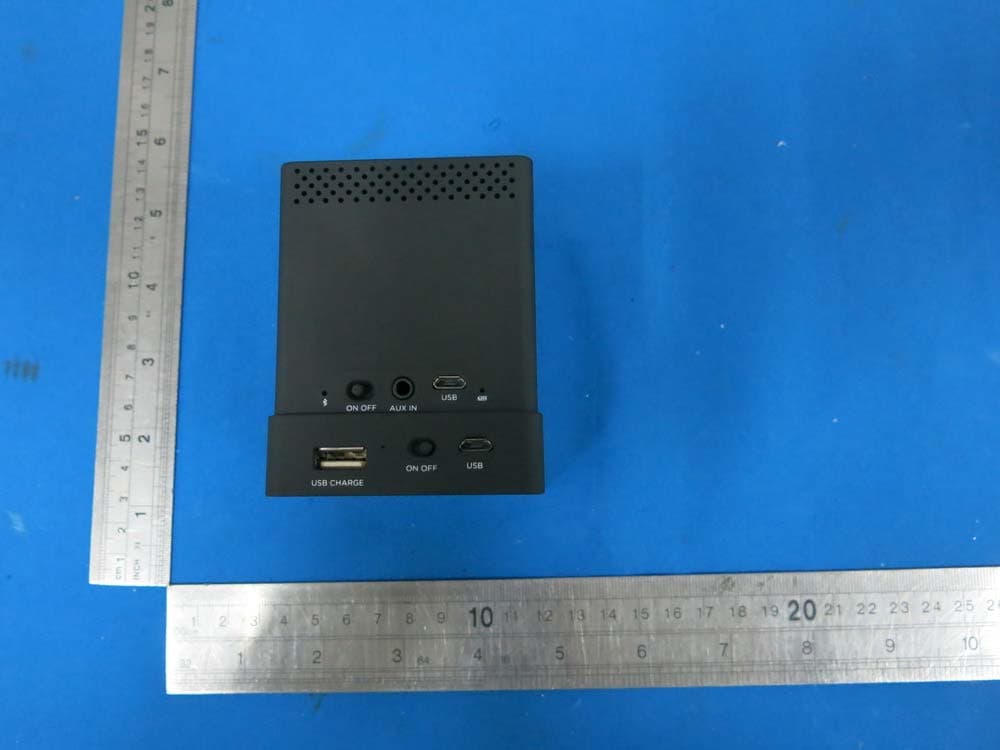
PXK-HL2750
Oct 31, 2015Speaker Mojo II
Equipment Class
DSS - Part 15 Spread Spectrum Transmitter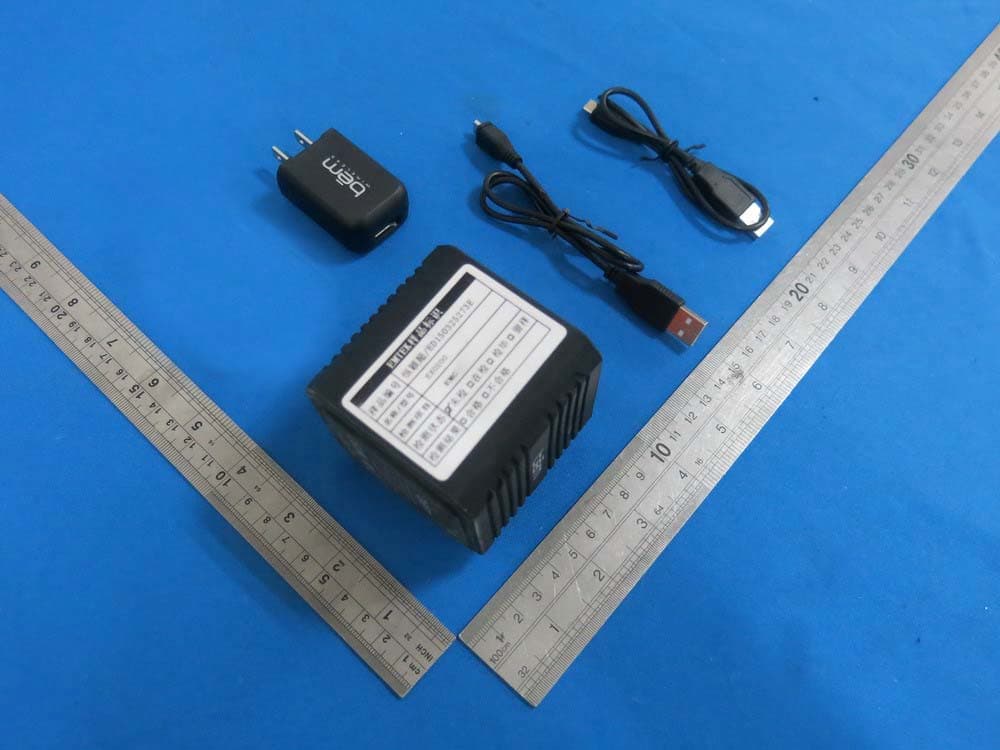
PXK-EXO200
Jul 01, 2015EXO-200
Equipment Class
DTS - Digital Transmission System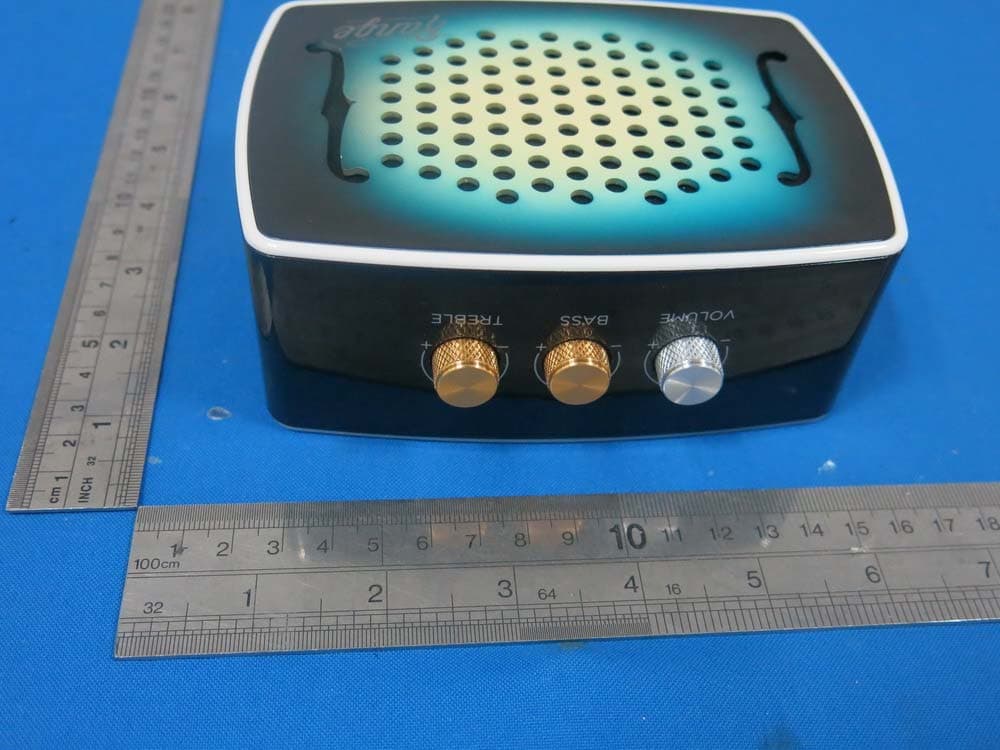
PXK-HL2515
Dec 22, 2014Strum
Equipment Class
DTS - Digital Transmission System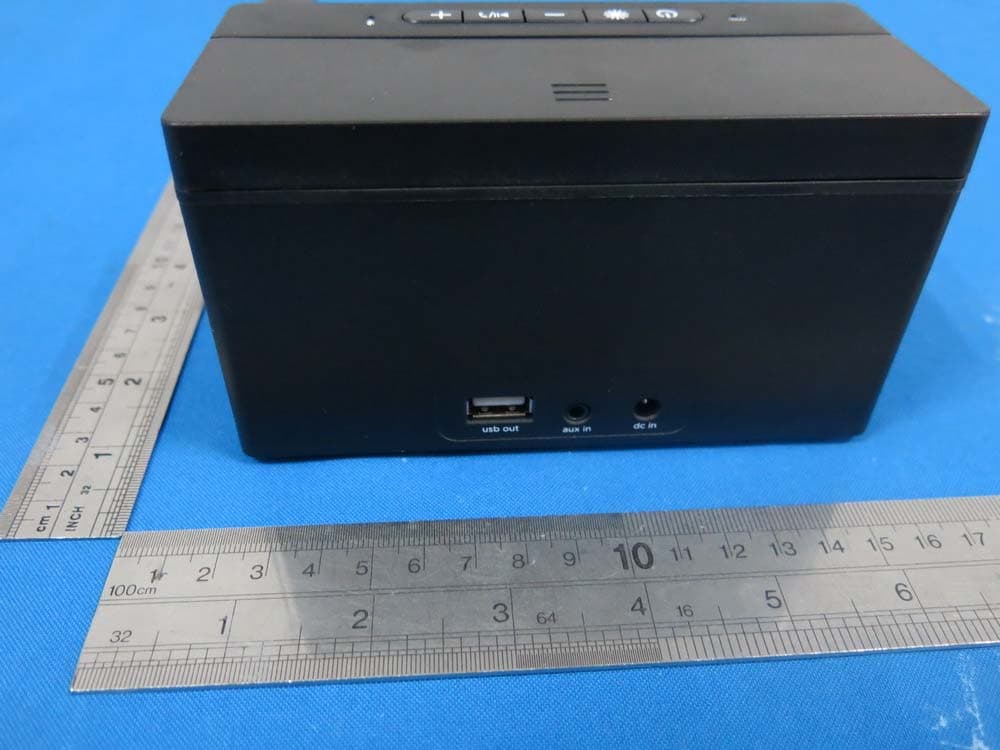
PXK-HL2507
Dec 22, 2014Express Speaker
Equipment Class
DTS - Digital Transmission System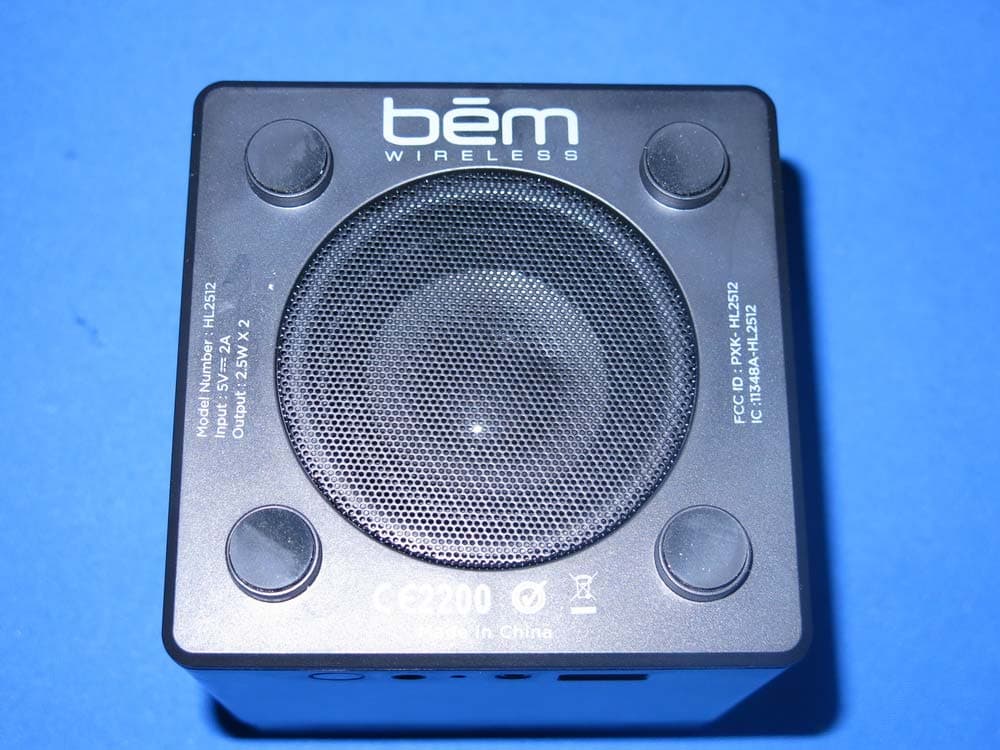
PXK-HL2512
Dec 22, 2014Eclipse
Equipment Class
DSS - Part 15 Spread Spectrum Transmitter