QGZ-B1000Vocera B1000 Badge
Vocera Communications
Click to zoom
Application Details
- Equipment Class
- DTS - Digital Transmission System
- Date of Grant
- Nov 18, 2002
- Application Purpose
- Original Equipment
- Date of Application
- Nov 18, 2002
- Equipment Note
- Vocera B1000 Badge
- Frequency Range
- 2412.00000000 - 2462.00000000
- Company
- Vocera Communications
- Country
- United States
Documents & Files
Document Text
Text extracted from the exhibit documents filed with the FCC. Open a document above to read the original.
Users Manual
Vocera User’s Guide ii ··· Copyrights and Trademarks ©2002 Vocera Communications, Inc. All rights reserved. Vocera Communications is a trademark of Vocera Communications, Inc. All other trademarks, service marks, registered trademarks, or registered service marks are the property of their respective owners. Vocera Communications, Inc. 20230 Stevens Creek Blvd. Cupertino, CA 95014 tel :: +1 408 790 4100 fax :: +1 408 790 4101 www.vocera.com Part No.: TBD Important Safety Instructions ··· iii Important Safety Instructions Badge and Battery Charger Safety When using a Vocera badge or battery charger, always follow basic safety pre- cautions to reduce the risk of fire, electric shock, and injury, including the fol- lowing: 1.Read, understand, and follow all warnings and instructions in the product documentation and on the product itself. 2.Only use the battery charger indoors. 3.Unplug the charger from the wall outlet before cleaning. To clean the badge, battery, or charger, wipe with a damp cloth. Do not use liquid clean- ers or aerosol cleaners. 4.Do not position the badge battery, or battery charger near water; for exam- ple, near a sink, wash bowl, or toilet. Do not spill liquid of any kind on the product. Doing so may short out parts, causing damage to the product and creating the risk of fire or electric shock. 5.Do not place the charger on an unstable surface, as a fall may cause serious damage to the charger. 6.Never place the badge or charger near or over a radiator or heat register. Do not operate the charger in a cabinet or other enclosure unless proper ventilation is provided. 7.Operate the charger only from the type of power source indicated on its label. Use only with the power adaptor that comes with the charger, or with a Vocera-approved replacement. 8.Only use the Vocera badge with a Vocera battery. 9.Do not allow anything to rest on the charger’s power cord. Do not locate the charger where the cord may be damaged, or where the cord may cause someone to trip. Keep the power cord away from operating machinery. 10.Do not overload outlets or extension cords, as this may cause a fire or elec- trical shock. 11.Do not put anything other than a Vocera badge or Vocera battery into a charger slot, as other objects may touch dangerous voltage points or short out parts, which could result in fire or electric shock. 12.To reduce the risk of electric shock, do not disassemble any part of the product. Take the badge or charger to qualified service personnel when ser- vice or repair work is required. Opening or removing covers may expose you to dangerous voltages or other risks. Incorrect reassembly can cause electric shock when you use the product again. 13.Take the badge or charger to a qualified service provider: • If the power cord or plug on the charger is damaged or frayed. • If liquid has been spilled into the badge or charger, or if the badge or charger has been exposed to rain or water. iv ··· Important Safety Instructions • If the badge or charger does not operate normally after you follow the operating instructions. • If the badge or charger has been dropped or damaged. • If the badge or charger exhibits a distinct degradation in performance. Battery Safety 1.Use only the batteries supplied with the product, or Vocera-approved replacements. 2.Do not use the battery to power any device other than a Vocera badge. 3.Charge the battery only in a Vocera charger, and according to the instruc- tions in “Charging the Battery” on page 41. These instructions are also included with the charger. 4.Do not charge the battery in a place where static electricity is generated, or let the battery touch something that is statically charged. 5.The battery can be stored at temperatures between -20° C and 40° C, and can be charged within a 0° C to 45° C. Do not use the battery when tem- peratures exceed 60° C or fall below -20° C. 6.Do not put battery into a microwave oven, conventional oven, dryer, or high pressure container, or dispose of the battery in a fire. Under these con- ditions, the cell may explode. 7.Do not open, puncture, or subject the battery to strong physical shock. 8.Stop using the battery if it exhibits abnormal heat, odor, color, deformation, or is in an abnormal condition. 9.If leakage or foul odor is detected, it is especially important to keep the bat- tery away from fire. If liquid leaks onto your skin or clothes, wash well with fresh water immediately. 10.If liquid leaking from the battery gets into your eyes, do not rub your eyes. Rinse the eyes well, and consult a doctor immediately. 11.Handle batteries with care to avoid shorting the battery with conducting materials such rings, bracelets, and keys. The battery may overheat, causing burns. 12.After the battery has reached the end of its useful life, we recommend recy- cling the materials at a recycling center in your community. If you choose to dispose of the batteries, consult the regulations that are in force in your locale. 13.When recycling or discarding the battery, make it non-conductive by apply- ing vinyl tape to the terminals located on the side edges of the battery. Table of Contents ··· v Table of Contents Important Safety Instructions . . . . . . . . . . . . . . . . . . . . . . iii Badge and Battery Charger Safety . . . . . . . . . . . . . . . . . . iii Battery Safety . . . . . . . . . . . . . . . . . . . . . . . . . . . . . . . . . . iv Welcome to Vocera . . . . . . . . . . . . . . . . . . . . . . . . . . . . . . . . 1 Getting Started . . . . . . . . . . . . . . . . . . . . . . . . . . . . . . . . . . . 3 Badge Features . . . . . . . . . . . . . . . . . . . . . . . . . . . . . . . . . 6 Badge Display and Button Operation . . . . . . . . . . . . . . . . 7 Badge Indicators and Warnings . . . . . . . . . . . . . . . . . . . 11 Adjusting the Volume . . . . . . . . . . . . . . . . . . . . . . . . . . . 13 Using Hold and Do Not Disturb . . . . . . . . . . . . . . . . . . . . 13 Cleaning the Badge . . . . . . . . . .…
Text truncated - open the document above for the full version.
Users Manual
To: Federal Communications Commission From: Vocera Communications Regarding: User manual FCC and SAR statement FCC ID: QGZ-B1000 Date: 21 November 2002 Vocera has elected to revise the FCC and SAR statement that will appear in the users manual for the Vocera Communications badge. The statement was revised in order to add clarification regarding proper use of the body-worn accessories. Unless directed otherwise by the FCC, the statements on the following pages will appear in all user manuals shipped with the products from this date forward. Best Regards, David Waitt Regulatory consultant on behalf of Vocera Communications Regulatory Compliance: FCC Part 15.247 FCC Part 15, Class B Device FCC Compliance This device complies with part 15 of the FCC Rules. Operation is subject to the following two conditions: (1) This device may not cause harmful interference, and (2) this device must accept any interference received, including interference that may cause unwanted operation This equipment has been tested and found to comply with the limits for a Class B digital device, pursuant to Part 15 of the FCC rules. These limits are designed to provide reasonable protection against harmful interference in a residential installation. This equipment generates, uses and can radiate radio frequency energy and, if not installed and used in accordance with the instructions, may cause harmful interference to radio communications. However, there is no guarantee that interference will not occur in a particular installation. If this equipment does cause harmful interference to radio or television reception, which can be determined by turning the equipment off and on, the user is encouraged to try to correct the interference by one or more of the following safety measures. • Reorient or relocate the receiving antenna. • Increase the separation between the equipment and the receiver. • Consult the dealer or an experienced radio/modem technician for help. THIS BADGE MEETS THE FCC REQUIREMENTS FOR EXPOSURE TO RADIO FREQUENCY ENERGY (SAR). Your wireless badge is a radio transmitter and receiver. It is designed and manufactured not to exceed the emission limits for exposure to radio frequency (RF) energy set by the Federal Communications Commission of the U.S. Government. These limits are part of the comprehensive guidelines and establish permitted levels of RF energy for the general population. The guidelines are based on standards that were developed by independent scientific organizations through periodic and thorough evaluation of scientific studies. The standards include a substantial safety margin designed to assure the safety of all persons, regardless of age and health. The exposure standard for wireless communications devices employs a unit of measurement known as the Specific Absorption Rate, or SAR. The SAR limit set by the FCC is 1.6W/kg. Tests for SAR are conducted using standard operating positions, as applicable to this device, specified by the FCC. The standard incorporates a substantial margin of safety to give additional protection for the public and to account for any variations of measurement. Before a badge is available for sale to the public, it must be tested and certified by the FCC that it does not exceed the limit established by the government-adopted requirement for safe exposure. USE ONLY APPROVED ACCESORIES To ensure compliance with FCC RF exposure guidelines when wearing the Vocera badge, always use a Vocera Communications approved lanyard, pocket clip, universal clip, or holster. Use of accessories that have not been tested for RF exposure compliance with this product may not comply with the FCC RF exposure safety guidelines and should not be used. To ensure RF exposure compliance of the badge when using the lanyard, position and maintain the call button, the speaker and antenna facing away from the body, as illustrated in the Getting Started section of the User Guide. The badge and lanyard attachment have been designed specifically to maintain proper orientation during normal usage. Additionally, the lanyard clip can be secured to clothing to provide additional stability. Wearing the Vocera Communications badge with the antenna facing the body may not comply with FCC RF exposure guidelines and should be avoided. RF exposure (SAR) tests have been performed on the Vocera Communications badge when worn correctly and used with the approved accessories. The SAR test results show compliance of the badge with the FCC exposure requirements. When operated with the appropriate accessories as instructed in this manual the level of RF exposure is well below the FCC limit of 1.6W/Kg. See http://www.fcc.gov/oet/rfsafety/ for more information on RF exposure safety.
Users Manual
Vocera User Guide ii ··· Copyrights and Trademarks © 2002 Vocera Communications, Inc. All rights reserved. Vocera Communications is a trademark of Vocera Communications, Inc. All other trademarks, service marks, registered trademarks, or registered service marks are the property of their respective owners. Vocera Communications, Inc. www.vocera.com tel :: +1 408 790 4100 fax :: +1 408 790 4101 Part No. :: 930-00529 rev B, 11.21.02 Important Safety Instructions ··· iii Important Safety Instructions The Vocera badge (including its battery component) and the Vocera battery charger are electronic devices. Care appropriate to the use of any electronic device should be taken in using the badge and the battery charger in order to avoid possible injury (such as from shock) and damage (such as from fire). In addition, the Vocera badge is a wireless communication device and works by generating radio frequency (RF) signals. These sig- nals, although generally lower in strength than a typical cell phone, can interfere with other electronic devices that are not appropriately shielded against RF. If the Vocera badge will be used in proximity to sensitive electronic devices for which inter- ference could result in serious consequences (for example, a heart pacemaker), you must consult with the manufacturer of that device in order to determine the operating safety of the Vocera badge. In order to foster comfortable use of the badge and avoid damage to hearing, do not bring the speaker within close proximity of the ear while the badge is powered on. References below to the “badge” refer to the Vocera badge, including its battery component. References to the “product” refer to the badge and the Vocera battery charger. In addition to other basic safety precautions appropriate to the use of electronic, wireless devices, please follow the safety and use instructions below. Badge and Battery Charger Safety 1.Read, understand, and follow all warnings and instructions in the product documentation and on the product itself. 2.To reduce the risk of electric shock, do not disassemble any part of the product. Take the badge or charger to qualified service person- nel when service or repair work is required. Opening or removing covers may expose you to dangerous voltages or other risks. Incor- rect reassembly can cause electric shock when you use the product again. iv ··· Vocera User Guide 3.Do not put anything other than a Vocera badge or Vocera battery into a charger slot, as other objects may touch dangerous voltage points or short out parts, which could result in fire or electric shock. 4.Do not place the product on an unstable surface, as a fall may cause serious damage to the product. 5.Never place the badge or charger near or over a radiator or heat register. Do not operate the charger in a cabinet or other enclosure unless proper ventilation is provided. 6.Do not position the badge or battery charger near water; for exam- ple, near a sink, wash bowl, or toilet. Do not spill liquid of any kind on the product. Doing so may short out parts, causing damage to the product and creating the risk of fire or electric shock. 7.Take the badge or charger to a qualified service provider in these circumstances: • If liquid has been spilled into the badge or charger, or if rain or water have touched the badge or charger. • If the badge or charger does not operate normally after you fol- low the operating instructions. • If the badge or charger has been dropped or damaged. • If the badge or charger exhibits a distinct degradation in perfor- mance. • If the power cord or plug on the charger is damaged or frayed. 8.Unplug the charger from the wall outlet before cleaning. To clean the badge or charger, wipe with a damp cloth. Do not use liquid cleaners or aerosol cleaners. 9.Use the battery charger indoors only. 10.Do not allow anything to rest on the charger's power cord. Do not locate the charger where the cord may be damaged or where the cord may cause someone to trip. Keep the power cord away from operating machinery. 11.Do not overload outlets or extension cords, because this may cause a fire or electrical shock. Important Safety Instructions ··· v 12.Operate the charger only with the following power adapters: • For the single-bay charger, use the power adapter model OH-41033DT, manufactured by Oriental Hero, or a Vocera- approved replacement. • For the eight-bay charger, use power adapter model MWS1248UC, manufactured by Minwa Canada, Inc., or a Vocera-approved replacement. Actionnez le chargeur seulement avec les adapteurs suivants de puissance: • Pour le chargeur de simple-compartiment, employez le modèle Oh-41033DT d'adapteur de puissance, construit par Oriental Hero, ou un remplacement Vocera-approuvé. • Pour le chargeur de huit-compartiment, employez le modèle MWS1248UC d'adapteur de puissance, construit par Minwa Canada, Inc., ou un remplacement Vocera-approuvé. Additional Instructions Related to Battery Safety 1.Use only the batteries supplied with the product or Vocera- approved replacements. 2.Do not use the battery to power any device other than a Vocera badge. 3.Charge the battery only in a Vocera charger and according to the instructions in Charging the Battery on page 31. These instructions are also included with the charger. 4.Do not charge the battery in a place where static electricity is gener- ated nor let the battery touch something that is statically charged. 5.The battery can be stored at temperatures between –4° F and 104° F (between –20° C and 40° C), and can be charged or operated at temperatures between 32° F and 104° F (between 0° C and 40° C). 6.Do not put the battery into a microwave oven, conventional oven, dryer, or high-pressure container, nor dispose of the battery in a fire. Under these conditions, the battery may explode. 7.Do not open or puncture the battery nor subject the battery to strong physical shock. vi ··· Vocera User Guide 8.Stop using the battery if it exhibits abnormal heat, …
Text truncated - open the document above for the full version.
Users Manual
To: FCC Equipment Authorization Branch From: Vocera Communications Re: Part 15.21 manual statement. FCC ID QGZ-B1000 Date: 15 Jan 2003 It was recently brought to Vocera’s attention that the FCC Part 15.21 “Non modification” manual statement was inadvertently omitted from the most recent draft of the user manual. The statement below will be inserted back into the user manual in the Regulatory notices section of the manual beginning on manual page 49 (PDF page 59 ) On behalf of Vocera Communications, David Waitt Independent Consultant NON MODIFICATION STATEMENT Use only the supplied internal antenna. Unauthorized antennas, modifications, or attachments could damage the badge and could violate FCC regulations and void the user’s authority to operate the equipment. 20600 Lazaneo Drive 3rd Floor Cupertino, CA 95014
Cover Letter(s)
To: Tim Harrington, FCC Equipment Authorization Branch From: Vocera Communications Re: Above referenced FCC request for additional information. Date: 5 Jan 2003 Replies to your recent inquiries are below. If I can be of any further assistance, or if additional clarification is required, please let me know. On behalf of Vocera Communications, David Waitt Independent Consultant FCC: Please list conducted power on Form 731 line item. EIRP may remain in grant notes. Vocera: Several units were measured for conducted power on the low, mid and high channel using a Agilent power meter (Model E4418B and a E9301A power detector, calibration due on 5 May 03) in order to obtain a statistically valid sample. The typical conducted power measured was 17 dBm +/- .25 dB across all channels, the maximum measured conducted power was 18.5 dBm. Based on these measurements, the maximum transmit power is 18.5 dBm. FCC: Filing has 2 users manual exhibits. Nov19 posting has SAR level from previous application under this FCC ID. Please submit complete final manual if available with correct SAR value if appropriate. Vocera: The final version of the users manual has been uploaded to the TCB site. FCC: Please confirm whether or not device could normally be used in a held to ear position. Vocera: The device is intended to be worn as shown in the users manual, (on a lanyard, clipped to a shirt packet, etc.) The typical audio level is set appropriately to provide adequate audio level when used at these distances from the ear. The audio level is such that a typical user would not, under normal operation, comfortably use the device held to the ear. Given this audio level, it is not appropriate, and may be uncomfortable for the user, to hold the device to the ear during normal operation. The user is cautioned against using the device in this manner in the user manual. Additionally, under normal operation, the device would not need to be held to the ear. Much engineering effort has been put into optimizing the audio performance of the speaker and the microphone when the device is worn as prescribed in the user manual. Given the quality of the audio, it would not be necessary, under normal operation, to hold the device to the ear. If the user wishes to have privacy when using the product, a headset is available. The user manual informs the user that the headset should be used privacy is desired. 20600 Lazaneo Drive 3rd Floor Cupertino, CA 95014 Correspondence reference information -----Original Message----- From: [email protected] [mailto:[email protected]] Sent: Thursday, December 19, 2002 4:07 PM To: [email protected] Subject: audit To: William Graff From: Tim Harrington [email protected] FCC Equipment Authorization Branch Re: FCC ID: QGZ-B1000 Applicant: Vocera Communications Correspondence Reference Number: 6242 731 Confirmation Number: Date of Original Email: 12/19/2002
External Photos
TOP SIDE OF EUT BOTTOM SIDE OF EUT
ID Label/Location Info
vocera TM COMMUNICATIONS Model: FCC ID: QGZ-B1000 CANADA: 4362A-B1000 Vocera Badge Locations for FCC and CSA logos after approval. Locations for product barcode. Not actual barcode number shown. C US ® 12345YMXXX vocera TM COMMUNICATIONS Model: FCC ID: QGZ-B1000 CANADA: 4362A-B1000 Composite Badge Label: printed on light silver metallic polyester label stock, shown here as PMS 877C. Label Die Line showing cutouts for heatstake pins and battery connector.. Vocera Badge 12345YMXXX FCC ID LOCATION
Internal Photos
BOTTOM SIDES FOR BOTH BOARDS TOP SIDE OF BOTH BOARDS
RF Exposure Info
Test Report S/N: 111302-313QGZ Test Date(s): November 15, 2002 FCC SAR Evaluation © 2002 Celltech Research Inc. 1 of 21 Celltech Research Inc. declares under its sole responsibility that this device was found to be in compliance with the Specific Absorption Rate (SAR) RF exposure requirements specified in FCC 47 CFR §2.1093. The device was tested in accordance with the measurement standards and procedures specified in FCC OET Bulletin 65, Supplement C, Edition 01-01 (General Population / Uncontrolled Exposure). I attest to the accuracy of data. All measurements were performed by me or were made under my supervision and are correct to the best of my knowledge and belief. I assume full responsibility for the completeness of these measurements and vouch for the qualifications of all persons taking them. This test report shall not be reproduced partially, or in full, without the prior written approval of Celltech Research Inc. The results and statements contained in this report pertain only to the device(s) evaluated. Russell Pipe Senior Compliance Technologist Celltech Research Inc. DECLARATION OF COMPLIANCE SAR EVALUATION Test Lab CELLTECH RESEARCH INC. Testing and Engineering Lab 1955 Moss Court Kelowna, B.C. Canada V1Y 9L3 Phone: 250-448-7047 Fax: 250-448-7046 e-mail: [email protected] web site: www.celltechlabs.com Applicant Information VOCERA COMMUNICATIONS 20230 Stevens Creek Blvd., Suite C Cupertino, CA 95014 FCC Rule Part(s): 47 CFR §2.1093 FCC Test Procedure(s): OET Bulletin 65, Supplement C (01-01) Device Classification: Part 15 Spread Spectrum Transmitter (DSS) EUT Type: Body-Worn Wireless Communications Device Modulation: Direct Sequence Spread Spectrum (DSSS) FCC ID: QGZ-B1000 Model No.: B-1000 Product Name: Vocera Communications Badge Tx Frequency Range: 2412 - 2462 MHz Max. Output Power Tested: 16.2 dBm EIRP (2437 MHz) Antenna Type: Internal Battery Type(s): 3.7V Lithium-Ion, 660 mAh (Model: 00533-02091753) 3.7V Lithium-Ion, 900 mAh (Model: 00296-02070021) Body-Worn Accessories: Lanyard, Pocket Clip, Universal Clip, Belt-Clip & Holster, Headset Max. SAR Measured: 0.0336 W/kg Test Report S/N: 111302-313QGZ Test Date(s): November 15, 2002 FCC SAR Evaluation © 2002 Celltech Research Inc. 2 of 21 TABLE OF CONTENTS 1.0 INTRODUCTION..................................................................... 3 2.0 DESCRIPTION OF EUT............................................................ 3 3.0 SAR MEASUREMENT SYSTEM ............................................... 4 4.0 MEASUREMENT SUMMARY..................................................... 5 5.0 DETAILS OF SAR EVALUATION............................................... 6 6.0 EVALUATION PROCEDURES................................................... 7 7.0 SYSTEM PERFORMANCE CHECK............................................ 8 8.0 EQUIVALENT TISSUES........................................................... 9 9.0 SAR LIMITS........................................................................... 9 10.0 SYSTEM SPECIFICATIONS...................................................... 10 11.0 PROBE SPECIFICATION......................................................... 11 12.0 SAM PHANTOM...................................................................... 11 13.0 DEVICE HOLDER.................................................................... 11 14.0 TEST EQUIPMENT LIST........................................................... 12 15.0 MEASUREMENT UNCERTAINTIES............................................ 13 16.0 REFERENCES....................................................................... 14 APPENDIX A - SAR MEASUREMENT DATA............................................ 15 APPENDIX B - SYSTEM CHECK DATA.................................................... 16 APPENDIX C - SYSTEM VALIDATION..................................................... 17 APPENDIX D - PROBE CALIBRATION.................................................... 18 APPENDIX E - MEASURED FLUID DIELECTRIC PARAMETERS................ 19 APPENDIX F - SAM PHANTOM CERTIFICATE OF CONFORMITY.............. 20 APPENDIX G - SAR TEST SETUP & EUT PHOTOGRAPHS........................ 21 Test Report S/N: 111302-313QGZ Test Date(s): November 15, 2002 FCC SAR Evaluation © 2002 Celltech Research Inc. Vocera Communications FCC ID: QGZ-B1000 (Model: B-1000) 3 of 21 Body-Worn Wireless Communications Badge (2412-2462MHz) 1.0 INTRODUCTION This measurement report demonstrates that the Vocera Communications Badge Model: B-1000 FCC ID: QGZ- B1000 complies with the RF exposure requirements specified in FCC 47 CFR §2.1093 (see reference [1]) for the General Population / Uncontrolled Exposure environment. The test procedures described in FCC OET Bulletin 65, Supplement C, Edition 01-01 (see reference [2]) were employed. A description of the product, operating configuration, detailed summary of the test results, methodology and procedures used in the evaluation, equipment used, and the various provisions of the rules are included within this test report. 2.0 DESCRIPTION of Equipment Under Test (EUT) FCC Rule Part(s) 47 CFR §2.1093 Test Procedure(s) FCC OET Bulletin 65, Supplement C (01-01) FCC Device Classification Part 15 Spread Spectrum Transmitter (DSS) Device Type Body-Worn Wireless Communications Device FCC ID QGZ-B1000 Model(s) B-1000 Product Name Vocera Communications Badge Serial No. Pre-production Modulation Direct Sequence Spread Spectrum (DSSS) Tx Frequency Range 2412 - 2462 MHz Max. RF Output Power Measured 16.2 dBm EIRP (2437 MHz) Antenna Type(s) Internal Battery Type(s) 3.7V Lithium-Ion, 660 mAh (Model: 00533-02091753) 3.7V Lithium-Ion, 900 mAh (Model: 00296-02070021) Body-Worn Accessories Tested 1. Lanyard 2. Pocket Clip 3. Universal Clip 4. Belt-Clip & Holster 5. Headset (Plantronics Model: M170) Test Report S/N: 111302-313QGZ Test Date(s): November 15, 2002 FCC SAR Evaluation © 2002 Celltech Research Inc. Vocera Communications FCC ID: QGZ-B1000 (Model: B-1000) 4 of 21 Body-Worn Wireless Commu…
Text truncated - open the document above for the full version.
Test Report
File: R47719 Page 1 of 15 Electromagnetic Emissions Test Report and Application for Grant of Equipment Authorization pursuant to FCC Part 15, Subpart C Specifications for an Intentional Radiator on the Vocera Communications Model: Communications Badge FCC ID: QGZ - B1000 GRANTEE: Vocera Communications 20230 Steven Creek Blvd., Suite C Cupertino, CA 95014 TEST SITE: Elliott Laboratories, Inc. 684 W. Maude Avenue Sunnyvale, CA 94086 REPORT DATE: June 27, 2002 FINAL TEST DATE: June 19, 2002 AUTHORIZED SIGNATORY: _____________________________ Juan Martinez Sr. EMC Engineer This report shall not be reproduced, except in its entirety, without the written approval of Elliott Laboratories, Inc. Elliott Laboratories, Inc. -- EMC Department Test Report Report Date: June 27, 2002 File: R47719 Page 2 of 15 Pages TABLE OF CONTENTS COVER PAGE...................................................................................................................................................................................1 TABLE OF CONTENTS..............................................................................................................................................................2 SCOPE............................................................................................................................................................................................3 OBJECTIVE...................................................................................................................................................................................3 STATEMENT OF COMPLIANCE..............................................................................................................................................3 EMISSION TEST RESULTS.......................................................................................................................................................4 LIMITS OF CONDUCTED INTERFERENCE VOLTAGE.....................................................................................................4 LIMITS OF ANTENNA CONDUCTED EMISSIONS...........................................................................................................4 LIMITS OF RADIATED INTERFERENCE FIELD STRENGTH..........................................................................................4 LIMITS OF POWER, BANDWIDTH, AND POWER SPECTRAL DENSITY...................................................................5 MEASUREMENT UNCERTAINTIES....................................................................................................................................5 EQUIPMENT UNDER TEST (EUT) DETAILS..........................................................................................................................6 GENERAL...................................................................................................................................................…
Text truncated - open the document above for the full version.
Contact Information
Applicant
Mike Morganstern(Head Of Operations)
Technical Contact
Elliott Laboratories Inc.Juan Martinez
[email protected]408-245-7800
684 West Maude Avenue · Sunnyvale, California · United States
Non-Technical Contact
Elliott Laboratories Inc.David Guidotti
[email protected]408-245-7800
Test Firm
Elliott Laboratories LLCDavid Bare
Technical Specifications
| # | Rule Parts | Frequency Range | Power Output |
|---|---|---|---|
| 1 | 15C | 2.41 GHz - 2.46 GHz | 70.80 mW |
Other Applications from Vocera Communications

QGZB3000N
Oct 20, 2014B3000N Communication Badge
Equipment Class
DTS - Digital Transmission System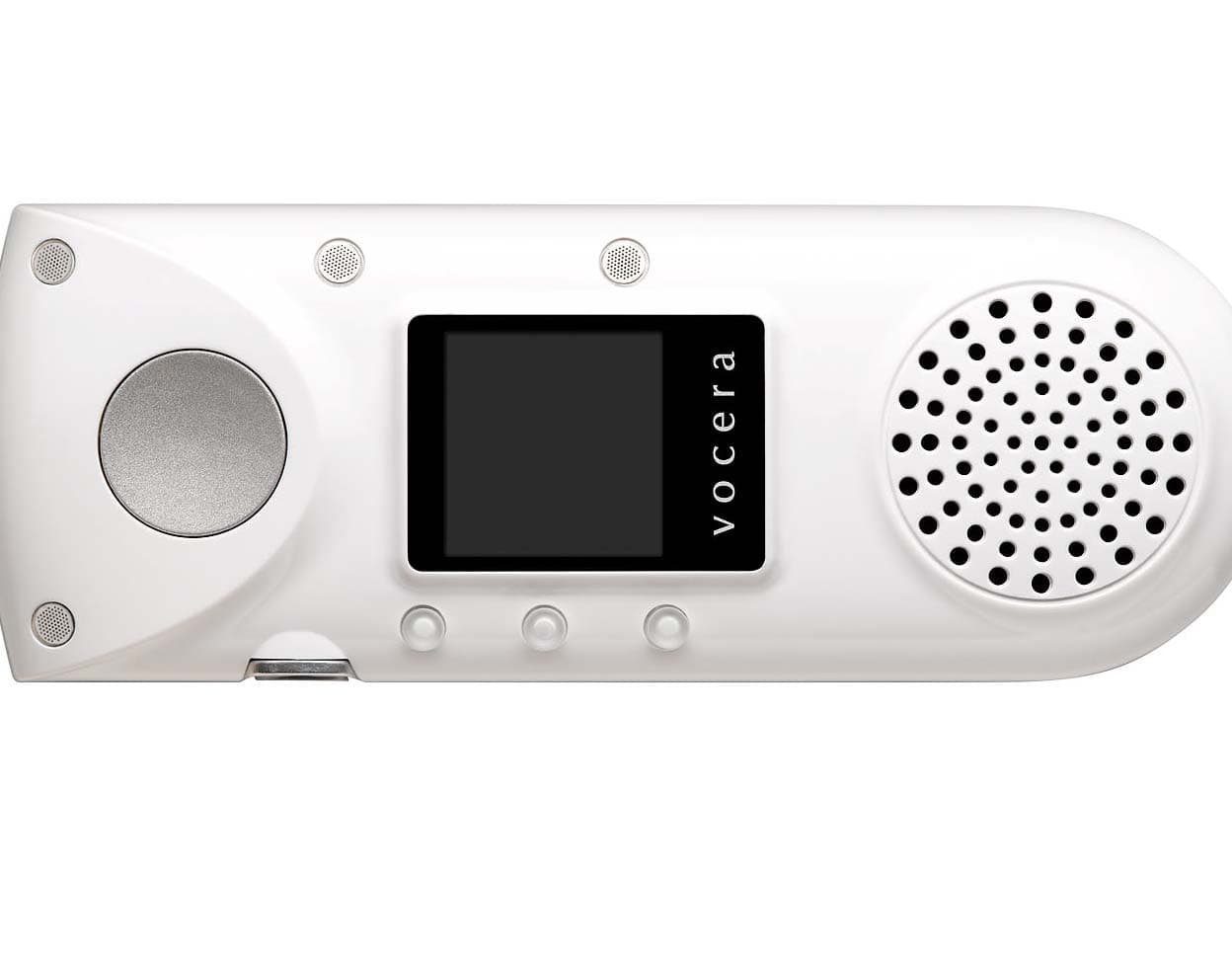
QGZAB3000
Nov 08, 2012Hands-free VOIP Communication Device
Equipment Class
DTS - Digital Transmission System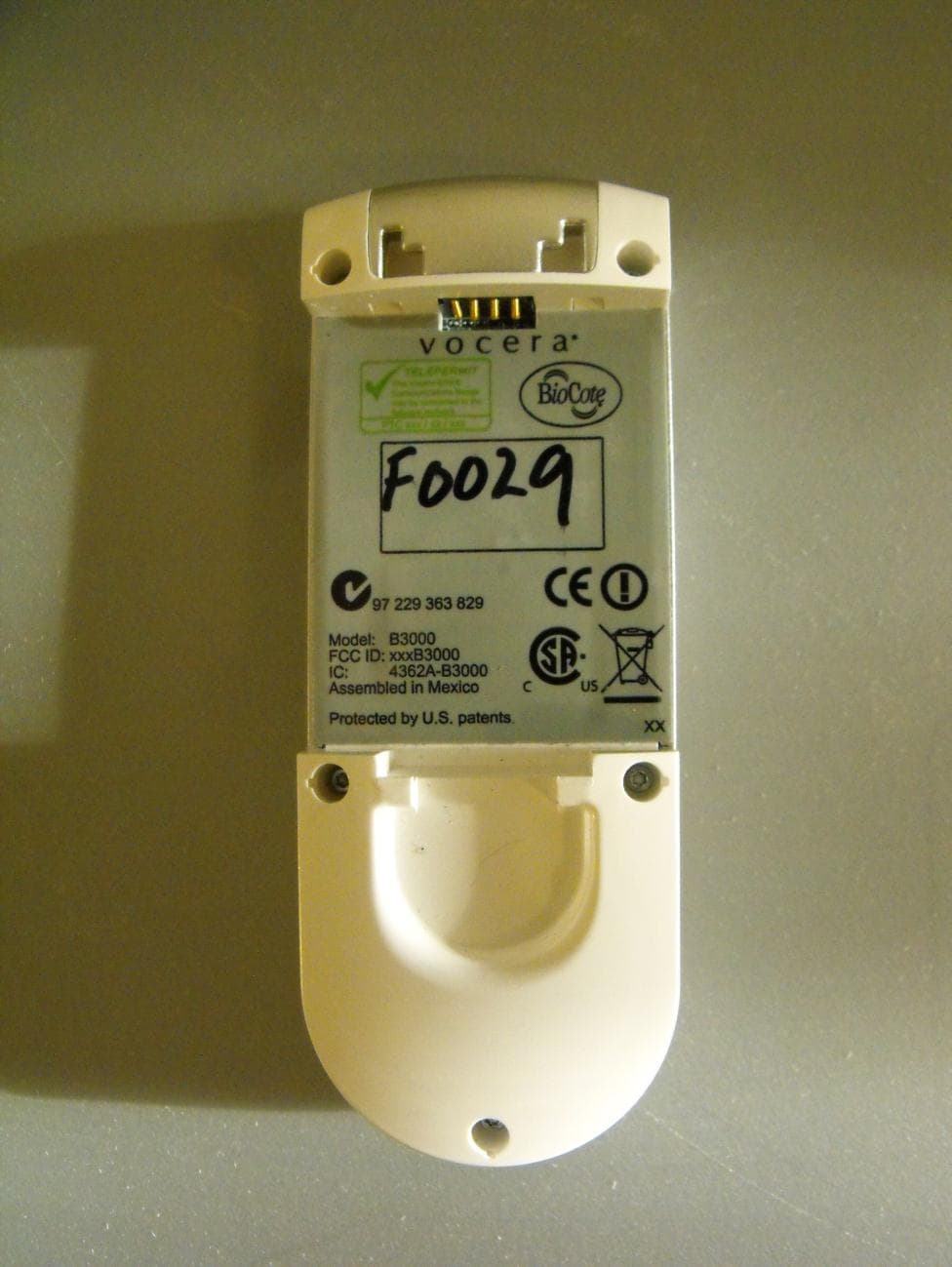
QGZB3000
Sep 29, 2011The Vocera B3000 is a hands-free VOIP Communication Device using 802.11b/g and bluetooth
Equipment Class
DSS - Part 15 Spread Spectrum Transmitter
QGZB2000
Sep 09, 2007Vocera 802.11 badge
Equipment Class
DTS - Digital Transmission System