QTZAMAP1200AB802.11 Dual Band Access Point
Airespace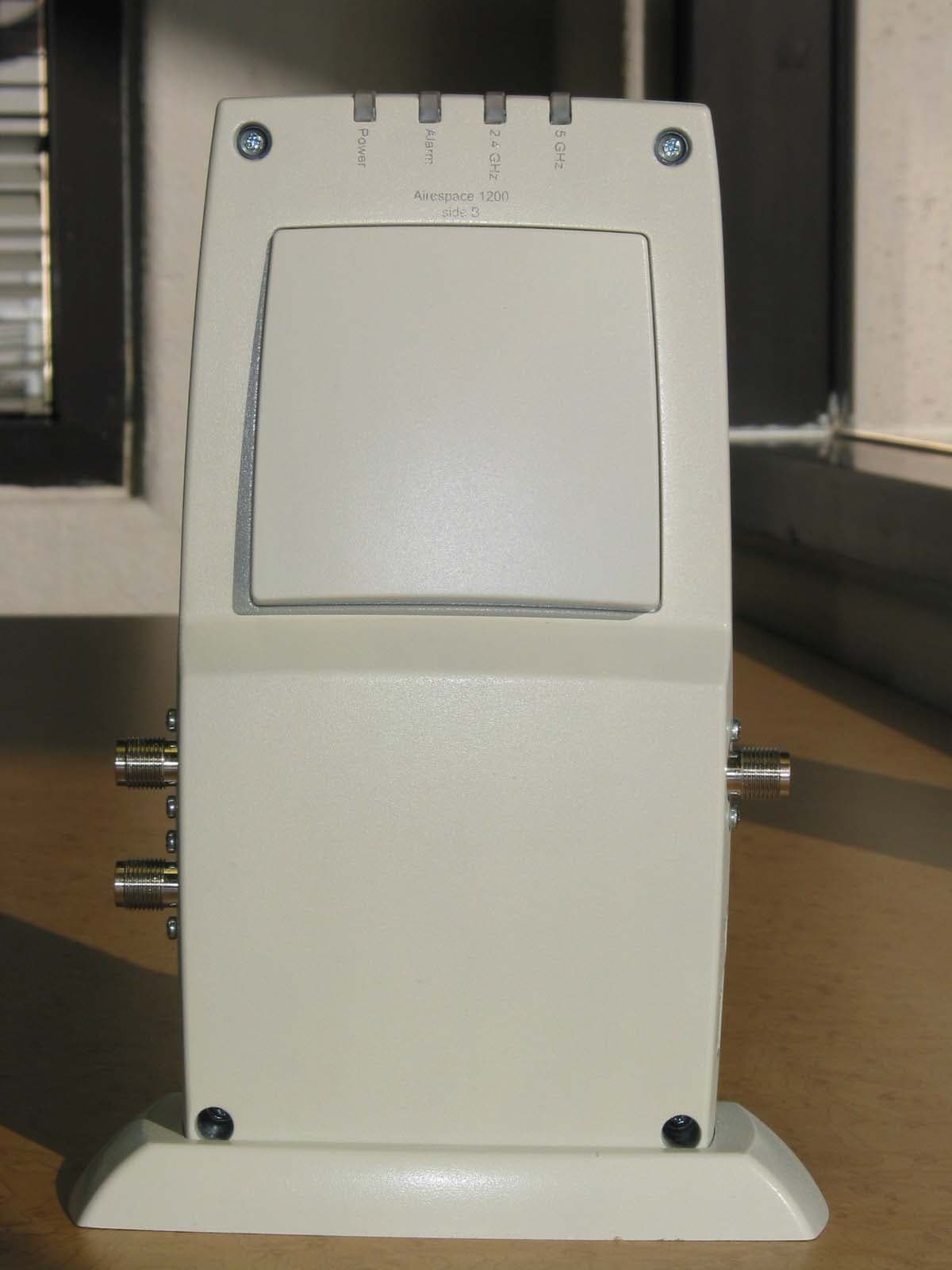
Click to zoom
Application Details
- Equipment Class
- DTS - Digital Transmission System
- Date of Grant
- Nov 04, 2003
- Application Purpose
- Original Equipment
- Date of Application
- Nov 04, 2003
- Equipment Note
- 802.11 Dual Band Access Point
- Frequency Range
- 2412.00000000 - 2462.00000000
- Company
- Airespace
- Country
- United States
Documents & Files
Document Text
Text extracted from the exhibit documents filed with the FCC. Open a document above to read the original.
Users Manual
10/10/03© 2003 Airespace, Inc. All Rights Reserved. 90-100584-004 Welcome to the Airespace Product Guide!Airespace Product Guide Airespace System 1.2: Last Updated October 10, 2003 Refer to the OVERVIEWS section to see a big picture view of Airespace products and features. See the SOLUTIONS section to look through real-world network and application- specific solutions to real-world problems. Go to the TASKS section to find detailed instructions on how to install, configure, use, and troubleshoot Airespace products and supported 802.11 networks. Visit the REFERENCES section to see technical information, such as the Access Point Site Survey Guide, Quick Installation Guides, Web Browser Online Help files, and Release Notes. FCC Statements for Airespace Switches and Appliances FCC Statements for Airespace APs Legal Information Airespace Technical Support Airespace System Release Notes 10/10/03Legal Information 90-100584-004Airespace Product Guideii Legal InformationLegal Information This section includes the following legal information: •Limited Warranty •Software License Agreement •SSH Source Code Statement •OpenSSL Project License Statements •Trademarks and Service Marks 10/10/03Legal Information 90-100584-004Airespace Product Guideiii Limited Product WarrantyLimited Product Warranty The following describes the Airespace, Inc. standard Product Warranty for End Customers. ProductsProducts •Airespace Wireless Switch (40XX) Family •Airespace WLAN Appliance (41XX) Family •Airespace Access Point (1200) Family Limited WarrantyLimited Warranty Airespace warrants that: •For a period of one (1) year from the date of installation of the Product at the End Customer’s site but not to exceed twenty-four (24) months after date of shipment by Airespace, the Hardware shall free from defects in materials and workmanship. •For a period of three (3) months from the date of installation of the Product but not to exceed fifteen (15) months after date of shipment by Airespace, the Software shall substantially conform to the applicable specifications in Airespace’s then-current published documentation. The date of shipment by Airespace is set forth on the packaging material in which the Product is shipped. This limited warranty extends only to you the original purchaser of the Product. Exclusive RemedyExclusive Remedy Your sole remedy under the limited warranty described above is, at Airespace’s sole option and expense, the repair or replacement of the non-conforming Product or refund of the purchase price of the non-conforming Products. Airespace’s obligation under this limited warranty is subject to compli- ance with Airespace’s then-current Return Material Authorization (“RMA”) procedures. All replaced Products will become the property of Airespace. Exchange Products not returned to Airespace will be invoiced at full Product list prices. Replacement Products may be new, reconditioned or contain refur- bished materials. In connection with any warranty services hereunder, Airespace may in its sole discretion modify the Product at no cost to you to improve its reliability or performance. Warranty Claim ProceduresWarranty Claim Procedures Should a Product fail to conform to the limited warranty during the applicable warranty period as described above, Airespace must be notified during the applicable warranty period in order to have any obligation under the limited warranty. The End Customer or their designated reseller must obtain a Return Material Authorization number (RMA number) from Airespace for the non-conforming Product and the non-conforming Product must be returned to Airespace according to the then-current RMA procedures. The End Customer or their designated reseller is responsible to ensure that the shipments are insured, with the transportation charges prepaid and that the RMA number is clearly marked on the outside of the package. Airespace will not accept collect shipments or those returned without an RMA number clearly visible on the outside of the package. Exclusions and RestrictionsExclusions and Restrictions Airespace shall not be responsible for any software, firmware, information or memory data contained in, stored on or integrated with any Product returned to Airespace pursuant to any warranty or repair. Upon return of repaired or replaced Products by Airespace, the warranty with respect to such Products will continue for the remaining unexpired warranty or sixty (60) days, whichever is longer. Airespace may provide out-of-warranty repair for the Products at its then-prevailing repair rates. 10/10/03Legal Information 90-100584-004Airespace Product Guideiv The limited warranty for the Product does not apply if, in the judgment of Airespace, the Product fails due to damage from shipment, handling, storage, accident, abuse or misuse, or it has been used or maintained in a manner not conforming to Product manual instructions, has been modified in any way, or has had any Serial Number removed or defaced. Repair by anyone other than Airespace or an approved agent will void this warranty. EXCEPT FOR ANY EXPRESS LIMITED WARRANTIES FROM AIRESPACE SET FORTH ABOVE, THE PRODUCT IS PROVIDED “AS IS”, AND AIRESPACE AND ITS SUPPLIERS MAKE NO WARRANTY, EXPRESS, IMPLIED, STATUTORY OR OTHERWISE, WITH RESPECT TO PRODUCT OR ANY PART THEREOF, INCLUDING WITHOUT LIMITATION ANY IMPLIED WARRANTY OF TITLE, MERCHANTABILITY, FITNESS FOR A PARTICULAR PURPOSE, NON-INFRINGEMENT, OR THOSE ARISING FROM COURSE OF PERFORMANCE, DEALING, USAGE OR TRADE. AIRESPACE’S SUPPLIERS MAKE NO DIRECT WARRANTY OF ANY KIND TO END CUSTOMER FOR THE LICENSED MATERIALS. NEITHER AIRESPACE NOR ANY OF ITS SUPPLIERS WARRANT THAT THE LICENSED MATERIALS OR ANY PART THEREOF WILL MEET END CUSTOMER'S REQUIREMENTS OR BE UNINTERRUPTED, OR ERROR-FREE, OR THAT ANY ERRORS IN THE PRODUCT WILL BE CORRECTED. SOME STATES/JURISDICTIONS DO NOT ALLOW THE EXCLUSION OF IMPLIED WARRANTIES SO THE ABOVE EXCLUSIONS MAY NOT APPLY TO END CUSTOMER. THIS LIMITED WARRANTY GIVES…
Text truncated - open the document above for the full version.
Cover Letter(s)
To: Federal Communications Commission 7435 Oakland Mills Road Columbia, Maryland 21046 Subject: Authorization of David Waitt to act on our behalf and as our agent for preparation of FCC certification applications. Gentlemen, This is a letter of authorization to accept David Waitt, an independent consultant who’s services have been retained by Malibu Networks, Inc. to sign applications before the commission on our behalf, to make representations to you on our behalf and to receive and exchange data between our company and the Commission in connection with the certification of the following product(s): Airespace access point model 1200 FCC ID: QTZAMAP1200AB Under FCC Docket number 20780 and General Docket Number 80-284 pursuant to Part 15 of the FCC Rules and Regulations. If you have any further questions or need additional information, please feel free to contact me at [email protected] <Orig Signature on File> AUG 2003 Bob Friday Airespace, Date Sr. Scientist 110 Nortech Parkway San Jose, CA, 95134
Cover Letter(s)
To: Federal Communications Commission From: Airespace Subject: Justification for Class A classification of the following FCC IDs QTZAMAP1200AB Date: 17 Aug 2003 Gentlemen, The purpose of this letter is to provide justification for classifying the above products as Class A. All of the devices is a IEEE802.11 A/B access point. The Airespace AP1200 series of products (and its associated 24 port Ethernet switch) is intended only for industrial / corporate environments. Marketing of the products will not be targeted at individuals for residential use. The AP1200 will not be available for purchase at consumer oriented retail outlets. If any further information is required, please do not hesitate to contact me at the email address below. David Waitt Consultant representing Airespace [email protected]
Cover Letter(s)
To: Federal Communications Commission 7435 Oakland Mills Road Columbia, Maryland 21046 Subject: Confidentiality Request for Certification Application Gentlemen, On behalf of Airespace I request that the following documents associated with the Part 15 Certification application for FCC ID: QTZAMAP1200AB be withheld from public disclosure per Section 0.459 of the FCC Rules. Any/All circuit schematics. Any/All electrical block diagrams Any/All parts lists This request is made under the provisions of Section 0.457(d) of the FCC rules and Sections 552(b)(4) of the Freedom of information Act. These Sections authorize withholding from public inspection, materials which would be privileged as a matter of law if retained by the person submitting them in addition to materials, which would not customarily be released to the public, by that person. If you have any questions, please do not hesitate to contact me at: [email protected] or (408) 832-7053 Sincerely, David Waitt Consultant representing Airespace 110 Nortech Parkway San Jose, CA, 95134
Cover Letter(s)
To: Mr. Tim Johnson, American TCB From: David Waitt, Airespace Subject: FCC ID QTZWNAP1200AB compliance with FCC Part 15.407 (c),(d),(e),(g) Date: 17 Aug 2003 This letter attests to the compliance of the VAP1200 to the below referenced FCC specifications. If there are any questions or if additional information is required, please contact me at [email protected] On behalf of Airespace, David Waitt 15.407 (c) The device shall automatically discontinue transmission in case of either absence of information to transmit or operational failure. These provisions are not intended to preclude the transmission of control or signalling information or the use of repetitive codes used by certain digital technologies to complete frame or burst intervals. Applicants shall include in their application for equipment authorization a description of how this requirement is met. Data transmission is always initiated by software, which is then pass down through the MAC, through the digital and analog baseband, and finally to the RF chip. Several special packets (ACKs, CTS, PSPoll, etc...) are initiated by the MAC. There are the only ways the digital baseband portion will turn on the RF transmitter, which it then turns off at the end of the packet. Therefore, the transmitter will be on only while one of the aforementioned packets are being transmitted. In addition, the Airespace product incorporates a watchdog timer. If the radio were to “lock up” the timer would reboot the radio where it would come up in the receive mode. 15.407(d) Any U-NII device that operates in the 5.15-5.25 GHz band shall use a transmitting antenna that is an integral part of the device. There are no external antennas currently certified for use with the VAP1200. The VAP1200 is only certified for use with the antennas integral to the unit. In the future, if use of external antennas is authorized by the FCC for use with the VAP1200, the firmware will disable the 5.15 – 5.25GHz band is external antennas are selected. 15.407(e) Within the 5.15-5.25 GHz band, U-NII devices will be restricted to indoor operations to reduce any potential for harmful interference to co-channel MSS operations. The Airespace VAP 1200 is not intended for outdoor use. The manual will be modified to include a statement stating that outdoor use is not allowed. Additionally, the enclosure of the VAP is not weatherproof. 15.407(g) Manufacturers of U-NII devices are responsible for ensuring frequency stability such that an emission is maintained within the band of operation under all conditions of normal operation as specified in the users manual. The transmit frequency of the VAP1200 has been monitored while the device has been temperature cycled over its specified operating temperature range. Concurrently, the supply voltage was varied throughout its specified operating range. In all cases the transmit frequency of the product did not drift out of band.
Cover Letter(s)
American Telecommunications Certification Body Inc. 6731 Whittier Ave, McLean, VA 22101 November 27, 2003 RE: Airespace FCC ID: QTZAMAP1200AB I have a few comments on the above referenced Application. 1) Per our discussion please verify that the internal photographs are correct. If not, please provide updated photographs. 2) The label appears to contain a "120C" vs. "1200". Please correct the labeling exhibit as we discussed. 3) Your response regarding 15.407(g) mentions that the transmit frequency fundamental did not drift out of band. Please confirm that this includes all of the occupied bandwidth within 26 dB of the fundamental, and not just the center frequency. 4) The Parts List appears to list an RF card for a different manufacturer (i.e., not Ambit). Please explain. 5) Please provide a separate exhibit for the test configuration photographs. 6) The users manual appears to list a 802.11 B/G Radio (page 44, 45, etc.), while this device has only been tested as a B Radio. Please explain, provide additional test data as necessary, or correct the users manual. 7) Please note that the FCC no longer desires that the safe distance for mobile devices be calculated in the RF exposure exhibit if the safe distance is < 20 cm, but instead prefers the power density results to be calculated and compared to the power density limit. Please correct the final calculation in the MPE statement. 8) Page 16 of 52 in the UNII report is misleading. There is mention of the peak PSD not exceeding a value, but it appears from the description in the paragraph that they do. Please explain. 9) FYI. From discussions with Bill this week, the FCC is once again having concerns about methods used for measuring peak power, especially for UNII measurements. We will accept the current results based upon past acceptability, but please be aware that methods may be under more scrutiny in the future and should typically follow the published UNII guidelines. 10) FYI. For future applications, please follow the procedures provided in the attached document. This may affect the results of power and 13 dB excursion measurements provided. Timothy R. Johnson Examining Engineer mailto: [email protected] The items indicated above must be submitted before processing can continue on the above referenced application. Failure to provide the requested information may result in application termination. Correspondence should be considered part of the permanent submission and may be viewed from the Internet after a Grant of Equipment Authorization is issued. Please do not respond to this correspondence using the email reply button. In order for your response to be processed expeditiously, you must submit your documents through the AmericanTCB.com website. Also, please note that partial responses increase processing time and should not be submitted. Any questions about the content of this correspondence should be directed to the sender.
Cover Letter(s)
To: Mr. Tim Johnson, American TCB From: David Waitt, Airespace Subject: Inquiries regarding Certification application for FCC ID QTZAMAP1200AB Date: 30 October 2003 Tim, Below are the replies to your inquiries regarding this application. If something is unclear, or if you have additional concerns, please contact me. Best Regards, David Waitt Consultant representing Airespace ATCB 1) Per our discussion please verify that the internal photographs are correct. If not, please provide updated photographs. Airespace) Updated photographs have been provided ATCB 2) The label appears to contain a "120C" vs. "1200" Please correct the labeling exhibit as we discussed. Airespace) The label does say 1200, not 120C. The label exhibit shows an actual photo of the label. There was small mark on the label that made it appear to say 120C. The label exhibit has been corrected. ATCB 3) Your response regarding 15.407(g) mentions that the transmit frequency fundamental did not drift out of band. Please confirm that this includes all of the occupied bandwidth within 26 dB of the fundamental, and not just the center frequency. Airespace) This has been confirmed with the test lab that no part of the spectra drifted out of band ATCB 4) The Parts List appears to list an RF card for a different manufacturer (i.e., not Ambit). Please explain. Airespace) An incorrect parts list was uploaded in error. A correct parts list has been uploaded. ATCB 5) Please provide a separate exhibit for the test configuration photographs. Airespace) A separate exhibit has been provided. 110 Nortech Parkway San Jose, CA, 95134 (408) 635 2000 www.airespace.com ATCB 6) The users manual appears to list a 802.11 B/G Radio (page 44, 45, etc.), while this device has only been tested as a B Radio. Please explain, provide additional test data as necessary, or correct the users manual. Airespace) The mini PCI module used within the access point is capable of 802.11 A/B/G. However, the unit is not certified in the US for 802.11 G. Therefore units shipped for operation within the United States do not allow the use of 802.11 G. (See attestation letter.) IEEE 802.11 G is referred to in the user manual because the access point has been approved for 802.11 G use in several other countries. ATCB 7) Please note that the FCC no longer desires that the safe distance for mobile devices be calculated in the RF exposure exhibit if the safe distance is < 20 cm, but instead prefers the power density results to be calculated and compared to the power density limit. Please correct the final calculation in the MPE statement. Airespace) A revised calculation of the power density calculation at 20 cm has been provided. ATCB 8) Page 16 of 52 in the UNII report is misleading. There is mention of the peak PSD not exceeding a value, but it appears from the description in the paragraph that they do. Please explain. Airespace) The reference on page 16 was an error. It was referring to PSD requirement in the Industrie Canada standard RSS-210 (Specifically, RSS-210 6.2.2. (q1) (iv) ) It was inadvertently left in the FCC report. It is not applicable to FCC specifications and has been removed. A revised UNII report has been uploaded. ATCB 9) FYI. From discussions with Bill this week, the FCC is once again having concerns about methods used for measuring peak power, especially for UNII measurements. We will accept the current results based upon past acceptability, but please be aware that methods may be under more scrutiny in the future and should typically follow the published UNII guidelines. Airespace) Understood. ATCB 10) FYI. For future applications, please follow the procedures provided in the attached document. This may affect the results of power and 13 dB excursion measurements provided. Airespace) Understood.
Cover Letter(s)
FCC ID: QTZAMAP1200AB 731 Confirmation: TC295583 Ref Number: 11107 Comment 1: Data has been uploaded as requested. Comment 2: Please note that this device was not approved in a modular fashion and therefore would not be labeled as suggested. The FCC ID covers only the specific configuration approved Comment 3: Deployment Guide has been uploaded along with additional request for confidentiality
Cover Letter(s)
To: Federal Communications Commission 7435 Oakland Mills Road Columbia, Maryland 21046 Subject: Confidentiality Request for Airespace Deployment Guide Gentlemen, On behalf of Airespace, I request that the Airespace Deployment Guide be withheld from public disclosure per Section 0.459 of the FCC Rules. This request is made under the provisions of Section 0.457(d) of the FCC rules and Sections 552(b)(4) of the Freedom of information Act. These Sections authorize withholding from public inspection, materials which would be privileged as a matter of law if retained by the person submitting them in addition to materials, which would not customarily be released to the public, by that person. Justification: The Airespace deployment guide represents the culmination of a significant effort by the Airespace System Engineering group to characterize deployment parameters for different building environments. It provides detailed data on necessary access point density as well as test results that outline necessary signal strengths for different 802.11 bands. Airespace feels the intellectual property resulting from these numerous site surveys would be beneficial to its competitors, thus detrimental to its business. Additionally this manual includes instructions on upgrading an 802.11 B/G access point which should not be made available to the general public. This deployment guide is intended for the professional installation subcontractor who would be performing an installation for an Airespace customer. These contractors would have been approved by Airespace and subject NDA. If you have any questions, please do not hesitate to contact me at: [email protected] or (408) 832-7053 Sincerely, David Waitt Consultant representing Airespace 110 Nortech Parkway San Jose, CA, 95134
External Photos
External Product Photos Airespace Access Point. Model: 1200 FCC Part 15 Certification Application Prepared by: David Waitt 202 Calvert Drive #217 Cupertino, Ca. 95014 [email protected] (408) 832 7053 110 Nortech Parkway San Jose, California, 95134 Airespace 1200, Side B Airespace 1200, Side A Airespace 1200, Alarm Indicators The 5GHz Reverse TNC External connector, (Currently not certified for use and disabled) and one of the reverse TNC external antenna connector for 2.4 GHz Airespace 1200, Bottom Airespace 1200, Top
ID Label/Location Info
To: Office of Engineering and Technology Federal Communications Commission 445 12TH ST SW Washington DC 20554 Re: FCC ID: QTZAMAP1200AB Certification Application. Regulatory Compliance Label Drawing Gentlemen, The label shown below will appear on the Airespace Access point and will be located on the bottom of the unit as shown.. 110 Nortech Parkway San Jose, CA, 95134
Internal Photos
Internal Product Photos Airespace Access Point. Model: 1200 FCC ID: QTZAMAP1200AB FCC Part 15 Certification Application Prepared by: David Waitt 202 Calvert Drive #217 Cupertino, Ca. 95014 [email protected] (408) 832 7053 110 Nortech Parkway San Jose, California, 95134 Access point with cover removed Access point, enclosure open, 802.11 A side shown Access point, A side Access point, B side Access point, B Side Access point, B side antennas Access point, A side antennas IEEE802.11 Module mini PCI module, Front IEEE802.11 Mini PCI module, front IEEE802.11 mini PCI module, Rear IEEE 802.11 mini PCI module, shield removed IEEE 802.11 mini PCI module, Rear, label removed IEEE 802.11 mini PCI module, Rear, label removed Shield soldered, not removable. IEEE 802.11 mini PCI module, Rear, Module FCC ID
Operational Description
Airespace. Part 15 Certification for QTZAP1200 The Airespace access point radio is an IEEE 802.11 A/B Access point (AP) intended to be professionally installed and configured in corporate and industrial environments. The device utilizes a mini PCI module manufactured by an outside vendor. At the time of this certification the module had received FCC modular approval, however with an antenna of significantly lower gain. For this reason, Airespace is pursuing its own certification. This product is similar in may respect to previous Airespace products (FCC ID:QTZWNAP1200AB) the only significant difference is that this unit incorporates mini PCI IEEE802.11 modules from a different supplier than the previous product(s) The AP utilizes integral antennas on the 802.11 A and B band. The AP effectively includes only a single 2.4GHz patch antenna. However, physically there are two 2.4 GHz antennas. The AP switches rapidly between them and when a signal is detected, the AP uses the antenna offering the best connection. At any one time, there is only one antenna connected to the internal PCI module. There are two “back to back” internal 5 GHz antennas that are used together to provides a somewhat omni-directional pattern The effective gain of the 2.4 GHz internal antenna path (the antenna switch and the antenna itself) is 6.8dBi. The diagrams below outline the RF path from the output of the mini PCI module within the AP to the integral antennas within the AP . (Note that only the Part 15.247, 2.4 GHz portion of the AP is covered by this particular report) Detailed Product Information Airespace Part 15 / RSS-210 Certification Application The Airespace radio is an IEEE 802.11 A/B access point (AP) intended to be professionally installed and configured in corporate and industrial environments. The access point utilizes integral antennas on the 802.11 A & B bands ( See FCC Part 15.247 report for 802.11 B details). The access point includes two integral 5 GHz patch antennas pointing 180 o from each other to create a somewhat omni directional 5GHz pattern. The effective gain of the 5 GHz antenna path (the power divider and the antenna itself) is 7.4dBi. The diagrams below outline the RF path from the output of the mini PCI module within the access point to the integral antennas within the access point . (Note that only the Subpart E, 15.401 UNII 5 GHz portion of the AP is covered by this particular report) There is a provision for attaching external 5 GHz antennas to the access point (which, when implemented will disable the integral antenna since only one output of the module is selected at any one time) however at this time, external 5GHz antennas are not included in this certification application, the ability to utilize an external antenna on this band, and even switch the antenna selection switch to the other position is disabled in the configuration software. The hardware was put in place to support the future use of external 5 GHz antennas once such use is authorized by the commission either by permissive change of new grant. The access point is powered either by an external 48V power supply or via power over Ethernet. RF Path block diagram Detailed Product Information / Operational Description
RF Exposure Info
Mobile Power Density Calculation for FCC ID: QTZAMAP1200AB Utilizing Internal Antennas The Airespace Access Point (AP) is an IEE802.11 A / B radio. The access point operates on the 2.4 GHz ISM band and the 5GHz UNII band. This exposure calculation assumes both transmitters are transmitting at the same time and that the field strengths are additive. Operating Environment: The operating environment for the for the radio in all cases is a fixed, uncontrolled environment, however, the devices are classified as being “Mobile”, Therefore the exposure at 20 cm is calculated. Fixed, Uncontrolled Environment: The FCC limit for the power density for uncontrolled exposure to RF devices operation at 2.4GHz and 5GHz at a distance of 20 cm is: 1 mW/cm 2 Power density is calculated from the following equation Exposure (mW/cm 2 ) = EIRP(mW) * Duty Cycle 4*PI* Radius 2 (cm) Where: Radius = 20 cm Duty Cycle = assumed to be 100% to yield a worst case result. 2.4GHz ISM Band MPE distance Calculation Using the highest power measured on the 2.4 GHz ISM band. MAX Pout: 15.94 dBm (39.26 mW) MAX Ant Gain 7.8 dBi (6.02x) EIRP: 23.74 dBm (236.59 mW EIRP) 5 GHz UNII Band MPE distance Calculation Using the highest power measured on the 5 GHz UNII / ISM band. MAX Pout: 18.7 dBm (74.13 mW) MAX Ant Gain 7.4 dBi (5.49x) EIRP: 26.1 dBm (407.38mW EIRP) Total EIRP : Assuming the worst case, an in-phase addition of the two signals at the peak of the antenna patterns, yields: 236.592mW + 407.38 mW = 643.97 mW TOTAL combined EIRP Calculating power density at a distance of 20 cm yields 643.97 5026.54 643.97 * 1 4 * Pi * 20 2 Power = Densit y .1281 mw/cm 2 110 Nortech Parkway San Jose, California, 95134 The following RF Exposure statement will appear near the front of the users / installation manual for the access point radio RF Exposure Safety FCC RF Exposure Requirements To ensure compliance with FCC RF exposure requirements, this device must be installed in a location such that the antenna of the device that will be greater then 20cm (8 in.) from all persons. Using higher gain antennas and types of antennas not covered under the FCC certification of this product is not allowed. Installers of the radio and end users of the system must adhere to the installation instructions outlined in this manual.
Test Report
EMI Test Report and Technical Documentation on Airespace Access Point. Model: 1200 FCC ID: QTZAMAP1200AB FCC Part 15.247 Certification Application Prepared by: David Waitt 202 Calvert Drive #217 Cupertino, Ca. 95014 [email protected] (408) 832 7053 110 Nortech Parkway San Jose, California, 95134 Airespace. Part 15 Certification for QTZAP1200 Table of Contents Section Page General information------------------------------------------ 3 Detailed product information--------------------------------- 4 Results summary---------------------------------------------- 5 Test facilities---------------------------------------------- 6 Test Equipment----------------------------------------------- 7 Test methods------------------------------------------------- 8 Test Results Maximum power at RF Output------------------------------ 11 6dB Bandwidth------------------------------------------- 12 Power spectral density---------------------------------- 14 Out of band emissions ---------------------------------- 16 Radiated emissions in restricted bands------------------ 18 AC Line conducted Emissions ---------------------------- 24 Airespace. Part 15 Certification for QTZAP1200 Unit(s) Under Test: Airespace Access Point (AP) (UUT) Model: AS1200 Product Description: IEEE 802.11 A/B Access point FCC ID: QTZAMAP1200AB Tested For: Airespace 110 Nortech Parkway San Jose, Ca. 95134 Tested At: Elliott Laboratories 684 West Maude Ave Sunnyvale, CA 94086 Tested By: Juan Martinez, Sr. Test Engineer, Elliott Laboratories Trinh Waitt, (Independent Consultant) Test Specifications: FCC CFR 47, Part 15.247, 2.4 GHz DSSS Test Date: Aug 11 – 14, 2003 Requested Certification: Part 15.247 / Part 15 Subpart E Certification General Information Airespace. Part 15 Certification for QTZAP1200 The Airespace access point radio is an IEEE 802.11 A/B Access point (AP) intended to be professionally installed and configured in corporate and industrial environments. The device utilizes a mini PCI module manufactured by an outside vendor. At the time of this certification the mo…
Text truncated - open the document above for the full version.
Contact Information
Applicant
Bob Friday(Sr. Scientist)
Technical Contact
ConsultantDavid Waitt
[email protected]408-832-7053
202 Calvert Drive # 217 · Cupertino, California · United States
Non-Technical Contact
ConsultantDavid Waitt
408-832-7053
Test Firm
Elliott Laboratories LLCDavid Bare
Technical Specifications
| # | Rule Parts | Frequency Range | Power Output |
|---|---|---|---|
| 1 | 15C | 2.41 GHz - 2.46 GHz | 39.00 mW |
Other Applications from Airespace
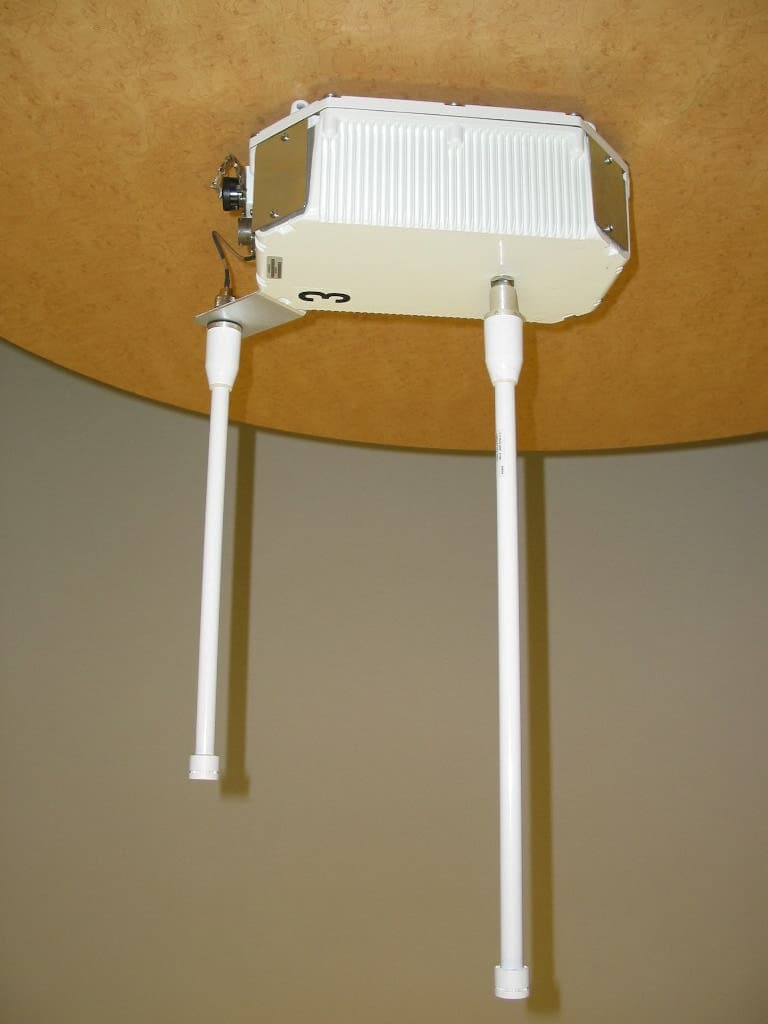
QTZ1300
Mar 30, 2005Outdoor Access Point
Equipment Class
DTS - Digital Transmission System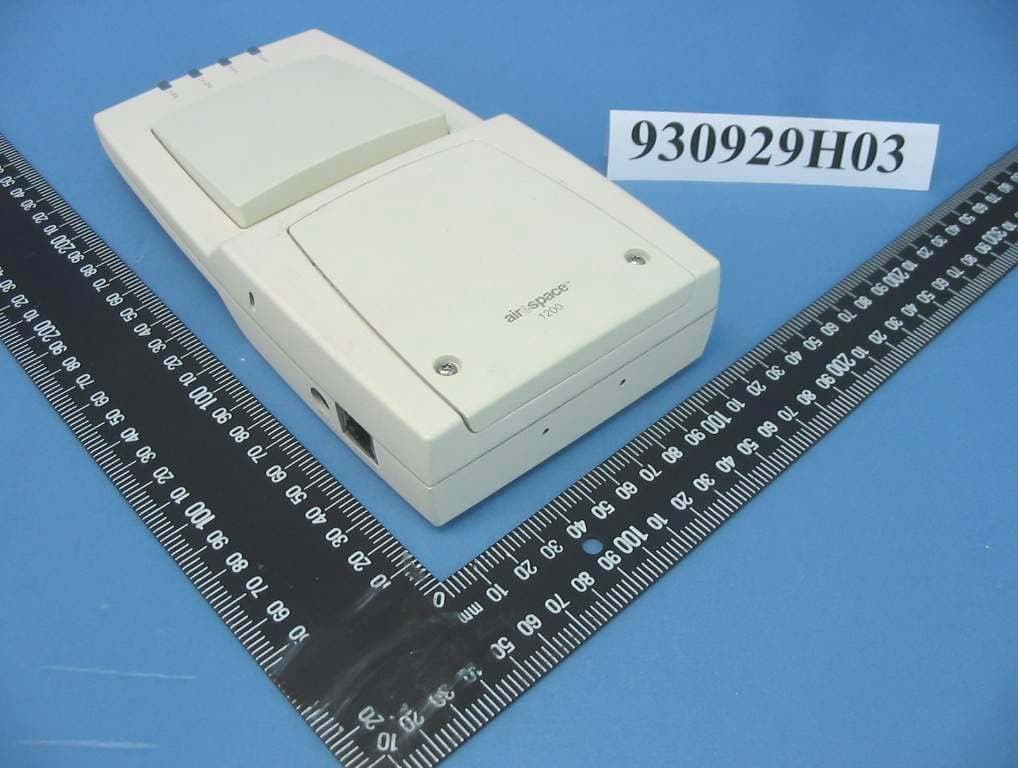
QTZ1200D
Dec 16, 2004IEEE 802.11 a/g Wireless LAN Access Point
Equipment Class
NII - Unlicensed National Information Infrastructure TXQTZ1200W
Jun 19, 2004802.11 Dual Band Access Point
Equipment Class
DTS - Digital Transmission System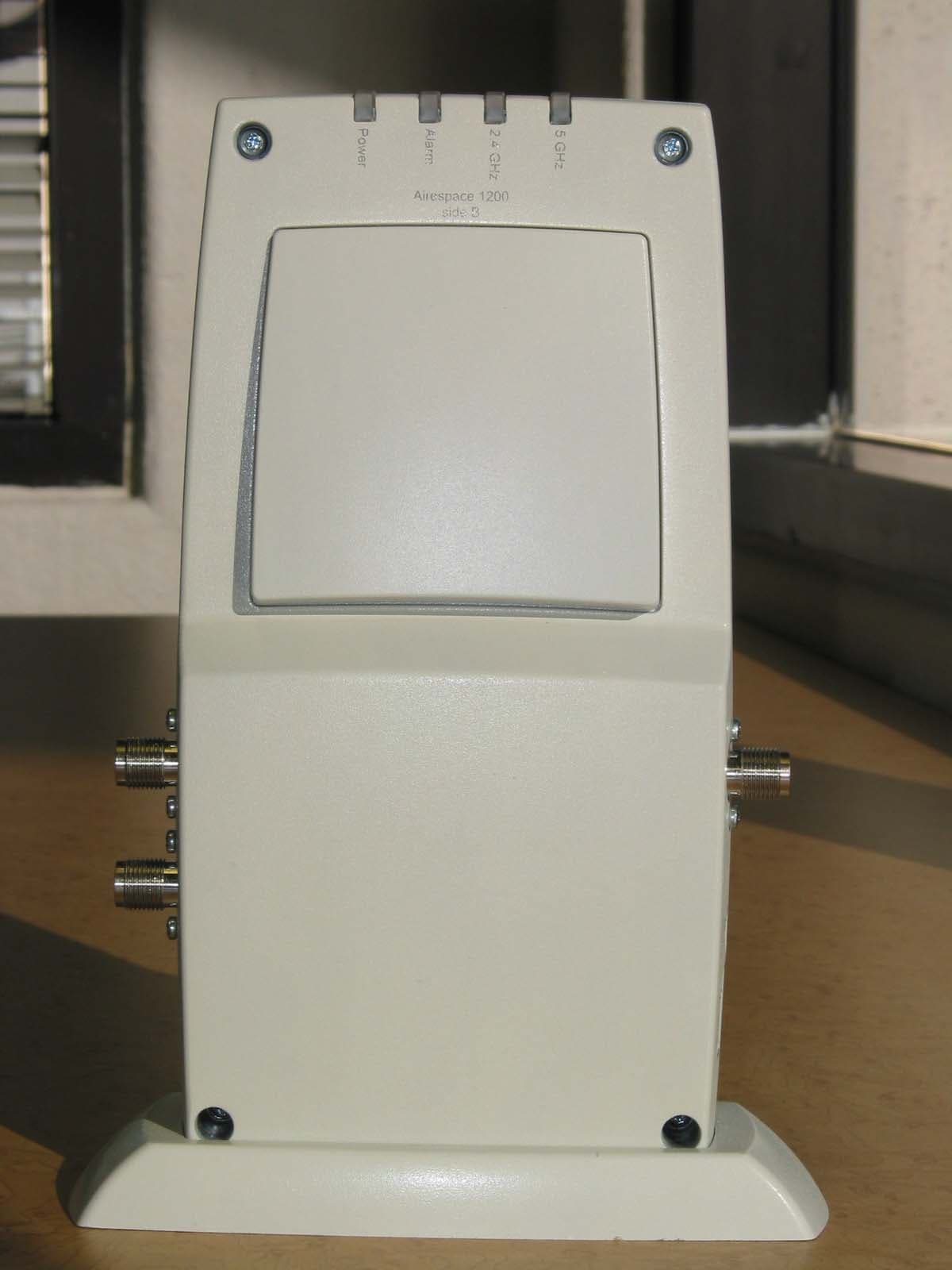
QTZAM1200ABG
Jan 12, 2004802.11 Dual Band Access Point
Equipment Class
DTS - Digital Transmission System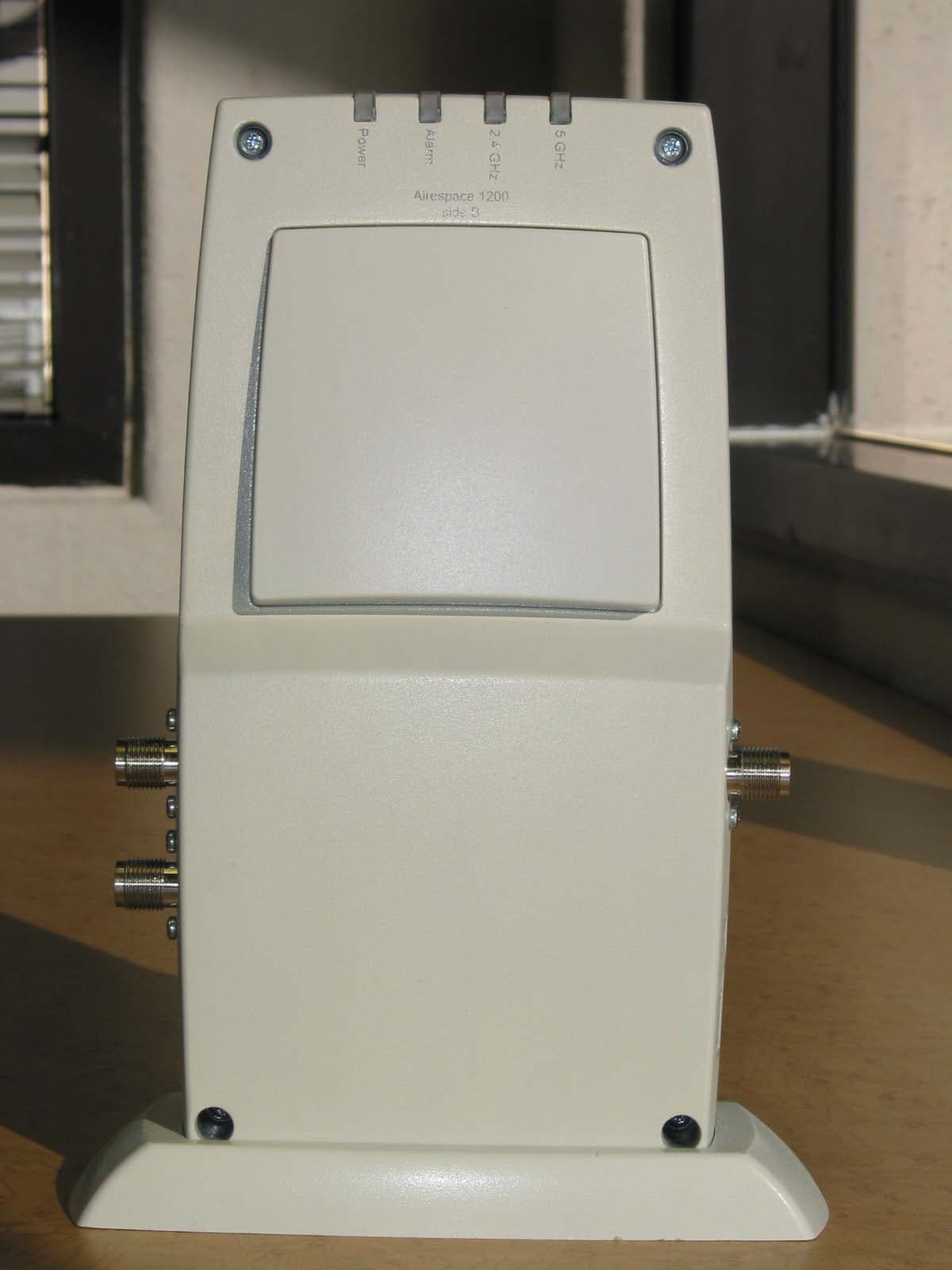
QTZWN1200BG
Dec 17, 20032.4 GHz 802.11 Access Point
Equipment Class
DTS - Digital Transmission System