RKH-HS222Bluetooth Headset
Huges Hi-Tech IncApplication Details
- Equipment Class
- DSS - Part 15 Spread Spectrum Transmitter
- Date of Grant
- Aug 22, 2004
- Application Purpose
- Original Equipment
- Date of Application
- Aug 22, 2004
- Equipment Note
- Bluetooth Headset
- Frequency Range
- 2402.00000000 - 2480.00000000
- Company
- Huges Hi-Tech Inc
- Country
- Taiwan
Documents & Files
Document Text
Text extracted from the exhibit documents filed with the FCC. Open a document above to read the original.
Users Manual
222 Bluetooth headset user guide v1.0 Introduction This Bluetooth headset is a wireless device utilizing Bluetooth wireless technology. The headset contains a microphone and a speaker. It provides hands-free communication using mobile phones, and the power is provided by either a rechargeable or an Alkaline AAA battery. Any device that you want to use with this Bluetooth headset must be compatible with Bluetooth technology version 1.1. The device must also support the same profiles as the headset. Make sure that you pair the headset with your Bluetooth phone or other devices before you start using it. Features 1. Battery Cover 2. LED Display 3. Microphone 4. Talk/Volume Up Button 5. Talk/Volume Down Button 6. Receiver What's in the package? 1. One Bluetooth headset with ear hook. 2. One AAA Alkaline battery 3. One user guide 4. One hanging strap Wearing preference Headset can be worn on either ear by adjusting the ear hook. You can adjust it by inserting the ear hook from either side of the headset. Preparing to use your Bluetooth headset 1. Putting the battery in the headset. A. Slide the battery cover upward and open it. B. Put the battery in the headset C. Close the battery cover and slide it downward. 2. Pairing procedure Before using the headset for the first time, you must pair the headset with a Bluetooth phone. If this is the only headset you will use with the cell phone, no further pairing is necessary. Make sure that the headset is switched off before pairing. A. Follow the instruction of the user guide of the cell phone to turn on the Bluetooth feature. B. Press and hold the Volume Up button (bigger button) on the headset for 7 seconds until the Red and Blue LEDs alternate rapidly, which indicates that the headset is in pairing mode. C. Perform a Bluetooth device discovery on the cell phone. (It might take several seconds. Also, the closer you put the two devices together, the better.) D. The phone's display will advise that it has found 222 and ask you to confirm that you 1 6 5 4 3 2 want to pair with it. Confirm this. E. Enter the passkey 1234 when your phone prompts you, and the phone will start to pair with the headset. F. Your phone will advise that pairing has been successful, and the LED on your headset will change state to show that it’s now in standby mode. The blue LED will flash once or three times every 5 seconds depending on the profile your cell phone supports. If the pairing fails, the blue and red LEDs keep alternating rapidly for about 2 minute. Please repeat steps A to F to pair the headset and the phone again. NOTE: The display on the mobile phone will also give the status. Once the headset and phone have successfully paired, you are ready to make and receive calls. Turning your headset ON and OFF To switch your headset on, press the Volume Up button (the bigger one) for about 5 seconds until the blue LED turns on. To switch your headset off, press and hold the Volume Up button for 5 seconds until the red LED flashes, and then the headset will turn off. Answering a call If there is an incoming call, a ring tone will sound in your headset; you can press either button on headset to answer the call. If your cell phone supports auto-answering, the headset will take the incoming call automatically and you don't need to press any button. Ending a call When in conversation, you can press and hold the Volume Down button (the smaller button) for 5 seconds to end the call. You can also end the call by pressing the END button on the cell phone. When the other party hangs up, the headset ends automatically. Making a call from the mobile phone keypad 1. Dial the phone number using the keypad on the mobile phone. 2. To send the call, press the phone's SEND/CALL key. 3. The call will then be transferred automatically to the headset when connection is made. Making a call with the headset by voice dialing If your Bluetooth phone supports voice dial, you can use this feature with the headset. Please refer to your phone's user guide for more information on voice dial. 1. Voice dial function on your phone must be turned on and voice tags must be stored. 2. Make sure that the headset is turned ON. 3. On the headset, press the either button once. 4. A short tone will prompt you and you can speak the “voice tag” that was stored in the phone’s voice dial phone book. 5. The phone automatically dials the contact you’ve selected, and you can see the details of the call on the phone display. 6. When connected, you can communicate normally using the headset. NOTE: a) To cancel voice dial, press the Volume Up key again. b) At Steps 3, if your cell phone supports hands-free profile, you can also press the Volume Down button to initiate voice dial. Reject incoming call Press and hold the Volume Up key for 5 seconds on the headset to reject an incoming call. Note: This function only works on Bluetooth phones that support Handsfree profile; therefore you need to make sure that the phone and the headset are linked with Handsfree profile. Last number redial When the headset is in standby condition (not in conversation), press the Volume Down key for 5 seconds, and your phone will redial the last number that you called. Note: This function only works on Bluetooth phones that support Handsfree profile; therefore you need to make sure that the phone and the headset are linked with Handsfree profile. Call transfer When in conversation, you may transfer the voice from headset to phone or from phone to headset. Press the Volume Up key for 5 seconds to make the transfer. Note: This function only works on Bluetooth phones that support Handsfree profile; therefore you need to make sure that the phone and the headset are linked with Handsfree profile. Note: For some cell phones (Sony Ericsson phones, for example), you can only transfer voice from the headset to the phone, but not the other way around. If that’s the case, you have to end the call from the cell phone. Speaker volume control button To incr…
Text truncated - open the document above for the full version.
Cover Letter(s)
Agent Authorization Letter attn: Reviewing Engineer Federal Communications Commission 7435 Oakland Mills Road Columbia, MD 21046 RE: LETTER OF AGENT AUTHORIZATION To Whom It May Concern: We, the undersigned, hereby authorize MET Laboratories, Inc. to act on our behalf in all matters relating to application for equipment authorization, including the signing of all documents relating to these matters. We also hereby certify that no party to the application authorized hereunder is subject to the denial of benefits, including FCC benefits, pursuant to Section 5301 of the Anti-Drug Abuse Act of 1988,21 U.S.C.853(a). This agreement expires one year from the current date. Sincerely, _____________________________ 08/20/2004 Alex Chen / Deputy Manager Huges Hi-Tech Inc.
Cover Letter(s)
Bluetooth Declaration Per FCC 15.247 Requirements 1 Output power and channel separation of a Bluetooth device in the different operating modes: The different operating modes (data-mode, acquisition-mode) of a Bluetooth device don’t influence the output power and the channel spacing. There is only one transmitter which is driven by identical input parameters concerning these two parameters. Only a different hopping sequence will be used. For this reason the check of these RF parameters in one op-mode is sufficient. 2 Frequency range of a Bluetooth device: Hereby we declare that the maximum frequency of this device is: 2402 – 2480 MHz. This is according the Bluetooth Core Specification V 1.0B (+ critical errata) for devices which will be operated in the USA. This was checked during the Bluetooth Qualification tests (Test Case: TRM/CA/04-E). Other frequency ranges ( e.g. for Spain, France, Japan) which are allowed according the Core Specification are not supported by this device. 3 Co-ordination of the hopping sequence in data mode to avoid simultaneous occupancy by multiple transmitters: Bluetooth units which want to communicate with other units must be organized in a structure called piconet. This piconet consist of max. 8 Bluetooth units. One unit is the master the other seven are the slaves. The master co-ordinates frequency occupation in this piconet for all units. As the master hop sequence is derived from it’s BD address which is unique for every Bluetooth device, additional masters intending to establish new piconets will always use different hop sequences. 4 Example of a hopping sequence in data mode: Example of a 79 hopping sequence in data mode: 40, 21, 44, 23, 42, 53, 46, 55, 48, 33, 52, 35, 50, 65, 54, 67, 56, 37, 60, 39, 58, 69, 62, 71, 64, 25, 68, 27, 66, 57, 70, 59, 72, 29, 76, 31, 74, 61, 78, 63, 01, 41, 05, 43, 03, 73, 07, 75, 09, 45, 13, 47, 11, 77, 15, 00, 64, 49, 66, 53, 68, 02, 70, 06, 01, 51, 03, 55, 05, 04 5 Equally average use of frequencies in data mode and behaviour for short transmissions: The generation of the hopping sequence in connection mode depends essentially on two input values: 1. LAP/UAP of the master of the connection 2. Internal master clock The LAP (lower address part) are the 24 LSB’s of the 48 BD_ADDRESS. The BD_ADDRESS is an unambiguous number of every Bluetooth unit. The UAP (upper address part) are the 24 MSB’s of the 48 BD_ADDRESS. The internal clock of a Bluetooth unit is derived from a free running clock which is never adjusted and is never turned off. For synchronisation with other units only offset are used. It has no relation to the time of the day. Its resolution is at least half the RX/TX slot length of 312.5 μs. The clock has a cycle of about one day (23h30). In most case it is implemented as 28 bit counter. For the deriving of the hopping sequence the entire LAP (24 bits), 4 LSB’s (4 bits) (Input 1) and the 27 MSB’s of the clock (Input 2) are used. With this input values different mathematical procedures (permutations, additions, XOR-operations) are performed to generate the sequence. This will be done at the beginning of every new transmission. Regarding short transmissions the Bluetooth system has the following behaviors: The first connection between the two devices is established, a hopping sequence was generated. For transmitting the wanted data the complete hopping sequence was not used. The connection ended. The second connection will be established. A new hopping sequence is generated. Due to the fact that the Bluetooth clock has a different value, because the period between the two transmission is longer (and it cannot be shorter) than the minimum resolution of the clock (312.5 μs). The hopping sequence will always differ from the first one. 6 Receiver input bandwidth and behaviors for repeated single or multiple packets: The input bandwidth of the receiver is 1 MHz. In every connection one Bluetooth device is the master and the other one is the slave. The master determines the hopping sequence (see chapter 5). The slave follows this sequence. Both devices shift between RX and TX time slot according to the clock of the master. Additionally the type of connection (e.g. single or multislot packet) is set up at the beginning of the connection. The master adapts its hopping frequency and its TX/RX timing according to the packet type of the connection. Also the slave of the connection will use these settings. Repeating of a packet has no influence on the hopping sequence. The hopping sequence generated by the master of the connection will be followed in any case. That means, a repeated packet will not be send on the same frequency, it is send on the next frequency of the hopping sequence. 7 Dwell time in data mode The dwell time of 0.3797s within a 30 second period in data mode is independent from the packet type (packet length). The calculation for a 30 second period is a follows: Dwell time = time slot length * hop rate / number of hopping channels *30s Example for a DH1 packet (with a maximum length of one time slot) Dwell time = 625 μs * 1600 1/s / 79 * 30s = 0.3797s (in a 30s period) For multislot packet the hopping is reduced according to the length of the packet. Example for a DH5 packet (with a maximum length of five time slots) Dwell time = 5 * 625 μs * 1600 * 1/5 *1/s / 79 * 30s = 0.3797s (in a 30s period) This is according the Bluetooth Core Specification V 1.0B (+ critical errata) for all Bluetooth devices. There for all Bluetooth devices comply with the FCC dwell time requirement in data mode. This was checked during the Bluetooth Qualification tests. The Dwell time in hybrid mode is measured and stated in the test report. 8 Channel Separation in hybrid mode The nominal channel spacing of the Bluetooth system is 1Mhz independent of the operating mode. The maximum “initial carrier frequency tolerance” which is allowed for Bluetooth is fcenter = 75 kHz. This was checked during the Bluetooth Qualification tests (Test Case:…
Text truncated - open the document above for the full version.
External Photos
REPORT NO: EF/2004/80010 ID: RKH-HS222 DATE: Aug. 20, 2004 The results shown in this test report refer only to the sample(s) tested unless otherwise stated. This test report cannot be reproduced, except in full, without prior written permission of the Company. SGS Taiwan Ltd. No. 134, Wu Kung Rd., Wuku Industrial Zone, Taipei Country, Taiwan. / 134 t (886-2) 2299-3939 f (886-2) 2298-2698 www.sgs.com.tw ILAC MRA APPENDIX 2 EXTERNAL OF EUT REPORT NO: EF/2004/80010 ID: RKH-HS222 DATE: Aug. 20, 2004 The results shown in this test report refer only to the sample(s) tested unless otherwise stated. This test report cannot be reproduced, except in full, without prior written permission of the Company. SGS Taiwan Ltd. No. 134, Wu Kung Rd., Wuku Industrial Zone, Taipei Country, Taiwan. / 134 t (886-2) 2299-3939 f (886-2) 2298-2698 www.sgs.com.tw ILAC MRA Front View of EUT (222) Back View of EUT (222) REPORT NO: EF/2004/80010 ID: RKH-HS222 DATE: Aug. 20, 2004 The results shown in this test report refer only to the sample(s) tested unless otherwise stated. This test report cannot be reproduced, except in full, without prior written permission of the Company. SGS Taiwan Ltd. No. 134, Wu Kung Rd., Wuku Industrial Zone, Taipei Country, Taiwan. / 134 t (886-2) 2299-3939 f (886-2) 2298-2698 www.sgs.com.tw ILAC MRA Right Side of EUT (222) Front View of EUT (224) REPORT NO: EF/2004/80010 ID: RKH-HS222 DATE: Aug. 20, 2004 The results shown in this test report refer only to the sample(s) tested unless otherwise stated. This test report cannot be reproduced, except in full, without prior written permission of the Company. SGS Taiwan Ltd. No. 134, Wu Kung Rd., Wuku Industrial Zone, Taipei Country, Taiwan. / 134 t (886-2) 2299-3939 f (886-2) 2298-2698 www.sgs.com.tw ILAC MRA Back View of EUT (224) Right Side of EUT (224)
ID Label/Location Info
REPORT NO: EF/2004/80010 ID: RKH-HS222 DATE: Aug. 20, 2004 The results shown in this test report refer only to the sample(s) tested unless otherwise stated. This test report cannot be reproduced, except in full, without prior written permission of the Company. SGS Taiwan Ltd. No. 134, Wu Kung Rd., Wuku Industrial Zone, Taipei Country, Taiwan. / 134 t (886-2) 2299-3939 f (886-2) 2298-2698 www.sgs.com.tw ILAC MRA APPENDIX 3 INTERNAL OF EUT REPORT NO: EF/2004/80010 ID: RKH-HS222 DATE: Aug. 20, 2004 The results shown in this test report refer only to the sample(s) tested unless otherwise stated. This test report cannot be reproduced, except in full, without prior written permission of the Company. SGS Taiwan Ltd. No. 134, Wu Kung Rd., Wuku Industrial Zone, Taipei Country, Taiwan. / 134 t (886-2) 2299-3939 f (886-2) 2298-2698 www.sgs.com.tw ILAC MRA Open View of EUT Internal of EUT REPORT NO: EF/2004/80010 ID: RKH-HS222 DATE: Aug. 20, 2004 The results shown in this test report refer only to the sample(s) tested unless otherwise stated. This test report cannot be reproduced, except in full, without prior written permission of the Company. SGS Taiwan Ltd. No. 134, Wu Kung Rd., Wuku Industrial Zone, Taipei Country, Taiwan. / 134 t (886-2) 2299-3939 f (886-2) 2298-2698 www.sgs.com.tw ILAC MRA Internal of EUT
Internal Photos
REPORT NO: EF/2004/80010 ID: RKH-HS222 DATE: Aug. 20, 2004 The results shown in this test report refer only to the sample(s) tested unless otherwise stated. This test report cannot be reproduced, except in full, without prior written permission of the Company. SGS Taiwan Ltd. No. 134, Wu Kung Rd., Wuku Industrial Zone, Taipei Country, Taiwan. / 134 t (886-2) 2299-3939 f (886-2) 2298-2698 www.sgs.com.tw ILAC MRA APPENDIX 3 INTERNAL OF EUT REPORT NO: EF/2004/80010 ID: RKH-HS222 DATE: Aug. 20, 2004 The results shown in this test report refer only to the sample(s) tested unless otherwise stated. This test report cannot be reproduced, except in full, without prior written permission of the Company. SGS Taiwan Ltd. No. 134, Wu Kung Rd., Wuku Industrial Zone, Taipei Country, Taiwan. / 134 t (886-2) 2299-3939 f (886-2) 2298-2698 www.sgs.com.tw ILAC MRA Open View of EUT Internal of EUT REPORT NO: EF/2004/80010 ID: RKH-HS222 DATE: Aug. 20, 2004 The results shown in this test report refer only to the sample(s) tested unless otherwise stated. This test report cannot be reproduced, except in full, without prior written permission of the Company. SGS Taiwan Ltd. No. 134, Wu Kung Rd., Wuku Industrial Zone, Taipei Country, Taiwan. / 134 t (886-2) 2299-3939 f (886-2) 2298-2698 www.sgs.com.tw ILAC MRA Internal of EUT
Test Report
REPORT NO: EF/2004/80010 ID: RKH-HS222 DATE: Aug. 20, 2004 Page: 1 of 51 The results shown in this test report refer only to the sample(s) tested unless otherwise stated. This test report cannot be reproduced, except in full, without prior written permission of the Company. SGS Taiwan Ltd. No. 134, Wu Kung Rd., Wuku Industrial Zone, Taipei Country, Taiwan. / 1361 t (886-2) 2299-3939 f (886-2) 2298-2698 www.sgs.com.tw ILAC MRA ELECTROMAGNETIC EMISSIONS COMPLIANCE REPORT INTENTIONAL RADIATOR CERTIFICATION TO FCC PART 15 SUBPART C REQUIREMENT OF Product Name: BlueTooth Headset Model Name: 222, 224 Model Differences: Models are variant in colors FCC ID: RKH-HS222 Report No.: EF/2004/80010 Issue Date: Aug. 20, 2004 FCC Rule Part: 15.247 Prepared for: HUGES HI-TECH INC. 7F, NO.188, SEC.2, CHUNG-HSING ROAD, HSIN TIEN CITY, TAIPEI HSIEN 231, TAIWAN, R.O.C. Prepared by: SGS Taiwan Ltd. No. 134, Wu Kung Rd., Wuku Industrial Zone, Taipei County, Taiwan. Note: This report shall not be reproduced except in full, without the written approval of SGS Taiwan Ltd. This document may be altered or revised by SGS Taiwan Ltd. personnel only, and shall be noted in the revision section of the document. REPORT NO: EF/2004/80010 ID: RKH-HS222 DATE: Aug. 20, 2004 Page: 2 The results shown in this test report refer only to the sample(s) tested unless otherwise stated. This test report cannot be reproduced, except in full, without prior written permission of the Company. SGS Taiwan Ltd. No. 134, Wu Kung Rd., Wuku Industrial Zone, Taipei Country, Taiwan. / 134 t (886-2) 2299-3939 f (886-2) 2298-2698 www.sgs.com.tw ILAC MRA VERIFICATION OF COMPLIANCE Applicant: HUGES HI-TECH INC. 7F, NO.188, SEC.2, CHUNG-HSING ROAD, HSIN TIEN CITY, TAIPEI HSIEN 231, TAIWAN, R.O.C. Equipment Under Test: BlueTooth Headset Brand Name: N/A FCC ID Number: RKH-HS222 Model No.: 222, 224 Model Difference: Models are variant in colors File Number: EF/2004/80010 Date of test: Jun. 11, 2004 ~ Jun. 17, 2004 Date of EUT Received: Jun. 10, 2004 We hereby certify that: The above equipment was tested by SGS Taiwan Ltd. The test data, data evaluation, test proce- dures, and equipment configurations shown in this report were made in accordance with the procedures given in ANSI C63.4 (2001) and the energy emitted by the sample EUT tested as described in this report is in compliance with conducted and radiated emission limits of FCC Rules Part 15.247 The test results of this report relate only to the tested sample identified in this report. Test By: Date Aug. 20, 2004 Sky Wang Approved By Date Aug. 20, 2004 Vincent Su REPORT NO: EF/2004/80010 ID: RKH-HS222 DATE: Aug. 20, 2004 Page: 3 The results shown in this test report refer only to the sample(s) tested unless otherwise stated. This test report cannot be reproduced, except in full, without prior written permission of the Company. SGS Taiwan Ltd. No. 134, Wu Kung Rd., Wuku Industrial Zone, Taipei Country, Taiwan. / 134 t (886-2) 2299-3939 f (886-2) 2298-2698 www.sgs.com.tw ILAC MRA Table of Contents 1. GENERAL INFORMATION .........................................................................................................6 1.1. Product Description ............................................................................................................................6 1.2. Related Submittal(s) / Grant (s) ..........................................................................................................6 1.3. Test Methodology ...............................................................................................................................6 1.4. Test Facility.........................................................................................................................................6 1.5. Special Accessories .............................................................................................................................6 1.6. Equipment Modifications....................................................................................................................6 2. SYSTEM TEST CONFIGURATION ............................................................................................7 2.1. EUT Configuration .............................................................................................................................7 2.2. EUT Exercise ......................................................................................................................................7 2.3. Test Procedure.....................................................................................................................................7 2.4. Configuration of Tested System..........................................................................................................8 3. SUMMARY OF TEST RESULTS .................................................................................................9 4. DESCRIPTION OF TEST MODES ..............................................................................................9 5. CONDUCTED EMISSION TEST................................................................................................10 5.1. Standard Applicable ..........................................................................................................................10 5.2. EUT Setup.........................................................................................................................................10 5.3. Measurement Procedure....................................................................................................................10 5.4. Measurement Equipment Used: ........................................................................................................11 5.5. Measurement Result..........................................................................................................................11 6. PEAK OUTPUT POWER MEASUREMENT...........................................................…
Text truncated - open the document above for the full version.
Test Setup Photos
REPORT NO: EF/2004/80010 ID: RKH-HS222 DATE: Aug. 20, 2004 The results shown in this test report refer only to the sample(s) tested unless otherwise stated. This test report cannot be reproduced, except in full, without prior written permission of the Company. SGS Taiwan Ltd. No. 134, Wu Kung Rd., Wuku Industrial Zone, Taipei Country, Taiwan. / 134 t (886-2) 2299-3939 f (886-2) 2298-2698 www.sgs.com.tw ILAC MRA APPENDIX 1 PHOTOGRPHS OF SET UP REPORT NO: EF/2004/80010 ID: RKH-HS222 DATE: Aug. 20, 2004 The results shown in this test report refer only to the sample(s) tested unless otherwise stated. This test report cannot be reproduced, except in full, without prior written permission of the Company. SGS Taiwan Ltd. No. 134, Wu Kung Rd., Wuku Industrial Zone, Taipei Country, Taiwan. / 134 t (886-2) 2299-3939 f (886-2) 2298-2698 www.sgs.com.tw ILAC MRA Radiated Emission Set up Photo
Contact Information
Applicant
Max Ko
Test Firm
SGS Taiwan Ltd.Wyse Chiu
Technical Specifications
| # | Rule Parts | Frequency Range | Power Output |
|---|---|---|---|
| 1 | 15C | 2.40 GHz - 2.48 GHz | 2.40 mW |
Other Applications from Huges Hi-Tech Inc

RKH-HS221
May 10, 2005Bluetooth 221 Headset
Equipment Class
DSS - Part 15 Spread Spectrum Transmitter
RKH-HS601
Apr 11, 2005Ultimate Headset
Equipment Class
DSS - Part 15 Spread Spectrum Transmitter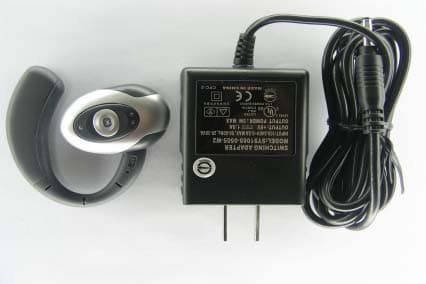
RKH-HS332A
Apr 19, 2004Bluetooth Headset
Equipment Class
DSS - Part 15 Spread Spectrum Transmitter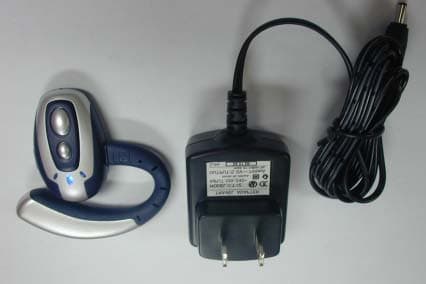
RKH-HS304
Feb 18, 2004Bluetooth Headset
Equipment Class
DSS - Part 15 Spread Spectrum Transmitter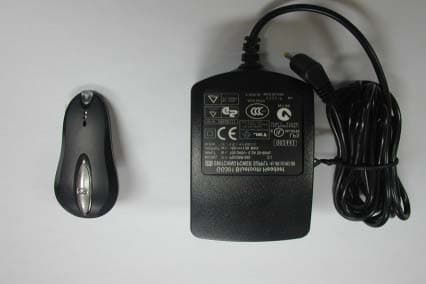
RKH-HS311
Feb 18, 2004Bluetooth Headset
Equipment Class
DSS - Part 15 Spread Spectrum Transmitter