RWZ-A320ATri Band GSM Mobile Phone
AMOI Electronics Co., Ltd.
Click to zoom
Application Details
- Equipment Class
- PCE - PCS Licensed Transmitter held to ear
- Date of Grant
- Dec 22, 2005
- Application Purpose
- Original Equipment
- Date of Application
- Dec 22, 2005
- Equipment Note
- Tri Band GSM Mobile Phone
- Frequency Range
- 824.20000000 - 848.80000000
- Company
- AMOI Electronics Co., Ltd.
- Country
- China
Documents & Files
Document Text
Text extracted from the exhibit documents filed with the FCC. Open a document above to read the original.
Users Manual
-1- Thank you very much for choosing AMOI A320a, the fashionable and elegant camera phone. A320a is a perfect integration of unparalleled contemporary design and consummate precise craftsmanship, bringing you easy communication, funny entertainment, as well as highlighting your tastes. Key Features: Compatible with Most Standard GSM Networks GPRS Class 10, WAP 2.0 AMOI Smart Dial SMS (Short Message Service) MMS (Multimedia Messaging Service) Downloadable 40-Polyphonic Ring Tones Phonebook Memory: 300 V-card Entries Built-in 300K pixels CMOS Video Camera Built-in Amusing Games Toolbox (Alarm Clock, Record, Unit Conversion, World Time, Calendar, Calculator) - 1 - Specifications: GSM/GPRS : 850 /1900 MHz Dimension: 104 x 43.6 x 17 mm; 4.09 x 1.72 x 0.67 inch Screen: 128 x 160 pixels, 1.8 inch, 65k colors CSTN display Weight: 80g; 2.83oz Battery Capacity: 750 mAh Standby Time: 70-120 hrs Talk Time: 2-4 hrs Voice Encoding: FR / EFR / HR The manufacturer may, at any time and without notice, make changes or improvements to the products offered, but provide necessary corrigendum with this manual or release new version of this manual for the following lot. The Amoi logo and trademark are the property of the manufacturer. Sep. 2005 - 2 - INTELLECTUAL PROPERTY All Intellectual Property, as defined below, owned by or which is otherwise the property of AMOI or its respective suppliers relating to the AMOI mobile phones, including but not limited to, accessories, parts, or software relating thereto (the “Phone System”), is proprietary to AMOI and protected under federal laws, state laws, and international treaty provisions. Intellectual Property includes, but is not limited to, inventions (patentable or unpatentable), patents, trade secrets, copyrights, software, computer programs, and related documentation and other works of authorship. You could not infringe on it, otherwise you may violate the rights secured by the Intellectual Property. Moreover, you must agree that you will not (and will not attempt to) modify, prepare derivative works, recompile, disassemble, or attempt to create source code from the software. No title or ownership in the Intellectual Property is transferred to you. All applicable rights of the Intellectual Property shall remain with AMOI and its suppliers. - 3 - TABLE OF CONTENTS Safety Precautions ................................................................. 7 Unpacking ..............................................................................9 Your Phone .................................................................... 11 Phone’s Layout ................................................................ 11 Keys Description ....................................................13 Display ............................................................................ 14 Getting Started .............................................................. 16 Installing a SIM Card ....................................................... 16 Charging a Battery .......................................................... 18 Switching the Phone On/Off ........................................... 22 Your Phone’s Mode...................................................... 23 Call Functions ............................................................. 24 Making Calls .................................................................... 24 Receiving / Rejecting Calls ............................................. 25 Volume Adjusting............................................................ 27 Missed Calls ................................................................... 26 Call Menu..................................................................... 27 Entering Text ................................................................. 30 Changing Text Input Mode ............................................ 30 Insert Symbol .................................................................. 31 Insert Template......................................................33 Insert Phone No.....................................................33 Dictionary ....................................................................... 34 eZi Eng....................................................................... 31 - 4 - Abc................................................................................ 32 123.......................................................................... 33 Phonebook ........................................................................... 35 Smart Dial........................................................... 35 Search.................................................................35 New..................................................................35 Number Group......................................................35 Calls..................................................................35 Speed Dial.........................................................35 Phbook Manager............................................................. 35 Country/Area Code..................................................36 Entertainment .................................................................... 70 Push Box.............................................................71 Gobang................................................................70 Tetris..................................................................71 Messages ......................................................................... 48 SMS ................................................................................ 48 MMS.................................................................51 Voice Mail..........................................................51 Cell Broadcast .................................................................. 51 Memory............................................................51 Settings ............................................................................ 51 Personality..............…
Text truncated - open the document above for the full version.
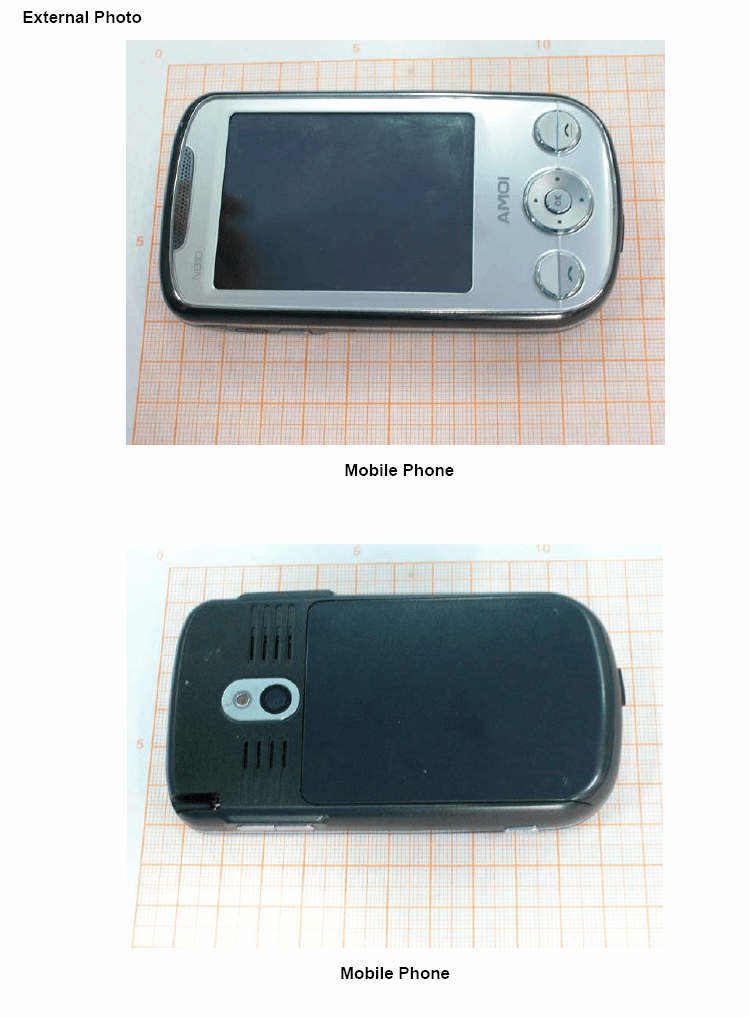
External Photos
Page 1 CONSTRUCTION PHOTOS OF EUT Page 2
ID Label/Location Info
Tri Band GSM Mobile Phone A320a / AMOI IMEI: 3572220000000253 FCC ID: RWZ-A320A Made in China
Internal Photos
Page 3 Page 4 Page 5 Page 6 Page 7 Page 8 Page 9
Operational Description
FCC ID: RWZ-A320A Report No.: RF941201L14 Operational Description This device is the Tri Band GSM mobile phone and operated frequency in the 850MHz (GSM band) and 1900MHz (PCS band). When GMSK technique will be applied under the transmission data and voice. The transmitter of the EUT is powered by charged battery or AC adapter. The antenna is Fixed internal antenna. There is no antenna connector. The other instruction, please have a look at the users manual.
RF Exposure Info
D3: DAE SN: 579
RF Exposure Info
APPENDIX D: SYSTEM CERTIFICATE & CALIBRATION D1: SAM PHANTOM
RF Exposure Info
FCC ID: RWZ-A320A Report No.: SA941201L141Report Format Version 2.0.2 SAR TEST REPORT REPORT NO.: SA941201L14 MODEL NO.: A320a RECEIVED: Dec. 02, 2005 TESTED: Dec. 05 ~ Dec. 06, 2005 ISSUED: Dec. 18, 2005 APPLICANT: Amoi Electronics Co., Ltd ADDRESS: No. 45, Tiyu Road, Xiamen, Fujian, China ISSUED BY: Advance Data Technology Corporation LAB ADDRESS: No. 47, 14th Ling, Chia Pau Tsuen, Lin Kou Hsiang 244, Taipei Hsien, Taiwan, R.O.C. TEST LOCATION: No. 19, Hwa Ya 2 nd Rd., Wen Hwa Tsuen, Kwei Shan Hsiang, Taoyuan Hsien 333, Taiwan, R.O.C. This test report consists of 47 pages in total except Appendix. It may be duplicated completely for legal use with the approval of the applicant. It should not be reproduced except in full, without the written approval of our laboratory. The client should not use it to claim product endorsement by CNLA, A2LA or any government agencies. The test results in the report only apply to the tested sample. 0528 ILAC MRA NO. 2177-01 FCC ID: RWZ-A320A Report No.: SA941201L142Report Format Version 2.0.2 TABLE OF CONTENTS 1.CERTIFICATION........................................................................................................................ 3 2.GENERAL INFORMATION........................................................................................................ 4 2.1GENERAL DESCRIPTION OF EUT.......................................................................................... 4 2.2GENERAL DESCRIPTION OF APPLIED STANDARDS ........................................................... 5 2.3GENERAL INOFRMATION OF THE SAR SYSTEM ................................................................. 6 2.4GENERAL DESCRIPTION OF THE SPATIAL PEAK SAR EVALUATION ................................ 9 3.DESCRIPTION OF TEST POSITION AND CONFIGURATIONS............................................ 14 3.1TOUCH/CHEEK TEST POSITION .......................................................................................... 16 3.2TILT TEST POSITION ............................................................................................................. 16 3.3BODY-WORN CONFIGURATION ........................................................................................... 17 3.4DESCRIPTION OF TEST MODE ............................................................................................ 18 4.DESCRIPTION OF SUPPORT UNITS .................................................................................... 13 5.TEST RESULTS ...................................................................................................................... 22 5.1TEST PROCEDURES .............................................................................................................22 5.2MEASURED SAR RESULTS................................................................................................... 24 5.3SAR LIMITS ............................................................................................................................. 30 5.4RECIPES FOR TISSUE SIMULATING LIQUIDS .................................................................... 30 5.5TEST EQUIPMENT FOR TISSUE PROPERTY...................................................................... 34 6.SYSTEM VALIDATION ............................................................................................................35 6.1TEST EQUIPMENT ................................................................................................................. 35 6.2TEST PROCEDURE................................................................................................................ 36 6.3VALIDATION RESULTS ..........................................................................................................38 6.4SYSTEM VALIDATION UNCERTAINTIES .............................................................................. 39 7.MEASUREMENT SAR PROCEDURE UNCERTAINTIES ...................................................... 40 7.1. PROBE CALIBRATION UNCERTAINTY................................................................................. 40 7.2. ISOTROPY UNCERTAINTY.................................................................................................... 41 7.3. BOUNDARY EFFECT UNCERTAINTY................................................................................... 41 7.4. PROBE LINEARITY UNCERTAINTY ...................................................................................... 42 7.5. READOUT ELECTRONICS UNCERTAINTY.......................................................................... 42 7.6. RESPONSE TIME UNCERTAINTY ........................................................................................ 42 7.7. INTEGRATION TIME UNCERTAINTY .................................................................................... 43 7.8. PROBE POSITIONER MECHANICAL TOLERANCE ............................................................. 44 7.9. PROBE POSITIONING............................................................................................................ 44 7.10. PHANTOM UNCERTAINTY .................................................................................................... 45 7.11. DASY4 UNCERTAINTY BUDGET .......................................................................................... 46 8.INFORMATION ON THE TESTING LABORATORIES............................................................ 47 APPENDIX A: TEST CONFIGURATIONS AND TEST DATA APPENDIX B: ADT SAR MEASUREMENT SYSTEM APPENDIX C: PHOTOGRAPHS OF SYSTEM VALIDATION APPENDIX D: SYSTEM CERTIFICATE & CALIBRATION FCC ID: RWZ-A320A Report No.: SA941201L143Report Format Version 2.0.2 1. CERTIFICATION PRODUCT : Tri Band GSM mobile phone MODEL NO. : A320a BRAND NAME : AMOI APPLICANT : Amoi Electronics Co., Ltd TEST DATE: Dec. 05 ~ Dec. 06, 2005 TEST SAMPLE: MASS-PRODUCTION STANDARDS : FCC Part 2 (Section 2.1093), RSS-102 FCC OET Bulletin 65, Supplement C (01-01) The above equipment have been tested by…
Text truncated - open the document above for the full version.
RF Exposure Info
1 APPENDIX A: TEST CONFIGURATIONS AND TEST DATA A1: TEST CONFIGURATION Right Head Cheek Position 2 Right Head Tilt Position 3 Left Head Cheek Position 4 Left Head Tilt Position 5 Body Worn Position The bottom of the EUT to the flat phantom distance 15 mm 6 Body Worn Position The front of the EUT to the flat phantom distance 15 mm 7 EUT Photo Reference Point (HEAD) PIFA Antenna Reference Point (BODY) 8 9 Liquid Level Photo Tissue HSL835MHz D=152mm Tissue MSL835MHz D=155mm 10 Tissue HSL1900MHz D=150mm Tissue MSL1900MHz D=151mm 11 Date/Time: 2005/12/5 10:22:27 Test Laboratory: Advance Data Technology Right Head-Cheek-GSM850-Ch128-Mode 1 DUT: Tri Band GSM/WCDMA Mobile Phone ; Type: A320 ; Test Frequency: 824.2 MHz Communication System: PCS 850 ; Frequency: 824.2 MHz ; Duty Cycle: 1:8.3 Phantom: SAM 12 Medium parameters used: f = 824.2 MHz; σ = 0.87 mho/m; ε r = 40.5; ρ = 1000 kg/m 3 ; Liquid level: 152 mm Phantom section: Right Section ; DUT test position : Cheek ; Modulation type: GMSK Antenna type : PIFA Antenna ; Air temp. : 22.1 degrees ; Liquid temp. : 20.7 degrees DASY4 Configuration: - Probe: ET3DV6 - SN1790; ConvF(6.94, 6.94, 6.94) ; Calibrated: 2004/12/20 - Sensor-Surface: 4mm (Mechanical Surface Detection) - Electronics: DAE3 Sn579; Calibrated: 2005/3/23 - Phantom: SAM 12; Type: SAM V4.0; Serial: TP 1202 - Measurement SW: DASY4, V4.6 Build 23; Postprocessing SW: SEMCAD, V1.8 Build 160 Touch position - Low Channel 128/Area Scan (5x8x1): Measurement grid: dx=15mm, dy=15mm Maximum value of SAR (measured) = 0.679 mW/g Touch position - Low Channel 128/Zoom Scan (7x7x7) (7x7x7)/Cube 0: Measurement grid: dx=5mm, dy=5mm, dz=5mm Reference Value = 22.7 V/m Peak SAR (extrapolated) = 0.869 W/kg SAR(1 g) = 0.642 mW/g; SAR(10 g) = 0.447 mW/g Maximum value of SAR (measured) = 0.681 mW/g 12 Date/Time: 2005/12/5 10:41:46 Test Laboratory: Advance Data Technology Right Head-Cheek-GSM850-Ch190-Mode 1 DUT: Tri Band GSM/WCDMA Mobile Phone ; Type: A320 ; Test Frequency: 836.6 MHz Communication System: PCS 850 ; Frequency: 836.6 MHz ; Duty Cycle: 1:8.3 Phantom: SAM 12 Medium parameters used: f = 836.6 MHz; σ = 0.88 mho/m; ε r = 40.4; ρ = 1000 kg/m 3 ; Liquid level: 152 mm Phantom section: Right Section ; DUT test position : Cheek ; Modulation type: GMSK Antenna type : PIFA Antenna ; Air temp. : 22.1 degrees ; Liquid temp. : 20.7 degrees DASY4 Configuration: - Probe: ET3DV6 - SN1790; ConvF(6.94, 6.94, 6.94) ; Calibrated: 2004/12/20 - Sensor-Surface: 4mm (Mechanical Surface Detection) - Electronics: DAE3 Sn579; Calibrated: 2005/3/23 - Phantom: SAM 12; Type: SAM V4.0; Serial: TP 1202 - Measurement SW: DASY4, V4.6 Build 23; Postprocessing SW: SEMCAD, V1.8 Build 160 Touch position - Mid Channel 190/Area Scan (5x8x1): Measurement grid: dx=15mm, dy=15mm Maximum value of SAR (measured) = 0.971 mW/g Touch position - Mid Channel 190/Zoom Scan (7x7x7) (7x7x7)/Cube 0: Measurement grid: dx=5mm, dy=5mm, dz=5mm Reference Value = 26.3 V/m Peak SAR (extrapolated) = 1.25 W/kg SAR(1 g) = 0.919 mW/g; SAR(10 g) = 0.636 mW/g Maximum value of SAR (measured) = 0.985 mW/g 13 14 Date/Time: 2005/12/5 10:57:54 Test Laboratory: Advance Data Technology Right Head-Cheek-GSM850-Ch251-Mode 1 DUT: Tri Band GSM/WCDMA Mobile Phone ; Type: A320 ; Test Frequency: 848.8 MHz Communication System: PCS 850 ; Frequency: 848.8 MHz ; Duty Cycle: 1:8.3 Phantom: SAM 12 Medium parameters used: f = 848.8 MHz; σ = 0.9 mho/m; ε r = 40.2; ρ = 1000 kg/m 3 ; Liquid level: 152 mm Phantom section: Right Section ; DUT test position : Cheek ; Modulation type: GMSK Antenna type : PIFA Antenna ; Air temp. : 22.1 degrees ; Liquid temp. : 20.7 degrees DASY4 Configuration: - Probe: ET3DV6 - SN1790; ConvF(6.94, 6.94, 6.94) ; Calibrated: 2004/12/20 - Sensor-Surface: 4mm (Mechanical Surface Detection) - Electronics: DAE3 Sn579; Calibrated: 2005/3/23 - Phantom: SAM 12; Type: SAM V4.0; Serial: TP 1202 - Measurement SW: DASY4, V4.6 Build 23; Postprocessing SW: SEMCAD, V1.8 Build 160 Touch position - High Channel 251/Area Scan (5x8x1): Measurement grid: dx=15mm, dy=15mm Maximum value of SAR (measured) = 0.819 mW/g Touch position - High Channel 251/Zoom Scan (7x7x7) (7x7x7)/Cube 0: Measurement grid: dx=5mm, dy=5mm, dz=5mm Reference Value = 23.6 V/m Peak SAR (extrapolated) = 1.08 W/kg SAR(1 g) = 0.777 mW/g; SAR(10 g) = 0.537 mW/g Maximum value of SAR (measured) = 0.833 mW/g 15 Date/Time: 2005/12/5 11:14:28 Test Laboratory: Advance Data Technology Right Head-Tilt-GSM850-Ch128-Mode 2 DUT: Tri Band GSM/WCDMA Mobile Phone ; Type: A320 ; Test Frequency: 824.2 MHz Communication System: PCS 850 ; Frequency: 824.2 MHz; Duty Cycle: 1:8.3 Medium: HSL835 Medium parameters used: f = 824.2 MHz; σ = 0.87 mho/m; ε r = 40.5; ρ = 1000 kg/m 3 ; Liquid level: 152 mm Phantom section: Right Section ; DUT test position : Tilt ; Modulation type: GMSK Antenna type : PIFA Antenna ; Air temp. : 22.1 degrees ; Liquid temp. : 20.7 degrees DASY4 Configuration: - Probe: ET3DV6 - SN1790 ; ConvF(6.94, 6.94, 6.94) ; Calibrated: 2004/12/20 - Sensor-Surface: 4mm (Mechanical Surface Detection) - Electronics: DAE3 Sn579; Calibrated: 2005/3/23 - Phantom: SAM 12; Type: SAM V4.0; Serial: TP 1202 - Measurement SW: DASY4, V4.6 Build 23; Postprocessing SW: SEMCAD, V1.8 Build 160 Tilt position - Low Channel 128/Area Scan (5x8x1): Measurement grid: dx=15mm, dy=15mm Maximum value of SAR (measured) = 0.217 mW/g Tilt position - Low Channel 128/Zoom Scan (7x7x7) (7x7x7)/Cube 0: Measurement grid: dx=5mm, dy=5mm, dz=5mm Reference Value = 15.8 V/m Peak SAR (extrapolated) = 0.272 W/kg SAR(1 g) = 0.204 mW/g; SAR(10 g) = 0.149 mW/g Maximum value of SAR (measured) = 0.215 mW/g 16 Date/Time: 2005/12/5 11:31:07 Test Laboratory: Advance Data Technology Right Head-Tilt-GSM850-Ch190-Mode 2 DUT: Tri Band GSM/WCDMA Mobile Phone ; Type: A320 ; Test Frequency: 836.6 MHz Communication System: PCS 850 ; Frequency: 836.6 MHz; Duty Cycle: 1:8.3 Medium: HSL835 Medium parameters used: f = 836.6 MHz; σ = 0.88 mho/m; ε r = 40.4; ρ = 1000 kg/m 3 ; …
Text truncated - open the document above for the full version.
RF Exposure Info
B - 1 APPENDIX B: ADT SAR MEASUREMENT SYSTEM C - 1 APPENDIX C: PHOTOGRAPHS OF SYSTEM VALIDATION
RF Exposure Info
D3: DAE SN: 579
RF Exposure Info
APPENDIX D: SYSTEM CERTIFICATE & CALIBRATION D1: SAM PHANTOM
RF Exposure Info
FCC ID: RWZ-A320A Report No.: SA941201L141Report Format Version 2.0.2 SAR TEST REPORT REPORT NO.: SA941201L14 MODEL NO.: A320a RECEIVED: Dec. 02, 2005 TESTED: Dec. 05 ~ Dec. 06, 2005 ISSUED: Dec. 18, 2005 APPLICANT: Amoi Electronics Co., Ltd ADDRESS: No. 45, Tiyu Road, Xiamen, Fujian, China ISSUED BY: Advance Data Technology Corporation LAB ADDRESS: No. 47, 14th Ling, Chia Pau Tsuen, Lin Kou Hsiang 244, Taipei Hsien, Taiwan, R.O.C. TEST LOCATION: No. 19, Hwa Ya 2 nd Rd., Wen Hwa Tsuen, Kwei Shan Hsiang, Taoyuan Hsien 333, Taiwan, R.O.C. This test report consists of 47 pages in total except Appendix. It may be duplicated completely for legal use with the approval of the applicant. It should not be reproduced except in full, without the written approval of our laboratory. The client should not use it to claim product endorsement by CNLA, A2LA or any government agencies. The test results in the report only apply to the tested sample. 0528 ILAC MRA NO. 2177-01 FCC ID: RWZ-A320A Report No.: SA941201L142Report Format Version 2.0.2 TABLE OF CONTENTS 1.CERTIFICATION........................................................................................................................ 3 2.GENERAL INFORMATION........................................................................................................ 4 2.1GENERAL DESCRIPTION OF EUT.......................................................................................... 4 2.2GENERAL DESCRIPTION OF APPLIED STANDARDS ........................................................... 5 2.3GENERAL INOFRMATION OF THE SAR SYSTEM ................................................................. 6 2.4GENERAL DESCRIPTION OF THE SPATIAL PEAK SAR EVALUATION ................................ 9 3.DESCRIPTION OF TEST POSITION AND CONFIGURATIONS............................................ 14 3.1TOUCH/CHEEK TEST POSITION .......................................................................................... 16 3.2TILT TEST POSITION ............................................................................................................. 16 3.3BODY-WORN CONFIGURATION ........................................................................................... 17 3.4DESCRIPTION OF TEST MODE ............................................................................................ 18 4.DESCRIPTION OF SUPPORT UNITS .................................................................................... 13 5.TEST RESULTS ...................................................................................................................... 22 5.1TEST PROCEDURES .............................................................................................................22 5.2MEASURED SAR RESULTS................................................................................................... 24 5.3SAR LIMITS ............................................................................................................................. 30 5.4RECIPES FOR TISSUE SIMULATING LIQUIDS .................................................................... 30 5.5TEST EQUIPMENT FOR TISSUE PROPERTY...................................................................... 34 6.SYSTEM VALIDATION ............................................................................................................35 6.1TEST EQUIPMENT ................................................................................................................. 35 6.2TEST PROCEDURE................................................................................................................ 36 6.3VALIDATION RESULTS ..........................................................................................................38 6.4SYSTEM VALIDATION UNCERTAINTIES .............................................................................. 39 7.MEASUREMENT SAR PROCEDURE UNCERTAINTIES ...................................................... 40 7.1. PROBE CALIBRATION UNCERTAINTY................................................................................. 40 7.2. ISOTROPY UNCERTAINTY.................................................................................................... 41 7.3. BOUNDARY EFFECT UNCERTAINTY................................................................................... 41 7.4. PROBE LINEARITY UNCERTAINTY ...................................................................................... 42 7.5. READOUT ELECTRONICS UNCERTAINTY.......................................................................... 42 7.6. RESPONSE TIME UNCERTAINTY ........................................................................................ 42 7.7. INTEGRATION TIME UNCERTAINTY .................................................................................... 43 7.8. PROBE POSITIONER MECHANICAL TOLERANCE ............................................................. 44 7.9. PROBE POSITIONING............................................................................................................ 44 7.10. PHANTOM UNCERTAINTY .................................................................................................... 45 7.11. DASY4 UNCERTAINTY BUDGET .......................................................................................... 46 8.INFORMATION ON THE TESTING LABORATORIES............................................................ 47 APPENDIX A: TEST CONFIGURATIONS AND TEST DATA APPENDIX B: ADT SAR MEASUREMENT SYSTEM APPENDIX C: PHOTOGRAPHS OF SYSTEM VALIDATION APPENDIX D: SYSTEM CERTIFICATE & CALIBRATION FCC ID: RWZ-A320A Report No.: SA941201L143Report Format Version 2.0.2 1. CERTIFICATION PRODUCT : Tri Band GSM mobile phone MODEL NO. : A320a BRAND NAME : AMOI APPLICANT : Amoi Electronics Co., Ltd TEST DATE: Dec. 05 ~ Dec. 06, 2005 TEST SAMPLE: MASS-PRODUCTION STANDARDS : FCC Part 2 (Section 2.1093), RSS-102 FCC OET Bulletin 65, Supplement C (01-01) The above equipment have been tested by…
Text truncated - open the document above for the full version.
RF Exposure Info
1 APPENDIX A: TEST CONFIGURATIONS AND TEST DATA A1: TEST CONFIGURATION Right Head Cheek Position 2 Right Head Tilt Position 3 Left Head Cheek Position 4 Left Head Tilt Position 5 Body Worn Position The bottom of the EUT to the flat phantom distance 15 mm 6 Body Worn Position The front of the EUT to the flat phantom distance 15 mm 7 EUT Photo Reference Point (HEAD) PIFA Antenna Reference Point (BODY) 8 9 Liquid Level Photo Tissue HSL835MHz D=152mm Tissue MSL835MHz D=155mm 10 Tissue HSL1900MHz D=150mm Tissue MSL1900MHz D=151mm 11 Date/Time: 2005/12/5 10:22:27 Test Laboratory: Advance Data Technology Right Head-Cheek-GSM850-Ch128-Mode 1 DUT: Tri Band GSM/WCDMA Mobile Phone ; Type: A320 ; Test Frequency: 824.2 MHz Communication System: PCS 850 ; Frequency: 824.2 MHz ; Duty Cycle: 1:8.3 Phantom: SAM 12 Medium parameters used: f = 824.2 MHz; σ = 0.87 mho/m; ε r = 40.5; ρ = 1000 kg/m 3 ; Liquid level: 152 mm Phantom section: Right Section ; DUT test position : Cheek ; Modulation type: GMSK Antenna type : PIFA Antenna ; Air temp. : 22.1 degrees ; Liquid temp. : 20.7 degrees DASY4 Configuration: - Probe: ET3DV6 - SN1790; ConvF(6.94, 6.94, 6.94) ; Calibrated: 2004/12/20 - Sensor-Surface: 4mm (Mechanical Surface Detection) - Electronics: DAE3 Sn579; Calibrated: 2005/3/23 - Phantom: SAM 12; Type: SAM V4.0; Serial: TP 1202 - Measurement SW: DASY4, V4.6 Build 23; Postprocessing SW: SEMCAD, V1.8 Build 160 Touch position - Low Channel 128/Area Scan (5x8x1): Measurement grid: dx=15mm, dy=15mm Maximum value of SAR (measured) = 0.679 mW/g Touch position - Low Channel 128/Zoom Scan (7x7x7) (7x7x7)/Cube 0: Measurement grid: dx=5mm, dy=5mm, dz=5mm Reference Value = 22.7 V/m Peak SAR (extrapolated) = 0.869 W/kg SAR(1 g) = 0.642 mW/g; SAR(10 g) = 0.447 mW/g Maximum value of SAR (measured) = 0.681 mW/g 12 Date/Time: 2005/12/5 10:41:46 Test Laboratory: Advance Data Technology Right Head-Cheek-GSM850-Ch190-Mode 1 DUT: Tri Band GSM/WCDMA Mobile Phone ; Type: A320 ; Test Frequency: 836.6 MHz Communication System: PCS 850 ; Frequency: 836.6 MHz ; Duty Cycle: 1:8.3 Phantom: SAM 12 Medium parameters used: f = 836.6 MHz; σ = 0.88 mho/m; ε r = 40.4; ρ = 1000 kg/m 3 ; Liquid level: 152 mm Phantom section: Right Section ; DUT test position : Cheek ; Modulation type: GMSK Antenna type : PIFA Antenna ; Air temp. : 22.1 degrees ; Liquid temp. : 20.7 degrees DASY4 Configuration: - Probe: ET3DV6 - SN1790; ConvF(6.94, 6.94, 6.94) ; Calibrated: 2004/12/20 - Sensor-Surface: 4mm (Mechanical Surface Detection) - Electronics: DAE3 Sn579; Calibrated: 2005/3/23 - Phantom: SAM 12; Type: SAM V4.0; Serial: TP 1202 - Measurement SW: DASY4, V4.6 Build 23; Postprocessing SW: SEMCAD, V1.8 Build 160 Touch position - Mid Channel 190/Area Scan (5x8x1): Measurement grid: dx=15mm, dy=15mm Maximum value of SAR (measured) = 0.971 mW/g Touch position - Mid Channel 190/Zoom Scan (7x7x7) (7x7x7)/Cube 0: Measurement grid: dx=5mm, dy=5mm, dz=5mm Reference Value = 26.3 V/m Peak SAR (extrapolated) = 1.25 W/kg SAR(1 g) = 0.919 mW/g; SAR(10 g) = 0.636 mW/g Maximum value of SAR (measured) = 0.985 mW/g 13 14 Date/Time: 2005/12/5 10:57:54 Test Laboratory: Advance Data Technology Right Head-Cheek-GSM850-Ch251-Mode 1 DUT: Tri Band GSM/WCDMA Mobile Phone ; Type: A320 ; Test Frequency: 848.8 MHz Communication System: PCS 850 ; Frequency: 848.8 MHz ; Duty Cycle: 1:8.3 Phantom: SAM 12 Medium parameters used: f = 848.8 MHz; σ = 0.9 mho/m; ε r = 40.2; ρ = 1000 kg/m 3 ; Liquid level: 152 mm Phantom section: Right Section ; DUT test position : Cheek ; Modulation type: GMSK Antenna type : PIFA Antenna ; Air temp. : 22.1 degrees ; Liquid temp. : 20.7 degrees DASY4 Configuration: - Probe: ET3DV6 - SN1790; ConvF(6.94, 6.94, 6.94) ; Calibrated: 2004/12/20 - Sensor-Surface: 4mm (Mechanical Surface Detection) - Electronics: DAE3 Sn579; Calibrated: 2005/3/23 - Phantom: SAM 12; Type: SAM V4.0; Serial: TP 1202 - Measurement SW: DASY4, V4.6 Build 23; Postprocessing SW: SEMCAD, V1.8 Build 160 Touch position - High Channel 251/Area Scan (5x8x1): Measurement grid: dx=15mm, dy=15mm Maximum value of SAR (measured) = 0.819 mW/g Touch position - High Channel 251/Zoom Scan (7x7x7) (7x7x7)/Cube 0: Measurement grid: dx=5mm, dy=5mm, dz=5mm Reference Value = 23.6 V/m Peak SAR (extrapolated) = 1.08 W/kg SAR(1 g) = 0.777 mW/g; SAR(10 g) = 0.537 mW/g Maximum value of SAR (measured) = 0.833 mW/g 15 Date/Time: 2005/12/5 11:14:28 Test Laboratory: Advance Data Technology Right Head-Tilt-GSM850-Ch128-Mode 2 DUT: Tri Band GSM/WCDMA Mobile Phone ; Type: A320 ; Test Frequency: 824.2 MHz Communication System: PCS 850 ; Frequency: 824.2 MHz; Duty Cycle: 1:8.3 Medium: HSL835 Medium parameters used: f = 824.2 MHz; σ = 0.87 mho/m; ε r = 40.5; ρ = 1000 kg/m 3 ; Liquid level: 152 mm Phantom section: Right Section ; DUT test position : Tilt ; Modulation type: GMSK Antenna type : PIFA Antenna ; Air temp. : 22.1 degrees ; Liquid temp. : 20.7 degrees DASY4 Configuration: - Probe: ET3DV6 - SN1790 ; ConvF(6.94, 6.94, 6.94) ; Calibrated: 2004/12/20 - Sensor-Surface: 4mm (Mechanical Surface Detection) - Electronics: DAE3 Sn579; Calibrated: 2005/3/2…
Text truncated - open the document above for the full version.
Contact Information
Applicant
William Ding(Manager)
Technical Contact
Advance Data Technology Corporation (Hwa Ya)Cody Chang
[email protected]886-3-3183232
No. 19, Hwa Ya 2nd Rd., Kwei Shan Hsiang · Taoyuan Hsien · Taiwan
Non-Technical Contact
Advance Data Technology CorporationEllis Wu
[email protected]886-3-3183232
Test Firm
Bureau Veritas CPS (H.K.) Ltd. Taoyuan BranchRichard Chen
Technical Specifications
| # | Rule Parts | Frequency Range | Power Output | Emission | Tolerance |
|---|---|---|---|---|---|
| 2 | 22H | 824.2 MHz - 848.8 MHz | 1.079 W | 318KGXW | 2.5 ppm |
Other Applications from AMOI Electronics Co., Ltd.
RWZ-N810
Nov 11, 2007PCS1900 (Mobile Phone)
Equipment Class
PCF - PCS Licensed Transmitter held to face
RWZ-SMT5700WOC
Sep 09, 2007GSM850 AND PCS1900 (Mobile Phone)
Equipment Class
DSS - Part 15 Spread Spectrum Transmitter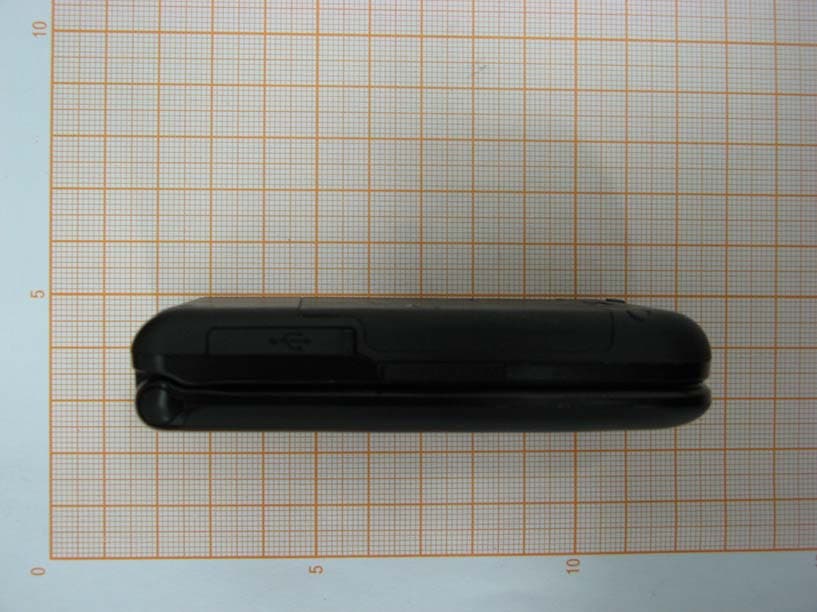
RWZV870
Apr 24, 2007CDMA 1X EVDO/GSM Digital Mobile Phone
Equipment Class
PCE - PCS Licensed Transmitter held to ear
RWZ-6711
Mar 15, 2007GSM850 AND PCS1900 (Mobile Phone)
Equipment Class
PCE - PCS Licensed Transmitter held to ear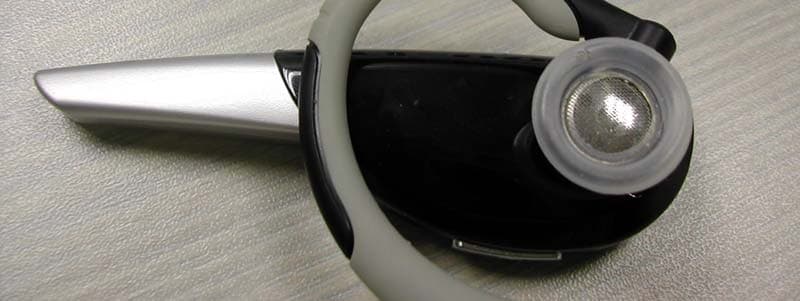
RWZ-BTH003
Nov 17, 2005Bluetooth Headset
Equipment Class
DSS - Part 15 Spread Spectrum Transmitter