SG71007HC-CM210USB modem
Haier Telecom (Qingdao) Co., Ltd.
Click to zoom
Application Details
- Equipment Class
- JBP - Part 15 Class B Computing Device Peripheral
- Date of Grant
- Aug 26, 2010
- Application Purpose
- Original Equipment
- Date of Application
- Aug 25, 2010
- Equipment Note
- USB modem
- Country
- China
Documents & Files
Document Text
Text extracted from the exhibit documents filed with the FCC. Open a document above to read the original.
Users Manual
Micro Digital (Nanjing) Wireless Technologies Ltd. - 1 - CM210 Data Modem User Manual 1 Introduction Thank you for using CM210 Data Modem. To guarantee the CM210 always in its best condition, please read this manual carefully and keep it for further use. The pictures, symbols and contents in this manual are just for your reference. They might not be completely identical with your CM210. With the CM210, you can easily: · Access the Internet · View the statistics · Make and answer calls · Use the call logs service · Send and receive message · Use the phonebook Features Technical Standard: CDMA2000 1X USB Interface Standard: USB 2.0 Full Speed Maximum Transmit Power:>24dBm Data Rate: 153.6kpbs Frequency Band: 800 MHz Dimensions: 89×28×10.5mm Weight: 22g Operating Temperature:0°C to 55°C Storage Temperature:-20°C to 65°C Operating Humidity:5°C to 95°C Storage Humidity:5°C to 95°C System requirements To use the CM210, the following requirements are recommended for your computer: CPU: Pentium4 1GHz or above Memory: 256MB or above Micro Digital (Nanjing) Wireless Technologies Ltd. - 2 - Hard Disk: 50MB free disk space OS: Windows 2000/XP/Vista or Macintosh Operating System Interface: USB1.1 or above Note: If the configuration of your computer is inferior to the recommended configuration, the running performance of the data modem may be affected. 2 Management Software Installation & Uninstalling The installation process is subject to different operating systems, such as Windows 2000, Windows XP, Windows Vista, Macintosh .During the actual installation, if any step differs from what is described here, follow the specific installation instructions. Installation 1. Put the CM210 into the USB interface; 2. The setup program starts automatically, and the CM210 installation interface is displayed later. 3. Follow the instructions of the program; 4. Once the installation completes, the shortcut icon for CM210 Manager appears on the desktop; 5. When the system prompts you that the installation is finished, click Finish to finish the installation of the CM210 Manager. Uninstalling Uninstalling the CM210 Manager through the Add / Remove in the Windows. Accessing & Exiting Accessing the CM210 Manager GUI 1. To start program, double-click the shortcut icon of the CM210 Manager on the desktop; 2. If you are prompted to enter PIN code, enter the correct one and click OK; You can try 3 times to enter your PIN code. If you failed to do that after 3 times, your R-UIM card would be locked, if this happens, use the PUK code to unlock it. You can try 10 times to enter your PUK code. If you failed to do that after 10 times, your Micro Digital (Nanjing) Wireless Technologies Ltd. - 3 - R-UIM card cannot be used, if this happens, contact your network operator. If you failed to enter PIN or PUK code, you can click Cancel to skip over the authentication of the PIN code. Then, the functions related to the R-UIM card are not available for you. However, you can still make emergency calls. Exiting the CM210 Manager Click the button on the right corner on the interface. Instruction to the main interface The initial interface after the CM210 Manager starts is as follows. Shortcut Icon :Access the Connect interface :Start the default internet browser in your operating system :Access the Usage interface :Access the Call and Call log interface :Access the SMS interface :Access the Phonebook interface Micro Digital (Nanjing) Wireless Technologies Ltd. - 4 - :Access the Options interface : View the Help document 3 Main Function Internet Service 1. Choose a profile and click Connect to set up a connection; 2. When the connection is set up, click or start the browser on your computer, and then you can access the internet; 3. Click Disconnect to disconnect from the network. Usage Service Click and access the Usage interface. You can view the content of the statistics, including sent and received statistic values and the duration of the connection. You can select the operation you need. The operation options are: Reset statistics, Expand all, Collapse all. Reset statistics Clear the statistic information Expand all Start all of the data Collapse all Close all of the data Note: The above data of the statistic is for your reference only. Call Service When you use the call service, you need to insert the earphone to the earphone jack on the CM210. Click to display the Voice Call and History interface. Make a call The CM210 provides many easy and quick ways to make a call. Entering a telephone number directly You can make a call by entering a telephone number directly. 1. Click the telephone keypad on the call interface; Micro Digital (Nanjing) Wireless Technologies Ltd. - 5 - 2. Click Dial to make a call; 3. Click End to hang up. Note:·You can press Clear to delete number on the call interface digit by digit. ·You can press and hold Clear to clear the whole number. Selecting a telephone number in the phonebook You can make a call by selecting a telephone number in the phonebook. 1. Click Contacts and the phonebook interface is displayed. Double-click a contact or select a contact and then click Dial. · If only one number in the selected contact, then the number is displayed on call interface and dial out. · If two or more number(s) in the selected contact, double-click the selected number in the pop-up Select interface or click OK after selecting the number. The selected number is displayed on the call interface and dial out. 2. Click End to hang up. Selecting a recently dialed number You can make a call by selecting a number from the recently dialed number. 1. Click Dialed/Received/Missed, and click Dial after selecting the number. Then the number is dialed out. 2. Click End to hang up. Answering a call An alert window is displayed when there is an incoming call. You can choose the options in the follow. 1. Click Answer to answer the call 2. Click Reject to reject the call Volume Adjustment You can adjust volume during the call. Call Hi…
Text truncated - open the document above for the full version.
Cover Letter(s)
Date: August 19, 2010 To: Federal Communications Commission, Authorization & Evaluation Division, 7435 Oakland Mills Road, Columbia, MD 21046 To Whom It May Concern: The Haier Telecom (Qingdao) Co., Ltd. , the undersigned, hereby authorizes Mr. Wu Xuewen from Shenzhen Morlab Communications Technology Co., Ltd., to act on the behalf of the Haier Telecom (Qingdao) Co., Ltd. solely in matters relating to the application for an FCC equipment authorization for FCC ID # SG71007HC-CM210 including the signing of documents in connection with this Application. Necessary acts carried out by Haier Telecom (Qingdao) Co., Ltd. on our behalf of the Haier Telecom (Qingdao) Co., Ltd. in connection with the Application shall have the same effect as acts of the Haier Telecom (Qingdao) Co., Ltd.. The Haier Telecom (Qingdao) Co., Ltd. also hereby certify that no party to this application is subject to a denial of benefits, including FCC benefits, pursuant to Section 5301 of the Anti-Drug Abuse Act of 1988, 21 U.S.C. 853(a). Thank you for your attention to this matter. Sincerely Yours, James Shi Type Approval Manager Haier Telecom (Qingdao) Co., Ltd.
Cover Letter(s)
Date: August 19, 2010 To: Federal Communications Commission, Authorization & Evaluation Division, 7435 Oakland Mills Road, Columbia, MD 21046 Re: Haier Telecom (Qingdao) Co., Ltd. FCC ID: SG71007HC-CM210 FCC Part 15B Certification Confidentiality Request Gentlemen: This letter is to comply with 47 CFR 0.457 and 0.459 pertaining to confidentiality material. Haier Telecom (Qingdao) Co., Ltd. requests that the following documents regarding this submission for FCC ID: SG71007HC-CM210 be kept confidential: Exhibit Type File Name Block Diagram HC-CM210_Block Diagram.pdf Operational Description HC-CM210_Operational Description.pdf Those documents contain detailed system and equipment description and related information about the product which Haier Telecom (Qingdao) Co., Ltd. considers to be confidential proprietary, a custom design and, otherwise, not releasable to the general public. Since this design is a basis form which future technological products will evolve, Haier Telecom (Qingdao) Co., Ltd. considers this information would be of benefit to its competitors, and that the disclosure of the information in these documents would give competitors an unfair advantage in the market. James Shi Type Approval Manager Haier Telecom (Qingdao) Co., Ltd.
External Photos
External Photos of EUT 1. Front View of EUT 2. Back View of EUT 3. Side View of EUT
ID Label/Location Info
Label Label Location
Internal Photos
Internal Photos
Test Report
Report No.: SZ10070079E02 Page 2 of 15 TABLE OF CONTENTS 1. TEST RESULT CERTIFICATION ..........................................................................................3 2. GENERAL INFORMATION ....................................................................................................4 2.1 Equipment under Test (EUT) Description ...............................................................................4 2.2 Test Standards and Results ........................................................................................................5 2.3 Facilities and Accreditations ......................................................................................................6 2.3.1 Facilities ....................................................................................................................................6 2.3.2 Test Environment Conditions....................................................................................................6 2.3.3 Measurement Uncertainty .........................................................................................................6 3. 47 CFR PART 15B REQUIREMENTS ....................................................................................7 3.1 General Information...................................................................................................................7 3.1.1 Test Mode..................................................................................................................................7 3.1.2 Test Setup ..................................................................................................................................8 3.2 Conducted Emission .................................................................................................................10 3.2.1 Requirement ............................................................................................................................10 3.2.2 Test Procedure .........................................................................................................................10 3.2.3 Test Result ...............................................................................................................................11 3.3 Radiated Emission ....................................................................................................................13 3.3.1 Requirement ............................................................................................................................13 3.3.2 Test Procedure .........................................................................................................................13 3.3.3 Test Result ...............................................................................................................................14 Change History Issue Date Reason for change 1.0 August 23, 2010 First edition Report No.: SZ10070079E02 Page 4 of 15 2. General Information 2.1 Equipment under Test (EUT) Description Description ........................... : USB modem Model Name ......................... : HC-CM210 Serial No. .............................. : (n.a, marked #1 by test site) MEID .................................... : (n.a) Hardware Version ................. : 1.0 Software Version .................. : CM210V1.0 Modulation ........................... : CM200V_2.57 Frequency ............................. : Tx: 824.7 – 848.31 MHz; Rx: 869.7-893.31MHz NOTE: 1. The EUT is a model of CDMA1X USB Modem. 2. The EUT can receive the electric power from the PC via USB point and can be used as a storage when inserted with a T-Flash card. 3. For detailed features about the EUT, please see user manual supplied by the applicant. Report No.: SZ10070079E02 Page 5 of 15 2.2 Test Standards and Results The objective of the report is to perform tests according to 47 CFR Part 2, Part 15 Part 22 for FCC ID Certification: No. Identity Document Title 1 47 CFR Part 2 (10-1-09 Edition) Frequency Allocations and Radio Treaty Matters; General Rules and Regulations 2 47 CFR Part 15 (10-1-09 Edition) Radio Frequency Devices Test detailed items and the results are as below: No. Rules Test Type Result FCC Part 15 Requirement 1 §15.107 Conducted Emissions PASS 2 §15.109 Radiated Emissions PASS NOTE: The tests were performed according to the method of measurements prescribed in ANSI C63.4 2003. Report No.: SZ10070079E02 Page 6 of 15 2.3 Facilities and Accreditations 2.3.1 Facilities Shenzhen Morlab Communications Technology Co., Ltd. Morlab Laboratory is a testing organization accredited by China National Accreditation Service for Conformity Assessment (CNAS) according to ISO/IEC 17025. The accreditation certificate number is CNAS L3572. All measurement facilities used to collect the measurement data are located at 3/F, Electronic Testing Building, Shahe Road, Xili, Nanshan District, Shenzhen, 518055 P. R. China. The site was constructed in conformance with the requirements of ANSI C63.7, ANSI C63.4 and CISPR Publication 22, the FCC registration number is 741109. 2.3.2 Test Environment Conditions During the measurement, the environmental conditions were within the listed ranges: Temperature (°C): 15 - 35 Relative Humidity (%): 30 -60 Atmospheric Pressure (kPa): 86-106 2.3.3 Measurement Uncertainty The uncertainty is calculated using the methods suggested in the "Guide to the Expression of Uncertainty in Measurement" (GUM) published by ISO. Uncertainty of Conducted Emission: ±1.8dB Uncertainty of Radiated Emission: ±3.1dB Report No.: SZ10070079E02 Page 7 of 15 3. 47 CFR Part 15B Requirements 3.1 General Information 3.1.1 Te s t M o d e The test modes of the EUT are showed as below: (1) Call Mode: The EUT configuration of the emission tests was MS +PC + earphone. Before the measurement, the lithium battery was completely discharge. During the measurement, the lithium battery was installed into the MS, and the charger was connected to the MS. A communication link was…
Text truncated - open the document above for the full version.
Test Setup Photos
Test Setup Photos 1. CE 2. RE
Contact Information
Applicant
David Yang(Certification Manager)
Technical Contact
Shenzhen Morlab Communications Technology Co.,LtdXuewen Wu
[email protected]+86-755-86120298
FL.3,Electronic Testing Bld, Shahe Rd, · Shenzhen · China
Test Firm
Shenzhen Morlab Communications Technology Co.,LtdShu Luan
Technical Specifications
| # | Rule Parts | Frequency Range | Power Output |
|---|---|---|---|
| 1 | 15B | - | - |
Other Applications from Haier Telecom (Qingdao) Co., Ltd.
SG7201511L50
Dec 07, 2015Mobile Phone
Equipment Class
DTS - Digital Transmission System
SG7201511L32
Dec 03, 2015Mobile Phone
Equipment Class
PCE - PCS Licensed Transmitter held to ear
SG71507L51
Dec 03, 2015L51
Equipment Class
DTS - Digital Transmission System
SG720151015I70
Nov 03, 2015Smart phone
Equipment Class
PCE - PCS Licensed Transmitter held to ear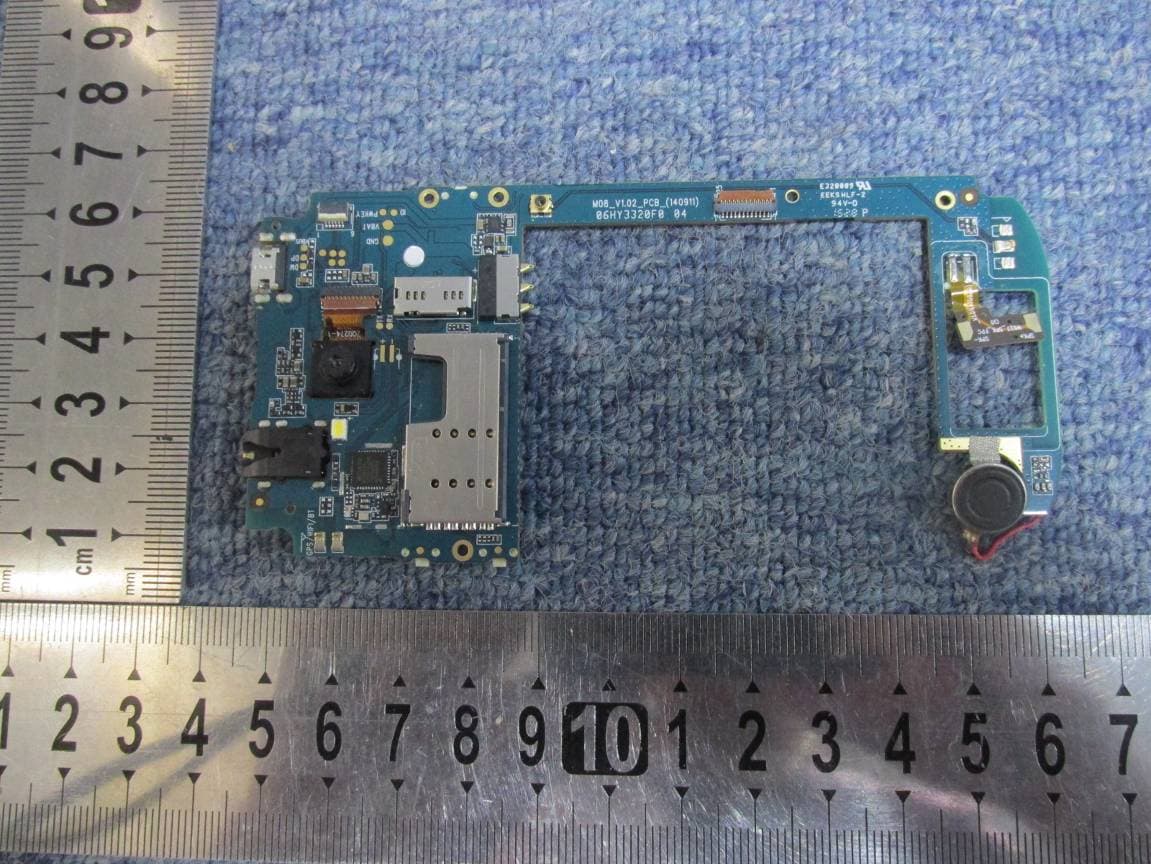
SG720151010G10
Oct 22, 2015Mobile phone
Equipment Class
DSS - Part 15 Spread Spectrum Transmitter