SGI-WL003BTEBTE Hearing Aid
Sivantos GmbH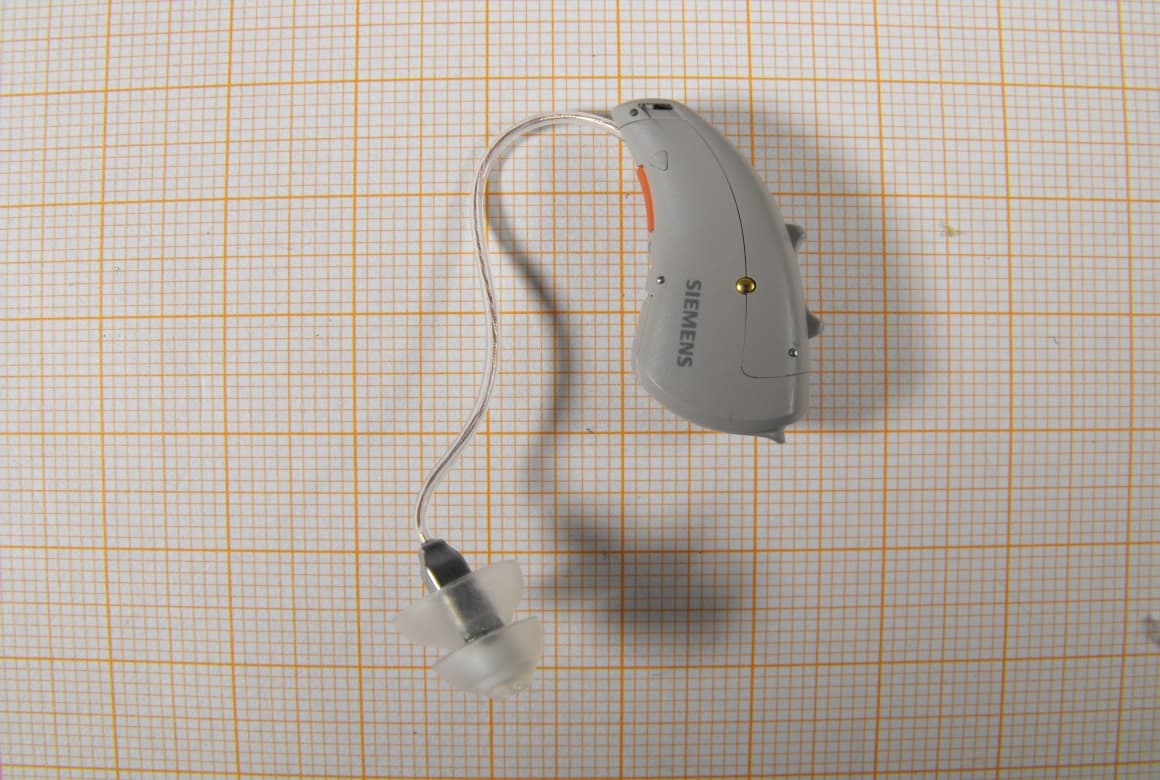
Click to zoom
Application Details
- Equipment Class
- DXX - Part 15 Low Power Communication Device Transmitter
- Date of Grant
- Jul 15, 2014
- Application Purpose
- Original Equipment
- Date of Application
- Jul 15, 2014
- Equipment Note
- BTE Hearing Aid
- Frequency Range
- 3.28000000 - 3.28000000
- Company
- Sivantos GmbH
- Country
- Germany
Documents & Files
Document Text
Text extracted from the exhibit documents filed with the FCC. Open a document above to read the original.
Users Manual
Safety manual for hearing instruments 2Content Content Safety information 3 Intended use 3 Explanation of symbols 3 General warnings 4 BTE or RIC or custom models 11 For infants, small children and mentally disabled persons 13 When using remote control apps 15 For Hearing Care Professionals 16 Important information 17 Transport and storage conditions 17 Disposal information 17 Conformance information 17 Safety information3 This safety manual provides safety information and other important information about your hearing instruments. It covers several instrument types and optional features. XRefer to the user guide of your hearing instruments, to check the instrument type and the activated features. Intended use Hearing instruments are intended to improve the hearing of hearing impaired persons. Diagnosis and prescription of a hearing instrument must be performed by hearing health specialists, e.g. acousticians, audiologists or ENT doctors. Use the hearing instruments and accessories only as described in the respective user guides. Explanation of symbols Symbols used in this document Points out a situation that could lead to serious, moderate, or minor injuries. Indicates possible property damage. Information and warnings for children with hearing instruments. Safety information Safety information4 Symbols on the device or packaging CE compliance label, confirms compliance with certain European Directives, refer to section "Conformance information". EMC and radio communications compliance label Australia. Do not dispose of the device with general domestic waste. Read more in section "Disposal information". Read and follow the instructions in the user guide. General warnings WARNING Risk of impairing the residual hearing of the user. XUse only hearing instruments that have been fitted especially for your needs. WARNING Risk of injury! XDo not use obviously damaged devices and return them to point of sale. WARNING Note that any unauthorized changes to the product may cause damage to the product or cause injury. XUse only approved parts and accessories. Ask your Hearing Care Professional for support. Safety information5 WARNING Your hearing instruments may reduce certain background sounds, potentially also traffic or warning signals. WARNING Risk of explosion! XDo not use your hearing instruments in explosive atmospheres (e. g. in mining areas). WARNING Choking hazard! Your hearing instruments contain small parts which can be swallowed. XKeep hearing instruments, batteries and accessories out of reach of children and mentally disabled persons. XIf parts have been swallowed consult a physician or hospital immediately. If you have hearing instruments that are intended for the fitting of infants, small children, or mentally disabled persons, refer also to section "For infants, small children and mentally disabled persons". NOTICE XProtect your hearing instruments from high humidity. Do not wear them in the shower or when you apply make-up, perfume, aftershave, hairspray or suntan lotion. Safety information6 NOTICE Only use zinc-air batteries or nickel-metal hydride (NiMH) rechargeable batteries. Do not use e.g. silver-zinc or lithium-ion rechargeable batteries. NOTICE Leaking batteries damage the hearing instruments. XTurn the hearing instruments off when not in use to preserve the battery. XRemove batteries when the instruments are not in use for a prolonged period of time. NOTICE XProtect your hearing instruments from extreme heat. Do not expose them to direct sunlight. NOTICE XDo not dry your hearing instruments in the microwave oven. NOTICE Different types of strong radiation, e. g. during X-ray or MRI head examinations, may damage hearing instruments. XDo not wear the hearing instruments during these or similar procedures. Weaker radiation, e. g. from radio equipment or airport security, does not damage the hearing instruments. Safety information7 Contraindications WARNING Consult a Hearing Care Professional if you experience any unusual side effects like skin irritation, excessive accumulation of ear wax, dizziness, change in your hearing, or if you think there may be a foreign object in your ear canal. WARNING A Hearing Care Professional should advise a prospective hearing instrument user to consult a licensed physician before using the hearing instrument if the Hearing Care Professional determines that the prospective user has any of the following conditions: XVisible congenital or traumatic deformity of the ear. XHistory of active drainage from the ear within the previous 90 days. XHistory of sudden or rapidly progressive hearing loss within the previous 90 days. XAcute or chronic dizziness. XUnilateral hearing loss of sudden or recent onset within the previous 90 days. Safety information8 For hearing instruments with wireless functionality In some countries restrictions for the usage of wireless equipment exist. XRefer to local authorities for further information. WARNING Risk of affecting electronic equipment! XIn areas where the use of electronics or wireless devices are restricted, verify if your device has to be turned off. NOTICE Your hearing instruments are designed to comply with international standards on electromagnetic compatibility but interference with nearby electronic devices could occur. In this case, move away from the source of interference. Safety information9 For hearing instruments with tinnitus noiser function Your hearing instrument may be equipped with a tinnitus noiser. The use of the tinnitus noiser should be only on the advice and in consultation with your Hearing Care Professional. WARNING Risk of further impairment to the user’s hearing health. The volume of the tinnitus noiser can be set to a level which could lead to permanent hearing damage when used for a prolonged period of time. XThe tinnitus noiser should never be used at uncomfortable levels. Safety information10 For hearing instruments with AutoPhone magnet WARNING Risk of affecting life support sys…
Text truncated - open the document above for the full version.
Users Manual
Mounting of the ‘e2e 3.0’ wireless module in a typical hearing aid page 1 of 4 C. Meythaler Siemens H AU QM, 2014-08-13 The module consists of the Antenna (1), Analog ASIC (2) which contains the modulation and power supply and a portion of the Digital ASIC (3) that contains the circuitry and firmware to provide / receive the digital data packages to be transmitted / being received (see also the separate block diagram). The power is originating in a 1,2Vdc button cell (4) which is available in different sizes / capacities for different hearing aid models (depending on the acoustic output power). The module does not require shielding. It is mounted on a printed circuit board by means of soldering. The PCB with the module and all other components of the hearing aid are arranged in a plastic shell that is not user serviceable or user modifiable. The outer chassis may be replaced by field service but is of no relevance to the wireless module. The following pictures display the mounting arrangement in 2 sample instruments. Mounting is performed by an automatic mounting machine. Fig 1: photographic image of the inside of the Type RIC 13 hearing aid. Fig 2: two versions (with/ without plastic shell) of stripped CAD pictures from the inside of Type RIC 13 hearing aid (1) Antenna (5) Microphone module (2) Digital ASIC (6) plastic shell (3) Analog ASIC (4)Battery (8) buttons (1) (1) (2) (3) (2) (3) (4) (5) (5) (6) (8) (8) Mounting of the ‘e2e 3.0’ wireless module in a typical hearing aid page 2 of 4 C. Meythaler Siemens H AU QM, 2014-08-13 Fig 3: photographic image of the inside of the Type RIC 312 hearing aid. Fig 4: two versions (with/ without plastic shell) of stripped CAD pictures from the inside of Type RIC 312 hearing aid (1) Antenna (5) Microphone module (2) Digital ASIC (6) plastic shell (3) Analog ASIC (8) buttons (4)Battery (1) (1) (2),(3) (2),(3) (4) (5) (5) (6) (8) (8) Mounting of the ‘e2e 3.0’ wireless module in a typical hearing aid page 3 of 4 C. Meythaler Siemens H AU QM, 2014-08-13 After the production, the labeling will be provided in the user guide as shown here n(English & French): Mounting of the ‘e2e 3.0’ wireless module in a typical hearing aid page 4 of 4 C. Meythaler Siemens H AU QM, 2014-08-13
External Photos
Test report no.: 1-7950_14-01-01_AnnexA 2014-05-28 Page 1 of 9 Annex A This test report annex is electronically signed and valid without handwriting signature. For verification of the electronic signatures, the public keys can be requested at the testing laboratory. Test report annex authorised: Tobias Wittenmeier Expert Test report no.: 1-7950_14-01-01_AnnexA 2014-05-28 Page 2 of 9 External photos of the EUT Photo documentation: Photo 1: Photo 2: Test report no.: 1-7950_14-01-01_AnnexA 2014-05-28 Page 3 of 9 Photo 3: Photo 4: Test report no.: 1-7950_14-01-01_AnnexA 2014-05-28 Page 4 of 9 Photo 5: Photo 6: Test report no.: 1-7950_14-01-01_AnnexA 2014-05-28 Page 5 of 9 Photo 7: Photo 8: Test report no.: 1-7950_14-01-01_AnnexA 2014-05-28 Page 6 of 9 Photo 9: Photo 10: Test report no.: 1-7950_14-01-01_AnnexA 2014-05-28 Page 7 of 9 Photo 11: Photo 12: Test report no.: 1-7950_14-01-01_AnnexA 2014-05-28 Page 8 of 9 Photo 13: Photo 14: Test report no.: 1-7950_14-01-01_AnnexA 2014-05-28 Page 9 of 9 Document history Version Applied changes Date of release Initial release 2014-05-28
Internal Photos
Test report no.: 1-7950_14-01-01_AnnexB 2014-05-28 Page 1 of 5 Annex B This test report annex is electronically signed and valid without handwriting signature. For verification of the electronic signatures, the public keys can be requested at the testing laboratory. Test report annex authorised: Tobias Wittenmeier Expert Test report no.: 1-7950_14-01-01_AnnexB 2014-05-28 Page 2 of 5 Internal photos of the EUT Photo documentation: Photo 1: Photo 2: Test report no.: 1-7950_14-01-01_AnnexB 2014-05-28 Page 3 of 5 Photo 3: Photo 4: Test report no.: 1-7950_14-01-01_AnnexB 2014-05-28 Page 4 of 5 Photo 5: Photo 6: Test report no.: 1-7950_14-01-01_AnnexB 2014-05-28 Page 5 of 5 Document history Version Applied changes Date of release Initial release 2014-05-28
Test Report
2014-07-15 Page 1 of 27 TEST REPORT Test report no.: 1-7950/14-01-02-A Testing laboratory Applicant CETECOM ICT Services GmbH Untertuerkheimer Strasse 6 – 10 66117 Saarbruecken / Germany Phone: + 49 681 5 98 - 0 Fax: + 49 681 5 98 - 9075 Internet: http://www.cetecom.com e-mail: [email protected] Accredited Testing Laboratory: The testing laboratory (area of testing) is accredited according to DIN EN ISO/IEC 17025 (2005) by the Deutsche Akkreditierungsstelle GmbH (DAkkS) The accreditation is valid for the scope of testing procedures as stated in the accreditation certificate with the registration number: D-PL-12076-01-01 Area of Testing: Radio Communications & EMC (RCE) SIEMENS Audiologische Technik GmbH Gebbertstrasse 125 91058 Erlangen / GERMANY Phone: +49 9131 308-3000 Fax: +49 9131 308-3207 Contact: Clemens Meythaler e-mail: [email protected] Manufacturer SIEMENS Audiologische Technik GmbH Gebbertstrasse 125 91058 Erlangen / GERMANY Test standard/s 47 CFR Part 15 Title 47 of the Code of Federal Regulations; Chapter I; Part 15 - Radio frequency devices RSS - 210 Issue 8 Spectrum Management and Telecommunications Radio Standards Specification - Licence-exempt Radio Apparatus (All Frequency Bands): Category I Equipment RSS - Gen Issue 3 Spectrum Management and Telecommunications Radio Standards Specifications - General Requirements and Information for the Certification of Radio Apparatus For further applied test standards please refer to section 3 of this test report. Test Item Kind of test item: Wireless System for Hearing Aids Model name: e2e 3.0 FCC ID: SGI-WL003BTE IC: 267AB-WL003BTE Frequency: 3.2520MHz – 3.3020MHz Technology tested: Magnetic coupling Antenna: Integrated ferrite coil antenna Power supply: 1.4V DC by Zinc Air Battery Temperature range: 0°C to +50°C This test report is electronically signed and valid without handwriting signature. For verification of the electronic signatures, the public keys can be requested at the testing laboratory. Test report authorised: Test performed: p.o. Stefan Bös Tobias Wittenmeier Professional Experienced Test report no.: 1-7950/14-01-02-A 2014-07-15 Page 2 of 27 1 Table of contents 1 Table of contents ............................................................................................................................................ 2 2 General information ....................................................................................................................................... 3 2.1 Notes and disclaimer .......................................................................................................................... 3 2.2 Application details ............................................................................................................................... 3 3 Test standard/s ............................................................................................................................................... 3 4 Test environment ............................................................................................................................................ 4 5 Test item .......................................................................................................................................................... 4 5.1 Additional information ........................................................................................................................ 4 6 Test laboratories sub-contracted ................................................................................................................. 4 7 Description of test setup ............................................................................................................................... 5 7.1 Radiated measurements ..................................................................................................................... 5 7.2 Open area site ...................................................................................................................................... 6 8 Summary of measurement results ............................................................................................................... 7 8.1 Additional comments .......................................................................................................................... 7 9 Measurement results ...................................................................................................................................... 8 9.1 Timing of the transmitter .................................................................................................................... 8 9.2 Bandwidth of the modulated carrier .................................................................................................. 9 9.3 Fieldstrength of the fundamental..................................................................................................... 12 9.4 Fieldstrength of the harmonics and spurious ................................................................................ 13 9.5 Receiver spurious emissions ........................................................................................................... 18 9.6 Conducted limits ............................................................................................................................... 23 10 Test equipment and ancillaries used for tests ................................................................................... 24 11 Observations ......................................................................................................................................... 25 Annex A Document history .......................................................................................................................... 26 Annex B Further information ........................................................................................................................ 26 Annex C Accreditation Certific…
Text truncated - open the document above for the full version.
Test Setup Photos
Test report no.: 1-7950_14-01-01_AnnexC 2014-05-28 Page 1 of 7 Annex C This test report annex is electronically signed and valid without handwriting signature. For verification of the electronic signatures, the public keys can be requested at the testing laboratory. Test report annex authorised: Tobias Wittenmeier Expert Test report no.: 1-7950_14-01-01_AnnexC 2014-05-28 Page 2 of 7 Test setup photos Photo documentation: Photo 1: Photo 2: Test report no.: 1-7950_14-01-01_AnnexC 2014-05-28 Page 3 of 7 Photo 3: Photo 4: Test report no.: 1-7950_14-01-01_AnnexC 2014-05-28 Page 4 of 7 Photo 5: Photo 6: Test report no.: 1-7950_14-01-01_AnnexC 2014-05-28 Page 5 of 7 Photo 7: Photo 8: Test report no.: 1-7950_14-01-01_AnnexC 2014-05-28 Page 6 of 7 Photo 9: Test report no.: 1-7950_14-01-01_AnnexC 2014-05-28 Page 7 of 7 Document history Version Applied changes Date of release Initial release 2014-05-28
Contact Information
Applicant
Juergen Reithinger
Test Firm
cetecom advanced GmbHGerald Schmidt
Technical Specifications
| # | Rule Parts | Frequency Range | Power Output |
|---|---|---|---|
| 1 | 15C | 3.28 MHz - 3.28 MHz | - |
Other Applications from Sivantos GmbH
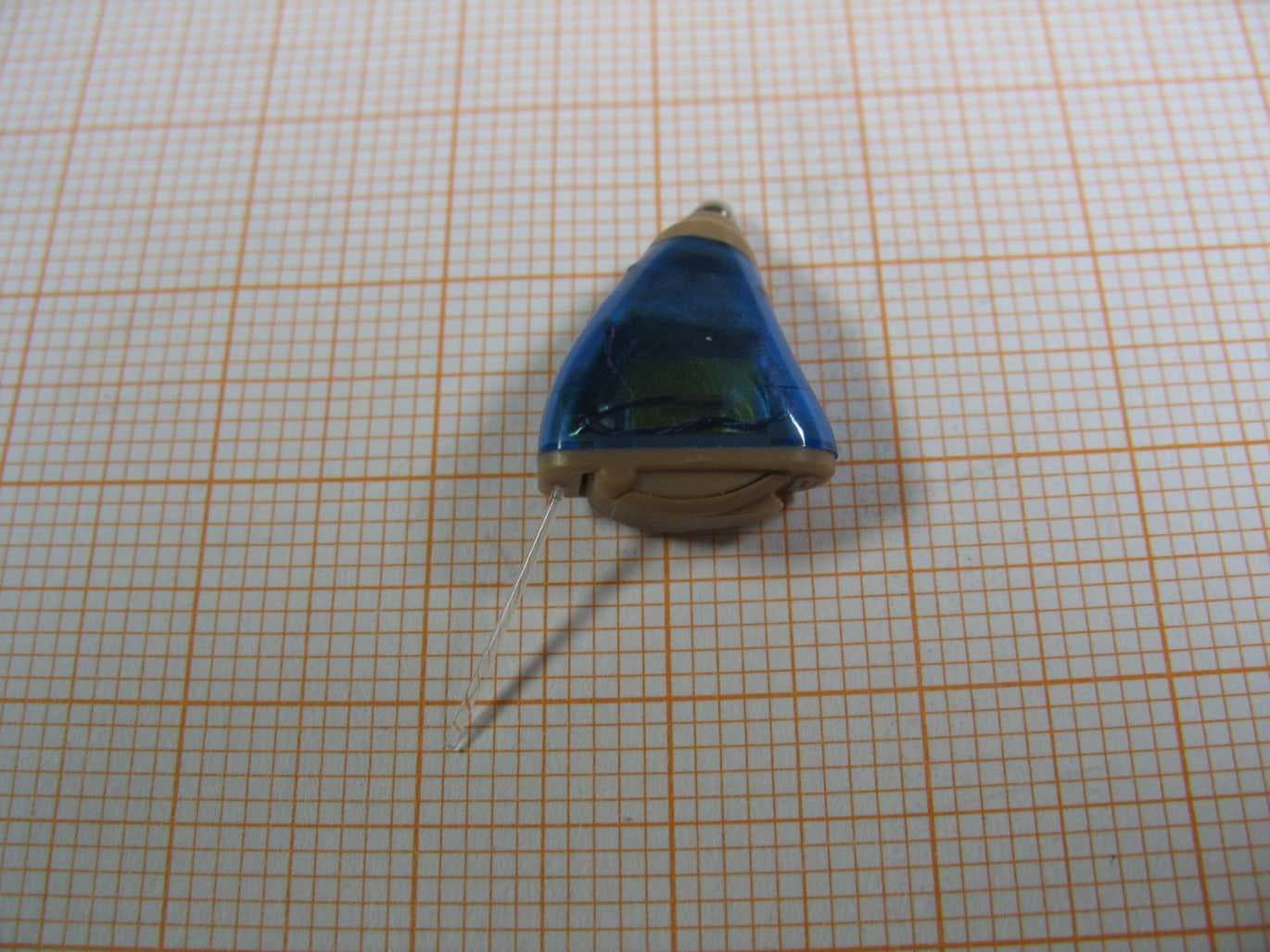
SGI-MIM002
Mar 17, 2020NFMI Module 2
Equipment Class
DXX - Part 15 Low Power Communication Device Transmitter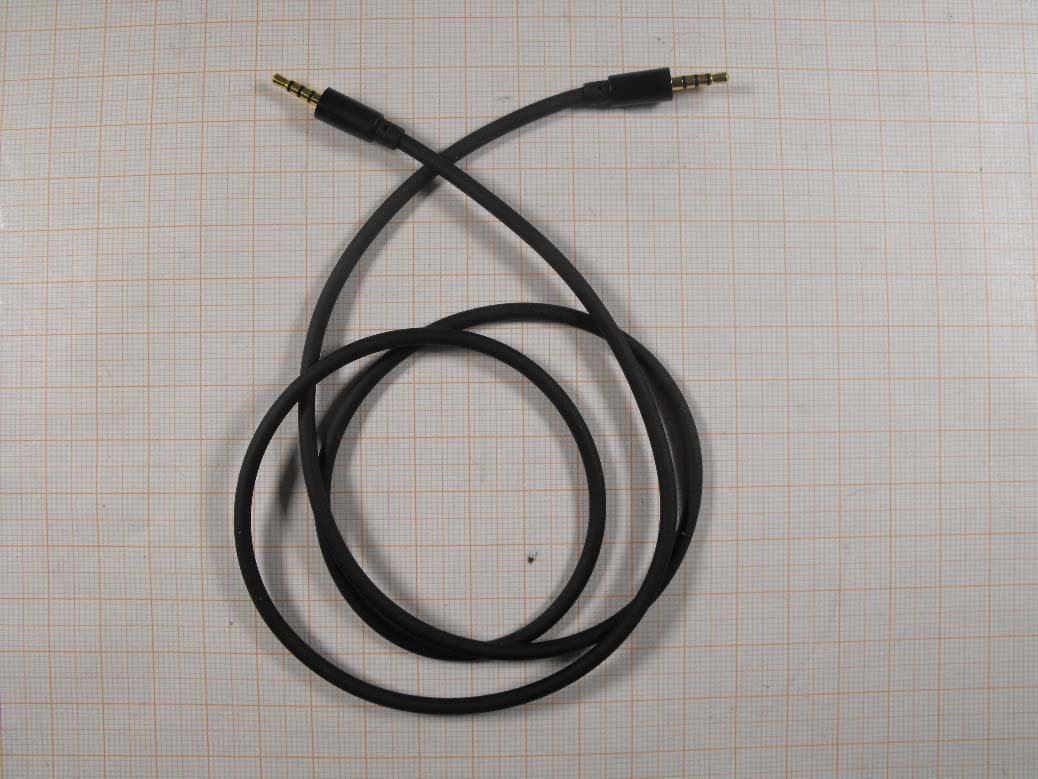
SGI-WL401
Apr 23, 2015Remote Controller
Equipment Class
DXX - Part 15 Low Power Communication Device Transmitter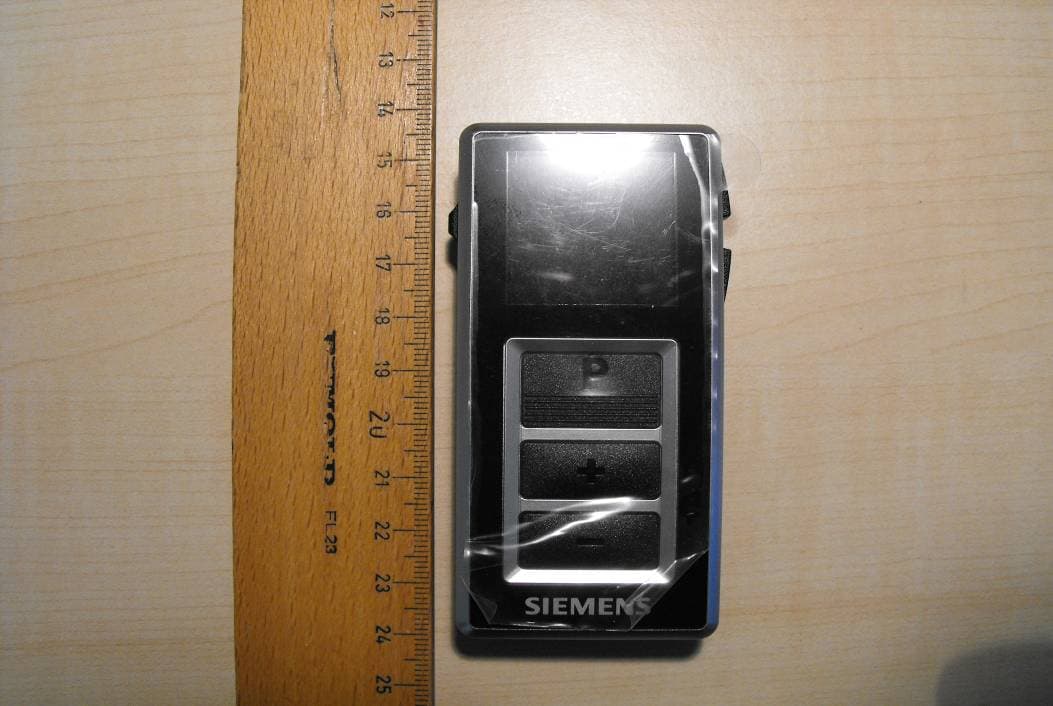
SGI-WL700
Feb 04, 2013easyPocket remote control 3.28 MHz
Equipment Class
DXX - Part 15 Low Power Communication Device TransmitterSGI-WL201AP
Jun 27, 2011Remote Control Device
Equipment Class
DXX - Part 15 Low Power Communication Device Transmitter
SGI-WL500
Feb 24, 2011Remote control for hearing instruments
Equipment Class
DSS - Part 15 Spread Spectrum Transmitter