TKHSP102TSM1/M110 Dual Band GSM 850/1900 Handset
Vitelcom Mobile Technology, S.A.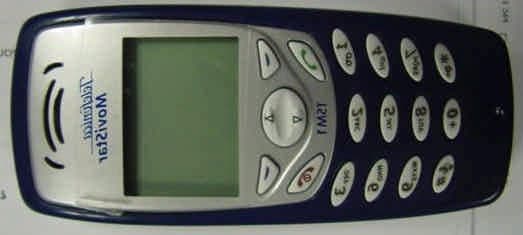
Click to zoom
Application Details
- Equipment Class
- PCE - PCS Licensed Transmitter held to ear
- Date of Grant
- Mar 16, 2006
- Application Purpose
- Original Equipment
- Date of Application
- Mar 16, 2006
- Equipment Note
- TSM1/M110 Dual Band GSM 850/1900 Handset
- Frequency Range
- 1850.20000000 - 1909.80000000
- Country
- Spain
Documents & Files
Document Text
Text extracted from the exhibit documents filed with the FCC. Open a document above to read the original.
Users Manual
- -- - 6 66 6 - -- - Safety information For your safety, please read the following instructions prior to the use of the phone. Violation of the following instructions is illegal and dangerous. Advice for safety and maintenance of the device - Do not try to disassemble or repair the mobile phone. - Keep it from humidity and moisture. - Do not use strong detergents or harmful chemicals to clean the device. Use a smooth cloth instead. - Do not apply strong impact on the device. - The device shall be located closely to the switch for easy access to the battery charger. - Do not place the mobile phone at a high temperature, which may cause defects in the device. - If the device is repaired by an unauthorized person, its guarantee will be void and the maker is not responsible for any defects caused by. - Do not remove the battery while the mobile phone is on, which will cause defects in the product. - Ambient temperature of about 25 degrees is recommended for normal operation of the mobile phone. - If the mobile phone or one of its parts (charger, battery, etc.) fails to operate, contact the agent you enlisted in. FCC statement Modification statement The FCC requires the user to be notified that any changes or modifications made to this device that are not expressly approved by Vitelcom Mobile Safety Instructions - -- - 7 77 7 - -- - Technology S.A. may void the user’s authority to operate the equipment. Class B digital devices regulatory notice This equipment has been tested and found to comply with the limits for a Class B digital device, pursuant to Part 15 of the FCC Rules. These limits are designed to provide reasonable protection against harmful interference in a residential installation. This equipment generates, uses, and can radiate radio frequency energy and, if not installed and used in accordance with the instructions, may cause harmful interference to radio communications. However, there is no guarantee that interference will not occur in a particular installation. If this equipment does cause harmful interference to radio or television reception, which can be determined by turning the equipment off and on, the user is encouraged to try to correct the interference by 1 or more of the following measures: • Reorient or relocate the receiving antenna • Increase the separation between the equipment and receiver • Connect the equipment into an outlet on a circuit different from that to which the receiver is connected • Consult the dealer or an experienced radio or television technician for help Wireless notice This product emits radio frequency energy, but the radiated output power of this device is far below the FCC radio frequency exposure limits. Nevertheless, the device should be used in such a manner that the potential for human - -- - 8 88 8 - -- - contact with the antenna during normal operation is minimized. For body worn operation, this phone has been tested and meets the FCC RF exposure guidelines when used with the Vitelcom accessories supplied or designated for this product. Use of other accessories may not ensure compliance with FCC RF exposure guidelines. SAR levels measured for this phone are 0.478 W/kg for use at the ear and 1.15 W/kg (this value must re-measured) for use close to the body, While there may be differences between the SAR levels of various phones and at various positions, they all meet the government requirement for RF exposure. For body-worn operation, the phone meets FCC RF exposure guidelines provided that it is used with a non-metallic accessory with the handset at least 1.5 cm from the body. Use of other accessories may not ensure compliance with FCC RF exposure guidelines. Measurement of radio frequency exposed (absorbed special rate information SAR) This mobile phone is a transmitter-receiver with the low-output electric wave. The mobile phone conforms to mandatory requirements of EU standard related with radio wavelength exposed, This product is designed and manufactured, kept from exceeding the exposed range of radio frequency energy as EU council has recommended. The international standard value is developed on the basis of thorough and regular scientific researches and evaluation (examination) by an independent research institute. - -- - 9 99 9 - -- - The range standard is to search for safety of all regardless of age or health state. Standard value exposed of the mobile phone is displayed in “Specific Absorption Rate” (SAR) unit. The SAR range (limit) that EU council recommends is 2.0w/kg. Based on the mobile functions, SAR test will be performed, and then the mobile sends the maximum output at the certified frequency. Its maximum output will be measured in SAR, but the level of the usual SAR will be far less than the maximum value. It is because the mobile phone is designed to operate at various strength of frequency. Consequently you are required to use the phone with the minimum strength as necessary in the communication network. In general, the closer a transmitting tower is, the lower the strength is. The manufacturer shall demonstrate that the phone conforms to R&TTE standard of Europe prior to release in the communication market. All of these requirements are mandatory to keep all the users safe and healthy. The maximum output of SAR in the phone is tested to be 1,15W/Kg. SAR limit for all the used mobile phones is 2.0 W/Kg for 10g of the human body, which is the maximum value in consideration of the additional safety items so to include all the other variables. SAR’s standard value can be changed to cope with national requirements and functions of the communication service network. Communication network service The product is approved to be available in GSM850~1900 environment. Please read the user manual carefully to get familiar with the functions of the device. Besides, this mobile phone is allowed to accept other communication network services. However, you need to contact the operator to use the services. How to join will be descr…
Text truncated - open the document above for the full version.
Users Manual
- -- - 6 66 6 - -- - Safety information For your safety, please read the following instructions prior to the use of the phone. Violation of the following instructions is illegal and dangerous. Advice for safety and maintenance of the device - Do not try to disassemble or repair the mobile phone. - Keep it from humidity and moisture. - Do not use strong detergents or harmful chemicals to clean the device. Use a smooth cloth instead. - Do not apply strong impact on the device. - The device shall be located closely to the switch for easy access to the battery charger. - Do not place the mobile phone at a high temperature, which may cause defects in the device. - If the device is repaired by an unauthorized person, its guarantee will be void and the maker is not responsible for any defects caused by. - Do not remove the battery while the mobile phone is on, which will cause defects in the product. - Ambient temperature of about 25 degrees is recommended for normal operation of the mobile phone. - If the mobile phone or one of its parts (charger, battery, etc.) fails to operate, contact the agent you enlisted in. FCC statement Modification statement The FCC requires the user to be notified that any changes or modifications made to this device that are not expressly approved by Vitelcom Mobile Safety Instructions - -- - 7 77 7 - -- - Technology S.A. may void the user’s authority to operate the equipment. Class B digital devices regulatory notice This equipment has been tested and found to comply with the limits for a Class B digital device, pursuant to Part 15 of the FCC Rules. These limits are designed to provide reasonable protection against harmful interference in a residential installation. This equipment generates, uses, and can radiate radio frequency energy and, if not installed and used in accordance with the instructions, may cause harmful interference to radio communications. However, there is no guarantee that interference will not occur in a particular installation. If this equipment does cause harmful interference to radio or television reception, which can be determined by turning the equipment off and on, the user is encouraged to try to correct the interference by 1 or more of the following measures: • Reorient or relocate the receiving antenna • Increase the separation between the equipment and receiver • Connect the equipment into an outlet on a circuit different from that to which the receiver is connected • Consult the dealer or an experienced radio or television technician for help Wireless notice This product emits radio frequency energy, but it has been tested and the the SAR levels are far bellow the FCC limits. While there may be differences between the SAR levels of various phones and at various positions, they - -- - 8 88 8 - -- - all meet the government requirement for RF exposure. For body-worn operation, the phone meets FCC RF exposure guidelines provided that it is used with accessories that contain no metallic components in its construction and provides a separation of at least 1.5 cm from the body. Use of other accessories may not ensure compliance with FCC RF exposure guidelines. Measurement of radio frequency exposed (absorbed special rate information SAR) This mobile phone is a transmitter-receiver with the low-output electric wave. The mobile phone conforms to mandatory requirements of EU standard related with radio wavelength exposed, This product is designed and manufactured, kept from exceeding the exposed range of radio frequency energy as EU council has recommended. The international standard value is developed on the basis of thorough and regular scientific researches and evaluation (examination) by an independent research institute. The range standard is to search for safety of all regardless of age or health state. Standard value exposed of the mobile phone is displayed in “Specific Absorption Rate” (SAR) unit. The SAR range (limit) that EU council recommends is 2.0w/kg. Based on the mobile functions, SAR test will be performed, and then the mobile sends the maximum output at the certified frequency. Its maximum output will be measured in SAR, but the level of the usual SAR will be far less than the maximum value. It is because the mobile phone is designed to - -- - 36 3636 36 - -- - Nevertheless, the device should be used in such a manner that the potential for human contact with the antenna during normal operation is minimized. - -- - 9 99 9 - -- - operate at various strength of frequency. Consequently you are required to use the phone with the minimum strength as necessary in the communication network. In general, the closer a transmitting tower is, the lower the strength is. The manufacturer shall demonstrate that the phone conforms to R&TTE standard of Europe prior to release in the communication market. All of these requirements are mandatory to keep all the users safe and healthy. The maximum output of SAR in the phone is tested to be 1,15W/Kg. SAR limit for all the used mobile phones is 2.0 W/Kg for 10g of the human body, which is the maximum value in consideration of the additional safety items so to include all the other variables. SAR’s standard value can be changed to cope with national requirements and functions of the communication service network. Communication network service The product is approved to be available in GSM850~1900 environment. Please read the user manual carefully to get familiar with the functions of the device. Besides, this mobile phone is allowed to accept other communication network services. However, you need to contact the operator to use the services. How to join will be described later. Safety on the road Please remember that use of the mobile phone is prohibited during driving. And follow the related laws in your country. Before answering the phone or making a call, stop the car in a safe place. In case of emergency, please keep in mind the following instructions before using the mobile phone: Concentrate on…
Text truncated - open the document above for the full version.
Cover Letter(s)
attn: Reviewing Engineer Federal Communications Commission 7435 Oakland Mills Road Columbia, MD 21046 RE: LETTER OF AGENT AUTHORIZATION March 14, 2006 To Whom It May Concern: We, the undersigned, hereby authorize MET Laboratories, Inc. to act on our behalf in all matters relating to application for equipment authorizations (FCC ID: TKHSP102), including the signing of all documents relating to these matters. We also hereby certify that no party to the application authorized hereunder is subject to the denial of benefits, including FCC benefits, pursuant to Section 5301 of the Anti-Drug Abuse Act of 1988,21 U.S.C.853(a). This agreement expires one year from the current date. Sincerely, P.A. Mr. Rafael Abad SW Validation Managing Director Vitelcom Mobile Technology Parque Tecnologico de Andalucia, Av. Juan Antonio Peñalver, E-29590 Campanilla-Málaga, SPAIN
Cover Letter(s)
Federal Communication Commission Equipment Authorization Division, Application Processing Branch 7435 Oakland Mills Road Columbia, MD 21048 March 14, 2006 RE: 15.19 Statement (FCC ID: TKHSP102) TO WHOM IT MAY CONCERN The statement: "This device complies with Part 15 of the FCC Rules. Operation is subject to the following two conditions: (1) this device may not cause harmful interference, and (2) this device must accept any interference received, including interference that may cause undesired operation” Is not placed in the label of the equipment due to the following reasons: - Type label is too small (No room for this writing). - Required text is already included in the user guide This statement is placed in a prominent location in the instruction manual. Please contact me if there is any information you may need. If you have any questions, please feel free to contact me at the address shown below. Sincerely, P.A. Mr. Rafael Abad SW Validation Managing Director Vitelcom Mobile Tecnology, S.A. Parque Tecnologico de Andalucia, Av. Juan Antonio Peñalver, E-29590 Campanillas-Malaga, SPAIN
Cover Letter(s)
Federal Communication Commission Equipment Authorization Division, Application Processing Branch 7435 Oakland Mills Road Columbia, MD 21048 March 14, 2006 TO WHOM IT MAY CONCERN Pursuant to Paragraphs §0.457 and 0.459 of the Commission’s Rules (47 C.F.R.) and Section §552(b)(4) of the Freedom of Information Act, Vitelcom Mobile Technology S.A. requests confidentiality for the following products: FCC ID Number Product Title/Model TKHSP102 Dual band GSM mobile phone For the product stated above, we request that the following information be held confidential: 1) Circuit diagrams 2) Block Diagrams 3) Bill of materials 4) Operational Description 5) Tune up information No other items submitted as part of the equipment authorization filing process are deemed confidential. The above exhibits contain Vitelcom Mobile Technology S.A. trade secrets and proprietary information that could be of benefit to our competitors. This material is not customarily available to the general public and we request that it be withheld from public inspection. If you have any questions, please feel free to contact me at the address shown below. Sincerely, Name: Rafael Abad Cano P.A. Date: March 14, 2006 Place: Campanillas-Málaga Signature and company stamp
External Photos
Rear view Front view
Internal Photos
Front view Rear view
RF Exposure Info
Accredited according to ISO/IEC 17025 by: TTI-P-G 81/94-A0 CETECOM Inc. 411 Dixon Landing Road Milpitas, CA 95035 U.S.A. Phone: + 1 (408) 586 6200 Fax: + 1 (408) 586 6299 E-mail: [email protected] http://www.cetecom.com CETECOM Inc. is a Delaware Corporation with Corporation number: 2113686 Board of Directors: Dr. Harald Ansorge, Dr. Klaus Matkey, Hans Peter May V.2.16M-2002-03-12 f:\emc\projects\vitelcom\479_2003_vitel_1900mhz\report\sar_479_2003_fcc_1900.doc © Copyright by CETECOM SAR Test Report No. SAR_479_2003_FCC_1900 for the Vitelcom 1900 MHz Mobile Phone Model Number: TSM1 Date of Report: 05/23/2003 Date of issue: 05/23/2003 Report Copy No.: 01 SAR Test Report No. SAR_479_2003_FCC_1900 Date of Report: 05/23/2003 Page 2 of 29 Error! Reference source not found. This report shall not be reproduced except in full without the written approval of: CETECOM Inc. SAR 411 Dixon Landing Road Milpitas, CA 95035 U.S.A. Contents 1. ASSESSMENT ...................................................................................................................4 2. ADMINISTRATIVE DATA...................................................................................................5 2.1. Identification of the Testing Laboratory Issuing the SAR Assessment Report ...............5 2.2. Identification of the Client...........................................................................................5 2.3. Identification of the Manufacturer...............................................................................5 3. EQUIPMENT UNDER INVESTIGATION (EUI)...................................................................6 3.1. Identification of the Equipment under Investigation ...................................................6 3.2. Front View of the Equipment under Investigation ......................................................7 4. SUBJECT OF INVESTIGATION ........................................................................................8 4.1. The IEEE Standard C95.1 and the FCC Exposure Criteria .......................................8 4.2. Distinction Between Exposed Population, Duration of Exposure and Frequencies...8 4.3. Distinction between Maximum Permissible Exposure and SAR Limits......................9 4.4. SAR Limit ...................................................................................................................9 5. THE FCC MEASUREMENT PROCEDURE .....................................................................10 5.1. General Requirements.............................................................................................10 5.2. Device Operating Next to a Person’s Ear ................................................................10 5.3. Test positions of device relative to head..................................................................11 5.4. Test to be Performed ...............................................................................................14 5.5. Body-worn and Other Configurations.......................................................................14 5.6. Procedure for assessing the peak spatial-average SAR .........................................15 5.7. Determination of the largest peak spatial-average SAR ..........................................17 6. THE MEASUREMENT SYSTEM ......................................................................................18 6.1. Robot system specification ......................................................................................18 6.2. Probe and amplifier specification .............................................................................19 6.3. Phantoms.................................................................................................................19 6.4. SAR measurement procedure .................................................................................20 6.5. SARA2 Interpolation and Extrapolation schemes ....................................................20 SAR Test Report No. SAR_479_2003_FCC_1900 Date of Report: 05/23/2003 Page 3 of 29 Error! Reference source not found. This report shall not be reproduced except in full without the written approval of: CETECOM Inc. SAR 411 Dixon Landing Road Milpitas, CA 95035 U.S.A. 6.6. Interpolation of 2D area scan...................................................................................21 6.7. Extrapolation of 3D scan..........................................................................................21 6.8. Interpolation of 3D scan and volume averaging.......................................................21 7. UNCERTAINTY ASSESSMENT.......................................................................................23 7.1. Measurement Uncertainty Budget ...........................................................................24 8. TEST RESULTS SUMMARY............................................................................................25 8.1. Description of EUT test positions and operation modes ..........................................25 8.2. Conducted Output Power.........................................................................................25 8.3. Head SAR results for GSM 1900MHz band for Vitel ...............................................26 8.4. Body SAR results for GSM 1900MHz band for Vitel................................................26 8.5. [Validation Check Results ........................................................................................27 9. REFERENCES..................................................................................................................28 SAR Test Report No. SAR_479_2003_FCC_1900 Date of Report: 05/23/2003 Page 4 of 29 Error! Reference source not found. This report shall not be reproduced except in full without the written approval of: CETECOM Inc. SAR 411 Dixon Landing Road Milpitas, CA 95035 U.S.A. 1. Assessment The Vitelcom Vitel 1900 MHz Mobile Phone is in co…
Text truncated - open the document above for the full version.
RF Exposure Info
Report No. : ES/2004/A0002 Page : 1 of 43 TEST REPORT Equipment Under Test : DualBand 850-1900 MHz mobile phone Model No. : TSM1 (FCC ID: TKHSP102) Applicant : Vitelcom Mobile Technology S.A. Address of Applicant : Avda. Juan Lopez Penalver 7, Parque Tecnologico de Andalucia Date of Receipt : 2004.09.24 Date of Test(s) : 2004.10.01-2004.10.04 Date of Issue : 2004.10.07 Standards: FCC OET Bulletin 65 supplement C, ANSI/IEEE C95.1 , C95.3, IEEE 1528 In the configuration tested, the EUT complied with the standards specified above. Remarks: This report details the results of the testing carried out on one sample, the results contained in this test report do not relate to other samples of the same product. The manufacturer should ensure that all products in series production are in conformity with the product sample detailed in this report. This report may only be reproduced and distributed in full. If the product in this report is used in any configuration other than that detailed in the report, the manufacturer must ensure the new system complies with all relevant standards. Any mention of SGS Taiwan E&E Services or testing done by SGS Taiwan E&E Services in connection with distribution or use of the product described in this report must be approved by SGS Taiwan E&E Services in writing. Tested by : Dikin Yang Date : 2004.10.07 Approved by : Robert Chang Date : 2004.10.07 Report No. : ES/2004/A0002 Page : 2 of 43 Contents 1. General Information 1.1 Testing Laboratory 3 1.2 Details of Applicant 3 1.3 Description of EUT(s) 3 1.4 Test Environment 4 1.5 Operation description 4 1.6 The SAR Measurement System 4 1.7 System Components 6 1.8 SAR System Verification 7 1.9 Tissue Simulant Fluid for the Frequency Band 8 1.10 Test Standards and Limits 9 2. Summary of Results 11 3. Instruments List 12 4. Measurements 13 4.1 Right-head, cheek, lowest channel 13 4.2 Right-head, cheek, middle channel 14 4.3 Right-head, cheek, highest channel 15 4.4 Left-head, cheek, lowest channel 16 4.5 Left-head, cheek, middle channel 17 4.6 Left-head, cheek, highest channel 18 4.7 Right head, tilt 15°, lowest channel 19 4.8 Right head, tilt 15°, middle channel 20 4.9 Right head, tilt 15°, highest channel 21 4.10 Left head, tilt 15°, lowest channel 22 4.11 Left head, tilt 15°, middle channel 23 4.12 Left head, tilt 15°, highest channel 24 4.13 Body-Worn , lowest channel 25 4.14 Body-Worn , middle channel 26 4.15 Body-Worn , highest channel 27 4.16 System Verification of GSM 900MHz Head 28 4.17 System Verification of GSM 900MHz Muscle 29 APPENDIX 1. Photographs of Test Setup 30 2. Photographs of EUT 33 2. Photographs of the Battery 35 3. Probe Calibration certificate 36 4. Uncertainty Analysis 40 5. Phantom description 41 6. System Validation from Original equipment supplier 42 Report No. : ES/2004/A0002 Page : 3 of 43 1. General Information 1.1 Testing Laboratory SGS Taiwan Ltd. 1F, No. 134, Wukung Road, Wuku industrial zone Taipei county , Taiwan , R.O.C. Telephone : +886-2-2299-3279 Fax : +886-2-2298-2698 Internet : http://www.sgs.com.tw 1.2 Details of Applicant Name : Vitelcom Mobile Technology S.A. V.A.T : A-92253137 Address : Avda. Juan Lopez Penalver 7, Parque Tecnologico de Andalucia City : MALAGA Postal code : 29590 Country : Spain Telephone : +34 952 028686 Contact Person : Rogelio de Lorenzo E-mail : [email protected] 1.3 Description of EUT(s) EUT Type DualBand 850-1900 MHz mobile phone Model TSM1 Mode of Operation GSM 850 Modulation Mode GMSK Maximum RF Conducted Power 32.3 dbm Duty Cycle 1/8.3 TX Frequency range 824.2-848.8 MHz Antenna Type Internal TKHSP102 FCC ID Report No. : ES/2004/A0002 Page : 4 of 43 Battery Type 3.7V Lithium-Ion Exposure environment Uncontrolled exposure Max. SAR Measured (1g) 0.478 W/kg (at Left-Head Cheek Channel 251 ) 0.413 W/kg (at Body-worn Channel 251 ) 1.4 Test Environment Ambient temperature : 21.9° C Tissue Simulating Liquid : 21.7° C Relative Humidity : 62 % 1.5 Operation description The device was controlled by using a Universal Radio Communication Tester (CMU 200). Communication between the device and the tester was established by air link. Measurements were performed on the lowest, middle and highest channels of the operating band. The phone was set to maximum power level during all tests and at the beginning of each test the battery was fully charged. The DASY4 system measures power drift during SAR testing by comparing e-field in the same location at the beginning and at the end of measurement. 1.6 The SAR Measurement System A photograph of the SAR measurement System is given in Fig. a. This SAR Measurement System uses a Computer-controlled 3-D stepper motor system ( Speag Dasy 4 professional system ). A Model ET3DV6 1760E-field probe is used to determine the internal electric fields. The SAR can be obtained from the equation SAR= σ (|Ei| 2 )/ ρ where σ and ρ are the conductivity and mass density of the tissue-simulant. The DASY4 system for performing compliance tests consists of the following items: • A standard high precision 6-axis robot (Stabile RX family) with controller, teach pendant and software. An arm extension for accommodating the data acquisition electronics (DAE). • A dosimetric probe, i.e., an isotropic E-field probe optimized and calibrated for usage in tissue simulating liquid. The probe is equipped with an optical surface detector system. Report No. : ES/2004/A0002 Page : 5 of 43 • A data acquisition electronics (DAE) which performs the signal amplification, signal multiplexing, AD-conversion, offset measurements, mechanical surface detection, collision detection, etc. The unit is battery powered with standard or rechargeable batteries. The signal is optically transmitted to the EOC. Fig. a The microwave circuit arrangement used for SAR system verification • The Electro-optical converter (EOC) performs the conversion between optical and electrical of the signals for the digital communication to the DAE and for the analog signal from the optical surface…
Text truncated - open the document above for the full version.
Test Report
Report No.: 22656RET Date: 2005-08-02 Page: 2 of 9 FDT08_04 INDEX 1. COMPETENCE AND GUARANTEES..........................................................................................3 2. GENERAL CONDITIONS..............................................................................................................3 3. CHARACTERISTICS OF THE TEST............................................................................................3 3.1 TEST REQUESTED.................................................................................................................3 3.2 REQUIREMENTS AND METHOD........................................................................................3 4. IDENTIFICATION DATA SUPPLIED BY THE APPLICANT.....................................................4 4.1 APPLICANT.............................................................................................................................4 4.2 REPRESENTATIVE................................................................................................................4 4.3 TEST SAMPLES SUPPLIER...................................................................................................5 4.4 IDENTIFICATION OF ITEM/ITEMS TESTED.....................................................................5 5. USAGE OF SAMPLES, PERIOD OF TESTING AND ENVIRONMENTAL CONDITIONS.....5 5.1 USAGE OF SAMPLES............................................................................................................5 5.2 PERIOD OF TESTING............................................................................................................6 5.3 ENVIROMENTAL CONDITIONS..........................................................................................6 6. TEST RESULTS..............................................................................................................................8 7. REMARKS AND COMMENTS......................................................................................................9 8. SUMMARY......................................................................................................................................9 ANNEXES ANNEX A. TEST RESULTS FOR FCC PART 22. MODEL TSM2 ANNEX B. TEST RESULTS FOR FCC PART 24. MODEL TSM2 ANNEX C. TEST RESULTS FOR FCC PART 22. MODEL TSM1 ANNEX D. TEST RESULTS FOR FCC PART 24. MODEL TSM1 ANNEX E. PHOTOGRAPHS Report No.: 22656RET Date: 2005-08-02 Page: 3 of 9 FDT08_04 1. COMPETENCE AND GUARANTEES Centro de Tecnología de las Comunicaciones (CETECOM), S.A. is a laboratory with a measurement facility in compliance with the requirements of Section 2.948 of the FCC rules and has been added to the list of facilities whose measurements data will be accept…
Text truncated - open the document above for the full version.
Contact Information
Applicant
Rafael Abad(Validation Manager)
Test Firm
DEKRA Testing and Certification, S.A.U.Rafael Lopez Martin
Technical Specifications
| # | Rule Parts | Frequency Range | Power Output | Emission | Tolerance |
|---|---|---|---|---|---|
| 2 | 24E | 1.85 GHz - 1.91 GHz | 990.00 mW | 243KGXW | 1 ppm |
Other Applications from Vitelcom Mobile Technology, S.A.

TKH-A109-TSM2
Jul 19, 2006Tri-Band GSM Phone TSM2, A109
Equipment Class
PCE - PCS Licensed Transmitter held to ear
TKH-A155
May 30, 2006TRI-BAND GSM MOBILE PHONE (Model: A155)
Equipment Class
PCE - PCS Licensed Transmitter held to ear
TKH-M350
May 15, 2006Quad Band GSM Handset with Bluetooth, Model E660
Equipment Class
PCE - PCS Licensed Transmitter held to ear
TKHSP-100
Oct 12, 2005TRI-BAND GSM 850/1800/1900 MHz MOBILE PHONE
Equipment Class
PCE - PCS Licensed Transmitter held to ear