YJ7-NA382408Bluetooth Radio Module for DeWalt Li-Ion Rechargable Batteries
Stanley Black & Decker
Click to zoom
Application Details
- Equipment Class
- DTS - Digital Transmission System
- Date of Grant
- Aug 18, 2024
- Application Purpose
- Original Equipment
- Date of Application
- Aug 08, 2024
- Equipment Note
- Bluetooth Radio Module for DeWalt Li-Ion Rechargable Batteries
- Frequency Range
- 2402.00000000 - 2480.00000000
- Company
- Stanley Black & Decker
- Country
- United States
Documents & Files
Document Text
Text extracted from the exhibit documents filed with the FCC. Open a document above to read the original.
Users Manual
NA382408 LMA BT Module Integration Manual Rev 1 August 9, 2024 The NA382408 BT module is intended only for use in proprietary Stanley Black and Decker power tools and lighting products. It is not intended for sale to third parties and these integration instructions are internal, manufacturing documents. FCC Part 15.212(a)(1) Modular Transmitter Requirements: (i) The module does not have its own shielding. The end-product host must be additionally tested to ensure continued RF compliance when this module is implemented. This testing must include spurious radiated emissions testing. See the host testing guidance in this integration manual. (ii) The module’s data inputs are buffered internal to the Bluetooth IC on the module. (iii) The module contains its own power supply regulation, separate from the host. (iv) The antenna for the module is permanent and etched into the module PCB. The antenna design cannot be changed without a Class II permissive change application for this module. (v) The module has been tested in a stand-alone configuration, independent of any host device. (vi) The module is labeled with its FCC ID and IC number granted by the FCC and ISED after authorization. These identification numbers must appear on a permanent label on the host device. See the labeling instructions in this integration manual. (vii) The module complies with FCC Part 15C, Intentional Radiator requirements. § 15.247 describes operation requirements for the module transmit frequency range of 2400-2483.5 MHz. (viii) The module meets Portable exclusion levels. Module Integration Instructions: The NA382408 module is an intentional radiator and is therefore governed by the FCC rules 47 CFR Part 15, Subpart C. As a Bluetooth radio transmitting in the frequency range 2400-2483.5 MHz, § 15.247 applies. The module is not for sale and only to be used by the Grantee in their proprietary power tools without any modifications to the radio circuitry or PCB antenna. The NA382408 Grant of Authorization is issued as a Limited Modular Approval because the module does not have its own RF shield. As such, deployment of the module in a host device requires a Class II Permissive Change filing for the module. The host product must also be evaluated for RF exposure. A fixed PCB trace antenna is integral to this radio module. This antenna cannot be modified in any way without a Class II Permissive Change filing for the module. Changes or modifications to the module not expressly approved by Stanley Black & Decker could void the user’s authority to operate the device. Host Device Testing Guidance: Because of the Limited Modular Approval of the NA382408 due to the lack of a shield, extra care must be exercised when evaluating all end-product hosts incorporating this module. In particular, the host device must be evaluated using the following test plan to demonstrate compliance with the following: FCC Rule Part: 15.247 Approval FCC ID: YJ7-NA382408 Modulation Modes: 1 Mb/s only Maximum power: Low Channel, 0.8 mW Highest Spectral Density: Low Channel Highest Occupied Bandwidth: Low Channel Based on this test data from the module filing, confirm and then select the worst-case channel in the host for each band under each specific rule part and verify that each specific fundamental frequency remains in full compliance with the respective rule part (i.e. 15.247 for Bluetooth LE). The host device must be investigated with the NA382408 module to demonstrate full compliance with the specific rule part. The permissive change test data shall compliment the test data from the original module filing with regard to the worst-case modulation. With the NA382408 module set to hop between low-, mid-, and high-bands, record the radiated emissions band edge measurements for the both the widest and narrowest BW available to ensure the host device is compliant. Per Part 15.31(m), one frequency near the low-end, one frequency near the middle, and one frequency near the high-end of the frequency range of the module must be evaluated in the host device. The worst- case channel may be confirmed through an approved investigation. The widest BW, highest aggregate power, and highest power spectral density conditions shall be investigated. If these conditions do not occur within the same operating mode of the module, then multiple modes require testing. Only the data for worst-case condition among the modes needs to be included in the permissive change report if the overall testing strategy is explained and justified. For the LMA NA382408, since it has no shield, testing of radiated spurious emissions shall cover the 10 th harmonic of the fundamental, per the requirements in Part 15.247, to confirm no additional parasitic non-compliant emissions exist. In all cases, a test of each worst-case modulation is required for channels over the frequency range defined in Part 15.33(a). Lastly, confirm and demonstrate with the host radiated testing that no additional parasitic, non-compliant emissions exist due to ingress (parasitic oscillations, radiation of stray signals within a host, etc.). This can be based on ANSI C63.10 and C63.26. Complete FCC Part 15, Subpart B testing as necessary. If the host device contains additional intentional radiator devices, modular or otherwise, all transmitter devices must be operated simultaneous to ensure that the transmitters can be co-located. The host device is otherwise operated in a typical user mode. The antenna used for this transmitter must not transmit simultaneously with any other antenna or transmitter, except in accordance with FCC multi-transmitter product procedures. This modular transmitter is ONLY authorized for the specific FCC and ISED intentional radiator rules listed in the grants of authorization. The host device must be evaluated for RF compliance to any other FCC and ISED rules that apply to the host device and not covered by the modular transmitter grant. At a minimum, the host device must be evaluated fo…
Text truncated - open the document above for the full version.
Attestation Statements
Kirwan Magdamo Lead Project Engineer 701 East Joppa Road, Towson, MD 21286 T (410) 716 3563 American Certification Body, Inc. 313 Park Avenue Suite 300 Falls Church, VA 22046 To Whom It May Concern: Statement for 47 CFR section 2.911(d)(5)(i) Stanley Black & Decker certifies that as of the date of the application the equipment for which authorization is sought is not “covered” equipment 1 prohibited from receiving an equipment authorization pursuant to section 2.903 of the FCC rules. If the equipment for which the applicant seeks authorization is produced by any of the entities identified on the current Covered List, including affiliates or subsidiaries of the named companies, the applicant must include an explanation on why the equipment is not “covered” equipment. Additional Explanation: <N/A> Statement for 47 CFR section 2.911(d)(5)(ii) _Stanley Black & Decker (“the applicant”) certifies that, as of the date of the filing of this application, the applicant is not identified on the Covered List as an entity producing “covered” equipment. Thank you, By: Kirwan Magdamo (Signature 2 ) (Print name) 1 - The Commission’s Covered List is published by the Public Safety and Homeland Security Bureau and posted on the Commission’s website. This Covered List, which is periodically updated, identifies particular equipment, produced by particular entities, that constitutes “covered” equipment. https://www.fcc.gov/supplychain/coveredlist . 2 - Letters must be placed on appropriate letterhead. Certification Application Attestation Statements Date: July 09, 2024 Title: Lead Project Engineer Company: Stanley Black & Decker Telephone: 410-716-3563
Attestation Statements
Kirwan Magdamo Lead Project Engineer 701 East Joppa Road, Towson, MD 21286 T (410) 716 3563 U.S. Agent Designation for Service of Process TO: American Certification Body, Inc. 313 Park Avenue Suite 300 Falls Church, VA 22046 ATTENTION: FCC Certification – Section 2.911(d)(7) Information This letter is to confirm that the Applicant will also serve as the U.S. Agent for Service of Process as required by 47 CFR 2.911(d)(7). The Applicant acknowledges that they must maintain an agent for no less than one year after terminating all marketing and importation OR the conclusion of any Commission-related proceeding involving the equipment. The Applicant further acknowledges their responsibility to inform the FCC whenever the Designated U.S. Agent information changes. Applicant Company name: Stanley Black & Decker FRN #: 0019980119 Grantee Code: YJ7 Contact Name: Kirwan Magdamo Street Address: 701 East Joppa Road City/Province/Zip: Towson, MD 21286 Telephone No: 410-716-3563 Email: [email protected] 1 - Letters must be placed on appropriate letterhead. The signee for the applicant must be one of the following: Applicant (grantee) contact of record in the FCC’s authorization system, or authorized officers or employee of the applicant (grantee). Applicant Signature 1 : Date: July 09, 2024 Signed by (Printed Name/Title): Kirwan Magdamo, Lead Project Engineer, Stanley Black & Decker
Cover Letter(s)
Kirwan Magdamo Lead Project Engineer 701 East Joppa Road, Towson, MD 21286 T (410) 716 3563 F (410) 716 2961 Request for Confidentiality Type of Confidentiality Requested Exhibit ☐ Short Term ☒ Permanent Block Diagrams ☐ Short Term --------------------------- External Photos ☐ Short Term ☐ Permanent * 1 Internal Photos ☐ Short Term ☒ Permanent Operation Description/Theory of Operation ☐ Short Term ☐ Permanent Parts List & Placement/BOM ☐ Short Term ☐ Permanent Tune-Up Procedure ☐ Short Term ☒ Permanent Schematics ☐ Short Term --------------------------- Test Setup Photos ☐ Short Term ☐ Permanent * 3 User’s Manual ______Stanley Black & Decker______ has spent substantial effort in developing this product and it is one of the first of its kind in industry. Having the subject information easily available to "competition" would negate the advantage they have achieved by developing this product. Not protecting the details of the design will result in financial hardship. Permanent Confidentiality: The applicant requests the exhibits listed above as permanently confidential be permanently withheld from public review due to materials that contain trade secrets and proprietary information not customarily released to the public. Short-Term Confidentiality for FCC Applications: The applicant requests the exhibits selected above as short term confidential be withheld from public view for a period of __ (specify number of days not to exceed 180) 2 ___ days from the date of the Grant of Equipment Authorization and prior to marketing. This is to avoid premature release of sensitive information prior to marketing or release of the product to the public. Applicant is also aware that they are responsible to notify ACB in the event information regarding the product or the product is made available to the public before the requested period has expired. ACB will then release the documents listed above for public disclosure pursuant to FCC Public Notice DA 04-1705. Short Term Confidentiality for Industry Canada Applications: 1 - The asterisked items (*) require further information to be provided to ACB before permanent confidentiality will be extended to these exhibits. Please refer to FCC KDB 726920 and the specific Document link for D01 found at: https://apps.fcc.gov/oetcf/kdb/forms/FTSSearchResultPage.cfm?switch=P&id=41731 and review section II, 3) regarding specific information that must accompany these requests. 2 - Please refer to https://acbcert.com/documents/misc-docs/Memo-Short-Term-Vs-Standard-Confidentiality.pdf for complete details. Date: July 26, 2024 Subject: Confidentiality Request for: _YJ7-NA382408 & 9082A-NA382408___ Pursuant to FCC 47 CFR 0.457(d) and 0.459 and IC RSP-100, Section 12.4, the applicant requests that a part of the subject FCC application be held confidential. Starting May 2022, ISED will recognize short term confidentiality on certain exhibits until the intended date of marketing. The applicant requests the exhibits selected above as short term confidential be withheld from public view until: (specify ISED expiration date / date of marketing) . Sincerely, By: ___Lead Project Engineer______ ____Kirwan Magdamo____ (Signature/Title) (Print Name)
Cover Letter(s)
Stanley Black & Decker, Inc. 701 E. Joppa Road Towson, MD 21286 U.S.A. Authority to Act as Agent Date: February 1, 2024 American Certification Body, Inc. 313 Park Avenue, Suite 300 Falls Church, VA 22046 To Whom It May Concern: Kimberly Colbert (Washington Laboratories, Ltd.) is authorized to act on our behalf, until otherwise notified, for applications to American Certification Body, Inc. (ACB). We certify that we are not subject to denial of federal benefits, that includes FCC benefits, pursuant to Section 5301 of the Anti-Drug Abuse Act of 1988, 21 U.S.C. 862. Further, no party, as defined in 47 CFR 1.2002 (b), to the application is subject to denial of federal benefits, that includes FCC benefits. We also declare that the information provided to the FCC is true and correct to the best of our knowledge (47 CFR 2.911(d)) and we have been informed of the grantee responsibilities (47 CFR 2.909) with regard to certified equipment. Thank you, By: Kirwan Magdamo (Signature 1 ) (Print name) Title: Senior Compliance Engineer On behalf of: Stanley, Black & Decker, Inc. Telephone: 410-716-3563 1 - Must be signed by applicant contact given for applicant on the FCC site, or by the authorized agent if an appropriate authorized agent letter has been provided. Letters should be placed on appropriate letterhead. Agency Agreement Expiration Date: 02/01/2025
Cover Letter(s)
Kirwan Magdamo Lead Project Engineer 701 East Joppa Road, Towson, MD 21286 T (410) 716 3563 F (410) 716 2961 Request for Modular/Limited Modular Approval Date: July 26, 2024 Subject: Manufacturer’s Declaration for ☐ - Modular Approval ☐ - Split Modular Approval ☒ - Limited Modular Approval ☐ - Limited Split Modular Approval Confidentiality Request for: ______YJ7-NA382408______ 8 Basic Requirements – FCC Part 15.212(a)(1) For Items Marked “NO(*)”, the Limited Module Description Must be Filled Out on the Following Pages Modular Approval Requirement Requirement Met 1. The modular transmitter must have its own RF shielding. This is intended to ensure that the module does not have to rely upon the shielding provided by the device into which it is installed in order for all modular transmitter emissions to comply with FCC limits. It is also intended to prevent coupling between the RF circuitry of the module and any wires or circuits in the device into which the module is installed. Such coupling may result in non-compliant operation. The physical crystal and tuning capacitors may be located external to the shielded radio elements. 15.212(a)(1)(i) ☐ - YES ☒ - NO(*) Details: The NA382408 module does not have its own RF shielding which is why it will have a Limited Modular Approval. 2. The modular transmitter must have buffered modulation/data inputs (if such inputs are provided) to ensure that the module will comply with FCC requirements under conditions of excessive data rates or over-modulation. 15.212(a)(1)(ii) ☒ - YES ☐ - NO(*) Details: Data to the modulation circuit is buffered by the BT radio chip. 3. The modular transmitter must have its own power supply regulation on the module. This is intended to ensure that the module will comply with FCC requirements regardless of the design of the power supplying circuitry in the device into which the module is installed. 15.212(a)(1)(iii) ☒ - YES ☐ - NO(*) Details: The module includes its own discrete power supply regulation. Additionally, the BT radio chip has onboard power regulation. 4. The modular transmitter must comply with the antenna and transmission system requirements of §§ 15.203, 15.204(b), 15.204(c), 15.212(a), and 2.929(b). The antenna must either be permanently attached or employ a ‘‘unique’’ antenna coupler (at all connections between the module and the antenna, including the cable). The ‘‘professional installation’’ provision of § 15.203 is not applicable to modules but can apply to limited modular approvals under paragraph 15.212(b). 15.212(a)(1)(iv) ☒ - YES ☐ - NO(*) Details: The module’s antenna is etched into the module PCB and so is permanently attached. 5. The modular transmitter must be tested in a stand-alone configuration, i.e., the module must not be inside another device during testing. This is intended to demonstrate that the module is capable of complying with Part 15 emission limits regardless of the device into which it is eventually installed. Unless the transmitter module will be battery powered, it must comply with the AC line conducted requirements found in Section 15.207. AC or DC power lines and data input/output lines connected to ☒ - YES ☐ - NO(*) the module must not contain ferrites, unless they will be marketed with the module (see Section 15.27(a)). The length of these lines shall be length typical of actual use or, if that length is unknown, at least 10 centimeters to insure that there is no coupling between the case of the module and supporting equipment. Any accessories, peripherals, or support equipment connected to the module during testing shall be unmodified or commercially available (see Section 15.31(i)). 15.212(a)(1)(v) Details: The module was tested stand-alone as shown in test setup photographs filed with this application. Modular Approval Requirement Requirement Met 6. The modular transmitter must be labeled with its own FCC ID number, or use an electron display (see KDB Publication 784748). If using a permanently affixed label with its own FCC ID number, if the FCC ID is not visible when the module is installed inside another device, then the outside of the device into which the module is installed must also display a label referring to the enclosed module. This exterior label can use wording such as the following: “Contains Transmitter Module FCC ID: XYZMODEL1” or “Contains FCC ID: XYZMODEL1.” Any similar wording that expresses the same meaning may be used. The Grantee may either provide such a label, an example of which must be included in the application for equipment authorization, or, must provide adequate instructions along with the module which explain this requirement. In the latter case, a copy of these instructions must be included in the application for equipment authorization. If the modular transmitter uses an electronic display of the FCC identification number, the information must be readily accessible and visible on the modular transmitter or on the device in which it is installed. If the module is installed inside another device, then the outside of the device into which the module is installed must display a label referring to the enclosed module. This exterior label can use wording such as the following: “Contains FCC certified transmitter module(s).” Any similar wording that expresses the same meaning may be used. The user manual must include instructions on how to access the electronic display. A copy of these instructions must be included in the application for equipment authorization. 15.212(a)(1)(vi) ☒ - YES ☐ - NO(*) Details: There is a label on the module as shown in the labeling exhibit filed with this application. Host specific labeling instructions are shown in the integration manual filed with this application. 7. The modular transmitter must comply with all specific rule or operating requirements applicable to the transmitter, including all the conditions provided in the integration instructions by the grantee. A copy of these instructions must be included in th…
Text truncated - open the document above for the full version.
ID Label/Location Info
Refer to Note #13 on exhibit “04_NA141898-C2D1_V2.1_2024_07_01” that states that the FCC ID and IC numbers are laser etched, repeats the content, and shows where it will be located on the module.
Internal Photos
TX Chip Antenna
RF Exposure Info
Page 1 of 6 4840 Winchester Boulevard., Suite #5 Frederick, Maryland 21703 (USA) (301) 216-1500 [email protected] July 22, 2024 Test Letter #: 18781-01 REV 1 (Created with Reference to WL Report # 18779) Applicant: Stanley Black & Decker, Inc. Exempt RF Device: NA382408 (Single Limited Module) FCC ID: YJ7-NA382408 ISED ID: 9082A-NA382408 EUT Summary: The NA382408 Module is categorically excluded from SAR testing. Time-Averaged Exclusion Threshold for FCC: Reference: KDB 447498 DO1 General RF Exposure Guidance v06. -- SAR evaluation for general population exposure conditions, by measurement or simulation, is not required when the corresponding SAR Test Exclusion Threshold condition(s), listed below, are satisfied. These test exclusion conditions are based on source-based time-averaged maximum conducted output power of the RF channel requiring evaluation, adjusted for tune-up tolerance, and the minimum test separation distance required for the exposure conditions. In accordance with Section 4.3.1, of the referenced document, the following formula may be used to calculate the exclusion of SAR Testing: where, a) f (GHz) is the RF channel transmit frequency in GHz b) power and distance shall be rounded to the nearest mW and mm before calculation. c) the result is rounded to the nearest mW and mm before calculation. d) when the minimum test separation distance is < 5mm, a distance of 5mm is used e) the values of 3.0 and 7.5 are the final numerical thresholds, these values are unitless. Page 2 of 6 4840 Winchester Boulevard., Suite #5 Frederick, Maryland 21703 (USA) (301) 216-1500 [email protected] Time-Averaged Exclusion Threshold for ISED Canada: Reference: RSS-102, Issue 6 (12/2023) Radio Frequency (RF) Exposure Compliance of Radiocommunication Apparatus (All Frequency Bands). -- SAR evaluation is required if the separation distance between the user and/or bystander and the antenna and/or radiating element of the device is less than or equal to 20 cm, except when the device operates at or below the applicable output power level (adjusted for tune-up tolerance) for the specified separation distance defined in RSS-102. These limits are provided below. Exclusion Limit for ISED Canada, Interpolated: The limits of Table 1, as provided in RSS-102, Issue 5 are based on RF port conducted power, or EIRP, whichever is higher. The EUT transmitter has a frequency of range of 2402 MHz to 2480 MHz As such, the interpolated limit shall be calculated from 2480 MHz, as this frequency produces the strictest limit. Additionally, the following equation shall by employed to interpolate the proper exclusion threshold: where, x 1 and y 1 is the first set of coordinates (e.g., 2450 MHz and 3 mW, respectively). x 2 and y 2 is the second set of coordinates (e.g., 3500 MHz and 2 mW, respectively). x is the EUT transmit frequency of 2480 MHz y is the final limit (e.g., interpolated value). Page 3 of 6 4840 Winchester Boulevard., Suite #5 Frederick, Maryland 21703 (USA) (301) 216-1500 [email protected] therefore, y = 3 + (2480 – 2450) * ((2 – 3) ÷ (3500 – 2450)) y = 2.97 mW further, 2.97 mW is the final exclusion limit for the BLE transmitter 2.97 mW = 4.73 dBm where, dBm = 10LOG(mW) dBm = 10LOG(2.97) dBm = 4.73 finally, 2.97 mW is the SAR testing exemption limit for ISED Canada (time-averaged power) 4.73 dBm is the SAR testing exemption limit for ISED Canada (time-averaged power) Exclusion Threshold Summary (for both markets): FCC = 3.0 (unitless) ISED = 2.97 mW Page 4 of 6 4840 Winchester Boulevard., Suite #5 Frederick, Maryland 21703 (USA) (301) 216-1500 [email protected] EUT Transmitter Details: The EUT has a peak output power, conducted at the antenna port, that measured -0.87 dBm. The manufacturer has declared a tune-up tolerance of ± 1.0 dB. The EUT employes a PCB trace antenna with a peak gain of +2.93 dBi. as such, -0.87dBm + 1.0dB + 2.93dBi = 3.06 dBm EIRP where, 3.06 dBm = the peak EIRP of the transmitter, not time-average mW = 10 (dBm ÷ 10) therefore, 3.06 dBm = 2.023 mW (rounded to nearest mW = 2mW). 2 mW = maximum power of RF channel, including tune-up tolerance Exclusion Results for FCC: The earlier noted compliance formula, referenced to KDB 447498 DO1, shall be employed: as such, (2mW ÷ 5mm) · (√2.48GHz) = 0.63 finally, because 0.63 is less than 3.0, the EUT is categorically excluded from SAR testing. Page 5 of 6 4840 Winchester Boulevard., Suite #5 Frederick, Maryland 21703 (USA) (301) 216-1500 [email protected] Exclusion Results for ISED Canada: The EUT transmitter has a peak EIRP of 3.06 dBm (not time-averaged), which is equal to 2.023 mW. In this case 2.023 mW shall be rounded to 2mW. therefore, 3.06 dBm = 2.023 mW (shall be rounded to 2 mW). 2 mW = maximum power of RF channel, adjusted for tune-up tolerance The ISED Canada limitation for SAR exclusion is: 2.97 mW (time-averaged threshold). finally, because 2.023 mW is less than 2.97 mW, the EUT is categorically excluded from SAR testing. Conclusion: The FCC time-averaged SAR Exclusion limit is 3.0 (numerical) The EUT has a calculated numerical value of 0.63. Because 0.63 is less than 3.0, the EUT is categorically excluded from SAR testing. The ISED Canada time-averaged SAR Exclusion limit is 2.97 mW. The EUT has a peak EIRP of 2.0 mW Because 2.0 mW is less than 2.97 mW, the EUT is categorically excluded from SAR testing. Overall, the NA382408 Module is categorically excluded from SAR testing. In both cases, the transmitter peak power meets the average exclusion limit. Page 6 of 6 4840 Winchester Boulevard., Suite #5 Frederick, Maryland 21703 (USA) (301) 216-1500 [email protected] The Washington Laboratories, Ltd., test facility is located at 4840 Winchester Boulevard, Frederick MD 21703 (USA). Washington Laboratories, Ltd. has been accepted by the FCC and approved by ANAB under Certificate AT-1448 as an independent test laboratory. These tests are accredited and meet the requirements of ISO/IEC 17025 as verified by the ANSI-ASQ National Accreditation Board. Refer to certificate…
Text truncated - open the document above for the full version.
Test Report
FCC & ISED CANADA CERTIFICATION TEST REPORT for the PROTEUS MODULE, NA382408 FCC ID: YJ7NA382408 IC ID: 9082A-NA382408 WLL REPORT# 18779-01 REV 1 Prepared for: Stanley Black & Decker, Inc. 701 East Joppa Road Towson, Maryland 21286 Prepared By: Washington Laboratories, Ltd. 4840 Winchester Blvd. Suite #5 Frederick, Maryland 21703 Testing Certificate AT-1448 Certificates and reports shall not be reproduced except in full, without the written permission of Washington Laboratories, Ltd Stanley Black & Decker, Inc. NA382408 FCC & ISED Canada Certification Test Report WLL Report 18779-01 Rev 1 Page 2 of 67 FCC & ISED Canada Certification Test Report for the Stanley Black & Decker, Inc. Proteus Module, NA382408 FCC ID: YJ7NA382408 ISED ID: 9082A-NA382408 July 31, 2024 WLL Report# 18779-01 Rev 1 Prepared by: ___________________________ Ryan Mascaro RF Test Engineer Reviewed by: ____________________________ Steven D. Koster President Stanley Black & Decker, Inc. NA382408 FCC & ISED Canada Certification Test Report WLL Report 18779-01 Rev 1 Page 3 of 67 Abstract This report has been prepared on behalf of Stanley Black & Decker, Inc. to support the attached Application for Equipment Authorization. The test report and application are submitted for a Digital Transmission System (DTS) transmitter under Part 15.247 of the FCC Rules and Regulations (current at the time of testing) and under Innovation, Science and Economic Development (ISED) Canada RSS-247 Issue 3 (8/2023). This certification test report documents the test configuration and test results for the Stanley Black & Decker, Inc., Model: NA382408. This BLE module is a limited single-modular transmitter. The information provided in this report is only applicable to device herein documented as the EUT. The EUT may be referred to as the Proteus module or NA382408. Radiated testing was performed in the Free-space Anechoic Chamber Test-site (FACT) 3m chamber of Washington Laboratories, Ltd., located at: 4840 Winchester Boulevard, Suite #5., Frederick, MD 21703. Site description and site attenuation data have been placed on file with the FCC's Sampling and Measurements Branch at the FCC laboratory in Columbia, MD. Washington Laboratories, Ltd. has been accepted by the FCC and approved by ANAB under Certificate AT-1448 as an independent FCC test laboratory. The ISED Canada number for Washington Laboratories is 3035A. The Stanley Black & Decker, Inc., NA382408 [FCC ID: YJ7NA382408] complies with the requirements for a Digital Transmission System (DTS) transmitter device under FCC Part 15.247 and ISED Canada RSS-247 Issue 3 (8/2023). The device is a limited single-modular transmitter. Revision History Description of Change Date Rev 0 Initial Release July 31, 2024 Rev 1 TCB Comments, dated: 8/8/2024 August 9, 2024 Stanley Black & Decker, Inc. NA382408 FCC & ISED Canada Certification Test Report WLL Report 18779-01 Rev 1 Page 4 of 67 Table of Contents Abstract ...................................................................................................................................................... iii Table of Contents ....................................................................................................................................... iv List of Tables .............................................................................................................................................. v List of Figures ............................................................................................................................................ vi 1 Introduction ..................................................................................................................................... 7 Compliance Statement ...........................................................................................................................................7 Test Scope ..............................................................................................................................................................7 Contract Information .........................................................................…
Text truncated - open the document above for the full version.
Contact Information
Applicant
Kirwan Magdamo
[email protected](410)716-3563
Technical Contact
Stanley Black & DeckerFrank Regan
[email protected]240-715-3907
701 E Joppa Road · Townson · United States
Non-Technical Contact
Stanley Black & DeckerKirwan Magdamo
[email protected]4107163563
Test Firm
Washington Laboratories, Ltd.Steve Koster
Technical Specifications
| # | Rule Parts | Frequency Range | Power Output |
|---|---|---|---|
| 1 | 15C | 2.40 GHz - 2.48 GHz | 800.00 µW |
Other Applications from Stanley Black & Decker
YJ7-NA091171
Oct 08, 202420V Rechargeable Battery for Power Tools
Equipment Class
DTS - Digital Transmission System
YJ7-NA080801
Aug 12, 2024Proprietary Bluetooth Radio Module
Equipment Class
DTS - Digital Transmission System
YJ7DCR010B
Nov 07, 2023Bluetooth Speaker
Equipment Class
DSS - Part 15 Spread Spectrum Transmitter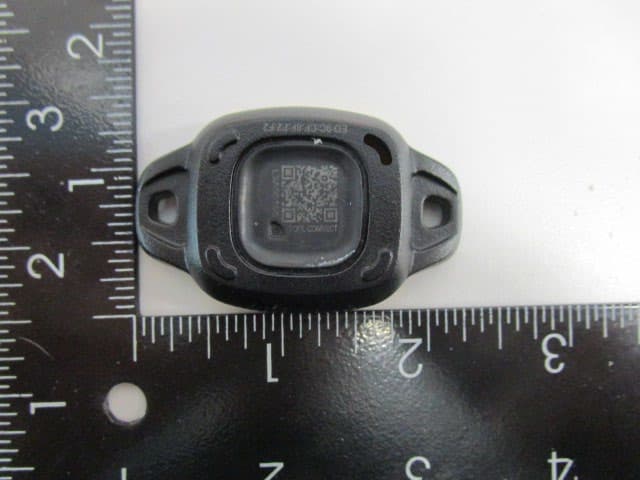
YJ7-DCE045
Jul 30, 2023BLE Tag
Equipment Class
DTS - Digital Transmission System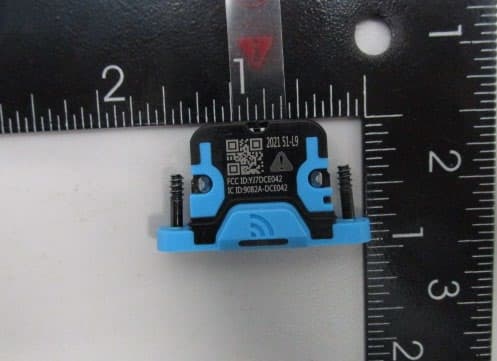
YJ7DCE042
Jan 05, 2023DCE042 Bluetooth Audit Chip
Equipment Class
DTS - Digital Transmission System