DZLF0179AF-0179A
Logitech Inc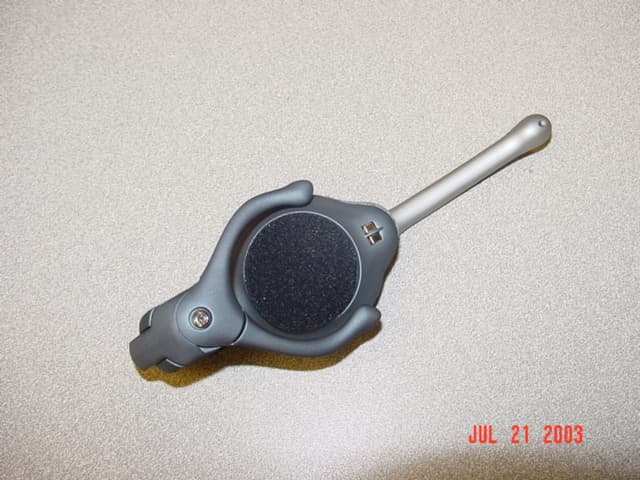
Click to zoom
Application Details
- Equipment Class
- DTS - Digital Transmission System
- Date of Grant
- Aug 11, 2003
- Application Purpose
- Original Equipment
- Date of Application
- Aug 11, 2003
- Equipment Note
- F-0179A
- Frequency Range
- 2402.00000000 - 2480.00000000
- Company
- Logitech Inc
- Country
- United States
Documents & Files
Document Text
Text extracted from the exhibit documents filed with the FCC. Open a document above to read the original.
Users Manual
Setup Configuration Configuración Logitech ® Bluetooth ™ Cordless Headset English Safety •Read these instructions. •Keep these instructions. •Heed all warnings. •Follow all instructions. •Caution: risk of electric shock. Do not open mains operated device. •Do not use apparatus near water. •Clean only with a dry cloth. •Install in accordance with the manufacturer’s instructions. •Do not install near any heat sources such as radiators, heat registers, stoves, or other apparatus (including amplifiers) that produce heat. •Do not defeat the safety purpose of the polarized plug. A polarized plug has two blades with one wider than the other. The wide blade is provided for your safety. If the provided plug does not fit into your outlet, consult an electrician for replacement of the obsolete outlet. •Protect the power cord from being walked on or pinched particularly at plugs, convenience receptacles, and the point where they exit from the apparatus. •Only use attachments/accessories specified by the manufacturer. •Unplug this apparatus when unused for long periods of time or during lightening storms. •Servicing is required when the apparatus has been damaged in any way, such as power-supply cord or plug is damaged, liquid has been spilled or objects have fallen into the apparatus, the apparatus has been exposed to rain or moisture, does not operate normally, or has been dropped. •Refer all servicing to qualified service personnel. •The appliance shall be disconnected from the mains by pulling the mains power plug. The socket - outlet shall be installed near the equipment and shall be easily accessible. WARNING: TO REDUCE THE RISK OF ELECTRIC SHOCK, DO NOT EXPOSE THIS APPA- RATUS TO RAIN OR MOISTURE. IMPORTANT SAFETY INFORMATION – FOR POWER SUPPLY ONLY CAUTION ELECTRIC SHOCK HAZARD Introduction 1 English Congratulations! Your new Logitech® Bluetooth ™ Cordless Headset will provide hours of hands-free convenience wherever you use your Bluetooth ™ mobile phone. Features A. Noise canceling microphone B. LED indicator light C. Convenient volume control and mute button D. Earclip adjuster E. Multi-function button. Use this button to power on / off, and answer / end calls (if supported by your phone) F. Ear clip for comfortable, secure fit G. Protective carrying case and charger The battery may not be fully charged when purchased. Please see “Charging your headset” on page 4. A D E F G C B W earing and Using your Headset 3 English Set-up - Pairing your Headset 2 English Wearing your Headset Press the earclip adjuster and slide the headset over either ear. Rotate the microphone boom so it is pointing toward the corner of your mouth. Adjust the headset until it feels comfortable. Using your Headset Turning the headset on and off: Pushing the multi-function button and holding for 2 seconds will turn on the headset. To turn the headset off, simply push the multi-function button and hold for 2 seconds. This feature will work even if your phone does not support the multi-function call answer/end feature. Standby: The headset will power down after 5 minutes of no activity. This will help conserve power. Your headset will automatically power up when your phone receives a call. Answering/ending a call: To answer or end (hang-up) a phone call, simply push the multi-function button. When pushing the button, do NOT hold the button; release it after pushing. Holding the button for 2 seconds will turn off your headset. NOTE: Not all phones support the call answer/end feature. If your phone does not support this feature, to answer a call first turn on your headset by pushing and holding the multi-function button. Then, use your mobile phone to answer/end the call. Adjusting call volume: To adjust the headset’s volume, simply push the “+” button to raise it, or the “ - ” to lower it. A tone will sound indicating the change in volume. When the headset is turned OFF, the current volume level is saved and stored. Muting a call: The headset can be muted by pushing both the “+” and “ - ” buttons at the same time. To stop muting, push either the “+” or the “ - ” buttons. When your headset is muted, the LED will flash at a faster rate than normal. Pairing your Headset with your Bluetooth ™ Mobile Phone Your Logitech ® Bluetooth ™ Headset must be “paired” to a Bluetooth phone before it will function. The following section describes how to pair your Logitech Bluetooth headset to a typical Bluetooth phone. 1. Charge your Bluetooth ™ Cordless Headset using the charger/carrying case. Make sure the headset is fully charged before proceeding (see page 4 for instructions on charging your headset). 2. Press and hold down the Volume “–” and Multi-function buttons for approximately 7 seconds until the headset indicator light glows steadily orange. There will be some short flashes before it becomes steady. 3. While the light is still steadily lit, release the button. The indicator light will remain on for 60 seconds, indicating that the headset is in pairing mode and waiting to communicate with another Bluetooth device. 4. Follow the operating instructions for your Bluetooth phone to start the pairing process. Typically, this is done by going to a ‘setup’ or ‘connect’ menu and then selecting the options to ‘discover’ Bluetooth devices. It may take several seconds to establish a connection. 5. Your phone’s display should indicate to you that it found the ‘Logitech HS01’ headset and ask if you want to pair it. You should confirm this. 6. The phone’s display should then prompt you for a passkey or PIN. Enter a sequence of four ones: 1111. 7.To indicate that pairing has been successful, the headset indicator light will briefly flash rapidly before it goes back to flashing every 3 seconds in standby mode. 8. Your phone’s display may also ask whether you want to change the headset’s name. We recommend that you approve the ‘Logitech HS01’ name and not change it. 9. If the headset indicator light is still steadily lit and orange, pairing was un…
Text truncated - open the document above for the full version.
Cover Letter(s)
July 1, 2003 FCC Authorization and Evaluation Division 7434 Oakland Mills Road Columbia, MD 21046 Subject: Cover Letter To Whom It May Concern: Logitech is requesting an original certification for our unlicensed Bluetooth Headset (MN: F-0179A). The Logitech Bluetooth Headset will operate under FCC Part 15.247 and consists of a head mounted, over the ear type transceiver. The head mounted transceiver is a low power, battery powered, cordless transceiver which is designed to be worn over the ear of the user to enable a two-way transmission with a Bluetooth compatible cellular telephone. Logitech’s Bluetooth Headset will be utilizing the frequency range of 2402MHz – 2480MHz and employing a FHSS modulation scheme. If further clarification of Logitech’s PAN is needed, please feel free to contact me at (360) 944-3708, via e-mail at [email protected] , or fax (360) 896-2020. Sincerely, Mitchell A. Phillipi Sr. Compliance Engineer Logitech, Inc.
Cover Letter(s)
04/14/03 Federal Communications Commission Authorization and Evaluation Division 7435 Oakland Mills Road Columbia, Maryland 21046 To whom it may concern, We, the undersigned, hereby authorize Northwest EMC, Inc., to act on our behalf, as our agent, in the following matters related to the FCC approval of our products: report submittal, related correspondence, the signing of all documents relating to these matters, and any other lawful activity necessary to obtain such certification. Any act carried out by Northwest EMC, Inc. within the scope of this authorization shall have the same affect as our own. This authorization shall expire 12 months from original date. Sincerely, Mitchell A. Phillipi Sr. Compliance Engineer Logitech, Inc.
Cover Letter(s)
04/14/03 Federal Communications Commission Authorization and Evaluation Division 7435 Oakland Mills Road Columbia, Maryland 21046 To whom it may concern, We hereby respectfully request that under the provision of 47 CFR 0.459, the documents listed below and attached with this application for certification be provided with confidential status. • Schematics • Theory of Operation • Frequency Block Diagrams Any exhibit/information for which we have requested confidentiality, but which may not be accorded such treatment by the FCC, should be returned to us. The documents listed above contain trade secrets that are treated as confidential by us. Substantial competitive harm to us could result should they be made available to the public. Sincerely, Mitchell A. Phillipi Sr. Compliance Engineer Logitech, Inc.
Cover Letter(s)
Northwest EMC TCB Compliance Opinion Revision 1/3/03 LABT0059 Information about the Applicant Company Name Logitech, Inc. Address 6505 Kaiser Drive City, State, Zip Fremont, CA, 94555 Requested By Mitchell A. Phillipi Job Number LABT0059 Model F-0179A FCC ID DZLF0179A Agent Northwest EMC Approval Type Certification Equipment Type DTS Rule Part 15.247 Overview Logitech’s Bluetooth TM Transmitter, Model F-0179A, FCC ID: DZLF0179A operates from 2402 – 2480 MHz (center frequency to center frequency), with a peak output power of 2.81 mW. It is a spread spectrum transceiver that utilizes frequency hopping modulation techniques. This radio is compliant with Bluetooth TM specifications, and will be used Bluetooth compatible cellular telephones . Only the permanently attached internal antenna, installed by the manufacturer can be used with the radio. Recommendation All items have been resolved and completed to my satisfaction; therefore I recommend this application for approval. _______________________________ Aug, 11, 2003 Dave Tolman, Q.A. Manager Date Northwest EMC TCB Compliance Opinion Revision 1/3/03 LABT0059 Findings and Resolution Item No items needing resolution were found. The application is complete. Opinion Specification Requirements Description 2.1091, 15.247(b)(4) RF Exposure Opinion: The Equipment meets the intent specified by the requirements listed above. Discussion: The Applicant has submitted test results in the form of a test report. Reference: RF Exposure.pdf Specification Requirements Description 15.247 (a)(1)(ii) Bandwidth Opinion: The Equipment meets the intent specified by the requirements listed above. Discussion: The Applicant has submitted test results in the form of a test report. Reference: Technical Report.pdf Specification Requirements Description 15.247 (b)(1) Power Output Opinion: The Equipment meets the intent specified by the requirements listed above. Discussion: The Applicant has submitted test results in the form of a test report. Reference: Technical Report.pdf Specification Requirements Description 15.247 (c) Spurious Emissions, Antenna Conducted Opinion: The Equipment meets the intent specified by the requirements listed above. Discussion: The Applicant has submitted test results in the form of a test report. Reference: Technical Report.pdf Northwest EMC TCB Compliance Opinion Revision 1/3/03 LABT0059 Specification Requirements Description 15.205, 15.209 Spurious Emissions, Radiated Emissions Opinion: The Equipment meets the intent specified by the requirements listed above. Discussion: The Applicant has submitted test results in the form of a test report. Reference: Technical Report.pdf Specification Requirements Description 15.247(d) Power Spectral Density Opinion: The Equipment meets the intent specified by the requirements listed above. Discussion: The Applicant has submitted test results in the form of a test report. Reference: Technical Report.pdf Specification Requirements Description 15.207 Conducted Emissions Opinion: The Equipment is not AC powered, therefore it meets the requirements. Discussion: The Equipment is not AC powered. Reference: NA Specification Requirements Description 15.247(c) Band Edge Compliance Opinion: The Equipment meets the intent specified by the requirements listed above. Discussion: The Applicant has submitted test results in the form of a test report. Reference: Technical Report.pdf Specification Requirements Description 2-15-02 FCC Procedure Bluetooth Common Items List Opinion: The Equipment meets the intent specified by the requirements listed above. Discussion: The Applicant has submitted test results in the form of a test report. Reference: FCC Procedure for Bluetooth 2-15-02.pdf
ID Label/Location Info
Dieline - do not print FCC ID: DZLF0179A IC: 1807D - F0179A Model #: F-0179A Input DC Rating: 6.5V 200mA P/N: 12-00261 N231 The FCC ID is located on the charging station becaue the headset is only able to be paired with the charging station. Without it, no charging (thus operation) is possible.
Operational Description
BLUETOOTH APPROVALS FCC Procedure Received from Joe Dichoso on 2-15-02 The following exhibit indicates the FCC Spread Spectrum requirements in Section 15.247 for devices meeting the Bluetooth Specifications in the 2.4 GHz band as of February 2001 operating in the USA. The purpose of this exhibit is to help expedite the approval process for Bluetooth devices. This exhibit provides items that vary for each device and also provides a list of items that are common to Bluetooth devices that explains the remaining requirements. The list of common items can be submitted for each application for equipment authorization. This exhibit only specifies requirements in Section 15.247, requirements in other rule Sections for intentional radiators such as in Section 15.203 or 15.207 must be also be addressed. A Bluetooth device is a FHSS transmitter in the data mode and applies as a Hybrid spread spectrum device in the acquisition mode. For each individual device, the following items, 1-7 will vary from one device to another and must be submitted. 1) The occupied bandwidth in Section 15.247(a)(1)(ii). 2) Conducted output power specified in Section 15.247(b)(1). 3) EIRP limit in Section 15.247(b)(3). 4) RF safety requirement in Section 15.247(b)(4) 5) Spurious emission limits in Section 15.247(c). 6) Processing gain and requirements for Hybrids in Section 15.247(f) in the acquisition mode. 7) Power spectral density requirement in Section 15.247(f) in the acquisition mode. For all devices, the following items, 1-12, are common to all Bluetooth devices and will not vary from one device to another. This list can be copied into the filing. 1 Output power and channel separation of a Bluetooth device in the different operating modes: The different operating modes (data-mode, acquisition-mode) of a Bluetooth device don’t influence the output power and the channel spacing. There is only one transmitter which is driven by identical input parameters concerning these two parameters. Only a different hopping sequence will be used. For this reason, the RF parameters in one op-mode is sufficient. 2 Frequency range of a Bluetooth device: The maximum frequency of the device is: 2402 – 2480 MHz. This is according the Bluetooth Core Specification V 1.0B (+ critical errata) for devices which will be operated in the USA. Other frequency ranges ( e.g. for Spain, France, Japan) which are allowed according the Core Specification must not be supported by the device. 3 Co-ordination of the hopping sequence in data mode to avoid simultaneous occupancy by multiple transmitters: Bluetooth units which want to communicate with other units must be organized in a structure called piconet. This piconet consist of max. 8 Bluetooth units. One unit is the master the other seven are the slaves. The master co-ordinates frequency occupation in this piconet for all units. As the master hop sequence is derived from it’s BD address which is unique for every Bluetooth device, additional masters intending to establish new piconets will always use different hop sequences. 4 Example of a hopping sequence in data mode: Example of a 79 hopping sequence in data mode: 40, 21, 44, 23, 42, 53, 46, 55, 48, 33, 52, 35, 50, 65, 54, 67, 56, 37, 60, 39, 58, 69, 62, 71, 64, 25, 68, 27, 66, 57, 70, 59, 72, 29, 76, 31, 74, 61, 78, 63, 01, 41, 05, 43, 03, 73, 07, 75, 09, 45, 13, 47, 11, 77, 15, 00, 64, 49, 66, 53, 68, 02, 70, 06, 01, 51, 03, 55, 05, 04 5 Equally average use of frequencies in data mode and short transmissions: The generation of the hopping sequence in connection mode depends essentially on two input values: 1. LAP/UAP of the master of the connection 2. Internal master clock The LAP (lower address part) are the 24 LSB’s of the 48 BD_ADDRESS. The BD_ADDRESS is an unambiguous number of every Bluetooth unit. The UAP (upper address part) are the 24 MSB’s of the 48 BD_ADDRESS. The internal clock of a Bluetooth unit is derived from a free running clock which is never adjusted and is never turned off. For synchronization with other units, only the offsets are used. It has no relation to the time of the day. Its resolution is at least half the RX/TX slot length of 312.5 μs. The clock has a cycle of about one day (23h30). In most case it is implemented as 28 bit counter. For the deriving of the hopping sequence the entire LAP (24 bits), 4 LSB’s (4 bits) (Input 1) and the 27 MSB’s of the clock (Input 2) are used. With this input values different mathematical procedures (permutations, additions, XOR-operations) are performed to generate the sequence. This will be done at the beginning of every new transmission. Regarding short transmissions, the Bluetooth system has the following behavior: The first connection between the two devices is established, a hopping sequence is generated. For transmitting the wanted data, the complete hopping sequence is not used and the connection ends. The second connection will be established. A new hopping sequence is generated. Due to the fact that the Bluetooth clock has a different value, because the period between the two transmission is longer (and it cannot be shorter) than the minimum resolution of the clock (312.5 μs). The hopping sequence will always differ from the first one. 6 Receiver input bandwidth, synchronization and repeated single or multiple packets: The input bandwidth of the receiver is 1 MHz. In every connection, one Bluetooth device is the master and the other one is the slave. The master determines the hopping sequence (see chapter 5). The slave follows this sequence. Both devices shift between RX and TX time slot according to the clock of the master. Additionally the type of connection (e.g. single or multi-slot packet) is set up at the beginning of the connection. The master adapts its hopping frequency and its TX/RX timing is according to the packet type of the connection. Also, the slave of the connection uses these settings. Repeating of a packet has no influence on the hopping sequence. The hopping s…
Text truncated - open the document above for the full version.
RF Exposure Info
Compliance with 47 CFR 15.247(b)(5) “Systems operating under the provisions of this section shall be operated in a manner that ensures that the public is not exposed to radio frequency energy levels in excess of the Commission's guidelines. See § 1.1307(b)(1) of this chapter.” The EUT is a head mounted, battery powered, cordless transceiver which is designed to be worn over the ear of the user to enable a two-way transmission with a Bluetooth compatible cellular telephone. It can be considered a portable transmitter per 47 CFR 2.1093(b). The antenna is internal to the unit and permanently attached. The antenna is a Printed Planar Inverted F antenna, quarter wavelength, with 1.9dBi gain. The maximum peak conducted output power is 2.81mW. The maximum peak power is 4.35 mW (EIRP) for FCC ID: DZLF0179A. The transmit frequency is 2402 to 2480 MHz, therefore the EUT does not require routine SAR evaluation per “TCB Exclusions List”, footnote 3 (dated July 17, 2002). See below: The exposure category is “General Population”. The distance is < 2.5 cm. Therefore the “Low Threshold” is 24.5 mW (EIRP) – above which routine SAR evaluation would be required. Since the maximum peak power of the EUT is 4.35 mW (EIRP), routine SAR evaluation is not required. The applicant’s Bluetooth radio, FCC ID: DZLF0179A, is compliant with the requirements of 15.247(b)(5).
Test Report
Logitech Inc. F-0179A July 20, 2003 Report No. LABT0059 Report Prepared By: 1-888-EMI-CERT © 2003 Northwest EMC, Inc 22975 NW Evergreen Parkway Suite 400 Hillsboro, Oregon 97124 Certificate of Test Issue Date: July 20, 2003 Logitech Inc. Model : F-0179A Emissions Description Pass Fail FCC 15.247, Spurious Radiated Emissions FCC 15.247, Spurious Conducted Emissions FCC 15.247, Band Edge Compliance FCC 15.247, Power Spectral Density FCC 15.247, Occupied Bandwidth FCC 15.247, Output Power The equipment was tested in the configuration and mode(s) of operation provided by the client. The specific tests and test levels were specified by the client. Any additional tests, or product configurations that should be tested are the responsibility of the client. Product compliance is the responsibility of the client. Modifications made to the product • See the modifications page of the report Deviations to the test standard • No deviations were made to the test standard Test Facility • The measurement facility used to collect the data is located at: Northwest EMC, Inc.; 22975 NW Evergreen Parkway, Suite 400; Hillsboro, OR 97124 Phone: (503) 844-4066 Fax: 844-3826 This site has been fully described in a report filed with the FCC (Federal Communications Commission), and accepted by the FCC in a letter maintained in our files. Approved By: Don Facteau, IS Manager This Report may only be duplicated in its entirety. The results of this test pertain only to the sample(s) tested, the specific description is noted in each of the individual sections of the test report supporting this certificate of test. Northwest EMC Revision History Revision 05/05/03 Revision Number Description Date Page Number 00 None Northwest EMC Accreditations and Authorizations Revision 03/05/03 FCC: The Open Area Test Sites, and conducted measurement facilities, have been fully described in reports filed with the FCC and accepted by the FCC in letters maintained in our files. TCB: Northwest EMC has been accredited by ANSI to ISO/IEC Guide 65 as a product certifier. We have been designated by the FCC as a Telecommunications Certification Body (TCB). This allows Northwest EMC to certify transmitters to FCC specifications in accordance with 47 CFR 2.960 and 2.962. A2LA: Accreditation has been granted to Northwest EMC, Inc. to perform the Electromagnetic Compatibility (EMC) tests described in the Scope of Accreditation. Assessment performed to ISO/IEC 17025. Certificate Number: 1936-01, Certificate Number: 1936-02, Certificate Number 1936-03 Australia/New Zealand: The National Association of Testing Authorities (NATA), Australia has been appointed by the ACA as an accreditation body to accredit test laboratories and competent bodies for EMC standards. Accredited test reports or assessments by competent bodies must carry the NATA logo. Test reports made by an overseas laboratory that has been accredited for the relevant standards by an overseas accreditation body that has a Mutual Recognition Agreement (MRA) with NATA are also accepted as technical grounds for product conformity. The report should be endorsed with the respective logo of the accreditation body. (A2LA) TÜV Product Service: Included in TUV Product Service Group's Listing of Recognized Laboratories. It qualifies in connection with the TUV Certification after Recognition of Agent's Testing Program for the product categories and/or standards shown in TUV's current Listing of CARAT Laboratories available from TUV. A certificate was issued to represent that this laboratory continues to meet TUV's CARAT Program requirements. Certificate No. USA0302C TÜV Rheinland: Authorized to carryout EMC tests by order and under supervision of TÜV Rheinland. This authorization is based on "Conditions for EMC-Subcontractors" of November 1992. Northwest EMC Accreditations and Authorizations Revision 03/05/03 NEMKO: Assessed and accredited by NEMKO (Norwegian testing and certification body) for European emissions and immunity testing. As a result of NEMKO's laboratory assessment, they will accept test results from Northwest EMC, Inc. for product certification (Authorization No. ELA 119). Technology International: Assessed in accordance with ISO Guide 25 defining the general international requirements for the competence of calibration and testing laboratories and with ITI assessment criteria LACO196. Based upon that assessment Interference Technology International, Ltd., has granted approval for specifications implementing the EU Directive on EMC (89/336/EEC and amendments). The scope of the approval was provided on a Schedule of Assessment supplied with the certificate and is available upon request. Industry Canada: Accredited by Industry Canada for performance of radiated measurements. Our open area test sites comply with RSP 100, Issue 7, section 3.3. VCCI: Accepted as an Associate Member to the VCCI, Acceptance No. 564. Conducted and radiated measurement facilities have been registered in accordance with Regulations for Voluntary Control Measures, Article 8. (Registration Nos. - Evergreen: C-1071 and R-1025, Trails End: C-694 and R-677, Sultan: C-905, R-871 and R-1172, North Sioux City C-1246, R-1185 and R-1217) BSMI: Northwest EMC has been designated by NIST and validated by C- Taipei (BSMI) as a CAB to conduct tests as described in the APEC Mutual Recognition Agreement. License No.SL2-IN-E-1017. CAB: Designated by NIST and validated by the European Commission as a Conformity Assessment Body (CAB) to conduct tests and approve products to the EMC directive and transmitters to the R&TTE directive, as described in the U.S. - EU Mutual Recognition Agreement GOST: Northwest EMC, Inc. has been assessed and accredited by the Russian Certification bodies Certinform VNIINMASH, CERTINFO, SAMTES, and Federal CHEC, to perform EMC and Hygienic testing for Information Technology Products. As a result of their laboratory assessment, they will accept test results from Northwest EMC, Inc. for product certificati…
Text truncated - open the document above for the full version.
Test Report
EUT Information EUT Description The type of equipment tested was a pre-production unit containing the identical schematic, PCB layout, and antenna design as will be used during production. No modifications were made during testing for FCC compliance. EUT Firmware Component Description Part Number Revision FIRMWARE, Bluetooth HEADSET, LogiHSO1 SWC- 745058- 0000 A0 Mobile Bluetooth Headset
Test Report
Per 15.203, the antenna is internal and permanently attached. It is not intended to be serviced by the customer and is, therefore only serviceable by Logitech, Inc. authorized personnel. The antenna is a Printed Planar Inverted F antenna, quarter wavelength, with 1.9dBi gain.
Contact Information
Applicant
Paul Zahra(Regulatory Compliance Manager)
Technical Contact
Northwest EMC, Inc.Greg Kiemel
[email protected]503-844-4066
22975 NW Evergreen Parkway · Hillsboro, Oregon · United States
Non-Technical Contact
Northwest EMC, Inc.Vicki Albertson
[email protected]503-844-4066
Test Firm
Northwest EMC, Inc.Greg Kiemel
Technical Specifications
| # | Rule Parts | Frequency Range | Power Output |
|---|---|---|---|
| 1 | 15C | 2.40 GHz - 2.48 GHz | 2.81 mW |
Other Applications from Logitech Inc
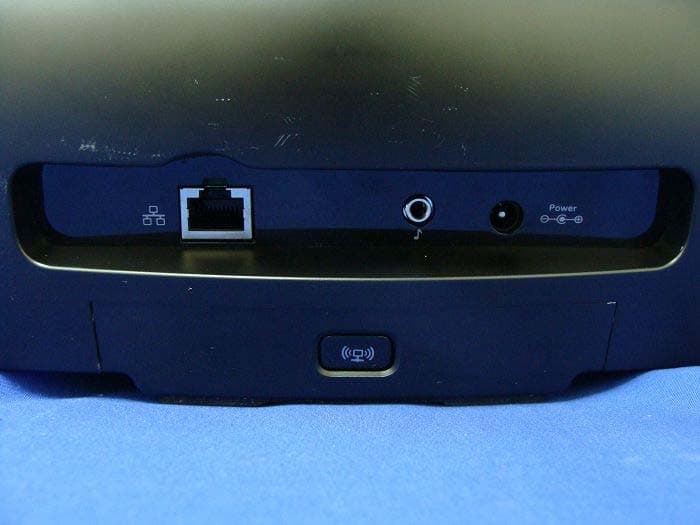
DZLS00118
Oct 06, 2011AIR SPEAKER
Equipment Class
DTS - Digital Transmission System
DZLA00032
Aug 07, 2011Nano Receiver
Equipment Class
DSS - Part 15 Spread Spectrum Transmitter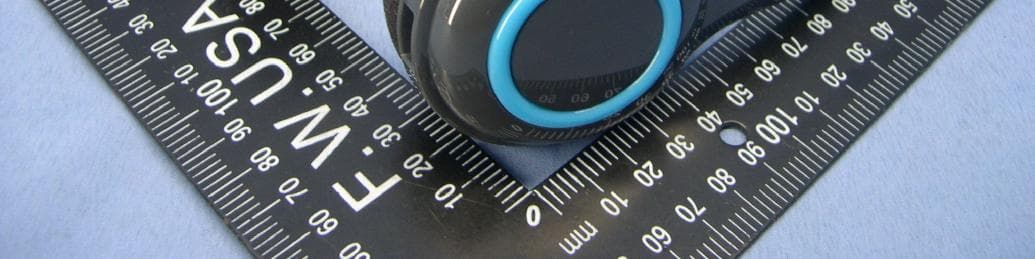
DZLA00031
Jul 24, 2011Wireless Headset H600
Equipment Class
DSS - Part 15 Spread Spectrum Transmitter
DZLS00114
Jul 20, 2011Wireless module
Equipment Class
DSS - Part 15 Spread Spectrum Transmitter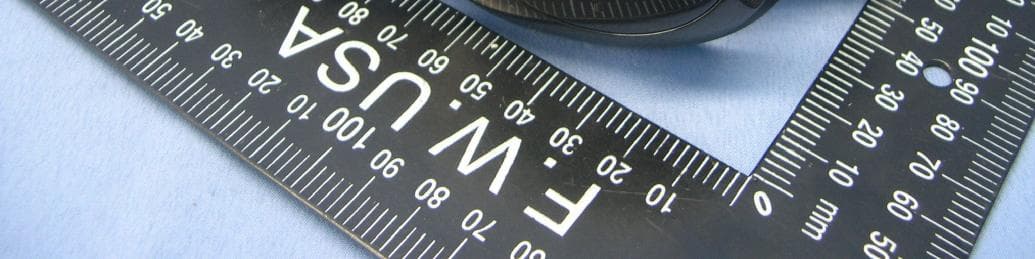
DZLA00033
Jul 18, 2011Wireless Headset H800
Equipment Class
DSS - Part 15 Spread Spectrum Transmitter